
Add it to your home screen and it opens full screen: no browser bars, one tap away, and everything stays signed in. Free, nothing to download from an app store.
- Tap the Share button in your browser
- Scroll down and choose “Add to Home Screen”
- Open GrowSomeFood from your home screen
- Open your browser’s menu
- Choose “Add to Home screen” or “Install app”
- Open GrowSomeFood from your home screen

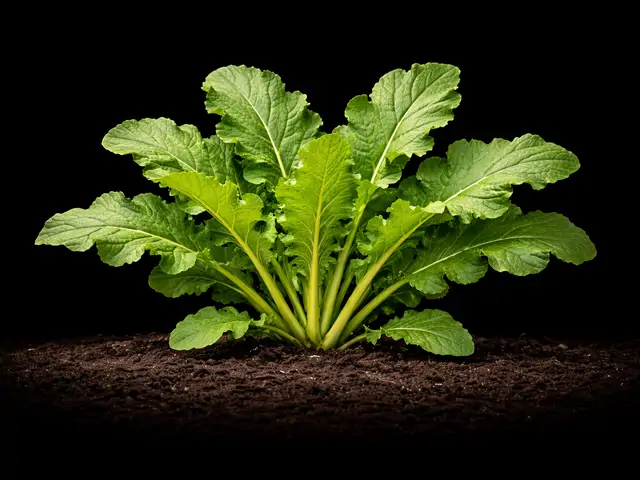
Mustard Greens
A fast, peppery leaf brassica - salad in a month, a Southern greens staple, and the source of mustard seed - that bolts quickly in heat, so you succession sow it.
Safety notes Leaves and seeds both edible. Raw leaves are pungent and can irritate a sensitive mouth or stomach in quantity; cooking mellows the bite. The seeds are the source of table mustard - and mustard seed is a recognized priority food allergen (EU and Canada) that can cause severe reactions including anaphylaxis, so anyone with a known mustard or rapeseed allergy should avoid the seed and seed products. Sprout only untreated food-grade seed, never seed sold treated for planting.
Overview
Mustard greens are the quick, spicy member of the cabbage family - a fast-growing annual leaf crop with a peppery, horseradish-like bite that ranges from mild to fiery depending on variety, weather, and how big the leaves get. At lettuce-like speed (baby leaves in about a month, full leaves in six weeks), they're one of the fastest returns in the garden, and unlike their biennial cousins they flower and set seed the same year - the same plant that gives you greens can give you mustard seed, the spice.
Quick facts
- Sprouts in
- 5 daysRange: 3–10 days
- Soil temperature
- 70 °FRange: 45–85 °F
- Start indoors
- 4 weeks before transplantRange: 3–5 weeks
- Height
- 18 inRange: 12–24 in
- Spread
- 12 inRange: 8–18 in
- Cold
- Takes light frostdamaged below 25°F
- Heat
- Struggles above 80°F
- Life cycle
- Annual
- Save seeds
- About 95 days after plantingRange: 80–110 days
- Self-sows
- Yes, expect volunteers
- Soil
- Well-drained
- Water
- Medium
- Plant spacing
- 10 inRange: 6–12 in
When to plant
Nothing is open today. Spring sowing opens 5 months, Mar 13 to Apr 17.
- Direct sow Mar 13 – Apr 17 Opens in 145 daysAbout 4 weeks before to 7 days after your last frost (Apr 10 here)Sow as soon as soil is workable; mustard is fast and frost-tolerant, but spring crops bolt quickly as days lengthen and warm - grow them early and pick young.
- Direct sow Aug 31 – Sep 30 Opens in 316 daysAbout 8 weeks before to 4 weeks before your first frost (Oct 25 here)The better crop - cool fall weather keeps leaves mild and tender, and light frost improves flavor without bolting pressure.
Frost here: last around Apr 10 (Mar 27 to Apr 24 most years), first around Oct 25. Zone averages, your own yard may run a week or two either way.
Life stages
From the first start to harvest
Follow the growing sequence. Choose a stage to see its care and signs to watch for.
Stage 1 of 5 · The growing sequence
Germination
Day 0 to 5 from sowing
Care at this stage
-
Keep the seedbed evenly moist
Sow 1/4-1/2 inch deep; mustard germinates very fast (3-5 days) in cool or warm soil. Don't let the surface crust.
Stages can overlap; weather, variety, and growing conditions change the pace.
Harvest
- Baby leaves 3-4 inches for salad; full leaves 6-8 inches for cooking
- Milder and more tender in cool weather; hotter in heat
- Harvest before the central stalk elongates to flower
- Cut outer leaves; leave the center growing · every 4 days
- Or cut the whole plant, then resow
Per plant 15 to 80 leaves, 8 to 48 ozPicking cut and it regrows
Cook with Mustard Greens
Watch out for
6 to know. 2 are high-risk: Harlequin Bug, Flea Beetles. 3 are active in October.
Harlequin BugSeverity High PestnowSeason: Apr–OctBright orange-and-black shield bugs on leaves and stems, whitish or yellow cloudy stippling and wilting, and barrel-shaped black-and-white striped eggs standing in rows on leaf undersides.
Bright orange-and-black shield bugs on leaves and stems, whitish or yellow cloudy stippling and wilting, and barrel-shaped black-and-white striped eggs standing in rows on leaf undersides.
Hand-pick the conspicuous adults into soapy water and crush egg rows; insecticidal soap or spinosad on heavy nymph populations. Spinosad is acutely toxic to bees while the spray is wet - apply at dusk when bees are not flying, never to plants in flower, and follow the product label.
Clean up brassica and cruciferous-weed debris where adults overwinter; row cover young plants; handpick early-season adults before they breed.
A shield-shaped stink bug boldly patterned in orange/red and black that sucks sap from mustard leaves, leaving pale cloudy blotches and wilting. A major pest of leafy brassicas in warm regions, and mustard is a preferred host - which also makes it a useful trap crop.
Flea BeetlesSeverity High PestSeason: Apr–SepDozens of pinhead-sized round holes peppered across the leaves, thickest on the youngest, most tender growth.
Mustard is one of their favorite hosts and they can shred seedlings fast. Since the damage lands on the part you eat, floating row cover from sowing plus harvesting young is the practical answer.
Dozens of pinhead-sized round holes peppered across the leaves, thickest on the youngest, most tender growth. Tiny beetles that spring away as you brush the plants or lean in for a closer look - that jump is the identification. Seedlings that go lacy and stop growing, and transplants that sit and sulk instead of taking off. Damage heaviest in warm, dry weather and along the edge of a bed nearest weedy ground or last year's crop debris. On root crops, shallow narrow grooves or channels scarring the skin at harvest, from larvae feeding underground.
Row cover and healthy fast growth carry most crops through, and on an established plant the damage is usually cosmetic and needs nothing at all. Where a young planting is genuinely being stripped, kaolin clay coats the leaves and deters feeding, and spinosad will knock the beetles back. Spinosad is acutely toxic to bees while the spray is still wet - apply it at dusk when bees are not flying, never onto plants in flower, and follow the product label. Anything you spray must be labeled for the plant you are treating, and you must observe its pre-harvest interval on a crop you are picking. Yellow sticky traps are useful for telling you when the beetles have arrived. Where the damage falls on the part you eat, harvesting young often beats them outright; where you are growing for a root or a fruit, leaf damage can simply be tolerated. Larvae feeding underground cannot be reached by a foliar spray, so rotation and clean beds are what work against those.
Floating row cover or fine insect mesh, laid over the bed from the day of sowing or transplanting and sealed at the edges so nothing can walk in underneath, is the single best defense - and on the crops they favor it is close to essential. Leave it on until plants are large and growing strongly, or until flowering on anything that needs pollinating. Push growth: a well-watered, unchecked plant outgrows the damage, so the whole game is getting seedlings through their vulnerable weeks fast. Keep beds weed-free, since related weeds host the beetles alongside your crop, and clear crop debris at the end of the season where the adults overwinter. Rotate away from a bed that grew a related crop last year. Where you can, shift sowing dates - cooler-season and fall plantings often miss the peak of adult feeding entirely.
Flea beetles are tiny dark beetles - often shiny black or bronze, rarely more than a couple of millimeters long - with enlarged back legs that let them spring away like fleas the moment you lean in. The adults chew countless small round pits and shot-holes through leaves, giving the foliage a peppered, buckshot-riddled look. They overwinter as adults in leaf litter, hedgerows, and crop debris, emerge hungry in spring, and are worst in warm dry spells. The damage is mostly a seedling and transplant problem: a small plant with a few leaves can be checked, stunted, or killed outright, while the same plant shrugs them off once it is large and growing strongly. Different species specialize on different plant families, so the beetles hammering your brassicas are not the ones on your nightshades. Some species also have larvae that feed on roots and tubers underground.
White RustSeverity Medium DiseasenowSeason: Mar, Apr, May, Oct, NovShiny white raised blister-pustules on the undersides of the leaves, yellow spots or blotches on the upper surface above them, and thickened, swollen or distorted shoots and stems where infection is heavy.
Mustards are among its favorite hosts, and a cool, wet spring on a dense stand is exactly its weather. Thin the bed and water at the base.
Shiny white raised blister-pustules on the undersides of the leaves, yellow spots or blotches on the upper surface above them, and thickened, swollen or distorted shoots and stems where infection is heavy.
Strip and destroy affected leaves promptly, and harvest ahead of a prolonged wet spell - the crop is usually still perfectly usable if you catch it early. Copper can protect new growth where pressure is high through a long wet season.
Space and thin for airflow, water at the base and in the morning so the foliage dries, rotate crucifers, and clear infected leaves and debris rather than leaving them standing in the bed.
A fungal-like disease (Albugo) of brassicas and other crucifers, common in cool, wet weather. It produces raised, shiny, chalky-white blister-like pustules on the undersides of the leaves, with yellow blotches showing through on the upper surface, and in bad cases it swells and distorts stems, shoots and flowering growth.
AphidsSeverity Medium PestnowSeason: Apr, May, Jun, Sep, OctDense clusters of tiny insects packed onto shoot tips, flower buds, and the undersides of young leaves.
The gray waxy cabbage aphid hides in the crown and along the veins. Mustard's speed often beats it; soak leaves before eating to flush out anything hiding.
Dense clusters of tiny insects packed onto shoot tips, flower buds, and the undersides of young leaves. Curled, cupped, or distorted new growth that never opens properly. A sticky shine on the leaves - and on whatever sits under the plant - that later goes black with sooty mold. Tiny white cast skins left behind where a colony has been feeding. Ants running steadily up and down the stems, which is often the first thing you notice. Mottled, streaked, or misshapen leaves that do not grow out can mean a virus the aphids brought with them rather than the feeding itself.
Knock the colonies off with a hard jet of water and repeat every few days - on most plants that alone ends it. Pinch out or prune off the worst-infested tips rather than treating the whole plant. If colonies keep rebuilding, spray insecticidal soap or horticultural oil directly onto the insects, covering leaf undersides, and repeat weekly until they are gone; treat early or late in the day, and never spray a wilted or heat-stressed plant. Avoid broad-spectrum insecticides - they kill the ladybugs, lacewings, and parasitic wasps that were about to solve the problem for you, and aphid numbers usually come back worse afterward. Anything you spray must be labeled for the plant you are treating; follow that label and observe its pre-harvest interval. On anything you eat, wash leaves, heads, and buds well before use, since aphids hide down in crowns, folds, and tight growth.
Go easy on nitrogen: the soft, lush growth that heavy feeding produces is exactly what aphids breed on. Check new growth once a week through spring and early summer so you catch colonies while they are still small, and rub the first few out with your fingers. Leave flowering plants nearby and skip broad-spectrum sprays - ladybugs, lacewings, hoverflies, and parasitic wasps do most of this work for free, and they only stay if there is something for them to eat. Keep ants off the plant where you can, since they protect aphids from those predators. Water steadily so plants are not stressed, and check any new plant over before you bring it home or move it indoors, since aphids usually arrive on something else.
Aphids are small soft-bodied sap-suckers - green, black, gray, pink, or waxy white, and mostly wingless - that gather in dense colonies on the tenderest new growth: shoot tips, buds, and the undersides of young leaves. They breed extremely fast in mild weather, so a few can become hundreds inside a week. Their feeding curls and distorts soft growth, and the sticky honeydew they excrete coats everything below and turns black with sooty mold. Ants often farm and defend the colonies for that honeydew. A few aphids are normal on almost any plant and a healthy plant shrugs them off; only dense, persistent colonies do real damage, and some aphids also spread plant viruses as they feed.
ClubrootSeverity Medium DiseaseSeason: Apr–SepMidday wilting that recovers overnight, yellowing and stunting with no obvious cause, and - the giveaway - swollen, distorted, clubbed roots instead of clean ones when a plant is pulled.
Fast-cropped mustard is usually cut before clubroot shows, but it is a brassica and it still feeds the spore load. Count it in the rotation rather than treating it as a free filler.
Midday wilting that recovers overnight, yellowing and stunting with no obvious cause, and - the giveaway - swollen, distorted, clubbed roots instead of clean ones when a plant is pulled.
There is no cure once the soil is infested. Pull and destroy affected plants - bag them, do not compost them - lime the bed, and keep brassicas off that ground for years. Rotation and pH are the whole game here.
Rotate at least 4 years out of every brassica, counting the fast salad ones and any brassica cover crop. Lime toward pH 7.0-7.2, since the pathogen dislikes alkaline soil, and improve drainage. Plant only clean seed and transplants, never move infested soil or plants around the garden, and grow resistant or tolerant varieties where the disease is known to be present.
A soil-borne pathogen (Plasmodiophora brassicae) that infects brassica roots and swells them into distorted, clubbed galls. Affected plants stunt and yellow, wilt on warm afternoons and recover overnight, and never size up properly. It is worst in acidic, poorly drained ground, and the resting spores survive in soil for up to 20 years, moving around on soil, tools, boots, water and infected transplants.
Cabbage Worms & LoopersSeverity Medium PestSeason: May–SepRagged holes in the leaves, dark-green frass in the crown, and green caterpillars that match the leaf and hide along midribs and leaf undersides.
Fast-cropped mustard is usually cut before worms do real damage, and the peppery mustard oils are no deterrent - they are exactly the cue cabbage whites use to choose where to lay. If you let a planting bolt and flower for seed, it becomes a bee plant: do not spray it then.
Ragged holes in the leaves, dark-green frass in the crown, and green caterpillars that match the leaf and hide along midribs and leaf undersides. White butterflies fluttering low over the bed mean eggs are going down now - look under the leaves for the small pale-yellow eggs, laid one at a time rather than in clusters.
Bt (Bacillus thuringiensis kurstaki) is the one to reach for first: it affects only caterpillars and is safe around bees, parasitic wasps, and hoverflies. Spinosad also works, but it is not caterpillar-specific - while the spray is still wet it is toxic to bees and to the parasitic wasps that hunt cabbage worms for you. If you use it, spray at dusk so it dries before bees are out, and never wet open flowers, including flowering companions like dill or nasturtium. Follow the label for both. On a small planting, hand-picking and rubbing off eggs is enough on its own.
Floating row cover from sowing or transplant is the near-complete fix - it stops the adults ever laying. Seal it at the soil edges and lift it only to weed or harvest. Otherwise check leaf undersides twice a week, rub off the eggs, and hand-pick the caterpillars. Let dill, cilantro, or other umbels flower nearby to feed the parasitic wasps that do this work for you.
The brassica caterpillar complex: velvety green imported cabbageworms (larvae of the white cabbage butterfly) and inch-worming cabbage loopers (a moth larva). Both chew large ragged holes through the leaves, then work into whatever folds up at the center - head, curd, sprout, or growing crown - fouling it with green pellet droppings. Fast leaf crops are usually cut before the damage matters; slow heading crops suffer most. Nasturtium carries the same mustard-oil chemistry that cues the butterflies to lay, so it hosts them too and is often planted nearby as a decoy.
Good & bad neighbors
Plant nearby
-
Its flowers draw parasitic wasps and hoverflies that hunt aphids and cabbage worms.
-
Aphid trap crop that also lures aphid predators toward it and away from the greens.
- Traditional pairings, thin evidence
-
Fast mustard makes a useful trap crop for flea beetles and harlequin bugs, drawing them off slower head cabbages nearby.
-
Different root depth and cool-season timing - a tidy space-sharing pair.
-
Shares the cool season and quick pace; interplants easily in a mixed salad bed.
-
Allium scent is traditionally credited with deterring brassica pests.
-
A cool-season legume that fixes a little nitrogen and shares mustard's spring/fall window.

Keep apart
-
FennelFennel's root exudates inhibit most vegetables, mustard included - give it its own corner.
- Traditional pairings, thin evidence
-
Traditional lore holds brassicas and climbing beans suppress each other; thin evidence, and they compete for space.
-
Traditional antagonist - can share pests; keep in separate beds.

Varieties · 10
You pick one when you add Mustard Greens to your garden. Its days to maturity set your harvest window.
Leaf mustard (Brassica juncea) 7 varieties
Southern Giant Curled
The classic Southern cooking mustard: big, bright-green, heavily curled and frilled leaves with a strong, spicy bite that mellows in the pot.
Variety details for Southern Giant Curled
Large, ruffled, deeply curled bright-green leaves in a big upright plant.
curledheirloomopen-pollinatedpungentVigorous, cold-hardy, and slow-ish to bolt - the traditional choice for a mess of greens.
Florida Broadleaf
A high-yielding Southern heirloom with large, smooth, broad green leaves and a lighter-toothed white midrib - milder and more tender than the curled types, and a heavy producer for cooking greens.
Variety details for Florida Broadleaf
Big, broad, flat green leaves with a prominent pale midrib.
broadleafheirloomopen-pollinatedproductiveRed Giant
A striking large-leaved mustard in deep reddish-purple over green, with a bold, spicy flavor.
Variety details for Red Giant
Large, broad, crinkled leaves in deep red-purple shading to green at the base.
redpungentcold-hardyornamentalAs handsome as it is hot - good raw for color and bite in salad mixes, and cooked when full-sized. Cold-tolerant.
Asian green (Brassica rapa) 3 varieties
Mizuna
A mild, feathery Japanese mustard (botanically Brassica rapa) with deeply serrated bright-green leaves and a gentle peppery tang - one of the best raw salad mustards, fast-regrowing, and more heat- and bolt-tolerant than most.
Variety details for Mizuna
Feathery, deeply serrated bright-green leaves in a spreading rosette.
asian-greenmildsaladcut-and-come-againExcellent in mesclun.
Tatsoi
A mild 'spoon mustard' (Brassica rapa) forming a low, flat rosette of dark, glossy, spoon-shaped leaves - tender and sweet-mild raw or lightly cooked, and remarkably cold-hardy for winter salads.
Variety details for Tatsoi
Dark green, glossy, spoon-shaped leaves in a flat ground-hugging rosette.
asian-greenmildsaladcold-hardyTendergreen
A fast, mild broad-leaved mustard-spinach (sold as Brassica rapa var.
Variety details for Tendergreen
Smooth, glossy, dark-green oval leaves with a slightly wavy edge.
broadleafmildfastheat-tolerantperviridis, the komatsuna group, not a true juncea mustard) with smooth, glossy dark-green leaves - tender, quick, and more heat- and bolt-tolerant than most, useful as a spinach substitute cooked or in salad. For seed saving, isolate it from turnip and other B. rapa crops.
Grower tips
Notes from growers, tagged with the zone they grow in. A person reads every post before it appears.
Nobody has posted about Mustard Greens yet. The first one usually saves someone a season.
Free account. Your post shows your grower name and zone, never your email.