Add it to your home screen and it opens full screen: no browser bars, one tap away, and everything stays signed in. Free, nothing to download from an app store.
- Tap the Share button in your browser
- Scroll down and choose “Add to Home Screen”
- Open GrowSomeFood from your home screen
- Open your browser’s menu
- Choose “Add to Home screen” or “Install app”
- Open GrowSomeFood from your home screen
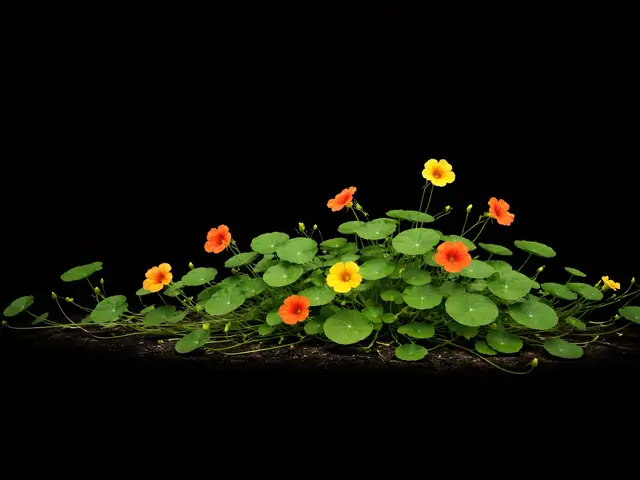
Nasturtium
Leaves, flowers, and immature seeds are all edible with a peppery, watercress-like flavor. Culinary garnish quantities are fine for most people, but the mustard oils are concentrated: eat them in moderation, and note that nasturtium is traditionally avoided by people with stomach or intestinal ulcers or with kidney disease, and is not given to young children in medicinal amounts. Handling can irritate very sensitive skin.
Overview
The edible flower that earns two keeps: a peppery salad crop and the garden's best-known aphid trap crop, from a plant almost impossible to kill.
Nasturtiums are the rare plant that's genuinely useful three ways at once: a beautiful flower, a real vegetable (leaves, flowers, and seeds all edible with a bright, peppery, watercress-like bite), and one of the most effective companion plants in the garden. They ask almost nothing — poor soil, a sunny spot, and water — and reward it with months of bloom and greens until frost.
Their headline garden job is as a trap crop: aphids and cabbage-white caterpillars find nasturtiums irresistible and swarm them in preference to your brassicas, cucumbers, and beans, concentrating the pests where you can deal with them. The main choice is habit: compact bush types for beds and pots, or vigorous trailing/climbing types that scramble up a trellis or spill from a container.
At a glance
- Sun
- Full sun · Part shade
- Water
- Medium
- Spacing
- 8–18 in (typ. 12)
- Mature height
- 10–96 in (typ. 12)
- Start by
- Direct sow
- Frost
- Tender
- Germination
- 7–14 days (typ. 10) @ 55–75 °F (typ. 65)
- Spread
- 12–120 in (typ. 18)
- Soil
- Well-drained
- Temperature
- Damaged below 32°F · struggles above 90°F
- Seed ready
- 80–110 days (typ. 95) (for saving)
- Self-sows
- Yes — expect volunteers
- Support
- Trellis-friendly
When to plant
Zone 7a typical frost: last Apr 10 · first Oct 25 (spring frost runs Mar 27–Apr 24 in a typical spread of years)
Life stages
- Germination day 0–10 from sowing
-
Keep the seedbed moist until sprouts showevery 1 dThe large seeds have a hard coat. Sow 1/2 inch deep; soaking them overnight first speeds a sometimes-slow germination.
-
Sow in place - they resent transplantingNasturtiums have brittle roots and dislike being moved. Direct sow where they'll grow rather than starting in cells.
Slow or patchy germination (normal - the seed coat is tough) -
Keep the seedbed moist until sprouts showevery 1 d
- Seedling day 10–30 from sowing
-
Thin to 8-12 inchesGive each plant room; crowded nasturtiums mildew and mound into a leaf pile with fewer flowers.
-
Watch for early aphidsAphids find nasturtiums fast - which is exactly why they make a good trap crop, but keep an eye on colonies.
Aphids colonizing tender stemsCabbage-white caterpillars chewing leaves -
Thin to 8-12 inches
- Vegetative day 30–50 from sowing
-
Water moderately - keep soil leanevery 5 dEven, moderate moisture; let the surface dry between. Rich soil and heavy feeding give you a jungle of leaves and almost no flowers.
-
Guide climbing types up a trellisTrailing and climbing varieties run 6-10 feet and will scramble up netting, a fence, or a wall - tie the first stems on and they take hold with their leaf stalks after that. Give them 18-24 inches of room, or a tall pot to spill from. Bush types stay a tidy mound and need no support at all.
All leaves, no flowers (soil too rich)Powdery mildew in crowded plantings -
Water moderately - keep soil leanevery 5 d
- Blooming & picking day 55–150 from sowing
-
Pick leaves and flowers regularlyevery 3 dFrequent harvest of both keeps the plant tender and productive right up to frost. Morning-picked flowers are freshest.
-
Manage aphids on the trap cropIf nasturtiums are pulling aphids off your brassicas, hose down or remove the worst-hit plants before the colony spreads back out.
Heavy aphid load (the trap working - manage it)Blooms hidden under leaves (thin or lift the canopy) -
Pick leaves and flowers regularlyevery 3 d
- Seed set day 85–160 from sowing
-
Pick green seeds for 'poor man's capers', or let them dryImmature green seedpods pickle into a caper substitute; leave the rest to ripen and drop for next year's volunteers, or collect for seed.
Ripe seeds dropping and self-sowingFirst frost (ends the plant) -
Pick green seeds for 'poor man's capers', or let them dry
Harvest
- Style
- Cut and come again
- Typical yield
- 20–100 flowers (typ. 50)
- Leaves bright green and tender (before they get papery)
- Flowers fully open and vivid
- Green seeds plump but still soft for pickling
Watch out for
Aphids Medium
Aphids are small soft-bodied sap-suckers - green, black, gray, pink, or waxy white, and mostly wingless - that gather in dense colonies on the tenderest new growth: shoot tips, buds, and the undersides of young leaves. They breed extremely fast in mild weather, so a few can become hundreds inside a week. Their feeding curls and distorts soft growth, and the sticky honeydew they excrete coats everything below and turns black with sooty mold. Ants often farm and defend the colonies for that honeydew. A few aphids are normal on almost any plant and a healthy plant shrugs them off; only dense, persistent colonies do real damage, and some aphids also spread plant viruses as they feed.
Watch for: Dense clusters of tiny insects packed onto shoot tips, flower buds, and the undersides of young leaves. Curled, cupped, or distorted new growth that never opens properly. A sticky shine on the leaves - and on whatever sits under the plant - that later goes black with sooty mold. Tiny white cast skins left behind where a colony has been feeding. Ants running steadily up and down the stems, which is often the first thing you notice. Mottled, streaked, or misshapen leaves that do not grow out can mean a virus the aphids brought with them rather than the feeding itself.
Prevent: Go easy on nitrogen: the soft, lush growth that heavy feeding produces is exactly what aphids breed on. Check new growth once a week through spring and early summer so you catch colonies while they are still small, and rub the first few out with your fingers. Leave flowering plants nearby and skip broad-spectrum sprays - ladybugs, lacewings, hoverflies, and parasitic wasps do most of this work for free, and they only stay if there is something for them to eat. Keep ants off the plant where you can, since they protect aphids from those predators. Water steadily so plants are not stressed, and check any new plant over before you bring it home or move it indoors, since aphids usually arrive on something else.
Treat: Knock the colonies off with a hard jet of water and repeat every few days - on most plants that alone ends it. Pinch out or prune off the worst-infested tips rather than treating the whole plant. If colonies keep rebuilding, spray insecticidal soap or horticultural oil directly onto the insects, covering leaf undersides, and repeat weekly until they are gone; treat early or late in the day, and never spray a wilted or heat-stressed plant. Avoid broad-spectrum insecticides - they kill the ladybugs, lacewings, and parasitic wasps that were about to solve the problem for you, and aphid numbers usually come back worse afterward. Anything you spray must be labeled for the plant you are treating; follow that label and observe its pre-harvest interval. On anything you eat, wash leaves, heads, and buds well before use, since aphids hide down in crowns, folds, and tight growth.
Nasturtium is swarmed in preference to almost anything else, which is what makes it a trap crop: a heavy aphid load here is often the point rather than a failure, and means the trap is protecting nearby brassicas and beans. Pull the worst-hit plants before the colonies rebuild and spread back into your crops.
Cabbage Worms & Loopers Medium
The brassica caterpillar complex: velvety green imported cabbageworms (larvae of the white cabbage butterfly) and inch-worming cabbage loopers (a moth larva). Both chew large ragged holes through the leaves, then work into whatever folds up at the center - head, curd, sprout, or growing crown - fouling it with green pellet droppings. Fast leaf crops are usually cut before the damage matters; slow heading crops suffer most. Nasturtium carries the same mustard-oil chemistry that cues the butterflies to lay, so it hosts them too and is often planted nearby as a decoy.
Watch for: Ragged holes in the leaves, dark-green frass in the crown, and green caterpillars that match the leaf and hide along midribs and leaf undersides. White butterflies fluttering low over the bed mean eggs are going down now - look under the leaves for the small pale-yellow eggs, laid one at a time rather than in clusters.
Prevent: Floating row cover from sowing or transplant is the near-complete fix - it stops the adults ever laying. Seal it at the soil edges and lift it only to weed or harvest. Otherwise check leaf undersides twice a week, rub off the eggs, and hand-pick the caterpillars. Let dill, cilantro, or other umbels flower nearby to feed the parasitic wasps that do this work for you.
Treat: Bt (Bacillus thuringiensis kurstaki) is the one to reach for first: it affects only caterpillars and is safe around bees, parasitic wasps, and hoverflies. Spinosad also works, but it is not caterpillar-specific - while the spray is still wet it is toxic to bees and to the parasitic wasps that hunt cabbage worms for you. If you use it, spray at dusk so it dries before bees are out, and never wet open flowers, including flowering companions like dill or nasturtium. Follow the label for both. On a small planting, hand-picking and rubbing off eggs is enough on its own.
Do not cover this one - it is the decoy. Nasturtium works as a trap near brassicas only if you actually inspect it and remove what you find; left alone it just raises the next generation and makes the problem worse. Caterpillars are easy to spot on the flat round leaves. A nasturtium in bloom is a bee plant, so keep sprays off it entirely, and check leaves and flowers before they go in a salad.
Slugs & Snails Low
Slugs and snails are nocturnal mollusks that rasp ragged holes in soft leaves, shear off seedlings at ground level, and chew into ripe fruit that touches the soil. They feed at night and in the early morning and spend the day hidden under boards, pots, dense mulch, leaf litter, and low foliage, becoming active in exactly the cool, damp, shaded conditions that suit young plants. Damage is heaviest in wet spells and on tender spring growth: a single wet week can erase a row of seedlings while an established, tough-leaved plant of the same species is barely marked. They lay clusters of small pearly eggs in damp soil and under debris, so a garden with plenty of cover carries a resident population year after year rather than being invaded from outside.
Watch for: Irregular ragged holes chewed out of the middle of leaves and along the edges - not the clean-edged cuts a caterpillar leaves. Seedlings that vanish overnight, or that are cut off at soil level with nothing left behind. Silvery dried slime trails across leaves, soil, pots, and paving in the morning: this is the giveaway that tells you it was mollusks rather than an insect. Chewed pits in ripe fruit, especially where it rests on the ground. Damage that shows up on the lowest, dampest leaves first and gets worse after rain or evening watering. Turn over a board, an upturned pot, or a clump of dense mulch during the day and look for the animals themselves sheltering in the cool underneath.
Prevent: Take away the daytime shelter first: lift boards and upturned pots, clear piles of debris, keep dense mulch pulled back from crowns and stems, and give crowded plantings enough airflow to dry out. Water in the morning rather than the evening so the surface is dry by the time they come out. Copper tape around containers and raised beds gives them a shock they will not cross, and it is the one barrier that reliably works. Get plants past the vulnerable stage quickly - start seedlings in pots and set them out at a decent size rather than direct-sowing into a cold wet bed, since most plants stop being worth defending once the leaves toughen. Leave the ground beetles, frogs, toads, and ground-feeding birds alone, because they eat mollusks all night for free and broad-spectrum slug pellets kill them too. Where thick-leaved or resistant varieties exist for what you are growing, they take far less damage.
Treat: Hand-picking works and costs nothing: go out an hour after dark with a headlamp, drop what you find into soapy water, and repeat nightly for a week or two - persistence is what wins, not any single product. Shallow beer traps sunk to soil level catch them too, but need emptying and refilling daily to be worth anything. Iron-phosphate bait is the standard control and is far lower-risk around pets and wildlife than the old metaldehyde products, but it is not harmless: many formulations include EDTA, and a dog that eats a quantity of pellets can develop iron toxicosis. Scatter it thinly per the label, never in piles, and keep dogs off a baited bed. Clear fallen foliage and debris in autumn, where the eggs are laid. In a wet climate this is a population you manage each season rather than one you eradicate - and on most established plants light grazing is cosmetic and needs nothing at all.
Seedlings can be taken out overnight; established nasturtiums shrug off light feeding.
Powdery Mildew Low
Powdery mildew is a fungal disease that coats leaves - and often stems, buds, and fruit - in a white-to-gray powder that looks like spilled talcum. It is not one fungus but a large family of them, each fairly specialised to its own group of plants, which is why mildew on one crop rarely jumps to an unrelated one beside it. Unlike most leaf diseases it does not need wet leaves: it thrives on warm dry days followed by humid nights, and it takes hold fastest where plants stand crowded in still air or in shade. The coating blocks light, so heavily covered leaves yellow, brown, and drop early. On many plants that is mostly disfiguring and arrives late enough not to matter; where it strips away the leaves a crop still needed to finish, it costs you size, sweetness, and quality.
Watch for: Round white powdery spots on the upper leaf surfaces that spread and merge until whole leaves look dusted. It usually starts on the oldest, lowest, most shaded leaves and works upward, so check there first. Look at the undersides too, and at stems, buds, and flower stalks, which get coated as it advances. Leaves that yellow, brown, curl, or go crisp and drop early under the coating. New growth that opens small, crumpled, or twisted where the fungus has reached the shoot tips. On plants where it gets onto the fruit, a dull gray film, russeted or scarred skin, and cracking. Late in the season, tiny dark specks scattered through the white felt - that is the fungus setting up to overwinter on the debris.
Prevent: Give plants room. Crowding and still air are the biggest single driver, so space at the full recommended distance, thin seedlings properly, and divide or prune out congested growth until air moves through the plant. Full sun and an open position help; deep shade and a still corner against a wall are where it always starts. Water at the base rather than overhead, and water early in the day so nothing stays damp overnight. Keep plants evenly watered - drought stress at the roots leaves them far more susceptible, even though the fungus itself likes dry air. Go easy on nitrogen, since soft lush growth is the most vulnerable. Where resistant varieties exist for what you are growing, choosing one is the single most effective thing you can do on a plant that mildews every year. Clear infected leaves and stems away at the end of the season rather than composting them.
Treat: Start early: sprays protect healthy tissue, they do not clean up leaves that are already coated. Pick off and bin the worst leaves as soon as you see them, and open the plant up by thinning or pruning so air moves through. On anything that regrows quickly, shearing the whole plant back forces a clean flush and beats spraying. If it keeps spreading, potassium bicarbonate, horticultural oil, or neem applied weekly will hold it - cover both leaf surfaces. Sulfur also works, but it burns the foliage of some plants, should never go on in heat, and must not be mixed with or applied close behind an oil spray. Whatever you use must be labeled for the plant you are treating: follow that label and observe its pre-harvest interval on anything you eat. Do not compost badly infected material. Late-season mildew on a plant that is finishing anyway is usually cosmetic; on a crop still filling out it is worth acting on.
Turns up on aging, crowded plantings late in the season. Nasturtiums resow and regrow so quickly that pulling tired plants and resowing beats treating them, and you should keep sprays off leaves and flowers you intend to eat.
Good & bad neighbors
Varieties · 10
Variegated green-and-white leaves with bright red, orange, and yellow single blooms.
The standout for foliage: cream-and-green marbled leaves that are ornamental even before the red, orange, and yellow flowers appear. Compact bush habit for beds and containers.
Dark blue-green leaves with rich crimson-red single flowers.
A striking Victorian heirloom: deep blue-green foliage setting off velvety deep-crimson flowers. Compact and container-friendly, with an especially peppery flavor.
Semi-double flowers in red, orange, gold, and yellow over rounded green leaves.
The classic bushy bedding mix: semi-double blooms held above the foliage in the full jewel range - red, orange, yellow, and cream. Reliable, compact, and prolific.
Creamy yellow single blooms with a red-orange center blotch.
A soft, unusual color for nasturtium: creamy pale-yellow flowers with a splash of red-orange at the throat, on a tidy bush plant. Lovely as an edible garnish.
Dark mahogany-red single flowers facing upward over compact foliage.
Deep mahogany-red flowers held right on top of a very neat, upward-facing bush - the blooms sit above the leaves instead of hiding under them.
Upward-facing semi-double blooms in red, orange, yellow, and peach.
Bred so the semi-double, spurless flowers face up and out on top of the foliage for maximum show - and easy picking. Comes in single colors and a mix.
A blend of upward-facing semi-double flowers over mounded foliage.
The full Whirlybird color range - red, orange, yellow, cream - with the same open, upward-facing spurless blooms that sit above the leaves.
Pale primrose-yellow single flowers on long trailing stems with round blue-green leaves.
A trailing heirloom with soft, creamy pale-yellow flowers on long running stems - it will climb 6-8 feet up netting or spill down from a tall pot or wall. The gentlest color in the genus and lovely as an edible garnish. Needs support or room to run.
Vivid scarlet-orange single blooms on long climbing stems.
A vigorous climbing nasturtium with hot scarlet-orange flowers, running 8-10 feet up a trellis, fence, or through a shrub. The best choice when you want nasturtium at eye level rather than underfoot, and a strong aphid decoy on a vertical face.
Red, orange, gold, and cream single flowers scattered along long trailing stems.
The classic old-fashioned trailing mix in the full jewel range, running 6-10 feet along the ground or up a support. The type to sow at the foot of a fence, along a bank, or over a wall - and the cheapest way to cover ground with edible flowers.
Grow
Direct sow the big seeds 1/2 inch deep after frost - they hate being transplanted - into lean soil and full sun.
Direct sowing is the only method worth bothering with: nasturtiums have brittle roots and sulk or die when transplanted. The seeds are large and easy to handle — poke them 1/2 inch deep once frost has passed and soil has warmed to 55°F or more, spacing bush types 10-12 inches apart and trailing or climbing types 18-24 inches apart at the foot of whatever they're going to run up. Soaking them overnight first softens the tough coat and speeds a sometimes-slow, 7-14 day germination. They'll bloom in about six to eight weeks.
The one rule that trips people up: keep the soil lean. Rich, fertilized ground grows enormous leaves and hides the flowers. Full sun gives the most bloom, though they tolerate part shade (with fewer flowers) and even prefer it in hot climates.
Care
Water moderately, never feed, harvest often, and let them do their pest-trapping work.
Care is mostly about restraint. Water evenly and moderately, letting the surface dry between; skip fertilizer entirely. Harvest leaves and flowers frequently — it keeps the plant tender and pushing new growth. Guide climbing types onto netting or a fence early; bush types need nothing.
Then let them be a trap crop. When aphids pile onto the nasturtiums (they will), that's the system working: the pests are on the decoy instead of your cabbages. Hose down or pull the worst-infested plants before the colony rebuilds and spreads, and encourage the ladybugs and hoverflies that the aphid buffet draws in.
Harvest
Pick leaves and flowers all season for the plate; pickle the green seeds as capers.
Everything above ground is harvestable. Pick flowers fully open in the morning for salads and garnish; snip leaves young and tender for a peppery green (they toughen and go papery with age); and gather the plump green seedpods while still soft. Harvest often — the more you take, the more the plant makes.
The seeds are the sleeper crop: pickled green in vinegar and salt, they become poor man's capers, a sharp, briny substitute that's arguably better than the real thing. Leave the last flush of seeds to ripen and drop, and nasturtiums usually reseed themselves for next year.
Storage
Everything is best fresh - flowers wilt within a day; pickled seeds keep for months.
Nasturtium flowers are a same-day ingredient: they wilt within hours of picking and keep only a day or two refrigerated in a container with a damp paper towel. Leaves hold a few days like other tender greens. The one thing that stores well is the pickled seed — green pods packed in a hot brine of vinegar, salt, and spices keep for months in the fridge and are ready to eat after a few weeks. Dried ripe seed, kept cool and dark, stays viable for 2-3 years for replanting.
Propagation & seed saving
The easiest seed you'll ever save: big seeds that self-sow on their own or store for years.
Nasturtiums are a perfect beginner seed-saving crop. Each flower forms a cluster of three big, knobbly seeds that are impossible to lose. Let the last flush ripen on the plant until they fall away brown and dry, gather them off the ground, dry another week indoors, and store cool and dark — they keep 2-3 years. Open-pollinated types come true; even mixes give you a fun spread of colors.
Left alone, they self-sow reliably in mild climates, popping up as volunteers exactly where last year's plants dropped seed. In cold zones the frost kills the parents but the fallen seed often overwinters and sprouts on its own in spring.
Nutrition
A genuine leafy green: high in vitamin C, with the peppery mustard oils (glucosinolates) that give it both flavor and mild antimicrobial reputation.
Unlike most edible flowers, nasturtium is real food. The leaves are a legitimate leafy green — notably high in vitamin C (the old name 'Indian cress' and its watercress-like bite are both clues) — and rich in the same mustard-oil compounds (glucosinolates) found in cabbage and cress that give the peppery heat.
Those mustard oils are behind nasturtium's folk reputation as an antimicrobial and respiratory remedy. Eat it as the fresh, vitamin-rich green it is; the pepper concentrates in the leaves, mellows in the flowers, and peaks in the seeds. Moderation is sensible — a lot of raw mustard oil can upset a sensitive stomach.
In the kitchen
Peppery leaves in salad, jewel-toned flowers as garnish or stuffed, green seeds pickled as capers.
Nasturtium is a working kitchen plant, not just a garnish. The flowers — brilliant orange, red, and yellow — go into salads whole, get stuffed with soft cheese, or top a plate for color and a mild pepper note. The leaves bring a sharp watercress bite to salads and blend into a peppery pesto that stands in for basil. The green seeds, pickled, become the famous poor-man's capers.
Pair the heat with something rich or sweet — goat cheese, buttered bread, ripe tomatoes. The whole plant is at its best raw and just-picked; cooking mutes both the color and the peppery character that make it worth growing.
Traditional & historical uses
A real folk remedy behind the flavor: the mustard oils have documented antimicrobial activity, though it's food first. Medicinal-strength preparations are traditionally avoided with stomach or intestinal ulcers or kidney disease, and are not given to young children.
This section records how people have traditionally used this plant, and what is known about the risks. It is history and general information — not medical advice, and not a recommendation to treat anything. Plants are not dosed like medicines, some interact with prescriptions, and some are harmful in ways that are not obvious. Talk to a clinician before using any plant medicinally.
Nasturtium has a more credible herbal history than most edible flowers, and it traces to the same chemistry as its flavor. The glucosinolate-derived mustard oils (notably benzyl isothiocyanate) have measurable antibacterial and antifungal activity in the lab, and traditional European herbalism used nasturtium leaf and flower for respiratory and urinary infections — a use that still appears in some modern herbal preparations combined with horseradish. That combination is a licensed medicine in Germany, and it is worth knowing that it ships with real contraindications: it is not used in people with stomach or intestinal ulcers or with kidney disease, and it is not given to young children.
Keep it in perspective: this is a nutritious peppery green with mild, evidence-supported antimicrobial compounds, not a treatment. Enjoy it as food that happens to carry a genuine kernel of its folklore, and eat it in normal culinary amounts — a few leaves and flowers in a salad are fine for almost everyone. The cautions attach to concentrated medicinal doses, and to anyone in those groups eating leaves and seeds in real quantity, where the mustard-oil load is highest.
Troubleshooting
No flowers means soil too rich; aphids are expected (that's the point); mildew comes from crowding.
Lush leaves, no flowers: the classic nasturtium problem — soil is too rich or over-fertilized. Stop feeding; poor soil is what triggers bloom. Aphids everywhere: expected, and often desirable — the plant is doing its trap-crop job; hose them off or remove the worst plants to protect the crops nearby. Chewed leaves: cabbage-white caterpillars, which also prefer nasturtium to your brassicas — pick them off. White powdery leaves (powdery mildew): crowding and age; thin, improve airflow, resow. Poor germination: the seed coat is tough — soak overnight and be patient. Wilting in heat: above ~90°F flowering stalls; give afternoon shade and water.
History
Brought from Peru to Europe in the 1500s, named for a Roman trophy pole, and a wartime pepper substitute.
Nasturtiums are native to the Andes of South America (Peru through Colombia), where the flowers were eaten long before Europeans arrived. Spanish explorers carried them home in the 1500s, and the plant spread through European gardens as both ornament and salad crop — the English called it 'Indian cress' for its cress-like bite.
The odd Latin name Tropaeolum comes from the Greek for 'trophy': the round leaves and helmet-shaped flowers reminded Linnaeus of the shields and helmets Romans hung on a trophy pole after a victory. During both World Wars, the peppery pickled seeds served as a home-garden substitute for hard-to-get capers and black pepper — the same trick worth reviving today.
Growing across climates
A cool-season-loving annual: cold zones grow it all summer; hot zones grow it in the mild shoulders with shade.
Zones 3-6: a summer annual — direct sow after frost for bloom from early summer until the first fall freeze, which ends it; a second sowing in mid-summer refreshes the show for autumn. Zones 7-8: long seasons; spring-sown plants often fade in peak heat, so sow again in late summer for a strong fall flush. Zones 9-11: flip the calendar — nasturtiums are a cool-season (fall-through-spring) crop here, since heat and humidity above ~90°F stall flowering and invite mildew; give afternoon shade and grow them out of the worst summer months. In frost-free areas they can behave as short-lived perennials, but most gardeners treat them as reseeding annuals everywhere.
Cook it
All 2 recipes →Grower tips
No grower tips for Nasturtium yet. Yours could be the first.
Sign in to share what works in your garden.