Add it to your home screen and it opens full screen: no browser bars, one tap away, and everything stays signed in. Free, nothing to download from an app store.
- Tap the Share button in your browser
- Scroll down and choose “Add to Home Screen”
- Open GrowSomeFood from your home screen
- Open your browser’s menu
- Choose “Add to Home screen” or “Install app”
- Open GrowSomeFood from your home screen
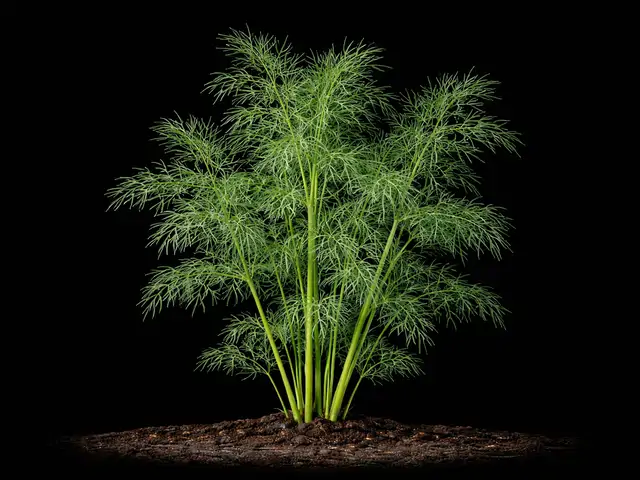
Dill
Safe as food. Handling the foliage can cause sun-triggered skin sensitivity (phytophotodermatitis) in some people; wash after cutting a lot. Check any ferny volunteer before eating it: poison hemlock (Conium maculatum) is naturalized across most of the US, seeds itself into the same disturbed soil, and is lethal in small amounts. Crush a leaf - dill smells unmistakably of dill, while hemlock smells musty or mousy and has hairless, purple-blotched stems. If it isn't clearly dill, don't eat it.
Overview
Feathery leaf, pickling flowers, and aromatic seed all from one fast, self-sowing plant that also feeds swallowtail butterflies.
Dill is three harvests in one tall, ferny plant: the feathery blue-green leaf (dill weed) for cooking, the yellow flower head that goes whole into the pickle crock, and the flat aromatic seed for pickling brine and bread. It grows fast from a direct sowing, and once you let a plant set seed it reseeds itself into a permanent, low-effort patch.
It's also one of the garden's best wildlife plants. Dill is a primary host for the black swallowtail butterfly — those striking black, yellow, and green caterpillars grazing your fronds are next summer's swallowtails — and its flowers are a beacon for the hoverflies and parasitic wasps that keep aphids down all over the garden. Plant a little extra and share.
At a glance
- Sun
- Full sun
- Water
- Medium
- Spacing
- 8–18 in (typ. 12)
- Mature height
- 24–48 in (typ. 36)
- Start by
- Direct sow
- Frost
- SemiHardy
- Germination
- 7–21 days (typ. 12) @ 60–85 °F (typ. 70)
- Spread
- 8–18 in (typ. 12)
- Soil
- Well-drained
- Temperature
- Damaged below 25°F · struggles above 90°F
- Seed ready
- 85–110 days (typ. 95) (for saving)
- Self-sows
- Yes — expect volunteers
When to plant
Zone 7a typical frost: last Apr 10 · first Oct 25 (spring frost runs Mar 27–Apr 24 in a typical spread of years)
Life stages
- Germination day 0–12 from sowing
-
Keep the bed evenly moistevery 1 dSow 1/4 inch deep, direct in place - dill's taproot hates transplanting. Light aids germination, so barely cover.
-
Sow into warm soil for even sproutingBest around 60-70°F. Dill germinates unevenly, so don't give up early.
Slow, patchy emergence (normal for dill) -
Keep the bed evenly moistevery 1 d
- Seedling day 12–30 from sowing
-
Thin to 10-12 inches apartCrowded dill flops and bolts fast. Thin to standing plants and eat the ferny thinnings.
-
Shelter the tall, brittle stems from windMature dill is top-heavy; a sheltered spot or a nearby stake keeps it from snapping.
Aphids on tender shootsDamping off in cold wet soil -
Thin to 10-12 inches apart
- Leaf (dill weed) day 30–55 from sowing
-
Snip feathery leaves once plants are 8 inchesevery 5 dCut whole fronds near the stem; regular cutting delays flowering and keeps tender leaf coming.
-
Keep soil consistently moistevery 3 dEven moisture keeps leaves lush and slows the rush to flower in warm weather.
Central stalk thickening (bolting begins - leaf window closing)Black swallowtail caterpillars grazing the fronds (usually welcome) -
Snip feathery leaves once plants are 8 inchesevery 5 d
- Flower head (dill for pickling) day 60–80 from sowing
-
Cut yellow flower umbels for the pickling crockThe flowering head at full bloom is 'dill for pickles' - the classic dill-crown for cucumbers. Cut whole umbels as they open.
-
Let some bloom for pollinatorsDill flowers are magnets for hoverflies, lacewings, and parasitic wasps that patrol the whole garden.
Green seeds forming behind the flowers (the seed crop is coming) -
Cut yellow flower umbels for the pickling crock
- Dill seed day 95–115 from sowing
-
Cut seed heads when tan and drySnip whole umbels into a paper bag as the seeds turn light brown, before they shatter. Finish drying, then shake the flat seeds free.
-
Let a head or two drop for volunteersSeed left to fall on undisturbed soil sprouts a self-sown dill patch next spring - the never-buy-it-again crop. Before you eat a volunteer, crush a leaf: dill smells of dill, while poison hemlock (a lethal ferny lookalike naturalized nearly everywhere) smells musty or mousy and has hairless, purple-blotched stems.
Seed heads shattering (harvest before they scatter if you want to collect) -
Cut seed heads when tan and dry
Harvest
- Style
- Cut and come again
- Typical yield
- 20–70 sprigs (typ. 40)
- By weight
- 2–14 oz (typ. 6)
- Leaf: plants 8+ inches tall with several feathery fronds, before the flower stalk thickens
- Flower head: umbels in full yellow bloom for the classic pickling 'dill crown'
- Seed: umbels dried to tan and the flat seeds loosen easily
Watch out for
Aphids Medium
Aphids are small soft-bodied sap-suckers - green, black, gray, pink, or waxy white, and mostly wingless - that gather in dense colonies on the tenderest new growth: shoot tips, buds, and the undersides of young leaves. They breed extremely fast in mild weather, so a few can become hundreds inside a week. Their feeding curls and distorts soft growth, and the sticky honeydew they excrete coats everything below and turns black with sooty mold. Ants often farm and defend the colonies for that honeydew. A few aphids are normal on almost any plant and a healthy plant shrugs them off; only dense, persistent colonies do real damage, and some aphids also spread plant viruses as they feed.
Watch for: Dense clusters of tiny insects packed onto shoot tips, flower buds, and the undersides of young leaves. Curled, cupped, or distorted new growth that never opens properly. A sticky shine on the leaves - and on whatever sits under the plant - that later goes black with sooty mold. Tiny white cast skins left behind where a colony has been feeding. Ants running steadily up and down the stems, which is often the first thing you notice. Mottled, streaked, or misshapen leaves that do not grow out can mean a virus the aphids brought with them rather than the feeding itself.
Prevent: Go easy on nitrogen: the soft, lush growth that heavy feeding produces is exactly what aphids breed on. Check new growth once a week through spring and early summer so you catch colonies while they are still small, and rub the first few out with your fingers. Leave flowering plants nearby and skip broad-spectrum sprays - ladybugs, lacewings, hoverflies, and parasitic wasps do most of this work for free, and they only stay if there is something for them to eat. Keep ants off the plant where you can, since they protect aphids from those predators. Water steadily so plants are not stressed, and check any new plant over before you bring it home or move it indoors, since aphids usually arrive on something else.
Treat: Knock the colonies off with a hard jet of water and repeat every few days - on most plants that alone ends it. Pinch out or prune off the worst-infested tips rather than treating the whole plant. If colonies keep rebuilding, spray insecticidal soap or horticultural oil directly onto the insects, covering leaf undersides, and repeat weekly until they are gone; treat early or late in the day, and never spray a wilted or heat-stressed plant. Avoid broad-spectrum insecticides - they kill the ladybugs, lacewings, and parasitic wasps that were about to solve the problem for you, and aphid numbers usually come back worse afterward. Anything you spray must be labeled for the plant you are treating; follow that label and observe its pre-harvest interval. On anything you eat, wash leaves, heads, and buds well before use, since aphids hide down in crowns, folds, and tight growth.
Dill is a favorite aphid host, and that is often the point: it is planted deliberately as a magnet whose blooms recruit the hoverflies and lacewings that then patrol the rest of the garden. Let it flower rather than reaching for a spray.
Root Rot Medium
Root rot is not one organism but a group of soil fungi and water molds - Pythium, Phytophthora, Fusarium, Rhizoctonia and others - that sit harmlessly in most soils and only turn destructive when the ground stays saturated. Waterlogged soil drives the air out, the roots suffocate, and the weakened tissue is invaded and goes soft, brown, and stringy. Because the damage is underground you usually see it first as something that looks like drought: wilting, yellowing, stunting, a plant that does not respond to being watered. Overwatering, heavy compacted ground, a low spot that collects runoff, a pot with no drainage or a saucer left standing full, and cold wet soil in winter are the usual causes. Once roots have actually rotted there is no cure - this is a problem you prevent rather than treat.
Watch for: Wilting in the middle of the day on a plant whose soil is damp - the classic tell, and the reason people water a rotting plant and finish it off. Leaves yellowing from the bottom up, dull off-color foliage, and growth that stalls for no visible reason. Whole shoots, or one side of the plant, collapsing while the rest still looks fine. Soft, dark, or mushy tissue at the base of the stem or at the crown, sometimes with a sour smell. Lift a failing plant and look at the roots: healthy ones are firm and pale, rotted ones are brown or black and slimy, and the outer layer slips off between your fingers leaving a thread of core behind. Seedlings that topple over at soil level are the same problem, called damping-off.
Prevent: Drainage is the whole defense. Match the plant to the site first - something that wants sharp drainage will not survive heavy clay or a low, water-collecting spot however well you tend it. Where the ground is heavy, plant on a raised bed, berm, or slope, or grow in a container. Set plants at the depth they were already growing, since burying the crown or the root flare is a common cause of rot, and keep mulch pulled back a few inches from the stem base instead of piled against it. Water the soil rather than the calendar: check that the top inch or two is dry before watering again, cut back hard in cool weather and winter dormancy, and never leave a pot standing in a full saucer. Do not plant or dig in soggy ground, and go easy on rich amendments for plants that want it lean. Rotate annual crops, and start with clean healthy plants and fresh mix.
Treat: There is no cure for tissue that has already rotted, so act on the conditions rather than looking for a spray. Stop watering at once and fix the drainage - open up compacted soil, or move the plant to a raised, sharply drained position or a container. Lift a badly affected plant, cut away every soft dark root and rotted section with a clean blade back to firm pale tissue, and replant only the healthy parts into fresh free-draining soil or mix. Often the better move is to give up on the plant and save its offspring instead: cuttings, offsets, or divisions taken from firm healthy growth root readily and give you a clean start. Bin the rotted material rather than composting it, and correct the drainage before you replant, because the rot comes straight back in the same wet spot.
A shallow, fast crop - the fix is well-drained soil, no overwatering, and avoiding heavy compacted ground, then resowing if a stand fails.
Slugs & Snails Low
Slugs and snails are nocturnal mollusks that rasp ragged holes in soft leaves, shear off seedlings at ground level, and chew into ripe fruit that touches the soil. They feed at night and in the early morning and spend the day hidden under boards, pots, dense mulch, leaf litter, and low foliage, becoming active in exactly the cool, damp, shaded conditions that suit young plants. Damage is heaviest in wet spells and on tender spring growth: a single wet week can erase a row of seedlings while an established, tough-leaved plant of the same species is barely marked. They lay clusters of small pearly eggs in damp soil and under debris, so a garden with plenty of cover carries a resident population year after year rather than being invaded from outside.
Watch for: Irregular ragged holes chewed out of the middle of leaves and along the edges - not the clean-edged cuts a caterpillar leaves. Seedlings that vanish overnight, or that are cut off at soil level with nothing left behind. Silvery dried slime trails across leaves, soil, pots, and paving in the morning: this is the giveaway that tells you it was mollusks rather than an insect. Chewed pits in ripe fruit, especially where it rests on the ground. Damage that shows up on the lowest, dampest leaves first and gets worse after rain or evening watering. Turn over a board, an upturned pot, or a clump of dense mulch during the day and look for the animals themselves sheltering in the cool underneath.
Prevent: Take away the daytime shelter first: lift boards and upturned pots, clear piles of debris, keep dense mulch pulled back from crowns and stems, and give crowded plantings enough airflow to dry out. Water in the morning rather than the evening so the surface is dry by the time they come out. Copper tape around containers and raised beds gives them a shock they will not cross, and it is the one barrier that reliably works. Get plants past the vulnerable stage quickly - start seedlings in pots and set them out at a decent size rather than direct-sowing into a cold wet bed, since most plants stop being worth defending once the leaves toughen. Leave the ground beetles, frogs, toads, and ground-feeding birds alone, because they eat mollusks all night for free and broad-spectrum slug pellets kill them too. Where thick-leaved or resistant varieties exist for what you are growing, they take far less damage.
Treat: Hand-picking works and costs nothing: go out an hour after dark with a headlamp, drop what you find into soapy water, and repeat nightly for a week or two - persistence is what wins, not any single product. Shallow beer traps sunk to soil level catch them too, but need emptying and refilling daily to be worth anything. Iron-phosphate bait is the standard control and is far lower-risk around pets and wildlife than the old metaldehyde products, but it is not harmless: many formulations include EDTA, and a dog that eats a quantity of pellets can develop iron toxicosis. Scatter it thinly per the label, never in piles, and keep dogs off a baited bed. Clear fallen foliage and debris in autumn, where the eggs are laid. In a wet climate this is a population you manage each season rather than one you eradicate - and on most established plants light grazing is cosmetic and needs nothing at all.
Mostly a seedling problem - established dill outgrows them quickly.
Powdery Mildew Low
Powdery mildew is a fungal disease that coats leaves - and often stems, buds, and fruit - in a white-to-gray powder that looks like spilled talcum. It is not one fungus but a large family of them, each fairly specialised to its own group of plants, which is why mildew on one crop rarely jumps to an unrelated one beside it. Unlike most leaf diseases it does not need wet leaves: it thrives on warm dry days followed by humid nights, and it takes hold fastest where plants stand crowded in still air or in shade. The coating blocks light, so heavily covered leaves yellow, brown, and drop early. On many plants that is mostly disfiguring and arrives late enough not to matter; where it strips away the leaves a crop still needed to finish, it costs you size, sweetness, and quality.
Watch for: Round white powdery spots on the upper leaf surfaces that spread and merge until whole leaves look dusted. It usually starts on the oldest, lowest, most shaded leaves and works upward, so check there first. Look at the undersides too, and at stems, buds, and flower stalks, which get coated as it advances. Leaves that yellow, brown, curl, or go crisp and drop early under the coating. New growth that opens small, crumpled, or twisted where the fungus has reached the shoot tips. On plants where it gets onto the fruit, a dull gray film, russeted or scarred skin, and cracking. Late in the season, tiny dark specks scattered through the white felt - that is the fungus setting up to overwinter on the debris.
Prevent: Give plants room. Crowding and still air are the biggest single driver, so space at the full recommended distance, thin seedlings properly, and divide or prune out congested growth until air moves through the plant. Full sun and an open position help; deep shade and a still corner against a wall are where it always starts. Water at the base rather than overhead, and water early in the day so nothing stays damp overnight. Keep plants evenly watered - drought stress at the roots leaves them far more susceptible, even though the fungus itself likes dry air. Go easy on nitrogen, since soft lush growth is the most vulnerable. Where resistant varieties exist for what you are growing, choosing one is the single most effective thing you can do on a plant that mildews every year. Clear infected leaves and stems away at the end of the season rather than composting them.
Treat: Start early: sprays protect healthy tissue, they do not clean up leaves that are already coated. Pick off and bin the worst leaves as soon as you see them, and open the plant up by thinning or pruning so air moves through. On anything that regrows quickly, shearing the whole plant back forces a clean flush and beats spraying. If it keeps spreading, potassium bicarbonate, horticultural oil, or neem applied weekly will hold it - cover both leaf surfaces. Sulfur also works, but it burns the foliage of some plants, should never go on in heat, and must not be mixed with or applied close behind an oil spray. Whatever you use must be labeled for the plant you are treating: follow that label and observe its pre-harvest interval on anything you eat. Do not compost badly infected material. Late-season mildew on a plant that is finishing anyway is usually cosmetic; on a crop still filling out it is worth acting on.
Mostly on aging plants. Harvest ahead of it and sow a fresh succession rather than treating a crop you eat fresh.
Black Swallowtail (Parsley Worm) Low
The green, black, and yellow-banded caterpillar of the black swallowtail butterfly, which favors fennel (a top host plant) along with dill, parsley, and carrots. It chews the feathery fronds but rarely does real harm to an established plant - and it becomes one of the garden's most beautiful butterflies.
Watch for: Plump smooth green caterpillars ringed with black and yellow-orange dots on the fronds, chewed foliage, and dark droppings; usually just a few per plant.
Prevent: None needed - this is a welcome garden visitor. Plant extra dill specifically to share, the standard ecological approach.
Treat: Consider tolerating them - fennel is grown by many gardeners specifically as a swallowtail host, and the frond damage is cosmetic. Hand-pick to a spare plant if numbers threaten a small crop; Bt works but kills the butterflies you may want to keep.
The 'dill worm' of old catalogs; reframed honestly as the beloved swallowtail host caterpillar rather than a pest.
Good & bad neighbors
Varieties · 5
Blue-green ferny foliage and large yellow flower umbels, 24-36 inches.
The most popular home-garden dill: earlier and shorter than the mammoth types, with big flower heads and heavy seed set - the go-to for both leaf and pickling. A dependable all-rounder.
Lush, dark green foliage, 3 feet tall, with delicate yellow flowers.
A leafy Scandinavian type prized for high essential-oil content and rich flavor, slower to bolt than most - the choice when you want maximum fragrant leaf rather than seed.
Dense, dark blue-green feathery foliage on a short, tidy plant.
A compact, slow-to-bolt All-America Selections winner bred for leaf and containers - stays around 18 inches, so it won't flop, and holds in leaf longer than the tall types. Ideal for pots and small beds.
Very tall plant with large, umbrella-like yellow flower and seed heads.
The classic tall pickling dill - big plants topping 3-5 feet with huge seed heads, the traditional choice when seed and pickling crowns are the goal. Needs space and shelter from wind.
Blue-green feathery foliage with attractive yellow umbels on strong stems.
A late-flowering, blue-tinged variety valued for a long leaf harvest and sturdy stems that double as a cut flower - the pick for stretching the leaf window and for bouquets.
Grow
Direct-sow shallow in place after frost, thin to a foot apart, and succession-sow for continuous leaf.
Dill has a taproot and resents being moved, so direct-sow it where it will grow, 1/4 inch deep, after heavy frost has passed. The seed needs light and warmth to germinate, so barely cover it and be patient — emergence is slow and uneven. Thin to about a foot apart; crowded plants flop and bolt early.
Give it full sun and a spot sheltered from wind, since the mature plant is tall and brittle. Because any one sowing bolts within a couple of months in warm weather, succession-sow every few weeks for a steady leaf supply, and time a late-summer sowing so the flower heads mature alongside your cucumber pickling.
Care
Keep it evenly watered, stake if it's tall, and decide plant by plant between leaf, flower, and seed.
Dill is low-maintenance. Keep the soil consistently moist to slow bolting and keep the leaves lush, and don't overfeed — rich soil grows floppy foliage. Tall varieties in an open spot may need a stake or a sheltered corner to avoid snapping in wind.
The main 'care' decision is what you want from each plant: keep cutting leaves to delay flowering, or let a plant run up to flower for pickling heads and seed. It's fine to do both across a patch. And when swallowtail caterpillars show up, remember they rarely kill an established plant — the friendliest move is to plant extra and let them eat.
Harvest
Snip leaves anytime from 8 inches; cut flower umbels in full bloom for pickles; gather seed when heads turn tan.
Leaf (dill weed): start snipping feathery fronds once plants are about 8 inches tall, cutting whole leaves near the stem. Morning-cut dill is most aromatic, and frequent cutting delays the flower stalk. Use it fresh — its flavor fades fast with heat and drying.
Flower heads for pickling: cut the yellow umbels at full bloom — this is the classic 'dill crown' dropped whole into a jar of cucumbers. Seed: let the heads dry on the plant until the flat seeds turn tan, then cut whole umbels into a paper bag before they shatter, finish drying indoors, and shake the seed free. Save some to resow; use the rest for pickling brine and bread.
Storage
Fresh dill wilts fast - refrigerate or freeze the leaf; dried seed and dill heads keep for a year or more.
Fresh dill weed is delicate. Refrigerate it wrapped in a barely-damp paper towel in a bag, or stand the stems in a glass of water tented loosely — good for a week or so. It dries poorly (most of the aroma vanishes), so for the long haul freeze it: chop and pack into ice-cube trays with water or oil, or freeze whole sprigs flat in a bag.
The seed and the dried flower heads are the shelf-stable payoff: fully dried and stored airtight and dark, dill seed keeps its pickling punch for a year or more, and dried heads are ready for the next batch of cucumbers. The same seed stays viable for planting for two to three years.
Propagation & seed saving
The ultimate self-sower: leave one head to shatter and you'll have a dill patch every spring, free - just crush-test every ferny volunteer, because poison hemlock volunteers in the same soil and is lethal.
Dill practically plants itself. Let one or two plants flower and set seed, harvest most of the umbels for cooking and replanting, and simply leave a head or two to shatter onto undisturbed soil. Come spring you'll have a self-sown patch of volunteers — many gardeners never deliberately sow dill again after the first year.
Volunteers come with one rule: confirm what you're eating. Poison hemlock (Conium maculatum) is naturalized across most of the US, its first-year foliage is finely divided and dill-like, it seeds itself into exactly the kind of disturbed garden soil dill volunteers in, and it is lethal in small amounts. Crush a leaf before you cut anything: dill smells unmistakably of dill, while hemlock smells musty or mousy, and its stems are hairless and blotched with purple. If a ferny volunteer isn't clearly dill, pull it wearing gloves and don't eat it — see the poison-hemlock entry in this catalog for the full picture.
Dill is open-pollinated and comes true from saved seed, so the volunteers match the parent. For a tidier, managed crop, collect the dried seed and sow it in deliberate succession rows instead of letting it scatter. Either way, one plant is all the seed you'll ever need to buy.
Nutrition
Low-calorie fresh herb rich in vitamin C, vitamin A, and manganese, with aromatic oils behind its distinctive flavor.
Fresh dill weed is nutritionally more than a garnish: it's a good source of vitamin C, vitamin A (as carotenoids), manganese, folate, and iron, all in a nearly calorie-free package. Its signature aroma comes from essential oils (chiefly carvone and limonene), which also carry antioxidant activity.
Dill seed concentrates those same aromatic oils and adds dietary fiber and minerals. Because the leaf is eaten fresh and raw, it delivers its vitamins intact — a real, if small, nutritional bonus layered on top of the flavor it brings to fish, pickles, and potatoes.
In the kitchen
The pickle herb, but also the classic partner to fish, potatoes, yogurt, and eggs - leaf fresh and late, seed in the brine.
Dill is inseparable from the pickle — flower heads and seed in the cucumber brine — but its fresh leaf reaches much further. It's the defining herb of Northern and Eastern European and Scandinavian cooking: with salmon and other fish (gravlax is cured with it), stirred into yogurt and sour-cream sauces (tzatziki, dilled cucumber), tossed with new potatoes, folded into egg dishes, and sprinkled over soups. Add the fresh leaf at the end — heat flattens its flavor fast.
Dill seed is a warmer, more caraway-like spice for pickling brines, rye and soda breads, coleslaw, and spice blends. Between the two, one plant seasons a whole cuisine's worth of dishes from a single summer's growth.
Traditional & historical uses
A genuine folk-medicine tradition as a digestive and carminative, especially the seed; its very name means 'to lull.'
This section records how people have traditionally used this plant, and what is known about the risks. It is history and general information — not medical advice, and not a recommendation to treat anything. Plants are not dosed like medicines, some interact with prescriptions, and some are harmful in ways that are not obvious. Talk to a clinician before using any plant medicinally.
Dill carries a real and old medicinal tradition, most of it centered on digestion. Its name traces to the Old Norse dilla, 'to lull,' reflecting long use of dill-seed water to calm colic and settle upset stomachs — a carminative for gas and bloating across European and Middle Eastern folk medicine. Dill-seed infusions were a nursery standby for generations, though that is history rather than advice: herbal teas and gripe waters are not recommended for infants today, and babies under six months should have nothing but milk.
The chemistry is real: the seed's carvone and other oils have documented antimicrobial and antispasmodic activity in the lab, and dill was traditionally used as a mild diuretic and to freshen breath. Honest framing — the effects are gentle and food-level, and it was sometimes used as an emmenagogue, which is why concentrated preparations were traditionally avoided in pregnancy. Enjoy it as a flavorful herb and a soothing seed tea rather than as a remedy.
History
An ancient Mediterranean and Asian herb - a Roman symbol of wealth and a medieval charm against witchcraft, now the world's pickle herb.
Dill has been cultivated for thousands of years across the Mediterranean and southwest Asia. Egyptian physicians named it, Greek and Roman writers prescribed it, and Romans wove it into garlands as a symbol of good fortune and wealth. Its use as a soothing digestive is recorded from antiquity straight through European herbals.
In medieval Europe dill picked up a second life as a protective charm — hung in doorways and carried against witchcraft and the evil eye. Practicality won out: as pickling spread as a way to preserve the cucumber harvest, dill became the pickle herb it's known as today, and it followed European settlers around the world into gardens everywhere.
Growing across climates
A cool-season, fast-bolting crop: spring and late-summer sowings in the north, fall-through-spring in the warm south.
Zones 3-6: sow after frost and again in mid-to-late summer; the summer heat between forces fast bolting, so succession-sowing is the way to keep leaf coming. Time a late sowing to head up with fall pickling. Zones 7-9: spring is the main window, with a bonus fall crop; hot, humid summers are the off-season and invite disease. Zones 10-11: a cool-season crop grown fall through spring; long hot days make it bolt almost at once in summer. Zones 12-13: only the coolest months work, with quick bolting the rule. Everywhere, dill's speed and self-sowing mean you work with the bolt — take leaf while it's cool, and let the summer plants become flowers, seed, and next year's volunteers.
Troubleshooting
Bolting in heat is normal; floppy plants need staking; striped caterpillars are welcome swallowtails; wilting despite water is root rot.
Shot up a flower stalk and stopped making leaves (bolting): heat and long days — expected; let it flower for pickling heads and seed, and sow the next succession. Big black, yellow, and green striped caterpillars stripping the fronds: black swallowtail larvae — a feature, not a pest; plant extra and enjoy the butterflies. Tall plants snapping or leaning: wind on a brittle, top-heavy plant — stake or move to a sheltered spot. Wilting despite moist soil: root rot in waterlogged ground — improve drainage and ease off water. Patchy germination: normal for dill — keep the bed evenly moist and give it three weeks before resowing.
Cook it
All 42 recipes →Grower tips
No grower tips for Dill yet. Yours could be the first.
Sign in to share what works in your garden.