
Add it to your home screen and it opens full screen: no browser bars, one tap away, and everything stays signed in. Free, nothing to download from an app store.
- Tap the Share button in your browser
- Scroll down and choose “Add to Home Screen”
- Open GrowSomeFood from your home screen
- Open your browser’s menu
- Choose “Add to Home screen” or “Install app”
- Open GrowSomeFood from your home screen
Strawberry
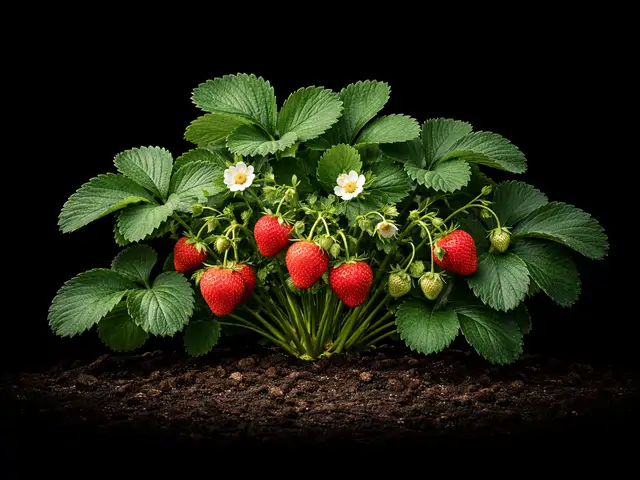
The first fruit most gardens grow: a low, spreading perennial that hands you sweet berries a store can't match, and multiplies itself for free by runners.
Safety notes The fruit and leaves are safe; rare individuals have a strawberry allergy. The leaves make a mild, caffeine-free tea - use them fresh or fully dried, never wilted.
Overview
Strawberries are the gateway fruit - small, fast, forgiving, and grown in beds, borders, barrels, and hanging baskets across nearly every zone. A vine-ripened garden strawberry is a different food from the pale, hollow shipping berry, and a handful of plants that cost a few dollars will, through runners, fill a bed within two years and keep replacing themselves for free.
The one thing to knowThe one decision that shapes everything is type.
Quick facts
- Sprouts in
- 21 daysRange: 14–42 days
- Height
- 10 inRange: 6–12 in
- Spread
- 18 inRange: 12–24 in
- Cold
- Takes light frostdamaged below 15°F
- Heat
- Struggles above 85°F
- Life cycle
- Perennial, lives about 4 years
- Soil
- Well-drained
- Water
- Medium
- Plant spacing
- 15 inRange: 12–24 in
When to plant
Nothing is open today. Spring transplanting opens 5 months, Mar 13 to Apr 24.
- Transplant Mar 13 – Apr 24 Opens in 145 daysAbout 4 weeks before to 2 weeks after your last frost (Apr 10 here)
Frost here: last around Apr 10 (Mar 27 to Apr 24 most years), first around Oct 25. Zone averages, your own yard may run a week or two either way.
Life stages
Establish, grow, repeat
Getting established and returning each season are different parts of the story.
Stage 1 of 5 · Getting established
Getting rooted (planting year)
Day 0 to 45 after transplanting
Care at this stage
-
Set the crown at exactly soil level
The crown is the thick point where leaves meet roots. Bury it and it rots; expose the roots and it dries out. Half in, half out is the target.
-
Keep the bed evenly moist for the first month
New transplants have tiny root systems; water so the top few inches never dry out while they establish.
-
Check whether yours is June-bearing or day-neutral before you pinch
The first-year blossom rule splits by type, and the two versions are opposites. June-bearers: snap off every flower stalk the whole first season. Day-neutrals and everbearers: pinch only for the first 4-6 weeks after planting, then let them fruit. Applying the June-bearer rule to a day-neutral throws away the first-season crop you bought it for - check the tag, then set the variety on this planting so only the right task appears.
-
Pinch off every flower the first year (June-bearers)
june-bearing only
Except day-neutral / everbearing
On June-bearers, snap off all flower stalks the whole first season - it feels wrong, but it forces the plant to build roots and runners for a big crop next June. Do NOT apply this to a day-neutral or everbearer.
-
Pinch flowers only the first 4-6 weeks (day-neutrals & everbearers)
day-neutral / everbearing only
Except june-bearing
Day-neutral and everbearing types get a short version of the rule: pinch blossoms for the first 4-6 weeks after planting so roots establish, then let them fruit the rest of the season.
Months are typical seasonal windows; climate, variety, and plant age can shift them.
Harvest
- Fully red across the whole berry, including the shoulders under the cap
- Glossy, plump, and fragrant
- Detaches with a gentle pinch of the stem
- Pick fully red berries every 2-3 days
- Remove any rotting or overripe fruit as you go · every 3 days
- Renovate June-bearing beds right after harvest
Per plant 20 to 120 berries, 8 to 32 ozPicking pick as they ripen
Cook with strawberries
Watch out for
8 to know. 4 are high-risk: Spotted Wing Drosophila, Gray Mold (Botrytis), Birds & Wildlife, Verticillium Wilt (Strawberry). 2 are active in October.
Spotted Wing DrosophilaSeverity High PestnowSeason: Jun–OctSoft, sunken, weeping fruit that collapses under light pressure, and tiny egg-laying scars on otherwise perfect ripening berries.
Strawberries ripen low and close together, so one infested berry sits against several sound ones. Pick every two or three days, and bag or freeze culls rather than leaving them lying in the row.
Soft, sunken, weeping fruit that collapses under light pressure, and tiny egg-laying scars on otherwise perfect ripening berries. To confirm, crush or float suspect fruit in salt water (1-2 teaspoons per cup) and look for small white maggots floating out. In an apple-cider-vinegar or yeast-sugar trap, the males carry a distinct dark spot at each wingtip.
There is no rescue for infested fruit. Control is relentless sanitation plus trap-based monitoring to time any spray: bag or freeze culls rather than leaving them, never drop them on the ground, and use vinegar or yeast-sugar traps to tell you when the flies have arrived. Well-timed targeted sprays such as spinosad are used where pressure is high - use only a product labeled for the crop you are treating, follow the label exactly, and observe its pre-harvest interval.
Pick short and often - every two or three days through the ripening window - and remove ALL overripe and dropped fruit, because culls left on the plant or the ground breed the next generation. Cool the harvest to about 35°F promptly, which stops larvae developing in fruit you have already picked. Fine mesh under 1 mm excludes the fly where pressure is high.
An invasive vinegar fly (Drosophila suzukii). Unlike ordinary fruit flies, which need damaged or overripe fruit, the female has a saw-edged ovipositor that cuts into sound, intact, ripening fruit to lay her eggs. The larvae feed inside, so the fruit softens, sinks, weeps and collapses just as you were about to pick it. It has become the dominant pest of soft fruit across the country, and the old rule that fruit flies only bother spoiled fruit no longer applies.
Gray Mold (Botrytis)Severity High DiseaseSeason: Apr–JulBrowned, collapsed flowers and buds; soft, water-soaked brown patches on leaves, stems or fruit; and a dusty gray-brown fuzz over the dead tissue.
This is the main reason strawberries rot. Straw mulch under the fruit keeps berries off wet soil, drip irrigation keeps the canopy dry, and renovating June-bearers after harvest opens the crowns back up. Clear every soft berry at each picking, because one left behind infects the fruit touching it.
Browned, collapsed flowers and buds; soft, water-soaked brown patches on leaves, stems or fruit; and a dusty gray-brown fuzz over the dead tissue. Rot jumping between two pieces of fruit or two petals that touch is the signature, and it often shows up again in the fridge or the storage box days later.
Cut out and destroy infected tissue as soon as it appears, and bag it rather than composting it. Harvest ahead of a prolonged wet spell and store the crop dry and cold. Protective fungicides help through long damp weather, but airflow and sanitation do most of the work.
Space and prune for airflow, water at the base rather than over the top, and go easy on nitrogen, which produces the soft growth it prefers. Clear dead leaves, spent flowers and rotting fruit at every pass, since that debris is where it overwinters. Handle fruit, buds and bulbs gently, because it enters through bruises, and cure and store anything you keep dry and well ventilated.
Botrytis cinerea and its relatives - the fuzzy gray-brown mold of cool, wet, humid weather. It blights flowers and buds, rots ripening fruit, and moves into soft, aging, bruised or frost-damaged tissue through the smallest wound, coating whatever it kills in dusty gray spores. It overwinters on dead plant debris, spreads on air currents and by direct contact between touching tissue, and keeps working after harvest, which is why it also ruins fruit and bulbs in storage.
Birds & WildlifeSeverity High WildlifeSeason: May–AugFruit disappearing from the outermost, most exposed parts of the plant first, and from the top of a tree where you cannot reach anyway.
Robins, waxwings, and starlings can strip a small bed in a day. Net over hoops so the netting does not touch the fruit, secure the edges to the ground, and do it before the berries color - once birds learn the buffet, deterrents lose their effect.
Fruit disappearing from the outermost, most exposed parts of the plant first, and from the top of a tree where you cannot reach anyway. Single neat pecks and gouges in ripening fruit, with several fruits sampled rather than one eaten through - the classic sign that it was birds rather than an animal. Heads of grain or seed going visibly lighter and emptier as they ripen, with hulls and chaff scattered underneath. Freshly sown seed vanishing off the surface of a bed before it germinates. Bird traffic in and out of the plant picking up as the crop colors, and birds waiting on nearby wires and branches. Wasps arriving at the pecked and split fruit shortly afterward.
There is no treatment once a crop is being taken - only protection and timing, so the answer is to get netting on and to pick what is ready. Reflective tape, flash ribbon, spinners, and decoy predators do work, but only for a few days at a time: birds habituate fast, so move and rotate them and never rely on them as the main defense for a crop you care about. Cut and gather grain or seed heads a little early, at firm dough, and finish drying them under cover instead of leaving them standing for the flocks. Plant a little extra, or a decoy crop the birds prefer, and accept sharing anything that crops heavily. On a wild or foraged patch, fruit going to birds and small mammals is the point of the plant rather than a problem to solve.
Net, and net early. Bird netting draped over a frame or hoops so it stands off the fruit, with the edges closed at ground level, is the only thing that reliably works at harvest scale - and it has to go on before the crop starts to color, because once birds have found the food they are far harder to displace. Keep fruit trees small enough that netting them is actually feasible; that decision gets made years earlier, at planting. Bags of mesh, organza, or paper slipped over individual heads, clusters, or prize fruit protect a small crop without netting the whole plant. Then shorten the exposure: pick promptly and completely rather than leaving ripe fruit hanging as a lure, clear split and dropped fruit that draws birds and wasps alike, and where a crop can finish off the plant, harvest a little early and ripen or dry it under cover. Rake in or cover broadcast seed so it is not lying in plain view.
Birds find ripening fruit and seed before you do. Robins, waxwings, starlings, catbirds, jays, sparrows, finches, blackbirds, and doves all work a garden, and the pressure arrives in a narrow window - the last days before harvest, when sugar rises, color changes, and the crop softens or the grain hardens. A flock can strip a small planting in a day or two, and birds that only peck rather than take whole fruit still leave wounds that rot or draw wasps. Squirrels, chipmunks, and other wildlife usually turn up on the same crop at the same time. This is competition rather than disease: the birds are not harming the plant, and a big tree or a heavy-cropping bush often has enough for everyone - but on a small planting it can be the difference between a harvest and none.
Verticillium Wilt (Strawberry)Severity High DiseaseSeason: May–JulOuter leaves flattening and browning from the edges in, wilting worst on hot afternoons, plants stunted or dying in the first bearing year.
Outer leaves flattening and browning from the edges in, wilting worst on hot afternoons, plants stunted or dying in the first bearing year.
None once infected - remove and destroy affected plants and don't replant strawberries or nightshades in that soil. Move the patch to clean ground and rely on resistant cultivars.
Plant certified disease-free stock in ground that hasn't grown strawberries, tomatoes, potatoes, peppers or eggplant for several years; choose resistant varieties; ensure good drainage.
A soil-borne fungus (Verticillium dahliae) that plugs the plant's water vessels; older outer leaves wilt, dry brown at the margins, and collapse while the center hangs on, often killing plants their first summer. It shares the pathogen with tomatoes, potatoes and peppers.
Slugs & SnailsSeverity Medium PestnowSeason: Apr, May, Jun, Sep, OctIrregular ragged holes chewed out of the middle of leaves and along the edges - not the clean-edged cuts a caterpillar leaves.
They rasp holes in ripe berries where the fruit touches the ground, and shelter under the leaf canopy by day. Straw-mulching to lift the fruit clear of wet soil is the single most useful step, along with keeping the bed open for airflow.
Irregular ragged holes chewed out of the middle of leaves and along the edges - not the clean-edged cuts a caterpillar leaves. Seedlings that vanish overnight, or that are cut off at soil level with nothing left behind. Silvery dried slime trails across leaves, soil, pots, and paving in the morning: this is the giveaway that tells you it was mollusks rather than an insect. Chewed pits in ripe fruit, especially where it rests on the ground. Damage that shows up on the lowest, dampest leaves first and gets worse after rain or evening watering. Turn over a board, an upturned pot, or a clump of dense mulch during the day and look for the animals themselves sheltering in the cool underneath.
Hand-picking works and costs nothing: go out an hour after dark with a headlamp, drop what you find into soapy water, and repeat nightly for a week or two - persistence is what wins, not any single product. Shallow beer traps sunk to soil level catch them too, but need emptying and refilling daily to be worth anything. Iron-phosphate bait is the standard control and is far lower-risk around pets and wildlife than the old metaldehyde products, but it is not harmless: many formulations include EDTA, and a dog that eats a quantity of pellets can develop iron toxicosis. Scatter it thinly per the label, never in piles, and keep dogs off a baited bed. Clear fallen foliage and debris in autumn, where the eggs are laid. In a wet climate this is a population you manage each season rather than one you eradicate - and on most established plants light grazing is cosmetic and needs nothing at all.
Take away the daytime shelter first: lift boards and upturned pots, clear piles of debris, keep dense mulch pulled back from crowns and stems, and give crowded plantings enough airflow to dry out. Water in the morning rather than the evening so the surface is dry by the time they come out. Copper tape around containers and raised beds gives them a shock they will not cross, and it is the one barrier that reliably works. Get plants past the vulnerable stage quickly - start seedlings in pots and set them out at a decent size rather than direct-sowing into a cold wet bed, since most plants stop being worth defending once the leaves toughen. Leave the ground beetles, frogs, toads, and ground-feeding birds alone, because they eat mollusks all night for free and broad-spectrum slug pellets kill them too. Where thick-leaved or resistant varieties exist for what you are growing, they take far less damage.
Slugs and snails are nocturnal mollusks that rasp ragged holes in soft leaves, shear off seedlings at ground level, and chew into ripe fruit that touches the soil. They feed at night and in the early morning and spend the day hidden under boards, pots, dense mulch, leaf litter, and low foliage, becoming active in exactly the cool, damp, shaded conditions that suit young plants. Damage is heaviest in wet spells and on tender spring growth: a single wet week can erase a row of seedlings while an established, tough-leaved plant of the same species is barely marked. They lay clusters of small pearly eggs in damp soil and under debris, so a garden with plenty of cover carries a resident population year after year rather than being invaded from outside.
Tarnished Plant Bug (Lygus)Severity Medium PestSeason: Apr–JunBerries that are hard, seedy, and knobby or shrunken at the tip; small pale-green nymphs in the blossoms when tapped over a white surface.
Berries that are hard, seedy, and knobby or shrunken at the tip; small pale-green nymphs in the blossoms when tapped over a white surface.
Row cover during bloom is the cleanest fix; where damage is heavy, targeted insecticide at early bloom, timed to protect pollinators, reduces the next generation.
Control broadleaf weeds nearby that host lygus, encourage beneficial insects (big-eyed bugs, minute pirate bugs), and avoid planting next to alfalfa or weedy field edges.
A small mottled brown true bug whose nymphs and adults feed on developing flowers and seeds, killing seed cells so the berry can't swell evenly - the classic cause of 'catfaced' (button-tipped, misshapen) fruit.
Powdery MildewSeverity Medium DiseaseSeason: May–AugRound white powdery spots on the upper leaf surfaces that spread and merge until whole leaves look dusted.
On strawberries the fungus also curls the leaf edges upward to show purplish blotches beneath, and it can russet and crack the berries, so it costs fruit quality rather than just looks. Airflow from proper spacing and post-harvest renovation, plus resistant varieties, are the real controls - and note it thrives in humid but not necessarily wet conditions.
Round white powdery spots on the upper leaf surfaces that spread and merge until whole leaves look dusted. It usually starts on the oldest, lowest, most shaded leaves and works upward, so check there first. Look at the undersides too, and at stems, buds, and flower stalks, which get coated as it advances. Leaves that yellow, brown, curl, or go crisp and drop early under the coating. New growth that opens small, crumpled, or twisted where the fungus has reached the shoot tips. On plants where it gets onto the fruit, a dull gray film, russeted or scarred skin, and cracking. Late in the season, tiny dark specks scattered through the white felt - that is the fungus setting up to overwinter on the debris.
Start early: sprays protect healthy tissue, they do not clean up leaves that are already coated. Pick off and bin the worst leaves as soon as you see them, and open the plant up by thinning or pruning so air moves through. On anything that regrows quickly, shearing the whole plant back forces a clean flush and beats spraying. If it keeps spreading, potassium bicarbonate, horticultural oil, or neem applied weekly will hold it - cover both leaf surfaces. Sulfur also works, but it burns the foliage of some plants, should never go on in heat, and must not be mixed with or applied close behind an oil spray. Whatever you use must be labeled for the plant you are treating: follow that label and observe its pre-harvest interval on anything you eat. Do not compost badly infected material. Late-season mildew on a plant that is finishing anyway is usually cosmetic; on a crop still filling out it is worth acting on.
Give plants room. Crowding and still air are the biggest single driver, so space at the full recommended distance, thin seedlings properly, and divide or prune out congested growth until air moves through the plant. Full sun and an open position help; deep shade and a still corner against a wall are where it always starts. Water at the base rather than overhead, and water early in the day so nothing stays damp overnight. Keep plants evenly watered - drought stress at the roots leaves them far more susceptible, even though the fungus itself likes dry air. Go easy on nitrogen, since soft lush growth is the most vulnerable. Where resistant varieties exist for what you are growing, choosing one is the single most effective thing you can do on a plant that mildews every year. Clear infected leaves and stems away at the end of the season rather than composting them.
Powdery mildew is a fungal disease that coats leaves - and often stems, buds, and fruit - in a white-to-gray powder that looks like spilled talcum. It is not one fungus but a large family of them, each fairly specialised to its own group of plants, which is why mildew on one crop rarely jumps to an unrelated one beside it. Unlike most leaf diseases it does not need wet leaves: it thrives on warm dry days followed by humid nights, and it takes hold fastest where plants stand crowded in still air or in shade. The coating blocks light, so heavily covered leaves yellow, brown, and drop early. On many plants that is mostly disfiguring and arrives late enough not to matter; where it strips away the leaves a crop still needed to finish, it costs you size, sweetness, and quality.
1 more, low risk
Leaf SpotSeverity Low DiseaseSeason: May–AugNumerous small round spots with purple margins and pale centers scattered over the leaves, worst in warm wet weather.
Numerous small round spots with purple margins and pale centers scattered over the leaves, worst in warm wet weather.
Mow off and remove old foliage at renovation to reset; it seldom needs spraying in the home garden. Keep the bed open and dry to slow it.
Renovate June-bearers to remove old infected leaves, space for airflow, water at the base, and grow resistant varieties.
Common fungal leaf spots (Mycosphaerella and relatives) that pepper the foliage with small dark-purple spots that develop tan or white centers; mostly cosmetic on the leaves but heavy infection weakens the plant.
Good & bad neighbors
Plant nearby
-
Traditionally interplanted to draw pollinators to strawberry blossoms and reputedly improve vigor; the pollinator benefit is real, the rest anecdotal.
-
French marigolds suppress root-knot nematodes in the soil and draw beneficial insects; a genuinely useful border plant.
- Traditional pairings, thin evidence
-
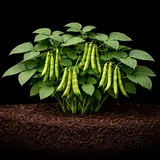
Legumes fix a little nitrogen and share bed space without competing heavily; a traditional, lightly-evidenced pairing.
-
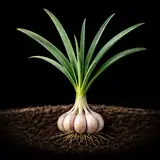
Allium scent is credited with deterring some pests; some growers report fewer spider mites. Evidence is anecdotal.
-
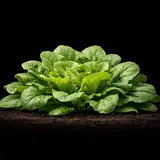
Fast, shallow lettuce fills space between young strawberries and shares moisture needs; harvested before the bed fills in.
-
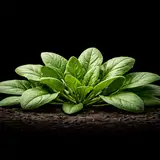
A cool-season interplant that uses the bed before strawberries spread; similar water and light needs.
Keep apart
-
Another verticillium host - shared soil-borne wilt makes it a poor neighbor and a bad rotation predecessor for strawberries.
-
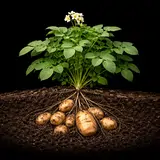
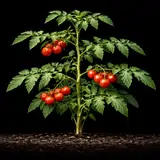
Nightshades share verticillium wilt with strawberries and can pass it through the soil; don't plant strawberries where tomatoes, peppers, or potatoes grew recently.
-
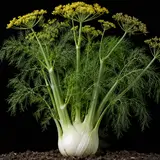
Fennel's root exudates inhibit many garden plants; give it its own corner.
- Traditional pairings, thin evidence
-
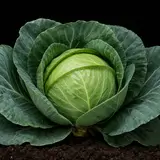
Brassicas are heavy feeders that compete with shallow-rooted strawberries and are traditionally kept apart.
Varieties · 21
You pick one when you add Strawberry to your garden. Its days to maturity set your harvest window.
June-bearing 14 varieties
Earliglow
The benchmark early June-bearer and a frequent winner of flavor trials - considered among the sweetest early berries.
Variety details for Earliglow
Medium, firm, glossy bright-red berries with a classic conical shape.
earlyclassic-flavorResists Red Stele, Verticillium Wilt
Medium fruit and moderate yields, but the taste and its strong disease resistance make it a dependable Northern favorite.
Honeoye
A hugely productive early June-bearer from Cornell (1970s) and one of the most widely planted home varieties: large, firm, bright berries in heavy volume.
Variety details for Honeoye
Large, glossy, bright-red berries, firm and uniform.
earlyhigh-yieldResists Red Stele
Flavor is good rather than exceptional and sharpens if the plant is stressed - reliable and forgiving.
Jewel
A premium midseason June-bearer prized for large, firm, sweet berries and excellent fresh flavor - a market and home favorite across the Northeast.
Variety details for Jewel
Large, glossy, firm berries with an attractive wedge shape.
midseasonhigh-yieldResists Red Stele, Leaf Spot
Somewhat susceptible to root disease in wet soils, so give it good drainage.
Everbearing 2 varieties
Fort Laramie
A very cold-hardy everbearer bred for the northern plains, giving a summer and a fall flush of large, sweet, aromatic berries.
Variety details for Fort Laramie
Large, bright-red, glossy berries with a classic heart shape.
cold-hardyResists Leaf Spot, Powdery Mildew
Tough and adaptable where winters are harsh.
Ogallala
A rugged everbearer (a wild-strawberry cross) built for the plains: vigorous, cold-hardy, and unusually drought-tolerant, with sweet medium berries over a long season.
Variety details for Ogallala
Medium, deep-red, sweet and juicy berries.
cold-hardydrought-tolerantAdaptable to tough sites.
Day-neutral 5 varieties
Albion
One of the best day-neutrals for the home garden: large, firm, conical berries with excellent sweet flavor produced steadily from summer to frost.
Variety details for Albion
Large, symmetrical, firm, deep-red conical berries.
everbearinglong-harvestResists Verticillium Wilt, Phytophthora Crown Rot, Anthracnose
Strong disease resistance and long shelf life make it a top all-around pick for a season-long supply.
Seascape
A widely adapted California day-neutral that fruits reliably across many climates, including in containers.
Variety details for Seascape
Large, firm, glossy bright-red berries.
everbearingcontainer-friendlyResists Verticillium Wilt, Root Rot
Large, sweet, aromatic berries in repeated flushes from early summer through fall - one of the easiest day-neutrals to succeed with.
Monterey
A high-yielding California day-neutral with slightly sweeter, more aromatic fruit than Albion and a long, heavy cropping season.
Variety details for Monterey
Large, firm berries with a bright, glossy red finish.
everbearinghigh-yieldResists Powdery Mildew
Vigorous and productive; excellent for warm-summer regions.
Grower tips
Notes from growers, tagged with the zone they grow in. A person reads every post before it appears.
Nobody has posted about Strawberry yet. The first one usually saves someone a season.
Free account. Your post shows your grower name and zone, never your email.