
Add it to your home screen and it opens full screen: no browser bars, one tap away, and everything stays signed in. Free, nothing to download from an app store.
- Tap the Share button in your browser
- Scroll down and choose “Add to Home Screen”
- Open GrowSomeFood from your home screen
- Open your browser’s menu
- Choose “Add to Home screen” or “Install app”
- Open GrowSomeFood from your home screen

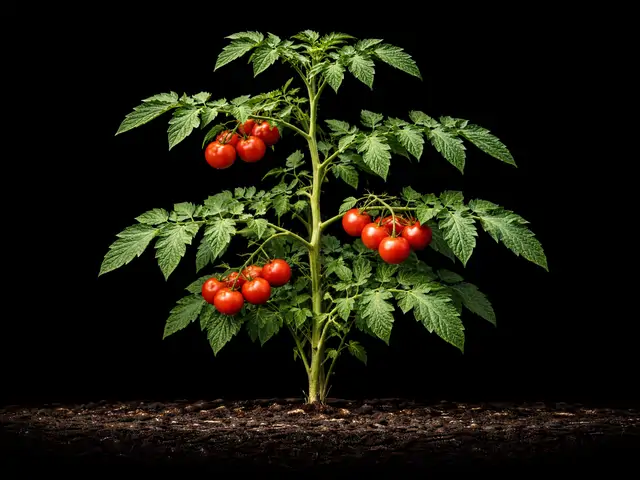
Tomato
The backyard classic: a frost-tender vining perennial grown as an annual for its fruit, rewarding steady care with months of harvest.
Safety notes Only the fruit is edible. Leaves and stems contain solanine-family alkaloids and should not be eaten in quantity.
Overview
Tomatoes are the most-grown crop in home gardens for good reason: no store tomato matches one ripened on the vine. Botanically a tender perennial vine from western South America, the tomato is grown as a warm-season annual almost everywhere. Give it full sun, steady moisture, something to climb, and a long frost-free stretch, and a handful of plants will feed a household from midsummer to frost.
The one thing to knowKnow whether your variety is determinate (one flush, no pruning) or indeterminate (vines all season, prune and stake).
Quick facts
- Sprouts in
- 7 daysRange: 5–14 days
- Soil temperature
- 78 °FRange: 60–95 °F
- Start indoors
- 6 weeks before transplantRange: 5–8 weeks
- Height
- 5 ftRange: 3–8 ft
- Spread
- 24 inRange: 18–36 in
- Support
- Grows better on a trellis or stake
- Cold
- Killed by frostdamaged below 32°F
- Heat
- Struggles above 95°F
- Life cycle
- Grown as an annualBotanically a perennial
- Save seeds
- About 80 days after plantingRange: 70–100 days
- Self-sows
- Yes, expect volunteers
- Soil
- Well-drained
- Water
- Medium
- Plant spacing
- 24 inRange: 18–36 in
When to plant
Nothing is open today. Spring indoor sowing opens 4 months, Feb 13 to Mar 6.
- Start indoors Feb 13 – Mar 6 Opens in 117 daysAbout 8 weeks before to 5 weeks before your last frost (Apr 10 here)
- Transplant Apr 17 – May 8 Opens in 180 daysAbout 7 days after to 4 weeks after your last frost (Apr 10 here)
Frost here: last around Apr 10 (Mar 27 to Apr 24 most years), first around Oct 25. Zone averages, your own yard may run a week or two either way.
Life stages
From the first start to harvest
Follow the growing sequence. Choose a stage to see its care and signs to watch for.
Stage 1 of 6 · The growing sequence
Germination
Day 0 to 8 from sowing
Care at this stage
-
Keep seed mix evenly moist
Surface should never dry out fully; bottom-water or mist to avoid dislodging seeds.
-
Hold 70-85°F for germination
A heat mat speeds germination noticeably; remove it once sprouts appear.
Stages can overlap; weather, variety, and growing conditions change the pace.
Harvest
- Full, even color for the variety
- Slight give under gentle pressure
- Fruit releases easily from the stem
- Pick when fully colored with slight give · every 3 days
- Top indeterminates 4 weeks before first frost
Per plant 20 to 90 fruits, 8 to 30 lbPicking pick as they ripen
Cook with tomatoes
Watch out for
8 to know. 3 are high-risk: Early Blight, Tomato Hornworm, Late Blight. None are active in October.
Early BlightSeverity High DiseaseSeason: Jun–SepBulls-eye-patterned brown spots on lower leaves, yellowing around the spots, and leaf drop moving upward; dark sunken spots on tubers.
Bulls-eye-patterned brown spots on lower leaves, yellowing around the spots, and leaf drop moving upward; dark sunken spots on tubers.
Remove and trash (never compost) affected leaves at first sight; copper or biological fungicides slow the spread through the canopy.
Mulch to stop soil splash, water at the base, rotate out of nightshade beds for 2-3 years, and keep plants well-fed (stressed plants suffer worse).
Fungal disease (Alternaria) causing brown spots with concentric target rings, starting on the lowest leaves and climbing - the same nightshade disease that hits tomatoes and potatoes.
Tomato HornwormSeverity High PestSeason: Jun–SepStripped stems and missing leaves, dark pellet droppings on leaves below, and the large green caterpillar camouflaged along stems.
Stripped stems and missing leaves, dark pellet droppings on leaves below, and the large green caterpillar camouflaged along stems.
Hand-pick at dusk (they glow under UV flashlight). Leave any wearing white rice-grain cocoons - those carry parasitic wasps that will kill the next generation. Bt works on small larvae.
Till beds in fall to destroy overwintering pupae; interplant strongly scented herbs; encourage parasitic wasps.
Huge green caterpillar (to 4 inches) with a rear horn - the larva of the five-spotted hawk moth. As a nightshade, tomatillos are a host, and a hornworm can defoliate a plant quickly.
Late BlightSeverity High DiseaseSeason: Jul–SepLarge greasy-looking dark patches on leaves and stems, white fuzz under leaves in humidity, and firm brown-to-purplish rot on tubers.
Pull volunteer tomato seedlings from last year's dropped fruit - they carry blight and other diseases over from the old crop, and they are not the variety you planted.
Large greasy-looking dark patches on leaves and stems, white fuzz under leaves in humidity, and firm brown-to-purplish rot on tubers.
There is no cure - remove and bag whole infected plants immediately to protect neighbors, and cut down foliage before digging so spores don't reach the tubers. It spreads on wind for miles.
Plant certified clean seed and resistant varieties; give maximum airflow; keep foliage dry; destroy volunteer potatoes and cull piles that harbor it over winter.
The Irish-famine pathogen (Phytophthora): greasy gray-green lesions that can collapse a planting in under a week of cool, wet weather.
Blossom End RotSeverity Medium DisorderSeason: Jun–AugDry, sunken, tan or dark patches on the blossom end of developing peppers, often on the first fruits or during heat and drought.
Dry, sunken, tan or dark patches on the blossom end of developing peppers, often on the first fruits or during heat and drought.
Remove affected fruit and fix the watering rhythm - subsequent fruit will be clean. Calcium sprays are largely cosmetic theater.
Even, consistent watering plus mulch to buffer swings; the soil almost always has enough calcium, so delivery, not supply, is the problem.
Not a disease: a calcium-delivery failure caused by uneven soil moisture, appearing as a sunken tan-to-black leathery patch on the fruit's bottom.
Fusarium WiltSeverity Medium DiseaseSeason: Jun–AugWilting, yellowing, and browning of plants (often in patches), stunting, and death, worse where flax has grown before ('flax sick' ground).
Wilting, yellowing, and browning of plants (often in patches), stunting, and death, worse where flax has grown before ('flax sick' ground).
No cure for infected plants - remove them, and rotate away from flax for several years; resistant varieties and rotation are the real controls.
Grow resistant varieties; rotate away from okra (and related mallows) for several years; ensure good drainage; control root-knot nematodes, which open the door to wilt.
A soil-borne fungus (Fusarium oxysporum f. lini) that infects flax roots and clogs the water-conducting tissue, causing wilting, yellowing, stunting, and death, and persisting in the soil for years - the classic 'flax sick' soil problem.
Leaf Spot (Septoria)Severity Medium DiseaseSeason: Jun–SepNumerous small brown-to-tan spots, sometimes with darker margins, spreading on the foliage after wet spells.
Numerous small brown-to-tan spots, sometimes with darker margins, spreading on the foliage after wet spells.
Remove and trash affected leaves promptly; improve airflow; copper can protect new growth if pressure is high.
Space for airflow, water at the base, use disease-free seed, and rotate away from Apiaceae beds.
Fungal disease (Septoria petroselini) that spots parsley foliage with small tan-centered lesions in wet, humid weather, disfiguring the leaves.
Verticillium WiltSeverity Medium DiseaseSeason: Jun–SepOne branch, one limb or one side of a plant wilting, yellowing and browning in summer while the rest carries on normally - the lopsided pattern is the tell - and leaves that wilt and then hang on rather than dropping cleanly.
This is the V in a VFN-resistant tomato variety, and choosing one is the simplest control there is. Verticillium is the cool-soil counterpart to fusarium wilt and produces the same vessel-clogging pattern; the V-shaped yellow lesions on the lower leaves are the tell.
One branch, one limb or one side of a plant wilting, yellowing and browning in summer while the rest carries on normally - the lopsided pattern is the tell - and leaves that wilt and then hang on rather than dropping cleanly. Cut into affected wood and look for olive-green, grey or brown streaking along the grain; in a cut vegetable stem it shows as a ring of discolored dots. On vegetables, lower leaves yellow in a wedge from the margin inward, and the plant wilts at midday but recovers overnight in the early stages.
There is no cure and nothing to spray. On a tree or shrub the aim is to keep it alive long enough to compartmentalize the fungus, which many plants manage for years: prune out dead and wilting branches well below the discolored wood, sanitize the pruners between cuts, water deeply through dry spells, mulch, and feed lightly rather than pushing it with a heavy feed. On vegetables, pull and bin affected plants rather than composting them, and move that crop to clean ground or to containers of fresh mix. Do not replant the same species where one has died.
There is no way to sterilize garden soil of it, so prevention is plant choice and plant vigor. Do not replant a susceptible species where one has already died of it. Grasses, conifers, ginkgo, hawthorn, hornbeam, honeylocust, oak and beech do not get it, and many vegetable varieties carry bred-in resistance - the V in a VFN code on the seed packet. Rotate susceptible vegetables on a long cycle and keep them off ground where the disease has shown. Buy clean stock, avoid wounding roots with spades and machinery, and keep woody plants steadily watered, mulched and only lightly fed, because a vigorous plant walls the fungus off far better than a stressed one.
A soil fungus (Verticillium dahliae and relatives) that enters through the roots and grows upward inside the water-conducting tissue, plugging it from within. The plant is not being eaten or rotted, it is being cut off from its own water supply, which is why the signature symptom is one branch or one side wilting and browning while the rest looks perfectly healthy. Cut into affected wood or stem and the tissue is streaked olive-green, grey or brown. The host range is enormous - maples, redbud, olive, tomato, potato, pepper, eggplant, strawberry and many more - and the fungus survives in soil for years as tough resting structures, so infected ground stays infected. Grasses and conifers do not get it.
1 more, low risk
AphidsSeverity Low PestSeason: Apr–SepDense clusters of tiny insects packed onto shoot tips, flower buds, and the undersides of young leaves.
Dense clusters of tiny insects packed onto shoot tips, flower buds, and the undersides of young leaves. Curled, cupped, or distorted new growth that never opens properly. A sticky shine on the leaves - and on whatever sits under the plant - that later goes black with sooty mold. Tiny white cast skins left behind where a colony has been feeding. Ants running steadily up and down the stems, which is often the first thing you notice. Mottled, streaked, or misshapen leaves that do not grow out can mean a virus the aphids brought with them rather than the feeding itself.
Knock the colonies off with a hard jet of water and repeat every few days - on most plants that alone ends it. Pinch out or prune off the worst-infested tips rather than treating the whole plant. If colonies keep rebuilding, spray insecticidal soap or horticultural oil directly onto the insects, covering leaf undersides, and repeat weekly until they are gone; treat early or late in the day, and never spray a wilted or heat-stressed plant. Avoid broad-spectrum insecticides - they kill the ladybugs, lacewings, and parasitic wasps that were about to solve the problem for you, and aphid numbers usually come back worse afterward. Anything you spray must be labeled for the plant you are treating; follow that label and observe its pre-harvest interval. On anything you eat, wash leaves, heads, and buds well before use, since aphids hide down in crowns, folds, and tight growth.
Go easy on nitrogen: the soft, lush growth that heavy feeding produces is exactly what aphids breed on. Check new growth once a week through spring and early summer so you catch colonies while they are still small, and rub the first few out with your fingers. Leave flowering plants nearby and skip broad-spectrum sprays - ladybugs, lacewings, hoverflies, and parasitic wasps do most of this work for free, and they only stay if there is something for them to eat. Keep ants off the plant where you can, since they protect aphids from those predators. Water steadily so plants are not stressed, and check any new plant over before you bring it home or move it indoors, since aphids usually arrive on something else.
Aphids are small soft-bodied sap-suckers - green, black, gray, pink, or waxy white, and mostly wingless - that gather in dense colonies on the tenderest new growth: shoot tips, buds, and the undersides of young leaves. They breed extremely fast in mild weather, so a few can become hundreds inside a week. Their feeding curls and distorts soft growth, and the sticky honeydew they excrete coats everything below and turns black with sooty mold. Ants often farm and defend the colonies for that honeydew. A few aphids are normal on almost any plant and a healthy plant shrugs them off; only dense, persistent colonies do real damage, and some aphids also spread plant viruses as they feed.
Good & bad neighbors
First rule: keep Potato apart. Same family, same diseases: early and late blight move freely between them.
Plant nearby
-
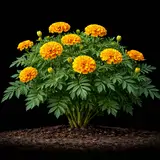
French marigolds demonstrably suppress root-knot nematodes; general pest-repellent claims are softer.
-
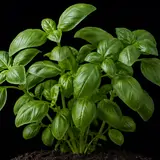
Classic pairing; some evidence basil's scent confuses hornworm moths, and the kitchen logic is undeniable.
-
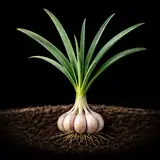
Allium scent may mask the crop from pests; no competition for space or nutrients.
-
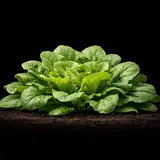
Lettuce thrives in the summer shade cast by tomato vines - a real microclimate benefit.
- Traditional pairings, thin evidence
-
Traditional space-sharing pair - carrots use the soil layer tomatoes ignore.

Keep apart
-
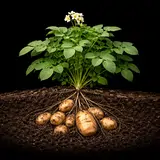
Same family, same diseases: early and late blight move freely between them. Keep them apart.
-
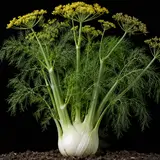
Fennel roots exude growth-inhibiting compounds that stunt most vegetables, tomatoes included.
-
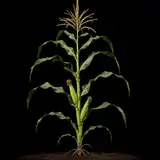
Corn earworm and tomato fruitworm are the same insect - adjacent plantings feed the shared pest.
- Traditional pairings, thin evidence
-
Traditional advice; both are heavy feeders and brassicas may mildly inhibit tomato growth.
Varieties · 6
You pick one when you add Tomato to your garden. Its days to maturity set your harvest window.
Cherry 1 variety
Sun Gold
The cherry tomato people plant once and never skip again: intensely sweet tangerine-orange fruit in long trusses, first to ripen and still producing at frost.
Variety details for Sun Gold
Bright orange cherry fruit in long clusters.
indeterminatehybridearlyProne to splitting after rain - pick often.
Slicer 2 varieties
Better Boy
The dependable workhorse hybrid: heavy yields of smooth 12-16 oz slicers with classic tomato flavor and a strong disease package.
Variety details for Better Boy
Smooth, deep red globe fruit, 12-16 oz.
indeterminatehybridResists Verticillium, Fusarium, Nematodes
A safe first tomato in almost any climate.
Celebrity
An All-America Selections winner that balances everything: tidy semi-determinate plants, 7-8 oz crack-resistant fruit, one of the best disease packages available, and reliable set in variable weather.
Variety details for Celebrity
Uniform red globe fruit, 7-8 oz.
determinatehybridResists Verticillium, Fusarium, Nematodes, Tobacco Mosaic Virus
Beefsteak 1 variety
Cherokee Purple
Pre-1890 Tennessee heirloom famous for rich, smoky-sweet flavor that tops taste trials.
Variety details for Cherokee Purple
Large flattened-globe fruit in dusky purple-pink with green shoulders.
indeterminateheirloomslicerDusky rose-purple fruit, 10-16 oz. Production is moderate and fruit cracks more readily than hybrids - the price of the flavor.
Paste 2 varieties
Roma
The standard paste tomato: compact determinate plants ripen a concentrated set of dense, low-moisture 2-3 oz fruit - exactly what sauce and canning batches want.
Variety details for Roma
Egg-shaped red fruit, 2-3 oz, thick walls with few seeds.
determinatecanningResists Verticillium, Fusarium
Little pruning needed.
San Marzano
The legendary Italian sauce tomato: longer and drier-fleshed than Roma with a bittersweet depth prized for authentic marinara.
Variety details for San Marzano
Long cylindrical red fruit, 4-6 inches, often with a pointed tip.
indeterminateheirloomcanningIndeterminate, so it needs support and yields over a long window.
Grower tips
Notes from growers, tagged with the zone they grow in. A person reads every post before it appears.
Nobody has posted about Tomato yet. The first one usually saves someone a season.
Free account. Your post shows your grower name and zone, never your email.