Add it to your home screen and it opens full screen: no browser bars, one tap away, and everything stays signed in. Free, nothing to download from an app store.
- Tap the Share button in your browser
- Scroll down and choose “Add to Home Screen”
- Open GrowSomeFood from your home screen
- Open your browser’s menu
- Choose “Add to Home screen” or “Install app”
- Open GrowSomeFood from your home screen
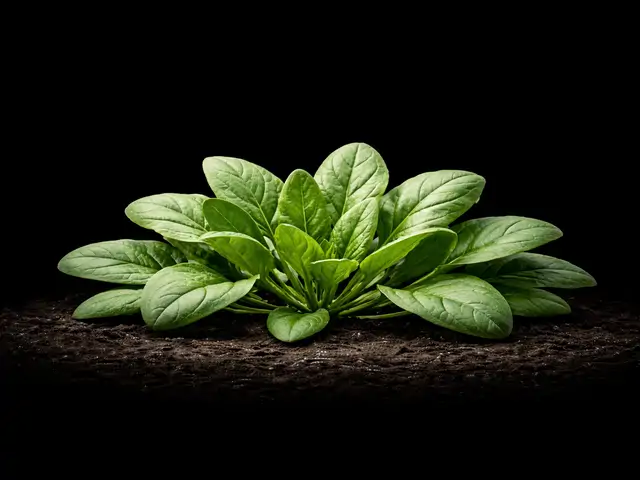
Spinach
Leaves are the food. Spinach is high in oxalates - people prone to kidney stones may want to moderate large raw servings; cooking reduces the oxalate somewhat. It is also very high in vitamin K: if you take warfarin or a similar blood thinner, keep your leafy-green intake steady rather than suddenly increasing it, and check with your prescriber.
Overview
A fast, cold-loving leafy green for spring and fall: sweet and tender in cool weather, quick to bolt in heat, and best sown in short successions.
Spinach is the cold-season salad green - it germinates in soil that would rot most seeds, sweetens in frost, and gives you tender, nutrient-dense leaves in about six weeks. It's also the crop most defined by what it hates: heat. Warm soil stops the seed from sprouting, and long, warm days trigger it to bolt (shoot up a flower stalk), after which the leaves turn bitter and the harvest is over. So spinach is a spring-and-fall crop, sown in short successions, that you race to grow before summer arrives.
The reward for that timing is real: garden spinach far outshines the bagged kind in flavor and freshness, and fall-grown spinach - kissed by frost - is the sweetest of all. It comes in savoy (crinkled), semi-savoy, and smooth-leaf types, and grows happily in beds, rows, or containers. In hot climates, gardeners lean on bolt-resistant varieties and heat-tolerant spinach substitutes for the summer gap.
At a glance
- Sun
- Full sun · Part shade
- Water
- Medium
- Spacing
- 3–6 in (typ. 4)
- Mature height
- 6–12 in (typ. 9)
- Start by
- Direct sow · Transplant
- Frost
- Hardy
- Germination
- 5–14 days (typ. 8) @ 35–70 °F (typ. 55)
- Start indoors
- 3–5 wks (typ. 4) before transplant
- Spread
- 6–12 in (typ. 8)
- Soil
- Consistently moist
- Temperature
- Damaged below 15°F · struggles above 75°F
- Seed ready
- 90–130 days (typ. 110) (for saving)
- Self-sows
- Yes — expect volunteers
When to plant
Zone 7a typical frost: last Apr 10 · first Oct 25 (spring frost runs Mar 27–Apr 24 in a typical spread of years)
Life stages
- Germination day 0–8 from sowing
-
Keep cool and moist - spinach hates warm soilevery 1 dSpinach germinates in cold soil (down to ~35°F) but poorly above 70°F. In late-summer sowings, chill the seed a week in the fridge or water the bed to cool it.
Poor germination in warm soil (heat dormancy, not dead seed)Soil crusting over the seedbed -
Keep cool and moist - spinach hates warm soilevery 1 d
- Seedling day 8–21 from sowing
-
Thin to 3-4 inches and eat the thinningsCrowded spinach makes small, bolt-prone plants. Thin to spacing; the pulled seedlings are baby spinach for the salad bowl.
-
Guard against slugs and leaf miners earlyevery 4 dSlugs shred seedlings overnight and leaf miners tunnel the leaves. Row cover from sowing and evening slug patrols keep both in check.
Slug damage (ragged holes, slime trails)Pale winding tunnels from leaf miner larvae -
Thin to 3-4 inches and eat the thinnings
- Leafing out day 21–42 from sowing
-
Keep soil consistently moistevery 3 dEven moisture keeps leaves tender and delays bolting; drought stress triggers a bolt and turns leaves bitter.
-
Feed nitrogen for fast leafy growthevery 21 dSpinach is all leaves - a light nitrogen feed (fish emulsion, compost tea) keeps growth quick and tender.
Aphids colonizing leaf undersides and crownsYellow angular patches (downy mildew) in cool damp weatherThe center starting to stretch upward (bolting begins) -
Keep soil consistently moistevery 3 d
- Harvest day 42–60 from sowing
-
Cut outer leaves every few daysevery 4 dCut-and-come-again: snip the outer leaves an inch above the crown once they hit 3-4 inches, and the center keeps producing for a few more pickings.
-
Cut the whole plant at the first sign of boltingOnce the center elongates into a stalk, the leaves turn bitter fast - harvest everything at once and resow.
Central stalk elongating (bolting - harvest now)Bitterness from heat or water stress -
Cut outer leaves every few daysevery 4 d
- Bolting (end of harvest) day 60–90 from sowing
-
Pull bolted plants - or leave one for seedBolted spinach is bitter and done. Compost it, or let your slowest-bolting plant flower and set seed to breed hardier spinach for your garden.
Tall flower stalk (fully bolted) -
Pull bolted plants - or leave one for seed
Harvest
- Style
- Cut and come again
- By weight
- 4–20 oz (typ. 10)
- Outer leaves 3-4 inches long (baby) to 6 inches (full)
- Deep green, crisp, and upright - before any central stalk appears
- At least 5-6 leaves per plant for a whole-plant cut
Watch out for
Downy Mildew (Spinach) High
The major spinach disease (Peronospora effusa): cool, damp-weather infection that produces pale-yellow angular patches on top of leaves with gray-violet fuzzy growth beneath, spreading fast and ruining the crop. Many races exist, which is why resistance packages keep updating.
Watch for: Yellow angular blotches bounded by leaf veins on the upper surface, with a downy gray-purple mold on the underside in morning humidity.
Prevent: Grow resistant varieties (Corvair, Space, Tyee, and others carry broad packages), space generously for airflow, water at the base in the morning, and rotate.
Treat: Remove affected leaves promptly, harvest ahead of a wet forecast, and improve airflow; copper can protect new growth under heavy pressure. Resistant varieties are the real defense.
Aphids Medium
Aphids are small soft-bodied sap-suckers - green, black, gray, pink, or waxy white, and mostly wingless - that gather in dense colonies on the tenderest new growth: shoot tips, buds, and the undersides of young leaves. They breed extremely fast in mild weather, so a few can become hundreds inside a week. Their feeding curls and distorts soft growth, and the sticky honeydew they excrete coats everything below and turns black with sooty mold. Ants often farm and defend the colonies for that honeydew. A few aphids are normal on almost any plant and a healthy plant shrugs them off; only dense, persistent colonies do real damage, and some aphids also spread plant viruses as they feed.
Watch for: Dense clusters of tiny insects packed onto shoot tips, flower buds, and the undersides of young leaves. Curled, cupped, or distorted new growth that never opens properly. A sticky shine on the leaves - and on whatever sits under the plant - that later goes black with sooty mold. Tiny white cast skins left behind where a colony has been feeding. Ants running steadily up and down the stems, which is often the first thing you notice. Mottled, streaked, or misshapen leaves that do not grow out can mean a virus the aphids brought with them rather than the feeding itself.
Prevent: Go easy on nitrogen: the soft, lush growth that heavy feeding produces is exactly what aphids breed on. Check new growth once a week through spring and early summer so you catch colonies while they are still small, and rub the first few out with your fingers. Leave flowering plants nearby and skip broad-spectrum sprays - ladybugs, lacewings, hoverflies, and parasitic wasps do most of this work for free, and they only stay if there is something for them to eat. Keep ants off the plant where you can, since they protect aphids from those predators. Water steadily so plants are not stressed, and check any new plant over before you bring it home or move it indoors, since aphids usually arrive on something else.
Treat: Knock the colonies off with a hard jet of water and repeat every few days - on most plants that alone ends it. Pinch out or prune off the worst-infested tips rather than treating the whole plant. If colonies keep rebuilding, spray insecticidal soap or horticultural oil directly onto the insects, covering leaf undersides, and repeat weekly until they are gone; treat early or late in the day, and never spray a wilted or heat-stressed plant. Avoid broad-spectrum insecticides - they kill the ladybugs, lacewings, and parasitic wasps that were about to solve the problem for you, and aphid numbers usually come back worse afterward. Anything you spray must be labeled for the plant you are treating; follow that label and observe its pre-harvest interval. On anything you eat, wash leaves, heads, and buds well before use, since aphids hide down in crowns, folds, and tight growth.
Colonies tuck deep into the crown and, on savoy types, into the crinkles - check there before eating, and soak or spray thoroughly to flush them out. Row cover from sowing is the easiest prevention on a leaf you eat raw.
Slugs & Snails Medium
Slugs and snails are nocturnal mollusks that rasp ragged holes in soft leaves, shear off seedlings at ground level, and chew into ripe fruit that touches the soil. They feed at night and in the early morning and spend the day hidden under boards, pots, dense mulch, leaf litter, and low foliage, becoming active in exactly the cool, damp, shaded conditions that suit young plants. Damage is heaviest in wet spells and on tender spring growth: a single wet week can erase a row of seedlings while an established, tough-leaved plant of the same species is barely marked. They lay clusters of small pearly eggs in damp soil and under debris, so a garden with plenty of cover carries a resident population year after year rather than being invaded from outside.
Watch for: Irregular ragged holes chewed out of the middle of leaves and along the edges - not the clean-edged cuts a caterpillar leaves. Seedlings that vanish overnight, or that are cut off at soil level with nothing left behind. Silvery dried slime trails across leaves, soil, pots, and paving in the morning: this is the giveaway that tells you it was mollusks rather than an insect. Chewed pits in ripe fruit, especially where it rests on the ground. Damage that shows up on the lowest, dampest leaves first and gets worse after rain or evening watering. Turn over a board, an upturned pot, or a clump of dense mulch during the day and look for the animals themselves sheltering in the cool underneath.
Prevent: Take away the daytime shelter first: lift boards and upturned pots, clear piles of debris, keep dense mulch pulled back from crowns and stems, and give crowded plantings enough airflow to dry out. Water in the morning rather than the evening so the surface is dry by the time they come out. Copper tape around containers and raised beds gives them a shock they will not cross, and it is the one barrier that reliably works. Get plants past the vulnerable stage quickly - start seedlings in pots and set them out at a decent size rather than direct-sowing into a cold wet bed, since most plants stop being worth defending once the leaves toughen. Leave the ground beetles, frogs, toads, and ground-feeding birds alone, because they eat mollusks all night for free and broad-spectrum slug pellets kill them too. Where thick-leaved or resistant varieties exist for what you are growing, they take far less damage.
Treat: Hand-picking works and costs nothing: go out an hour after dark with a headlamp, drop what you find into soapy water, and repeat nightly for a week or two - persistence is what wins, not any single product. Shallow beer traps sunk to soil level catch them too, but need emptying and refilling daily to be worth anything. Iron-phosphate bait is the standard control and is far lower-risk around pets and wildlife than the old metaldehyde products, but it is not harmless: many formulations include EDTA, and a dog that eats a quantity of pellets can develop iron toxicosis. Scatter it thinly per the label, never in piles, and keep dogs off a baited bed. Clear fallen foliage and debris in autumn, where the eggs are laid. In a wet climate this is a population you manage each season rather than one you eradicate - and on most established plants light grazing is cosmetic and needs nothing at all.
They can erase spinach seedlings overnight in the cool, damp weather spinach loves. Copper barriers around the bed plus nightly patrols through the seedling weeks is what works.
Holly Leaf Miner Medium
The larvae of small flies that tunnel between the upper and lower surfaces of a leaf, leaving winding pale trails and translucent blister-like blotches. Because the larva lives inside the leaf, sprays rarely reach it. On an ornamental or an established plant the damage is cosmetic; on a leafy crop it is a direct hit on the part you eat.
Watch for: Squiggly white or tan tunnels and translucent blister patches inside the leaves, sometimes with a tiny maggot visible when a leaf is held up to the light, and small clusters of white eggs lined up on the leaf undersides.
Prevent: Float row cover or fine mesh over the crop from sowing so the adult flies cannot reach the leaves to lay, crush egg clusters on the undersides when you find them, and clear the weed hosts nearby - lambsquarters, chickweed and wild dock are the usual reservoirs. Avoid broad-spectrum sprays, which kill the parasitic wasps that do most of the real control.
Treat: Pick off and destroy mined leaves before the larvae mature, and do not compost them - the larva is inside the mine, so removing the leaf removes the insect. Sprays rarely reach it. On a plant that regrows fast, a hard cutback forces clean new growth, and row cover then protects the fresh flush.
A direct hit on the part you eat, and the spinach leaf miner is one of the main reasons spring spinach gets covered. Float row cover from sowing.
Cutworms Low
The soil-dwelling larvae of night-flying moths. They spend the day curled just under the surface and come out after dark to chew through young stems at soil level, felling seedlings and transplants outright - a toppled plant lying beside its own stump is the signature. Some species also climb to gouge and notch emerging shoots and spears. They are worst in freshly worked ground, in beds that were weedy or grassy the year before, and on the first plantings of spring.
Watch for: Seedlings and transplants toppled at the soil line overnight, or shoots chewed and notched near the base, with the severed tops left lying beside the stumps. Dig an inch down within a few inches of the damage and you will usually find the culprit: a plump, dull gray-brown caterpillar that curls into a C when touched.
Prevent: Push a cardboard, foil or tin-can collar an inch into the soil around each seedling and transplant so the stem cannot be reached. Cultivate the bed a couple of weeks before planting to expose the larvae to birds and drying, and clear grassy weeds and debris, which is where the moths lay their eggs.
Treat: Dig around each fallen plant and destroy the caterpillar - left alone, one cutworm will fell another plant every night. Replant the gaps with collars fitted. Hand-picking after dark with a flashlight works well on a small bed, and a fast-growing crop soon outgrows the vulnerable stage.
Cool-season spring sowings coincide with peak cutworm activity. Sowing a little thicker than you need is easier than collaring a whole row of spinach seedlings.
Good & bad neighbors
Varieties · 12
Dark green, heavily savoyed (crinkled) leaves in an upright rosette.
The classic savoy heirloom (since the 1820s): thick, dark-green, heavily crinkled leaves with rich flavor and good cold hardiness, ideal for spring and fall. The definitive traditional spinach.
Thick, dark-green, crinkled leaves, slower to send up a stalk.
The bolt-resistant improvement of Bloomsdale, bred to stand longer before going to seed - the savoy to grow when you want the classic flavor to last into warmer weather.
Smooth, dark-green, oval, tender leaves on upright plants.
A slow-bolting, upright, smooth-leaf variety that stands well into warm weather - excellent for baby-leaf salad cutting and for stretching the season, with good disease resistance.
Smooth, oval, dark-green, glossy leaves; upright habit.
A modern smooth-leaf hybrid with an exceptionally broad downy-mildew resistance package (many races) and high yields of dark, glossy leaves - a top pick where mildew is a recurring problem.
Large, broad, lightly crinkled dark-green leaves.
A large, vigorous, cold-hardy variety for fall and winter growing - big semi-savoy leaves that keep producing through cold weather, a favorite for winter cropping and cold frames.
Semi-savoyed, thick dark-green leaves; upright and productive.
An AAS-winning semi-savoy hybrid known for vigorous, high-yielding, vibrant-green growth and disease resistance - a dependable all-purpose spinach for spring and fall.
Dark-green leaves with vivid red veins and stems.
A fast baby-leaf spinach with striking red veins and stems over dark-green leaves - grown young for colorful salad mixes; best cut small before the leaves toughen.
Dark-green, medium-savoyed leaves on upright, productive plants.
A high-yielding, fast-growing savoy hybrid with dark, richly flavored leaves and downy-mildew resistance - a productive main-season pick for a heavy continuous harvest.
Grow
Direct-sow shallow into cool soil, keep it moist and cool, and thin to spacing; heat is the enemy at both ends.
Direct sowing is the default (spinach's taproot resents disturbance, though careful transplants buy a couple of weeks). Sow ½ inch deep, an inch apart, as soon as soil is workable in spring - it sprouts in cold soil down to about 35°F. The catch is the warm end: above ~70°F soil, spinach seed goes dormant and won't germinate, so late-summer and warm-zone sowings need the seed pre-chilled a week in the fridge, or the bed watered and shaded to cool it.
Thin seedlings to 3-4 inches (eat the thinnings as baby spinach), keep the soil consistently moist, and feed lightly with nitrogen for fast, tender growth. Because each planting bolts within a few weeks of summer heat, sow a short row every 10-14 days through the cool season rather than one big bed, and switch to bolt-resistant varieties as the season warms.
Care
Consistent moisture and cool conditions delay bolting; light feeding keeps leaves tender; slugs and leaf miners are the pests to watch.
Spinach care is a fight against bolting, and moisture is the main lever: keep the soil consistently moist and never let the plants dry out, because drought stress is a top bolting trigger and turns leaves bitter. A light nitrogen feed keeps growth fast, and fast growth is tender growth. As days warm, 30-40% shade cloth or the afternoon shade of taller crops buys a couple of extra weeks before bolting wins.
The pests to watch are slugs (which shred seedlings overnight - patrol or bait early), leaf miners (whose larvae tunnel pale trails through the leaves - use row cover and pick off mined leaves), and aphids (which hide in the crowns). The main disease is downy mildew in cool, damp weather - space for airflow, water at the base, and grow resistant varieties, of which spinach has many.
Harvest
Cut outer leaves for a rolling harvest or the whole plant at once; always before bolting, ideally in the cool morning.
Two modes. Cut-and-come-again: snip the outer leaves an inch above the crown once they reach 3-4 inches (baby) to 6 inches (full), and the plant keeps producing from the center for three or four more pickings. Whole plant: cut the entire rosette at the base when it's full and lush. Morning harvest gives the crispest, longest-keeping leaves.
Watch the center like a hawk: the moment it starts to stretch upward into a stalk, bolting has begun and the leaves turn bitter within days - cut everything left immediately and move on to the next succession. Wash garden spinach well; the crinkled savoy types in particular trap grit and the occasional hidden aphid.
Storage
Wash, dry thoroughly, and refrigerate - a week for leaves; freeze the surplus after blanching for up to a year.
Spinach storage is a moisture-balance problem: wash the leaves in cold water, then dry them thoroughly (salad spinner plus a towel), because surface water turns them to slime. Store in the crisper in a bag or container with a paper towel to catch condensation, where they keep about a week. Wilted-but-sound leaves revive in an ice-water soak.
Spinach is one of the best greens to freeze: blanch briefly, squeeze dry, and freeze in portions for up to a year - perfect for cooking into soups, sauces, and smoothies later. It can also be dried into flakes for soups. Sliminess, yellowing, mold, or a sour smell mean it's gone. Because garden spinach loses quality fast, harvest close to when you'll use it.
Growing across climates
Cold zones grow spring and fall crops around a summer gap; hot zones flip to fall-through-spring and lean on substitutes in summer heat.
Spinach is cold-hardy and heat-intolerant everywhere, which shapes the calendar. Zones 3-5: the short cool summers frustrate tomato growers but suit spinach; crop it spring and fall, and overwinter fall sowings under cover for a very early spring cut. Zones 6-7: classic spring-and-fall crop with a summer gap; shade cloth stretches both ends. Zones 8-9: flip the calendar - spinach is a fall-through-spring crop and summer is fully off. Zones 10+: grow only through the coolest months with deep shade and bolt-resistant varieties, and fill the long hot season with heat-loving spinach substitutes (Malabar and New Zealand 'spinach') that thrive where true spinach can't. Fall-grown, frost-touched spinach is the sweetest everywhere.
Troubleshooting
Bolting and bitterness are heat and drought stress; poor summer germination is heat dormancy; ragged holes are slugs; pale tunnels are leaf miners.
Sudden tall stalk (bolting): triggered by heat and lengthening days, hastened by drought and crowding - harvest immediately, keep moisture even, and switch to bolt-resistant varieties. Bitter leaves: heat or water stress; cut in the cool morning and steady the watering. Seeds won't sprout in late summer: heat dormancy above ~70°F soil - pre-chill the seed and cool the bed. Ragged holes overnight: slugs; patrol or bait at dusk. Pale winding tunnels in leaves: leaf miner larvae; pick off mined leaves and use row cover. Yellow angular patches with gray fuzz beneath: downy mildew; improve airflow, water at the base, grow resistant types. Pale, stunted, yellowing plants: often just cold-weather slow growth, or a nitrogen shortfall - feed lightly.
Nutrition
A nutrient heavyweight: outstanding vitamin K, A, folate, iron, and antioxidants - and cooking concentrates the minerals.
Spinach is one of the most nutrient-dense foods you can grow, near-zero calories yet loaded with vitamin K (well over a day's worth in a serving), vitamin A (as beta-carotene), folate, vitamin C, manganese, potassium, iron, and magnesium, plus the eye-protective antioxidants lutein and zeaxanthin. Its Popeye reputation for iron and strength is overstated but not baseless - it's a genuinely good plant source.
A few honest caveats. Spinach is high in oxalates, which bind some of its iron and calcium (so you absorb less than the label suggests) and are a consideration for people prone to kidney stones; a squeeze of vitamin-C-rich lemon improves iron uptake. And while a huge pile of raw spinach cooks down to a small amount, cooking concentrates the minerals and reduces oxalates somewhat - so both raw and cooked spinach earn their place. One more: that big vitamin K number matters if you take warfarin or a similar blood thinner — keep your leafy-green intake steady rather than suddenly ramping it up, and talk to your prescriber.
In the kitchen
Raw when young and tender, wilted in seconds when mature, and the backbone of countless cooked dishes - it shrinks dramatically, so cook a lot.
Young, tender leaves are the salad and smoothie spinach - mild and sweet raw. Mature leaves shine cooked, and here's the key fact: spinach collapses to a fraction of its volume, so a huge colander wilts to a couple of handfuls. Wilt it in seconds in a hot pan with garlic and olive oil, fold it into eggs, pasta, curries (saag, palak), soups, and lasagna, or cream it as a steakhouse side.
Savoy (crinkled) types have more texture and body for cooking; smooth-leaf types are cleaner for salads and easier to wash. Because garden spinach is at its freshest sweetness the day you pick it, use it fast - and when the bed floods you all at once (as it will right before it bolts), wilt and freeze the surplus for winter cooking.
Propagation & seed saving
Let your slowest-bolting plant flower and set seed - a great way to breed heat-tolerant spinach adapted to your garden.
Spinach seeds itself readily, which makes seed-saving easy: let your best, slowest-to-bolt plants flower rather than pulling them at the first sign of a stalk. Selecting your last bolters year after year gradually breeds more heat-tolerant, longer-standing spinach for your climate - a genuinely useful home-breeding project. Spinach plants are separate male and female, and it's wind-pollinated, so grow several plants and isolate from other spinach varieties (pollen travels far) for pure seed.
Once the female plants form seed along the stalks and it dries brown and papery, strip the seed off, dry it fully, and store cool and dry - spinach seed stays viable about 3-5 years. Save from open-pollinated types, not hybrids. Volunteer spinach seedlings from self-sown plants often appear in fall or early spring right where you let a plant go to seed.
Traditional & historical uses
No real herbal tradition - its health value is straightforwardly dietary, through an exceptional density of vitamins, minerals, and antioxidants.
This section records how people have traditionally used this plant, and what is known about the risks. It is history and general information — not medical advice, and not a recommendation to treat anything. Plants are not dosed like medicines, some interact with prescriptions, and some are harmful in ways that are not obvious. Talk to a clinician before using any plant medicinally.
Spinach has little history as a traditional herbal remedy; its health story is simply that it's exceptional food. What modern nutrition credits it with is real and dietary: the vitamin K supports bone and blood health, the folate is important in pregnancy, the nitrates (as in beets) may modestly aid blood pressure and circulation, and the lutein and zeaxanthin support long-term eye health. Regular leafy-green intake is one of the better-supported dietary habits for overall health.
Keep it in perspective: spinach is nutritious food, not medicine, and its oxalate content is the one caution - relevant to stone-formers and a reason the old 'spinach = iron powerhouse' claim is only half true, since oxalates limit absorption. The other thing worth knowing is the vitamin K: if you take warfarin or another vitamin-K-antagonist blood thinner, keep your leafy-green intake steady rather than suddenly increasing it, and check with your prescriber — steady is what matters, not avoidance. Otherwise eat it freely, cook some of it, pair it with a little vitamin C and fat, and let it do the quiet everyday work that good vegetables do.
History
From ancient Persia to Moorish Spain to medieval European kitchens - spinach traveled the Silk Road to become the West's premier cooked green.
Spinach originated in ancient Persia (its name traces through Persian aspanakh), and from there it traveled east to China by the 7th century and west with Arab traders and the Moors, who brought it to Spain around the 11th century - Europe's gateway for the crop. Medieval European cooks embraced it as a superior cooked green, prized because it grew in the cool seasons when little else was fresh and cooked down richly.
By the Renaissance it was a kitchen staple (Catherine de' Medici so loved it that dishes served on a bed of spinach are still called 'à la Florentine'). Its modern fame owes an odd debt to the 1930s Popeye cartoons, which - riding an overstated iron figure - drove a real surge in American spinach consumption. Today it's grown worldwide as a cool-season crop, with heat-tolerant unrelated 'spinaches' filling in where the true plant can't take the summer.
Cook it
All 25 recipes →Grower tips
No grower tips for Spinach yet. Yours could be the first.
Sign in to share what works in your garden.