
Add it to your home screen and it opens full screen: no browser bars, one tap away, and everything stays signed in. Free, nothing to download from an app store.
- Tap the Share button in your browser
- Scroll down and choose “Add to Home Screen”
- Open GrowSomeFood from your home screen
- Open your browser’s menu
- Choose “Add to Home screen” or “Install app”
- Open GrowSomeFood from your home screen
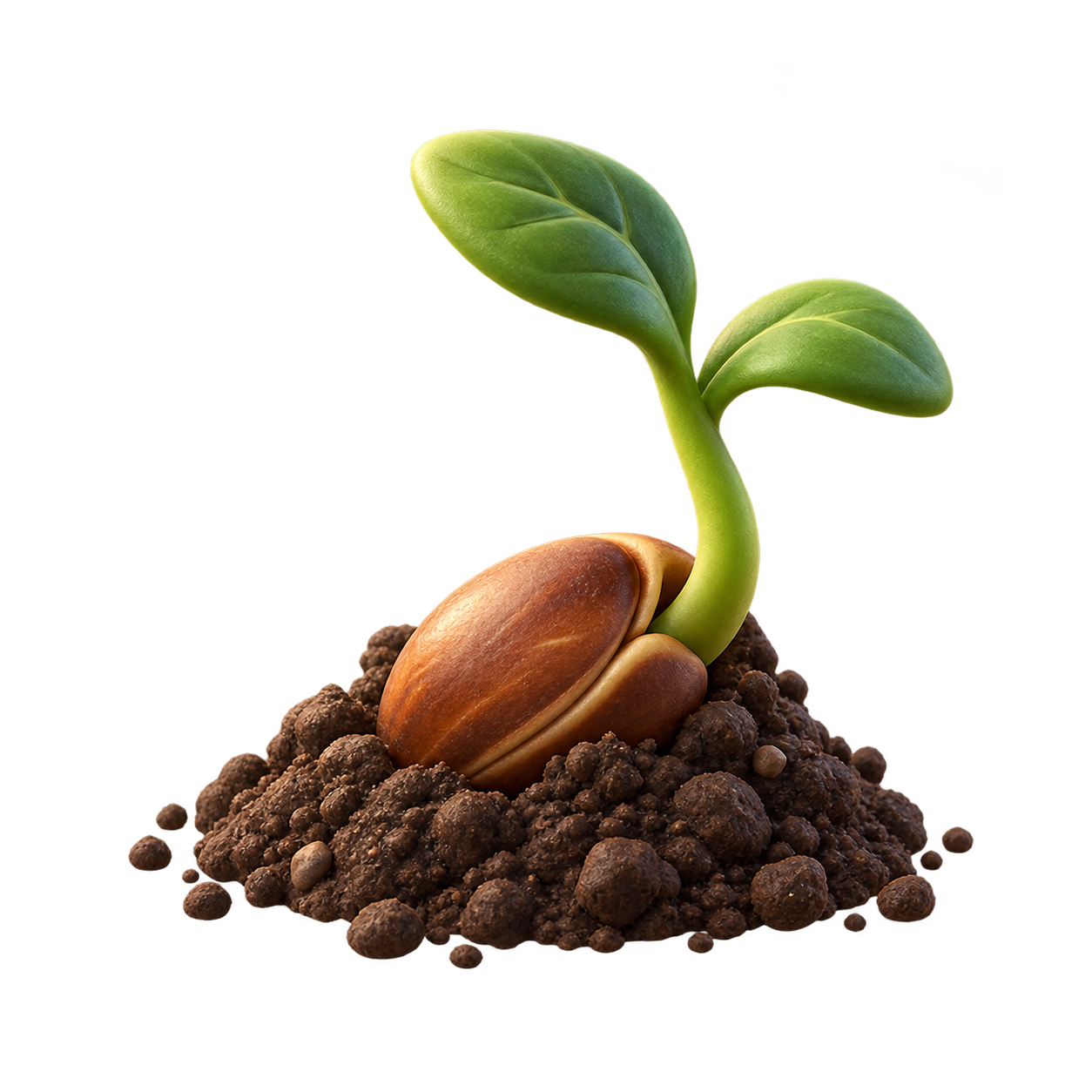
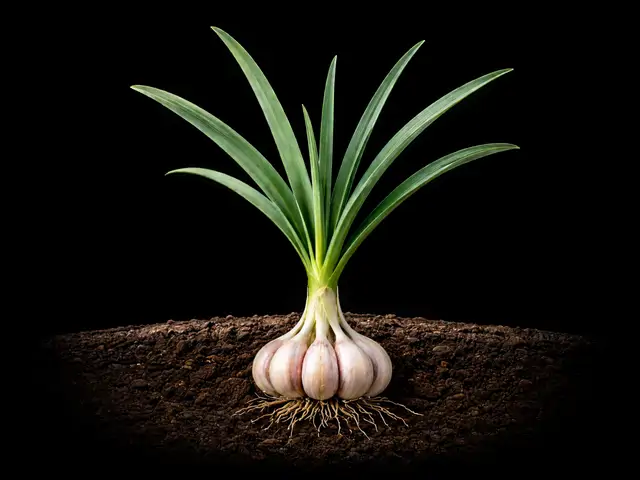
Garlic
Plant cloves in fall, ignore all winter, harvest fat bulbs in early summer - the highest-reward, lowest-effort crop in the garden.
Safety notes Safe for people; like all alliums, toxic to dogs and cats in quantity. Garlic stored in oil (confit or infused oil) is a botulism risk and is NOT shelf-stable: refrigerate the cloves and the oil together and use within 4 days, or freeze. Never leave garlic in oil at room temperature.
Overview
Garlic runs on a different calendar from everything else in the garden: you plant it in fall as the season winds down, it roots in before winter, sleeps under mulch, then races through spring to hand you a summer harvest of bulbs that store for months. Almost nothing bothers it - deer, rabbits, and most insects want no part of it.
The one thing to knowThe essential split is hardneck vs.
Quick facts
- Height
- 20 inRange: 12–30 in
- Spread
- 8 inRange: 4–12 in
- Cold
- Takes hard frostdamaged below -30°F
- Heat
- Struggles above 90°F
- Life cycle
- Grown as an annualBotanically a perennial
- Soil
- Well-drained
- Water
- Medium
- Plant spacing
- 6 inRange: 4–8 in
When to plant
Nothing is open today. Fall planting opens 11 months, Sep 13 to Oct 11.
- Plant tubers Sep 13 – Oct 11 Opens in 329 daysAbout 6 weeks before to 2 weeks before your first frost (Oct 25 here)Plant cloves 2-6 weeks before the ground freezes; fall planting is what produces full-size bulbs.
Frost here: last around Apr 10 (Mar 27 to Apr 24 most years), first around Oct 25. Zone averages, your own yard may run a week or two either way.
Life stages
From the first start to harvest
Follow the growing sequence. Choose a stage to see its care and signs to watch for.
Stage 1 of 6 · The growing sequence
Rooting in (fall)
Day 0 to 30 from planting
Care at this stage
-
Water in well at planting, then only if dry
Cloves need moisture to root before the ground freezes, but soggy soil rots them.
-
Mulch 4-6 inches after planting
Straw or shredded leaves insulate against freeze-thaw heaving and suppress spring weeds.
Stages can overlap; weather, variety, and growing conditions change the pace.
Harvest
- Lower third of leaves brown while the top 4-6 stay green
- Bulb shoulders feel full through the soil
- A test bulb shows fat cloves and tight wrappers
- Lift when 4-6 green leaves remain
- Cure 2-4 weeks in shade with airflow
Per plant 1 bulb, 1 to 5 ozPicking pull once
Cook with Garlic
Watch out for
4 to know. 1 is high-risk: White Rot (Allium). None are active in October.
White Rot (Allium)Severity High DiseaseSeason: Apr–JunYellowing, wilting plants that pull up far too easily because the roots have gone, and - on the rotted bulb base - white cottony fungal growth with tiny black poppy-seed-like dots through it.
Seed-source discipline is the whole defense here: buy certified seed garlic, and never plant grocery cloves, which are the classic route in.
Yellowing, wilting plants that pull up far too easily because the roots have gone, and - on the rotted bulb base - white cottony fungal growth with tiny black poppy-seed-like dots through it.
There is no viable garden treatment. Remove and bin infected plants, never compost them, and do not grow alliums in that soil again. This is why clean planting-stock discipline matters more here than for any other allium problem.
This is entirely about never introducing it. Buy certified disease-free seed stock, sets and plants, never plant grocery-store bulbs or cloves, quarantine new stock, and do not move soil, bulbs or tools between an affected bed and a clean one. Once it is in, it is essentially permanent.
The most serious allium disease there is. A soil fungus (Sclerotium cepivorum) rots the roots and the base of the bulb, growing a white fluffy mold over it studded with tiny black sclerotia like poppy seeds. Those sclerotia survive in the soil for twenty years or more and germinate whenever an allium is planted above them, so a bed that gets it is finished for alliums within a home gardener's timescale. It arrives on infected planting stock and on moved soil.
Onion MaggotSeverity Medium PestSeason: Apr–JunIndividual plants yellowing and wilting while their neighbors look fine, and - on pulling one - small white maggots with brown, slimy rot in the bulb base, shank or stem.
Garlic is in the ground through the whole of the fly's spring flight, so row fabric over the spring growth is the practical protection. A single wilting plant is worth pulling and checking rather than watering.
Individual plants yellowing and wilting while their neighbors look fine, and - on pulling one - small white maggots with brown, slimy rot in the bulb base, shank or stem.
There is no rescue for a maggot-riddled bulb. Pull and destroy infested plants rather than composting them, and never save affected bulbs for replanting. Beneficial nematodes drenched into the soil help suppress the larvae in a bed you have to keep using.
Rotate alliums yearly, cover the crop with row fabric through the fly's spring egg-laying window, space plants out rather than growing them in dense rows, and never plant into fresh manure, which draws the flies in.
The larvae of a small gray fly - the onion fly is the same insect - that lays its eggs at the base of allium plants. The white maggots tunnel into the bulb, shank or stem base, and the damage they leave opens the door to soft rot, so the plant yellows, wilts and collapses into a mush. It is worst in cool, wet springs, in unrotated allium beds, and in dense rows where the maggots can work from one plant to the next.
Rust (Allium)Severity Medium DiseaseSeason: Apr–JunOrange-red raised dots and streaks on the leaf blades, worst in humid spells and on crowded, poorly spaced or congested plantings.
Rust costs bulb size rather than the crop itself, since the leaves are the plant's solar panels. Strip the worst leaves and harvest on schedule.
Orange-red raised dots and streaks on the leaf blades, worst in humid spells and on crowded, poorly spaced or congested plantings.
Strip or shear off the worst-affected leaves early and let clean growth come back, improving airflow at the same time. A bulb crop usually still matures, so harvest on schedule rather than writing it off - rust rarely reaches the bulb itself.
Give wide spacing and full sun so the leaves dry quickly, avoid overhead watering and excess nitrogen, divide congested perennial clumps, and rotate alliums on a three-year cycle. Rust-tolerant varieties are available in some allium crops.
A fungal disease that raises bright orange pustules on allium leaves. The pustules destroy green tissue, and since those leaves are what feed the bulb, a heavy infection shrinks the crop or weakens the clump. It builds in humid weather, in crowded plantings and in high-nitrogen soil, and it rarely reaches the bulb itself.
Stem & Bulb NematodeSeverity Medium PestSeason: Apr–JulStunted, swollen or twisted plants; soft, spongy bulbs with cracked or discolored basal tissue; bloated leaf bases.
Stunted, swollen or twisted plants; soft, spongy bulbs with cracked or discolored basal tissue; bloated leaf bases.
None in-season. Destroy infected crops, hot-compost nothing from them, and rest that bed from alliums for 4+ years.
The whole defense is clean stock: certified seed, sets, and transplants, and never replant from a suspect crop.
Microscopic worms that live inside onion tissue, causing bloated, twisted, stunted growth and soft, cracked bulbs - spread almost entirely through infected planting stock and seed.
Good & bad neighbors
Plant nearby
-
Traditional pairing - alliums are credited with deterring cabbage moths from brassica beds.
-
The classic ornamental pairing - garlic underplanted to discourage aphids on roses.
-
Garlic's scent may mask neighbors from pests; the two share space without competing.
- Traditional pairings, thin evidence
-
Often interplanted; some growers report fewer spider mites. Evidence is anecdotal.
Varieties · 6
You pick one when you add Garlic to your garden. Its days to maturity set your harvest window.
Hardneck 3 varieties
Music
The benchmark hardneck: huge easy-peel cloves (4-6 per bulb), rich musky-sweet flavor, and outstanding cold hardiness.
Variety details for Music
Large white bulbs blushed pink at the clove skins, typically 4-6 fat cloves.
porcelainConsistently the top producer in northern gardens.
German Extra Hardy
As tough as the name promises - survives brutal winters under mulch and stores unusually long for a hardneck.
Variety details for German Extra Hardy
White wrappers over dark red clove skins; 4-5 large cloves.
porcelainStrong, classic garlic heat.
Chesnok Red
The cook's hardneck: holds its shape and develops sweet, mellow depth when roasted - a frequent 'best baked garlic' winner.
Variety details for Chesnok Red
Purple-striped bulbs with 8-10 medium cloves.
purple-stripeBeautiful purple-striped wrappers. Like every hardneck it wants a genuinely cold winter - in zone 8 and warmer, pre-chill the seed cloves 10-12 weeks or expect undivided single rounds.
Softneck 2 varieties
Inchelium Red
A mild, buttery softneck discovered on the Colville Reservation in Washington - unusually adaptable, performing from cold valleys to mild-winter gardens, and stores 9+ months.
Variety details for Inchelium Red
Large flattened bulbs with light purple blotching; 12-18 overlapping cloves.
artichokeCalifornia Early
The workhorse of warm-winter garlic growing: reliable with minimal chill, matures a few weeks ahead of most, braids beautifully, and stores most of a year.
Variety details for California Early
Plump off-white bulbs with many layered cloves.
artichokeearly
Elephant 1 variety
Elephant
The giant of the garlic bed - technically a bulbing leek (Allium ampeloprasum) with fist-sized bulbs of a few huge, mild cloves.
Variety details for Elephant
Fist-sized bulbs with 4-6 enormous cream-colored cloves; can top a pound.
mildPlant in fall like garlic; roast whole for a sweet, gentle spread. Expect some solid single 'rounds' the first year - replant them.
Grower tips
Notes from growers, tagged with the zone they grow in. A person reads every post before it appears.
Nobody has posted about Garlic yet. The first one usually saves someone a season.
Free account. Your post shows your grower name and zone, never your email.