
Add it to your home screen and it opens full screen: no browser bars, one tap away, and everything stays signed in. Free, nothing to download from an app store.
- Tap the Share button in your browser
- Scroll down and choose “Add to Home Screen”
- Open GrowSomeFood from your home screen
- Open your browser’s menu
- Choose “Add to Home screen” or “Install app”
- Open GrowSomeFood from your home screen
Pepper
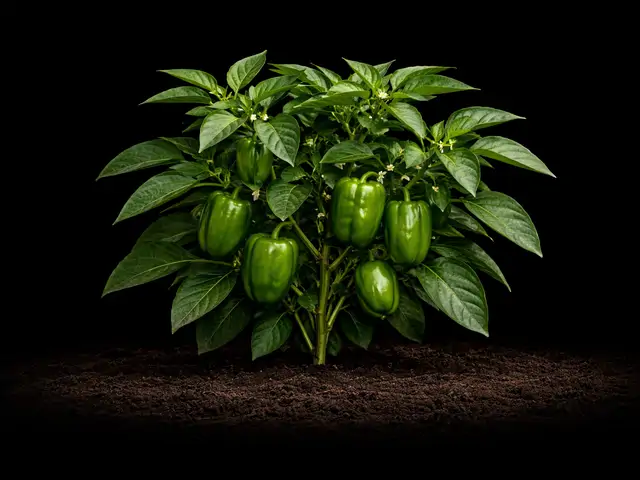
A heat-loving nightshade grown as an annual for its fruit - one plant family spanning sweet bells to fiery chiles, all needing warmth, sun, and patience.
Safety notes Only the fruit is eaten; leaves and stems carry solanine-family alkaloids. Wear gloves cutting hot varieties - capsaicin oil burns skin and eyes for hours and water won't rinse it off.
Overview
Most garden peppers are one species, Capsicum annuum - bells, jalapeños, cayennes, poblanos - but habaneros and Scotch bonnets are C. chinense, a separate domestication out of the Amazon. All are grown the same way; the C. chinense types just germinate slower and want a longer, hotter season. Both are tender perennials grown as warm-season annuals almost everywhere. Peppers ask for the same three things tomatoes do - full sun, steady moisture, and a long warm stretch - but they are slower and fussier about cold, rewarding the gardener who waits for real warmth with months of picking.
The one thing to knowThe planning fork is sweet vs.
Quick facts
- Sprouts in
- 12 daysRange: 7–21 days
- Soil temperature
- 82 °FRange: 70–90 °F
- Start indoors
- 9 weeks before transplantRange: 8–10 weeks
- Height
- 30 inRange: 18–48 in
- Spread
- 18 inRange: 12–24 in
- Support
- Grows better on a trellis or stake
- Cold
- Killed by frostdamaged below 32°F
- Heat
- Struggles above 95°F
- Life cycle
- Grown as an annualBotanically a perennial
- Save seeds
- About 110 days after plantingRange: 90–130 days
- Soil
- Well-drained
- Water
- Medium
- Plant spacing
- 18 inRange: 12–24 in
When to plant
Nothing is open today. Spring indoor sowing opens 3 months, Jan 30 to Feb 20.
- Start indoors Jan 30 – Feb 20 Opens in 103 daysAbout 10 weeks before to 7 weeks before your last frost (Apr 10 here)Start 8-10 weeks ahead; hot and super-hot types want the earlier end - they are slow.
- Transplant Apr 24 – May 15 Opens in 187 daysAbout 2 weeks after to 5 weeks after your last frost (Apr 10 here)Wait 2-3 weeks past last frost until soil is 65°F and nights stay above 55°F - cold checks peppers for the whole season.
Frost here: last around Apr 10 (Mar 27 to Apr 24 most years), first around Oct 25. Zone averages, your own yard may run a week or two either way.
Life stages
From the first start to harvest
Follow the growing sequence. Choose a stage to see its care and signs to watch for.
Stage 1 of 6 · The growing sequence
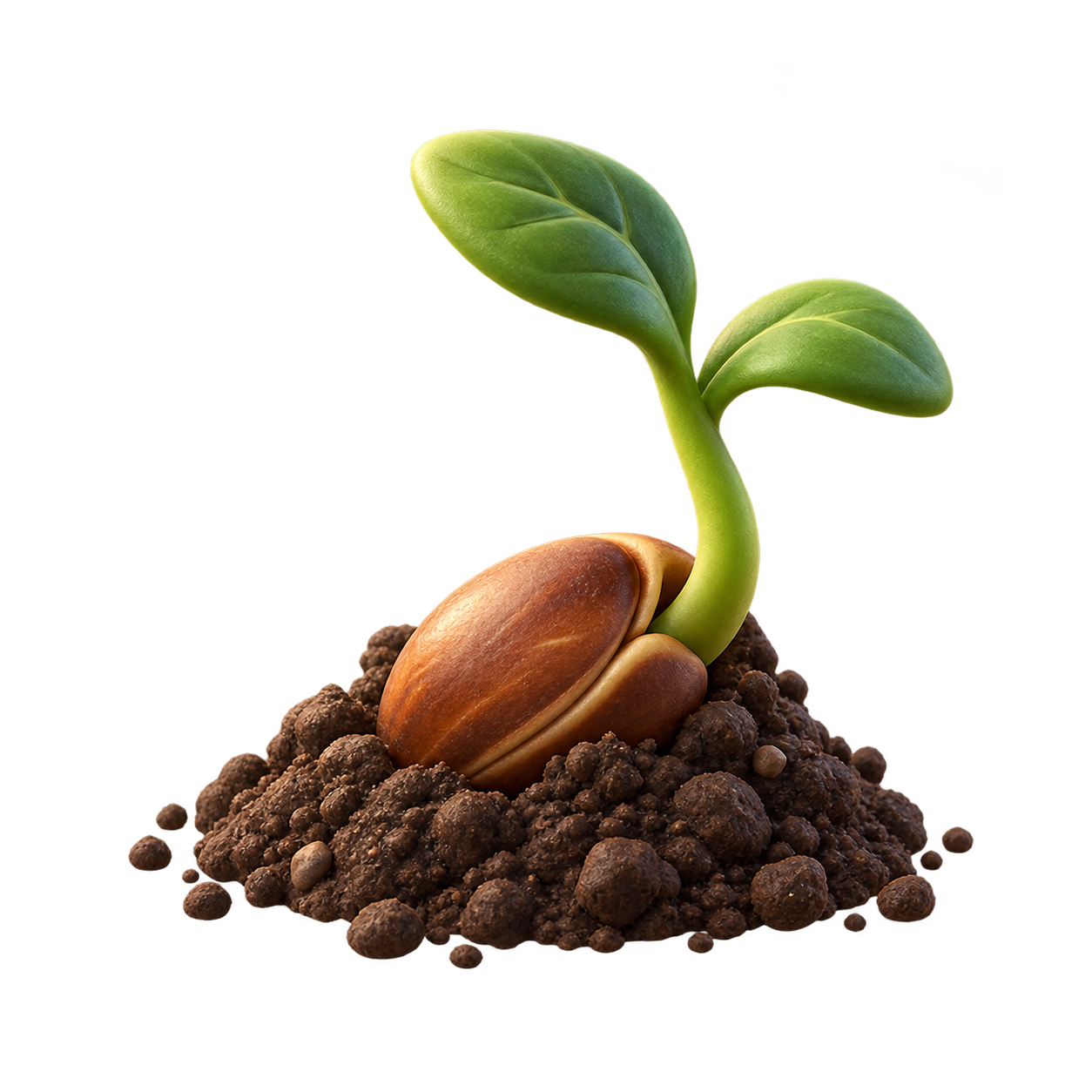
Germination
Day 0 to 12 from sowing
Care at this stage
-
Keep seed mix warm and evenly moist
Bottom-water or mist so the surface never crusts; peppers sprout slowly and unevenly, so patience beats fussing.
-
Hold 80-90°F on a heat mat
This is the single biggest lever on pepper germination - cool mix (below 70°F) can push sprouting past three weeks or stall it entirely. Remove the mat once sprouts show.
Stages can overlap; weather, variety, and growing conditions change the pace.
Harvest
- Full size and firm with glossy, taut skin (green stage)
- Fully colored red, yellow, orange, or purple for sweeter, more nutritious fruit
- Snaps off cleanly with a short stem attached
- Cut - don't pull - every few days
- Shade or pick ahead of scorching sun
Per plant 6 to 40 peppers, 1 to 6 lbPicking pick as they ripen
Cook with peppers
Watch out for
8 to know. 3 are high-risk: Pepper Weevil, Bacterial Leaf Spot, Phytophthora Blight. None are active in October.
Pepper WeevilSeverity High PestSeason: May–SepTiny puncture holes in buds and young fruit, premature yellowing and dropping of buds and small peppers, misshapen fruit.
Chiefly a problem in the Deep South, Texas, and warm coastal zones where it overwinters; northern gardens rarely see it.
Tiny puncture holes in buds and young fruit, premature yellowing and dropping of buds and small peppers, misshapen fruit.
No rescue for infested fruit - strip and destroy it to break the cycle; row cover and sanitation are the main defenses.
Remove and destroy dropped buds and fruit (where larvae mature); clean up nightshade weeds and old crops; rotate away from last year's pepper ground.
A small dark weevil whose larvae develop inside pepper buds and fruit, causing bud and fruit drop and internal rot; a serious pest in warm southern regions.
Bacterial Leaf SpotSeverity High DiseaseSeason: Jun–AugSmall dark water-soaked leaf spots with yellow halos, ragged 'shot-hole' tearing, and rough scabby spots on fruit that ruin market quality.
The most common serious pepper disease in humid regions; resistance is the single best defense - many hybrids list bacterial-spot race numbers.
Small dark water-soaked leaf spots with yellow halos, ragged 'shot-hole' tearing, and rough scabby spots on fruit that ruin market quality.
No cure - copper-based sprays slow spread on new growth; remove badly infected plants; save seed only from clean fruit.
Plant resistant varieties and clean (hot-water-treated) seed; avoid overhead watering and working plants when wet; rotate and remove old debris.
Bacterial disease (Xanthomonas) of peppers and tomatoes causing small water-soaked spots on leaves and raised scabby lesions on fruit, spreading fast in warm, wet, splashy weather.
Phytophthora BlightSeverity High DiseaseSeason: Jun–SepSudden permanent wilting, dark water-soaked lesions girdling the stem at the soil line, and white-moldy soft rot on fruit touching wet ground.
Also attacks squash, cucumbers, and melons, so don't rotate peppers to a bed those crops just left.
Sudden permanent wilting, dark water-soaked lesions girdling the stem at the soil line, and white-moldy soft rot on fruit touching wet ground.
No cure once a plant collapses - remove it and improve drainage; the pathogen persists in soil for years, so prevention and rotation are everything.
Excellent drainage above all - plant on raised beds or mounds, never let peppers sit in standing water, use drip not overhead irrigation, and rotate on a long cycle away from peppers and cucurbits.
An aggressive water-mold disease (Phytophthora capsici) that rots roots, crowns, stems, and fruit; it can collapse a pepper planting within days in warm, waterlogged soil.
AphidsSeverity Medium PestSeason: Apr–SepDense clusters of tiny insects packed onto shoot tips, flower buds, and the undersides of young leaves.
On peppers, aphids also transmit mosaic viruses that stunt and mottle the plant - controlling them protects against the virus more than the feeding damage.
Dense clusters of tiny insects packed onto shoot tips, flower buds, and the undersides of young leaves. Curled, cupped, or distorted new growth that never opens properly. A sticky shine on the leaves - and on whatever sits under the plant - that later goes black with sooty mold. Tiny white cast skins left behind where a colony has been feeding. Ants running steadily up and down the stems, which is often the first thing you notice. Mottled, streaked, or misshapen leaves that do not grow out can mean a virus the aphids brought with them rather than the feeding itself.
Knock the colonies off with a hard jet of water and repeat every few days - on most plants that alone ends it. Pinch out or prune off the worst-infested tips rather than treating the whole plant. If colonies keep rebuilding, spray insecticidal soap or horticultural oil directly onto the insects, covering leaf undersides, and repeat weekly until they are gone; treat early or late in the day, and never spray a wilted or heat-stressed plant. Avoid broad-spectrum insecticides - they kill the ladybugs, lacewings, and parasitic wasps that were about to solve the problem for you, and aphid numbers usually come back worse afterward. Anything you spray must be labeled for the plant you are treating; follow that label and observe its pre-harvest interval. On anything you eat, wash leaves, heads, and buds well before use, since aphids hide down in crowns, folds, and tight growth.
Go easy on nitrogen: the soft, lush growth that heavy feeding produces is exactly what aphids breed on. Check new growth once a week through spring and early summer so you catch colonies while they are still small, and rub the first few out with your fingers. Leave flowering plants nearby and skip broad-spectrum sprays - ladybugs, lacewings, hoverflies, and parasitic wasps do most of this work for free, and they only stay if there is something for them to eat. Keep ants off the plant where you can, since they protect aphids from those predators. Water steadily so plants are not stressed, and check any new plant over before you bring it home or move it indoors, since aphids usually arrive on something else.
Aphids are small soft-bodied sap-suckers - green, black, gray, pink, or waxy white, and mostly wingless - that gather in dense colonies on the tenderest new growth: shoot tips, buds, and the undersides of young leaves. They breed extremely fast in mild weather, so a few can become hundreds inside a week. Their feeding curls and distorts soft growth, and the sticky honeydew they excrete coats everything below and turns black with sooty mold. Ants often farm and defend the colonies for that honeydew. A few aphids are normal on almost any plant and a healthy plant shrugs them off; only dense, persistent colonies do real damage, and some aphids also spread plant viruses as they feed.
Flea BeetlesSeverity Medium PestSeason: Apr–JunDozens of pinhead-sized round holes peppered across the leaves, thickest on the youngest, most tender growth.
Mostly a cosmetic threat to established peppers, but they can seriously check small transplants - protect those early and keep the cover on until the plants are large and flowering.
Dozens of pinhead-sized round holes peppered across the leaves, thickest on the youngest, most tender growth. Tiny beetles that spring away as you brush the plants or lean in for a closer look - that jump is the identification. Seedlings that go lacy and stop growing, and transplants that sit and sulk instead of taking off. Damage heaviest in warm, dry weather and along the edge of a bed nearest weedy ground or last year's crop debris. On root crops, shallow narrow grooves or channels scarring the skin at harvest, from larvae feeding underground.
Row cover and healthy fast growth carry most crops through, and on an established plant the damage is usually cosmetic and needs nothing at all. Where a young planting is genuinely being stripped, kaolin clay coats the leaves and deters feeding, and spinosad will knock the beetles back. Spinosad is acutely toxic to bees while the spray is still wet - apply it at dusk when bees are not flying, never onto plants in flower, and follow the product label. Anything you spray must be labeled for the plant you are treating, and you must observe its pre-harvest interval on a crop you are picking. Yellow sticky traps are useful for telling you when the beetles have arrived. Where the damage falls on the part you eat, harvesting young often beats them outright; where you are growing for a root or a fruit, leaf damage can simply be tolerated. Larvae feeding underground cannot be reached by a foliar spray, so rotation and clean beds are what work against those.
Floating row cover or fine insect mesh, laid over the bed from the day of sowing or transplanting and sealed at the edges so nothing can walk in underneath, is the single best defense - and on the crops they favor it is close to essential. Leave it on until plants are large and growing strongly, or until flowering on anything that needs pollinating. Push growth: a well-watered, unchecked plant outgrows the damage, so the whole game is getting seedlings through their vulnerable weeks fast. Keep beds weed-free, since related weeds host the beetles alongside your crop, and clear crop debris at the end of the season where the adults overwinter. Rotate away from a bed that grew a related crop last year. Where you can, shift sowing dates - cooler-season and fall plantings often miss the peak of adult feeding entirely.
Flea beetles are tiny dark beetles - often shiny black or bronze, rarely more than a couple of millimeters long - with enlarged back legs that let them spring away like fleas the moment you lean in. The adults chew countless small round pits and shot-holes through leaves, giving the foliage a peppered, buckshot-riddled look. They overwinter as adults in leaf litter, hedgerows, and crop debris, emerge hungry in spring, and are worst in warm dry spells. The damage is mostly a seedling and transplant problem: a small plant with a few leaves can be checked, stunted, or killed outright, while the same plant shrugs them off once it is large and growing strongly. Different species specialize on different plant families, so the beetles hammering your brassicas are not the ones on your nightshades. Some species also have larvae that feed on roots and tubers underground.
Blossom End RotSeverity Medium DisorderSeason: Jun–AugDry, sunken, tan or dark patches on the blossom end of developing peppers, often on the first fruits or during heat and drought.
Peppers get this less than tomatoes, but hot dry spells with erratic watering will bring it on, especially in containers.
Dry, sunken, tan or dark patches on the blossom end of developing peppers, often on the first fruits or during heat and drought.
Remove affected fruit and fix the watering rhythm - subsequent fruit will be clean. Calcium sprays are largely cosmetic theater.
Even, consistent watering plus mulch to buffer swings; the soil almost always has enough calcium, so delivery, not supply, is the problem.
Not a disease: a calcium-delivery failure caused by uneven soil moisture, appearing as a sunken tan-to-black leathery patch on the fruit's bottom.
Verticillium WiltSeverity Medium DiseaseSeason: Jun–SepOne branch, one limb or one side of a plant wilting, yellowing and browning in summer while the rest carries on normally - the lopsided pattern is the tell - and leaves that wilt and then hang on rather than dropping cleanly.
Peppers wilt more subtly than tomatoes; the whole plant may simply stunt and yellow rather than dramatically collapse, so it is easy to mistake for poor soil.
One branch, one limb or one side of a plant wilting, yellowing and browning in summer while the rest carries on normally - the lopsided pattern is the tell - and leaves that wilt and then hang on rather than dropping cleanly. Cut into affected wood and look for olive-green, grey or brown streaking along the grain; in a cut vegetable stem it shows as a ring of discolored dots. On vegetables, lower leaves yellow in a wedge from the margin inward, and the plant wilts at midday but recovers overnight in the early stages.
There is no cure and nothing to spray. On a tree or shrub the aim is to keep it alive long enough to compartmentalize the fungus, which many plants manage for years: prune out dead and wilting branches well below the discolored wood, sanitize the pruners between cuts, water deeply through dry spells, mulch, and feed lightly rather than pushing it with a heavy feed. On vegetables, pull and bin affected plants rather than composting them, and move that crop to clean ground or to containers of fresh mix. Do not replant the same species where one has died.
There is no way to sterilize garden soil of it, so prevention is plant choice and plant vigor. Do not replant a susceptible species where one has already died of it. Grasses, conifers, ginkgo, hawthorn, hornbeam, honeylocust, oak and beech do not get it, and many vegetable varieties carry bred-in resistance - the V in a VFN code on the seed packet. Rotate susceptible vegetables on a long cycle and keep them off ground where the disease has shown. Buy clean stock, avoid wounding roots with spades and machinery, and keep woody plants steadily watered, mulched and only lightly fed, because a vigorous plant walls the fungus off far better than a stressed one.
A soil fungus (Verticillium dahliae and relatives) that enters through the roots and grows upward inside the water-conducting tissue, plugging it from within. The plant is not being eaten or rotted, it is being cut off from its own water supply, which is why the signature symptom is one branch or one side wilting and browning while the rest looks perfectly healthy. Cut into affected wood or stem and the tissue is streaked olive-green, grey or brown. The host range is enormous - maples, redbud, olive, tomato, potato, pepper, eggplant, strawberry and many more - and the fungus survives in soil for years as tough resting structures, so infected ground stays infected. Grasses and conifers do not get it.
1 more, low risk
Tomato HornwormSeverity Low PestSeason: Jun–SepStripped stems and missing leaves, dark pellet droppings on leaves below, and the large green caterpillar camouflaged along stems.
Peppers are a secondary host after tomatoes; hornworms will move onto pepper foliage but rarely cause the wholesale defoliation they do on tomatoes.
Stripped stems and missing leaves, dark pellet droppings on leaves below, and the large green caterpillar camouflaged along stems.
Hand-pick at dusk (they glow under UV flashlight). Leave any wearing white rice-grain cocoons - those carry parasitic wasps that will kill the next generation. Bt works on small larvae.
Till beds in fall to destroy overwintering pupae; interplant strongly scented herbs; encourage parasitic wasps.
Huge green caterpillar (to 4 inches) with a rear horn - the larva of the five-spotted hawk moth. As a nightshade, tomatillos are a host, and a hornworm can defoliate a plant quickly.
Good & bad neighbors
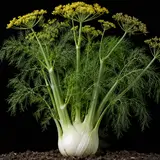
First rule: keep Fennel apart. Fennel roots exude growth-inhibiting compounds that stunt most vegetables; give it its own corner.
Plant nearby
-
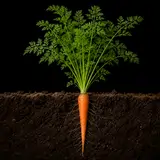
French marigolds demonstrably suppress root-knot nematodes; broader pest-repellent claims are softer but the interplanting is harmless and pretty.
-
Traditional pairing and a kitchen match; basil's scent may help mask peppers from pests, and it shares the warm, sunny, evenly-watered conditions.
- Traditional pairings, thin evidence
-
Space-sharers using a different soil layer than peppers; a traditional low-conflict pairing.
-
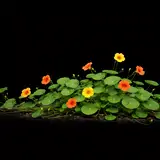
Grown as an aphid trap crop to draw pests off the peppers; anecdotal but widely practiced.
-
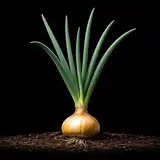
Allium scent is traditionally credited with deterring aphids and other soft-bodied pests; no competition for space.
Keep apart
-
Fennel roots exude growth-inhibiting compounds that stunt most vegetables; give it its own corner.
-
Same nightshade family - they share diseases like verticillium wilt and attract overlapping pests; separate them and rotate.
- Traditional pairings, thin evidence
-
Traditional advice that brassicas and peppers compete and grow poorly together; evidence is thin.
Varieties · 7
You pick one when you add Pepper to your garden. Its days to maturity set your harvest window.
Bell 1 variety
Bell
The kitchen workhorse: thick-walled, blocky sweet peppers with no heat, picked green or left to ripen red, yellow, or orange (sweeter and far higher in vitamins).
Variety details for Bell
Blocky three- or four-lobed fruit with glossy skin and a hollow, seedy interior.
sweetblockysweet-pepperResists Bacterial Spot, Tobacco Mosaic Virus
Many modern hybrids carry disease resistance. Green at 60-75 days, full color 2-3 weeks later.
Banana 1 variety
Banana
A mild, sweet pepper named for its long yellow shape, ripening through orange to red and sweetening as it goes.
Variety details for Banana
Slender, curved, 5-7 inch fruit, bright waxy yellow ripening to red.
sweetmildpicklingResists Mosaic Virus
Heavy-yielding and quick - a favorite for pickling, sandwiches, and fresh eating. (Hot 'banana' strains exist; this is the sweet type.)
Anaheim 1 variety
Anaheim
The mild green chile of the Southwest (also called the New Mexico or California chile): long, tapering fruit with gentle warmth, prized for roasting and peeling.
Variety details for Anaheim
Long, narrow, flattened fruit, deep green ripening to red, 6-8 inches.
hotmild-heatchileroastingNamed for the California town where it was grown commercially in the early 1900s.
Poblano 1 variety
Poblano
The essential stuffing chile of Mexican cooking (chiles rellenos), from Puebla: heart-shaped, thick-walled, and mild-to-medium with rich flavor.
Variety details for Poblano
Dark green, heart-shaped fruit maturing to deep red-brown, 4-5 inches.
hotmild-heatchilestuffingDried, it becomes the sweet, raisiny ancho - one of the most important dried chiles.
Jalapeño 1 variety
Jalapeño
The everyday medium-hot chile: small, thick-walled, and reliable, used green in salsa and poppers or ripened red and smoke-dried into chipotle.
Variety details for Jalapeño
Smooth, glossy green fruit 2-3 inches long, ripening red, sometimes corky-striped when hot.
hotmedium-heatHeavy producer that's easy to grow across a wide range of climates.
Cayenne 1 variety
Cayenne
The classic drying-and-grinding chile: long, slender, wrinkled fruit that ripens fiery red and dries easily into cayenne powder and flakes.
Variety details for Cayenne
Long, thin, curved and often wrinkled fruit, bright red at maturity, 4-6 inches.
hotdryingVery productive - a few plants supply a year of ground heat and a ristra to hang.
Habanero 1 variety
Habanero
A very hot chile (about 100,000-350,000 SHU) with intense fruity-floral flavor beneath searing heat, essential to Caribbean and Yucatec cooking.
Variety details for Habanero
Wrinkled, lantern-shaped fruit ripening green to bright orange (or red/chocolate strains), about 1-2 inches.
hotvery-hotchileSlow to ripen and heat-loving, so it needs a long warm season or an early indoor start - the payoff is orange lanterns dozens to a plant. Handle with gloves.
Grower tips
Notes from growers, tagged with the zone they grow in. A person reads every post before it appears.
Nobody has posted about Pepper yet. The first one usually saves someone a season.
Free account. Your post shows your grower name and zone, never your email.