
Add it to your home screen and it opens full screen: no browser bars, one tap away, and everything stays signed in. Free, nothing to download from an app store.
- Tap the Share button in your browser
- Scroll down and choose “Add to Home Screen”
- Open GrowSomeFood from your home screen
- Open your browser’s menu
- Choose “Add to Home screen” or “Install app”
- Open GrowSomeFood from your home screen
Orange
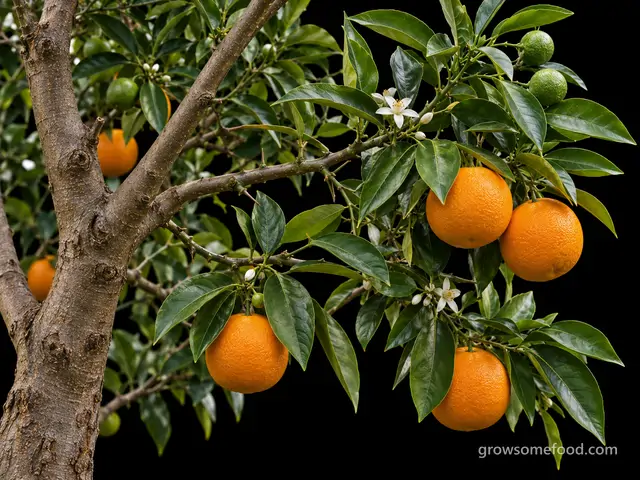
The world's most-grown fruit tree and the taste of a warm-climate garden: a self-fruitful, fragrant, evergreen citrus that fruits for months. In-ground in zones 9-11; growable in a large pot and wintered indoors farther north. Navel for eating, Valencia for juice, Blood for drama.
Safety notes The fruit, juice, and zest are the food. Citrus peel oils are phototoxic on skin in sunlight (can cause a rash) - rinse hands after zesting. Leaves and seeds are not eaten. Sweet oranges lack grapefruit's furanocoumarins, but orange juice can still reduce absorption of some medicines - take pills with water, and ask your pharmacist if you take prescriptions.
Overview
The orange is the most widely grown fruit tree on earth, and for good reason: a healthy sweet-orange tree is a beautiful evergreen that fills the spring air with legendary orange-blossom fragrance and then hangs heavy with fruit for months. It's self-fruitful (one tree bears alone), long-lived, and productive, and its fruit conveniently holds on the tree for weeks so you pick as you need it. There are three broad kinds worth knowing: Navel oranges (sweet, seedless, easy-peeling - the classic eating orange, ripening in winter), Valencia (the great juice orange, tarter, seedy, holding on the tree into summer), and the striking Blood oranges (Moro, Tarocco - crimson flesh, a berry-like tang).
The one thing to knowIt's self-fruitful (one tree bears alone), long-lived, and productive, and its fruit conveniently holds on the tree for weeks so you pick as you need it.
Quick facts
- Height
- 15 ftRange: 8–25 ft
- Spread
- 13 ftRange: 8–18 ft
- Cold
- Killed by frostdamaged below 24°F
- Heat
- Struggles above 105°F
- Life cycle
- Perennial, lives about 60 years
- Soil
- Well-drained
- Water
- Medium
- Plant spacing
- 15 ftRange: 10–22 ft
When to plant
No planting window on record for this zone. Nearest zone with one: 8b.
Frost here: last around Apr 10 (Mar 27 to Apr 24 most years), first around Oct 25. Zone averages, your own yard may run a week or two either way.
Life stages
Establish, grow, repeat
Getting established and returning each season are different parts of the story.
Stage 1 of 5 · Getting established
First-year establishment
The first year after planting
Care at this stage
-
Keep evenly moist, never waterlogged
A new orange needs steady moisture to establish but hates soggy roots (root rot is the fast killer). Water deeply when the top inch or two dries; in containers, ensure free drainage.
-
Mulch a ring, kept well off the trunk
A shallow mulch ring conserves moisture and feeds the shallow feeder roots, but keep it clear of the trunk - citrus get foot/crown rot if the base stays wet.
-
Protect from frost
Oranges are frost-tender (sweet oranges damaged below about 24-28°F). In-ground only in zones 9-11; colder zones grow oranges in containers and shelter them for winter.
-
Start a citrus feeding program
Oranges are heavy feeders. Begin a specialized citrus fertilizer with micronutrients (iron, zinc, manganese) in the warm season; yellowing leaves usually mean hunger or wet roots.
Months are typical seasonal windows; climate, variety, and plant age can shift them.
Harvest
- Fruit tastes sweet and full-flavored (the only reliable test - oranges don't sweeten off the tree)
- Fruit is fully sized and heavy for its size (juicy)
- Skin has colored (though in warm climates ripe oranges can stay partly green)
- Fruit separates easily with a gentle twist or clean clip
- Pick by taste - oranges don't ripen off the tree · weekly
- Mind the type's window and don't leave fruit too long
Per plant 30 to 500 oranges, 12.5 to 187.5 lbPicking pick as they ripen
Cook with oranges
Watch out for
5 to know. 2 are high-risk: Citrus Greening (Huanglongbing / HLB), Citrus Canker. 5 are active in October.
Citrus Greening (Huanglongbing / HLB)Severity High DiseasenowSeason: year-roundAsymmetric, blotchy yellow mottling on the leaves - the pattern does not match from one side of the midrib to the other, which is what distinguishes it from a nutrient deficiency - along with yellow-shoot dieback, small lopsided fruit that stays green at the stem end, bitter off-flavored juice, and the tiny Asian citrus psyllid feeding on new flushes.
This collapsed much of Florida's orange production, and sweet orange is the crop it has hurt worst. Buy clean trees, watch for symptoms, and cooperate with local reporting and quarantine.
Asymmetric, blotchy yellow mottling on the leaves - the pattern does not match from one side of the midrib to the other, which is what distinguishes it from a nutrient deficiency - along with yellow-shoot dieback, small lopsided fruit that stays green at the stem end, bitter off-flavored juice, and the tiny Asian citrus psyllid feeding on new flushes.
There is no cure. An infected tree declines and dies and should be removed to stop the spread rather than nursed along. Management is entirely exclusion: clean stock, psyllid control, and destroying infected trees. Report a suspected case to your state agriculture department or extension office, which is how local quarantine programs track and contain it.
Buy only certified disease-free trees from a reputable source, and never move citrus plants, cuttings or fruit out of a quarantine area - that is how it travels between regions. Control the Asian citrus psyllid on new flushes, and remove infected trees promptly to protect the ones nearby. No resistant common variety exists yet.
The most serious citrus disease in the world, and effectively a death sentence for an infected tree. A bacterial infection (Candidatus Liberibacter) spread by the Asian citrus psyllid blocks the tree's vascular system, causing blotchy mottled leaves, yellow-shoot dieback, and small, misshapen, lopsided fruit that stays green at the stem end and tastes bitter. Every commercial citrus type is susceptible, there is NO cure, and it has collapsed much of Florida's citrus industry. It is the reason citrus plants and fruit are under quarantine restriction across much of the southern United States.
Citrus CankerSeverity High DiseasenowSeason: Apr–OctRaised, corky, brown lesions with a distinctive yellow halo (and sometimes a water-soaked margin) on both sides of leaves, on stems, and on fruit; premature leaf and fruit drop.
A regulated, quarantined disease in the US - spread partly by the wounds citrus leaf miner leaves, so controlling the miner helps limit canker.
Raised, corky, brown lesions with a distinctive yellow halo (and sometimes a water-soaked margin) on both sides of leaves, on stems, and on fruit; premature leaf and fruit drop.
No cure for infected tissue; copper sprays protect new growth in high-pressure areas. Remove and destroy infected leaves and prunings, and sanitize tools. In quarantine regions, follow official removal/management rules.
Buy certified disease-free trees; don't move plants or fruit out of quarantine areas. Avoid overhead watering and don't work the tree when wet (the bacteria spread in water films). Windbreaks reduce wind-driven spread; leaf-miner control helps, since its wounds admit the bacteria. Choose less-susceptible varieties where available.
A highly contagious bacterial disease (Xanthomonas citri) that causes raised, corky, tan-to-brown lesions surrounded by yellow halos on leaves, stems, and fruit, leading to premature leaf and fruit drop, twig dieback, and blemished fruit; it spreads fast in warm, wet, windy weather. Grapefruit is among the MOST canker-susceptible citrus.
Scale & Sooty MoldSeverity Medium PestnowSeason: Mar–OctRows of small brown, tan, black, white, or waxy bumps along stems, twigs, leaf midribs, and leaf undersides that do not brush off but can be scraped loose with a fingernail.
One of the most common citrus pests; the sooty mold it feeds is often the first thing you notice.
Rows of small brown, tan, black, white, or waxy bumps along stems, twigs, leaf midribs, and leaf undersides that do not brush off but can be scraped loose with a fingernail. A sticky shine on the leaves - and on the floor, table, or path beneath the plant - that later turns black with sooty mold. Ants running steadily up and down the stems, since they farm and defend scale for that honeydew; often the first sign anything is wrong. Yellowing leaves, weak thin growth, and dieback of individual branches or canes that are heavily encrusted. On fruit crops, scale covers and sooty mold directly on the fruit. Check the leaf undersides and the shaded inner wood, which is where colonies build up unseen.
Horticultural oil is the main control: it works by smothering, so it has to coat the insects thoroughly - stems, twigs, and leaf undersides - and it usually needs repeating, because the waxy covering shields them and no single pass reaches everything. On deciduous woody plants a dormant-season oil smothers the overwintering stage while the leaves are out of the way, and timing a growing-season spray to the crawler stage, when the young are mobile and uncovered, is far more effective than spraying settled adults. On a small plant or a light infestation, scrub or wipe the scales off by hand, or dab them with a cotton swab of rubbing alcohol. Prune out and destroy badly encrusted wood rather than trying to save it. Wash off the sooty mold once the scale is gone - it lives on the honeydew, not on the plant, and stops once the supply does. Anything you spray must be labeled for the plant, and oils can burn delicate foliage, so test first.
Inspect. Look over leaf undersides and stems regularly - on a crop you pick, every harvest is a scouting chance - and check every new plant thoroughly before you buy it, plant it, or set it beside anything else, because scale almost always arrives on a plant rather than flying in. Quarantine new houseplants for a few weeks. Keep plants unstressed and not over-fertilized, since soft, forced growth is what populations build on. Prune for airflow and light to open up the shaded inner growth where scale hides, and prune out heavily infested wood as routine maintenance - on anything that gets a hard annual pruning, that alone removes most of any buildup. Leave the lady beetles, lacewings, and parasitic wasps alone, since they normally keep scale down to nothing, and keep ants off the plant where you can, because ants protect the colonies from those predators. Indoors, avoid hot, dry, still winter air.
Scale insects are sap-suckers that spend most of their lives immobile, fixed to a stem, twig, or leaf underside beneath a waxy or shell-like cover. They look far more like bumps, blisters, or crusty encrustations than like insects, which is why an infestation is usually well established before anyone notices it. Soft scales excrete large amounts of sticky honeydew that drips onto everything below and grows a black sooty mold - and those blackened leaves are often the first thing a gardener actually sees. Armored scales produce no honeydew but sit under a hard shield that protects them from most sprays. They spread as tiny mobile crawlers in the weeks after hatching, which is the only stage that moves and the only stage that is easy to kill. Populations build on stressed plants, on crowded shaded growth, and above all on plants kept indoors in dry, still air over winter.
Citrus Leaf MinerSeverity Medium PestnowSeason: Apr–OctSilvery, squiggling serpentine trails inside new leaves, and curled, twisted, distorted new growth on the flushes.
Only damages new flushes, not mature leaves or fruit; its main significance is opening the door to citrus canker.
Silvery, squiggling serpentine trails inside new leaves, and curled, twisted, distorted new growth on the flushes. Mature leaves and fruit are untouched.
Largely cosmetic on an established tree - prune off heavily mined flushes if you want to, and otherwise leave it alone rather than spraying for appearance. Horticultural oil applied to new flushes deters egg-laying. Systemic controls are used mainly on young trees or where canker pressure is high.
Established trees tolerate it, so the aim is to give it less to work with: avoid over-fertilizing, which pushes out the excess soft flushes it feeds on, and stop feeding by late summer so there is no tender autumn flush to mine. Encourage the parasitic wasps that control it, and protect young trees and new grafts, whose growth actually matters.
A tiny moth whose larvae mine winding, silvery serpentine tunnels just under the surface of new citrus leaves, curling, twisting and distorting them. It attacks only the tender new-growth flushes, never mature leaves or fruit, so on an established tree it is essentially cosmetic - but it can stunt a young tree, and the wounds it leaves in the leaf provide entry points for citrus canker bacteria, which is its real significance.
AphidsSeverity Low PestnowSeason: Mar, Apr, May, Sep, OctDense clusters of tiny insects packed onto shoot tips, flower buds, and the undersides of young leaves.
On citrus this is a spring and fall flush problem - aphids ride the tender new growth and distort it, and some species transmit citrus viruses. The honeydew and sooty mold are usually more noticeable than the aphids themselves.
Dense clusters of tiny insects packed onto shoot tips, flower buds, and the undersides of young leaves. Curled, cupped, or distorted new growth that never opens properly. A sticky shine on the leaves - and on whatever sits under the plant - that later goes black with sooty mold. Tiny white cast skins left behind where a colony has been feeding. Ants running steadily up and down the stems, which is often the first thing you notice. Mottled, streaked, or misshapen leaves that do not grow out can mean a virus the aphids brought with them rather than the feeding itself.
Knock the colonies off with a hard jet of water and repeat every few days - on most plants that alone ends it. Pinch out or prune off the worst-infested tips rather than treating the whole plant. If colonies keep rebuilding, spray insecticidal soap or horticultural oil directly onto the insects, covering leaf undersides, and repeat weekly until they are gone; treat early or late in the day, and never spray a wilted or heat-stressed plant. Avoid broad-spectrum insecticides - they kill the ladybugs, lacewings, and parasitic wasps that were about to solve the problem for you, and aphid numbers usually come back worse afterward. Anything you spray must be labeled for the plant you are treating; follow that label and observe its pre-harvest interval. On anything you eat, wash leaves, heads, and buds well before use, since aphids hide down in crowns, folds, and tight growth.
Go easy on nitrogen: the soft, lush growth that heavy feeding produces is exactly what aphids breed on. Check new growth once a week through spring and early summer so you catch colonies while they are still small, and rub the first few out with your fingers. Leave flowering plants nearby and skip broad-spectrum sprays - ladybugs, lacewings, hoverflies, and parasitic wasps do most of this work for free, and they only stay if there is something for them to eat. Keep ants off the plant where you can, since they protect aphids from those predators. Water steadily so plants are not stressed, and check any new plant over before you bring it home or move it indoors, since aphids usually arrive on something else.
Aphids are small soft-bodied sap-suckers - green, black, gray, pink, or waxy white, and mostly wingless - that gather in dense colonies on the tenderest new growth: shoot tips, buds, and the undersides of young leaves. They breed extremely fast in mild weather, so a few can become hundreds inside a week. Their feeding curls and distorts soft growth, and the sticky honeydew they excrete coats everything below and turns black with sooty mold. Ants often farm and defend the colonies for that honeydew. A few aphids are normal on almost any plant and a healthy plant shrugs them off; only dense, persistent colonies do real damage, and some aphids also spread plant viruses as they feed.
Good & bad neighbors
All of these are traditional pairings. The evidence is thin, so treat them as a nudge, not a rule.
Plant nearby
-
A living clover groundcover fixes nitrogen (citrus are hungry) and feeds pollinators; keep it and any mulch off the trunk base to avoid foot rot.
-
Draws beneficial insects and is traditionally credited with deterring some pests around citrus; French types also suppress root-knot nematodes. Harmless under a young tree.
-
Grown around citrus as a trap crop and to draw aphids and beneficial insects away from the tender new flushes; a common, harmless citrus underplanting.
-
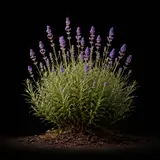
Shares citrus's love of sun and drainage and draws pollinators; a tidy, drought-tolerant companion, though plant a little apart since it wants drier feet.
-
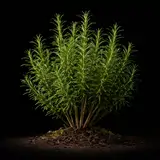
Another Mediterranean, drought-loving, pollinator-friendly herb that shares citrus's sunny conditions; aromatic foliage may deter some pests. Plant a little apart for drier roots.

Varieties · 6
You pick one when you add Orange to your garden. Its days to maturity set your harvest window.
Washington Navel
The classic sweet eating orange: seedless, easy-peeling, richly sweet, and ripening through winter.
Variety details for Washington Navel
Round-to-oval seedless orange with a small 'navel' at the blossom end and thick, easy-peel skin.
navelseedlesseasy-peelsweetEvery Washington Navel descends by cuttings from a single mutant Brazilian tree, so they're all clones. The default choice for fresh eating and snacking; best flavor where winters are cool. Doesn't juice as well as Valencia (the juice can turn bitter on standing).
Cara Cara (Navel)
A pink-fleshed Navel sport with rosy-red flesh, low acid, and a sweet flavor carrying berry and cranberry notes - a beautiful, distinctive eating orange that peels and segments like a Navel but surprises with its color and taste.
Variety details for Cara Cara (Navel)
Navel-type orange with striking pinkish-red flesh under standard orange skin.
navelpink-fleshseedlesssweetIncreasingly popular; grows and ripens like Washington Navel.
Valencia
The world's great juice orange: sweet-tart, richly flavored fruit that ripens late and, uniquely, holds on the tree well into the next summer, so a Valencia often carries two crops at once and gives a long fresh-juice season.
Variety details for Valencia
Medium-round orange, thin-skinned, juicy, with a few seeds; holds long on the tree.
valenciajuice-orangelate-ripeningtree-holdsSeedier and thinner-skinned than Navels, and the juice keeps its flavor without turning bitter. The choice for homegrown orange juice.
Moro (Blood Orange)
The most deeply colored blood orange: dramatic crimson-to-nearly-black flesh and a bold, tangy, raspberry-tinged flavor.
Variety details for Moro (Blood Orange)
Medium orange with a red-blushed skin and deep crimson, sometimes near-black, flesh.
blood-orangered-fleshtangyneeds-cold-nightsNeeds genuinely cold winter nights to develop its full red color and complex taste, so it shines in Mediterranean and interior-California-type climates and underperforms in mild tropical warmth. Stunning in juice, salads, and desserts.
Tarocco (Blood Orange)
A prized Italian blood orange, often considered the best-flavored: sweeter and less intensely colored than Moro, with a rich, aromatic taste and famously high vitamin C.
Variety details for Tarocco (Blood Orange)
Medium orange with orange-to-red blushed skin and orange-red, sweet, aromatic flesh.
blood-orangesweethigh-vitamin-citalianNearly seedless and easy to eat out of hand. Like all blood oranges, it colors best with cold nights. An excellent eating-and-juice blood orange.
Trovita
A mild, sweet, thin-skinned orange notable for tolerating milder-winter and coastal conditions where Navels struggle to sweeten - a useful variety for warm or coastal climates that lack the cold nights other oranges want.
Variety details for Trovita
Round, thin-skinned, mild-sweet orange with few seeds.
sweetheat-tolerantcoastal-adaptedself-fruitfulGood fresh and for juice, with few seeds. A dependable choice for tricky mild climates.
Grower tips
Notes from growers, tagged with the zone they grow in. A person reads every post before it appears.
Nobody has posted about Orange yet. The first one usually saves someone a season.
Free account. Your post shows your grower name and zone, never your email.