Add it to your home screen and it opens full screen: no browser bars, one tap away, and everything stays signed in. Free, nothing to download from an app store.
- Tap the Share button in your browser
- Scroll down and choose “Add to Home Screen”
- Open GrowSomeFood from your home screen
- Open your browser’s menu
- Choose “Add to Home screen” or “Install app”
- Open GrowSomeFood from your home screen
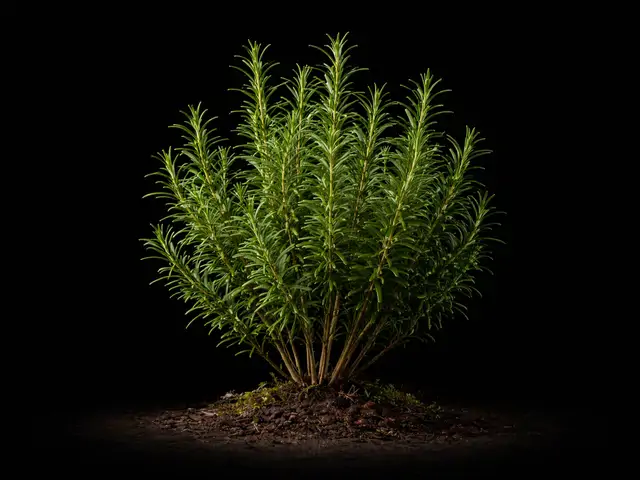
Rosemary
Safe in culinary amounts. Concentrated rosemary essential oil is potent and not for undiluted internal use; medicinal doses of the extract are traditionally avoided in pregnancy.
Overview
An evergreen Mediterranean shrub for the long haul: plant one from a cutting, give it sun and sharp drainage, and harvest year-round for a decade.
Rosemary is the most permanent herb most gardeners grow — not a soft annual but a woody evergreen shrub that can live fifteen years and grow into a fragrant hedge. In warm zones it's harvestable every day of the year; its needle-like leaves carry the piney, resinous flavor of Mediterranean roasts, and its early blue flowers are one of the first bee plants of the season. Give it full sun, lean soil, and sharp drainage and it thrives on neglect.
Two things define growing it well. First, drainage and dryness: rosemary is killed by wet soil far more than by cold or drought. Second, cold-hardiness: it's reliably hardy only to about zone 7 (zone 6 with tough cultivars like Arp), so in colder regions it becomes a container plant wintered indoors.
At a glance
- Sun
- Full sun
- Water
- Low
- Spacing
- 24–48 in (typ. 36)
- Mature height
- 24–72 in (typ. 48)
- Start by
- Transplant · Cuttings
- Frost
- SemiHardy
- Germination
- 14–30 days (typ. 21) @ 65–80 °F (typ. 70)
- Spread
- 24–48 in (typ. 36)
- Soil
- Well-drained
- Temperature
- Damaged below 0°F · struggles above 100°F
- Seed ready
- 150–210 days (typ. 180) (for saving)
When to plant
Zone 7a typical frost: last Apr 10 · first Oct 25 (spring frost runs Mar 27–Apr 24 in a typical spread of years)
Life stages
- Establishing (year 1) day 0–150 from sowing
-
Water to root in, then let it go dryevery 5 dA new rosemary needs regular water for the first couple of months to establish, then very little - it's drought-tolerant once rooted and hates soggy soil.
-
Harvest lightly the first yearTake only small sprigs the first season while the shrub builds its framework; harvest freely from year two.
Root rot in wet or heavy soil (the main killer of a young plant)Winter cold or wet in borderline zones - the first winter is the risk -
Water to root in, then let it go dryevery 5 d
- Spring growth & pruning Mar, Apr, May (yearly)
-
Prune to shape after the frost risk passesTrim lightly in spring to shape the shrub and encourage bushy new growth - but never cut back into bare old wood, which rarely resprouts.
-
Harvest sprigs freely as it growsevery 10 dSnip 4-6 inch tips above a leafy node; regular harvesting is the best pruning.
Bare, leggy woody stems (shape with light trims, not hard cuts) -
Prune to shape after the frost risk passes
- Bloom Feb, Mar, Apr, May (yearly)
-
Enjoy the flowers - and the beesRosemary's small blue (sometimes pink or white) flowers appear in late winter to spring and are among the earliest bee food. The flowers are edible and mildly rosemary-flavored.
-
Harvest is fine during bloomUnlike leafy herbs, rosemary's flavor holds through flowering - keep cutting sprigs as needed.
Note: bloom timing varies widely by climate; warm zones flower in winter -
Enjoy the flowers - and the bees
- Main harvest May, Jun, Jul, Aug, Sep, Oct (yearly)
-
Cut sprigs year-round from an established plantevery 10 dSnip 4-6 inch tips as needed, taking no more than a third at once. Morning cutting gives the most concentrated oils.
-
Water only in real droughtAn established rosemary rarely needs watering; overwatering is far more dangerous than dry soil.
Powdery mildew or spittlebugs in humid crowdingWoody, unproductive shrub (renew from cuttings rather than hard-pruning) -
Cut sprigs year-round from an established plantevery 10 d
- Winter Jan, Feb, Nov, Dec (yearly)
-
Protect in cold zones; keep it dryRosemary is only reliably hardy to about zone 7 (zone 6 with hardy cultivars and shelter). In colder zones, grow it in a pot and overwinter indoors in a cool, bright spot, or plant a hardy variety in a sheltered, sharply drained spot.
-
Keep harvesting where it's evergreenIn mild zones rosemary is evergreen, so you can snip fresh sprigs all winter.
Cold moisture and 'wet feet' - the real winter killer, more than cold itselfIndoor plants dropping needles from dry heat or overwatering -
Protect in cold zones; keep it dry
Harvest
- Style
- Cut and come again
- By weight
- 8–64 oz (typ. 24)
- First production
- 0–1 yrs (typ. 1)
- Established shrub with plenty of soft green stem tips (not just old wood)
- Sprigs 4-6 inches long, cut above a leafy node
- Flavor holds year-round; morning cutting gives the strongest oils
Watch out for
Root Rot High
Root rot is not one organism but a group of soil fungi and water molds - Pythium, Phytophthora, Fusarium, Rhizoctonia and others - that sit harmlessly in most soils and only turn destructive when the ground stays saturated. Waterlogged soil drives the air out, the roots suffocate, and the weakened tissue is invaded and goes soft, brown, and stringy. Because the damage is underground you usually see it first as something that looks like drought: wilting, yellowing, stunting, a plant that does not respond to being watered. Overwatering, heavy compacted ground, a low spot that collects runoff, a pot with no drainage or a saucer left standing full, and cold wet soil in winter are the usual causes. Once roots have actually rotted there is no cure - this is a problem you prevent rather than treat.
Watch for: Wilting in the middle of the day on a plant whose soil is damp - the classic tell, and the reason people water a rotting plant and finish it off. Leaves yellowing from the bottom up, dull off-color foliage, and growth that stalls for no visible reason. Whole shoots, or one side of the plant, collapsing while the rest still looks fine. Soft, dark, or mushy tissue at the base of the stem or at the crown, sometimes with a sour smell. Lift a failing plant and look at the roots: healthy ones are firm and pale, rotted ones are brown or black and slimy, and the outer layer slips off between your fingers leaving a thread of core behind. Seedlings that topple over at soil level are the same problem, called damping-off.
Prevent: Drainage is the whole defense. Match the plant to the site first - something that wants sharp drainage will not survive heavy clay or a low, water-collecting spot however well you tend it. Where the ground is heavy, plant on a raised bed, berm, or slope, or grow in a container. Set plants at the depth they were already growing, since burying the crown or the root flare is a common cause of rot, and keep mulch pulled back a few inches from the stem base instead of piled against it. Water the soil rather than the calendar: check that the top inch or two is dry before watering again, cut back hard in cool weather and winter dormancy, and never leave a pot standing in a full saucer. Do not plant or dig in soggy ground, and go easy on rich amendments for plants that want it lean. Rotate annual crops, and start with clean healthy plants and fresh mix.
Treat: There is no cure for tissue that has already rotted, so act on the conditions rather than looking for a spray. Stop watering at once and fix the drainage - open up compacted soil, or move the plant to a raised, sharply drained position or a container. Lift a badly affected plant, cut away every soft dark root and rotted section with a clean blade back to firm pale tissue, and replant only the healthy parts into fresh free-draining soil or mix. Often the better move is to give up on the plant and save its offspring instead: cuttings, offsets, or divisions taken from firm healthy growth root readily and give you a clean start. Bin the rotted material rather than composting it, and correct the drainage before you replant, because the rot comes straight back in the same wet spot.
Wet feet kill far more rosemary than cold does. Gritty lean soil, a raised bed or a well-draining pot, and water only to establish and then only in real drought. Take cuttings from healthy growth before you lose the plant.
Powdery Mildew Medium
Powdery mildew is a fungal disease that coats leaves - and often stems, buds, and fruit - in a white-to-gray powder that looks like spilled talcum. It is not one fungus but a large family of them, each fairly specialised to its own group of plants, which is why mildew on one crop rarely jumps to an unrelated one beside it. Unlike most leaf diseases it does not need wet leaves: it thrives on warm dry days followed by humid nights, and it takes hold fastest where plants stand crowded in still air or in shade. The coating blocks light, so heavily covered leaves yellow, brown, and drop early. On many plants that is mostly disfiguring and arrives late enough not to matter; where it strips away the leaves a crop still needed to finish, it costs you size, sweetness, and quality.
Watch for: Round white powdery spots on the upper leaf surfaces that spread and merge until whole leaves look dusted. It usually starts on the oldest, lowest, most shaded leaves and works upward, so check there first. Look at the undersides too, and at stems, buds, and flower stalks, which get coated as it advances. Leaves that yellow, brown, curl, or go crisp and drop early under the coating. New growth that opens small, crumpled, or twisted where the fungus has reached the shoot tips. On plants where it gets onto the fruit, a dull gray film, russeted or scarred skin, and cracking. Late in the season, tiny dark specks scattered through the white felt - that is the fungus setting up to overwinter on the debris.
Prevent: Give plants room. Crowding and still air are the biggest single driver, so space at the full recommended distance, thin seedlings properly, and divide or prune out congested growth until air moves through the plant. Full sun and an open position help; deep shade and a still corner against a wall are where it always starts. Water at the base rather than overhead, and water early in the day so nothing stays damp overnight. Keep plants evenly watered - drought stress at the roots leaves them far more susceptible, even though the fungus itself likes dry air. Go easy on nitrogen, since soft lush growth is the most vulnerable. Where resistant varieties exist for what you are growing, choosing one is the single most effective thing you can do on a plant that mildews every year. Clear infected leaves and stems away at the end of the season rather than composting them.
Treat: Start early: sprays protect healthy tissue, they do not clean up leaves that are already coated. Pick off and bin the worst leaves as soon as you see them, and open the plant up by thinning or pruning so air moves through. On anything that regrows quickly, shearing the whole plant back forces a clean flush and beats spraying. If it keeps spreading, potassium bicarbonate, horticultural oil, or neem applied weekly will hold it - cover both leaf surfaces. Sulfur also works, but it burns the foliage of some plants, should never go on in heat, and must not be mixed with or applied close behind an oil spray. Whatever you use must be labeled for the plant you are treating: follow that label and observe its pre-harvest interval on anything you eat. Do not compost badly infected material. Late-season mildew on a plant that is finishing anyway is usually cosmetic; on a crop still filling out it is worth acting on.
Common on indoor and greenhouse rosemary, where still air and a humid room are the trigger. Do not over-humidify potted plants, and give them some air movement.
Spider Mites Medium
Spider mites are not insects but tiny sap-feeding arachnids, smaller than a grain of salt, and you almost always notice the damage before you notice them. They live on the undersides of leaves and drain the cells one at a time, which is why the leaf goes finely stippled with pale dots before it bronzes and dries. They breed explosively in hot, dry, dusty, still air - a generation can pass in a week at high temperature - so a barely visible population becomes a webbed, bronzed plant within a fortnight. Drought-stressed plants and plants wintered indoors in dry heated air are the classic hosts. Broad-spectrum insecticides make matters worse rather than better, because they kill the predatory mites and lady beetles that normally hold mites in check.
Watch for: Fine pale stippling or speckling across the upper leaf surface, as though the color had been sandblasted out of it, and later a dull bronze or rusty cast over the whole leaf. Delicate webbing across leaf joints, shoot tips, and undersides - that comes with a heavy infestation and means you caught it late. Leaves that dry, curl, and drop early while the plant looks thirsty no matter how much you water it. Hold a leaf over a sheet of white paper and tap it: the specks that fall and then start walking are mites. With a hand lens, look on the undersides for the mites themselves, pale or reddish, and their round translucent eggs. Damage that shows up first on the hottest, dustiest, most sheltered side of a plant, or on a pot sitting near a radiator indoors.
Prevent: Do not let plants get drought-stressed - that is the single strongest trigger, and a plant watered steadily through heat is far less likely to have a mite problem at all. Hose the foliage down, undersides included, during hot dry spells: it knocks mites off, washes away the dust they thrive in, and raises the humidity around the plant for a while. Indoors and under cover, keep the air from going hot, dry, and stagnant, wipe or rinse the leaves occasionally, and keep pots away from radiators and heating vents. Inspect any plant carefully before you bring it indoors for winter or set it among others, since mites almost always arrive on something else. Avoid broad-spectrum insecticides: they wipe out the predatory mites, lacewings, and lady beetles that do most of this work for you, and reliably leave you with a worse outbreak than you started with.
Treat: Start with water. A strong jet aimed at the leaf undersides, repeated every few days for a couple of weeks, knocks populations down and breaks the cycle - on many plants that alone ends it. On anything that regrows quickly, shearing back badly infested growth resets the plant to clean foliage. If it keeps building, spray insecticidal soap or horticultural oil directly onto the undersides where the mites actually live, and repeat every five to seven days for three rounds: contact sprays do not kill the eggs, so a single application always fails. Anything you spray must be labeled for the plant you are treating - follow the label and observe its pre-harvest interval on anything you eat. Predatory mites are an effective release in a greenhouse or on an indoor plant. Above all, correct the heat, dust, and drought stress that caused it, or the mites simply come back.
A common reason indoor rosemary declines over winter. Keep an indoor plant cool and humid enough rather than warm and dry, and rinse the foliage periodically.
Aphids Low
Aphids are small soft-bodied sap-suckers - green, black, gray, pink, or waxy white, and mostly wingless - that gather in dense colonies on the tenderest new growth: shoot tips, buds, and the undersides of young leaves. They breed extremely fast in mild weather, so a few can become hundreds inside a week. Their feeding curls and distorts soft growth, and the sticky honeydew they excrete coats everything below and turns black with sooty mold. Ants often farm and defend the colonies for that honeydew. A few aphids are normal on almost any plant and a healthy plant shrugs them off; only dense, persistent colonies do real damage, and some aphids also spread plant viruses as they feed.
Watch for: Dense clusters of tiny insects packed onto shoot tips, flower buds, and the undersides of young leaves. Curled, cupped, or distorted new growth that never opens properly. A sticky shine on the leaves - and on whatever sits under the plant - that later goes black with sooty mold. Tiny white cast skins left behind where a colony has been feeding. Ants running steadily up and down the stems, which is often the first thing you notice. Mottled, streaked, or misshapen leaves that do not grow out can mean a virus the aphids brought with them rather than the feeding itself.
Prevent: Go easy on nitrogen: the soft, lush growth that heavy feeding produces is exactly what aphids breed on. Check new growth once a week through spring and early summer so you catch colonies while they are still small, and rub the first few out with your fingers. Leave flowering plants nearby and skip broad-spectrum sprays - ladybugs, lacewings, hoverflies, and parasitic wasps do most of this work for free, and they only stay if there is something for them to eat. Keep ants off the plant where you can, since they protect aphids from those predators. Water steadily so plants are not stressed, and check any new plant over before you bring it home or move it indoors, since aphids usually arrive on something else.
Treat: Knock the colonies off with a hard jet of water and repeat every few days - on most plants that alone ends it. Pinch out or prune off the worst-infested tips rather than treating the whole plant. If colonies keep rebuilding, spray insecticidal soap or horticultural oil directly onto the insects, covering leaf undersides, and repeat weekly until they are gone; treat early or late in the day, and never spray a wilted or heat-stressed plant. Avoid broad-spectrum insecticides - they kill the ladybugs, lacewings, and parasitic wasps that were about to solve the problem for you, and aphid numbers usually come back worse afterward. Anything you spray must be labeled for the plant you are treating; follow that label and observe its pre-harvest interval. On anything you eat, wash leaves, heads, and buds well before use, since aphids hide down in crowns, folds, and tight growth.
Whiteflies Low
Tiny white sap-sucking insects that cluster on leaf undersides and lift off in a cloud when the foliage is brushed. They weaken growth, and the honeydew they excrete coats the leaves below in a sticky film that blackens with sooty mold. Some species also transmit plant viruses. They breed fast in warm, still, sheltered air, which is why they are far more trouble under cover and on plants overwintered indoors than on the same plant outside.
Watch for: Clouds of tiny white insects rising when you shake the plant, flat scale-like nymphs stuck to the leaf undersides, a sticky shine on the leaves below them, black sooty mold over that, and yellowing, weakened growth.
Prevent: Inspect the undersides of any new plant before it joins the others, and quarantine anything you are bringing under cover or indoors for winter. Avoid crowding and heavy nitrogen feeding, which produce the soft growth they prefer. Hang yellow sticky traps early to catch the build-up while it is still small, and encourage lacewings, ladybugs and parasitic wasps outdoors.
Treat: Hose off light infestations, then spray insecticidal soap or horticultural oil onto the leaf undersides where they actually sit. Sprays do not kill the eggs, so repeat every few days for two or three weeks or the population simply rebuilds. Yellow sticky traps knock back the adults, and outdoors natural enemies usually finish the job.
Mostly a greenhouse and indoor problem on rosemary - it is the plants brought in for winter that suffer, not the ones left outside.
Good & bad neighbors
Varieties · 6
Upright bushy plant with gray-green aromatic leaves and pale blue flowers.
The benchmark cold-hardy rosemary, discovered in Arp, Texas - the most reliable variety for zone 6-7, tolerating cold to around -10°F in a sheltered, well-drained spot. Gray-green leaves, pale blue flowers, good culinary flavor.
Large, broad, flat needle-like leaves on a big, vigorous upright shrub.
An Italian heirloom with unusually large, broad leaves and a robust growth habit - prized by cooks for big, easy-to-strip leaves and a milder, less resinous flavor. Grows into a large upright plant.
Upright plant with narrow green needle-like leaves and light blue flowers.
Another top cold-hardy selection (often sold as Madeline Hill), upright and vigorous with good flavor and reliable performance in zone 6-7 - a strong alternative to Arp for colder gardens.
Low, trailing stems of needle-like green leaves that spill and spread, with blue flowers.
A low, spreading, trailing rosemary that cascades over walls and containers and makes a fragrant groundcover - fully edible but grown largely for its form. Less cold-hardy than upright types; best in warm zones or as a container plant.
Dense, upright shrub with dark green needle-like leaves and blue flowers.
An upright variety selected for an especially strong, aromatic flavor - a favorite where intense rosemary punch is the goal. Dense growth and dark green foliage.
Tall, upright growth with dark green needle-like leaves and blue flowers.
A vigorous, upright culinary rosemary with broad flavorful leaves and rich blue flowers - a top choice for cooking and for a fast, tall, hedge-like plant. Not especially cold-hardy; best in zones 8 and warmer or as a container plant.
Grow
Start from a transplant or cutting (not seed) in full sun and gritty, sharply drained soil; keep it lean and dry.
Almost nobody grows rosemary from seed — it's slow, erratic, and often doesn't come true — so start from a transplant or a rooted cutting. Set it out after frost danger passes, into full sun and lean, gritty, sharply drained soil. Space plants 2-4 feet apart (they get big) or grow one in a large pot, which guarantees the drainage rosemary demands.
Water a new plant regularly for its first couple of months to establish, then back off hard: once rooted, rosemary is genuinely drought-tolerant and suffers from overwatering. Don't feed much; lean soil concentrates the flavor and oils. In zones colder than 7, choose a hardy cultivar for a sheltered spot, or plan to overwinter a potted plant indoors in a cool, bright room.
Care
Prune lightly to shape (never into old wood), water only in drought, and renew from cuttings when it gets woody.
Rosemary is low-maintenance to the point of thriving on neglect. Prune lightly in spring to shape it and encourage bushy growth, and treat your regular harvesting as pruning — but never cut back hard into the bare old wood, which usually won't resprout. Water only in genuine drought; an established shrub rarely needs any, and wet soil is its main enemy.
Skip heavy feeding. Over years a plant gets woody and less productive; rather than butchering it, renew from cuttings to raise a fresh young plant. In cold zones, the winter plan is the whole game: hardy cultivar plus shelter and sharp drainage in zone 6-7, or a container brought indoors to a cool, bright spot (warm dry indoor air and overwatering are what kill potted rosemary in winter).
Harvest
Snip 4-6 inch sprigs year-round from an established plant, taking green tips above a node, no more than a third at once.
Harvest rosemary by snipping 4-6 inch stem tips, cutting above a leafy node into soft green growth rather than into bare wood. From an established plant you can cut sprigs whenever you cook, and in mild zones that means year-round — rosemary is evergreen. Take no more than a third of the plant at a time, and morning cutting gives the most concentrated oils. Unlike leafy herbs, rosemary's flavor holds fine even while it flowers.
Strip the needle-like leaves from the woody stem by running your fingers down against the grain, or use whole sprigs as flavoring (and as fragrant skewers for grilling). The tough stems are strong enough to thread meat and vegetables onto for the grill — a classic trick.
Storage
Dries and keeps well; refrigerate sprigs for weeks, freeze, or infuse into oil - and harvest fresh year-round where evergreen.
Rosemary stores easily. It dries well and holds its flavor: hang bundled stems in a warm, airy, shaded spot until crisp, then strip and store the needles in a jar. Fresh sprigs also keep unusually long — a couple of weeks or more in the fridge wrapped in a barely-damp paper towel — and whole sprigs freeze beautifully in a bag.
It's also a natural for infusions: rosemary oil, rosemary vinegar, rosemary salt, and rosemary-infused honey all capture the flavor for months. And because a mature plant is evergreen in mild climates, the simplest storage is often none at all — just step outside and cut a fresh sprig.
Propagation & seed saving
Cuttings are the way: root 4-6 inch tips in weeks, get an exact copy of a good plant, and never buy rosemary again.
Rosemary propagates so readily from cuttings that seed isn't worth the trouble (seed is slow and unreliable, and named plants won't come true from it). Take 4-6 inch tip cuttings from a healthy, flower-free shoot in late spring or summer, strip the lower leaves, dip in rooting hormone if you have it, and stand them in water or a gritty rooting mix. Roots form in a few weeks, and you've cloned an exact copy of a plant you know grows and tastes well.
Layering works too: pin a low branch to the soil and it roots itself, then sever the rooted piece. These are how you renew an aging woody plant, guard a favorite over winter, and multiply one shrub into a hedge — one good rosemary is all the rosemary you'll ever need to buy.
Nutrition
Eaten in small amounts, but rich in antioxidant compounds like rosmarinic and carnosic acid - so valued they're used as a natural food preservative.
Rosemary is a seasoning, not a serving, so its dietary contribution is modest by volume — but the compounds it carries are notable. It's dense in antioxidant polyphenols, chiefly rosmarinic acid and carnosic acid, which are potent enough that rosemary extract is used commercially as a natural preservative to keep fats and oils from going rancid. It also supplies small amounts of vitamin A, vitamin C, calcium, and iron.
Those same antioxidants underpin rosemary's reputation as one of the most-studied culinary herbs. In practical kitchen terms, cooking with rosemary adds real antioxidant value alongside the flavor — a healthful herb even if you never eat much of it at once.
In the kitchen
The herb of the roast: piney and robust, it stands up to high heat and long cooking on meats, potatoes, bread, and infused oils.
Rosemary is built for bold, high-heat cooking. Its resinous, piney, camphor-and-pine flavor is powerful and durable, so it goes in early and holds up to roasting, grilling, and braising where softer herbs would vanish. It's the classic partner to roast lamb, chicken, and pork, to potatoes and root vegetables, and to focaccia and other breads; whole sprigs perfume a pan roast, and the tough stems make fragrant grilling skewers.
Use it with a lighter hand than leafy herbs — a little goes a long way, and too much turns medicinal. Strip and finely chop the needles for even distribution, or infuse whole sprigs and remove them. Beyond the plate, rosemary makes superb infused oil, vinegar, salt, and even shortbread and lemonade, and the edible flowers are a delicate garnish.
Traditional & historical uses
The ancient herb of remembrance - with genuinely intriguing modern evidence that its aroma may aid memory and alertness.
This section records how people have traditionally used this plant, and what is known about the risks. It is history and general information — not medical advice, and not a recommendation to treat anything. Plants are not dosed like medicines, some interact with prescriptions, and some are harmful in ways that are not obvious. Talk to a clinician before using any plant medicinally.
Rosemary carries one of the richest medicinal traditions of any culinary herb, and unusually, some of the folklore has modern support. Since antiquity it has been the herb of remembrance and memory — Greek scholars wore rosemary garlands while studying, and it appears in funeral and wedding rites as a symbol of memory and fidelity. Traditional uses span digestion, circulation, hair and scalp tonics, and aromatic baths to invigorate.
The memory link isn't only folklore: several modern studies have found that exposure to rosemary aroma (and rosemary-derived compounds like 1,8-cineole) can measurably improve aspects of memory, alertness, and mood in test settings — preliminary, but a striking echo of the tradition. Rosemary's rosmarinic and carnosic acids also show real antioxidant and antimicrobial activity in the lab. As always, the honest line: the culinary herb and a mild tea are safe and pleasant, while concentrated rosemary essential oil is potent, must be diluted, and is best avoided in medicinal doses during pregnancy.
History
The 'dew of the sea' of the Mediterranean coast - a symbol of remembrance from ancient Greece through Shakespeare and into every roasting pan.
Rosemary's old botanical name, Rosmarinus officinalis, means 'dew of the sea,' for the wild shrub that grows on the Mediterranean coast within reach of the sea spray. (Botanists have since folded it into the genus Salvia as Salvia rosmarinus, though the old name lingers everywhere.) The Greeks and Romans prized it as a symbol of memory and love, burned it as incense, and used it medicinally and to preserve food.
Its association with remembrance ran through European culture for millennia — woven into wedding wreaths and funeral bouquets, and immortalized in Ophelia's line, 'There's rosemary, that's for remembrance.' Carried north from the Mediterranean into every European garden and kitchen, it became the defining herb of the roast, and today it's a fixture from windowsill pots to landscape hedges around the world.
Growing across climates
Reliably hardy only to about zone 7 - a container-and-indoors plant in the cold north, a big evergreen shrub in the warm south.
Zones 3-5: not winter-hardy in the ground — grow rosemary in a pot and overwinter it indoors in a cool, bright room (warm dry air and overwatering are what kill it inside). Zone 6: possible in the ground only with a cold-hardy cultivar (Arp, Hill Hardy, Madeline Hill) in a sheltered spot with sharp drainage; winter wet and cold both threaten it. Zones 7-8: reliably hardy and evergreen, growing into a substantial shrub with year-round harvest. Zones 9-11: thrives on heat and drought, often reaching hedge size; plant in fall, grow it lean and dry, and watch only for humidity-driven root rot and mildew. Everywhere, the constant is sharp drainage — and the deciding factor for northern gardeners is a pot and a bright windowsill.
Troubleshooting
Wilting despite water is root rot; a woody, sparse plant needs renewing from cuttings; winter losses are usually wet, not cold.
Wilting or browning despite watering, with soft roots: root rot from overwatering or poor drainage — the number-one rosemary killer; improve drainage and water far less. Died over winter: usually cold moisture ('wet feet') rather than cold alone, or an insufficiently hardy variety for your zone — use hardy cultivars, sharp drainage, and shelter, or overwinter a pot indoors. Woody, leggy, sparse: aging plant — shape with light trims, never cut into bare old wood, and renew from cuttings. Indoor plant dropping needles: dry indoor heat or overwatering — give it a cool, bright spot and let the soil dry between waterings. Powdery white coating in humidity: powdery mildew — improve airflow and reduce humidity.
Cook it
All 16 recipes →Grower tips
No grower tips for Rosemary yet. Yours could be the first.
Sign in to share what works in your garden.