Add it to your home screen and it opens full screen — no browser bars, one tap away, and everything stays signed in. Free, nothing to download from an app store.
- Tap the Share button in your browser
- Scroll down and choose “Add to Home Screen”
- Open GrowSomeFood from your home screen
- Open your browser’s menu
- Choose “Add to Home screen” or “Install app”
- Open GrowSomeFood from your home screen
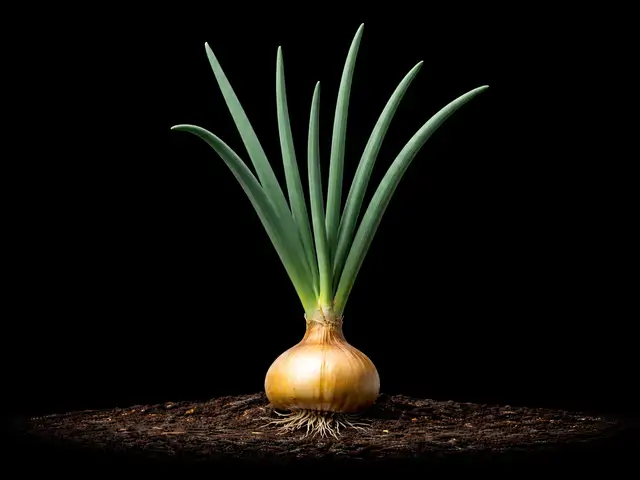
Onion
Safe for people (the green tops are edible like scallions); like all alliums, onions are toxic to dogs and cats in quantity.
Overview
The kitchen's foundation crop - and the one where day length is everything: match long-, intermediate-, or short-day varieties to your latitude or you'll harvest scallions instead of bulbs.
Onions are the flavor base of nearly every cuisine, a long-season allium grown for its storage bulb (technically a biennial, harvested as an annual). They're not hard to grow, but they hinge on one fact most beginners miss: onions bulb in response to day length, and you must match the variety type to your latitude. Plant the wrong type and the plant never triggers bulbing - you get big tops and tiny onions.
The rule: long-day onions (need ~14-16 hours of daylight) for gardens north of about the 36th parallel; short-day onions (bulb at ~10-12 hours) for the South, planted in fall to overwinter; and intermediate/day-neutral types (~12-14 hours) for the transition zone and gardeners who want a type that works across a wide band. Get that right, give onions a long cool leaf-building season and steady care, and they store for months.
At a glance
- Sun
- Full sun
- Water
- Medium
- Spacing
- 3–6 in (typ. 4)
- Mature height
- 12–30 in (typ. 18)
- Start by
- Direct sow · Transplant · Bulbs/cloves
- Frost
- SemiHardy
- Germination
- 7–14 days (typ. 10) @ 50–85 °F (typ. 70)
- Start indoors
- 8–12 wks (typ. 10) before transplant
When to plant
Zone 7a typical frost: last Apr 10 · first Oct 25
Life stages
- Germination day 0–10 from sowing
-
Keep the mix evenly moistevery 1 dOnion seed is slow and short-lived - use fresh seed and keep the surface damp. Indoors, sow 8-12 weeks before your transplant date.
-
Hold 70-75°F for germinationWarmth speeds the slow germination; the wispy grass-like sprouts loop up first before straightening.
No emergence after 2 weeks (old seed - onion seed dies in a year) -
Keep the mix evenly moistevery 1 d
- Seedling day 10–70 from sowing
-
Trim seedling tops to ~3 inchesevery 21 dIf starting indoors, giving the grassy tops a haircut when they flop keeps them stocky and channels energy into roots.
-
Harden off before transplantingOnions want to go out early - they're cold-tolerant - but ease them into outdoor conditions over a week first.
Leggy, floppy tops from weak light indoorsDamping off in soggy trays -
Trim seedling tops to ~3 inchesevery 21 d
- Leaf building day 0–55 from transplant
-
Feed nitrogen through leaf growthevery 21 dEvery leaf becomes a bulb ring, so more (and bigger) leaves before bulbing means a bigger onion. Feed regularly until bulbing starts, then stop.
-
Weed shallowly and relentlesslyevery 10 dOnions have skimpy roots and lose badly to weeds. Keep the bed clean, weeding shallowly so you don't nick the bulbs.
-
Water evenly, ~1 inch/weekevery 7 dConsistent moisture through leaf growth sets final bulb size; onions won't recover lost growth later.
Weed competition stunting the plantsThrips (silvery streaking on the leaves) in hot dry weatherBolting (a flower stalk) after a cold spell - pull those bulbs first -
Feed nitrogen through leaf growthevery 21 d
- Bulbing day 75–100 from transplant
-
Stop feeding once bulbs swellBulbing is triggered by day length for your onion type. Once the bulbs start fattening, stop nitrogen - late feeding delays maturity and hurts storage.
-
Taper off water as tops start to fallEase back on watering as the necks soften and tops flop; dry conditions at the end cure better bulbs and prevent storage rot.
Thick, soft necks (won't store well)Downy mildew or purple blotch on leaves in wet weather -
Stop feeding once bulbs swell
- Harvest day 105–120 from transplant
-
Lift when about half the tops have fallenWhen most necks bend and flop over, the bulbs are done sizing. Loosen with a fork and lift on a dry day - don't bend tops down artificially.
-
Cure 2-4 weeks in a dry, airy placeDry the whole plants out of direct sun with good airflow until the necks are papery and tight, then trim tops and roots for storage.
Rain during curing (invites neck rot)Curing in hot sun (cooks and sunscalds the bulbs) -
Lift when about half the tops have fallen
Harvest
- Style
- One-time harvest
- Typical yield
- 1–1 bulbs (typ. 1)
- By weight
- 3–16 oz (typ. 6)
- About half or more of the tops flopped over at the neck
- Bulb shoulders full and skins beginning to paper over
- Necks softening (the signal bulbing is finished)
Watch out for
Onion Maggot Pest HighApr, May, Jun, Jul
Larvae of a small gray fly that tunnel into allium bulbs and stems, opening the door to rot; worst in cool, wet springs and unrotated allium beds.
Watch for: Wilting or yellowing individual plants; small white maggots in the bulb base when a plant is pulled.
Prevent: Rotate alliums yearly, cover spring growth with row fabric during the fly's egg-laying window, and avoid planting into fresh manure.
Treat: Remove and destroy infested plants (don't compost); beneficial nematodes applied to the soil help suppress larvae.
White Rot (Allium) Disease HighApr, May, Jun
The most serious allium soil disease: a fungus that rots the roots and bulb base with white fluffy growth and tiny black sclerotia that persist in soil for 20+ years. Shallots are fully susceptible.
Watch for: Yellowing, wilting plants that pull up easily; white cottony fungus and poppy-seed-like black dots on the rotted bulb base.
Prevent: Buy certified disease-free sets, never plant grocery bulbs or into infested soil, and quarantine new stock. Once introduced it is essentially permanent.
Treat: None viable for gardens - remove and trash infected plants and never grow alliums in that soil again. This is why clean seed-stock discipline matters.
Thrips Pest MediumJun, Jul, Aug
Tiny slender insects that rasp petals and leaves, streaking and distorting the blooms and silvering the foliage, worst in warm, dry weather.
Watch for: Silvery streaks and flecks on petals and leaves, distorted or discolored flowers, tiny slivers moving when you blow on a bloom.
Prevent: Keep plants healthy and watered; encourage predatory mites and lacewings; blue sticky traps help monitor.
Treat: Insecticidal soap or spinosad for heavy infestations; often thrips simply arrive with the heat that's ending the season anyway.
Rust (Allium) Disease MediumApr, May, Jun, Jul
Fungal disease producing bright orange pustules on the leaves; heavy infections shrink the bulb cluster by cutting the plant's solar panels.
Watch for: Orange-red raised dots and streaks on the leaf blades, worst in humid spells and crowded plantings.
Prevent: Wide spacing for airflow, full sun, avoid overhead watering and excess nitrogen, and rotate alliums on a 3-year cycle.
Treat: Strip the worst leaves early; the crop usually still matures. Harvest on schedule - rust rarely reaches the bulbs themselves.
Stem & Bulb Nematode Pest MediumApr, May, Jun, Jul
Microscopic worms that live inside allium tissue, causing bloated, twisted, stunted growth and soft, cracked bulbs - spread almost entirely through infected planting stock.
Watch for: Stunted, swollen or twisted plants; soft, spongy bulbs with cracked basal tissue.
Prevent: The whole defense is clean stock: certified sets and seed, and never replant from a suspect crop.
Treat: None in-season. Destroy infected crops, compost nothing from them, and rest that bed from alliums for 4+ years.
Downy Mildew (Onion) Disease MediumApr, May, Jun, Sep, Oct
A cool, damp-weather disease (Peronospora destructor) that produces pale patches and fuzzy gray-violet growth on onion leaves, collapsing them and shrinking bulbs; also causes purple blotch to follow in the dead tissue.
Watch for: Pale yellow-green oval patches on leaves with a downy gray-purple fuzz in humid mornings; leaves yellowing and dying back from the tips.
Prevent: Space for airflow, water at the base in the morning, rotate alliums, avoid low wet spots, and grow resistant varieties (Red Wing) where it recurs.
Treat: Remove affected leaves, improve airflow, and apply copper protectively in a wet season. Harvest and cure carefully - infected necks invite storage rot.
Good & bad neighbors
Varieties · 26
A famous heirloom exhibition onion that grows huge (over a pound) and mild - pale golden and sweet - best for fresh use and show; not a long keeper.
A widely adapted intermediate-day (day-neutral) sweet onion that grows large and mild across a broad range of latitudes - the go-to when you're unsure of your day-length type or live near the 36th parallel.
The benchmark long-day storage onion: firm, medium yellow-brown globes with the longest shelf life of any onion (up to a year cured), pungent and dense. The keeper northern gardeners rely on.
A small, mild white short-day onion (the White Bermuda strain) often grown for pearl onions, pickling, and fresh use in the South. Mild and juicy.
A hardy long-day storage onion bred for the northern plains: robust flavor, large firm bulbs, and long storage - a reliable winter-supply onion for cold gardens.
An early-maturing long-day yellow storage heirloom: medium globes that mature ahead of most, store well, and give the northern garden a dependable early keeper.
The onion sold as 'Vidalia' when grown in Georgia's special soils: flattened, pale yellow, exceptionally sweet and mild short-day onion, the South's celebrated sweet onion. Eat fresh - poor keeper.
A leading long-day storage hybrid, replacing Copra in many gardens: uniform medium-large yellow bulbs, excellent disease resistance, and outstanding storage into spring.
Grow
Choose the right day-length type for your latitude, start from seed indoors or transplants/sets, and get them in early for a long leaf-building season.
First choose the day-length type for your latitude - this is the single most important onion decision (see Climate). Then pick a starting method. From seed (the widest variety choice and best storage) sow indoors 8-12 weeks before transplanting; onions are slow. Transplants (bareroot bunches) are the easy middle path. Sets (little dormant bulbs) are the simplest but offer fewer varieties and bolt more readily.
Get onions out early - they're cold-tolerant and every day of cool-season leaf growth before bulbing means a bigger bulb, because each leaf becomes a bulb ring. Space 4 inches apart in rich, loose, well-drained soil in full sun; plant transplants shallow (about an inch deep). Keep the bed weeded from day one - onions have weak roots and won't out-compete weeds.
Care
Feed nitrogen and weed hard through leaf growth, then stop feeding and taper water once bulbs swell.
An onion's whole life is a race to build leaves before day length triggers bulbing, so the leaf-growth phase is where care counts. Feed nitrogen regularly (blood meal, fish emulsion, or a balanced fertilizer) from establishment until bulbing begins - more leaves mean more, larger rings. Keep the bed relentlessly and shallowly weeded, and water evenly, about an inch a week; onions can't make up for growth lost to weeds, drought, or hunger.
Then flip the switch. Once bulbs start to swell, stop feeding - late nitrogen delays maturity, thickens necks, and ruins storage. Taper off watering as the tops begin to soften and fall, so the bulbs cure dry in the ground. Don't fold the tops over by hand to hasten harvest (an old myth that just bruises them); let them flop on their own.
Harvest
Lift when half the tops have fallen, then cure 2-4 weeks in a dry airy place until the necks are papery.
Onions tell you when they're ready: when about half or more of the tops have naturally bent and flopped over at the neck, bulbing is finished. On a dry day, loosen the soil with a fork and lift the bulbs (don't yank by the tops). Any that bolted - sent up a flower stalk - won't store, so eat those first.
Then cure, the step that determines whether they keep for weeks or months. Spread the whole plants, tops on, in a single layer somewhere warm, dry, shaded, and breezy for two to four weeks, until the necks are completely papery-dry and tight and the outer skins are crackly. Only then trim the tops to an inch and the roots close, brush off soil (don't wash), and store. A soft or thick neck is the sign a bulb won't keep.
Storage
Cool, dark, dry, and airy: well-cured storage onions keep 3-8 months; sweet onions only weeks. Never a sealed bag.
Storage life depends on both the variety and the cure. Well-cured storage onions (pungent yellow and red keepers like Copra, Patterson, Yellow Globe) hold 3-8 months in a cool, dark, dry place with airflow - mesh bags, slatted crates, or braided tops hung up. Sweet onions (Vidalia/Granex types, Walla Walla) have high water and sugar and keep only a few weeks to a couple of months; eat those first.
Never store onions in a sealed plastic bag (trapped moisture rots them) or next to potatoes (each hastens the other's spoilage). Keep them cool but not in the fridge unless already cut. Sprouting, soft spots, a strong smell, or mold at the neck mean a bulb is going - use it now. Chop-and-freeze or dehydrate the surplus.
Growing across climates
Day length is the whole game: long-day onions north of the 36th parallel, short-day in the South (fall-planted), intermediate in between.
Everything about growing onions comes down to matching the variety to your latitude, because day length triggers bulbing. North of about the 36th parallel (roughly zones 3-6, the northern US and Canada): grow long-day onions, which bulb when days reach 14-16 hours in early-mid summer; start them early for maximum leaf growth first. South of the 36th parallel (roughly zones 8-11, the southern US): grow short-day onions, which bulb at just 10-12 hours - plant them in fall to grow over the mild winter and bulb in spring (spring-planted short-days bulb too soon to size up). The transition band around the 36th parallel (roughly zone 7): intermediate/day-neutral types are safest and adapt across the widest range. Plant a long-day onion in the Deep South and it never gets enough daylight to bulb; plant a short-day onion up north and it bulbs while still tiny. This one choice makes or breaks the crop.
Troubleshooting
Tiny bulbs usually mean the wrong day-length type or weed/nutrient starvation; thick necks and rot mean poor curing; bolting follows a cold spell.
Big tops but tiny bulbs (or no bulb): most often the wrong day-length type for your latitude, or the plant never built enough leaves - weeds, drought, poor soil, or too-late planting. Match the variety and grow leaves hard early. Bolting (a flower stalk): triggered when young plants hit a cold spell after warmth (common with oversized sets); pull and use those bulbs first, they won't store. Thick, soft necks and bulbs rotting in storage: under-curing, or too much late nitrogen and water - cure fully and stop feeding at bulbing. Silvery streaks and stippling on leaves: thrips in hot dry weather. Bulbs rotting in wet ground: poor drainage; onions demand it. Yellowing, wilting plants that pull up easily with white fungus: white rot, a permanent soil problem - see Threats.
Nutrition
Small servings, real chemistry: vitamin C, B6, and the organosulfur and quercetin compounds behind the health research.
Nobody eats onions by the bowlful, but they carry real nutrition at seasoning quantities: vitamin C, vitamin B6, folate, potassium, and fiber, especially the prebiotic fibers (inulin and fructans) that feed beneficial gut bacteria. Their signature compounds are the organosulfur molecules released when you cut them (the same ones that make you cry) and the flavonoid quercetin, concentrated in red and yellow skins.
Those compounds are why onions show up in cardiovascular, anti-inflammatory, and blood-sugar research - as part of a diet, not as a drug. Red onions carry the most quercetin and anthocyanins; sweet onions the least pungency and sulfur. Cooking mellows the sharp compounds but keeps most of the quercetin. Grow them for flavor; the health benefits ride along.
In the kitchen
The universal base - sweated for foundation, caramelized for sweetness, raw for bite, grilled or pickled - plus green tops as scallions.
The onion is the most-used aromatic on earth, and it's really several ingredients depending on treatment. Sweated gently in fat, it's the soft, savory foundation under countless soups, sauces, and braises. Caramelized slowly to deep brown, it turns jammy-sweet for burgers, tarts, and French onion soup. Raw (best from sweet or red onions, or soaked in cold water to tame the bite), it's the crunch in salads, salsas, and sandwiches. Grilled or roasted whole, it mellows into sweetness.
Match the type to the job: pungent yellow storage onions for cooking, mild sweet onions (Vidalia, Walla Walla) for raw and roasting, red onions for color and salads and pickling (quick-pickled red onion is a bright universal topping). And don't forget the green tops - thinnings and young plants are scallions, and even a bolted onion's hollow stalk can be snipped as garnish.
Propagation & seed saving
Biennial like garlic's cousin: let a bulb overwinter and flower in year two for seed, or multiply the easy way from sets.
Onions flower and set seed in their second year, so seed-saving means replanting a few of your best cured bulbs the following spring (or leaving them in the ground in mild zones). In year two each bulb sends up a tall stalk topped with a globe of small white flowers that yields hundreds of black seeds. Cut the heads when the seed shows, dry them, and rub the seed out - but note the catch: onion seed is short-lived, viable only about a year, so save it fresh and sow it the next season, never stockpile it.
Onions are insect-pollinated and cross with other flowering onions nearby, so isolate for pure seed, and save from open-pollinated (not hybrid) types. The easier multiplication route is sets - small bulbs grown from a dense seeding one year and replanted the next - which is how sets are commercially produced and how you can perpetuate a variety without the two-year seed cycle.
Medicine
A long, respectable folk-medicine record with modern support for modest cardiovascular and anti-inflammatory effects - as food.
Onions, like their cousin garlic, have one of the oldest and best-documented places in traditional medicine - used across ancient Egypt, Greece, India, and China for infections, coughs, wounds, and heart complaints, and the folk 'onion poultice' or onion-and-honey cough syrup persists to this day. The modern evidence is respectable if modest: the organosulfur compounds and quercetin show anti-inflammatory, antioxidant, and mild cardiovascular effects in studies, and the prebiotic fibers genuinely support gut health.
As with most kitchen medicine, keep it honest - these are the gentle benefits of eating onions regularly, not a treatment, and the strongest effects come from raw or lightly cooked onion where the sulfur compounds survive. The onion earns its folklore better than most: a food that quietly supports health, best taken by the plateful in cooking rather than the spoonful as a remedy.
History
One of humanity's oldest crops - a pyramid-builder ration and a symbol of eternity in Egypt - now grown on every inhabited continent.
The onion is among the oldest cultivated plants, grown for at least 5,000 years and probably domesticated in Central Asia. It was central to ancient Egypt, where its concentric rings symbolized eternity, onions were painted in tombs and buried with pharaohs, and (with garlic and radishes) they reportedly fed the laborers who built the pyramids. Greeks, Romans, and every civilization since prized the onion for keeping well, traveling far, and flavoring everything.
Because it stores and ships so well, the onion spread across the entire world early and became a base ingredient of virtually every cuisine - one of the few crops with no regional cuisine that doesn't use it. Today it's grown on every inhabited continent, in the same day-length-matched way home gardeners still puzzle over: long-day in the north, short-day in the south, an ancient crop still governed by the sun.
Cook it
All 64 recipes →No grower tips for Onion yet — yours could be the first.
Sign in to share what works in your garden.