
Add it to your home screen and it opens full screen: no browser bars, one tap away, and everything stays signed in. Free, nothing to download from an app store.
- Tap the Share button in your browser
- Scroll down and choose “Add to Home Screen”
- Open GrowSomeFood from your home screen
- Open your browser’s menu
- Choose “Add to Home screen” or “Install app”
- Open GrowSomeFood from your home screen
Oats
The friendly cool-season grain that does double duty: an easy porridge grain with graceful drooping heads, and one of the best and easiest cover crops there is - fast, weed-smothering, and winter-killed for effortless soil building.
Safety notes The groat (hulled oat grain) is the food; the hulls are not eaten and the green plant is not a vegetable, though oat straw and green oats are brewed as a tea. Oats are gluten-free but are often cross-contaminated with wheat and barley; home-grown oats kept apart avoid that. Pure oats are still not automatically celiac-safe - some people with celiac react to avenin, oats' own protein - so introduce oats only on medical advice. Dry oats fully and discard moldy, musty, or discolored grain.
Overview
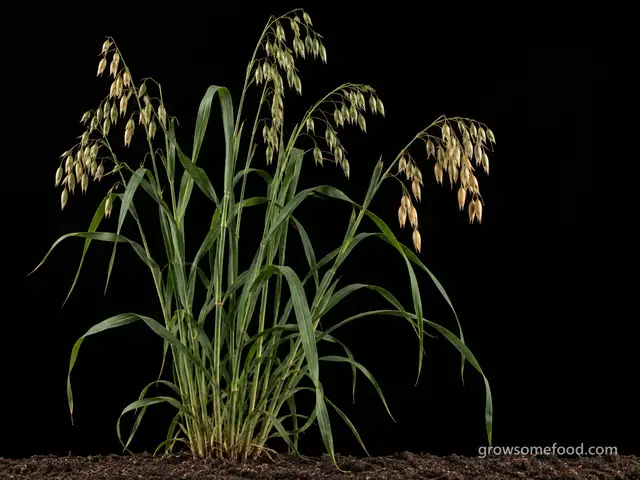
Oats are perhaps the most beginner-friendly grain a gardener can grow, and one of the most useful plants in the whole cover-crop toolkit. A fast, cool-season grass with distinctive open, drooping heads of dangling grain (quite unlike the tight spike of wheat or barley), it grows quickly in cool weather, tolerates poorer soil, and asks very little. Grow it for a genuine crop of oat groats to roll or cut for porridge, or grow it purely to feed your soil.
The one thing to knowA fast, cool-season grass with distinctive open, drooping heads of dangling grain (quite unlike the tight spike of wheat or barley), it grows quickly in cool weather, tolerates poorer soil, and asks very little.
Quick facts
- Sprouts in
- 7 daysRange: 4–12 days
- Soil temperature
- 60 °FRange: 38–80 °F
- Height
- 40 inRange: 24–60 in
- Spread
- 4 inRange: 2–6 in
- Cold
- Takes light frostdamaged below 10°F
- Heat
- Struggles above 90°F
- Life cycle
- Annual
- Save seeds
- About 110 days after plantingRange: 90–130 days
- Soil
- Well-drained
- Water
- Medium
- Plant spacing
- 2 inRange: 1–4 in
When to plant
Nothing is open today. Spring sowing opens 5 months, Mar 13 to Apr 24.
- Direct sow Mar 13 – Apr 24 Opens in 144 daysAbout 4 weeks before to 2 weeks after your last frost (Apr 10 here)SPRING OATS: sow as early as the ground can be worked, well before the last frost - oats love cool weather and must ripen before summer heat. The main way oats are grown for grain in cold and temperate zones.
- Direct sow Aug 26 – Sep 25 Opens in 310 daysAbout 9 weeks before to 4 weeks before your first frost (Oct 25 here)NO GRAIN HARVEST - cover crop only: sow in late summer/early fall as a fast, winter-killed cover. Oats smother weeds, then die in hard freezes to leave an easy, mulch-covered bed for spring. For a grain crop in these zones, use the spring window.
Frost here: last around Apr 10 (Mar 27 to Apr 24 most years), first around Oct 25. Zone averages, your own yard may run a week or two either way.
Life stages
From the first start to harvest
Follow the growing sequence. Choose a stage to see its care and signs to watch for.
Stage 1 of 6 · The growing sequence
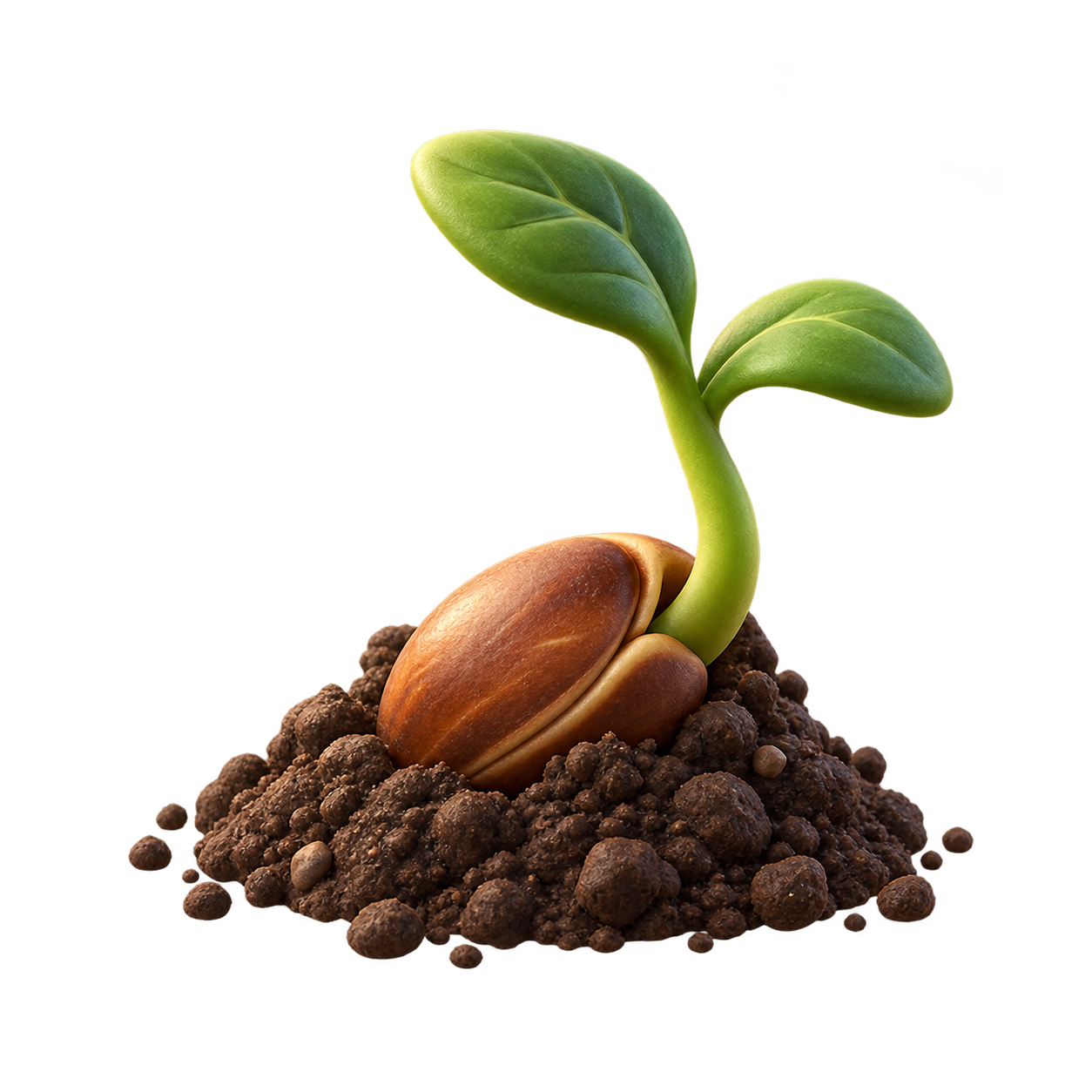
Germination
Day 0 to 8 from sowing
Care at this stage
-
Sow into cool, moist soil for a fast start
Oats sprout readily in cool, moist ground (as low as 38F). Broadcast or drill about an inch deep into a firm, moist seedbed; they germinate quickly and evenly in the cool weather they prefer.
-
Rake in broadcast seed so birds don't take it
Cover or rake in broadcast seed for good soil contact and to keep birds from eating it before it sprouts.
Stages can overlap; weather, variety, and growing conditions change the pace.
Harvest
- The whole plant has turned golden and the straw is drying
- The grain is firm and hard (or at soft-dough if finishing in the sheaf)
- The open panicles nod under the weight of filled grain
- Cut when golden and the grain is firm · every 3 days
- Thresh, winnow, and (for common oats) hull the groats
Per plant 0.5 to 3 ozPicking pull once
Cook with Oats
Watch out for
6 to know. 1 is high-risk: Crown Rust. None are active in October.
Crown RustSeverity High DiseaseSeason: May–JulBright orange to yellow raised pustules scattered on the leaves that rub off as orange powder, later turning dark, with yellowing and dieback in heavy infections.
Oats' signature disease - variety resistance and early sowing to beat the humid peak are the practical home controls.
Bright orange to yellow raised pustules scattered on the leaves that rub off as orange powder, later turning dark, with yellowing and dieback in heavy infections.
Little to be done once heavy; resistant varieties and early sowing prevent it, and late rust on a nearly ripe crop causes limited loss.
Grow resistant varieties (the main defense), give airflow, sow early so the crop ripens before rust peaks, and remove nearby buckthorn (the alternate host) if practical.
The most important disease of oats: a fungus (Puccinia coronata) that covers the leaves with bright orange-yellow pustules, sapping the plant and shriveling the grain, worst in warm, humid weather and where its alternate host (buckthorn) grows nearby.
Birds & WildlifeSeverity Medium WildlifeSeason: Jun–AugFruit disappearing from the outermost, most exposed parts of the plant first, and from the top of a tree where you cannot reach anyway.
Manageable at garden scale - protect the seed at sowing and the grain at ripening; the open oat panicle is a little more exposed to birds than a tight spike. Cutting early at soft dough and finishing the drying under cover works well.
Fruit disappearing from the outermost, most exposed parts of the plant first, and from the top of a tree where you cannot reach anyway. Single neat pecks and gouges in ripening fruit, with several fruits sampled rather than one eaten through - the classic sign that it was birds rather than an animal. Heads of grain or seed going visibly lighter and emptier as they ripen, with hulls and chaff scattered underneath. Freshly sown seed vanishing off the surface of a bed before it germinates. Bird traffic in and out of the plant picking up as the crop colors, and birds waiting on nearby wires and branches. Wasps arriving at the pecked and split fruit shortly afterward.
There is no treatment once a crop is being taken - only protection and timing, so the answer is to get netting on and to pick what is ready. Reflective tape, flash ribbon, spinners, and decoy predators do work, but only for a few days at a time: birds habituate fast, so move and rotate them and never rely on them as the main defense for a crop you care about. Cut and gather grain or seed heads a little early, at firm dough, and finish drying them under cover instead of leaving them standing for the flocks. Plant a little extra, or a decoy crop the birds prefer, and accept sharing anything that crops heavily. On a wild or foraged patch, fruit going to birds and small mammals is the point of the plant rather than a problem to solve.
Net, and net early. Bird netting draped over a frame or hoops so it stands off the fruit, with the edges closed at ground level, is the only thing that reliably works at harvest scale - and it has to go on before the crop starts to color, because once birds have found the food they are far harder to displace. Keep fruit trees small enough that netting them is actually feasible; that decision gets made years earlier, at planting. Bags of mesh, organza, or paper slipped over individual heads, clusters, or prize fruit protect a small crop without netting the whole plant. Then shorten the exposure: pick promptly and completely rather than leaving ripe fruit hanging as a lure, clear split and dropped fruit that draws birds and wasps alike, and where a crop can finish off the plant, harvest a little early and ripen or dry it under cover. Rake in or cover broadcast seed so it is not lying in plain view.
Birds find ripening fruit and seed before you do. Robins, waxwings, starlings, catbirds, jays, sparrows, finches, blackbirds, and doves all work a garden, and the pressure arrives in a narrow window - the last days before harvest, when sugar rises, color changes, and the crop softens or the grain hardens. A flock can strip a small planting in a day or two, and birds that only peck rather than take whole fruit still leave wounds that rot or draw wasps. Squirrels, chipmunks, and other wildlife usually turn up on the same crop at the same time. This is competition rather than disease: the birds are not harming the plant, and a big tree or a heavy-cropping bush often has enough for everyone - but on a small planting it can be the difference between a harvest and none.
Fusarium Head Blight (Scab)Severity Medium DiseaseSeason: Jun–JulPrematurely bleached, straw-colored spikelets or whole heads while the rest is green, often with pink-orange fungal growth at the base of the florets, and shriveled, chalky-white 'tombstone' kernels.
The mycotoxin makes scab a safety issue, not just a yield one - discard suspect grain, and dry small-plot sheaves somewhere genuinely airy.
Prematurely bleached, straw-colored spikelets or whole heads while the rest is green, often with pink-orange fungal growth at the base of the florets, and shriveled, chalky-white 'tombstone' kernels.
No home cure - discard shriveled, discolored, musty, or moldy grain rather than eating or feeding it; the toxins survive cooking. Prevention through rotation and fast, thorough drying is the control.
Rotate away from corn and small-grain residue, avoid dense stands that stay wet, and harvest and dry promptly - sheaves left damp in wet weather are the home-scale version of the problem.
A fungal disease infecting the heads in warm, wet weather at flowering, shriveling the grain and contaminating it with mycotoxins - a food-safety concern as well as a yield loss. Oats are among the cereals most affected by the T-2 and HT-2 toxins.
LodgingSeverity Medium DisorderSeason: Jun–JulWhole patches bent or flattened to the ground, especially after storms or on rich, over-fertilized ground, with tangled stems and heads in the dirt.
More a management issue than a pest - the fix is lean feeding and sturdy varieties rather than any treatment.
Whole patches bent or flattened to the ground, especially after storms or on rich, over-fertilized ground, with tangled stems and heads in the dirt.
Little can be done once lodged - harvest lodged teff carefully; prevention through lean feeding and good variety choice is the real answer.
Feed lightly (avoid excess nitrogen), grow teff on lean-to-moderate soil, avoid over-watering, and choose sturdier or shorter varieties where available.
The flattening of a stand when tall, weak stems bend or break under their own weight, wind, or rain - teff's most significant weakness, made worse by rich soil, excess nitrogen, and heavy heads, and it tangles the crop and complicates harvest.
AphidsSeverity Low PestSeason: Apr–JunDense clusters of tiny insects packed onto shoot tips, flower buds, and the undersides of young leaves.
Cereal aphids can transmit barley yellow dwarf virus, which matters more than the feeding, though oats are less affected than wheat and barley - rarely a serious garden problem. Avoid very early fall sowing, which exposes seedlings to aphid flights.
Dense clusters of tiny insects packed onto shoot tips, flower buds, and the undersides of young leaves. Curled, cupped, or distorted new growth that never opens properly. A sticky shine on the leaves - and on whatever sits under the plant - that later goes black with sooty mold. Tiny white cast skins left behind where a colony has been feeding. Ants running steadily up and down the stems, which is often the first thing you notice. Mottled, streaked, or misshapen leaves that do not grow out can mean a virus the aphids brought with them rather than the feeding itself.
Knock the colonies off with a hard jet of water and repeat every few days - on most plants that alone ends it. Pinch out or prune off the worst-infested tips rather than treating the whole plant. If colonies keep rebuilding, spray insecticidal soap or horticultural oil directly onto the insects, covering leaf undersides, and repeat weekly until they are gone; treat early or late in the day, and never spray a wilted or heat-stressed plant. Avoid broad-spectrum insecticides - they kill the ladybugs, lacewings, and parasitic wasps that were about to solve the problem for you, and aphid numbers usually come back worse afterward. Anything you spray must be labeled for the plant you are treating; follow that label and observe its pre-harvest interval. On anything you eat, wash leaves, heads, and buds well before use, since aphids hide down in crowns, folds, and tight growth.
Go easy on nitrogen: the soft, lush growth that heavy feeding produces is exactly what aphids breed on. Check new growth once a week through spring and early summer so you catch colonies while they are still small, and rub the first few out with your fingers. Leave flowering plants nearby and skip broad-spectrum sprays - ladybugs, lacewings, hoverflies, and parasitic wasps do most of this work for free, and they only stay if there is something for them to eat. Keep ants off the plant where you can, since they protect aphids from those predators. Water steadily so plants are not stressed, and check any new plant over before you bring it home or move it indoors, since aphids usually arrive on something else.
Aphids are small soft-bodied sap-suckers - green, black, gray, pink, or waxy white, and mostly wingless - that gather in dense colonies on the tenderest new growth: shoot tips, buds, and the undersides of young leaves. They breed extremely fast in mild weather, so a few can become hundreds inside a week. Their feeding curls and distorts soft growth, and the sticky honeydew they excrete coats everything below and turns black with sooty mold. Ants often farm and defend the colonies for that honeydew. A few aphids are normal on almost any plant and a healthy plant shrugs them off; only dense, persistent colonies do real damage, and some aphids also spread plant viruses as they feed.
Head Smut & Kernel SmutSeverity Low DiseaseSeason: Jun–JulDark, powdery, sooty spore masses in the seed heads or in place of individual kernels, standing out against healthy panicles.
Uncommon with clean seed - since it's seed-borne, saving seed only from healthy, smut-free stands prevents it.
Dark, powdery, sooty spore masses in the seed heads or in place of individual kernels, standing out against healthy panicles.
No cure for infected heads - remove and destroy them before they shed spores, and save seed only from healthy, smut-free plants.
Sow clean, disease-free or treated seed and grow resistant varieties; the fungus is carried on and in the seed, so clean seed is the key control.
Seed-borne smut fungi that replace the developing grain in the head with masses of dark, dusty spores, turning affected heads into sooty black or brown clusters instead of grain.
Good & bad neighbors
Plant nearby
-
Oats are often used as a fast 'nurse crop' sown with slower crimson clover: the oats establish quickly and shade out weeds while the clover gets going underneath, then winter-kill to release the clover as a nitrogen cover.
-
Oats and peas are a classic cover-crop and forage mix: the oats give the climbing legume support and bulk while the pea fixes nitrogen - the grain-legume 'nurse crop' partnership at its simplest.
-
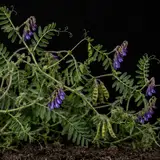
A common cover-crop mix - oats provide structure and quick weed suppression while hairy vetch fixes nitrogen and scrambles up the oat stems; the oats winter-kill and the vetch carries on.
- Traditional pairings, thin evidence
-
Peppers / tomatoes (as a preceding cover)Winter-killed oats leave a clean, mulched, weed-free bed that transplanted vegetables like peppers and tomatoes love to go into in spring - a rotation benefit rather than a same-season pairing.
Varieties · 4
You pick one when you add Oats to your garden. Its days to maturity set your harvest window.
Spring Oats 2 varieties
Hulless / Naked Oats
The gardener's food oat: the grain threshes cleanly free of its hull, giving edible groats straight from threshing and winnowing with none of the tricky de-hulling that standard oats require.
Variety details for Hulless / Naked Oats
Open drooping panicles whose plump grain releases free of the hull when threshed.
hullessnaked-oatfoodeasy-threshingThe single best choice if you're growing oats to actually eat. Spring-sown for a summer harvest.
Common Spring Oats
Standard hulled spring oats grown for grain, forage, straw, and cover cropping - fast, vigorous, and adaptable.
Variety details for Common Spring Oats
Tall plants with classic open, spreading panicles of hulled grain.
spring-oathulledgrainforageGreat as a cover crop or for livestock and straw, but the tight hull makes them a chore to process for human food (grow hulless for eating).
Winter Oats 1 variety
Gray Winter Oats
A more cold-tolerant fall-sown winter oat for mild-winter regions, overwintering as a green cover or forage and heading in spring.
Variety details for Gray Winter Oats
Fall-established green stands that overwinter and head out the following spring.
winter-oatfall-sownmild-winterforageUseful in the South and mild zones where oats grow through the cool season rather than being killed by winter.
Other varieties 1 variety
Cover-Crop Oats (Winter-Kill Type)
Oats grown specifically as a fall cover crop: sown late summer to early fall for fast, weed-smothering growth that then winter-kills in cold zones, leaving an easy, mulch-covered, weed-free bed to plant into in spring.
Variety details for Cover-Crop Oats (Winter-Kill Type)
Lush green fall growth that dies back to a soft straw mulch after hard freezes.
cover-cropwinter-killfastweed-smotherThere is no grain harvest - the crop is terminated by hard freezes about 8-10 weeks after sowing, or mowed in spring in milder winters. The classic beginner-friendly, self-terminating cover crop.
Grower tips
Notes from growers, tagged with the zone they grow in. A person reads every post before it appears.
Nobody has posted about Oats yet. The first one usually saves someone a season.
Free account. Your post shows your grower name and zone, never your email.