
Add it to your home screen and it opens full screen: no browser bars, one tap away, and everything stays signed in. Free, nothing to download from an app store.
- Tap the Share button in your browser
- Scroll down and choose “Add to Home Screen”
- Open GrowSomeFood from your home screen
- Open your browser’s menu
- Choose “Add to Home screen” or “Install app”
- Open GrowSomeFood from your home screen

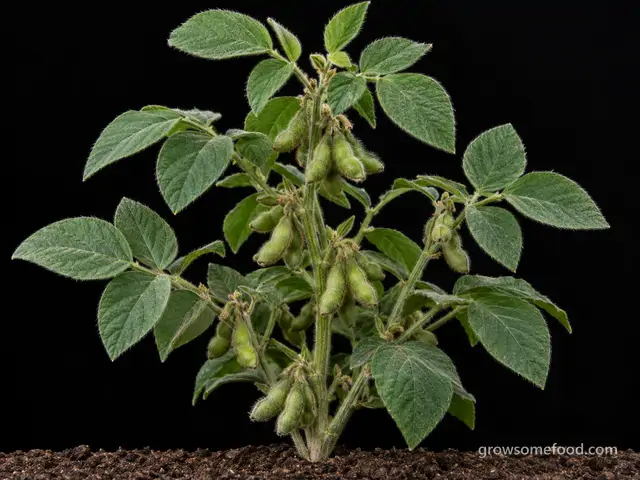
Edamame
Vegetable soybeans picked young and green as a sweet, protein-packed snack - easy to grow, but with a famously short harvest window that rewards succession planting.
Safety notes The immature green beans are eaten cooked - never raw. Like all soybeans, raw edamame contains trypsin inhibitors and lectins that make it hard to digest and mildly toxic uncooked; a few minutes of boiling or steaming makes it perfectly safe and delicious.
Overview
Edamame is the soybean harvested young - picked at the plump, bright-green immature stage, boiled or steamed in the pod, and popped straight into your mouth. It's the same species as the field soybean but grown from sweeter, larger-seeded vegetable varieties bred for fresh eating. A warm-season bush legume, it's genuinely easy to grow: sow after frost, keep it watered, and each compact plant hangs heavy with fuzzy pods of two or three beans.
The one thing to knowThe one catch worth planning around is the harvest window.
Quick facts
- Sprouts in
- 10 daysRange: 6–14 days
- Soil temperature
- 77 °FRange: 60–90 °F
- Height
- 28 inRange: 20–36 in
- Spread
- 12 inRange: 8–16 in
- Cold
- Killed by frostdamaged below 32°F
- Heat
- Struggles above 95°F
- Life cycle
- Annual
- Soil
- Well-drained
- Water
- Medium
- Plant spacing
- 4 inRange: 2–6 in
When to plant
Nothing is open today. Spring sowing opens 6 months, Apr 17 to May 15.
- Direct sow Apr 17 – May 15 Opens in 180 daysAbout 7 days after to 5 weeks after your last frost (Apr 10 here)Sow 1-3 weeks after last frost once soil holds above 60°F. Because the harvest window is so short, sow small batches every 2 weeks (or mix early/mid/late varieties) to spread the picking.
- Direct sow Jul 12 – Jul 22 Opens in 266 daysAbout 15 weeks before to 14 weeks before your first frost (Oct 25 here)A second sowing only pays if ~95 warm, frost-free days still remain before your first fall frost - which is why this one is counted back from frost rather than forward from spring. Use an early variety.
Frost here: last around Apr 10 (Mar 27 to Apr 24 most years), first around Oct 25. Zone averages, your own yard may run a week or two either way.
Life stages
From the first start to harvest
Follow the growing sequence. Choose a stage to see its care and signs to watch for.
Stage 1 of 6 · The growing sequence
Germination
Day 0 to 10 from sowing
Care at this stage
-
Sow 1 inch deep into WARM soil
Wait until the soil is reliably above 60°F (like other beans, edamame rots in cold ground). Sow 1 inch deep and just 2-4 inches apart - edamame is planted densely and thinned later.
-
Don't presoak; inoculant helps new ground
Soybean seed can crack if presoaked - sow it dry. A soybean-specific rhizobium inoculant boosts nitrogen fixation in soil that has never grown soybeans.
Stages can overlap; weather, variety, and growing conditions change the pace.
Harvest
- Pods bright green and plump, beans filling 80-90% of the pod
- Peak lasts only about 3-7 days before pods harden and yellow
- Most pods on a plant ripen together - pick or pull the whole plant
- Pick during the SHORT peak - or pull the whole plant · every 2 days
- Cook or chill immediately
Per plant 20 to 70 pods, 8 to 32 ozPicking pull once
Cook with Edamame
Watch out for
4 to know. 3 are high-risk: Deer (browse resistance), Japanese Beetles, Stink Bugs. None are active in October.
Deer (browse resistance)Severity High WildlifeSeason: May–SepGrowth cleanly missing overnight, with the plant browsed back to a level line about as high as a deer can comfortably reach.
Soybeans are one of deer's favorite garden crops and a preferred food - in deer country, fencing edamame from the start is close to essential, because browsing pressure on this crop is especially heavy.
Growth cleanly missing overnight, with the plant browsed back to a level line about as high as a deer can comfortably reach. Ragged, torn stem ends rather than the clean angled cut a rabbit leaves - the single most reliable identifier. Buds and flowers gone while the foliage below is untouched, since deer often take the best part first. Hoof prints and droppings in soft ground near the damage. Repeat visits, with fresh damage each morning once a planting has been found. On young trees, shredded and stripped bark and broken low branches in autumn - that is antler rubbing rather than feeding.
There is no chemical fix, only exclusion and recovery. Get physical protection up immediately after the first damage, because deer return to a known meal, and reinforce or rotate whatever you were relying on before. Most plants regrow from browsing if the crown and roots are intact - feed and water a grazed plant and protect the regrowth while it comes back. What does not recover in the same season is anything whose buds or flowers have been taken, and a young tree whose bark has been rubbed right around the trunk is usually lost. Where deer pressure is genuinely heavy, the honest answer is to fence properly or to grow the plants deer leave alone, rather than to keep replacing losses.
Fencing is the only thing that reliably works. Eight feet is the standard for excluding deer, or two parallel four-foot fences a few feet apart, which they will not jump because they cannot judge the landing. Short of that, cage individual plants: a sturdy wire cage or trunk guard around every young tree, left on until the trunk is thick and the canopy is above browse height, prevents both browsing and antler rubbing and is the single highest-value thing you can do for a young tree. Repellent sprays do help at moderate pressure, but they wash off and deer habituate, so reapply after rain and rotate between different types through the season. Motion-activated sprinklers, scent deterrents, and noise devices work for a while and then stop. Siting matters too: plants close to the house, in daily traffic, and screened behind other planting get browsed less than the same plant out at the boundary.
Deer are the largest garden problem across much of the country, and where pressure is high they set the limit on what you can grow at all. They browse at night and around dawn and dusk, taking tender shoots, leaves, buds, flowers, and fruit within about five feet of the ground, and they come back night after night to anything they have found and liked. Because they have no upper incisors they tear rather than cut, leaving ragged stem ends - that is how you tell deer damage from a rabbit's clean angled cut. In fall, bucks rub their antlers on young trunks and can strip the bark right around a stem, which kills a young tree outright. Palatability varies enormously between plants and between seasons: a herd short of food in late winter eats things it ignores in June, and no plant is truly deer-proof.
Japanese BeetlesSeverity High PestSeason: Jun–AugClusters of shiny metallic beetles massed together on the upper, sunniest foliage and down inside open blooms, heaviest on warm sunny afternoons from around late June.
Soybeans are a favored Japanese-beetle host - expect them in beetle country and scout daily through midsummer. Row cover before pods form is practical here.
Clusters of shiny metallic beetles massed together on the upper, sunniest foliage and down inside open blooms, heaviest on warm sunny afternoons from around late June. Leaves reduced to lace, with the veins left intact and the tissue between them gone - unmistakable, and quite different from the ragged chewing of a caterpillar. Ragged, chewed petals and blooms that never open properly. Beetles that let go and drop straight to the ground when you disturb the plant. Feeding damage on ripening fruit, on the plants they also take fruit from. Whole branches going brown and lacy at the top of a plant while the shaded lower growth stays untouched.
Persistent morning hand-picking into soapy water is the most effective home control there is, and on a vigorous established plant the damage is usually cosmetic and needs nothing else. Neem deters feeding rather than killing, and has to be reapplied. For heavy pressure, spinosad or a targeted insecticide labeled for the plant will work - but time any spray away from bloom and apply it at dusk to protect bees, and observe the pre-harvest interval on anything you eat. On flowering plants, some gardeners simply shear the blooms off for a couple of weeks and let the plant rebloom once the wave has passed, which removes the lure as well as the damage. Young plants and young trees are the ones worth defending: a mature tree or an established vine tolerates several weeks of leaf loss without lasting harm.
Hand-picking is genuinely the main defense in a home garden. Go out in the cool of the morning while the beetles are sluggish, hold a tub of soapy water underneath, and knock them in - they drop when disturbed, so most fall straight into it. Do it daily through the flight: because the beetles call each other in, taking them off early stops a plant becoming a beacon. Do not put pheromone or lure traps anywhere near the garden - they demonstrably pull in far more beetles than they catch. And do not count on lawn grub control: milky spore has performed poorly and inconsistently in field trials across most of the US, and treating your own turf does not reduce the adults feeding on your plants, because they fly in from surrounding properties. Where it is practical, row cover or netting through the peak flight excludes them outright. Otherwise riding out the six-to-eight-week wave is a legitimate strategy, since most established plants absorb the damage.
Japanese beetles are metallic green-and-copper beetles about half an inch long that emerge in early summer and feed for six to eight weeks. They feed in aggregating masses - one beetle's feeding releases a scent that draws in more - so a plant goes from untouched to covered in a couple of days. They chew the soft tissue between the leaf veins and leave the veins standing, so the leaf ends up as a brown lace skeleton, and they shred open flowers and sometimes ripening fruit as well. They work the sunniest upper parts of a plant on warm afternoons. The white C-shaped grubs spend the rest of the year in turf and pasture soil eating grass roots, and the adults then fly in from wherever they hatched, which can be some distance away.
Stink BugsSeverity High PestSeason: Jul–SepWarty, deformed, or twisted pods with sunken or hardened feeding spots; shield-shaped bugs and their barrel-shaped egg clusters on leaves.
Stink bugs are the pest that most directly wrecks edamame quality, feeding on the beans themselves rather than the leaves - watch pods closely as they fill.
Warty, deformed, or twisted pods with sunken or hardened feeding spots; shield-shaped bugs and their barrel-shaped egg clusters on leaves.
Hand-pick bugs into soapy water in the cool morning; spot-treat heavy pod-stage infestations. Because they damage the seeds directly, catch them before pods fill.
Keep the garden and margins weed-free to reduce overwintering sites, scout as pods form, and use row cover until flowering; encourage parasitic wasps.
Shield-shaped bugs that pierce developing pods and suck the sap from the immature beans, causing shriveled, dimpled, discolored, or aborted seeds - directly damaging the part you eat.
Mexican Bean BeetleSeverity Medium PestSeason: Jun–AugFuzzy spiny yellow larvae and neat clusters of yellow eggs on the leaf undersides, lacy skeletonized leaves with only the veins left, and coppery black-spotted adults on the foliage.
It feeds on soybeans as readily as on snap beans. Check the leaf undersides - the larvae do most of the damage there before the adults are obvious.
Fuzzy spiny yellow larvae and neat clusters of yellow eggs on the leaf undersides, lacy skeletonized leaves with only the veins left, and coppery black-spotted adults on the foliage. The larvae are usually well established underneath before the adults become obvious, so turn the leaves over.
Hand-crush eggs and larvae on the leaf undersides - done every day or two while the pods are filling, this alone controls a home planting. Insecticidal soap or neem knocks back a heavy larval outbreak, and the parasitic wasp Pediobius is available for large plantings. Do not spray anything onto open flowers.
Float row cover over young plants, scout leaf undersides weekly from midsummer and crush the egg clusters before they hatch, grow early varieties that finish before peak beetle season where you can, clean up bean-family debris in fall, and rotate the bean bed.
A coppery, black-spotted beetle that looks like an oversized ladybug and is in fact a member of the same family - but this one eats plants. The spiny yellow larvae do most of the damage, feeding on the undersides of bean-family leaves and skeletonizing them into lace, which cuts the photosynthesis that fills the pods. Both adults and larvae feed, and over a long season the generations stack up.
Good & bad neighbors
Plant nearby
- Traditional pairings, thin evidence
-
A traditional legume-grass pairing: the beans fix nitrogen the hungry corn uses, and the tall corn and low bush soybeans share space at different heights.
-
Draws pollinators and beneficials and suppresses root-knot nematodes; a useful border interplant.
-
Beans and potatoes are a traditional mutual pairing - the legume's nitrogen benefits the potatoes, and some lore holds each deters the other's beetles.
-
A common bean-companion pairing; the legume enriches the soil and the crops occupy different niches without much conflict.
-
A three-sisters-style pairing: nitrogen-fixing beans with sprawling squash that shades the soil; give the bush soybeans their own sun.


Varieties · 6
You pick one when you add Edamame to your garden. Its days to maturity set your harvest window.
Midori Giant
A popular, widely grown vegetable soybean with large, plump beans (usually two to three per pod) and heavy yields on compact plants.
Variety details for Midori Giant
Bushy plants hung with plump green pods of large beans.
earlylarge-seededhigh-yieldclassicRelatively early and dependable - a great default edamame for most gardens.
Envy
One of the earliest and most cold-tolerant edamame varieties, maturing in around 75 days on small plants - the go-to for short-season and northern gardens.
Variety details for Envy
Compact plants with small-to-medium bright-green pods.
earlyshort-seasoncompactcold-tolerantSmaller beans but reliable where the season is tight.
Chiba Green
A Japanese-type edamame prized for large, sweet, bright-green beans and good flavor, on sturdy productive plants.
Variety details for Chiba Green
Vigorous plants with well-filled pods of large, sweet green beans.
mid-seasonlarge-seededsweetjapaneseA favorite mid-season variety for classic boiled-in-the-pod eating.
Butterbeans
A later, large-seeded variety named for its rich, buttery flavor and big plump beans, worth the extra time in a long-enough season.
Variety details for Butterbeans
Tall, productive plants with large, plump, well-filled pods.
latelarge-seededbutteryhigh-yieldPairs well with earlier types for a staggered harvest.
Tohya
A tender, sweet-flavored Japanese vegetable soybean with a smooth texture and reliable set of well-filled pods.
Variety details for Tohya
Medium plants with clusters of plump, tender-beaned pods.
mid-seasonsweettenderproductivePopular for fresh eating and freezing; a dependable mid-season choice.
BeSweet 292
A sweet, large-seeded variety selected for excellent fresh flavor and good yields, widely grown by market gardeners.
Variety details for BeSweet 292
Well-filled green pods of large, sweet beans on productive plants.
mid-seasonsweetlarge-seededConsistent, plump pods with the sugary taste that makes homegrown edamame worth it.
Grower tips
Notes from growers, tagged with the zone they grow in. A person reads every post before it appears.
Nobody has posted about Edamame yet. The first one usually saves someone a season.
Free account. Your post shows your grower name and zone, never your email.