Add it to your home screen and it opens full screen: no browser bars, one tap away, and everything stays signed in. Free, nothing to download from an app store.
- Tap the Share button in your browser
- Scroll down and choose “Add to Home Screen”
- Open GrowSomeFood from your home screen
- Open your browser’s menu
- Choose “Add to Home screen” or “Install app”
- Open GrowSomeFood from your home screen
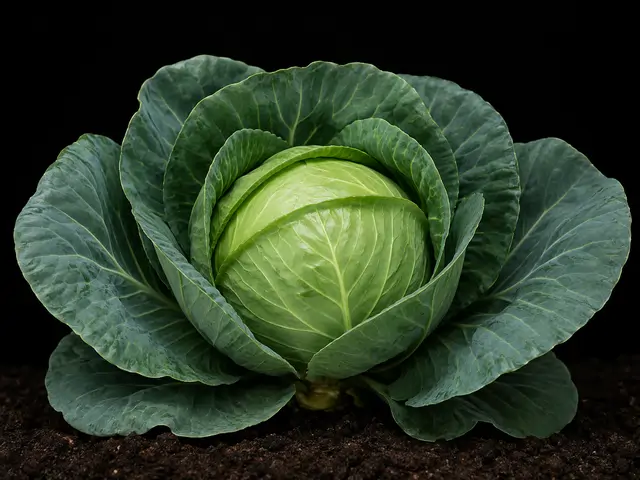
Cabbage
Entirely edible. The sulfur compounds can cause gas in some people; fermenting (sauerkraut, kimchi) makes it more digestible for many.
Overview
A cool-season brassica grown for a dense head of folded leaves - a garden staple for slaw, kraut, and long storage, and one of the most cold-hardy crops you can grow.
Cabbage is the archetype of its family: a heavy-feeding, cool-season biennial grown as an annual for a tight head of overlapping leaves. It's one of the hardiest vegetables in the garden - established plants shrug off hard frost and mild freezes - and it stores longer than almost any other fresh vegetable, which is exactly why it fed households through winter for centuries before refrigeration.
Choose your type by the job. Green cabbages are the all-purpose kitchen workhorses; red cabbages add color and hold it when cooked with acid; Savoy types have crinkled, tender leaves prized raw and for wraps; and storage cabbages form dense, heavy heads that keep for months in a cold cellar. Like the whole family, cabbage does its best work in the cool ends of the season, and a fall crop usually beats a spring one on both quality and pest pressure.
At a glance
- Sun
- Full sun · Part sun
- Water
- Medium
- Spacing
- 12–24 in (typ. 18)
- Mature height
- 12–24 in (typ. 18)
- Start by
- Direct sow · Transplant
- Frost
- SemiHardy
- Germination
- 4–10 days (typ. 7) @ 45–85 °F (typ. 70)
- Start indoors
- 4–8 wks (typ. 6) before transplant
- Spread
- 18–36 in (typ. 24)
- Soil
- Well-drained
- Temperature
- Damaged below 20°F · struggles above 80°F
- Seed ready
- 100–150 days (typ. 120) (for saving)
When to plant
Zone 7a typical frost: last Apr 10 · first Oct 25 (spring frost runs Mar 27–Apr 24 in a typical spread of years)
Life stages
- Germination day 0–7 from sowing
-
Keep the seed mix evenly moistevery 1 dSow 1/4-1/2 inch deep in warm mix (65-75°F); brassica seed comes up fast and even when it isn't allowed to dry.
-
Start indoors for spring; sow shaded for fallSpring crops go under lights 6-8 weeks before transplant; late-summer fall sowings germinate best in a cool, shaded spot.
No emergence in 10+ days (old seed or cold mix) -
Keep the seed mix evenly moistevery 1 d
- Seedling day 7–40 from sowing
-
Grow cool, stocky, and well-litCool (55-65°F), bright conditions make sturdy transplants; leggy or cold-shocked seedlings are prone to bolting or premature heading.
-
Harden off 7-10 days before setting outA stocky plant with 4-6 true leaves transplants without a check.
Damping offLeggy stretch from weak lightCold shock below 20°F on early plantings (bolting risk) -
Grow cool, stocky, and well-lit
- Frame leaves day 0–35 from transplant
-
Row-cover at transplantFloating row cover blocks cabbage-worm moths, flea beetles, and root-maggot flies before they can lay eggs - the family's single best defense. Leave it on until harvest.
-
Water deeply and evenly, 1-1.5 inches/weekevery 4 dBig outer frame leaves are the solar panels that build the head; keep them growing steadily and never let the plant stall.
-
Side-dress nitrogen 3 weeks after transplantCabbage is a heavy feeder. A boost during leaf growth drives the large frame that a dense head needs.
Cabbage worms and loopers (holes, green frass)Flea beetle shot-holesCabbage root maggot wilting young plants -
Row-cover at transplant
- Head formation day 40–70 from transplant
-
Keep moisture STEADY as the head fillsevery 3 dThe classic cabbage failure is a split head - it happens when a dry spell is followed by a soak and the head takes on water faster than its skin can grow. Even watering is the whole game.
-
Feel the head for firmnessSqueeze gently - harvest is near when the head resists like a firm ball rather than giving softly.
Splitting after a soak (harvest firm heads promptly)Aphids colonizing the headLoose heads from heat -
Keep moisture STEADY as the head fillsevery 3 d
- Harvest day 70–90 from transplant
-
Cut when the head is firm and fullSlice the head off at the base with a sharp knife once it's solid to the squeeze. Don't wait long past firmness - overripe heads split and lose quality.
-
Leave the stump for a bonus cropCut a shallow cross into the stump and leave the outer leaves and roots; in a long-enough season it often pushes several small tennis-ball heads.
Splitting (harvest immediately or twist the plant to break roots)Heavy rain after drought forcing a split -
Cut when the head is firm and full
Harvest
- Style
- One-time harvest
- Typical yield
- 1–1 heads (typ. 1)
- By weight
- 16–96 oz (typ. 48)
- Head firm and solid to a gentle squeeze
- Full size for the variety, before any splitting
- Outer wrapper leaves still tight around the head
Watch out for
Cabbage Worms & Loopers High
The brassica caterpillar complex: velvety green imported cabbageworms (larvae of the white cabbage butterfly) and inch-worming cabbage loopers (a moth larva). Both chew large ragged holes through the leaves, then work into whatever folds up at the center - head, curd, sprout, or growing crown - fouling it with green pellet droppings. Fast leaf crops are usually cut before the damage matters; slow heading crops suffer most. Nasturtium carries the same mustard-oil chemistry that cues the butterflies to lay, so it hosts them too and is often planted nearby as a decoy.
Watch for: Ragged holes in the leaves, dark-green frass in the crown, and green caterpillars that match the leaf and hide along midribs and leaf undersides. White butterflies fluttering low over the bed mean eggs are going down now - look under the leaves for the small pale-yellow eggs, laid one at a time rather than in clusters.
Prevent: Floating row cover from sowing or transplant is the near-complete fix - it stops the adults ever laying. Seal it at the soil edges and lift it only to weed or harvest. Otherwise check leaf undersides twice a week, rub off the eggs, and hand-pick the caterpillars. Let dill, cilantro, or other umbels flower nearby to feed the parasitic wasps that do this work for you.
Treat: Bt (Bacillus thuringiensis kurstaki) is the one to reach for first: it affects only caterpillars and is safe around bees, parasitic wasps, and hoverflies. Spinosad also works, but it is not caterpillar-specific - while the spray is still wet it is toxic to bees and to the parasitic wasps that hunt cabbage worms for you. If you use it, spray at dusk so it dries before bees are out, and never wet open flowers, including flowering companions like dill or nasturtium. Follow the label for both. On a small planting, hand-picking and rubbing off eggs is enough on its own.
Once the head starts closing, worms already inside are sealed in where no spray reaches - so the work has to happen before wrapping. A halved head soaked in salt water floats out anything hidden in the leaf layers before cooking.
Cabbage Root Maggot High
The larvae of a small gray fly that lays its eggs at the soil line against brassica stems. The white maggots hatch and tunnel down into the roots, scarring and rotting them, so plants wilt on warm days, stunt, take on a blue-green cast, and can die outright; root brassicas are tunneled through and spoiled. It is worst in cool, wet spring soil, on transplants and early sowings, and in ground that grew brassicas the year before.
Watch for: Sudden wilting on the first warm days even though the soil is moist, stunted plants with a bluish cast, and - on pulling a failing plant - brown tunnels and slimy scarring through the roots with small white maggots inside.
Prevent: Cover the crop with floating row fabric from the day you sow or transplant, sealing the edges down to the soil so the fly cannot reach the stems, or fit a cardboard or felt collar disc flat around each stem to block egg-laying. Rotate at least three years away from ground that grew brassicas, and do not plant into fresh manure.
Treat: There is no rescue once the maggots are inside the roots. Pull and destroy badly infested plants rather than composting them, and reset the bed with row cover and rotation. Beneficial nematodes drenched into the soil help suppress the larvae in a bed you have to keep using.
Cabbage transplants set into cold, wet spring soil are the classic target. A collar disc fitted around each stem takes seconds at planting time and costs nothing afterwards.
Clubroot High
A soil-borne pathogen (Plasmodiophora brassicae) that infects brassica roots and swells them into distorted, clubbed galls. Affected plants stunt and yellow, wilt on warm afternoons and recover overnight, and never size up properly. It is worst in acidic, poorly drained ground, and the resting spores survive in soil for up to 20 years, moving around on soil, tools, boots, water and infected transplants.
Watch for: Midday wilting that recovers overnight, yellowing and stunting with no obvious cause, and - the giveaway - swollen, distorted, clubbed roots instead of clean ones when a plant is pulled.
Prevent: Rotate at least 4 years out of every brassica, counting the fast salad ones and any brassica cover crop. Lime toward pH 7.0-7.2, since the pathogen dislikes alkaline soil, and improve drainage. Plant only clean seed and transplants, never move infested soil or plants around the garden, and grow resistant or tolerant varieties where the disease is known to be present.
Treat: There is no cure once the soil is infested. Pull and destroy affected plants - bag them, do not compost them - lime the bed, and keep brassicas off that ground for years. Rotation and pH are the whole game here.
Cabbage is the classic host and a full-season one. A clubbed plant will not make a solid head, so a bed with any clubroot history is not worth risking on it.
Black Rot (Brassica) High
The most serious bacterial disease of brassicas (Xanthomonas campestris), and it thrives in warm, wet weather. It enters at the leaf margins through the pores and through wounds, then moves inward along the veins, producing yellow V-shaped wedges pointing in from the leaf edge with blackened veins inside them. From there it works into the stem and head as a foul soft rot. It is seed-borne as well as soil- and debris-borne, and it spreads readily on hands, tools and splashing water when plants are worked while wet.
Watch for: Yellow V-shaped wedges opening inward from the leaf margins, with darkened, blackened veins running through the wedge - the combination is diagnostic. Leaves yellow and drop, and a foul soft rot advances toward the stem, head or curd.
Prevent: Start with clean, hot-water-treated seed, since the bacterium travels on seed. Rotate at least three years out of brassicas, space plants widely for airflow, water at the base rather than overhead, never work or harvest the plants while the leaves are wet, and control cruciferous weeds, which host it between crops.
Treat: There is no cure. Remove and destroy infected plants - never compost them - disinfect tools between plants, do not save seed from an infected crop, and keep brassicas out of that ground for years. Clean seed and rotation are the whole strategy.
A long-standing cabbage through warm wet weather is the classic host, and a rot that reaches the head makes it inedible. Clean seed matters most here, since that is how the bacterium usually arrives.
Aphids Medium
Aphids are small soft-bodied sap-suckers - green, black, gray, pink, or waxy white, and mostly wingless - that gather in dense colonies on the tenderest new growth: shoot tips, buds, and the undersides of young leaves. They breed extremely fast in mild weather, so a few can become hundreds inside a week. Their feeding curls and distorts soft growth, and the sticky honeydew they excrete coats everything below and turns black with sooty mold. Ants often farm and defend the colonies for that honeydew. A few aphids are normal on almost any plant and a healthy plant shrugs them off; only dense, persistent colonies do real damage, and some aphids also spread plant viruses as they feed.
Watch for: Dense clusters of tiny insects packed onto shoot tips, flower buds, and the undersides of young leaves. Curled, cupped, or distorted new growth that never opens properly. A sticky shine on the leaves - and on whatever sits under the plant - that later goes black with sooty mold. Tiny white cast skins left behind where a colony has been feeding. Ants running steadily up and down the stems, which is often the first thing you notice. Mottled, streaked, or misshapen leaves that do not grow out can mean a virus the aphids brought with them rather than the feeding itself.
Prevent: Go easy on nitrogen: the soft, lush growth that heavy feeding produces is exactly what aphids breed on. Check new growth once a week through spring and early summer so you catch colonies while they are still small, and rub the first few out with your fingers. Leave flowering plants nearby and skip broad-spectrum sprays - ladybugs, lacewings, hoverflies, and parasitic wasps do most of this work for free, and they only stay if there is something for them to eat. Keep ants off the plant where you can, since they protect aphids from those predators. Water steadily so plants are not stressed, and check any new plant over before you bring it home or move it indoors, since aphids usually arrive on something else.
Treat: Knock the colonies off with a hard jet of water and repeat every few days - on most plants that alone ends it. Pinch out or prune off the worst-infested tips rather than treating the whole plant. If colonies keep rebuilding, spray insecticidal soap or horticultural oil directly onto the insects, covering leaf undersides, and repeat weekly until they are gone; treat early or late in the day, and never spray a wilted or heat-stressed plant. Avoid broad-spectrum insecticides - they kill the ladybugs, lacewings, and parasitic wasps that were about to solve the problem for you, and aphid numbers usually come back worse afterward. Anything you spray must be labeled for the plant you are treating; follow that label and observe its pre-harvest interval. On anything you eat, wash leaves, heads, and buds well before use, since aphids hide down in crowns, folds, and tight growth.
The gray waxy cabbage aphid is the brassica specialist and burrows between the head leaves. Row cover from transplant and go after colonies while they are still on the outer leaves; soak or split-and-rinse the head before cooking.
Flea Beetles Medium
Flea beetles are tiny dark beetles - often shiny black or bronze, rarely more than a couple of millimeters long - with enlarged back legs that let them spring away like fleas the moment you lean in. The adults chew countless small round pits and shot-holes through leaves, giving the foliage a peppered, buckshot-riddled look. They overwinter as adults in leaf litter, hedgerows, and crop debris, emerge hungry in spring, and are worst in warm dry spells. The damage is mostly a seedling and transplant problem: a small plant with a few leaves can be checked, stunted, or killed outright, while the same plant shrugs them off once it is large and growing strongly. Different species specialize on different plant families, so the beetles hammering your brassicas are not the ones on your nightshades. Some species also have larvae that feed on roots and tubers underground.
Watch for: Dozens of pinhead-sized round holes peppered across the leaves, thickest on the youngest, most tender growth. Tiny beetles that spring away as you brush the plants or lean in for a closer look - that jump is the identification. Seedlings that go lacy and stop growing, and transplants that sit and sulk instead of taking off. Damage heaviest in warm, dry weather and along the edge of a bed nearest weedy ground or last year's crop debris. On root crops, shallow narrow grooves or channels scarring the skin at harvest, from larvae feeding underground.
Prevent: Floating row cover or fine insect mesh, laid over the bed from the day of sowing or transplanting and sealed at the edges so nothing can walk in underneath, is the single best defense - and on the crops they favor it is close to essential. Leave it on until plants are large and growing strongly, or until flowering on anything that needs pollinating. Push growth: a well-watered, unchecked plant outgrows the damage, so the whole game is getting seedlings through their vulnerable weeks fast. Keep beds weed-free, since related weeds host the beetles alongside your crop, and clear crop debris at the end of the season where the adults overwinter. Rotate away from a bed that grew a related crop last year. Where you can, shift sowing dates - cooler-season and fall plantings often miss the peak of adult feeding entirely.
Treat: Row cover and healthy fast growth carry most crops through, and on an established plant the damage is usually cosmetic and needs nothing at all. Where a young planting is genuinely being stripped, kaolin clay coats the leaves and deters feeding, and spinosad will knock the beetles back. Spinosad is acutely toxic to bees while the spray is still wet - apply it at dusk when bees are not flying, never onto plants in flower, and follow the product label. Anything you spray must be labeled for the plant you are treating, and you must observe its pre-harvest interval on a crop you are picking. Yellow sticky traps are useful for telling you when the beetles have arrived. Where the damage falls on the part you eat, harvesting young often beats them outright; where you are growing for a root or a fruit, leaf damage can simply be tolerated. Larvae feeding underground cannot be reached by a foliar spray, so rotation and clean beds are what work against those.
Mostly a threat to seedlings and transplants - once the plant is heading up it is past caring.
Good & bad neighbors
Varieties · 23
Conical, pointed heads of tightly packed light-green leaves on a small plant.
A mid-1800s American heirloom and still the classic early cabbage: compact, conical (pointed) heads that mature quickly and pack into small gardens. Sweet, tender, and reliable - one of the best first cabbages.
Medium, round, uniform green heads with smooth leaves.
An early hybrid known for exceptionally sweet, tender heads that make excellent fresh eating and slaw. Fast and adaptable, a good first cutting of the season.
Small, round, solid light-green heads.
An early round green heirloom prized for small, dense, mild-sweet heads that suit tight spacing and quick harvests. A dependable spring cabbage for fresh eating and slaw.
Small, round, dense green heads averaging 1-2 pounds.
A mini-cabbage bred for small, dense 1-2 pound heads - perfect for small households and tight beds, and small enough to use in one or two meals. Uniform and quick.
Small, round, light-green heads.
One of the earliest cabbages of all - small, sweet, tender heads for the first cutting of spring and for tight beds. Quick enough for succession sowing.
Small, round, light-green heads with tightly packed leaves.
A quick, compact early hybrid with small, sweet, tender heads. Its speed and small size make it a favorite for succession spring plantings and small gardens.
Large, dense, round, dark-green heads.
A large, adaptable hybrid with dense round heads and good field-holding and storage. Reliable, uniform, and forgiving - a solid main-season green cabbage.
Large, flattened, dense blue-green heads.
A large, cold-tolerant heirloom drumhead cabbage grown for hefty storage heads and sauerkraut. Very hardy and reliable for a big fall/winter crop.
Large, round, very solid blue-green heads.
The classic long-storage heirloom: dense, heavy, round heads bred to keep for months in a cold cellar. Slow to mature but the choice for winter storage.
Large, dense, vibrant-green heads.
A robust, adaptable main-season hybrid producing large, dense heads with good holding ability. A dependable choice for a big fall crop.
Dense, medium-to-large, vibrant-green heads.
A vigorous, adaptable hybrid that forms dense medium-to-large heads across a range of climates. Uniform and dependable for a main crop.
Round, compact, extremely solid blue-green heads.
Named for its rock-solid heads - very dense, split-resistant, and forgiving of tight spacing. Holds well in the garden past maturity, which makes it a low-stress choice for beginners.
Round, very dense, firm green heads.
Bred specifically for the root cellar - very dense heads with outstanding keeping quality for winter-long home-grown cabbage. A late main crop for storage.
Crinkled dark-green leaves forming a fairly loose head.
A cold-hardy Savoy with crinkled, mild, tender leaves - excellent for fall crops and light-frost holding. Prized for cooking and stuffing.
Small, compact, crinkled dark-green heads.
The earliest Savoy - small, quick, tender heads that bring the crinkled Savoy texture to short seasons and small gardens. Mild and tender enough for salads.
Crinkled (savoyed), dark-green leaves in a semi-loose head.
An All-America Selections winner and a benchmark Savoy: crinkled, tender, mild leaves on a high-yielding, adaptable plant. The Savoy texture is the best in the family for raw use and wraps.
Round, tight heads of deep red-purple leaves.
The standard heirloom red cabbage: compact, dense deep-purple-red heads that store well and hold their color in the garden and the pan. Beautiful in slaw and braises.
Small, tight, reddish-purple heads.
A fast, compact red cabbage that matures well ahead of most - the red choice for short seasons. Small, solid heads with vivid color.
Round, solid, deep red-purple heads.
An adaptable red hybrid with solid, split-resistant heads and deep color that holds through cooking. A dependable red for slaw, braises, and garnish.
Semi-crinkled heads with green and purple-blushed outer leaves.
A strikingly hardy European overwintering cabbage that stands through hard frost and snow to be cut in the depths of winter, with semi-savoyed leaves flushed green and purple. Treat the timing seriously: this is not a spring or fall crop. Transplant it in mid-to-late summer, about 15-18 weeks before your first frost, and cut it from the standing plant between December and March - use the overwintering planting window, not the spring or fall ones. It is reliable to about zone 7 unprotected; in zone 6 give it a low tunnel, heavy mulch, or a sheltered wall, and it will not carry a zone 5 winter.
Large, dense, green heads.
A large heat-tolerant hybrid bred for warm and tropical regions where standard cabbages struggle. Produces big dense heads in conditions that would bolt or loosen others.
Compact, smooth, light-green heads.
A warm-climate hybrid with compact, smooth heads and good disease tolerance for challenging tropical and subtropical gardens. A dependable choice where heat defeats northern varieties.
Compact, dense, bright-green heads.
A heat-adapted hybrid (sold as both 'Tropic Delight' and 'Tropical Delight') that forms compact, dense heads in warm regions where traditional cabbages fail. Bred for the tropics and hot subtropical falls.
Grow
Start transplants 6-8 weeks ahead, set out 2-3 weeks before last frost (spring) or 8-12 weeks before first frost (fall), 12-18 inches apart in rich soil.
Cabbage is almost always grown from transplants. For spring, start seed indoors 6-8 weeks before the last frost and set hardened plants out about 2-3 weeks before it - but don't rush an unhardened plant into a long cold snap, which can fool it into bolting. For the easier fall crop, count back 10-12 weeks from your first fall frost and transplant then.
Give cabbage rich, well-drained soil in full sun and feed it well - it's one of the hungriest crops in the bed. Space by intended size: 12 inches for small early heads, up to 24 for big storage types, in rows 24-36 inches apart. As with every brassica, lay floating row cover at transplant and leave it on to shut out the cabbage worms, flea beetles, and root maggots before they arrive.
Care
Feed heavily, water with religious consistency to prevent splitting, and keep row cover on against the family's pests.
Two things make or break a cabbage crop: feeding and steady water. Side-dress nitrogen a few weeks after transplanting to drive the big frame leaves, then keep moisture even right through heading. The most common failure - a split head - is purely a watering problem: a dry stretch followed by a heavy soak swells the head faster than its skin can grow, and it bursts. Mulch to buffer the swings.
Keep the row cover on through the season to keep aphids out of the developing head and moths off the leaves. If a heat wave or a big rain threatens a nearly-ripe head with splitting, either harvest it early or give the plant a quarter-turn twist to break some roots and slow its water uptake - an old trick that buys a few days.
Harvest
Cut when the head is firm and solid; harvest promptly to beat splitting, and leave the stump for baby heads.
A cabbage is ready when the head feels firm and solid under a gentle squeeze - not soft, not yet splitting. Cut it off at the base with a sharp knife. Unlike loose greens there's no rush of daily picking, but there is a deadline: a ripe head left in wet weather will split, so harvest firm heads promptly rather than pushing for more size.
Don't pull the whole plant. Cut a shallow cross into the top of the standing stump and leave the roots and outer leaves in place; in a long-enough season the stump often sprouts a cluster of small, tennis-ball-sized secondary heads - a free bonus crop of tender mini-cabbages.
Storage
Weeks in the crisper, months in a cold cellar for storage types - or turn the flood into sauerkraut and kimchi.
A solid head keeps 3-4 weeks in the crisper in a loose bag, and dense storage varieties hold for 2-4 months near freezing (32-40°F) at high humidity in a root cellar or spare fridge - wrap them or leave a few wrapper leaves on to slow drying. Peel off any slimy outer leaves as needed; the core inside stays good far longer than it looks.
The traditional answer to a cabbage glut is fermentation, and it's genuinely worth doing: shredded and salted, cabbage becomes sauerkraut or kimchi, keeping for months and turning more digestible and probiotic-rich in the process. Cabbage also freezes after blanching (best destined for cooked dishes) and dehydrates for soups.
Growing across climates
North: hardy spring and fall crops with winter storage. Warm zones: a fall-through-winter staple, summer off.
Zones 3-5: cabbage thrives in the cool short summers here; grow spring and fall crops, and lean on dense storage types to carry through winter. Zones 6-7: classic two-season brassica country - an early spring crop and a fall crop that can hold in the garden well into cold weather under a little protection. Zones 8-9: the calendar flips; cabbage is a fall-through-spring crop and summer is the off-season. Zones 10-11: a cool-season crop grown fall into winter on absolute dates (Sep-Feb, UF/IFAS pattern); choose heat-tolerant tropical varieties (the 'Tropic' types) at the window edges and skip summer entirely.
Troubleshooting
Splitting, bolting, loose heads, and green caterpillars top the list - most trace to water swings, cold shock, or heat.
Split head: uneven moisture - a soak after a dry spell. Water evenly, harvest firm heads promptly, or twist the plant to slow uptake. Bolts to flower without heading: the young plant hit a prolonged cold spell (below ~50°F for weeks) and 'vernalized'; don't set transplants out too early or too small. Loose, leafy heads that never firm up: too much heat, too little sun, or spacing too tight. Green caterpillars and holey leaves: cabbage worms and loopers - row cover prevents them, Bt cures them. Wilting young plants that pull up easily: cabbage root maggot in the roots - use collars and rotation. Swollen, clubbed roots: clubroot; lime the soil toward pH 7.2 and rotate for years.
Nutrition
Low-calorie and vitamin-C-rich; red types add anthocyanins, and fermenting adds probiotics and preserves the vitamins.
Cabbage is cheap nutrition: a cup of raw shredded cabbage is about 20 calories and delivers a good hit of vitamin C, vitamin K, folate, and fiber, plus the glucosinolate compounds shared across the brassica family. Red and purple cabbages layer on anthocyanins - the same antioxidant pigments found in berries - making them the most nutrient-dense of the group.
A historical footnote with real chemistry: cabbage's vitamin C helped keep sailors from scurvy, and because fermenting preserves that vitamin C, barrels of sauerkraut carried it through long winters and voyages. Fermentation also adds live probiotic bacteria. Eat cabbage raw for the most vitamin C, lightly cooked for easier digestion, or fermented for the probiotic bonus.
In the kitchen
Raw in slaw, quick-cooked in stir-fries, slow-braised sweet, or fermented into kraut and kimchi - one of the most versatile vegetables.
Cabbage flexes across the kitchen. Raw, thinly shredded, it's the backbone of slaw and a crunchy taco topping. Quick-cooked - stir-fried, sautéed, or roasted in wedges - it turns sweet and tender-crisp in minutes. Slow-braised with a little fat and acid it becomes silky and rich (red cabbage with apple and vinegar is the classic). And halved cabbage roasted or grilled cut-side-down develops deep caramelized flavor.
The great preserving vegetable: shred and salt it for sauerkraut, spice it into kimchi, or roll the big leaves around fillings for cabbage rolls. Savoy's tender crinkled leaves are best for wraps and quick cooking; sturdy green and red types stand up to long braises and fermentation. Blanch a whole head to loosen leaves for stuffing.
Propagation & seed saving
Seed-saving is a two-year, isolation-heavy project - cabbage crosses with the whole family, so beginners buy seed.
Be honest with yourself here: most gardeners buy cabbage seed, and for good reason. Cabbage is a biennial, so a plant must live through winter and flower its second spring before it sets any seed - and it must survive as a whole plant, which means you can't have eaten the head. On top of that, Brassica oleracea crosses freely, so your cabbage will hybridize with any broccoli, kale, collard, cauliflower, or kohlrabi flowering nearby, and hybrid varieties won't come true.
For the determined: choose an open-pollinated variety, overwinter several healthy plants (in cold zones, dig and store the roots or protect them heavily), and in spring cut a cross into the head to help the flower stalk emerge. Isolate the flowering plants from all other brassicas by 800+ feet or cage and hand-pollinate. Let the pods dry on the plant and thresh out the seed. It's a satisfying advanced project - not a beginner's shortcut to free plants.
Traditional & historical uses
A genuine folk-medicine history for the leaf poultice, plus a real dietary vitamin-C legacy - but it's food, not a cure.
This section records how people have traditionally used this plant, and what is known about the risks. It is history and general information — not medical advice, and not a recommendation to treat anything. Plants are not dosed like medicines, some interact with prescriptions, and some are harmful in ways that are not obvious. Talk to a clinician before using any plant medicinally.
Cabbage has more traditional-medicine history than most vegetables. The Romans treated cabbage as a near-cure-all, and the cabbage-leaf poultice - crushed or wilted leaves bound over a sore joint, a bruise, or an engorged breast - persists in folk practice, with some modern nursing research suggesting cold cabbage leaves do relieve breast engorgement (likely as a cooling compress). Its clearest documented contribution is dietary: cabbage's vitamin C, preserved by fermentation, historically prevented scurvy on long voyages.
Keep the framing honest: cabbage is excellent, protective food with a couple of mild traditional uses that hold up, not a medicine. The topical poultice is low-risk and worth knowing; the eating benefits come from making brassicas a regular part of a vegetable-rich diet.
History
One of humanity's oldest cultivated vegetables, selected from wild sea-cabbage - it fed Europe through winter and sailed the world as kraut.
Cabbage is one of the oldest vegetables in continuous cultivation, bred from the wild Brassica oleracea of Europe's Atlantic coast - the same sea-cabbage that gave rise to broccoli, kale, cauliflower, and kohlrabi, each selected for a different part. Cabbage was the branch selected for a tight terminal bud: a dense, storable head. Greeks and Romans grew it widely (the word traces through Old French caboche, 'head'), and it became a cornerstone of the northern European winter diet.
Its storability made it historically vital. Fermented as sauerkraut, cabbage carried scurvy-preventing vitamin C through winters and across oceans - Captain Cook famously provisioned his ships with it. From Europe it traveled everywhere cool enough to grow it, becoming the base of kraut, kimchi, colcannon, and a thousand peasant soups. Today it remains one of the most-grown vegetables on earth.
Cook it
All 9 recipes →Grower tips
No grower tips for Cabbage yet. Yours could be the first.
Sign in to share what works in your garden.