Add it to your home screen and it opens full screen: no browser bars, one tap away, and everything stays signed in. Free, nothing to download from an app store.
- Tap the Share button in your browser
- Scroll down and choose “Add to Home Screen”
- Open GrowSomeFood from your home screen
- Open your browser’s menu
- Choose “Add to Home screen” or “Install app”
- Open GrowSomeFood from your home screen
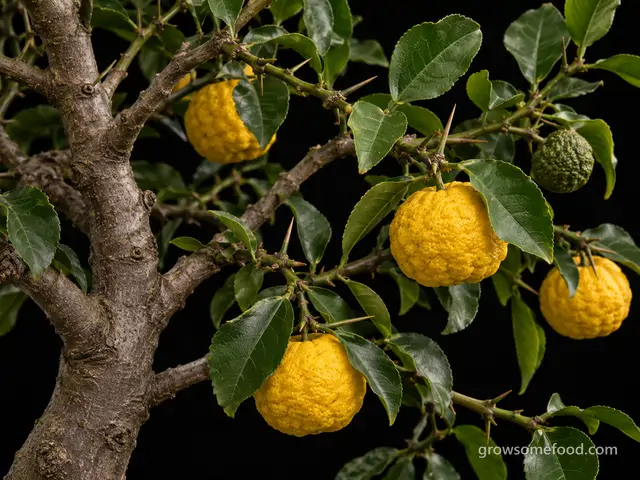
Yuzu
The cold-hardiest edible citrus there is - an in-ground fruit tree in zone 8 and sometimes 7b, where no other citrus survives. Grown for its extraordinarily aromatic rind, not for eating: the fruit is sour, low in juice, and full of seeds. Ferociously thorny, and worth every scratch.
A seasoning citrus, not an eating one: sour flesh, 20 or more bitter seeds. The real hazard is the tree - yuzu carries some of the longest, stoutest thorns in citrus, so wear gloves and eye protection when pruning or picking. Peel oils are phototoxic on skin in sunlight, and the traditional yuzu bath can irritate sensitive or broken skin - use fewer fruit, or float them in a bag, for children. No grapefruit-type drug interaction is known, but yuzu is far less studied than grapefruit.
Overview
The one thing to knowThat single fact makes it the only real edible citrus most of zone 8 can plant in the open ground, and a serious proposition in sheltered zone 7b.
Yuzu is the citrus that grows where citrus is not supposed to grow. Its wild parent is the Ichang papeda, a mountain citrus from central China with genuine cold tolerance, and yuzu inherited enough of it that a mature grafted tree survives brief dips to around 10 to 15°F - and sometimes lower. That single fact makes it the only real edible citrus most of zone 8 can plant in the open ground, and a serious proposition in sheltered zone 7b. It helps that yuzu blooms late, in May or June, so it sleeps through the spring frosts that ruin earlier citrus.
Set your expectations about the fruit before you plant one, because they are not the usual citrus expectations. A yuzu is roughly tangerine-sized with a thick, knobbly, deeply pitted rind, sour flesh, very little juice, and often twenty or more seeds. Nobody eats one out of hand. What you grow it for is the aroma of the rind, which is one of the most distinctive smells in cooking - floral, resinous, grapefruit-and-mandarin with something almost pine-like behind it - and which survives cooking and freezing in a way that most citrus aromatics do not. A few grams of yuzu zest changes a dish. Japan built a whole seasoning vocabulary on it: ponzu, yuzu kosho, yuzu miso, yuzu vinegar, and the winter-solstice yuzu bath. It is a slow, thorny, awkward tree that will take three or four years to fruit after grafting, and there is nothing else like it.
Quick facts
- Life cycle
- Perennial, lives about 50 years
- Height
- 12 ft7 to 18
- Spread
- 10 ft6 to 15
- Cold
- Takes light frostdamaged below 12°F
- Heat
- Struggles above 100°F
Full sun · medium water · well-drained soil · 12 ft apart (8 to 18) · transplant
When to plant
No planting window on record for this zone. Nearest zone with one: 7b.
Frost here: last around Apr 10 (Mar 27 to Apr 24 most years), first around Oct 25. Zone averages, your own yard may run a week or two either way.
Life stages
One stage to settle in, then five that repeat each year. Windows are typical; your zone and weather move them.
First-year establishment
The first year after planting- WaterKeep evenly moist, never waterloggedevery 4 daysA new yuzu needs steady moisture to establish but hates soggy roots (root rot is the fast killer). Water deeply when the top inch or two dries; in containers, ensure free drainage.
- MulchMulch generously - this is a cold-climate citrusA thick mulch ring insulates the root zone through the cold winters yuzu is planted to survive, which matters far more here than on a zone-10 citrus. Keep it clear of the trunk itself, since citrus get foot and crown rot if the base stays wet.
- ProtectProtect the first two or three winters even in zone 8Yuzu's famous hardiness belongs to a mature, well-hardened, grafted tree. A young one is far more vulnerable, so wrap the trunk, mulch deeply, and throw a frost blanket over it on hard nights until it has real size and woody structure.
- ProtectSite it away from paths - the thorns are seriousYuzu carries some of the longest and stoutest thorns of any citrus, an inch or more and stiff enough to go through a glove. Plant it back from walkways, doorways, and anywhere children play, and leave yourself room to work around it.
- FertilizeStart a citrus feeding programevery 45 daysUse a citrus fertilizer with micronutrients (iron, zinc, manganese) through the warm season, and stop by late summer - late feeding pushes soft growth that will not harden before the frosts, which is exactly what kills a cold-climate citrus.
Watch for- Root rot from soggy soil
- Cold damage on young unhardened wood
- Long stout thorns on every branch
- Yellowing leaves (nutrient deficiency or overwatering)
- Very slow growth in the first years - normal for yuzu
Flushes of new growth
Apr, May, Jun, Aug, every year- FertilizeFeed in spring and early summer, then stopevery 45 daysSplit the season's citrus fertilizer between spring and early summer and stop feeding by late summer. Unlike a zone-10 citrus, a yuzu needs its late growth to harden off before winter, and nitrogen late in the season is a direct cause of freeze damage.
- PrunePrune in late winter, and wear real glovesThin out dead, crossing and inward wood to open the centre, and rub off any suckers below the graft (yuzu is often grafted onto trifoliate orange, whose three-part leaves make its suckers easy to spot). Prune before the spring flush, use long-handled tools where you can, and wear leather gloves and eye protection - these thorns cause real injuries.
- InspectProtect new flushes from pests and the greening vectorevery 10 daysThe tender new-growth flushes attract citrus leaf miner, aphids, and the Asian citrus psyllid that spreads citrus greening. Inspect each flush - this is the key scouting moment.
Watch for- Citrus leaf miner trails in new leaves
- Aphids and psyllids on new growth
- Scale insects and sooty mold
- Trifoliate rootstock suckers with three-part leaves below the graft
Bloom (late spring)
May to Jun, every year- PollinateYuzu is self-fruitful - no partner neededOne tree sets fruit alone, and bees work the small fragrant white blossoms outdoors. Yuzu blooms late, in May or June, which is part of why it survives cold climates - it is still dormant while a spring frost is taking out earlier-blooming fruit.
- WaterKeep water steady through bloom and setevery 4 daysConsistent moisture during flowering and early fruit set prevents excessive flower and fruitlet drop. Some natural drop after bloom is normal.
Watch for- Late bloom in May or June - part of yuzu's frost escape
- Fragrant white blossoms
- Flower and fruitlet drop from watering stress
Fruit sizing & colouring (green to yellow)
Jul to Nov, every year- WaterWater deeply and evenly as the fruit sizesweeklySteady moisture through late summer and fall sizes the fruit and thickens the aromatic rind, which is the part you actually want. Yuzu is never juicy, but drought makes it drier still.
- InspectWatch for scale, mites, and greening symptomsevery 2 weeksScale and spider mites build up through the season, and citrus-greening symptoms (blotchy leaves, twig dieback, lopsided fruit) would show. Inspect regularly, especially where citrus quarantine rules apply.
Watch for- Fruit turning from deep green to yellow through autumn
- Knobbly, thick, deeply pitted rind developing - normal and wanted
- Scale and spider mites
- Blotchy mottled leaves and twig dieback (citrus greening warning signs)
Harvest (green in early fall, yellow in late fall)
Sep to Dec, every year- HarvestTwo harvests - green yuzu first, yellow yuzu laterevery 10 daysGreen yuzu, picked in early autumn while still hard and deep green, gives a sharper, more herbal, almost pine-like aroma and is what green yuzu kosho is made from. Yellow yuzu, picked from late autumn once the rind has fully coloured, is rounder, sweeter-smelling and gives more juice. Both are worth taking; pick to the use rather than waiting for one ripe date.
- ProtectClip, do not pull - and gear up firstCut each fruit off with clippers, leaving a short stem, rather than pulling it; the thorns sit exactly where the fruit hangs. Leather gloves, long sleeves and eye protection are not optional on a mature yuzu. Take the crop before a hard freeze, which damages fruit left hanging.
Watch for- Fruit colouring from deep green to full yellow
- Thorns exactly where the fruit hangs
- Fruit damaged by a hard freeze if left too late
- Very seedy, low-juice fruit - normal, this is a zest crop
Winter (the season yuzu is planted for)
Dec to Feb, every year- ProtectMulch the root zone deeply before the first hard freezeThe roots are the least hardy part of the tree, and a deep mulch ring over the root zone is the single most useful winter protection. Renew it each autumn, keeping it clear of the trunk itself.
- ProtectWrap young trunks and cover on the coldest nightsTrunk wrap and a frost blanket thrown over the canopy on nights below the low twenties will carry a yuzu through cold snaps at the edge of its range. Remove the cover during the day so the tree does not cook and so it stays hardened.
- WaterWater before a hard freeze, not duringA tree going into a freeze with moist soil around its roots survives cold better than one going in dry, because damp soil holds heat. Water thoroughly a day or two ahead of a forecast hard freeze, then leave it alone.
Watch for- Leaf browning and drop after a hard freeze - often survivable, so do not prune until spring growth shows what is alive
- Split or peeling bark on the trunk (freeze damage)
- Wind desiccation on exposed sites
Harvest
- For green yuzu: fruit is full size, hard, and still deep green, in early autumn
- For yellow yuzu: the rind has coloured fully yellow, usually from late autumn
- The rind is knobbly, thick, and intensely fragrant when scratched
- The fruit is light for its size and feels hollow - normal, yuzu is never juicy
- Two harvests - green yuzu first, yellow yuzu later · every 10 days
- Clip, do not pull - and gear up first
Per plant 20 to 300 yuzu, 3.8 to 75 lbPicking pick as they ripen
Cook with yuzu
Watch out for
5 to know. 1 is high-risk: Citrus Greening (Huanglongbing / HLB). 4 are active in September.
Citrus Greening (Huanglongbing / HLB)Severity High DiseasenowMuch of yuzu's range sits north of the psyllid's, so pressure is genuinely lower here than on a Gulf Coast citrus - but the rules still apply.
The quarantine restrictions that make greening such a problem are also why fresh Japanese yuzu has been so hard to buy in the US, so never carry plant material or fruit across a quarantine line.
Asymmetric, blotchy yellow mottling on the leaves - the pattern does not match from one side of the midrib to the other, which is what distinguishes it from a nutrient deficiency - along with yellow-shoot dieback, small lopsided fruit that stays green at the stem end, bitter off-flavored juice, and the tiny Asian citrus psyllid feeding on new flushes.
There is no cure. An infected tree declines and dies and should be removed to stop the spread rather than nursed along. Management is entirely exclusion: clean stock, psyllid control, and destroying infected trees. Report a suspected case to your state agriculture department or extension office, which is how local quarantine programs track and contain it.
Buy only certified disease-free trees from a reputable source, and never move citrus plants, cuttings or fruit out of a quarantine area - that is how it travels between regions. Control the Asian citrus psyllid on new flushes, and remove infected trees promptly to protect the ones nearby. No resistant common variety exists yet.
The most serious citrus disease in the world, and effectively a death sentence for an infected tree. A bacterial infection (Candidatus Liberibacter) spread by the Asian citrus psyllid blocks the tree's vascular system, causing blotchy mottled leaves, yellow-shoot dieback, and small, misshapen, lopsided fruit that stays green at the stem end and tastes bitter. Every commercial citrus type is susceptible, there is NO cure, and it has collapsed much of Florida's citrus industry. It is the reason citrus plants and fruit are under quarantine restriction across much of the southern United States.
Scale & Sooty MoldSeverity Medium PestnowThe practical difficulty on yuzu is reaching the colonies: they build up in the dense thorny inner wood, which is exactly where you least want to put your hands.
Open the centre out at the late-winter pruning, in gloves, and treat then - a thorough dormant-season oil at that point is worth several growing-season sprays.
Rows of small brown, tan, black, white, or waxy bumps along stems, twigs, leaf midribs, and leaf undersides that do not brush off but can be scraped loose with a fingernail. A sticky shine on the leaves - and on the floor, table, or path beneath the plant - that later turns black with sooty mold. Ants running steadily up and down the stems, since they farm and defend scale for that honeydew; often the first sign anything is wrong. Yellowing leaves, weak thin growth, and dieback of individual branches or canes that are heavily encrusted. On fruit crops, scale covers and sooty mold directly on the fruit. Check the leaf undersides and the shaded inner wood, which is where colonies build up unseen.
Horticultural oil is the main control: it works by smothering, so it has to coat the insects thoroughly - stems, twigs, and leaf undersides - and it usually needs repeating, because the waxy covering shields them and no single pass reaches everything. On deciduous woody plants a dormant-season oil smothers the overwintering stage while the leaves are out of the way, and timing a growing-season spray to the crawler stage, when the young are mobile and uncovered, is far more effective than spraying settled adults. On a small plant or a light infestation, scrub or wipe the scales off by hand, or dab them with a cotton swab of rubbing alcohol. Prune out and destroy badly encrusted wood rather than trying to save it. Wash off the sooty mold once the scale is gone - it lives on the honeydew, not on the plant, and stops once the supply does. Anything you spray must be labeled for the plant, and oils can burn delicate foliage, so test first.
Inspect. Look over leaf undersides and stems regularly - on a crop you pick, every harvest is a scouting chance - and check every new plant thoroughly before you buy it, plant it, or set it beside anything else, because scale almost always arrives on a plant rather than flying in. Quarantine new houseplants for a few weeks. Keep plants unstressed and not over-fertilized, since soft, forced growth is what populations build on. Prune for airflow and light to open up the shaded inner growth where scale hides, and prune out heavily infested wood as routine maintenance - on anything that gets a hard annual pruning, that alone removes most of any buildup. Leave the lady beetles, lacewings, and parasitic wasps alone, since they normally keep scale down to nothing, and keep ants off the plant where you can, because ants protect the colonies from those predators. Indoors, avoid hot, dry, still winter air.
Scale insects are sap-suckers that spend most of their lives immobile, fixed to a stem, twig, or leaf underside beneath a waxy or shell-like cover. They look far more like bumps, blisters, or crusty encrustations than like insects, which is why an infestation is usually well established before anyone notices it. Soft scales excrete large amounts of sticky honeydew that drips onto everything below and grows a black sooty mold - and those blackened leaves are often the first thing a gardener actually sees. Armored scales produce no honeydew but sit under a hard shield that protects them from most sprays. They spread as tiny mobile crawlers in the weeks after hatching, which is the only stage that moves and the only stage that is easy to kill. Populations build on stressed plants, on crowded shaded growth, and above all on plants kept indoors in dry, still air over winter.
Citrus Leaf MinerSeverity Medium PestnowOn a slow-growing yuzu, damage to the limited new growth costs more than it would on a vigorous citrus, and it matters most on young trees still building structure.
The best control here is the one you should be doing anyway: stop feeding by late summer, so there is no soft autumn flush to mine.
Silvery, squiggling serpentine trails inside new leaves, and curled, twisted, distorted new growth on the flushes. Mature leaves and fruit are untouched.
Largely cosmetic on an established tree - prune off heavily mined flushes if you want to, and otherwise leave it alone rather than spraying for appearance. Horticultural oil applied to new flushes deters egg-laying. Systemic controls are used mainly on young trees or where canker pressure is high.
Established trees tolerate it, so the aim is to give it less to work with: avoid over-fertilizing, which pushes out the excess soft flushes it feeds on, and stop feeding by late summer so there is no tender autumn flush to mine. Encourage the parasitic wasps that control it, and protect young trees and new grafts, whose growth actually matters.
A tiny moth whose larvae mine winding, silvery serpentine tunnels just under the surface of new citrus leaves, curling, twisting and distorting them. It attacks only the tender new-growth flushes, never mature leaves or fruit, so on an established tree it is essentially cosmetic - but it can stunt a young tree, and the wounds it leaves in the leaf provide entry points for citrus canker bacteria, which is its real significance.
Spider MitesSeverity Low PestnowOnly a real problem in hot dry inland summers or on a container yuzu wintered indoors.
A hosing down of the foliage during a dry spell usually settles it - though on a thorny tree, aim from a distance.
Fine pale stippling or speckling across the upper leaf surface, as though the color had been sandblasted out of it, and later a dull bronze or rusty cast over the whole leaf. Delicate webbing across leaf joints, shoot tips, and undersides - that comes with a heavy infestation and means you caught it late. Leaves that dry, curl, and drop early while the plant looks thirsty no matter how much you water it. Hold a leaf over a sheet of white paper and tap it: the specks that fall and then start walking are mites. With a hand lens, look on the undersides for the mites themselves, pale or reddish, and their round translucent eggs. Damage that shows up first on the hottest, dustiest, most sheltered side of a plant, or on a pot sitting near a radiator indoors.
Start with water. A strong jet aimed at the leaf undersides, repeated every few days for a couple of weeks, knocks populations down and breaks the cycle - on many plants that alone ends it. On anything that regrows quickly, shearing back badly infested growth resets the plant to clean foliage. If it keeps building, spray insecticidal soap or horticultural oil directly onto the undersides where the mites actually live, and repeat every five to seven days for three rounds: contact sprays do not kill the eggs, so a single application always fails. Anything you spray must be labeled for the plant you are treating - follow the label and observe its pre-harvest interval on anything you eat. Predatory mites are an effective release in a greenhouse or on an indoor plant. Above all, correct the heat, dust, and drought stress that caused it, or the mites simply come back.
Do not let plants get drought-stressed - that is the single strongest trigger, and a plant watered steadily through heat is far less likely to have a mite problem at all. Hose the foliage down, undersides included, during hot dry spells: it knocks mites off, washes away the dust they thrive in, and raises the humidity around the plant for a while. Indoors and under cover, keep the air from going hot, dry, and stagnant, wipe or rinse the leaves occasionally, and keep pots away from radiators and heating vents. Inspect any plant carefully before you bring it indoors for winter or set it among others, since mites almost always arrive on something else. Avoid broad-spectrum insecticides: they wipe out the predatory mites, lacewings, and lady beetles that do most of this work for you, and reliably leave you with a worse outbreak than you started with.
Spider mites are not insects but tiny sap-feeding arachnids, smaller than a grain of salt, and you almost always notice the damage before you notice them. They live on the undersides of leaves and drain the cells one at a time, which is why the leaf goes finely stippled with pale dots before it bronzes and dries. They breed explosively in hot, dry, dusty, still air - a generation can pass in a week at high temperature - so a barely visible population becomes a webbed, bronzed plant within a fortnight. Drought-stressed plants and plants wintered indoors in dry heated air are the classic hosts. Broad-spectrum insecticides make matters worse rather than better, because they kill the predatory mites and lady beetles that normally hold mites in check.
AphidsSeverity Low PestOn citrus this rides the tender new flushes and distorts them.
Yuzu's single late-spring flush concentrates the whole problem into a few weeks, so one round of attention in late spring usually settles it for the year.
Dense clusters of tiny insects packed onto shoot tips, flower buds, and the undersides of young leaves. Curled, cupped, or distorted new growth that never opens properly. A sticky shine on the leaves - and on whatever sits under the plant - that later goes black with sooty mold. Tiny white cast skins left behind where a colony has been feeding. Ants running steadily up and down the stems, which is often the first thing you notice. Mottled, streaked, or misshapen leaves that do not grow out can mean a virus the aphids brought with them rather than the feeding itself.
Knock the colonies off with a hard jet of water and repeat every few days - on most plants that alone ends it. Pinch out or prune off the worst-infested tips rather than treating the whole plant. If colonies keep rebuilding, spray insecticidal soap or horticultural oil directly onto the insects, covering leaf undersides, and repeat weekly until they are gone; treat early or late in the day, and never spray a wilted or heat-stressed plant. Avoid broad-spectrum insecticides - they kill the ladybugs, lacewings, and parasitic wasps that were about to solve the problem for you, and aphid numbers usually come back worse afterward. Anything you spray must be labeled for the plant you are treating; follow that label and observe its pre-harvest interval. On anything you eat, wash leaves, heads, and buds well before use, since aphids hide down in crowns, folds, and tight growth.
Go easy on nitrogen: the soft, lush growth that heavy feeding produces is exactly what aphids breed on. Check new growth once a week through spring and early summer so you catch colonies while they are still small, and rub the first few out with your fingers. Leave flowering plants nearby and skip broad-spectrum sprays - ladybugs, lacewings, hoverflies, and parasitic wasps do most of this work for free, and they only stay if there is something for them to eat. Keep ants off the plant where you can, since they protect aphids from those predators. Water steadily so plants are not stressed, and check any new plant over before you bring it home or move it indoors, since aphids usually arrive on something else.
Aphids are small soft-bodied sap-suckers - green, black, gray, pink, or waxy white, and mostly wingless - that gather in dense colonies on the tenderest new growth: shoot tips, buds, and the undersides of young leaves. They breed extremely fast in mild weather, so a few can become hundreds inside a week. Their feeding curls and distorts soft growth, and the sticky honeydew they excrete coats everything below and turns black with sooty mold. Ants often farm and defend the colonies for that honeydew. A few aphids are normal on almost any plant and a healthy plant shrugs them off; only dense, persistent colonies do real damage, and some aphids also spread plant viruses as they feed.
Good & bad neighbors
All of these are traditional pairings. The evidence is thin, so treat them as a nudge, not a rule.
Plant nearby
-
A living clover groundcover fixes nitrogen and feeds pollinators; keep it and any mulch off the trunk base to avoid foot rot. Clear it back in autumn so the winter mulch sits directly on the root zone.
-
Draws beneficial insects and is traditionally credited with deterring some pests around citrus; French types also suppress root-knot nematodes. Harmless under a young tree.
-
Grown around citrus as a trap crop and to draw aphids and beneficial insects away from the tender new flushes; a common, harmless citrus underplanting.
-
Shares yuzu's love of sun and sharp drainage and draws pollinators to the late bloom; plant a little apart, since lavender wants drier feet.
-
A low, drought-tolerant, pollinator-friendly herb that suits a sunny, sharply drained yuzu site and is hardy enough to share the same cold winters.



Varieties · 5
You pick one when you add Yuzu to your garden. Its days to maturity set your harvest window.
Yuzu (standard)
Tangerine-sized, slightly flattened fruit with a thick, bumpy, deeply pitted rind, ripening deep green to bright yellow; heavily thorned branches.
cold-hardyaromatic-rindvery-thornyseedyThe classic yuzu and the hardiest form: a slow, stiffly branched, heavily thorned tree bearing knobbly fruit the size of a small tangerine that ripens from deep green to yellow through autumn. Sour, dry and full of seeds - and carrying the most complete version of the aroma the whole crop exists for. This is what to plant if you are growing yuzu at the cold edge of its range or want the definitive flavour, and what almost every specialist nursery sells. Grafted on trifoliate rootstock it bears in three or four years.
Tadanishiki
Smaller, rounder yellow fruit with a thinner, smoother rind than standard yuzu, on a tidier tree with far fewer thorns.
near-seedlessfewer-thornssmaller-fruitcold-hardyA Japanese selection and by far the easier yuzu to live with: nearly seedless, noticeably less thorny, and quicker to come into bearing, on a somewhat more compact tree. The fruit is a little smaller than a standard yuzu and the aroma is a shade lighter, which purists notice and most cooks do not. If the seeds and the thorns are what put you off planting a yuzu, this is the answer - and it is the better choice for a container or a small garden where you have to work close to the plant.
Hana yuzu
Small yellow fruit on a lighter-framed, freely flowering tree with abundant white blossom.
fast-bearingsmall-fruitornamentalfragrant-bloomThe flowering yuzu (Citrus hanayu), a close relative grown for its abundant, exceptionally fragrant bloom and its speed - it bears far younger than true yuzu, often within a couple of years. The fruit is smaller and its aroma is milder and less complex than a real yuzu, so this is a compromise rather than an upgrade: plant it for early fruit, heavy fragrance and ornamental value, and plant standard yuzu alongside it if the flavour is what you are after. Also used as a rootstock in Japan.
Sudachi
Small, round, deep-green fruit about the size of a golf ball, used before it colours.
distinct-speciesused-greensmall-fruitsharp-aromaIMPORTANT - this is a different citrus (Citrus sudachi), listed here because it is grown and used alongside yuzu and sold by the same nurseries; the guidance on this page transfers broadly but not exactly. Sudachi is the small, green, golf-ball-sized citrus of Tokushima, used almost entirely while green and unripe for its sharp, clean, herbal aroma - squeezed over matsutake, grilled fish, soba and sashimi. It is somewhat less cold-hardy than true yuzu, ripens earlier, and is never allowed to turn yellow in practice.
Kabosu
Round green fruit the size of a small yuzu with a smoother rind, used before ripening to yellow.
distinct-speciesused-greenjuiciermilderIMPORTANT - another distinct citrus (Citrus sphaerocarpa), listed here for the same reason as sudachi; treat this page's guidance as approximate. Kabosu is the green citrus of Oita prefecture, larger than sudachi and roughly the size of a yuzu, but juicier, milder and less aromatic than either - it is used green as an everyday souring citrus over hot pot, fried food and grilled fish where yuzu would be too assertive. Rather less cold-hardy than true yuzu, so it is a poor substitute at the cold edge.
Grower tips
Notes from growers, tagged with the zone they grow in. A person reads every post before it appears.
Nobody has posted about Yuzu yet. The first one usually saves someone a season.
Free account. Your post shows your grower name and zone, never your email.