Add it to your home screen and it opens full screen: no browser bars, one tap away, and everything stays signed in. Free, nothing to download from an app store.
- Tap the Share button in your browser
- Scroll down and choose “Add to Home Screen”
- Open GrowSomeFood from your home screen
- Open your browser’s menu
- Choose “Add to Home screen” or “Install app”
- Open GrowSomeFood from your home screen
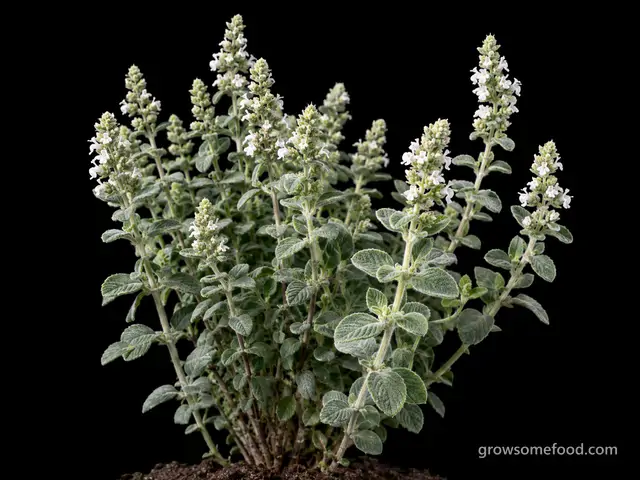
Syrian Oregano
The Levantine oregano that real za'atar is built from - oregano, marjoram and thyme in one soft gray-green leaf. A woody-based perennial herb, hardy in the ground only to about zone 7 and a container plant everywhere colder.
Safe in culinary amounts - the dried, rubbed leaf is an everyday seasoning. The concentrated essential oil is a potent carvacrol and thymol extract and is a separate thing from the leaf: never take it undiluted, and avoid medicinal-strength preparations in pregnancy. Seasoning amounts in food are not a concern.
Overview
The one thing to knowSyrian oregano (Origanum syriacum) is the herb at the heart of za'atar - the blend of dried leaf, toasted sesame, sumac and salt eaten across the Levant on flatbread, labneh, eggs and olive oil.
Syrian oregano (Origanum syriacum) is the herb at the heart of za'atar - the blend of dried leaf, toasted sesame, sumac and salt eaten across the Levant on flatbread, labneh, eggs and olive oil. Confusingly, za'atar is also the plant's own name in Arabic, so the word covers both the seasoning and the shrubby, woolly-leaved plant it is made from. Rub a leaf and you get why it stands alone: oregano's pungency, marjoram's sweetness and thyme's clean edge in one aroma, rounder and less biting than Greek oregano.
In the garden it is a semi-woody perennial that grows into an upright, gray-green mound two to three feet tall, covered in dense white flower spikes by midsummer. It wants what all Mediterranean herbs want - full sun, lean stony soil, sharp drainage, very little water - and asks for almost nothing else.
The one number that governs everything is hardiness. Common oregano, Origanum vulgare, shrugs off −20°F. This close relative is reliable only to about zone 7, so in zone 8 and warmer it is a permanent plant in the ground, in zone 7 it needs your best-drained, sunniest corner, and in zone 6 and colder it is a pot that comes indoors for winter - or a summer annual. It is also worth knowing that wild za'atar is legally protected in Israel and under collection pressure elsewhere in the Levant, which is precisely why a cultivated plant on your own patio matters.
Quick facts
- Sprouts in
- 16 days10 to 28
- Soil to sprout
- 70 °F65 to 80
- Start indoors
- 9 weeks before transplant8 to 10
- Life cycle
- Perennial, lives about 6 years
- Seed to save
- About 130 days after planting110 to 160
- Height
- 30 in18 to 40
- Spread
- 24 in16 to 36
- Cold
- Takes light frostdamaged below 5°F
- Heat
- Struggles above 105°F
- Self-sows
- Yes, expect volunteers
Full sun · low water · well-drained soil · 18 in apart (12 to 24) · direct sow or transplant or cuttings
When to plant
Nothing is open today. Spring indoor sowing opens 4 months, Jan 30 to Feb 13.
- Start indoors Jan 30 – Feb 13 Opens in 131 daysAbout 10 weeks before to 8 weeks before your last frost (Apr 10 here)Start seed indoors 8-10 weeks ahead; it is slow and uneven. Press the tiny seed onto the surface of warm mix - it needs light to germinate - and do not cover it.
- Transplant Apr 17 – May 22 Opens in 208 daysAbout 7 days after to 6 weeks after your last frost (Apr 10 here)Its cold limit, and a gamble in the open ground. Give it the best spot you have - full sun, gritty soil, a slope or wall that sheds winter water - and mulch the root zone. Keep a rooted cutting indoors, because a hard winter can still take it.
Frost here: last around Apr 10 (Mar 27 to Apr 24 most years), first around Oct 25. Zone averages, your own yard may run a week or two either way.
Life stages
One stage to settle in, then four that repeat each year. Windows are typical; your zone and weather move them.
Establishing (year 1)
Day 0 to 90 after transplanting- WaterWater to root in, then taper offevery 5 daysWater a new plant every few days through its first weeks so it takes hold, then back off quickly. Once rooted it wants the soil to dry between waterings - steady moisture around the woody base is what kills it, not drought.
- ProtectDecide now where it spends the winterThis is the tender end of the oregano genus: hardy in the ground to about zone 7 and no colder. In zone 6 and below, plant it in a container from the start so it can move indoors before the first frost - potting up a woody plant in October is far harder than starting it in a pot in May.
- HarvestHarvest lightly the first yearTake only a few sprigs the first season while the plant builds its woody base and root system. It comes into real production from year two, and an over-picked first-year plant sulks.
Watch for- Root rot in rich or slow-draining soil - the commonest way a young plant is lost
- A slow, unimpressive first summer while it puts roots down before top growth
Spring regrowth
Mar to May, every year- PruneCut it back as growth restartsShear the plant back by a third to a half in early spring, cutting into wood that still carries buds. It resprouts willingly from the woody base, and that hard cut is what keeps it dense and leafy instead of a bare-bottomed tangle with foliage only at the tips.
- HarvestStart cutting once shoots are 4-6 inches longevery 10 daysSnip stem tips just above a leaf pair. Every cut forces the plant to branch, so through spring the harvesting is also the shaping.
Watch for- Bare, woody centers with leaves only at the tips (it needed a harder spring cutback)
- Late leaf-out after a cold winter - scratch a stem for green wood before writing the plant off
Peak harvest (pre-flower)
May to Jul, every year- HarvestCut your drying batch just before it bloomsLeaf flavor and oil peak in the days before the white flower spikes open, and the traditional za'atar harvest across the Levant is exactly this moment. Cut whole stems in the morning once the dew has dried, taking up to a third of the plant at a time.
- PruneShear or deadhead to hold it in leafevery 2 weeksCutting the plant back before it blooms keeps the leaves tender and strongly flavored for weeks longer. Once your winter supply is drying, let the rest of the plant flower.
Watch for- Flower spikes forming (cut now for the strongest leaf)
- Powdery mildew where plants stand crowded in still, humid air
Bloom
Jul to Sep, every year- InspectLet it flower for the beesThe dense white flower spikes are heavy with nectar and pull in bees and hoverflies for weeks. Leave some bloom once your drying batch is in - and if you want seed, this is the flowering you save it from.
- PruneShear back after bloom for a second flushA hard cut once flowering finishes rejuvenates the plant and usually brings a fresh flush of tender leaves before the season ends. Stop cutting well before your first frost date, so no soft new growth goes into cold weather.
Watch for- Self-sown seedlings around the base in mild zones
- Soft late growth on a plant pruned too close to frost
Winter
Nov to Feb, every year- ProtectBelow zone 7, bring the pot indoorsSyrian oregano is reliably perennial only to about zone 7 - roughly 5°F - so in colder gardens it winters as a container plant. Move the pot into a cool, bright, frost-free room before the first frost warning rather than on the night of it, keep it barely moist, and do not feed it until spring.
- MulchIn zones 7-8, mulch the root zone and keep it dryWhere it stays outdoors at its cold limit, a gravel or coarse mulch over the root zone buffers a cold snap. Do not pile wet organic mulch against the woody base, and do not water through a cold wet spell - cold plus soggy soil kills far more plants here than cold alone.
- HarvestKeep picking where it stays evergreenIn zones 9-11 the plant is semi-evergreen and you can cut sprigs right through winter. Growth is slow in the short days, so take less than you would in summer.
Watch for- Crown rot at the soil line after a wet winter - dark, soft tissue rather than dry, brittle cold damage
- Spider mites and whiteflies on a plant wintering in warm, dry indoor air
Harvest
- Leafy stem tips 4-6 inches long any time the plant is in active growth
- Strongest flavor in the days just before the white flower spikes open - that is the batch to dry
- Cut above a leaf pair so the stem branches instead of running upward
- Cut your drying batch just before it blooms
- Shear or deadhead to hold it in leaf · every 2 weeks
Per plant 30 to 140 sprigs, 4 to 32 ozPicking cut and it regrows
Cook with Syrian Oregano
Watch out for
7 to know. 2 are high-risk: Root Rot, Winter Cold Loss. None are active in September.
Root RotSeverity High DiseaseThe commonest way this plant is killed, and it hits in two windows: a wet winter around the woody base at its cold limit, and an overwintered pot still being watered on a summer schedule.
Grow it lean and gritty, raise the planting in clay or humid climates, and water a resting plant only enough to keep the roots from going bone dry.
Wilting in the middle of the day on a plant whose soil is damp - the classic tell, and the reason people water a rotting plant and finish it off. Leaves yellowing from the bottom up, dull off-color foliage, and growth that stalls for no visible reason. Whole shoots, or one side of the plant, collapsing while the rest still looks fine. Soft, dark, or mushy tissue at the base of the stem or at the crown, sometimes with a sour smell. Lift a failing plant and look at the roots: healthy ones are firm and pale, rotted ones are brown or black and slimy, and the outer layer slips off between your fingers leaving a thread of core behind. Seedlings that topple over at soil level are the same problem, called damping-off.
There is no cure for tissue that has already rotted, so act on the conditions rather than looking for a spray. Stop watering at once and fix the drainage - open up compacted soil, or move the plant to a raised, sharply drained position or a container. Lift a badly affected plant, cut away every soft dark root and rotted section with a clean blade back to firm pale tissue, and replant only the healthy parts into fresh free-draining soil or mix. Often the better move is to give up on the plant and save its offspring instead: cuttings, offsets, or divisions taken from firm healthy growth root readily and give you a clean start. Bin the rotted material rather than composting it, and correct the drainage before you replant, because the rot comes straight back in the same wet spot.
Drainage is the whole defense. Match the plant to the site first - something that wants sharp drainage will not survive heavy clay or a low, water-collecting spot however well you tend it. Where the ground is heavy, plant on a raised bed, berm, or slope, or grow in a container. Set plants at the depth they were already growing, since burying the crown or the root flare is a common cause of rot, and keep mulch pulled back a few inches from the stem base instead of piled against it. Water the soil rather than the calendar: check that the top inch or two is dry before watering again, cut back hard in cool weather and winter dormancy, and never leave a pot standing in a full saucer. Do not plant or dig in soggy ground, and go easy on rich amendments for plants that want it lean. Rotate annual crops, and start with clean healthy plants and fresh mix.
Root rot is not one organism but a group of soil fungi and water molds - Pythium, Phytophthora, Fusarium, Rhizoctonia and others - that sit harmlessly in most soils and only turn destructive when the ground stays saturated. Waterlogged soil drives the air out, the roots suffocate, and the weakened tissue is invaded and goes soft, brown, and stringy. Because the damage is underground you usually see it first as something that looks like drought: wilting, yellowing, stunting, a plant that does not respond to being watered. Overwatering, heavy compacted ground, a low spot that collects runoff, a pot with no drainage or a saucer left standing full, and cold wet soil in winter are the usual causes. Once roots have actually rotted there is no cure - this is a problem you prevent rather than treat.
Winter Cold LossSeverity High DisorderThis is the whole reason Syrian oregano is a separate guide from common oregano.
The hardiness figures on the Origanum vulgare page do not apply here: the two plants look alike and taste related, but this one's floor is roughly 25 degrees warmer.
Blackened or water-soaked shoot tips a day or two after a hard freeze, worst on the most exposed side of the plant. Leaves that go limp, then brown and crisp, and hang on rather than dropping cleanly. A crown that stays bare into late spring while everything else in the herb bed leafs out. Scratch the bark with a thumbnail: green underneath means live wood, brown and dry means that section is dead - work down the stem until you find green. Tissue at the soil line that is soft, dark and peeling rather than dry and brittle, which points to winter wet rather than cold alone. A potted plant that was left outside one week too long in autumn.
Wait before you cut. Leave frozen growth in place until new shoots appear in spring, then prune back to live green wood, working down each stem until you find it. A plant that was only tipped back usually rebuilds from its woody base within a season; a plant frozen through at the crown rarely returns. Lift a failure and look at the base before replanting the same spot: soft and dark means winter wet, and the fix is drainage rather than a warmer corner. Replace losses from cuttings taken the previous late summer - two rooted youngsters on a windowsill are the cheapest insurance in cold-zone growing, and far quicker than starting again from seed.
Know your zone floor and plan the winter before you plant. In zone 8 and warmer, put it in the ground in an open, sunny, sharply drained spot. In zone 7 give it the best position you have - full sun, gritty soil, a slope or wall that sheds winter water - lay a gravel or coarse mulch over the root zone rather than wet organic matter against the stems, and keep a rooted cutting indoors as insurance. In zone 6 and colder, grow it in a container from the start and move it into a cool, bright, frost-free room before the first frost warning rather than on the night of it. Do not feed or prune late in the season, since soft autumn growth freezes first, and keep the soil on the dry side going into cold weather.
Not a pest but the defining risk for this plant, and the reason it has its own guide. Origanum syriacum sits at the tender end of the oregano genus: it is reliably perennial only to about zone 7, roughly 5F, where common oregano shrugs off -20F. A plant grown on common oregano's reputation - left in open ground in zone 5 or 6, mulched, and expected to resprout - usually does not come back. Outright freezing is only half the story. Just as often the plant is killed by cold combined with wet soil around its woody base, which is why a sodden clay bed loses plants that a gritty raised one carries through the same winter. Losses are discovered late: not in January, but in April, as a crown that simply never breaks bud.
Spider MitesSeverity Medium PestThe usual reason an overwintered pot declines by February, when the plant sits in warm, dry indoor air.
Keep winter quarters cool and bright rather than warm, check leaf undersides monthly, and shear the plant back in spring rather than spraying a herb you are about to dry.
Fine pale stippling or speckling across the upper leaf surface, as though the color had been sandblasted out of it, and later a dull bronze or rusty cast over the whole leaf. Delicate webbing across leaf joints, shoot tips, and undersides - that comes with a heavy infestation and means you caught it late. Leaves that dry, curl, and drop early while the plant looks thirsty no matter how much you water it. Hold a leaf over a sheet of white paper and tap it: the specks that fall and then start walking are mites. With a hand lens, look on the undersides for the mites themselves, pale or reddish, and their round translucent eggs. Damage that shows up first on the hottest, dustiest, most sheltered side of a plant, or on a pot sitting near a radiator indoors.
Start with water. A strong jet aimed at the leaf undersides, repeated every few days for a couple of weeks, knocks populations down and breaks the cycle - on many plants that alone ends it. On anything that regrows quickly, shearing back badly infested growth resets the plant to clean foliage. If it keeps building, spray insecticidal soap or horticultural oil directly onto the undersides where the mites actually live, and repeat every five to seven days for three rounds: contact sprays do not kill the eggs, so a single application always fails. Anything you spray must be labeled for the plant you are treating - follow the label and observe its pre-harvest interval on anything you eat. Predatory mites are an effective release in a greenhouse or on an indoor plant. Above all, correct the heat, dust, and drought stress that caused it, or the mites simply come back.
Do not let plants get drought-stressed - that is the single strongest trigger, and a plant watered steadily through heat is far less likely to have a mite problem at all. Hose the foliage down, undersides included, during hot dry spells: it knocks mites off, washes away the dust they thrive in, and raises the humidity around the plant for a while. Indoors and under cover, keep the air from going hot, dry, and stagnant, wipe or rinse the leaves occasionally, and keep pots away from radiators and heating vents. Inspect any plant carefully before you bring it indoors for winter or set it among others, since mites almost always arrive on something else. Avoid broad-spectrum insecticides: they wipe out the predatory mites, lacewings, and lady beetles that do most of this work for you, and reliably leave you with a worse outbreak than you started with.
Spider mites are not insects but tiny sap-feeding arachnids, smaller than a grain of salt, and you almost always notice the damage before you notice them. They live on the undersides of leaves and drain the cells one at a time, which is why the leaf goes finely stippled with pale dots before it bronzes and dries. They breed explosively in hot, dry, dusty, still air - a generation can pass in a week at high temperature - so a barely visible population becomes a webbed, bronzed plant within a fortnight. Drought-stressed plants and plants wintered indoors in dry heated air are the classic hosts. Broad-spectrum insecticides make matters worse rather than better, because they kill the predatory mites and lady beetles that normally hold mites in check.
Powdery MildewSeverity Medium DiseaseThe woolly gray leaves hold humidity, so crowding and still air matter more here than on a smooth-leaved herb.
Shear the plant open at the first sign - faster and cleaner than spraying a herb you are about to dry, and it regrows quickly.
Round white powdery spots on the upper leaf surfaces that spread and merge until whole leaves look dusted. It usually starts on the oldest, lowest, most shaded leaves and works upward, so check there first. Look at the undersides too, and at stems, buds, and flower stalks, which get coated as it advances. Leaves that yellow, brown, curl, or go crisp and drop early under the coating. New growth that opens small, crumpled, or twisted where the fungus has reached the shoot tips. On plants where it gets onto the fruit, a dull gray film, russeted or scarred skin, and cracking. Late in the season, tiny dark specks scattered through the white felt - that is the fungus setting up to overwinter on the debris.
Start early: sprays protect healthy tissue, they do not clean up leaves that are already coated. Pick off and bin the worst leaves as soon as you see them, and open the plant up by thinning or pruning so air moves through. On anything that regrows quickly, shearing the whole plant back forces a clean flush and beats spraying. If it keeps spreading, potassium bicarbonate, horticultural oil, or neem applied weekly will hold it - cover both leaf surfaces. Sulfur also works, but it burns the foliage of some plants, should never go on in heat, and must not be mixed with or applied close behind an oil spray. Whatever you use must be labeled for the plant you are treating: follow that label and observe its pre-harvest interval on anything you eat. Do not compost badly infected material. Late-season mildew on a plant that is finishing anyway is usually cosmetic; on a crop still filling out it is worth acting on.
Give plants room. Crowding and still air are the biggest single driver, so space at the full recommended distance, thin seedlings properly, and divide or prune out congested growth until air moves through the plant. Full sun and an open position help; deep shade and a still corner against a wall are where it always starts. Water at the base rather than overhead, and water early in the day so nothing stays damp overnight. Keep plants evenly watered - drought stress at the roots leaves them far more susceptible, even though the fungus itself likes dry air. Go easy on nitrogen, since soft lush growth is the most vulnerable. Where resistant varieties exist for what you are growing, choosing one is the single most effective thing you can do on a plant that mildews every year. Clear infected leaves and stems away at the end of the season rather than composting them.
Powdery mildew is a fungal disease that coats leaves - and often stems, buds, and fruit - in a white-to-gray powder that looks like spilled talcum. It is not one fungus but a large family of them, each fairly specialised to its own group of plants, which is why mildew on one crop rarely jumps to an unrelated one beside it. Unlike most leaf diseases it does not need wet leaves: it thrives on warm dry days followed by humid nights, and it takes hold fastest where plants stand crowded in still air or in shade. The coating blocks light, so heavily covered leaves yellow, brown, and drop early. On many plants that is mostly disfiguring and arrives late enough not to matter; where it strips away the leaves a crop still needed to finish, it costs you size, sweetness, and quality.
3 more, low risk
WhitefliesSeverity Low PestAn indoor problem only - it turns up on overwintered pots in a warm room, not on a plant outdoors in full sun.
Keeping the winter quarters cool and bright rather than warm is most of the fix.
Clouds of tiny white insects rising when you shake the plant, flat scale-like nymphs stuck to the leaf undersides, a sticky shine on the leaves below them, black sooty mold over that, and yellowing, weakened growth.
Hose off light infestations, then spray insecticidal soap or horticultural oil onto the leaf undersides where they actually sit. Sprays do not kill the eggs, so repeat every few days for two or three weeks or the population simply rebuilds. Yellow sticky traps knock back the adults, and outdoors natural enemies usually finish the job.
Inspect the undersides of any new plant before it joins the others, and quarantine anything you are bringing under cover or indoors for winter. Avoid crowding and heavy nitrogen feeding, which produce the soft growth they prefer. Hang yellow sticky traps early to catch the build-up while it is still small, and encourage lacewings, ladybugs and parasitic wasps outdoors.
Tiny white sap-sucking insects that cluster on leaf undersides and lift off in a cloud when the foliage is brushed. They weaken growth, and the honeydew they excrete coats the leaves below in a sticky film that blackens with sooty mold. Some species also transmit plant viruses. They breed fast in warm, still, sheltered air, which is why they are far more trouble under cover and on plants overwintered indoors than on the same plant outside.
Sold Under the Wrong NameSeverity Low DisorderWorth settling before you plant rather than after.
A za'atar that overwintered happily outdoors in a cold zone is good evidence you have something else - which is useful, because it also means this page's zone 7 floor does not apply to it.
Narrow, hard, needle-like little leaves and dense one-sided flower spikes point to Thymbra or Satureja rather than this plant, whose leaves are soft, broadly oval, gray-green and woolly to the touch. Pink or purple flowers rather than white ones in pale-bracted spikes. A sharply medicinal or resinous smell instead of the warm oregano-marjoram-thyme roundness. A plant that sails through a zone 5 winter outdoors in open ground is certainly not Origanum syriacum. A label carrying only the words za'atar or zaatar with no botanical name anywhere on it.
Nothing is wrong with the plant you have - grow it and use it, but look up its own care, because its hardiness and habit may be nothing like this page's. Several of the substitutes are hardier than this species and can stay outdoors where this one cannot. If you want the herb the Levantine blend is actually built on, source a plant labeled Origanum syriacum from an herb specialist, or start one from a cutting of a plant you have tasted.
Buy by botanical name. Ask for Origanum syriacum specifically and check that the label or the nursery listing prints it - specialist herb nurseries do. Rub and smell a leaf before you buy where that is possible: the real thing is round and warm, oregano and marjoram together with a thyme edge, not sharp, camphorous or medicinal. Take cuttings from a plant you have already cooked with rather than trusting seed, and be especially wary of seed sold under the common name alone.
Za'atar is at once a blend, a habit of eating and a name shared by half a dozen different aromatic plants, so what arrives in the pot is often not Origanum syriacum. Thymbra spicata (sold as Persian or desert za'atar), Satureja thymbra, Thymbra capitata and even plain sweet marjoram or Greek oregano all reach gardeners under the name. They are edible and pleasant, several are genuinely used in regional blends, and none of them is quite this plant: the flavors differ, and so does the hardiness, so care advice written for one can be badly wrong for another. Seed is the least reliable route of all, since the name on a seed packet is doing all the work.
AphidsSeverity Low PestMostly a spring problem on the soft new shoots after the hard cutback, and on plants brought indoors for winter.
Rub the first colonies out by hand and grow the plant lean - well-fed plants carry far more.
Dense clusters of tiny insects packed onto shoot tips, flower buds, and the undersides of young leaves. Curled, cupped, or distorted new growth that never opens properly. A sticky shine on the leaves - and on whatever sits under the plant - that later goes black with sooty mold. Tiny white cast skins left behind where a colony has been feeding. Ants running steadily up and down the stems, which is often the first thing you notice. Mottled, streaked, or misshapen leaves that do not grow out can mean a virus the aphids brought with them rather than the feeding itself.
Knock the colonies off with a hard jet of water and repeat every few days - on most plants that alone ends it. Pinch out or prune off the worst-infested tips rather than treating the whole plant. If colonies keep rebuilding, spray insecticidal soap or horticultural oil directly onto the insects, covering leaf undersides, and repeat weekly until they are gone; treat early or late in the day, and never spray a wilted or heat-stressed plant. Avoid broad-spectrum insecticides - they kill the ladybugs, lacewings, and parasitic wasps that were about to solve the problem for you, and aphid numbers usually come back worse afterward. Anything you spray must be labeled for the plant you are treating; follow that label and observe its pre-harvest interval. On anything you eat, wash leaves, heads, and buds well before use, since aphids hide down in crowns, folds, and tight growth.
Go easy on nitrogen: the soft, lush growth that heavy feeding produces is exactly what aphids breed on. Check new growth once a week through spring and early summer so you catch colonies while they are still small, and rub the first few out with your fingers. Leave flowering plants nearby and skip broad-spectrum sprays - ladybugs, lacewings, hoverflies, and parasitic wasps do most of this work for free, and they only stay if there is something for them to eat. Keep ants off the plant where you can, since they protect aphids from those predators. Water steadily so plants are not stressed, and check any new plant over before you bring it home or move it indoors, since aphids usually arrive on something else.
Aphids are small soft-bodied sap-suckers - green, black, gray, pink, or waxy white, and mostly wingless - that gather in dense colonies on the tenderest new growth: shoot tips, buds, and the undersides of young leaves. They breed extremely fast in mild weather, so a few can become hundreds inside a week. Their feeding curls and distorts soft growth, and the sticky honeydew they excrete coats everything below and turns black with sooty mold. Ants often farm and defend the colonies for that honeydew. A few aphids are normal on almost any plant and a healthy plant shrugs them off; only dense, persistent colonies do real damage, and some aphids also spread plant viruses as they feed.
Good & bad neighbors
Plant nearby
-
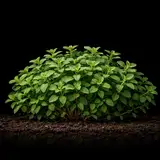
Ideal bedmates - the same full sun, lean soil and sharp drainage, and the same low-water habit. They are also kitchen partners, since thyme is what many commercial za'atar blends are cut with or built from outright.
- Traditional pairings, thin evidence
-
Matched Mediterranean needs - full sun, poor soil, dry roots - and both flower heavily for bees. A natural pairing in a dry gravelly herb bed, and both are semi-woody plants that want the same hard spring cutback.
-
The third plant in the oregano name-tangle, and the least related: Lippia graveolens is a verbena-family shrub, not an Origanum at all, killed outright at about 25-30°F and citrusy rather than sweet. It shares this plant's love of heat, sun and dry lean soil, and the two make natural neighbors in a gravelly herb bed - each with its own guide here.
-
The hardy cousin, and the page this plant was split out of. Origanum vulgare is the same genus and wants the same lean, sunny, sharply drained bed, so they grow happily side by side - but it survives to about -20°F while this one stops at roughly 5°F, so plan their winters separately. Greek oregano is also the usual stand-in when a recipe wants za'atar leaf and you have none.
-
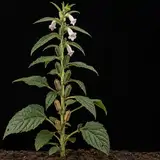
The third ingredient of za'atar, toasted and stirred in whole. Sesame is a warm-season annual that wants more water and richer ground than this herb, so give it its own row rather than the same dry corner - but it closes the circle on a homegrown blend.
-
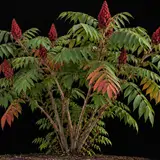
Not a bed partner - sumac is a shrub or small tree - but the other half of the blend: its dried, ground berries supply za'atar's sour red note. Worth planting somewhere on the same property if you have room, so you can mix the seasoning entirely from your own garden.
Keep apart
- Traditional pairings, thin evidence
-
MintMint runs aggressively and wants constant moisture; this herb wants dry roots and open ground, and will be swamped and then rotted by mint's watering regime. Keep mint contained and somewhere else entirely.
Grower tips
Notes from growers, tagged with the zone they grow in. A person reads every post before it appears.
Nobody has posted about Syrian Oregano yet. The first one usually saves someone a season.
Free account. Your post shows your grower name and zone, never your email.