Add it to your home screen and it opens full screen: no browser bars, one tap away, and everything stays signed in. Free, nothing to download from an app store.
- Tap the Share button in your browser
- Scroll down and choose “Add to Home Screen”
- Open GrowSomeFood from your home screen
- Open your browser’s menu
- Choose “Add to Home screen” or “Install app”
- Open GrowSomeFood from your home screen
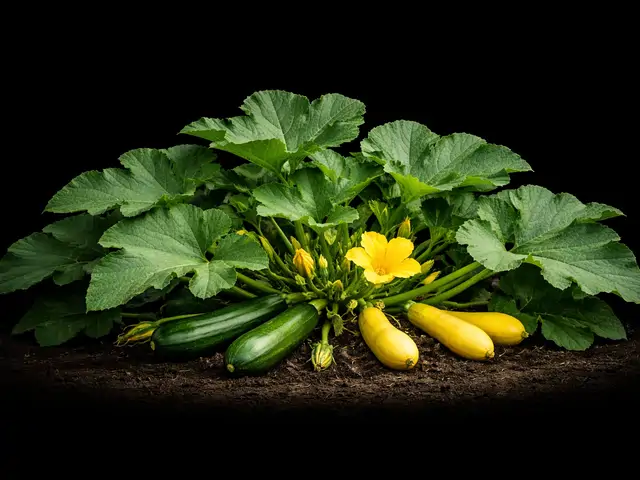
Summer Squash
A squash that tastes strongly bitter carries high cucurbitacins (rare, usually from a cross with an ornamental gourd or severe stress) and can cause 'toxic squash syndrome' - taste a raw sliver, spit it out, and throw the whole fruit away if it is bitter. Do not swallow the test bite.
Overview
The fastest, most generous crop in the garden - a bushy squash that turns a warm month into more zucchini than you know what to do with.
Summer squash is the vegetable garden's overachiever: sow into warm soil and you're cutting tender zucchini, crookneck, or pattypan in about seven weeks, then daily for the rest of summer. Unlike its winter cousins it's a compact bush, not a sprawling vine, and you eat it young and soft-skinned rather than mature and hard. It's the crop that teaches beginners success — and teaches everyone the meaning of 'too much of a good thing.'
All the familiar shapes are the same species, Cucurbita pepo: cylindrical zucchini, curved yellow crookneck, straight yellow straightneck, and scalloped pattypan. Grow one or two plants per person — genuinely, that's enough — and the real skill is keeping up with the harvest so the plant keeps making more.
At a glance
- Sun
- Full sun
- Water
- Medium
- Spacing
- 18–36 in (typ. 24)
- Mature height
- 18–36 in (typ. 24)
- Start by
- Direct sow · Transplant
- Frost
- Tender
- Germination
- 5–10 days (typ. 7) @ 60–95 °F (typ. 85)
- Start indoors
- 2–4 wks (typ. 3) before transplant
- Spread
- 24–48 in (typ. 36)
- Soil
- Well-drained
- Temperature
- Damaged below 33°F · struggles above 95°F
- Seed ready
- 80–115 days (typ. 95) (for saving)
When to plant
Zone 7a typical frost: last Apr 10 · first Oct 25 (spring frost runs Mar 27–Apr 24 in a typical spread of years)
Life stages
- Germination day 0–7 from sowing
-
Keep the hill evenly moistevery 1 dWait for 65-70°F soil, then keep the surface damp until the big cotyledons push up - usually within a week in warm ground.
-
Guard sprouting seedSlugs, birds, and rodents love emerging squash seed; a cloche or light cover helps until true leaves form.
No emergence in cold soilSlugs shredding cotyledons overnight -
Keep the hill evenly moistevery 1 d
- Seedling day 6–21 from sowing
-
Thin to 2-3 plants per hillSnip extras at the soil line rather than pulling. Crowded squash plants shade each other and set poorly.
-
Row-cover against beetles and borersevery 3 dCovers keep off cucumber beetles and (crucially) the vine-borer moth. Remove at first flower for pollination.
Cucumber beetlesDamping-offCutworms felling seedlings -
Thin to 2-3 plants per hill
- Bushing out day 18–42 from sowing
-
Water deeply and steadilyevery 3 dAbout 1-2 inches a week at the base builds the big leaves that feed a heavy fruit set; even moisture prevents misshapen fruit.
-
Feed as the plant bulks upevery 21 dA balanced side-dressing supports growth, but ease off high nitrogen near flowering or you'll get huge leaves and few fruit.
-
Check the stem base for borer eggsevery 7 dScout the lower stem weekly for the vine borer's small flat brown eggs and squash-bug egg clusters; wiping them off now saves the plant later.
Squash vine borer eggs at the stem baseSquash bug egg clusters on leaf undersidesFirst powdery mildew on older leaves -
Water deeply and steadilyevery 3 d
- Flowering day 38–90 from sowing
-
Understand the male/female flowersThe plant opens male flowers first (on thin stalks) for about a week before females (each with a tiny squash behind the bloom) appear. Both must be open the same morning and a bee must carry pollen between them. If tiny fruit yellow and rot, hand-pollinate at dawn: pick a male, strip its petals, and dab its pollen into the female.
-
The blossoms are a crop tooPick some male flowers (leave a few for pollination) to stuff and fry - a delicacy you can only get from your own plant.
Tiny fruit yellowing and shriveling (unpollinated)All-male flush at first (normal for the first week)Blossom drop in extreme heat -
Understand the male/female flowers
- Fruit set day 45–100 from sowing
-
Never let fruiting plants go dryevery 2 dSummer squash swells fast; a dry spell mid-fruiting brings pinched, misshapen fruit and blossom-end rot.
-
Watch for sudden wiltevery 3 dA whole plant collapsing in midsummer usually means a vine borer in the crown or bacterial wilt - check the stem base for frass at the first sign.
Sudden whole-plant wilt (vine borer or bacterial wilt)Blossom-end rot from uneven waterPowdery mildew spreading up the plant -
Never let fruiting plants go dryevery 2 d
- Harvest day 48–100 from sowing
-
Pick young, and pick every day or twoevery 2 dCut zucchini at 6-8 inches, pattypans at 2-4 inches across, while the skin still dents under a thumbnail. Missing even one lets a marrow form that tells the plant to stop - keeping up is the whole job.
-
Remove oversized and diseased fruitPull any baseball-bat zucchini you missed and mildewed lower leaves to keep the plant producing and airy.
Oversized 'marrow' fruit halting productionSkin too tough to dent (overripe)Powdery mildew shutting the plant down late season -
Pick young, and pick every day or twoevery 2 d
Harvest
- Style
- Repeated picking
- Typical yield
- 15–50 squash (typ. 25)
- By weight
- 120–640 oz (typ. 320)
- Zucchini and straightnecks at 6-8 inches; pattypans 2-4 inches across
- Skin glossy and tender enough to dent with a thumbnail
- Picked young - flavor and texture are best well before full size
Watch out for
Powdery Mildew High
Powdery mildew is a fungal disease that coats leaves - and often stems, buds, and fruit - in a white-to-gray powder that looks like spilled talcum. It is not one fungus but a large family of them, each fairly specialised to its own group of plants, which is why mildew on one crop rarely jumps to an unrelated one beside it. Unlike most leaf diseases it does not need wet leaves: it thrives on warm dry days followed by humid nights, and it takes hold fastest where plants stand crowded in still air or in shade. The coating blocks light, so heavily covered leaves yellow, brown, and drop early. On many plants that is mostly disfiguring and arrives late enough not to matter; where it strips away the leaves a crop still needed to finish, it costs you size, sweetness, and quality.
Watch for: Round white powdery spots on the upper leaf surfaces that spread and merge until whole leaves look dusted. It usually starts on the oldest, lowest, most shaded leaves and works upward, so check there first. Look at the undersides too, and at stems, buds, and flower stalks, which get coated as it advances. Leaves that yellow, brown, curl, or go crisp and drop early under the coating. New growth that opens small, crumpled, or twisted where the fungus has reached the shoot tips. On plants where it gets onto the fruit, a dull gray film, russeted or scarred skin, and cracking. Late in the season, tiny dark specks scattered through the white felt - that is the fungus setting up to overwinter on the debris.
Prevent: Give plants room. Crowding and still air are the biggest single driver, so space at the full recommended distance, thin seedlings properly, and divide or prune out congested growth until air moves through the plant. Full sun and an open position help; deep shade and a still corner against a wall are where it always starts. Water at the base rather than overhead, and water early in the day so nothing stays damp overnight. Keep plants evenly watered - drought stress at the roots leaves them far more susceptible, even though the fungus itself likes dry air. Go easy on nitrogen, since soft lush growth is the most vulnerable. Where resistant varieties exist for what you are growing, choosing one is the single most effective thing you can do on a plant that mildews every year. Clear infected leaves and stems away at the end of the season rather than composting them.
Treat: Start early: sprays protect healthy tissue, they do not clean up leaves that are already coated. Pick off and bin the worst leaves as soon as you see them, and open the plant up by thinning or pruning so air moves through. On anything that regrows quickly, shearing the whole plant back forces a clean flush and beats spraying. If it keeps spreading, potassium bicarbonate, horticultural oil, or neem applied weekly will hold it - cover both leaf surfaces. Sulfur also works, but it burns the foliage of some plants, should never go on in heat, and must not be mixed with or applied close behind an oil spray. Whatever you use must be labeled for the plant you are treating: follow that label and observe its pre-harvest interval on anything you eat. Do not compost badly infected material. Late-season mildew on a plant that is finishing anyway is usually cosmetic; on a crop still filling out it is worth acting on.
Nearly universal on summer squash by late season. A July succession sowing gives you clean young plants just as the first ones mildew out, which is far more reliable than trying to hold an infected planting together.
Squash Bugs High
Flat, gray-brown shield-shaped bugs that pierce leaves and stems to suck sap, injecting a toxin that wilts and browns foliage. Adults and gray nymphs cluster at the plant base and can overwhelm young plants; they are hardest to kill once mature.
Watch for: Neat bronze egg clusters in the V of leaf veins on the undersides, fast-moving gray nymphs, and adults that scatter when you lift a leaf or a board laid nearby.
Prevent: Scrape egg masses off leaves into soapy water; clear old vines and mulch that shelter overwintering adults; lay a board at dusk and destroy the bugs that gather beneath it by morning; row covers until bloom.
Treat: Hand-pick adults and crush egg clusters daily - this alone controls small plantings. Target young nymphs with insecticidal soap or neem; mature adults shrug off most sprays, so timing on the nymph stage is everything. Use only a product labeled for the crop you are treating, follow the label exactly, and observe the pre-harvest interval before you pick.
Squash bugs love summer squash; scout leaf undersides for egg clusters twice a week from the seedling stage.
Squash Vine Borer High
The larva of a clearwing moth that looks like a wasp. The moth lays eggs at the base of stems in early summer; the grub tunnels inside and hollows the vine, cutting off water so the plant wilts and collapses seemingly overnight. Squash and pumpkins are the favored hosts.
Watch for: Sudden wilting of a whole vine in midsummer, a small hole near the stem base oozing wet, sawdust-like frass, and orange-and-black moths flying by day.
Prevent: Cover young plants with row fabric until flowering (remove for pollination); wrap or mound soil over the lower stem to block egg-laying; plant a second sowing in early July after the moth's main flight; grow resistant Cucurbita moschata types where borers are severe.
Treat: At the first frass, slit the stem lengthwise, dig out and destroy the grub, then bury that stem section in moist soil to re-root. Bury vine nodes along the row so the plant survives even if the crown is lost. Destroy spent vines in fall.
One of summer squash's most destructive pests - a July succession sowing that matures after the moth flight is the surest home-garden defense.
Cucumber Beetles Medium
Small yellow beetles marked with black stripes or spots that chew leaves, flowers, and fruit rind. Their real danger is disease: they carry and spread the bacterium that causes cucurbit bacterial wilt and also transmit mosaic viruses, so even light feeding can be costly.
Watch for: Ragged holes in leaves and flowers, scarred fruit rind, and the beetles themselves - striped or spotted, about a quarter inch - diving into blossoms as you approach.
Prevent: Row covers from planting until flowering are the single best defense (remove at bloom for pollination); yellow sticky traps; delay-sow past the first beetle surge; clean up crop debris in fall and choose wilt-tolerant varieties.
Treat: Hand-pick in the cool early morning when beetles are sluggish; kaolin clay deters feeding; spot-treat heavy pressure at flowering with an evening insecticide application to spare bees. Use only a product labeled for the crop you are treating, follow the label exactly, and observe the pre-harvest interval before you pick. Controlling beetles is really about preventing the wilt they spread.
Damages seedlings and can spread bacterial wilt to summer squash, though the crop tolerates the wilt better than cucumbers and melons do.
Bacterial Wilt (Cucurbit) Medium
A bacterial disease (Erwinia tracheiphila) spread by cucumber beetles that plugs the plant's water-conducting vessels. Infected vines wilt in the heat, recover overnight at first, then collapse and die. Cucumbers and muskmelons are most susceptible; watermelon is essentially immune.
Watch for: Individual runners wilting in midday sun and reviving at night, then whole-plant collapse; a cut wilted stem oozes sticky sap that strings into a fine thread when you touch it and pull away.
Prevent: There is no cure, so the whole strategy is beetle control: row covers until flowering, prompt beetle knockdown, and wilt-tolerant varieties. Cucumber beetles carry the bacterium over winter and infect through feeding wounds.
Treat: None - remove and destroy wilting plants before beetles carry the bacteria to healthy vines. Prevention through beetle management is the only real control.
Summer squash is less susceptible than cucumber or melon; a wilting squash plant is more often the vine borer, so check the stem base for frass first.
Downy Mildew (Cucurbit) Medium
A fast-moving, wind-borne water mold (Pseudoperonospora cubensis) specific to the cucurbit family. Cool, wet, humid weather triggers it, and it can defoliate a planting within a week or two. Unlike powdery mildew it needs leaf moisture to spread.
Watch for: Angular yellow blotches on the upper leaf surface bounded by the veins (a blocky, mosaic look), with a gray-purple fuzzy growth on the underside in morning humidity; leaves brown and die from the oldest inward.
Prevent: Grow resistant varieties; maximize airflow and sun; water at the base early so leaves dry fast; and watch the regional downy-mildew forecast maps that track the disease moving north each summer.
Treat: Remove affected leaves early and harvest ahead of a wet forecast; protectant copper or approved fungicides slow it if applied before infection takes hold. Once established in warm, humid weather it moves faster than sprays can keep up.
Less devastating on squash than on cucumber, but wet summers can still strip the foliage.
Aphids Low
Aphids are small soft-bodied sap-suckers - green, black, gray, pink, or waxy white, and mostly wingless - that gather in dense colonies on the tenderest new growth: shoot tips, buds, and the undersides of young leaves. They breed extremely fast in mild weather, so a few can become hundreds inside a week. Their feeding curls and distorts soft growth, and the sticky honeydew they excrete coats everything below and turns black with sooty mold. Ants often farm and defend the colonies for that honeydew. A few aphids are normal on almost any plant and a healthy plant shrugs them off; only dense, persistent colonies do real damage, and some aphids also spread plant viruses as they feed.
Watch for: Dense clusters of tiny insects packed onto shoot tips, flower buds, and the undersides of young leaves. Curled, cupped, or distorted new growth that never opens properly. A sticky shine on the leaves - and on whatever sits under the plant - that later goes black with sooty mold. Tiny white cast skins left behind where a colony has been feeding. Ants running steadily up and down the stems, which is often the first thing you notice. Mottled, streaked, or misshapen leaves that do not grow out can mean a virus the aphids brought with them rather than the feeding itself.
Prevent: Go easy on nitrogen: the soft, lush growth that heavy feeding produces is exactly what aphids breed on. Check new growth once a week through spring and early summer so you catch colonies while they are still small, and rub the first few out with your fingers. Leave flowering plants nearby and skip broad-spectrum sprays - ladybugs, lacewings, hoverflies, and parasitic wasps do most of this work for free, and they only stay if there is something for them to eat. Keep ants off the plant where you can, since they protect aphids from those predators. Water steadily so plants are not stressed, and check any new plant over before you bring it home or move it indoors, since aphids usually arrive on something else.
Treat: Knock the colonies off with a hard jet of water and repeat every few days - on most plants that alone ends it. Pinch out or prune off the worst-infested tips rather than treating the whole plant. If colonies keep rebuilding, spray insecticidal soap or horticultural oil directly onto the insects, covering leaf undersides, and repeat weekly until they are gone; treat early or late in the day, and never spray a wilted or heat-stressed plant. Avoid broad-spectrum insecticides - they kill the ladybugs, lacewings, and parasitic wasps that were about to solve the problem for you, and aphid numbers usually come back worse afterward. Anything you spray must be labeled for the plant you are treating; follow that label and observe its pre-harvest interval. On anything you eat, wash leaves, heads, and buds well before use, since aphids hide down in crowns, folds, and tight growth.
Rarely serious on vigorous summer squash, but watch new growth for the melon aphid and the mosaic viruses it spreads.
Good & bad neighbors
Varieties · 19
Straight, glossy dark green to black cylindrical fruit.
The classic dark-green zucchini and a fair default: glossy, near-black straight fruit with tender creamy flesh on a heavy-bearing bush. Pick at 6-8 inches; a 1930s heirloom still hard to beat.
Long, ribbed fruit striped dark and light green.
An Italian heirloom zucchini with striking dark-and-light green stripes and firm, flavorful flesh that holds its texture in the pan. Best picked slim at 6-8 inches.
Ribbed, pale-flecked green fruit with a scalloped cross-section.
The chef's zucchini: heavily ribbed Italian heirloom with dense, nutty, less-watery flesh prized for flavor and for slicing into scalloped rounds. Lower-yielding than hybrids but worth it; its male blossoms are large and excellent stuffed.
Long, smooth, dark green cylindrical fruit.
A vigorous, prolific green zucchini from Burpee's Fordhook Farm with long, smooth dark fruit and dependable production; some mildew tolerance.
Slim, uniform bright golden fruit.
An All-America Selections golden zucchini with slender, uniform, bright-yellow fruit and tender flesh; ornamental and productive.
Bright yellow straight fruit on an open, upright bush.
A golden zucchini on an unusually open, upright, low-spine plant that makes picking easy on the hands, with good mildew tolerance.
Straight, glossy golden-yellow cylindrical fruit.
A true zucchini in bright golden-yellow - same tender texture as green types but easy to spot among the leaves, so fewer are missed and left to grow oversized.
Glossy near-black cylindrical fruit on an open bush.
A very dark, nearly black zucchini hybrid on an open, compact plant that's easy to pick and harvest; higher in lutein than most, with some disease tolerance.
Straight, medium-green glossy fruit.
A uniform, high-yielding green zucchini hybrid bred for consistency and an open plant habit that makes fruit easy to spot and cut; good early vigor.
Straight, smooth, bright yellow tapering fruit.
A 1938 All-America Selections winner and the standard yellow straightneck: early, heavy sets of smooth buttery-yellow fruit. Pick at 6-8 inches for the best texture.
Smooth, pale-to-bright yellow straightneck fruit.
An early, high-yielding yellow straightneck hybrid valued for smooth, uniform fruit and good eating quality on a compact plant.
Curved-neck bright yellow fruit with a warty skin when older.
The old-fashioned Southern crookneck: bright yellow fruit with a bent neck, slightly bumpy skin, and rich flavor many rank above zucchini. Best picked young and tender at 4-6 inches before the skin toughens.
Flattened scalloped fruit, pale green fading to cream.
A pale, green-tinted scallop (pattypan) heirloom with tender, mild flesh; best picked small at 2-3 inches for whole cooking or stuffing.
Bright golden scalloped, saucer-shaped fruit.
A golden-yellow pattypan on a compact bush - bright, tender baby squash picked small; ornamental as well as good eating.
Round, flattened, scallop-edged fruit resembling a small saucer.
The scalloped 'flying saucer' squash, in white, green, or yellow, with firm mild flesh - superb picked small and whole-roasted or stuffed. Old and reliable, a scallop (pattypan) type.
Vivid yellow scalloped fruit with a green button at the blossom end.
A bright yellow scallop (pattypan) hybrid and AAS winner: tender, buttery baby squash picked at 2-3 inches, prolific and pretty on the plate. Green sunburst at the blossom scar.
Very long, slender, curved pale-green fruit with a bulbous blossom end, turning tan when mature.
Put up a strong trellis before you plant this one. Tromboncino is the exception that proves the rule: a rampant vining Italian squash (actually Cucurbita moschata, which is why it shrugs off the vine borer) that runs 10-15 feet and will not behave like a bush zucchini - give it about four feet of room and something sturdy to climb. Eaten young it is a firm, non-watery summer squash, long, curved, and pale green; left to mature tan it keeps as a winter squash. A single plant produces heavily. It also appears in the winter-squash entry with a longer days-to-maturity: that is the same cultivar picked at a different stage - young for summer use here, mature for keeping there - not a data conflict.
Small, egg-shaped, bright golden-yellow fruit.
A small, egg-shaped golden squash grown as much for looks as eating; harvest at egg size for tender, mild flesh.
Slender fruit, yellow shading to pale green at the tip.
A distinctive bicolor hybrid - yellow with a pale green blossom end - with firm, nutty, non-watery flesh that's a market and chef favorite. Good disease tolerance; best at 4-6 inches.
Grow
Direct sow into warm soil after frost in hills; two plants per person is plenty, and succession sowings dodge the borer.
Direct sowing is the norm: summer squash grows so fast that transplants gain little, and the roots dislike disturbance. Sow 1 inch deep in hills once soil is 65-70°F and frost is past, a few seeds per hill spaced 2-3 feet apart, then thin to the two or three strongest. Where seasons are short you can start in peat pots two to three weeks early, but it's rarely necessary.
Give full sun and rich, well-drained soil. The single best planning move is succession sowing: start a fresh hill every three weeks, including one in early July. Young plants keep the harvest of tender fruit coming, and — critically — a July sowing matures after the squash vine borer's main egg-laying flight, so it sidesteps the pest that kills so many first plantings.
Care
Steady water, light feeding, and relentless borer/bug scouting; then pick constantly to keep it producing.
Care is simple but the vigilance is real. Keep water even — 1-2 inches a week at the base — for straight, unblemished fruit, and feed modestly (too much nitrogen buries the fruit under giant leaves). Water low and in the morning so foliage dries fast against the powdery mildew that eventually finds every squash plant.
The two enemies to scout weekly are the squash vine borer (check the stem base for small flat eggs and later for wet sawdust frass) and squash bugs (wipe bronze egg clusters off leaf undersides). Row covers protect young plants but must come off at flowering for pollination. And once fruit starts, the most important 'care' task is harvesting — a plant left with an oversized fruit stops setting new ones.
Harvest
Pick young - 6-8 inch zucchini, small pattypans - and pick every day or two, or the plant quits.
Summer squash is best eaten young and tender: cut zucchini and straightnecks at 6-8 inches, crookneck at 1.5-2 inches thick, and pattypans at 2-4 inches across, while the skin still dents under a thumbnail. Use a knife or pruners and leave a short stub of stem. The fruit grows shockingly fast in heat — a picked-perfect zucchini can become a seedy baseball bat in two or three days.
The rule that matters most: harvest constantly. Check daily at peak, because a single fruit allowed to mature signals the plant to stop producing. Keeping every fruit picked young is what turns two plants into a summer-long supply — and, honestly, into more squash than you expected.
Storage
A week in the fridge fresh; freeze grated, dehydrate, or pickle the flood - it doesn't store long whole.
Summer squash is a fresh vegetable, not a keeper. Unwashed in the crisper it holds about a week; the tender skin means it softens and shrivels faster than winter squash. Don't wash until you use it, and keep it out of the coldest part of the fridge to avoid chilling pits.
Because the plants overwhelm, preservation is a summer ritual. Grate and freeze zucchini in measured bags for winter bread and soup (no blanching needed for baking); blanch and freeze slices for cooking; dehydrate rounds into chips; or turn the glut into bread-and-butter squash pickles and relish. Salting or squeezing grated squash first removes the water that would otherwise turn dishes soggy.
Propagation & seed saving
Let a fruit grow hard and mature for seed, but beware: pepo squash cross wildly, so isolate or hand-pollinate.
Saving summer-squash seed means abandoning the eating stage entirely: leave one fruit on an open-pollinated (non-hybrid) plant to grow far past edible, until the skin is hard and dull and the fruit is heavy — roughly eight weeks past the size you'd normally pick, into fall. Scoop the seeds, rinse off the pulp, and dry them thoroughly. Stored cool and dry, they stay viable 4-6 years.
The big caution is crossing. Cucurbita pepo is a promiscuous species: zucchini, pattypan, acorn squash, many pumpkins, and ornamental gourds all cross with one another (bees carry pollen far), so seed saved from a mixed garden rarely comes true — and a cross with a bitter gourd can even produce dangerously bitter fruit next year. For pure seed, grow only one pepo variety, or hand-pollinate and bag the flowers. Crossing never affects the fruit you eat this season, only the seed you save.
Nutrition
Light and low-calorie with vitamin C, B6, and potassium - and the tender skin holds most of it, so don't peel.
Summer squash is about 94% water and very low in calories, a mild vegetable that carries a modest but useful nutrient load: vitamin C, vitamin B6, potassium, and some fiber, with a little vitamin A and lutein in the deeper-colored types. Most of it lives in and just under the tender skin, so there's no reason to peel a young squash.
Its real dietary value is versatility and volume — a filling, low-calorie base that soaks up whatever you cook it with. Spiralized 'zoodles,' grated into sauces, or grilled, it stretches a meal and sneaks vegetables into skeptical eaters, which is why it's a staple of light summer cooking.
In the kitchen
Grilled, sauteed, baked into bread, stuffed as blossoms - and every trick for surviving the August zucchini avalanche.
Summer squash is a blank, quick-cooking canvas. It's best when the heat is high and fast: grilled in planks until charred, sautéed hard so it browns instead of steaming into mush, or roasted. Its mildness welcomes garlic, herbs, lemon, parmesan, and chili. The flowers are their own luxury — stuffed with cheese and fried, they're a dish you can only make from your own garden.
Then there's the glut, which every squash grower faces. The traditions all aim at hiding volume: grated into zucchini bread and muffins (sweet, and it freezes), shredded into fritters and pancakes, spiralized into zoodles, layered into ratatouille and gratins, or blitzed into cold soup. Salt and squeeze grated squash to wring out water first, and remember the gardener's dark joke — this is the vegetable neighbors start locking their car doors against in August.
Traditional & historical uses
No herbal tradition to speak of - it's gentle, hydrating food, not medicine, and the only real note is the bitterness warning.
This section records how people have traditionally used this plant, and what is known about the risks. It is history and general information — not medical advice, and not a recommendation to treat anything. Plants are not dosed like medicines, some interact with prescriptions, and some are harmful in ways that are not obvious. Talk to a clinician before using any plant medicinally.
Honest answer: summer squash has no meaningful medicinal tradition. It's simply light, hydrating, easily digested food — which is its own quiet virtue for anyone wanting gentle, low-calorie vegetables — but there's no folk remedy or clinical story to tell.
The one genuine safety note is chemical, not medicinal. Summer squash normally contains only traces of the bitter compounds (cucurbitacins) found in wild cucurbits, but a rare plant — usually one grown from seed that crossed with an ornamental gourd, or badly stressed — can produce sharply bitter fruit that causes cramping and illness. The rule is simple: taste a raw sliver, spit it out, and if it is bitter throw the whole fruit away. Never swallow the test bite.
History
One of the oldest domesticated crops of the Americas, tamed in Mexico millennia ago; zucchini is a modern Italian refinement.
Squash (Cucurbita pepo) is among the very oldest domesticated plants in the Americas — cultivated in Mexico for perhaps 10,000 years, first for its seeds and hard shells and only later for tender flesh. It was a cornerstone of Indigenous agriculture, the 'squash' of the Three Sisters grown with corn and beans, and the word itself comes from the Narragansett askutasquash.
The soft summer-eating forms were selected over centuries, but the zucchini specifically is a relatively recent, Italian refinement of the 19th century (its name is the diminutive of zucca, gourd), which returned to the Americas with Italian immigrants in the 20th century. So the plant is ancient and American; the beloved zucchini is a modern round trip across the Atlantic.
Troubleshooting
Rotting baby fruit is poor pollination; sudden wilt is borer or bacterial wilt; white leaves are mildew; bitter fruit, discard.
Tiny fruit yellow and rot at the tip: incomplete pollination — the female flower wasn't visited; protect bees and hand-pollinate at dawn. The whole plant wilts and collapses in midsummer: squash vine borer (look for a hole and wet sawdust frass at the stem base) or bacterial wilt (a cut stem oozes sticky threads) — slit the stem to remove a borer and re-root it in soil; there's no cure for the wilt. White powder coating the leaves: powdery mildew — start weekly sprays early and improve airflow. Misshapen, pinched fruit: uneven water or partial pollination. Plant stopped producing: almost always an oversized fruit you missed — remove it and keep picking young. Strongly bitter squash: high cucurbitacins — spit out the test bite, throw the whole fruit away, and don't save seed from a bitter plant.
Growing across climates
Everyone can grow it; cold zones get a fast crop, hot zones grow spring and fall around peak pests, tropics fight disease.
Zones 3-5: summer squash is one of the surest crops here — it's fast enough to direct sow after frost and still pile up fruit before fall; a single succession sowing extends the run. Zones 6-8: prime territory, but the squash vine borer and squash bug peak in early-mid summer, so sow again in early July to grow past them. Zones 9-10: grow a spring crop and a fall crop, skipping the most brutal, disease-heavy midsummer weeks; pick very early in the morning as fruit sizes fast in heat. Zones 11-13: grow through the cooler, drier months and lean on resistant varieties and airflow, since constant humidity brings relentless mildew and bugs.
Cook it
All 12 recipes →Grower tips
No grower tips for Summer Squash yet. Yours could be the first.
Sign in to share what works in your garden.