Add it to your home screen and it opens full screen: no browser bars, one tap away, and everything stays signed in. Free, nothing to download from an app store.
- Tap the Share button in your browser
- Scroll down and choose “Add to Home Screen”
- Open GrowSomeFood from your home screen
- Open your browser’s menu
- Choose “Add to Home screen” or “Install app”
- Open GrowSomeFood from your home screen
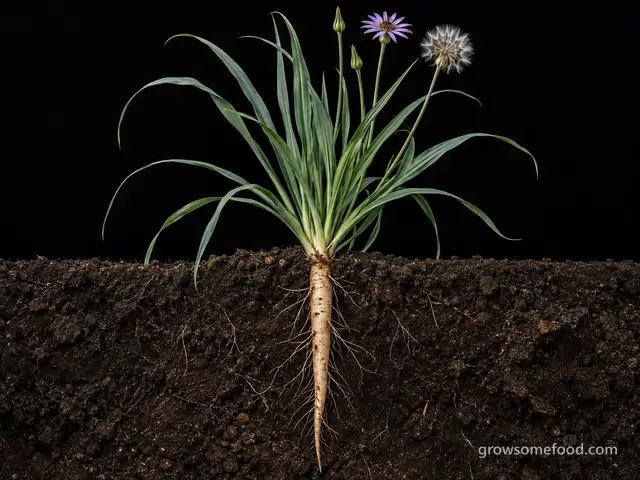
Salsify
A long-season heirloom root with a mild, sweet, faintly nutty flavor and a purple daisy flower - slow, undemanding, sweetened by frost, and dug from the ground all winter long.
Nothing on the plant is toxic - root, young leaves, spring shoots, buds, and flowers are all edible. Cut roots and stems bleed a sticky white latex that stains hands and browns the flesh; peel under water or drop peeled roots into water with lemon juice or vinegar. People with strong ragweed or daisy-family allergies occasionally react to the sap on skin, so wear gloves if you know you are sensitive to Asteraceae.
Overview
The one thing to knowIts other name is oyster plant, and the promise in that name deserves an honest answer: cooked salsify does not really taste like oysters.
Salsify is a slim, ivory-skinned taproot that spends a whole season doing very little and then rewards you in the cold. It looks like a scruffy, hairy parsnip; it grows from a grassy rosette that most gardeners mistake for a weed; and it belongs not to the carrot family but to the daisies, alongside lettuce, chicory, and dandelion. In its second spring it throws a striking purple daisy flower that opens at dawn and closes by midday - the habit that earned the whole genus the name Jack-go-to-bed-at-noon.
Its other name is oyster plant, and the promise in that name deserves an honest answer: cooked salsify does not really taste like oysters. It is mild, faintly sweet, and closest to a cross between artichoke heart and parsnip, with a hint of something briny in a cream soup if you are looking for it. That is a good vegetable in its own right - just not a seafood substitute, and setting the expectation right is the difference between delight and disappointment.
Two practical things define growing it. First, frost is the flavor: roots dug before hard frost are bland, and after two or three weeks of freezing nights they turn sweet and nutty, so this is a crop you plant in spring and dig from November to March. Second, it is genuinely low-maintenance - no serious pests, no diseases worth worrying about, and nothing to do between thinning in May and digging in December except water it. Note also that black salsify, or scorzonera, is a different plant entirely (Scorzonera hispanica, black-skinned, in the same family), often sold under the same name and grown almost identically.
Quick facts
- Sprouts in
- 12 days7 to 21
- Soil to sprout
- 65 °F45 to 75
- Life cycle
- Biennial, grown as an annual
- Seed to save
- Second yearafter overwintering a few plants
- Height
- 30 in18 to 48
- Spread
- 10 in6 to 14
- Cold
- Takes hard frostdamaged below -20°F
- Heat
- Struggles above 85°F
- Self-sows
- Yes, expect volunteers
Full sun or part sun · medium water · well-drained soil · 3 in apart (2 to 4) · direct sow
When to plant
Nothing is open today. Spring sowing opens 6 months, Mar 20 to May 1.
- Direct sow Mar 20 – May 1 Opens in 180 daysAbout 3 weeks before to 3 weeks after your last frost (Apr 10 here)Sow early to mid-spring, then leave it alone until the frosts arrive; harvest runs from late fall right through winter.
- Direct sow Jun 7 – Jul 2 Opens in 259 daysAbout 20 weeks before to 16 weeks before your first frost (Oct 25 here)A midsummer sowing timed to size up in autumn and sweeten through winter frosts. Roots come smaller than from a spring sowing.
Frost here: last around Apr 10 (Mar 27 to Apr 24 most years), first around Oct 25. Zone averages, your own yard may run a week or two either way.
Life stages
Six stages, about 4 months from sowing to the first pull. Windows are typical; your zone and weather move them.
Germination
Day 0 to 12 from sowing- WaterUse fresh seed and keep the bed damp for two weeksdailySalsify seed is short-lived - two years at best, and often less. Buy new seed each season, sow ½ inch deep into a firmed bed, and keep the surface damp for the two to three weeks it takes to come up.
- DoMark the slow row with radishesSalsify seedlings look like grass and come up unevenly. A few radishes sown along the row show you where it is, break the crust, and are pulled long before the salsify needs the room.
Watch for- Nothing up after three weeks (old seed or a dried-out bed - the usual failure)
- Soil crusting over the row
Seedling
Day 12 to 45 from sowing- ThinThin to 2-4 inches apartCrowded salsify makes thin, forked, useless roots. Thin once the grassy seedlings are a few inches tall, snipping rather than pulling so you do not disturb the neighbors' taproots.
- WeedWeed by hand while the plants are smallevery 2 weeksSalsify seedlings look so much like grass that they are easy to hoe out by mistake, and they are easily swamped early. Weed the row by hand until the leaves are clearly wider than a grass blade.
Watch for- Seedlings mistaken for grass and weeded out
- Slugs shearing off the grassy seedlings overnight
Root growth
Day 45 to 115 from sowing- WaterWater deeply and evenly all summerweeklyThe long taproot grows straight only on steady moisture. Swings between bone-dry and soaked are what cause split and forked roots, and a drought check makes the root woody at the core.
- MulchMulch to hold moisture through the long seasonSalsify is in the ground four to five months. A mulch layer steadies the moisture the taproot depends on and keeps the weeds down over that whole stretch.
- FertilizeFeed lightly, and never with fresh manureSalsify is a light feeder. High nitrogen and fresh manure both grow tops at the expense of the root and cause the forking and hairiness that ruin it. Compost worked in before sowing is enough.
Watch for- Forked or hairy roots from stones, manure, or uneven water
- Plants bolting to flower in their first summer (a stress response - the root will be woody)
Frost sweetening
Day 115 to 145 from sowing- ProtectLeave the roots in the ground for frost to sweeten themLike parsnip, salsify converts starch to sugar in near-freezing weather. Roots dug before frost are bland and slightly grassy; after two or three weeks of frosts they turn sweet and nutty. Waiting is the whole trick.
- MulchMulch deeply before the ground freezes solidA thick straw mulch keeps the soil diggable so you can lift roots through the winter, and protects the ones you leave for a spring shoot harvest.
Watch for- Tops dying back in late fall (normal)
- Ground freezing hard before you have mulched
Harvest
Day 110 to 150 to the first pull from sowing, picking to about day 210- HarvestDig - never pull - after the first hard frostsSalsify roots are long and brittle and snap off if you tug the tops. Drive a fork in a hand's width away, lever the soil up along the whole length, and lift the root out of loosened ground. Dig as you need them, from after the first frosts right through winter.
- HarvestClear the bed before spring regrowthOnce an overwintered root sends up new leaves in spring it turns woody and hollow, because it is spending itself on the flower stalk. Lift the last of the crop before that starts - or deliberately keep a few plants for their spring shoots.
Watch for- Roots snapping off underground if pulled rather than dug
- Spring regrowth signaling the roots are going woody
Second-year shoots (optional)
Day 300 to 380 from sowing- HarvestCut the spring shoots before the buds openLeave a few roots in the ground over winter and each sends up a tender flower stalk in spring. Cut those shoots at 4-6 inches, while the bud is still closed, and cook them like asparagus - the second crop almost nobody knows salsify gives.
- WeedDeadhead anything you are not eatingA plant allowed to bloom makes a large dandelion-style seedhead and scatters parachute seed across the garden. Cut the flowers off unless you are saving seed, or expect volunteers for years.
Watch for- Purple flowers opening at dawn and closing by midday (the family habit that gives it the name Jack-go-to-bed-at-noon)
- Seedheads shattering and self-sowing across the garden
Harvest
- Root shoulders about 1-1.5 inches across and 8-12 inches long
- The plant has been through several hard frosts (that is what makes it sweet)
- Tops have died back for the season
- Dig - never pull - after the first hard frosts
- Clear the bed before spring regrowth
Per plant 1 root, 2 to 8 ozPicking pull once
Cook with Salsify
Watch out for
6 to know. None are high-risk for Salsify. 5 are active in September.
Slugs & SnailsSeverity Medium PestnowOnly the grassy seedling stage is really at risk, and salsify sits in that stage for weeks because it germinates so slowly.
Protect the row for its first month and the crop looks after itself for the rest of the year. Note that salsify cannot be started in pots and set out large - the taproot forbids it - so the usual escape route does not apply here.
Irregular ragged holes chewed out of the middle of leaves and along the edges - not the clean-edged cuts a caterpillar leaves. Seedlings that vanish overnight, or that are cut off at soil level with nothing left behind. Silvery dried slime trails across leaves, soil, pots, and paving in the morning: this is the giveaway that tells you it was mollusks rather than an insect. Chewed pits in ripe fruit, especially where it rests on the ground. Damage that shows up on the lowest, dampest leaves first and gets worse after rain or evening watering. Turn over a board, an upturned pot, or a clump of dense mulch during the day and look for the animals themselves sheltering in the cool underneath.
Hand-picking works and costs nothing: go out an hour after dark with a headlamp, drop what you find into soapy water, and repeat nightly for a week or two - persistence is what wins, not any single product. Shallow beer traps sunk to soil level catch them too, but need emptying and refilling daily to be worth anything. Iron-phosphate bait is the standard control and is far lower-risk around pets and wildlife than the old metaldehyde products, but it is not harmless: many formulations include EDTA, and a dog that eats a quantity of pellets can develop iron toxicosis. Scatter it thinly per the label, never in piles, and keep dogs off a baited bed. Clear fallen foliage and debris in autumn, where the eggs are laid. In a wet climate this is a population you manage each season rather than one you eradicate - and on most established plants light grazing is cosmetic and needs nothing at all.
Take away the daytime shelter first: lift boards and upturned pots, clear piles of debris, keep dense mulch pulled back from crowns and stems, and give crowded plantings enough airflow to dry out. Water in the morning rather than the evening so the surface is dry by the time they come out. Copper tape around containers and raised beds gives them a shock they will not cross, and it is the one barrier that reliably works. Get plants past the vulnerable stage quickly - start seedlings in pots and set them out at a decent size rather than direct-sowing into a cold wet bed, since most plants stop being worth defending once the leaves toughen. Leave the ground beetles, frogs, toads, and ground-feeding birds alone, because they eat mollusks all night for free and broad-spectrum slug pellets kill them too. Where thick-leaved or resistant varieties exist for what you are growing, they take far less damage.
Slugs and snails are nocturnal mollusks that rasp ragged holes in soft leaves, shear off seedlings at ground level, and chew into ripe fruit that touches the soil. They feed at night and in the early morning and spend the day hidden under boards, pots, dense mulch, leaf litter, and low foliage, becoming active in exactly the cool, damp, shaded conditions that suit young plants. Damage is heaviest in wet spells and on tender spring growth: a single wet week can erase a row of seedlings while an established, tough-leaved plant of the same species is barely marked. They lay clusters of small pearly eggs in damp soil and under debris, so a garden with plenty of cover carries a resident population year after year rather than being invaded from outside.
WirewormSeverity Medium PestnowThe one soil pest that genuinely spoils salsify, because the root is slender enough that a single tunnel ruins it.
Beds broken from lawn within the last two years are the classic trouble spot - put salsify somewhere else and give the ground a season of cultivated crops first.
Thin, clean holes and shallow tunnels in roots at harvest, and stiff orange-brown 'worms' in the soil - worst in beds recently converted from lawn or sod.
No rescue for holed tubers - trim and eat them soon (they don't store); trap with buried potato or carrot pieces before planting to gauge and reduce numbers.
Avoid planting potatoes into ground that was grass/sod the year before; rotate; cultivate the soil to expose larvae to birds; bait with buried potato chunks and remove them with their feeders.
The tough, wiry, orange-brown larvae of click beetles, which live in soil for years and bore narrow holes and tunnels through storage roots.
Root-Knot NematodesSeverity Medium PestnowProduces exactly the beaded, branched roots that people otherwise blame on stones - if de-stoning the bed did not fix your forking, dig a root up in midsummer and look for swellings on the side rootlets.
Worst in warm sandy soils in the South.
Stunted, yellowing, unthrifty plants that wilt in the heat even though the soil is moist, and poor yields for no obvious reason. Confirm by digging: beady swellings strung along the roots and side rootlets, and root crops that are forked, branched, cracked or knotted rather than clean.
There is no in-season cure. Pull and destroy affected plants rather than composting them, and bring that ground back over several seasons with rotation, resistant varieties and marigold cover crops. Where a crop can be grown in a container of fresh mix, that sidesteps the problem entirely.
Rotate to non-hosts, and grow resistant varieties where they exist for your crop. A French marigold cover crop grown thickly the season before and turned in genuinely lowers populations. Build organic matter and mulch heavily, which feeds the soil life that suppresses them. Plant only clean stock, never move soil from an infested bed around the garden, and solarize badly infested ground through the hottest part of summer.
Microscopic soil roundworms (Meloidogyne species) that invade roots and force them to swell into beady galls. A galled root cannot take up water and nutrients properly, so the plant stunts, yellows, wilts in heat despite watering, and yields poorly, and root and tuber crops come up forked, knobbly, hairy or cracked instead of clean. They are worst in warm, sandy soils and build up steadily wherever a susceptible crop is grown in the same ground year after year. The wounds they leave also open the way for fusarium wilt and rots.
Deer (browse resistance)Severity Low WildlifenowDeer graze the grassy tops but the root is untouched and the plant regrows, so light browsing costs you only a little root size.
It matters more on plants you are overwintering for spring shoots, which is exactly the growth deer take first.
Growth cleanly missing overnight, with the plant browsed back to a level line about as high as a deer can comfortably reach. Ragged, torn stem ends rather than the clean angled cut a rabbit leaves - the single most reliable identifier. Buds and flowers gone while the foliage below is untouched, since deer often take the best part first. Hoof prints and droppings in soft ground near the damage. Repeat visits, with fresh damage each morning once a planting has been found. On young trees, shredded and stripped bark and broken low branches in autumn - that is antler rubbing rather than feeding.
There is no chemical fix, only exclusion and recovery. Get physical protection up immediately after the first damage, because deer return to a known meal, and reinforce or rotate whatever you were relying on before. Most plants regrow from browsing if the crown and roots are intact - feed and water a grazed plant and protect the regrowth while it comes back. What does not recover in the same season is anything whose buds or flowers have been taken, and a young tree whose bark has been rubbed right around the trunk is usually lost. Where deer pressure is genuinely heavy, the honest answer is to fence properly or to grow the plants deer leave alone, rather than to keep replacing losses.
Fencing is the only thing that reliably works. Eight feet is the standard for excluding deer, or two parallel four-foot fences a few feet apart, which they will not jump because they cannot judge the landing. Short of that, cage individual plants: a sturdy wire cage or trunk guard around every young tree, left on until the trunk is thick and the canopy is above browse height, prevents both browsing and antler rubbing and is the single highest-value thing you can do for a young tree. Repellent sprays do help at moderate pressure, but they wash off and deer habituate, so reapply after rain and rotate between different types through the season. Motion-activated sprinklers, scent deterrents, and noise devices work for a while and then stop. Siting matters too: plants close to the house, in daily traffic, and screened behind other planting get browsed less than the same plant out at the boundary.
Deer are the largest garden problem across much of the country, and where pressure is high they set the limit on what you can grow at all. They browse at night and around dawn and dusk, taking tender shoots, leaves, buds, flowers, and fruit within about five feet of the ground, and they come back night after night to anything they have found and liked. Because they have no upper incisors they tear rather than cut, leaving ragged stem ends - that is how you tell deer damage from a rabbit's clean angled cut. In fall, bucks rub their antlers on young trunks and can strip the bark right around a stem, which kills a young tree outright. Palatability varies enormously between plants and between seasons: a herd short of food in late winter eats things it ignores in June, and no plant is truly deer-proof.
White Blister of SalsifySeverity Low DiseasenowThe only disease salsify reliably gets, and it is usually a nuisance rather than a loss.
Take it more seriously on plants you are overwintering for spring shoots or for seed, since those are the ones the stem distortion actually spoils.
Shiny, raised, chalk-white pustules on leaves and leaf stalks, with pale yellow blotches on the upper surface above them. Swollen, twisted, or bent stems and leaf stalks in a bad case. Worst in cool, damp weather and in crowded, poorly ventilated rows, and often arriving from wild Tragopogon growing in nearby rough ground.
Remove and bin affected leaves as you see them; the root generally sizes up regardless, and on a crop harvested for its root this is rarely worth spraying. Where it is severe enough to distort the plants, improve spacing and airflow next season and site the bed away from wild Tragopogon.
Thin to full spacing so air moves through the row, water at the base rather than overhead and early in the day, and rotate out of daisy-family crops for a couple of years. Clear infected foliage at the end of the season rather than composting it, and pull wild salsify and goatsbeard growing near the bed, since they carry it over.
A white blister rust (Pustula tragopogonis, formerly Albugo tragopogonis) specific to salsify and its wild Tragopogon relatives, and shared with sunflowers. It raises glossy white pustules on the leaves and can swell and distort stems, but it attacks the foliage rather than the root, so a crop that catches it late usually still produces.
AphidsSeverity Low PestColonies build on the tops and on second-year flower stalks but rarely affect the root at all.
Worth dealing with only if you are growing the plant on for spring shoots or for seed.
Dense clusters of tiny insects packed onto shoot tips, flower buds, and the undersides of young leaves. Curled, cupped, or distorted new growth that never opens properly. A sticky shine on the leaves - and on whatever sits under the plant - that later goes black with sooty mold. Tiny white cast skins left behind where a colony has been feeding. Ants running steadily up and down the stems, which is often the first thing you notice. Mottled, streaked, or misshapen leaves that do not grow out can mean a virus the aphids brought with them rather than the feeding itself.
Knock the colonies off with a hard jet of water and repeat every few days - on most plants that alone ends it. Pinch out or prune off the worst-infested tips rather than treating the whole plant. If colonies keep rebuilding, spray insecticidal soap or horticultural oil directly onto the insects, covering leaf undersides, and repeat weekly until they are gone; treat early or late in the day, and never spray a wilted or heat-stressed plant. Avoid broad-spectrum insecticides - they kill the ladybugs, lacewings, and parasitic wasps that were about to solve the problem for you, and aphid numbers usually come back worse afterward. Anything you spray must be labeled for the plant you are treating; follow that label and observe its pre-harvest interval. On anything you eat, wash leaves, heads, and buds well before use, since aphids hide down in crowns, folds, and tight growth.
Go easy on nitrogen: the soft, lush growth that heavy feeding produces is exactly what aphids breed on. Check new growth once a week through spring and early summer so you catch colonies while they are still small, and rub the first few out with your fingers. Leave flowering plants nearby and skip broad-spectrum sprays - ladybugs, lacewings, hoverflies, and parasitic wasps do most of this work for free, and they only stay if there is something for them to eat. Keep ants off the plant where you can, since they protect aphids from those predators. Water steadily so plants are not stressed, and check any new plant over before you bring it home or move it indoors, since aphids usually arrive on something else.
Aphids are small soft-bodied sap-suckers - green, black, gray, pink, or waxy white, and mostly wingless - that gather in dense colonies on the tenderest new growth: shoot tips, buds, and the undersides of young leaves. They breed extremely fast in mild weather, so a few can become hundreds inside a week. Their feeding curls and distorts soft growth, and the sticky honeydew they excrete coats everything below and turns black with sooty mold. Ants often farm and defend the colonies for that honeydew. A few aphids are normal on almost any plant and a healthy plant shrugs them off; only dense, persistent colonies do real damage, and some aphids also spread plant viruses as they feed.
Good & bad neighbors
Plant nearby
-
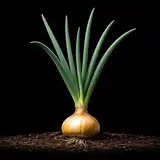
Fast radishes mark the slow, grass-like salsify row, break the soil crust for germination, and are pulled long before the taproot needs the space.
- Traditional pairings, thin evidence
-
Not related (salsify is a daisy, carrot an umbellifer) so they share no pests, and both want the same deep, stone-free, unmanured bed - convenient to prepare once.
-
Shallow and quick - covers the ground beside a crop that spends its first two months looking like nothing, and is gone before the root fills out.
-
Shares the row with a different root profile and no real competition; a traditional pairing in a long-season root bed.
-
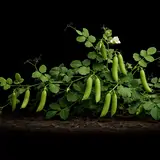
Early peas fix a little nitrogen and are cleared well before salsify bulks up - a good use of the same ground.



Keep apart
- Traditional pairings, thin evidence
-
Shares the white blister rust that affects salsify, and its roots take the deep moisture the taproot needs. Keep it out of the salsify bed and out of the rotation before it.

Varieties · 3
You pick one when you add Salsify to your garden. Its days to maturity set your harvest window.
Mammoth Sandwich Island
Long, slender, tapering creamy-white roots with a scruffy hairy surface, topped by grassy blue-green leaves.
heirloomopen-pollinatedlong-rootstandardThe standard salsify and, in practice, nearly the only one sold in North America - an heirloom dating to the nineteenth century with long, tapered, ivory-white roots and reliably mild, sweet flavor after frost. If a seed packet just says 'salsify', this is almost certainly what is in it.
Sandwich Island
Long, slender, creamy-white tapering roots with grassy blue-green tops.
heirloomopen-pollinatedlong-rootstandardThe same heirloom under its shorter market name - carried as a separate catalog entry so a packet labelled this way resolves, and grown, harvested, and cooked identically to Mammoth Sandwich Island. Any difference between packets is a matter of seed-house selection rather than a distinct variety.
Fiore Blu
Slender ivory roots with grassy foliage and notably showy purple daisy flowers in the second spring.
heirloomopen-pollinateditaliandual-purposeAn Italian selection offered by a few specialist seed houses, grown as much for its abundant purple flowers and tender spring shoots as for the root itself. Roots are comparable to the Sandwich Island types; the difference is that it is sold with the second-year shoot harvest in mind, so plan to overwinter some plants deliberately.
Grower tips
Notes from growers, tagged with the zone they grow in. A person reads every post before it appears.
Nobody has posted about Salsify yet. The first one usually saves someone a season.
Free account. Your post shows your grower name and zone, never your email.