
Add it to your home screen and it opens full screen: no browser bars, one tap away, and everything stays signed in. Free, nothing to download from an app store.
- Tap the Share button in your browser
- Scroll down and choose “Add to Home Screen”
- Open GrowSomeFood from your home screen
- Open your browser’s menu
- Choose “Add to Home screen” or “Install app”
- Open GrowSomeFood from your home screen
Pomegranate
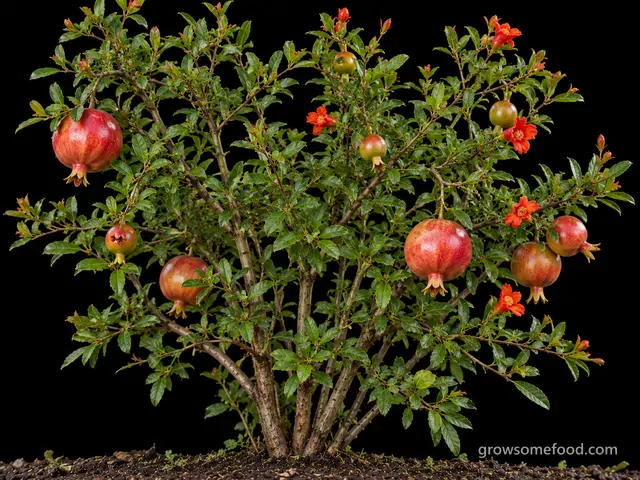
A tough, drought-hardy, low-chill deciduous shrub for warm climates (zones 7b-11) that rewards you with jeweled ruby arils - mostly self-fruitful, ornamental in bloom, and long-lived. The key to a good crop is steady water during fruit fill to prevent splitting.
Safety notes The juicy arils (seed sacs) inside are the food. The bitter white pith is inedible but not toxic. The root and stem bark contain alkaloids and are not for casual consumption despite folk use as a dewormer.
Overview
The pomegranate is one of the most forgiving fruits you can grow in a warm climate: a drought-tolerant, heat-loving, remarkably long-lived deciduous shrub (or small tree) that asks little once established and lives for decades - some ancient plants are centuries old. It needs very little winter chill (roughly 100-200 hours), most cultivars are self-fruitful so a single plant crops, and the flame-orange summer flowers make it a genuinely ornamental plant even before the fruit. In fall it hands you the famous leathery-skinned globes packed with hundreds of ruby arils - each a juicy seed sac - that you eat fresh, juice, or scatter over everything.
The one thing to knowIt needs very little winter chill (roughly 100-200 hours), most cultivars are self-fruitful so a single plant crops, and the flame-orange summer flowers make it a genuinely ornamental plant even before the fruit.
Quick facts
- Winter chill
- 150 hours below 45°FRange: 100–200 hours
- Height
- 12 ftRange: 6–20 ft
- Spread
- 10 ftRange: 6–15 ft
- Cold
- Killed by frostdamaged below 5°F
- Heat
- Struggles above 110°F
- Life cycle
- Perennial, lives about 50 years
- Soil
- Well-drained
- Water
- Low
- Plant spacing
- 12 ftRange: 8–18 ft
When to plant
Nothing is open today. Spring transplanting opens 6 months, Apr 10 to May 25.
- Transplant Apr 10 – May 25 Opens in 173 daysAbout at to 6 weeks after your last frost (Apr 10 here)Plant in spring after all frost danger passes so the tender young plant has a full warm season to establish before its first winter. At the cold edge (zone 7) this needs a cold-hardy cultivar (Salavatski, Kazake, Parfianka), a warm south-facing spot, and winter protection while young.
Frost here: last around Apr 10 (Mar 27 to Apr 24 most years), first around Oct 25. Zone averages, your own yard may run a week or two either way.
Life stages
Establish, grow, repeat
Getting established and returning each season are different parts of the story.
Stage 1 of 5 · Getting established
First-year establishment
The first year after planting
Care at this stage
-
Water regularly the first year to establish roots
Though drought-tolerant once established, a young pomegranate needs steady moisture its first year or two to build roots. Water deeply every 7-10 days through the first summer.
-
Mulch to hold moisture and warmth
A ring of mulch conserves water and, in borderline-cold zones, helps buffer the roots over winter. Keep it off the trunk.
-
Protect from hard frost in borderline zones
Young pomegranates are frost-tender. In zone 7 and colder edges, wrap the trunk or mound mulch over the base for the first few winters, and plant a cold-hardy cultivar (Salavatski, Kazake).
-
Decide tree-form or shrub-form early
Pomegranates sucker heavily and naturally form a multi-stemmed shrub. To grow a small tree, select one to three main trunks and remove suckers; to grow a productive shrub (often more cold-resilient), keep 5-6 main stems. Set this shape in the first two years.
Months are typical seasonal windows; climate, variety, and plant age can shift them.
Harvest
- Rind reaches full, deep variety color (red, pink, or bronze depending on cultivar)
- The round fruit develops flattened sides, becoming slightly hexagonal, and feels heavy for its size
- A metallic 'tink' sound when tapped
- Arils inside a test fruit are full, juicy, and deeply colored - remember, they do NOT ripen further off the plant
- Pick ripe - pomegranates do NOT ripen after picking · every 5 days
- Pick ahead of rain and frost
Per plant 10 to 150 pomegranates, 5 to 75 lbPicking pick as they ripen
Cook with pomegranates
Watch out for
4 to know. None are high-risk for pomegranates. 1 is active in October.
Leaf-Footed BugSeverity Medium PestSeason: May–SepClusters of large brown bugs (and their reddish nymphs) on fruit and stems, small dark feeding punctures on the rind, and discolored or shriveled arils inside affected fruit.
Mainly a Western/Southwestern problem; damage is often hidden until you open the fruit, so scout the fruit through summer.
Clusters of large brown bugs (and their reddish nymphs) on fruit and stems, small dark feeding punctures on the rind, and discolored or shriveled arils inside affected fruit.
Knock bugs into soapy water; targeted insecticides (or kaolin clay) during heavy pressure, timed to nymphs, which are easier to kill than adults.
Remove weedy hosts and overwintering shelter near the planting, hand-pick or vacuum adults and egg clusters in the cool morning, and encourage predators; row cover isn't practical on a large shrub, so scouting is key.
A large brown true bug (named for the leaf-like flares on its hind legs) that pierces developing pomegranate fruit with its needle-like mouthparts to feed, causing internal aril discoloration, sunken punctures, and sometimes fruit drop. A key pomegranate pest in the arid Southwest and California.
Birds & WildlifeSeverity Low WildlifenowSeason: Sep–NovFruit disappearing from the outermost, most exposed parts of the plant first, and from the top of a tree where you cannot reach anyway.
The tough rind protects intact fruit fairly well - damage concentrates on already-split or overripe fruit, so the steady watering that prevents splitting also reduces this. Rats and squirrels join the birds at cracked fruit.
Fruit disappearing from the outermost, most exposed parts of the plant first, and from the top of a tree where you cannot reach anyway. Single neat pecks and gouges in ripening fruit, with several fruits sampled rather than one eaten through - the classic sign that it was birds rather than an animal. Heads of grain or seed going visibly lighter and emptier as they ripen, with hulls and chaff scattered underneath. Freshly sown seed vanishing off the surface of a bed before it germinates. Bird traffic in and out of the plant picking up as the crop colors, and birds waiting on nearby wires and branches. Wasps arriving at the pecked and split fruit shortly afterward.
There is no treatment once a crop is being taken - only protection and timing, so the answer is to get netting on and to pick what is ready. Reflective tape, flash ribbon, spinners, and decoy predators do work, but only for a few days at a time: birds habituate fast, so move and rotate them and never rely on them as the main defense for a crop you care about. Cut and gather grain or seed heads a little early, at firm dough, and finish drying them under cover instead of leaving them standing for the flocks. Plant a little extra, or a decoy crop the birds prefer, and accept sharing anything that crops heavily. On a wild or foraged patch, fruit going to birds and small mammals is the point of the plant rather than a problem to solve.
Net, and net early. Bird netting draped over a frame or hoops so it stands off the fruit, with the edges closed at ground level, is the only thing that reliably works at harvest scale - and it has to go on before the crop starts to color, because once birds have found the food they are far harder to displace. Keep fruit trees small enough that netting them is actually feasible; that decision gets made years earlier, at planting. Bags of mesh, organza, or paper slipped over individual heads, clusters, or prize fruit protect a small crop without netting the whole plant. Then shorten the exposure: pick promptly and completely rather than leaving ripe fruit hanging as a lure, clear split and dropped fruit that draws birds and wasps alike, and where a crop can finish off the plant, harvest a little early and ripen or dry it under cover. Rake in or cover broadcast seed so it is not lying in plain view.
Birds find ripening fruit and seed before you do. Robins, waxwings, starlings, catbirds, jays, sparrows, finches, blackbirds, and doves all work a garden, and the pressure arrives in a narrow window - the last days before harvest, when sugar rises, color changes, and the crop softens or the grain hardens. A flock can strip a small planting in a day or two, and birds that only peck rather than take whole fruit still leave wounds that rot or draw wasps. Squirrels, chipmunks, and other wildlife usually turn up on the same crop at the same time. This is competition rather than disease: the birds are not harming the plant, and a big tree or a heavy-cropping bush often has enough for everyone - but on a small planting it can be the difference between a harvest and none.
AphidsSeverity Low PestSeason: Apr–JunDense clusters of tiny insects packed onto shoot tips, flower buds, and the undersides of young leaves.
Mostly a young-plant and spring-flush concern; established pomegranates tolerate light aphid pressure.
Dense clusters of tiny insects packed onto shoot tips, flower buds, and the undersides of young leaves. Curled, cupped, or distorted new growth that never opens properly. A sticky shine on the leaves - and on whatever sits under the plant - that later goes black with sooty mold. Tiny white cast skins left behind where a colony has been feeding. Ants running steadily up and down the stems, which is often the first thing you notice. Mottled, streaked, or misshapen leaves that do not grow out can mean a virus the aphids brought with them rather than the feeding itself.
Knock the colonies off with a hard jet of water and repeat every few days - on most plants that alone ends it. Pinch out or prune off the worst-infested tips rather than treating the whole plant. If colonies keep rebuilding, spray insecticidal soap or horticultural oil directly onto the insects, covering leaf undersides, and repeat weekly until they are gone; treat early or late in the day, and never spray a wilted or heat-stressed plant. Avoid broad-spectrum insecticides - they kill the ladybugs, lacewings, and parasitic wasps that were about to solve the problem for you, and aphid numbers usually come back worse afterward. Anything you spray must be labeled for the plant you are treating; follow that label and observe its pre-harvest interval. On anything you eat, wash leaves, heads, and buds well before use, since aphids hide down in crowns, folds, and tight growth.
Go easy on nitrogen: the soft, lush growth that heavy feeding produces is exactly what aphids breed on. Check new growth once a week through spring and early summer so you catch colonies while they are still small, and rub the first few out with your fingers. Leave flowering plants nearby and skip broad-spectrum sprays - ladybugs, lacewings, hoverflies, and parasitic wasps do most of this work for free, and they only stay if there is something for them to eat. Keep ants off the plant where you can, since they protect aphids from those predators. Water steadily so plants are not stressed, and check any new plant over before you bring it home or move it indoors, since aphids usually arrive on something else.
Aphids are small soft-bodied sap-suckers - green, black, gray, pink, or waxy white, and mostly wingless - that gather in dense colonies on the tenderest new growth: shoot tips, buds, and the undersides of young leaves. They breed extremely fast in mild weather, so a few can become hundreds inside a week. Their feeding curls and distorts soft growth, and the sticky honeydew they excrete coats everything below and turns black with sooty mold. Ants often farm and defend the colonies for that honeydew. A few aphids are normal on almost any plant and a healthy plant shrugs them off; only dense, persistent colonies do real damage, and some aphids also spread plant viruses as they feed.
WhitefliesSeverity Low PestSeason: May–SepClouds of tiny white insects rising when you shake the plant, flat scale-like nymphs stuck to the leaf undersides, a sticky shine on the leaves below them, black sooty mold over that, and yellowing, weakened growth.
Usually a nuisance rather than a crop-threatening pest on outdoor pomegranates; worse on container plants brought indoors.
Clouds of tiny white insects rising when you shake the plant, flat scale-like nymphs stuck to the leaf undersides, a sticky shine on the leaves below them, black sooty mold over that, and yellowing, weakened growth.
Hose off light infestations, then spray insecticidal soap or horticultural oil onto the leaf undersides where they actually sit. Sprays do not kill the eggs, so repeat every few days for two or three weeks or the population simply rebuilds. Yellow sticky traps knock back the adults, and outdoors natural enemies usually finish the job.
Inspect the undersides of any new plant before it joins the others, and quarantine anything you are bringing under cover or indoors for winter. Avoid crowding and heavy nitrogen feeding, which produce the soft growth they prefer. Hang yellow sticky traps early to catch the build-up while it is still small, and encourage lacewings, ladybugs and parasitic wasps outdoors.
Tiny white sap-sucking insects that cluster on leaf undersides and lift off in a cloud when the foliage is brushed. They weaken growth, and the honeydew they excrete coats the leaves below in a sticky film that blackens with sooty mold. Some species also transmit plant viruses. They breed fast in warm, still, sheltered air, which is why they are far more trouble under cover and on plants overwintered indoors than on the same plant outside.
Good & bad neighbors
Plant nearby
-
A low clover cover fixes nitrogen, feeds pollinators for the long bloom, and suppresses weeds around the shrub.
- Traditional pairings, thin evidence
-
Shares the pomegranate's love of heat, sun, and dry well-drained soil, and its bloom draws pollinators; a natural Mediterranean-garden pairing.
-
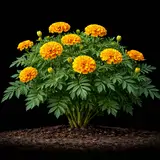
French marigolds add pollinator-friendly bloom and are traditionally credited with deterring some soil pests; a low-evidence but compatible, sun-loving underplanting.
-
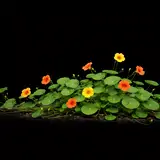
Trap crop that pulls aphids and whiteflies off the pomegranate and draws in beneficial insects.
-
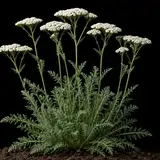
Flat flower heads bring in the lacewings, ladybugs, and parasitic wasps that help control aphids and whiteflies; drought-tolerant, so it suits the same dry conditions.
Varieties · 8
You pick one when you add Pomegranate to your garden. Its days to maturity set your harvest window.
Wonderful
The commercial standard and most widely grown pomegranate - large, deep-red fruit with sweet-tart, richly flavored dark-red arils, superb for both juice and fresh eating.
Variety details for Wonderful
Large, glossy deep-red rind; sweet-tart, deep-crimson juicy arils.
self-fruitfuljuicefresh-eatinglarge-fruitVigorous and heavy-bearing, with showy orange-red flowers. Self-fruitful. It's the least cold-hardy of the common cultivars, though - best in zone 8 and warmer. Low chill (~150-200 hours). Late-ripening, so needs a long hot season.
Salavatski (Russian 8)
The most cold-hardy common pomegranate - a Turkmen/Russian cultivar that survives into the single digits Fahrenheit (established plants take roughly 0 to 5°F), pushing pomegranates into zone 7 with a warm microclimate and winter protection while young.
Variety details for Salavatski (Russian 8)
Large, orange-red to pink rind; sweet-tart, soft-seeded pink-red arils.
self-fruitfulcold-hardyjuicefresh-eatingLarge orange-red fruit with sweet-tart pink-red arils. Self-fruitful and vigorous. The go-to for cold-edge growers. Very low chill (~150-300 hours).
Parfianka
A connoisseur's favorite, often rated the best-flavored of all pomegranates - complex sweet-tart red arils with unusually soft, edible seeds, on a reliably heavy-bearing plant with strong resistance to fruit splitting.
Variety details for Parfianka
Medium-large, red rind; exceptionally flavorful red arils with soft seeds.
self-fruitfulpremium-flavorsplit-resistantsoft-seedSelf-fruitful. Somewhat cold-hardy (zones 7-10). Very low chill (~100-200 hours). An outstanding fresh-eating cultivar.
Angel Red
An early-ripening, extremely juicy cultivar with bright-red rind and vivid red, soft-seeded arils - one of the highest-juice pomegranates and good resistance to splitting.
Variety details for Angel Red
Medium-large, bright-red rind; very juicy, bright-red soft-seeded arils.
self-fruitfulearly-seasonjuicehigh-juiceRipens weeks ahead of Wonderful, extending the season and dodging fall rains. Self-fruitful. Best in zones 8-10.
Eversweet
A very sweet, low-acid, early-ripening cultivar with nearly clear (non-staining) juice and soft seeds - excellent for kids and fresh eating, and it ripens even in cooler coastal climates where sour cultivars struggle to sweeten.
Variety details for Eversweet
Medium, red-blushed pink rind; very sweet, pale, clear-juiced arils.
self-fruitfulsweetlow-acidearly-seasonSelf-fruitful. Best in mild zones 8-10.
Kazake (Kazakhstan)
A cold-hardy Central Asian cultivar in the Salavatski class, prized for pushing pomegranates into colder gardens - sweet-tart pink-red arils on a tough, freeze-recovering plant.
Variety details for Kazake (Kazakhstan)
Medium-large, pinkish-red rind; sweet-tart pink-red arils.
self-fruitfulcold-hardyfresh-eatingvery-low-chillSelf-fruitful. A dependable choice alongside Salavatski for zone 7 growers. Very low chill.
Grower tips
Notes from growers, tagged with the zone they grow in. A person reads every post before it appears.
Nobody has posted about Pomegranate yet. The first one usually saves someone a season.
Free account. Your post shows your grower name and zone, never your email.