
Add it to your home screen and it opens full screen: no browser bars, one tap away, and everything stays signed in. Free, nothing to download from an app store.
- Tap the Share button in your browser
- Scroll down and choose “Add to Home Screen”
- Open GrowSomeFood from your home screen
- Open your browser’s menu
- Choose “Add to Home screen” or “Install app”
- Open GrowSomeFood from your home screen
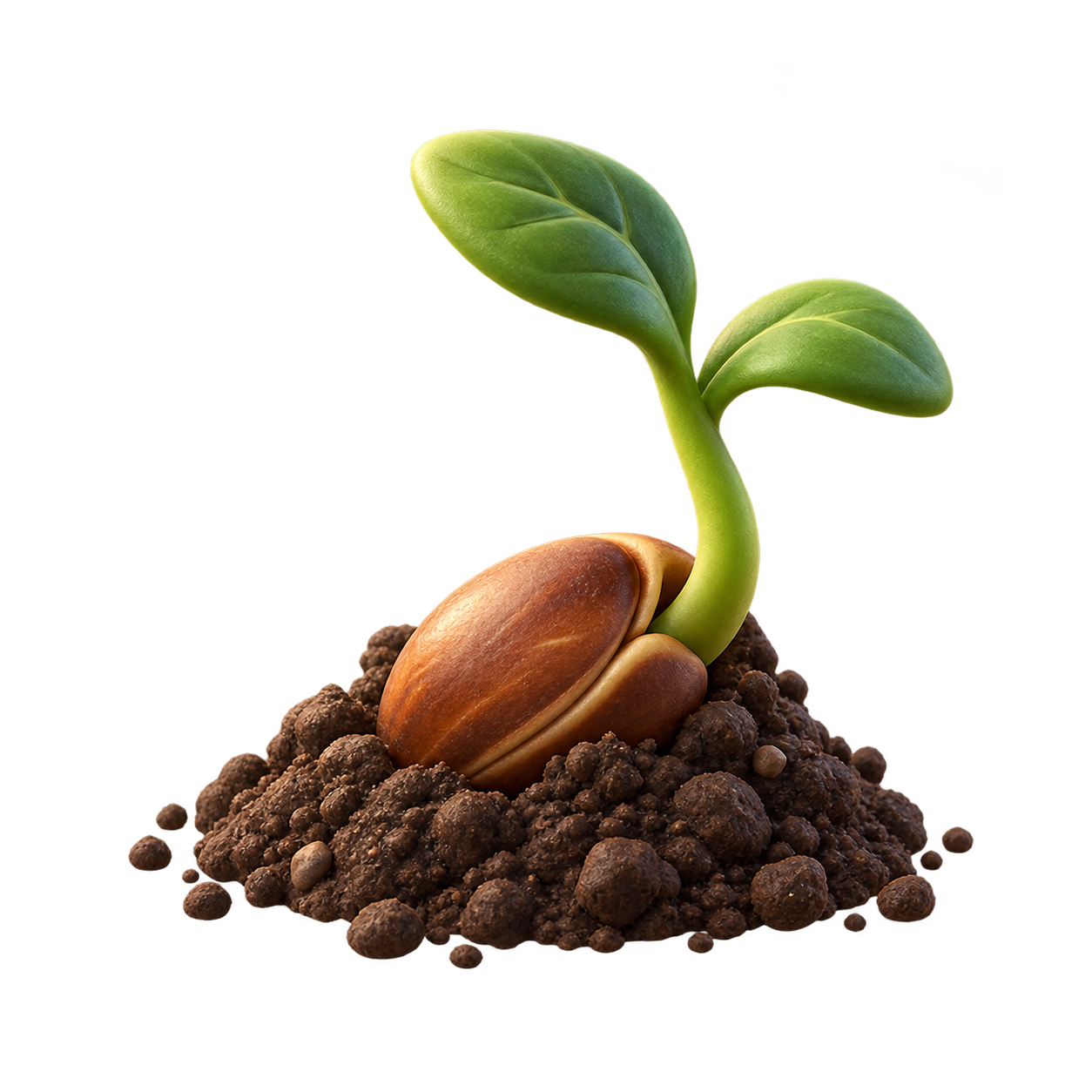
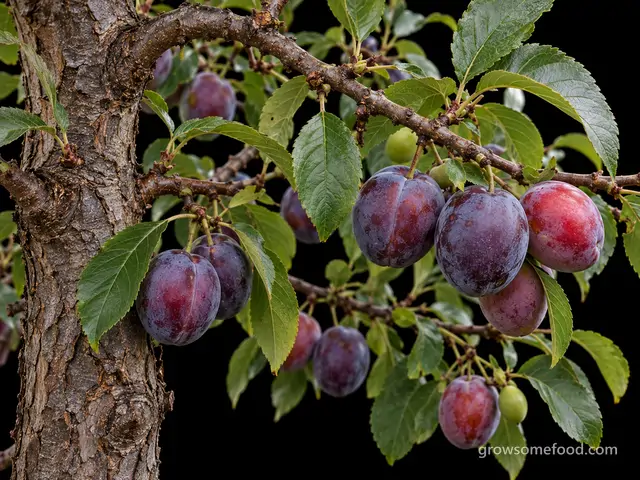
Plum
The most forgiving stone fruit for a home yard - fast to bear and often self-fruitful - but which plum you plant matters: firm, sweet European/prune types for drying and jam, or big juicy Japanese types for fresh eating. Black knot is the disease to know.
Safety notes The flesh is the food. The kernel inside the pit and the leaves and twigs contain cyanogenic compounds - don't eat the kernel; leaves and wilted foliage are not for eating (and are toxic to livestock).
Overview
Plums are arguably the easiest and most productive stone fruit for a backyard: they bear young (often by year two or three), stay naturally small and manageable, and many are self-fruitful. But "plum" is two crops. European plums (Prunus domestica - Stanley, Italian Prune, Green Gage, Damson) are smaller, firmer, sweeter, freestone, cold-hardier, and later-blooming - the plums you dry into prunes, cook into jam, and bake into tarts, and many of them are self-fruitful. Japanese plums (Prunus salicina - Santa Rosa, Methley, Shiro, Burbank) are the big, round, juicy, brightly colored plums of the fresh-eating produce aisle - vigorous, heavy-bearing, earlier-blooming, and mostly needing a second Japanese variety to pollinate.
Quick facts
- Winter chill
- 700 hours below 45°FRange: 400–1000 hours
- Height
- 16 ftRange: 10–24 ft
- Spread
- 15 ftRange: 10–22 ft
- Cold
- Takes light frostdamaged below -25°F
- Heat
- Struggles above 100°F
- Life cycle
- Perennial, lives about 20 years
- Soil
- Well-drained
- Water
- Medium
- Plant spacing
- 16 ftRange: 10–22 ft
When to plant
Nothing is open today. Fall transplanting opens in 13 days, Nov 1 to Dec 15.
- Transplant Nov 1 – Dec 15 Opens in 13 daysFall bare-root planting lets roots establish over a mild winter before spring growth.
- Transplant Jan 15 – Mar 15 Opens in 88 daysLate winter, while dormant, is ideal; fall planting also works in these mild zones. The full range of European and Japanese plums does well - match a compatible pollen partner.
Frost here: last around Apr 10 (Mar 27 to Apr 24 most years), first around Oct 25. Zone averages, your own yard may run a week or two either way.
Life stages
Establish, grow, repeat
Getting established and returning each season are different parts of the story.
Stage 1 of 5 · Getting established
First-year establishment
The first year after planting
Care at this stage
-
Water deeply every 7-10 days the first season
Soak the whole root zone; plums want steady moisture but sharp drainage. Consistent water the first summer sets up a strong tree.
-
Mulch a ring, kept off the trunk
2-3 inches of wood chips hold moisture and beat back grass; leave the bark bare to prevent crown rot and rodents.
-
Paint the trunk white against borers and sunscald
Diluted white latex paint on the lower trunk deters borer egg-laying and prevents winter sunscald cracks in thin plum bark.
-
Train to the right shape for the type
Train European plums to a central leader (like a pear) and vigorous Japanese plums to an open-center vase (like a peach) - Japanese types are spreading and need light in the middle. Keep first-year cuts light and formative.
Months are typical seasonal windows; climate, variety, and plant age can shift them.
Harvest
- Full skin color for the variety, with a dusty pale 'bloom' on the surface
- Flesh gives slightly to a gentle squeeze
- Releases with a gentle lift-and-twist, not a hard pull
- Sweet, ripe flavor and softening near the stem - taste-test rather than trusting color
- Pick when the fruit softens slightly and colors fully · every 3 days
- Net or watch for birds, wasps, and squirrels
Per plant 60 to 700 plums, 10 to 150 lbPicking pick as they ripen
Cook with plums
Watch out for
7 to know. 3 are high-risk: Black Knot, Brown Rot, Plum Curculio. None are active in October.
Black KnotSeverity High DiseaseSeason: Dec–JunOlive-green, corky swellings on new growth that harden and turn coal-black and warty, encircling twigs and branches; worst on wood 1-2 years old.
Manageable but relentless - the one plum chore you can't skip. Far worse in the humid East than the arid West.
Olive-green, corky swellings on new growth that harden and turn coal-black and warty, encircling twigs and branches; worst on wood 1-2 years old.
Prune out and destroy all knots annually - this sanitation is the core control. Fungicide sprays from bud break through early shoot growth help in high-pressure orchards but don't replace cutting out the knots.
Cut out every knot 4-6 inches below the swelling during dormant winter pruning, sterilizing the saw between cuts and burning or bagging the wood; plant more-resistant varieties; and remove wild cherry and plum nearby, which harbor the disease.
The signature disease of plums and cherries in the eastern US and Canada: a fungus (Apiosporina morbosa) that forms hard, black, crusty, warty swellings that encircle and girdle twigs and limbs, deforming and eventually killing branches. Left unchecked it takes over a tree over a few years.
Brown RotSeverity High DiseaseSeason: Mar, Apr, Jun, Jul, AugBrowned, collapsed blossoms in spring, sometimes with a small gummy canker on the twig behind them; firm brown spots on ripening fruit that erupt in tan fuzzy spores; and shriveled mummies clinging to the tree.
Humidity-driven; the main disease limiting plums in the warm, wet Southeast. Split, insect-stung or bird-pecked plums rot first, so anything that keeps the skin intact pays off.
Browned, collapsed blossoms in spring, sometimes with a small gummy canker on the twig behind them; firm brown spots on ripening fruit that erupt in tan fuzzy spores; and shriveled mummies clinging to the tree.
Fungicide at bloom for blossom blight, and again in the last two to three weeks before harvest if the weather stays warm and wet. Use only a product whose label lists your crop by name, and follow that label's pre-harvest interval - some stone-fruit fungicides (chlorothalonil, ziram) may not legally be sprayed that close to picking. Strip and destroy infected fruit the day you see it. Sanitation - clearing mummies and infected wood - is at least half the control.
Remove every mummy and rotted fruit - they are the spore source that starts next season - prune for airflow, thin so fruit don't touch, protect fruit from insect, bird and cracking injury (those wounds are the way in), and avoid wetting the foliage. Dry climates see far less of it.
The major fruit-rot disease of stone fruit: a fungus (Monilinia) that blights blossoms, cankers twigs, and rots ripening and stored fruit into fuzzy tan 'mummies' - it can destroy a ripe plum crop in days of warm, humid weather.
Plum CurculioSeverity High PestSeason: Apr–JunCrescent- or half-moon-shaped scars on newly set fruit within a few weeks of petal fall, a heavy premature fruit drop, and small grubs inside the dropped fruit when you cut one open.
Plums are its namesake and favorite host, and it is the most damaging insect on eastern plums. An eastern and midwestern pest, largely absent in the arid West.
Crescent- or half-moon-shaped scars on newly set fruit within a few weeks of petal fall, a heavy premature fruit drop, and small grubs inside the dropped fruit when you cut one open.
Spread a sheet under the tree at dawn and jar the branches: the beetles play dead and drop, and you can collect them. Where damage is heavy, a targeted insecticide at petal fall and again shortly after is timed to adult activity - use only a product labeled for the crop you are treating, follow the label exactly, and observe the pre-harvest interval before you pick.
Pick up and destroy dropped fruit promptly and consistently - the larvae finish developing in the drops, so leaving them under the tree simply raises next year's population. Kaolin clay applied to the young fruit deters egg-laying without an insecticide.
A small snout beetle of the eastern and midwestern US that cuts distinctive crescent- or half-moon-shaped scars into newly set fruit to lay its eggs. The larvae tunnel inside, so the fruit comes out misshapen and wormy or drops early, and the larvae then finish their development in the fallen fruit. It attacks stone fruit and pome fruit alike, and it is largely absent from the arid West.
AphidsSeverity Medium PestSeason: Apr–JunDense clusters of tiny insects packed onto shoot tips, flower buds, and the undersides of young leaves.
Leaf-curl plum aphid and mealy plum aphid are the species here, and they are more of a problem on plums than on most other fruit trees - heavy early colonies curl and yellow the leaves and can stunt young shoots. Dormant oil in winter smothers overwintering eggs where it recurs.
Dense clusters of tiny insects packed onto shoot tips, flower buds, and the undersides of young leaves. Curled, cupped, or distorted new growth that never opens properly. A sticky shine on the leaves - and on whatever sits under the plant - that later goes black with sooty mold. Tiny white cast skins left behind where a colony has been feeding. Ants running steadily up and down the stems, which is often the first thing you notice. Mottled, streaked, or misshapen leaves that do not grow out can mean a virus the aphids brought with them rather than the feeding itself.
Knock the colonies off with a hard jet of water and repeat every few days - on most plants that alone ends it. Pinch out or prune off the worst-infested tips rather than treating the whole plant. If colonies keep rebuilding, spray insecticidal soap or horticultural oil directly onto the insects, covering leaf undersides, and repeat weekly until they are gone; treat early or late in the day, and never spray a wilted or heat-stressed plant. Avoid broad-spectrum insecticides - they kill the ladybugs, lacewings, and parasitic wasps that were about to solve the problem for you, and aphid numbers usually come back worse afterward. Anything you spray must be labeled for the plant you are treating; follow that label and observe its pre-harvest interval. On anything you eat, wash leaves, heads, and buds well before use, since aphids hide down in crowns, folds, and tight growth.
Go easy on nitrogen: the soft, lush growth that heavy feeding produces is exactly what aphids breed on. Check new growth once a week through spring and early summer so you catch colonies while they are still small, and rub the first few out with your fingers. Leave flowering plants nearby and skip broad-spectrum sprays - ladybugs, lacewings, hoverflies, and parasitic wasps do most of this work for free, and they only stay if there is something for them to eat. Keep ants off the plant where you can, since they protect aphids from those predators. Water steadily so plants are not stressed, and check any new plant over before you bring it home or move it indoors, since aphids usually arrive on something else.
Aphids are small soft-bodied sap-suckers - green, black, gray, pink, or waxy white, and mostly wingless - that gather in dense colonies on the tenderest new growth: shoot tips, buds, and the undersides of young leaves. They breed extremely fast in mild weather, so a few can become hundreds inside a week. Their feeding curls and distorts soft growth, and the sticky honeydew they excrete coats everything below and turns black with sooty mold. Ants often farm and defend the colonies for that honeydew. A few aphids are normal on almost any plant and a healthy plant shrugs them off; only dense, persistent colonies do real damage, and some aphids also spread plant viruses as they feed.
Birds & WildlifeSeverity Medium WildlifeSeason: Jun–SepFruit disappearing from the outermost, most exposed parts of the plant first, and from the top of a tree where you cannot reach anyway.
Because plums ripen in a short window, a few days of unchecked bird and squirrel pressure can take a big share.
Fruit disappearing from the outermost, most exposed parts of the plant first, and from the top of a tree where you cannot reach anyway. Single neat pecks and gouges in ripening fruit, with several fruits sampled rather than one eaten through - the classic sign that it was birds rather than an animal. Heads of grain or seed going visibly lighter and emptier as they ripen, with hulls and chaff scattered underneath. Freshly sown seed vanishing off the surface of a bed before it germinates. Bird traffic in and out of the plant picking up as the crop colors, and birds waiting on nearby wires and branches. Wasps arriving at the pecked and split fruit shortly afterward.
There is no treatment once a crop is being taken - only protection and timing, so the answer is to get netting on and to pick what is ready. Reflective tape, flash ribbon, spinners, and decoy predators do work, but only for a few days at a time: birds habituate fast, so move and rotate them and never rely on them as the main defense for a crop you care about. Cut and gather grain or seed heads a little early, at firm dough, and finish drying them under cover instead of leaving them standing for the flocks. Plant a little extra, or a decoy crop the birds prefer, and accept sharing anything that crops heavily. On a wild or foraged patch, fruit going to birds and small mammals is the point of the plant rather than a problem to solve.
Net, and net early. Bird netting draped over a frame or hoops so it stands off the fruit, with the edges closed at ground level, is the only thing that reliably works at harvest scale - and it has to go on before the crop starts to color, because once birds have found the food they are far harder to displace. Keep fruit trees small enough that netting them is actually feasible; that decision gets made years earlier, at planting. Bags of mesh, organza, or paper slipped over individual heads, clusters, or prize fruit protect a small crop without netting the whole plant. Then shorten the exposure: pick promptly and completely rather than leaving ripe fruit hanging as a lure, clear split and dropped fruit that draws birds and wasps alike, and where a crop can finish off the plant, harvest a little early and ripen or dry it under cover. Rake in or cover broadcast seed so it is not lying in plain view.
Birds find ripening fruit and seed before you do. Robins, waxwings, starlings, catbirds, jays, sparrows, finches, blackbirds, and doves all work a garden, and the pressure arrives in a narrow window - the last days before harvest, when sugar rises, color changes, and the crop softens or the grain hardens. A flock can strip a small planting in a day or two, and birds that only peck rather than take whole fruit still leave wounds that rot or draw wasps. Squirrels, chipmunks, and other wildlife usually turn up on the same crop at the same time. This is competition rather than disease: the birds are not harming the plant, and a big tree or a heavy-cropping bush often has enough for everyone - but on a small planting it can be the difference between a harvest and none.
Japanese BeetlesSeverity Medium PestSeason: Jun–AugClusters of shiny metallic beetles massed together on the upper, sunniest foliage and down inside open blooms, heaviest on warm sunny afternoons from around late June.
A few weeks of feeding rarely hurts an established tree, but they also chew ripening fruit - net or otherwise protect the fruit during peak beetle flight.
Clusters of shiny metallic beetles massed together on the upper, sunniest foliage and down inside open blooms, heaviest on warm sunny afternoons from around late June. Leaves reduced to lace, with the veins left intact and the tissue between them gone - unmistakable, and quite different from the ragged chewing of a caterpillar. Ragged, chewed petals and blooms that never open properly. Beetles that let go and drop straight to the ground when you disturb the plant. Feeding damage on ripening fruit, on the plants they also take fruit from. Whole branches going brown and lacy at the top of a plant while the shaded lower growth stays untouched.
Persistent morning hand-picking into soapy water is the most effective home control there is, and on a vigorous established plant the damage is usually cosmetic and needs nothing else. Neem deters feeding rather than killing, and has to be reapplied. For heavy pressure, spinosad or a targeted insecticide labeled for the plant will work - but time any spray away from bloom and apply it at dusk to protect bees, and observe the pre-harvest interval on anything you eat. On flowering plants, some gardeners simply shear the blooms off for a couple of weeks and let the plant rebloom once the wave has passed, which removes the lure as well as the damage. Young plants and young trees are the ones worth defending: a mature tree or an established vine tolerates several weeks of leaf loss without lasting harm.
Hand-picking is genuinely the main defense in a home garden. Go out in the cool of the morning while the beetles are sluggish, hold a tub of soapy water underneath, and knock them in - they drop when disturbed, so most fall straight into it. Do it daily through the flight: because the beetles call each other in, taking them off early stops a plant becoming a beacon. Do not put pheromone or lure traps anywhere near the garden - they demonstrably pull in far more beetles than they catch. And do not count on lawn grub control: milky spore has performed poorly and inconsistently in field trials across most of the US, and treating your own turf does not reduce the adults feeding on your plants, because they fly in from surrounding properties. Where it is practical, row cover or netting through the peak flight excludes them outright. Otherwise riding out the six-to-eight-week wave is a legitimate strategy, since most established plants absorb the damage.
Japanese beetles are metallic green-and-copper beetles about half an inch long that emerge in early summer and feed for six to eight weeks. They feed in aggregating masses - one beetle's feeding releases a scent that draws in more - so a plant goes from untouched to covered in a couple of days. They chew the soft tissue between the leaf veins and leave the veins standing, so the leaf ends up as a brown lace skeleton, and they shred open flowers and sometimes ripening fruit as well. They work the sunniest upper parts of a plant on warm afternoons. The white C-shaped grubs spend the rest of the year in turf and pasture soil eating grass roots, and the adults then fly in from wherever they hatched, which can be some distance away.
Peachtree BorerSeverity Medium PestSeason: Jun–SepGummy sap mixed with sawdust-like frass oozing from the lower trunk and crown, and wilting or dieback on a young tree.
Attacks the trunk, not the fruit - gum-and-frass at the soil line is the diagnostic sign.
Gummy sap mixed with sawdust-like frass oozing from the lower trunk and crown, and wilting or dieback on a young tree.
Dig out and destroy larvae from the trunk with a wire in spring/fall; targeted trunk sprays or beneficial nematodes drenched at the base help. Protect young trees especially.
Keep trees vigorous and avoid trunk wounds; keep mulch and weeds off the trunk base so borers can't hide; monitor the crown area. Pheromone traps help time management.
A clearwing moth whose larvae bore into the trunk at and just below the soil line, girdling and killing branches or whole young trees - one of the most serious pests of peaches and nectarines, especially on young trees.
Good & bad neighbors
Plant nearby
-
A clover understory fixes nitrogen and outcompetes the grass that robs young plum trees of water; feeds pollinators at bloom.
-
ComfreyA classic orchard-guild plant: deep roots mine nutrients, the leaves make a rich mulch/fertilizer, and the flowers feed pollinators. Plant just outside the drip line.
- Traditional pairings, thin evidence
-
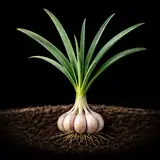
Same allium tradition - said to deter aphids and some fungal issues; shares the space without competing.
-
Underplanted alliums are traditionally credited with discouraging borers and aphids around stone fruit; low-evidence but harmless.
-
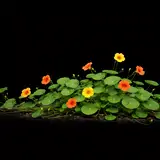
Trap crop that pulls aphids off the tree and draws in beneficial insects.
-
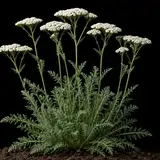
Flat flower heads draw in the lacewings, ladybugs, and parasitic wasps that help hold down aphids and other soft pests.
Keep apart
-
Wild cherry / wild plumNearby wild Prunus (chokecherry, wild plum) are major reservoirs of black knot and brown rot - remove them from the vicinity of cultivated plums.
Varieties · 12
You pick one when you add Plum to your garden. Its days to maturity set your harvest window.
European 5 varieties
Stanley
The standard European prune plum across the eastern US: reliably self-fruitful, heavy-bearing, and productive, with sweet, firm, blue-black freestone fruit ideal fresh, dried into prunes, canned, or baked.
Variety details for Stanley
Medium, oval, dark blue-purple with a heavy bloom; firm greenish-yellow freestone flesh.
pruneself-fruitfulfreestonedryingCold-hardy and dependable; somewhat susceptible to black knot, so keep up sanitation. About 700 chill hours. The default European plum for most home growers.
Italian Prune (Fellenberg)
The classic late-season European prune plum: deep purple, firm, richly sweet freestone fruit that's superb dried, baked into tarts, and canned.
Variety details for Italian Prune (Fellenberg)
Medium, elongated egg-shape, dark purple-blue; amber-green sweet freestone flesh.
pruneself-fruitfulfreestonedryingSelf-fruitful and productive, ripening in late summer/early fall. A favorite in the Pacific Northwest. About 800 chill hours.
Green Gage (Reine Claude)
An ancient, aristocratic dessert plum famed for extraordinary honey-sweet, richly flavored green-gold flesh - widely rated the best-tasting plum of all.
Variety details for Green Gage (Reine Claude)
Small, round, greenish-yellow (sometimes red-dotted); amber, honey-sweet freestone flesh.
dessertself-fruitful-partialfreestoneheirloomSmall and unshowy but unmatched fresh and in preserves. Partially self-fruitful; crops better with another European plum. Somewhat particular about site and climate. About 700 chill hours.
Japanese 5 varieties
Santa Rosa
The most famous Japanese plum, bred by Luther Burbank (1906): large, reddish-purple fruit with sweet-tart, aromatic amber flesh - excellent fresh and in jam, and a classic pollinizer for other Japanese plums.
Variety details for Santa Rosa
Large, round, crimson-to-purple skin with a bloom; juicy amber-red flesh flushed near the skin.
dessertself-fruitful-partialclingstonefresh-eatingPartially self-fruitful (crops alone but far better with a second midseason Japanese variety). Lower chill (~300-400 hours), so good for zones 8-9. Somewhat susceptible to bacterial spot.
Methley
A widely-planted, reliably self-fruitful Japanese plum that's one of the easiest for beginners and the South - very sweet, juicy, reddish-purple fruit ripening early, on a heavy-bearing, low-chill tree.
Variety details for Methley
Small-to-medium, round, reddish-purple; very sweet, juicy dark-red flesh.
dessertself-fruitfulearly-seasonlow-chillA good universal pollinizer for other Japanese plums. Only about 250 chill hours. Blooms early, so frost-risky up north.
Shiro
A bright yellow Japanese plum (another Burbank introduction) known for enormous crops of sweet, juicy, mild golden fruit that's beautiful in the kitchen and great fresh.
Variety details for Shiro
Round, translucent bright yellow; very juicy, sweet, mild yellow flesh (cling).
dessertclingstoneyellow-plumheavy-bearingNeeds a second Japanese plum (Santa Rosa, Methley) to pollinate. Heavy-setting, so thin hard. About 400-500 chill hours.
American hybrid 2 varieties
Toka (hybrid)
The 'bubblegum plum' - a super-hardy American-Japanese hybrid (to zone 3) with distinctive spicy-sweet, aromatic reddish fruit, beloved on the northern plains.
Variety details for Toka (hybrid)
Small-to-medium, reddish-bronze; firm, aromatic, spicy-sweet yellow flesh.
hybridamerican-japanesecold-hardypollinizerIts greatest value is as a hardy, prolific POLLINIZER for other hardy hybrid and Japanese plums, but it's a fine eating plum too. Needs a partner itself. Very cold-tolerant.
Superior (hybrid)
A cold-hardy American-Japanese hybrid (University of Minnesota) bearing unusually large, sweet, red-skinned dessert plums on a tough tree - one of the best large-fruited plums for the upper Midwest and northern plains.
Variety details for Superior (hybrid)
Large, red-skinned with a bloom; firm, sweet yellow flesh.
hybridamerican-japanesecold-hardylarge-fruitNeeds a hardy pollinizer such as Toka. Cold-tolerant to about zone 4.
Grower tips
Notes from growers, tagged with the zone they grow in. A person reads every post before it appears.
Nobody has posted about Plum yet. The first one usually saves someone a season.
Free account. Your post shows your grower name and zone, never your email.