Add it to your home screen and it opens full screen: no browser bars, one tap away, and everything stays signed in. Free, nothing to download from an app store.
- Tap the Share button in your browser
- Scroll down and choose “Add to Home Screen”
- Open GrowSomeFood from your home screen
- Open your browser’s menu
- Choose “Add to Home screen” or “Install app”
- Open GrowSomeFood from your home screen
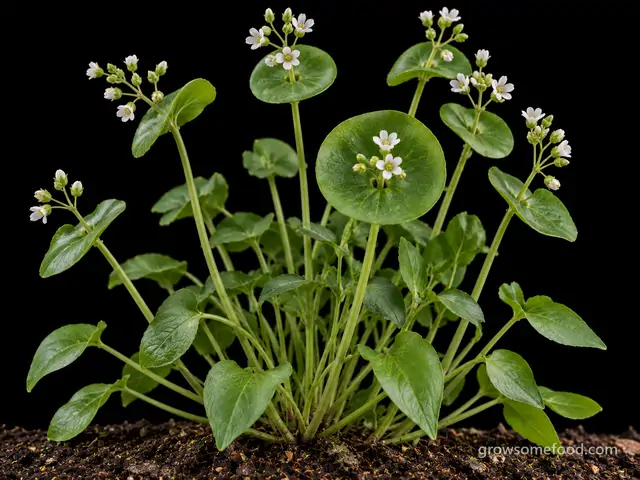
Miner's Lettuce
A native western wild green with round, cupped leaves that grows in cool damp shade, tastes like mild sweet spinach, and is one of the very few salad crops you can cut in the dead of winter.
Entirely edible raw or cooked - leaves, stems and flowers - and one of the safest wild greens in North America, with no dangerous look-alike at any stage. Two honest cautions: it carries soluble oxalates like spinach and purslane, so anyone prone to calcium-oxalate kidney stones should treat a big raw bowlful the way they treat spinach; and any leafy green grown in cold, dim, heavily fed conditions can accumulate nitrates. Never gather from roadsides, sprayed lawns or contaminated ground.
Overview
The one thing to knowIt tolerates shade, so it earns its keep in the damp corner where nothing else salads.
Miner's lettuce is the rare wild plant that is also a genuinely good garden vegetable. It is native to western North America, where it carpets shady damp ground from late winter into spring, and its signature is unmistakable: as each stem rises to flower, two leaves fuse into a round green disc with the flower stalk poking straight through the middle, like a small saucer on a stick. Nothing else in an American garden looks like it, which makes it one of the safest plants a beginner can learn.
In the kitchen it is mild, juicy and faintly sweet - closer to a tender spinach or a very delicate lettuce than to anything sharp. It has three real virtues for a home grower. It tolerates shade, so it earns its keep in the damp corner where nothing else salads. It is very cold-hardy, and under a low tunnel or cold frame it is a standard winter cutting green in the North. And it self-seeds politely, coming back on its own year after year from one sowing.
The catch is heat. This is a cool-season plant that germinates around 50–60°F and effectively stops above about 70°F, then shrinks, flowers and disappears when summer arrives. Grow it the way it grows in the wild - fall through spring - and it is nearly foolproof. A name note worth knowing: the woodland wildflowers called spring beauty (Claytonia virginica and C. lanceolata) are relatives with edible corms but are a different plant entirely, and Claytonia sibirica, Siberian miner's lettuce, is a pink-flowered cousin with heart-shaped leaves that is grown and eaten the same way.
Quick facts
- Sprouts in
- 12 days7 to 21
- Soil to sprout
- 55 °F40 to 65
- Start indoors
- 4 weeks before transplant3 to 5
- Life cycle
- Annual
- Seed to save
- About 100 days after planting80 to 130
- Height
- 8 in4 to 14
- Spread
- 8 in4 to 12
- Cold
- Takes hard frostdamaged below 15°F
- Heat
- Struggles above 75°F
- Self-sows
- Yes, expect volunteers
Full sun or part sun or part shade or shade · medium water · consistently moist soil · 5 in apart (3 to 8) · direct sow or transplant
When to plant
Fall sowing is open for 9 more days. Next: spring, Feb 20 to Apr 3.
- Direct sow Aug 16 – Sep 30 Open now · 9 days leftAbout 10 weeks before to 4 weeks before your first frost (Oct 25 here)The crop worth planning: sow into cooling late-summer soil so the patch establishes before hard frost, then harvest through fall and - under a low tunnel or cold frame - straight through winter.
- Transplant Aug 31 – Sep 30 Open now · 9 days leftAbout 8 weeks before to 4 weeks before your first frost (Oct 25 here)Worth it only where warm late-summer soil refuses to germinate seed outdoors: start in flats somewhere cool, then set out in small clumps.
- Direct sow Feb 20 – Apr 3 Opens in 152 daysAbout 7 weeks before to 7 days before your last frost (Apr 10 here)Sow as soon as the ground can be worked. Spring crops are good but short - once soil warms past about 70°F germination stops and standing plants shrink and flower.
Frost here: last around Apr 10 (Mar 27 to Apr 24 most years), first around Oct 25. Zone averages, your own yard may run a week or two either way.
Life stages
Five stages, about 7 weeks from sowing to the first pull. Windows are typical; your zone and weather move them.
Germination
Day 0 to 12 from sowing- WaterSow shallow into cool, damp soildailyPress seed onto the surface or cover no more than 1/8 inch, and keep the bed damp. This is a cool-soil germinator - it comes up best around 50-60°F and largely refuses above about 70°F, so late-summer sowings often sit until the weather breaks.
- ProtectShade a late-summer sowingIf you are sowing while it is still warm, shade the bed with a board, burlap or shade cloth until seedlings appear. Chilling the packet in the fridge for a week or two before sowing also helps warm-season sowings wake up.
Watch for- Nothing up after 3 weeks (usually soil that is too warm, not bad seed)
- Surface drying out between waterings
Seedling
Day 12 to 35 from sowing- ThinThin to 3-5 inches, and eat the thinningsThe first leaves are narrow and spoon-shaped, nothing like the round discs to come - that is normal. Thin to a few inches apart for a dense cutting patch, and eat what you pull.
- ProtectGuard the seedling weeks against slugsSlugs and snails are the one real threat, and they like exactly the cool damp shade this plant likes. Patrol at dusk, or ring a small patch with copper tape until the stand is established.
Watch for- Seedlings vanishing overnight (slugs)
- Collapse at the soil line in cold soggy ground (damping-off)
Cupped leaves forming
Day 35 to 50 from sowing- WaterKeep it evenly damp and it stays succulentevery 3 daysMiner's lettuce is a succulent-textured green that turns small and tough if it dries out. Steady moisture and a little shade are what produce the big round leaves.
- MulchMulch lightly to hold moistureA thin leaf or straw mulch keeps the soil cool and damp, which is the whole recipe here. Keep it off the crowns so slugs have nowhere to shelter.
Watch for- Round disc leaves forming on the flowering stems (the signature stage)
- Yellow blotching with gray fuzz beneath in wet weather (downy mildew)
Harvest
Day 40 to 60 to the first pull from sowing, picking to about day 140- HarvestShear the patch an inch above the crownevery 18 daysTreat it like a cutting bed rather than a plant: shear whole leafy stems an inch or so above the crowns with scissors, and the patch regrows for another cut in two to three weeks. Two or three cuttings from one sowing is typical.
- HarvestOr pick individual stems as you need themFor a handful at a time, pull or snip individual leaf stalks from the outside of each rosette. The whole thing is edible - stem, leaf and any flowers on it - so there is nothing to trim.
Watch for- Flower stems rising through the cupped leaves (still good eating for a while)
- Leaves shrinking and toughening as the weather warms
Flowering and self-seeding
Day 100 to 130 from sowing- HarvestEat the flowering stems tooUnlike lettuce or mustard, this plant does not turn bitter when it flowers. The tiny white blooms sit in the middle of the cupped leaf and go into the salad with it - flavor stays mild right through bloom.
- DoLet one patch shed seed for next yearLeave a corner to ripen and it reseeds itself, coming up on its own in the fall or late winter. This is the easiest way to keep it going, and volunteers are shallow-rooted and trivial to pull where you do not want them.
Watch for- Tiny black shiny seeds dropping (collect before the capsules fling them)
- Volunteers appearing in paths and pots the following season
Harvest
- Round, cupped disc leaves fully formed on the stems - the signature look
- Stems 4-6 inches long and crisp, before hot weather shrinks them
- Still good after the tiny white flowers open - it does not turn bitter
- Shear the patch an inch above the crown · every 18 days
- Or pick individual stems as you need them
Per plant 4 to 24 ozPicking cut and it regrows
Cook with Miner's Lettuce
Watch out for
4 to know. 1 is high-risk: Slugs & Snails. None are active in September.
Slugs & SnailsSeverity High PestThe one pest that genuinely matters here, because cool damp shade is what both the crop and the mollusks want.
Getting the stand through its seedling weeks is the whole battle - after that a sheared patch regrows faster than they can eat it. Under a winter low tunnel they are active on mild nights when nothing else is.
Irregular ragged holes chewed out of the middle of leaves and along the edges - not the clean-edged cuts a caterpillar leaves. Seedlings that vanish overnight, or that are cut off at soil level with nothing left behind. Silvery dried slime trails across leaves, soil, pots, and paving in the morning: this is the giveaway that tells you it was mollusks rather than an insect. Chewed pits in ripe fruit, especially where it rests on the ground. Damage that shows up on the lowest, dampest leaves first and gets worse after rain or evening watering. Turn over a board, an upturned pot, or a clump of dense mulch during the day and look for the animals themselves sheltering in the cool underneath.
Hand-picking works and costs nothing: go out an hour after dark with a headlamp, drop what you find into soapy water, and repeat nightly for a week or two - persistence is what wins, not any single product. Shallow beer traps sunk to soil level catch them too, but need emptying and refilling daily to be worth anything. Iron-phosphate bait is the standard control and is far lower-risk around pets and wildlife than the old metaldehyde products, but it is not harmless: many formulations include EDTA, and a dog that eats a quantity of pellets can develop iron toxicosis. Scatter it thinly per the label, never in piles, and keep dogs off a baited bed. Clear fallen foliage and debris in autumn, where the eggs are laid. In a wet climate this is a population you manage each season rather than one you eradicate - and on most established plants light grazing is cosmetic and needs nothing at all.
Take away the daytime shelter first: lift boards and upturned pots, clear piles of debris, keep dense mulch pulled back from crowns and stems, and give crowded plantings enough airflow to dry out. Water in the morning rather than the evening so the surface is dry by the time they come out. Copper tape around containers and raised beds gives them a shock they will not cross, and it is the one barrier that reliably works. Get plants past the vulnerable stage quickly - start seedlings in pots and set them out at a decent size rather than direct-sowing into a cold wet bed, since most plants stop being worth defending once the leaves toughen. Leave the ground beetles, frogs, toads, and ground-feeding birds alone, because they eat mollusks all night for free and broad-spectrum slug pellets kill them too. Where thick-leaved or resistant varieties exist for what you are growing, they take far less damage.
Slugs and snails are nocturnal mollusks that rasp ragged holes in soft leaves, shear off seedlings at ground level, and chew into ripe fruit that touches the soil. They feed at night and in the early morning and spend the day hidden under boards, pots, dense mulch, leaf litter, and low foliage, becoming active in exactly the cool, damp, shaded conditions that suit young plants. Damage is heaviest in wet spells and on tender spring growth: a single wet week can erase a row of seedlings while an established, tough-leaved plant of the same species is barely marked. They lay clusters of small pearly eggs in damp soil and under debris, so a garden with plenty of cover carries a resident population year after year rather than being invaded from outside.
Downy Mildew (Claytonia)Severity Medium DiseaseAlmost entirely a winter-cover problem: the same low tunnel that makes a January harvest possible is what traps the humidity this disease needs.
Vent it whenever the weather allows.
Pale yellow or bleached patches on the upper surface of the round leaves, with a fine gray-purple fuzz on the underside that is easiest to see in the humid early morning. Whole stems collapsing and going slimy in a wet spell, and damage worst in the densest, least ventilated part of the patch.
Shear the affected patch hard and remove the cuttings from the garden rather than composting them in place - the crowns usually push clean new growth once air and light get in. Strip and destroy badly affected stems, thin the survivors, and improve ventilation. There is no home cure once a stand is soaked and closed in; prevention through airflow and base watering is the whole control.
Sow thinly and thin the stand so air moves through it, water at the base rather than over the leaves, and water in the morning so foliage dries. Vent low tunnels and cold frames on any mild day. Do not overfeed with nitrogen, which produces the soft crowded growth the disease wants. Clear infected debris rather than leaving it in the bed, and move a new sowing to different ground.
A water mold that attacks claytonia in prolonged cool, wet weather and inside closed winter tunnels, where humidity stays high and air never moves. It shows as pale yellow blotches on the upper leaf surface with a gray to violet downy growth underneath, and it spreads through a dense stand quickly once it starts. It is a separate organism from the downy mildews of spinach and lettuce, so a resistant spinach variety in the next bed tells you nothing about this.
AphidsSeverity Low PestMostly a sheltered-tunnel problem, where mild still air lets colonies build on a crop with no natural enemies around it in midwinter.
Rinse cut stems before they go in a salad, and shear a colonized patch back hard rather than spraying a leaf you eat raw.
Dense clusters of tiny insects packed onto shoot tips, flower buds, and the undersides of young leaves. Curled, cupped, or distorted new growth that never opens properly. A sticky shine on the leaves - and on whatever sits under the plant - that later goes black with sooty mold. Tiny white cast skins left behind where a colony has been feeding. Ants running steadily up and down the stems, which is often the first thing you notice. Mottled, streaked, or misshapen leaves that do not grow out can mean a virus the aphids brought with them rather than the feeding itself.
Knock the colonies off with a hard jet of water and repeat every few days - on most plants that alone ends it. Pinch out or prune off the worst-infested tips rather than treating the whole plant. If colonies keep rebuilding, spray insecticidal soap or horticultural oil directly onto the insects, covering leaf undersides, and repeat weekly until they are gone; treat early or late in the day, and never spray a wilted or heat-stressed plant. Avoid broad-spectrum insecticides - they kill the ladybugs, lacewings, and parasitic wasps that were about to solve the problem for you, and aphid numbers usually come back worse afterward. Anything you spray must be labeled for the plant you are treating; follow that label and observe its pre-harvest interval. On anything you eat, wash leaves, heads, and buds well before use, since aphids hide down in crowns, folds, and tight growth.
Go easy on nitrogen: the soft, lush growth that heavy feeding produces is exactly what aphids breed on. Check new growth once a week through spring and early summer so you catch colonies while they are still small, and rub the first few out with your fingers. Leave flowering plants nearby and skip broad-spectrum sprays - ladybugs, lacewings, hoverflies, and parasitic wasps do most of this work for free, and they only stay if there is something for them to eat. Keep ants off the plant where you can, since they protect aphids from those predators. Water steadily so plants are not stressed, and check any new plant over before you bring it home or move it indoors, since aphids usually arrive on something else.
Aphids are small soft-bodied sap-suckers - green, black, gray, pink, or waxy white, and mostly wingless - that gather in dense colonies on the tenderest new growth: shoot tips, buds, and the undersides of young leaves. They breed extremely fast in mild weather, so a few can become hundreds inside a week. Their feeding curls and distorts soft growth, and the sticky honeydew they excrete coats everything below and turns black with sooty mold. Ants often farm and defend the colonies for that honeydew. A few aphids are normal on almost any plant and a healthy plant shrugs them off; only dense, persistent colonies do real damage, and some aphids also spread plant viruses as they feed.
Damping-OffSeverity Low DiseaseAn awkward one here, because this crop wants cool damp soil and that is also what the fungi want.
The answer is drainage rather than warmth: sow into a raised, humus-rich bed that stays moist without going soggy, and surface-sow rather than burying the seed.
Seedlings that fail to emerge or collapse at the soil line soon after germinating, and thin, patchy establishment in cold wet conditions.
None for affected seedlings; reduce watering, improve drainage and airflow, and resow more thinly if needed.
Sow into warm-enough, well-drained, moist (not soggy) soil with good seed-to-soil contact, and don't sow too deep or too early into cold ground.
A seedling rot that collapses young desert marigold seedlings sown too thickly or kept too wet in cool conditions - a minor issue easily avoided by lean, well-drained sowing and careful watering.
Good & bad neighbors
All of these are traditional pairings. The evidence is thin, so treat them as a nudge, not a rule.
Plant nearby
-
Another shade-tolerant, cool-season self-seeder - the pair carpets a damp bed under deciduous shrubs.
-
Same cool season, same water, same cutting rhythm - they share a shaded salad bed naturally.
-
Overlapping windows and identical culture; miner's lettuce keeps cutting in the shadier corners where spinach sulks.
-
Deciduous fruit bushes give winter light and summer shade, which is exactly the pattern this plant wants underneath them.
-
Fast cool-season root that finishes and clears out before the claytonia patch fills its space.


Keep apart
-
Not antagonism, just calendars - the bed is claytonia's from fall to spring and the tomato wants it from spring to frost. Pick one.

Grower tips
Notes from growers, tagged with the zone they grow in. A person reads every post before it appears.
Nobody has posted about Miner's Lettuce yet. The first one usually saves someone a season.
Free account. Your post shows your grower name and zone, never your email.