Add it to your home screen and it opens full screen: no browser bars, one tap away, and everything stays signed in. Free, nothing to download from an app store.
- Tap the Share button in your browser
- Scroll down and choose “Add to Home Screen”
- Open GrowSomeFood from your home screen
- Open your browser’s menu
- Choose “Add to Home screen” or “Install app”
- Open GrowSomeFood from your home screen
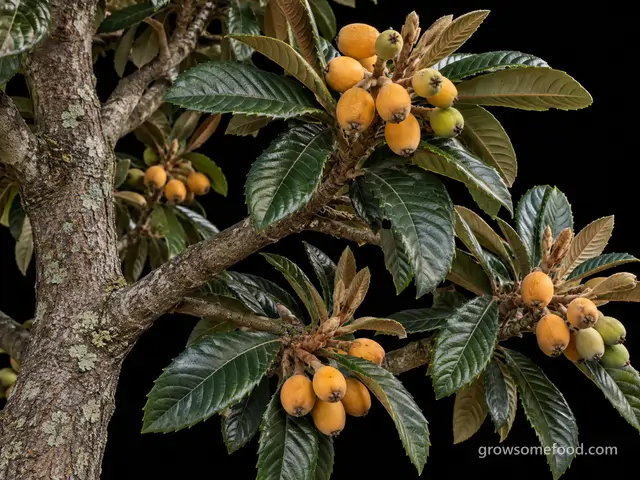
Loquat
An evergreen tree that flowers in autumn and hands you sweet apricot-flavored fruit in early spring, months before anything else. Too perishable to ship, which is why you have to grow it.
The ripe flesh is the food; the big glossy seeds are not. Like apricot and cherry pits they contain cyanogenic compounds, so spit them out and never crush, grind or blend them - a smoothie made with the seeds in is how people get hurt. A seed swallowed whole and intact passes through and is not an emergency, but do not eat them deliberately or let a child treat them as nuts. The leaves are cyanogenic too - leave loquat-leaf tea to people who know the preparation.
Overview
The one thing to knowIt flowers in autumn and winter, filling a cold garden with a heavy sweet fragrance when nothing else is in bloom, and it ripens fruit in late winter and early spring, two or three months before the first cherries.
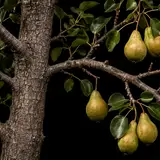
The loquat is a handsome evergreen tree with big leathery corrugated leaves that does everything at the wrong time of year, and is wonderful for it. It flowers in autumn and winter, filling a cold garden with a heavy sweet fragrance when nothing else is in bloom, and it ripens fruit in late winter and early spring, two or three months before the first cherries. The fruit is small, apricot-orange, and tastes like a cross between an apricot and a very good mango with a squeeze of citrus behind it.
Almost nobody has eaten a good one, because loquats bruise at a touch and last a day or two off the tree, so they cannot be shipped and effectively never appear in stores. That is the whole argument for planting one: this is a fruit you can only really have if it is growing in your own yard. It bears young on a grafted tree, needs no winter chill, needs no pollinator partner, and asks very little once established.
Two things shape where and how you plant it. The autumn bloom is its Achilles heel - the tree itself takes about 12°F, but the flowers and young fruit are killed at 26-28°F, so a hard winter freeze simply cancels the year's crop and reliable fruit stops around zone 8. And birds spread the seed enthusiastically: loquat has naturalized across the Gulf South, coastal California and Hawaii, and Florida lists it as a Category II invasive, so keep it away from wild edges and pick up what falls.
Quick facts
- Life cycle
- Perennial, lives about 40 years
- Height
- 20 ft12 to 30
- Spread
- 18 ft12 to 25
- Cold
- Takes light frostdamaged below 12°F
- Heat
- Struggles above 105°F
- Self-sows
- Yes, expect volunteers
Full sun or part sun · medium water · well-drained soil · 20 ft apart (15 to 30) · transplant
When to plant
Nothing is open today. Spring transplanting opens 7 months, Apr 10 to May 10.
- Transplant Apr 10 – May 10 Opens in 201 daysAbout at to 4 weeks after your last frost (Apr 10 here)Ornamental only, and a gamble even then: expect winter leaf burn and dieback, and effectively never a crop. If you want loquats this far north, grow a dwarf in a large pot and move it under cover for freezes.
Frost here: last around Apr 10 (Mar 27 to Apr 24 most years), first around Oct 25. Zone averages, your own yard may run a week or two either way.
Life stages
One stage to settle in, then four that repeat each year. Windows are typical; your zone and weather move them.
First-year establishment
The first year after planting- WaterWater regularly through the first two summersweeklyA young loquat is not yet drought-tolerant. Soak the root zone deeply once or twice a week through its first two hot seasons until the roots are out into the surrounding soil; after that it needs far less.
- MulchMulch a wide ring, kept off the trunkA broad mulch ring holds moisture, keeps mowers and string trimmers away from the bark, and suppresses the grass that competes hardest with a young tree. Leave a hand's width of bare soil right around the trunk.
- PrunePrune only to shape - and never in wet weatherTake out crossing branches and set the framework low enough that you can reach and net the crop later. Loquat is a rose-family tree and fire blight enters through fresh cuts, so prune in dry weather and sterilize the blade between trees.
- ProtectShelter young trees from hard freezesThe wood is hardy to roughly 12°F once established, but a first- or second-year tree is far more tender. In zone 8 plant against a warm south or west wall and be ready to wrap or cover the tree for a hard freeze.
Watch for- Blackened shoot tips curled into a hook (fire blight - cut it out at once)
- Cold damage on new growth after a hard freeze
- Trunk damage from mowers and trimmers
- Deer browsing the low evergreen foliage in winter
Summer growth flush
Jun to Sep, every year- PruneDo the year's pruning right after harvest, in summerSummer, immediately after the fruit comes off, is the only sensible pruning window: the tree has all season to regrow the wood that will carry this autumn's flowers, and you are not cutting off next year's crop. Prune in dry weather, and never hard - heavy pruning pushes the soft growth fire blight loves.
- FertilizeFeed lightly, and stop by late summerA light balanced feed in spring and again in early summer is plenty. Do not push a loquat with nitrogen: soft succulent growth is exactly what fire blight infects, and a heavily fed tree makes leaves rather than flower trusses.
- WaterWater deeply in drought once the tree is establishedevery 2 weeksEstablished loquats are reasonably drought-tolerant but the fruit that follows is small and gritty on a tree that went thirsty. A deep soak every couple of weeks through a dry summer pays off six months later.
Watch for- Shepherd's-crook dieback on new shoots (fire blight)
- Crusty bumps along stems and leaf midribs (scale insects)
- Sooty black film on leaves under a scale infestation
Autumn & winter bloom
Oct to Jan, every year- ProtectCover or shelter the tree for a hard freeze - this is the cropLoquat blooms in autumn and winter, when everything else is dormant. Open flowers and young fruit are killed at roughly 26-28°F even though the tree itself shrugs off 15°F. On a small tree, a frost blanket over the canopy for a freeze night is the difference between a crop and none.
- InspectEnjoy the bloom - and leave the pollinators to itThe fuzzy cream flower trusses are strongly fragrant and are one of the very few nectar sources available to bees on a mild winter day. Most loquats set well on their own; do not spray anything on a tree in flower.
Watch for- A hard freeze forecast while the tree is in bloom
- Flower trusses blackening after a freeze (that year's crop is gone)
- Blossom blight - whole trusses wilting and blackening in warm wet spells (fire blight)
Fruit set & thinning
Dec to Mar, every year- ThinThin each cluster to 4-6 fruit for size and flavorA loquat truss sets far more fruit than it can fill, and unthinned trees give small, seedy, mediocre loquats. When the fruit is marble-sized, snip each cluster back to four to six of the best, and remove damaged and inward-facing ones. It is the single biggest quality decision you make all year.
- WaterKeep water steady while the fruit fillsevery 10 daysWinter and early-spring rain usually does this, but in a dry spell the developing fruit needs help. Uneven water gives small, gritty fruit and encourages the purple blotching that spoils the skin.
- ProtectNet small trees before the fruit starts to colorBirds find loquats before you do and can strip a small tree in a couple of days. Netting has to go on while the fruit is still green - once the birds have found the tree they are far harder to displace.
Watch for- Purple or brown blotches on the skin of developing fruit (purple spot)
- Fruit splitting after heavy rain
- Birds beginning to work the tree as color develops
Harvest
Feb to May, every year- HarvestPick fully colored and slightly soft - loquats do not ripen off the treeevery 3 daysA loquat picked early stays sour forever. Wait until the fruit has gone deep yellow to orange all over, gives very slightly to gentle pressure, and smells sweet. Clip or snap it off with the short stem attached rather than pulling, which tears the skin and starts the bruising.
- HarvestHandle like eggs and use within daysLoquat skin bruises at a touch and the fruit is one of the most perishable there is - that is exactly why you never see it in a grocery store. Pick into a shallow single layer, do not stack, and plan to eat, cook or preserve within a few days.
- DoClear every fallen fruit from under the treeDropped fruit is how loquat gets into the woods: birds and gravity plant the seed, and it germinates readily. Rake fallen fruit up each week through harvest - it also cuts the wasps, ants and rot that build up under a fruiting tree.
Watch for- Birds stripping the top of the tree first
- Split or fermenting fruit after rain
- Seedlings coming up under and beyond the canopy
- Wasps and ants working fallen fruit
Harvest
- Skin fully colored deep yellow to orange with no green cast
- A slight give under gentle pressure, and a sweet fragrance
- The fine fuzz rubs off the skin easily
- Fruit separates with a light twist, still carrying its short stem
- Never picked early - loquats do not sweeten after picking
- Pick fully colored and slightly soft - loquats do not ripen off the tree · every 3 days
- Handle like eggs and use within days
- Clear every fallen fruit from under the tree
Per plant 100 to 2000 fruits, 5 to 200 lbPicking pick as they ripen
Cook with loquats
Watch out for
5 to know. 3 are high-risk: Birds & Wildlife, Fire Blight, Freeze Damage to the Autumn Bloom. 1 is active in September.
Birds & WildlifeSeverity High WildlifeLoquat ripens in late winter and early spring when almost nothing else is available, so bird pressure is unusually intense - and because loquats must ripen fully on the tree, there is no picking early to beat them.
Keeping the tree at a nettable height is the decision that matters, and it gets made when you prune, not when the fruit colors. Birds are also how loquat seeds itself into surrounding woodland.
Fruit disappearing from the outermost, most exposed parts of the plant first, and from the top of a tree where you cannot reach anyway. Single neat pecks and gouges in ripening fruit, with several fruits sampled rather than one eaten through - the classic sign that it was birds rather than an animal. Heads of grain or seed going visibly lighter and emptier as they ripen, with hulls and chaff scattered underneath. Freshly sown seed vanishing off the surface of a bed before it germinates. Bird traffic in and out of the plant picking up as the crop colors, and birds waiting on nearby wires and branches. Wasps arriving at the pecked and split fruit shortly afterward.
There is no treatment once a crop is being taken - only protection and timing, so the answer is to get netting on and to pick what is ready. Reflective tape, flash ribbon, spinners, and decoy predators do work, but only for a few days at a time: birds habituate fast, so move and rotate them and never rely on them as the main defense for a crop you care about. Cut and gather grain or seed heads a little early, at firm dough, and finish drying them under cover instead of leaving them standing for the flocks. Plant a little extra, or a decoy crop the birds prefer, and accept sharing anything that crops heavily. On a wild or foraged patch, fruit going to birds and small mammals is the point of the plant rather than a problem to solve.
Net, and net early. Bird netting draped over a frame or hoops so it stands off the fruit, with the edges closed at ground level, is the only thing that reliably works at harvest scale - and it has to go on before the crop starts to color, because once birds have found the food they are far harder to displace. Keep fruit trees small enough that netting them is actually feasible; that decision gets made years earlier, at planting. Bags of mesh, organza, or paper slipped over individual heads, clusters, or prize fruit protect a small crop without netting the whole plant. Then shorten the exposure: pick promptly and completely rather than leaving ripe fruit hanging as a lure, clear split and dropped fruit that draws birds and wasps alike, and where a crop can finish off the plant, harvest a little early and ripen or dry it under cover. Rake in or cover broadcast seed so it is not lying in plain view.
Birds find ripening fruit and seed before you do. Robins, waxwings, starlings, catbirds, jays, sparrows, finches, blackbirds, and doves all work a garden, and the pressure arrives in a narrow window - the last days before harvest, when sugar rises, color changes, and the crop softens or the grain hardens. A flock can strip a small planting in a day or two, and birds that only peck rather than take whole fruit still leave wounds that rot or draw wasps. Squirrels, chipmunks, and other wildlife usually turn up on the same crop at the same time. This is competition rather than disease: the birds are not harming the plant, and a big tree or a heavy-cropping bush often has enough for everyone - but on a small planting it can be the difference between a harvest and none.
Fire BlightSeverity High DiseaseThe most serious loquat disease, and it hits at an odd time of year because loquat blooms in autumn and winter - so watch for blossom blight from October onward, not in spring.
Loquat is genuinely susceptible; Advance shows better tolerance than most. Prune only in dry weather after harvest, go easy on nitrogen, and cut strikes out immediately, well below the damage.
Sudden wilting and blackening of blossoms and shoot tips that look burned rather than diseased, shoots bent over into a hook, dark sunken cankers on limbs, and amber bacterial ooze on the bark in warm humid weather.
Cut strikes out at least 8 to 12 inches below the visible damage, sterilizing the saw or pruners between every single cut, and remove and destroy the prunings rather than leaving them lying. Cut cankers out in dry dormant weather. Copper or biological sprays at bloom help in high-pressure areas - use only a product labeled for the crop you are treating, follow the label exactly, and observe the pre-harvest interval before you pick.
Where a resistant option exists for your crop, variety choice matters more than any spray - check before you buy. Avoid heavy nitrogen and hard pruning, both of which force the soft succulent growth the bacteria enter through, and never prune or work the plant in wet weather. Keep susceptible hosts spaced apart rather than planted hard against each other, and do not prune two of them in the same wet spell.
A fast, destructive bacterial disease (Erwinia amylovora) of the rose family. It enters through open blossoms and soft shoot tips in warm, humid weather, then runs back down the shoot, blackening leaves and wood as though scorched and bending the tip into a telltale 'shepherd's crook'. From there it moves into limbs as dark sunken cankers, and it can kill a young tree in a single season. Apple, pear, quince, loquat, hawthorn, serviceberry and toyon are all hosts, and susceptibility varies enormously between species and between varieties.
Freeze Damage to the Autumn BloomSeverity High DisorderThis single fact defines loquat's US range: reliable crops in zones 9-10, occasional crops in zone 8 after mild winters, and effectively none in zone 7, even though the tree survives and looks handsome in all three.
Flower trusses going brown or black within a day or two of a freeze night. Small green fruit turning brown at the core when you cut one open - the classic check after a cold snap. A tree that flowers heavily every autumn and carries nothing by spring, year after year. Healthy foliage and vigorous growth alongside a total absence of fruit. Fruit set only in the warmest, most sheltered part of the canopy, typically low down and against a wall.
There is nothing to do once flowers or young fruit have frozen; that year's crop is gone and the tree will be fine. The response is preparation for next time: cover the canopy with frost cloth (not plastic touching the foliage) on forecast freeze nights, string incandescent or old-style holiday lights through a small tree for a few degrees of warmth, and prune after harvest to keep the tree at a coverable height. In zone 8 and colder, growing a dwarf cultivar such as Advance in a large pot that can be moved under cover is the only genuinely reliable route to fruit.
Site is most of the answer: plant on the south or west side of a building, inside a courtyard, or under high overhead canopy, where radiant heat and shelter buy several degrees on a still frosty night. Choose a cultivar suited to your region, and in cold-edge climates favor later-blooming types. Keep the tree small enough to cover - a loquat pruned to eight or ten feet can be draped with a frost blanket in ten minutes, while a twenty-five-foot tree cannot be protected at all. Water the ground before a freeze, since moist soil holds and releases more heat than dry.
The reason most loquat trees outside zones 9-10 never fruit, and it is a timing problem rather than a disease. Loquat flowers from October into January and carries small green fruit through the winter - exactly the months when hard freezes happen. The wood is hardy to around 12°F, but open flowers are killed at about 26-28°F and small developing fruit at roughly 25°F, so a single cold night can remove an entire year's crop from a tree that otherwise looks perfect the following spring. Because the tree itself is undamaged, the gardener usually concludes something is wrong with the plant rather than with the calendar.
Cyanogenic Seeds & LeavesSeverity Medium DisorderThe fruit flesh is completely safe and carries no caution at all - this entry is about the seeds and leaves only.
The realistic hazard in a home kitchen is the unpitted smoothie and the pectin-from-seeds jam recipe, both of which circulate widely online.
Recipes that call for crushing, grinding, simmering or steeping loquat seeds - including jam methods that use a bag of seeds for pectin, and traditional seed liqueurs. Whole loquats going into a blender without pitting. Children collecting and chewing the seeds, which are attractively large, smooth and nut-like. Symptoms of cyanide exposure after any of these: headache, dizziness, confusion, nausea, rapid breathing, flushing, and in serious cases collapse.
For a seed or two swallowed whole and intact, no action is needed beyond watching the person. For any quantity of crushed, ground or blended seed, or for any symptoms at all, call poison control or emergency services immediately rather than waiting - cyanide poisoning moves quickly and is treatable when caught early. Do not induce vomiting. Bring the recipe or the container with you so the clinician knows what was consumed.
Pit every fruit before it goes into a blender, a pot or a bottle - that one habit removes essentially all the risk. Do not use loquat seeds for pectin; a little added pectin or lemon juice does the same job. Do not make seed liqueurs, whatever the tradition. Collect and bin the seeds rather than leaving piles of them where children can find them, and teach children to spit them out. Treat loquat-leaf tea the same way: the leaves are cyanogenic too, and the traditional East Asian preparation is specific about mature leaves, scrubbing off the fuzz, and decocting - not something to improvise from your own tree.
Loquat is a rose-family fruit, and like apricot, cherry and peach it puts cyanogenic glycosides in its seeds - the two to four large glossy stones inside each fruit - and, in smaller amounts, in its leaves. Intact seeds swallowed by accident pass through largely undigested and are not an emergency. The risk comes from processing: crushing, grinding, blending or long steeping breaks the seed open and releases hydrogen cyanide. That matters because two popular practices do exactly that - whole-fruit smoothies made without pitting, and folk recipes that simmer the seeds for pectin or steep them in spirits for liqueur. Children are the other concern, because the big smooth seeds look and feel like nuts.
Scale & Sooty MoldSeverity Low PestnowCommon but rarely serious on a healthy loquat.
Because the tree is evergreen there is no leafless dormant window for an oil spray, so time treatment to the crawler stage instead, and open the dense canopy up when you prune after harvest - shaded inner wood is where colonies build. Sooty mold on the big glossy leaves is usually the first thing anyone notices.
Rows of small brown, tan, black, white, or waxy bumps along stems, twigs, leaf midribs, and leaf undersides that do not brush off but can be scraped loose with a fingernail. A sticky shine on the leaves - and on the floor, table, or path beneath the plant - that later turns black with sooty mold. Ants running steadily up and down the stems, since they farm and defend scale for that honeydew; often the first sign anything is wrong. Yellowing leaves, weak thin growth, and dieback of individual branches or canes that are heavily encrusted. On fruit crops, scale covers and sooty mold directly on the fruit. Check the leaf undersides and the shaded inner wood, which is where colonies build up unseen.
Horticultural oil is the main control: it works by smothering, so it has to coat the insects thoroughly - stems, twigs, and leaf undersides - and it usually needs repeating, because the waxy covering shields them and no single pass reaches everything. On deciduous woody plants a dormant-season oil smothers the overwintering stage while the leaves are out of the way, and timing a growing-season spray to the crawler stage, when the young are mobile and uncovered, is far more effective than spraying settled adults. On a small plant or a light infestation, scrub or wipe the scales off by hand, or dab them with a cotton swab of rubbing alcohol. Prune out and destroy badly encrusted wood rather than trying to save it. Wash off the sooty mold once the scale is gone - it lives on the honeydew, not on the plant, and stops once the supply does. Anything you spray must be labeled for the plant, and oils can burn delicate foliage, so test first.
Inspect. Look over leaf undersides and stems regularly - on a crop you pick, every harvest is a scouting chance - and check every new plant thoroughly before you buy it, plant it, or set it beside anything else, because scale almost always arrives on a plant rather than flying in. Quarantine new houseplants for a few weeks. Keep plants unstressed and not over-fertilized, since soft, forced growth is what populations build on. Prune for airflow and light to open up the shaded inner growth where scale hides, and prune out heavily infested wood as routine maintenance - on anything that gets a hard annual pruning, that alone removes most of any buildup. Leave the lady beetles, lacewings, and parasitic wasps alone, since they normally keep scale down to nothing, and keep ants off the plant where you can, because ants protect the colonies from those predators. Indoors, avoid hot, dry, still winter air.
Scale insects are sap-suckers that spend most of their lives immobile, fixed to a stem, twig, or leaf underside beneath a waxy or shell-like cover. They look far more like bumps, blisters, or crusty encrustations than like insects, which is why an infestation is usually well established before anyone notices it. Soft scales excrete large amounts of sticky honeydew that drips onto everything below and grows a black sooty mold - and those blackened leaves are often the first thing a gardener actually sees. Armored scales produce no honeydew but sit under a hard shield that protects them from most sprays. They spread as tiny mobile crawlers in the weeks after hatching, which is the only stage that moves and the only stage that is easy to kill. Populations build on stressed plants, on crowded shaded growth, and above all on plants kept indoors in dry, still air over winter.
Good & bad neighbors
Plant nearby
-
A living mulch under the canopy that fixes a little nitrogen, keeps the soil cool and shaded over the tree's surface roots, and flowers for pollinators - and it is much easier to rake fallen fruit off clover than out of long grass.
- Traditional pairings, thin evidence
-
Shares the loquat's liking for heat and sharp drainage, thrives in the light shade at the drip line, and brings bees into the area. A tidy, drought-tolerant edge to a tree that wants dry feet.
-
Another Mediterranean shrub that matches loquat's water and drainage needs exactly, and whose winter flowering overlaps the loquat's own autumn-to-winter bloom to keep pollinators around.
Keep apart
- Traditional pairings, thin evidence
-
Both are rose-family trees highly susceptible to fire blight, and a blighted pear is a reservoir of bacteria that rain and insects carry straight to a loquat in bloom. The same caution applies to apple and quince - keep susceptible trees apart, and never prune between them without sterilizing the blade.
Varieties · 9
You pick one when you add Loquat to your garden. Its days to maturity set your harvest window.
White-fleshed loquats 3 varieties
Champagne
Pale yellow, slightly downy skin over translucent creamy-white juicy flesh.
white-fleshfresh-eatingaromaticcaliforniaResists Fire blight (moderate)
The classic California white loquat and, for many growers, the best-flavored of all: medium-to-large fruit with pale yellow skin and juicy, melting, intensely aromatic white flesh with a fine sweet-tart balance. It ripens midseason and is strictly a fresh-eating fruit - far too soft to cook or ship. A long-established dooryard favorite in California, less suited to humid Gulf summers.
Vista White
Round, pale creamy-yellow fruit with white, very sweet flesh.
white-fleshfresh-eatingvery-sweetlate-seasonA very sweet white-fleshed California selection with unusually high sugar and a mild, almost floral flavor, ripening late in the season when most other loquats are finished. Round, medium-sized, pale fruit with tender skin. Prized by loquat enthusiasts and rarely found outside specialist nurseries on the West Coast.
Advance
Pear-shaped, downy pale yellow fruit with juicy white flesh, on a compact bushy tree.
white-fleshdwarfcompactpollinizerResists Fire blight (good)
A naturally dwarf, bushy loquat that stays around five to eight feet - the obvious choice for a small yard, a large container, or a tree you actually want to net. Pear-shaped fruit with pale yellow skin and juicy white flesh of good quality. It is also valued as a pollinizer that improves fruit set on other cultivars planted nearby, and it shows better fire blight tolerance than most.
Orange-fleshed loquats 6 varieties
Gold Nugget
Large round-oval fruit with deep orange skin and firm orange flesh.
orange-fleshlarge-fruitlate-seasonfirmOne of the most widely planted orange-fleshed loquats in California: large, round-to-oval fruit with deep orange skin and firm, sweet, apricot-flavored orange flesh that holds up in the kitchen. It ripens late in the season, which helps it escape early bird pressure, and its firmness makes it one of the few loquats that travels at all. Sometimes sold as Placentia or Thales.
Big Jim
Very large, rounded, yellow-orange fruit with sweet orange-yellow flesh.
orange-fleshvery-large-fruitvigorouscaliforniaA large-fruited California selection valued for size and reliable heavy crops - the fruit is among the biggest of any loquat, with yellow-orange skin and sweet, mildly acidic orange-yellow flesh. Vigorous and productive, and a good all-purpose choice for a home tree where you want quantity as well as quality. Responds especially well to cluster thinning.
Tanaka
Large, oval, deep orange fruit with firm, richly flavored orange flesh.
orange-fleshlarge-fruitlate-seasonstorageA Japanese cultivar and one of the most widely grown loquats in the world: large orange fruit with firm, sweet-tart, richly flavored flesh, ripening very late in the season. Its lateness is both an asset and a limitation - it escapes early bird pressure and extends the harvest, but it needs a long mild spring to finish, so it disappoints where spring turns hot early. Among the firmer, better-keeping loquats.
Grower tips
Notes from growers, tagged with the zone they grow in. A person reads every post before it appears.
Nobody has posted about Loquat yet. The first one usually saves someone a season.
Free account. Your post shows your grower name and zone, never your email.