
Add it to your home screen and it opens full screen: no browser bars, one tap away, and everything stays signed in. Free, nothing to download from an app store.
- Tap the Share button in your browser
- Scroll down and choose “Add to Home Screen”
- Open GrowSomeFood from your home screen
- Open your browser’s menu
- Choose “Add to Home screen” or “Install app”
- Open GrowSomeFood from your home screen

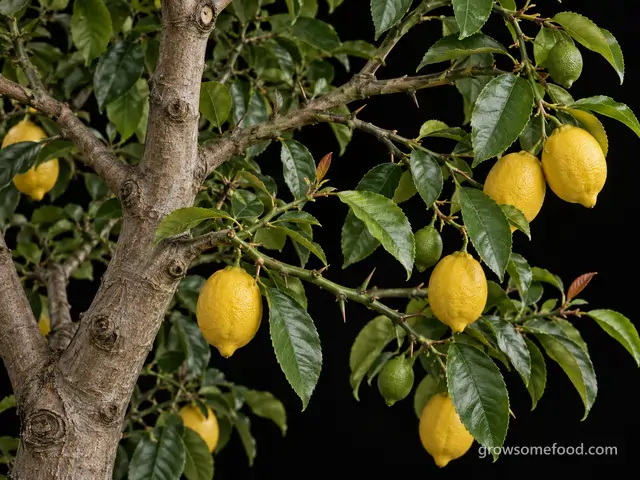
Lemon
The most rewarding citrus for the home grower - self-fruitful, fast to bear, and productive nearly year-round in zones 9-11. And because it grows superbly in a pot, a lemon is the one citrus almost anyone can grow, moving it to shelter through winter far north of its outdoor range.
Safety notes The fruit, juice, and zest are the food. Citrus peel oils and juice are phototoxic on skin in sunlight (can cause a rash/burn called phytophotodermatitis) - rinse hands after zesting or juicing before sun exposure. Thorns on many lemon trees are sharp; the leaves and seeds are not eaten. Citrus peel, leaves and their oils are toxic to dogs and cats (ASPCA) - keep prunings, peel and windfalls away from pets, and never put citrus essential oil on a cat.
Overview
A lemon tree is the citrus that gives back the most for the least. It's self-fruitful (one tree, no pollen partner), it bears young (often in a year or two), it's more or less everbearing - flowering and fruiting more than once a year, so you'll often see blossoms, green fruit, and ripe lemons all at once - and the fruit conveniently stores on the tree, so you pick as you need it. A handful of homegrown lemons transforms cooking, and few things smell better than citrus blossom.
Quick facts
- Height
- 13 ftRange: 6–20 ft
- Spread
- 10 ftRange: 6–15 ft
- Cold
- Killed by frostdamaged below 28°F
- Heat
- Struggles above 105°F
- Life cycle
- Perennial, lives about 50 years
- Soil
- Well-drained
- Water
- Medium
- Plant spacing
- 12 ftRange: 8–18 ft
When to plant
No planting window on record for this zone. Nearest zone with one: 8b.
Frost here: last around Apr 10 (Mar 27 to Apr 24 most years), first around Oct 25. Zone averages, your own yard may run a week or two either way.
Life stages
Establish, grow, repeat
Getting established and returning each season are different parts of the story.
Stage 1 of 5 · Getting established
First-year establishment
The first year after planting
Care at this stage
-
Keep evenly moist, never waterlogged
A new citrus needs steady moisture to establish, but hates soggy roots (root rot is the quick killer). Water deeply when the top inch or two of soil dries; in containers, ensure free drainage and empty the saucer.
-
Mulch a ring, kept off the trunk
A shallow mulch ring conserves moisture and feeds the shallow feeder roots, but keep it well off the trunk - citrus are prone to foot/crown rot if the base stays damp.
-
Protect from any frost
Lemons are among the most cold-tender citrus, damaged below about 28-30°F. In-ground only in zones 9-11; everywhere colder, grow in a container and move it to shelter before frost.
-
Start a regular citrus feeding program
Citrus are heavy feeders. Begin a specialized citrus fertilizer (with micronutrients - especially iron, zinc, manganese) in the warm season; yellowing leaves usually mean it's hungry or the roots are too wet.
Months are typical seasonal windows; climate, variety, and plant age can shift them.
Harvest
- Fruit is fully colored (bright yellow; Meyer turns deep egg-yolk yellow-orange)
- Skin is glossy and the fruit gives slightly to a gentle squeeze
- Fruit feels heavy for its size (juicy)
- A taste test confirms full flavor - color alone can mislead
- Pick when full-colored and slightly soft, by taste · weekly
- Guard against sunburn and mind the thorns
Per plant 20 to 400 lemons, 5 to 125 lbPicking pick as they ripen
Cook with lemons
Watch out for
6 to know. 1 is high-risk: Citrus Greening (Huanglongbing / HLB). 5 are active in October.
Citrus Greening (Huanglongbing / HLB)Severity High DiseasenowSeason: year-roundAsymmetric, blotchy yellow mottling on the leaves - the pattern does not match from one side of the midrib to the other, which is what distinguishes it from a nutrient deficiency - along with yellow-shoot dieback, small lopsided fruit that stays green at the stem end, bitter off-flavored juice, and the tiny Asian citrus psyllid feeding on new flushes.
It has devastated Florida's industry and is present across the Gulf states. Buy clean trees, watch the new flushes for the psyllid, and cooperate with local quarantine and reporting programs.
Asymmetric, blotchy yellow mottling on the leaves - the pattern does not match from one side of the midrib to the other, which is what distinguishes it from a nutrient deficiency - along with yellow-shoot dieback, small lopsided fruit that stays green at the stem end, bitter off-flavored juice, and the tiny Asian citrus psyllid feeding on new flushes.
There is no cure. An infected tree declines and dies and should be removed to stop the spread rather than nursed along. Management is entirely exclusion: clean stock, psyllid control, and destroying infected trees. Report a suspected case to your state agriculture department or extension office, which is how local quarantine programs track and contain it.
Buy only certified disease-free trees from a reputable source, and never move citrus plants, cuttings or fruit out of a quarantine area - that is how it travels between regions. Control the Asian citrus psyllid on new flushes, and remove infected trees promptly to protect the ones nearby. No resistant common variety exists yet.
The most serious citrus disease in the world, and effectively a death sentence for an infected tree. A bacterial infection (Candidatus Liberibacter) spread by the Asian citrus psyllid blocks the tree's vascular system, causing blotchy mottled leaves, yellow-shoot dieback, and small, misshapen, lopsided fruit that stays green at the stem end and tastes bitter. Every commercial citrus type is susceptible, there is NO cure, and it has collapsed much of Florida's citrus industry. It is the reason citrus plants and fruit are under quarantine restriction across much of the southern United States.
Scale & Sooty MoldSeverity Medium PestnowSeason: Mar–OctRows of small brown, tan, black, white, or waxy bumps along stems, twigs, leaf midribs, and leaf undersides that do not brush off but can be scraped loose with a fingernail.
One of the most common citrus pests, particularly troublesome on container and indoor trees - the sooty mold it feeds is often the first thing you notice.
Rows of small brown, tan, black, white, or waxy bumps along stems, twigs, leaf midribs, and leaf undersides that do not brush off but can be scraped loose with a fingernail. A sticky shine on the leaves - and on the floor, table, or path beneath the plant - that later turns black with sooty mold. Ants running steadily up and down the stems, since they farm and defend scale for that honeydew; often the first sign anything is wrong. Yellowing leaves, weak thin growth, and dieback of individual branches or canes that are heavily encrusted. On fruit crops, scale covers and sooty mold directly on the fruit. Check the leaf undersides and the shaded inner wood, which is where colonies build up unseen.
Horticultural oil is the main control: it works by smothering, so it has to coat the insects thoroughly - stems, twigs, and leaf undersides - and it usually needs repeating, because the waxy covering shields them and no single pass reaches everything. On deciduous woody plants a dormant-season oil smothers the overwintering stage while the leaves are out of the way, and timing a growing-season spray to the crawler stage, when the young are mobile and uncovered, is far more effective than spraying settled adults. On a small plant or a light infestation, scrub or wipe the scales off by hand, or dab them with a cotton swab of rubbing alcohol. Prune out and destroy badly encrusted wood rather than trying to save it. Wash off the sooty mold once the scale is gone - it lives on the honeydew, not on the plant, and stops once the supply does. Anything you spray must be labeled for the plant, and oils can burn delicate foliage, so test first.
Inspect. Look over leaf undersides and stems regularly - on a crop you pick, every harvest is a scouting chance - and check every new plant thoroughly before you buy it, plant it, or set it beside anything else, because scale almost always arrives on a plant rather than flying in. Quarantine new houseplants for a few weeks. Keep plants unstressed and not over-fertilized, since soft, forced growth is what populations build on. Prune for airflow and light to open up the shaded inner growth where scale hides, and prune out heavily infested wood as routine maintenance - on anything that gets a hard annual pruning, that alone removes most of any buildup. Leave the lady beetles, lacewings, and parasitic wasps alone, since they normally keep scale down to nothing, and keep ants off the plant where you can, because ants protect the colonies from those predators. Indoors, avoid hot, dry, still winter air.
Scale insects are sap-suckers that spend most of their lives immobile, fixed to a stem, twig, or leaf underside beneath a waxy or shell-like cover. They look far more like bumps, blisters, or crusty encrustations than like insects, which is why an infestation is usually well established before anyone notices it. Soft scales excrete large amounts of sticky honeydew that drips onto everything below and grows a black sooty mold - and those blackened leaves are often the first thing a gardener actually sees. Armored scales produce no honeydew but sit under a hard shield that protects them from most sprays. They spread as tiny mobile crawlers in the weeks after hatching, which is the only stage that moves and the only stage that is easy to kill. Populations build on stressed plants, on crowded shaded growth, and above all on plants kept indoors in dry, still air over winter.
Citrus Leaf MinerSeverity Medium PestnowSeason: Apr–OctSilvery, squiggling serpentine trails inside new leaves, and curled, twisted, distorted new growth on the flushes.
Only damages new flushes, not mature leaves or fruit; the bigger concern is that its leaf wounds can let citrus canker bacteria in. Do not spray an established lemon just for cosmetic damage.
Silvery, squiggling serpentine trails inside new leaves, and curled, twisted, distorted new growth on the flushes. Mature leaves and fruit are untouched.
Largely cosmetic on an established tree - prune off heavily mined flushes if you want to, and otherwise leave it alone rather than spraying for appearance. Horticultural oil applied to new flushes deters egg-laying. Systemic controls are used mainly on young trees or where canker pressure is high.
Established trees tolerate it, so the aim is to give it less to work with: avoid over-fertilizing, which pushes out the excess soft flushes it feeds on, and stop feeding by late summer so there is no tender autumn flush to mine. Encourage the parasitic wasps that control it, and protect young trees and new grafts, whose growth actually matters.
A tiny moth whose larvae mine winding, silvery serpentine tunnels just under the surface of new citrus leaves, curling, twisting and distorting them. It attacks only the tender new-growth flushes, never mature leaves or fruit, so on an established tree it is essentially cosmetic - but it can stunt a young tree, and the wounds it leaves in the leaf provide entry points for citrus canker bacteria, which is its real significance.
AphidsSeverity Low PestnowSeason: Mar, Apr, May, Jun, Sep, OctDense clusters of tiny insects packed onto shoot tips, flower buds, and the undersides of young leaves.
On citrus this is a spring and fall flush problem - aphids ride the tender new growth and distort it, and some species transmit citrus viruses. The honeydew and sooty mold are usually more noticeable than the aphids themselves.
Dense clusters of tiny insects packed onto shoot tips, flower buds, and the undersides of young leaves. Curled, cupped, or distorted new growth that never opens properly. A sticky shine on the leaves - and on whatever sits under the plant - that later goes black with sooty mold. Tiny white cast skins left behind where a colony has been feeding. Ants running steadily up and down the stems, which is often the first thing you notice. Mottled, streaked, or misshapen leaves that do not grow out can mean a virus the aphids brought with them rather than the feeding itself.
Knock the colonies off with a hard jet of water and repeat every few days - on most plants that alone ends it. Pinch out or prune off the worst-infested tips rather than treating the whole plant. If colonies keep rebuilding, spray insecticidal soap or horticultural oil directly onto the insects, covering leaf undersides, and repeat weekly until they are gone; treat early or late in the day, and never spray a wilted or heat-stressed plant. Avoid broad-spectrum insecticides - they kill the ladybugs, lacewings, and parasitic wasps that were about to solve the problem for you, and aphid numbers usually come back worse afterward. Anything you spray must be labeled for the plant you are treating; follow that label and observe its pre-harvest interval. On anything you eat, wash leaves, heads, and buds well before use, since aphids hide down in crowns, folds, and tight growth.
Go easy on nitrogen: the soft, lush growth that heavy feeding produces is exactly what aphids breed on. Check new growth once a week through spring and early summer so you catch colonies while they are still small, and rub the first few out with your fingers. Leave flowering plants nearby and skip broad-spectrum sprays - ladybugs, lacewings, hoverflies, and parasitic wasps do most of this work for free, and they only stay if there is something for them to eat. Keep ants off the plant where you can, since they protect aphids from those predators. Water steadily so plants are not stressed, and check any new plant over before you bring it home or move it indoors, since aphids usually arrive on something else.
Aphids are small soft-bodied sap-suckers - green, black, gray, pink, or waxy white, and mostly wingless - that gather in dense colonies on the tenderest new growth: shoot tips, buds, and the undersides of young leaves. They breed extremely fast in mild weather, so a few can become hundreds inside a week. Their feeding curls and distorts soft growth, and the sticky honeydew they excrete coats everything below and turns black with sooty mold. Ants often farm and defend the colonies for that honeydew. A few aphids are normal on almost any plant and a healthy plant shrugs them off; only dense, persistent colonies do real damage, and some aphids also spread plant viruses as they feed.
Sooty MoldSeverity Low DiseasenowSeason: Mar–OctA black, dusty or crusty coating on leaves, stems, and fruit (that can be rubbed or washed off), always accompanying a honeydew-producing pest above it.
Harmless in itself but a reliable sign of a scale, aphid, mealybug, or whitefly infestation somewhere above - find and treat that pest.
A black, dusty or crusty coating on leaves, stems, and fruit (that can be rubbed or washed off), always accompanying a honeydew-producing pest above it.
Treat the underlying scale/mealybugs first; then wipe or wash the sooty film off leaves with mild soapy water. It doesn't infect the plant, but heavy coating blocks light and weakens it.
Control the underlying sap-sucking pest (aphids, scale, mealybugs, whiteflies) - no honeydew, no sooty mold. Encourage beneficial insects and treat the pest, not the mold.
A black, soot-like fungal coating that grows on the sticky honeydew excreted by aphids, scale, mealybugs, and whiteflies - it doesn't infect the plant directly but coats leaves and fruit in a black film that blocks light and disfigures them (a particular nuisance on makrut lime, grown for clean leaves).
Spider MitesSeverity Low PestSeason: Jun–SepFine pale stippling or speckling across the upper leaf surface, as though the color had been sandblasted out of it, and later a dull bronze or rusty cast over the whole leaf.
Especially common on citrus wintered indoors in dry heated air; misting and washing the leaves helps prevent outbreaks. Watch for bronzing and leaf drop as well as stippling.
Fine pale stippling or speckling across the upper leaf surface, as though the color had been sandblasted out of it, and later a dull bronze or rusty cast over the whole leaf. Delicate webbing across leaf joints, shoot tips, and undersides - that comes with a heavy infestation and means you caught it late. Leaves that dry, curl, and drop early while the plant looks thirsty no matter how much you water it. Hold a leaf over a sheet of white paper and tap it: the specks that fall and then start walking are mites. With a hand lens, look on the undersides for the mites themselves, pale or reddish, and their round translucent eggs. Damage that shows up first on the hottest, dustiest, most sheltered side of a plant, or on a pot sitting near a radiator indoors.
Start with water. A strong jet aimed at the leaf undersides, repeated every few days for a couple of weeks, knocks populations down and breaks the cycle - on many plants that alone ends it. On anything that regrows quickly, shearing back badly infested growth resets the plant to clean foliage. If it keeps building, spray insecticidal soap or horticultural oil directly onto the undersides where the mites actually live, and repeat every five to seven days for three rounds: contact sprays do not kill the eggs, so a single application always fails. Anything you spray must be labeled for the plant you are treating - follow the label and observe its pre-harvest interval on anything you eat. Predatory mites are an effective release in a greenhouse or on an indoor plant. Above all, correct the heat, dust, and drought stress that caused it, or the mites simply come back.
Do not let plants get drought-stressed - that is the single strongest trigger, and a plant watered steadily through heat is far less likely to have a mite problem at all. Hose the foliage down, undersides included, during hot dry spells: it knocks mites off, washes away the dust they thrive in, and raises the humidity around the plant for a while. Indoors and under cover, keep the air from going hot, dry, and stagnant, wipe or rinse the leaves occasionally, and keep pots away from radiators and heating vents. Inspect any plant carefully before you bring it indoors for winter or set it among others, since mites almost always arrive on something else. Avoid broad-spectrum insecticides: they wipe out the predatory mites, lacewings, and lady beetles that do most of this work for you, and reliably leave you with a worse outbreak than you started with.
Spider mites are not insects but tiny sap-feeding arachnids, smaller than a grain of salt, and you almost always notice the damage before you notice them. They live on the undersides of leaves and drain the cells one at a time, which is why the leaf goes finely stippled with pale dots before it bronzes and dries. They breed explosively in hot, dry, dusty, still air - a generation can pass in a week at high temperature - so a barely visible population becomes a webbed, bronzed plant within a fortnight. Drought-stressed plants and plants wintered indoors in dry heated air are the classic hosts. Broad-spectrum insecticides make matters worse rather than better, because they kill the predatory mites and lady beetles that normally hold mites in check.
Good & bad neighbors
All of these are traditional pairings. The evidence is thin, so treat them as a nudge, not a rule.
Plant nearby
-
A living clover groundcover fixes nitrogen (citrus are hungry) and feeds pollinators; keep it and any mulch off the trunk base to avoid foot rot.
-
Draws beneficial insects and is traditionally credited with deterring some pests around citrus; French types also suppress root-knot nematodes. Harmless and useful under a young tree.
-
Grown around citrus as a trap crop and to draw aphids and beneficial insects away from the tender new flushes; a common, harmless citrus underplanting.
-
Aromatic alliums are traditionally credited with discouraging aphids around fruit trees; anecdotal but a harmless space-sharer near citrus.
-
Shares citrus's love of sun and good drainage and draws pollinators; a tidy, drought-tolerant companion, though it wants drier feet than citrus so plant a little apart.




Varieties · 5
You pick one when you add Lemon to your garden. Its days to maturity set your harvest window.
Meyer
The home-garden and container champion: a lemon-mandarin hybrid that is sweeter, less acidic, and more floral than a true lemon, with thin, deep-yellow-orange skin.
Variety details for Meyer
Rounder fruit with thin, smooth, deep egg-yolk-yellow to orange skin; compact bushy tree.
sweetcold-hardy-citruscontainer-starself-fruitfulResists Cold (hardiest common lemon)
Hardier than Eureka/Lisbon (takes a light frost), naturally compact, and the classic variety to grow in a pot and winter indoors far north of citrus country. Self-fruitful and productive. The best first lemon for almost everyone.
Eureka
The classic grocery-store lemon: true, tart, acidic fruit with thick, bright-yellow skin, borne nearly year-round on a relatively thornless, open tree.
Variety details for Eureka
Classic oval bright-yellow lemon with a thick, textured rind and few seeds.
true-lemontarteverbearingself-fruitfulSlightly less cold-hardy than Lisbon but productive and everbearing in warm zones - the standard choice for a real sharp lemon in the ground in zones 9-11.
Lisbon
The other classic true lemon and a workhorse: vigorous, heavy-bearing, and both more cold-hardy and more heat- and wind-tolerant than Eureka, so it's the tougher in-ground choice - but thornier and more upright.
Variety details for Lisbon
Oval bright-yellow lemon similar to Eureka, on a thornier, more vigorous tree.
true-lemontartcold-hardyheat-tolerantTart, high-quality, seedy-to-few-seeded fruit, mostly in a heavier winter crop. A dependable grove and backyard lemon in warm zones.
Ponderosa
The novelty giant: a lemon-citron hybrid producing enormous, thick-skinned, bumpy fruit that can weigh one to three pounds each - more for show and thick fragrant peel than juice, though usable.
Variety details for Ponderosa
Huge, rough, thick-skinned lemons the size of a small grapefruit, on a compact tree.
giant-fruitnoveltycontainer-friendlythick-skinnedA popular ornamental container and greenhouse plant, tender to cold. Fun and dramatic rather than a workhorse.
Variegated Pink (Eureka)
A striking ornamental sport of Eureka: green-and-cream variegated leaves and young fruit striped green-and-yellow, ripening to yellow with pale pink flesh and clear (not pink) juice.
Variety details for Variegated Pink (Eureka)
Variegated foliage; fruit striped green-yellow when young, ripening yellow with pink-tinged flesh.
variegatedornamentalpink-fleshtrue-lemonA beautiful, genuinely productive tree that earns its place on looks and gives real tart lemons - a favorite decorative container citrus.
Grower tips
Notes from growers, tagged with the zone they grow in. A person reads every post before it appears.
Nobody has posted about Lemon yet. The first one usually saves someone a season.
Free account. Your post shows your grower name and zone, never your email.