
Add it to your home screen and it opens full screen: no browser bars, one tap away, and everything stays signed in. Free, nothing to download from an app store.
- Tap the Share button in your browser
- Scroll down and choose “Add to Home Screen”
- Open GrowSomeFood from your home screen
- Open your browser’s menu
- Choose “Add to Home screen” or “Install app”
- Open GrowSomeFood from your home screen
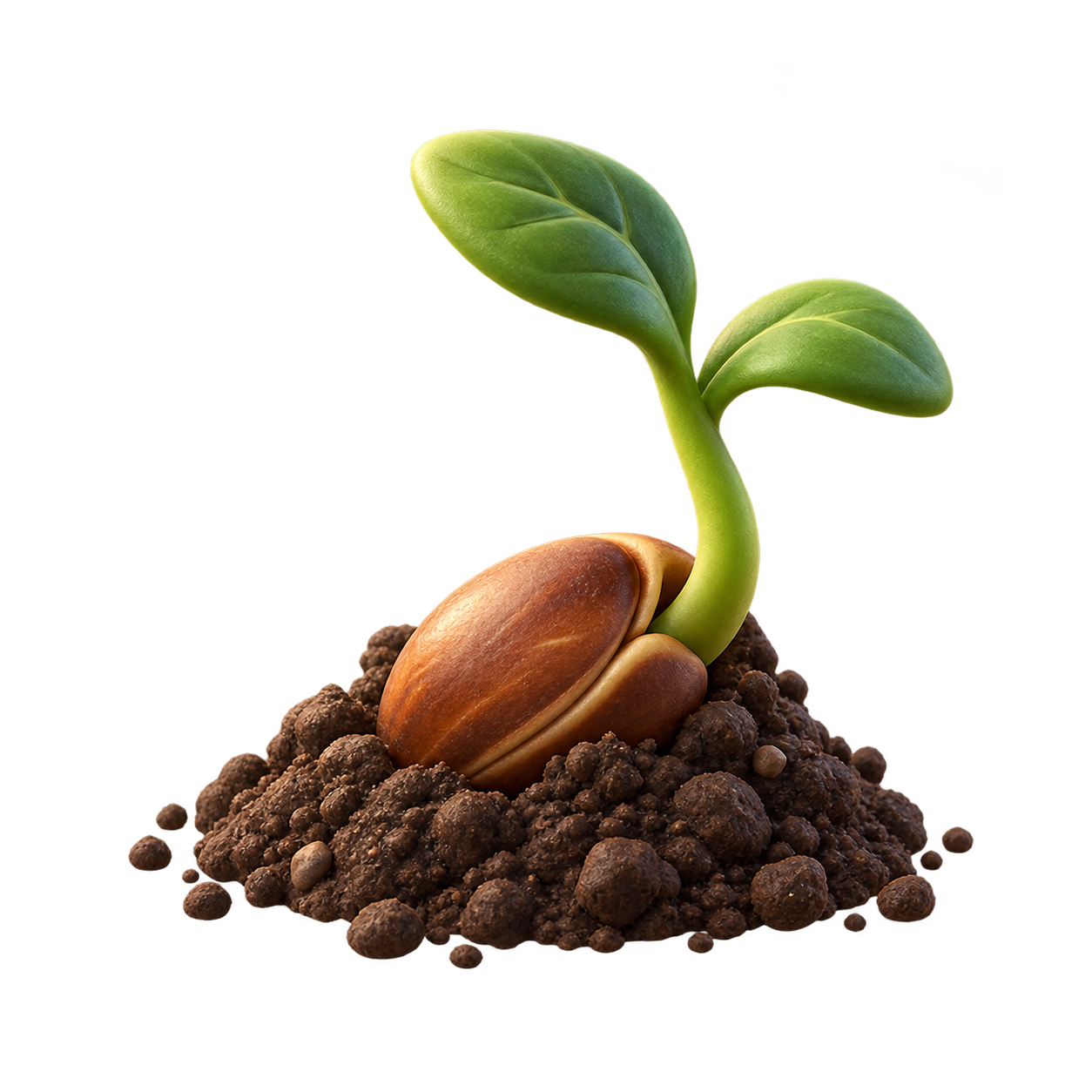
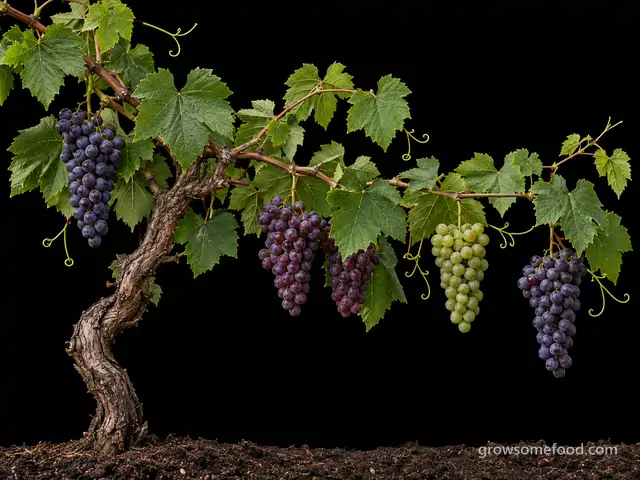
Grape
A long-lived vine whose whole crop depends on hard annual pruning; the type you plant - American slip-skin, European wine, or seedless table - decides your climate fit and how you prune.
Safety notes Grapes and young leaves (used for dolmas) are safe to eat. Whole grapes are a serious choking hazard for children under about 4 - quarter them lengthwise before serving to young kids, frozen ones too. Only pick leaves from vines you have not sprayed, or observe the label's pre-harvest interval - the spring spray window falls on exactly the young leaves used for dolmas. Grapes are toxic to dogs and cats even in small amounts - keep windfalls and clusters away from pets.
Overview
Grapes are one of the oldest cultivated fruits and among the most rewarding backyard vines: a single well-pruned plant can yield 15-30 pounds and live for decades on a wall, arbor, or wire trellis. But they demand one thing above all - hard pruning every winter. Grapes fruit only on shoots that arise from one-year-old wood, so each year you cut away 70-90% of last season's growth. Skip it and you get a shady tangle with little fruit; do it and you get heavy, clean crops.
The one thing to knowBut they demand one thing above all - hard pruning every winter.
Quick facts
- Winter chill
- 800 hours below 45°FRange: 100–1500 hours
- Height
- 6 ftRange: 5–8 ft
- Spread
- 8 ftRange: 6–20 ft
- Support
- Grows better on a trellis or stake
- Cold
- Takes hard frostdamaged below -20°F
- Heat
- Struggles above 100°F
- Life cycle
- Perennial, lives about 40 years
- Soil
- Well-drained
- Water
- Medium
- Plant spacing
- 8 ftRange: 6–10 ft
When to plant
Nothing is open today. Spring transplanting opens 5 months, Mar 20 to May 1.
- Transplant Mar 20 – May 1 Opens in 152 daysAbout 3 weeks before to 3 weeks after your last frost (Apr 10 here)Broad grape range - American, hybrid, and (with care) European vinifera all workable. Build the trellis first.
- Transplant Aug 26 – Oct 4 Opens in 311 daysAbout 9 weeks before to 3 weeks before your first frost (Oct 25 here)Fall planting of dormant vines works in the milder end, giving roots time before summer; mulch the first winter.
Frost here: last around Apr 10 (Mar 27 to Apr 24 most years), first around Oct 25. Zone averages, your own yard may run a week or two either way.
Life stages
Establish, grow, repeat
Getting established and returning each season are different parts of the story.
Stage 1 of 6 · Getting established
Year 1: planting & training a trunk
The first year after planting
Care at this stage
-
Build the trellis before or at planting
Grapes are heavy, long-lived vines that need a permanent structure - a two-wire trellis (about 3 and 5-6 ft) on sturdy end posts, or an arbor. Put it up first; retrofitting around an established vine is a fight.
-
Train one strong shoot straight up to build the trunk
Year one is all about the framework: after planting, cut the vine back to 2-3 buds, then select the single strongest new shoot, tie it to a stake, and train it straight up to the wire, rubbing off competing shoots. You're building the permanent trunk, not fruit.
-
Water to establish the roots
Keep the young vine watered through its first summer to root in. Grapes are drought-tolerant once established but need steady moisture the first year.
-
Plant the graft union above ground on grafted vines
Many European (vinifera) vines are grafted onto phylloxera-resistant American rootstock. Set the vine so the graft union (the knob) sits a few inches ABOVE the soil, or the fruiting variety roots and loses its protection.
Months are typical seasonal windows; climate, variety, and plant age can shift them.
Harvest
- Full color for the variety (won't ripen further after cutting)
- Berries at the bottom of the cluster taste sweet, not tart
- Seeds (in seeded types) have turned brown
- Berries part easily from the stem and the cluster stem browns
- Pick by taste - grapes don't sweeten after cutting · every 4 days
- Net against birds and clear wasp-drawing drops · every 4 days
Per plant 10 to 40 pounds per vine, 10 to 40 lbPicking pick as they ripen
Cook with grapes
Watch out for
8 to know. 4 are high-risk: Grape Black Rot, Grape Downy Mildew, Powdery Mildew, Pierce's Disease. 1 is active in October.
Grape Black RotSeverity High DiseaseSeason: Apr–JulSmall tan-brown leaf spots ringed in dark margins with tiny black dots, and berries that turn brown, shrivel, and harden into black mummies clinging to the cluster.
This is GRAPE black rot (Guignardia bidwellii) - a distinct disease from brassica black rot and sweet-potato black rot despite the shared common name. Far worse on vinifera and tight-clustered grapes than on American types or muscadine.
Small tan-brown leaf spots ringed in dark margins with tiny black dots, and berries that turn brown, shrivel, and harden into black mummies clinging to the cluster.
Sanitation (removing mummies) is the core control; protective fungicides from bud break through fruit set are needed on susceptible vines in humid climates. There's no cure for an infected berry.
Remove and destroy mummies and fallen leaves (the spore source) each dormant season, prune and thin for airflow, and spray susceptible vines from bud break through a few weeks after bloom - the critical window. American grapes resist the mildews but are still susceptible to black rot: Concord and Niagara need mummy sanitation and the bud-break-through-fruit-set window like anything else in the humid East. Muscadine is the one grape that shrugs it off.
A fungal disease of grapes (Guignardia bidwellii) and the major disease of grapes in the humid East: it spots leaves and, most damagingly, turns developing berries brown then into hard, black, shriveled 'mummies'. It can destroy an entire crop on susceptible bunch grapes in a wet year.
Grape Downy MildewSeverity High DiseaseSeason: May–AugPale yellow-green to oily 'oilspot' blotches on the upper leaf surface with a white, downy, cotton-like growth on the undersides beneath them; browning shoots and grey-rotting young berries.
A NEW canonical grape slug (Plasmopara viticola). Native to North America but far more destructive on introduced European vinifera; American Vitis species are relatively resistant.
Pale yellow-green to oily 'oilspot' blotches on the upper leaf surface with a white, downy, cotton-like growth on the undersides beneath them; browning shoots and grey-rotting young berries.
Remove and destroy infected tissue; there's no cure for infected leaves, so control is prevention plus timely protective sprays on susceptible vines in wet seasons.
Open the canopy for airflow, avoid overhead watering, remove infected leaves and clean up debris, and grow resistant American/hybrid varieties; on susceptible vinifera, protective fungicides through the wet pre- and post-bloom window are needed.
A water-mold disease (Plasmopara viticola) that thrives in warm, wet, humid weather, attacking leaves, shoots, and berries; severe infections defoliate vines and rot young clusters. A 'downy mildew year' is a wet one, and it hits European vinifera hardest while American grapes resist it better.
Powdery MildewSeverity High DiseaseSeason: May–AugRound white powdery spots on the upper leaf surfaces that spread and merge until whole leaves look dusted.
Grape powdery mildew is Erysiphe necator, and it scars, cracks and taints the berries rather than merely marking leaves - vinifera is highly susceptible while many American grapes resist it. The sulfur rule matters here: American (labrusca) grapes such as Concord and Niagara, and red-fruited French-American hybrids, are burned by sulfur, with injury starting around 75-85°F. Use potassium bicarbonate or horticultural oil on those vines and keep sulfur for vinifera.
Round white powdery spots on the upper leaf surfaces that spread and merge until whole leaves look dusted. It usually starts on the oldest, lowest, most shaded leaves and works upward, so check there first. Look at the undersides too, and at stems, buds, and flower stalks, which get coated as it advances. Leaves that yellow, brown, curl, or go crisp and drop early under the coating. New growth that opens small, crumpled, or twisted where the fungus has reached the shoot tips. On plants where it gets onto the fruit, a dull gray film, russeted or scarred skin, and cracking. Late in the season, tiny dark specks scattered through the white felt - that is the fungus setting up to overwinter on the debris.
Start early: sprays protect healthy tissue, they do not clean up leaves that are already coated. Pick off and bin the worst leaves as soon as you see them, and open the plant up by thinning or pruning so air moves through. On anything that regrows quickly, shearing the whole plant back forces a clean flush and beats spraying. If it keeps spreading, potassium bicarbonate, horticultural oil, or neem applied weekly will hold it - cover both leaf surfaces. Sulfur also works, but it burns the foliage of some plants, should never go on in heat, and must not be mixed with or applied close behind an oil spray. Whatever you use must be labeled for the plant you are treating: follow that label and observe its pre-harvest interval on anything you eat. Do not compost badly infected material. Late-season mildew on a plant that is finishing anyway is usually cosmetic; on a crop still filling out it is worth acting on.
Give plants room. Crowding and still air are the biggest single driver, so space at the full recommended distance, thin seedlings properly, and divide or prune out congested growth until air moves through the plant. Full sun and an open position help; deep shade and a still corner against a wall are where it always starts. Water at the base rather than overhead, and water early in the day so nothing stays damp overnight. Keep plants evenly watered - drought stress at the roots leaves them far more susceptible, even though the fungus itself likes dry air. Go easy on nitrogen, since soft lush growth is the most vulnerable. Where resistant varieties exist for what you are growing, choosing one is the single most effective thing you can do on a plant that mildews every year. Clear infected leaves and stems away at the end of the season rather than composting them.
Powdery mildew is a fungal disease that coats leaves - and often stems, buds, and fruit - in a white-to-gray powder that looks like spilled talcum. It is not one fungus but a large family of them, each fairly specialised to its own group of plants, which is why mildew on one crop rarely jumps to an unrelated one beside it. Unlike most leaf diseases it does not need wet leaves: it thrives on warm dry days followed by humid nights, and it takes hold fastest where plants stand crowded in still air or in shade. The coating blocks light, so heavily covered leaves yellow, brown, and drop early. On many plants that is mostly disfiguring and arrives late enough not to matter; where it strips away the leaves a crop still needed to finish, it costs you size, sweetness, and quality.
Pierce's DiseaseSeverity High DiseaseSeason: Jun–SepLeaf margins scorching and browning (often with a yellow/red band between green and dead tissue), uneven cane maturity with green islands on browning wood, raisined fruit, and vines declining and dying over one to two seasons.
Severity is HIGH where present (the humid Southeast, coastal California), but the disease is absent from cold and arid regions - it's the barrier that makes muscadine the Southern grape.
Leaf margins scorching and browning (often with a yellow/red band between green and dead tissue), uneven cane maturity with green islands on browning wood, raisined fruit, and vines declining and dying over one to two seasons.
No cure exists - infected vines are removed. Management is entirely variety choice and vector/reservoir control; it defines the southern limit of bunch-grape growing.
In high-pressure regions (Gulf South, parts of the Southeast and California), grow PD-tolerant varieties (Blanc du Bois, Lake Emerald) or switch to muscadine, which resists it; control sharpshooters and remove nearby wild/susceptible grapes and reservoir plants.
A bacterial disease (Xylella fastidiosa) spread by sharpshooter insects that clogs a grapevine's water-conducting tissue, causing leaf scorch and progressive vine death. It is the reason most European and American bunch grapes cannot be grown across the humid Southeast and Gulf (roughly zones 8-10); pressure falls away in colder regions (zone 7 and north), where winters kill the vector and the pathogen, and in the arid West.
Birds & WildlifeSeverity Medium WildlifenowSeason: Aug–OctFruit disappearing from the outermost, most exposed parts of the plant first, and from the top of a tree where you cannot reach anyway.
Birds take whole clusters as the sugar rises, and wasps and yellowjackets follow them in at split and dropped fruit. Net the vine as fruit begins to color and clear split or dropped berries promptly.
Fruit disappearing from the outermost, most exposed parts of the plant first, and from the top of a tree where you cannot reach anyway. Single neat pecks and gouges in ripening fruit, with several fruits sampled rather than one eaten through - the classic sign that it was birds rather than an animal. Heads of grain or seed going visibly lighter and emptier as they ripen, with hulls and chaff scattered underneath. Freshly sown seed vanishing off the surface of a bed before it germinates. Bird traffic in and out of the plant picking up as the crop colors, and birds waiting on nearby wires and branches. Wasps arriving at the pecked and split fruit shortly afterward.
There is no treatment once a crop is being taken - only protection and timing, so the answer is to get netting on and to pick what is ready. Reflective tape, flash ribbon, spinners, and decoy predators do work, but only for a few days at a time: birds habituate fast, so move and rotate them and never rely on them as the main defense for a crop you care about. Cut and gather grain or seed heads a little early, at firm dough, and finish drying them under cover instead of leaving them standing for the flocks. Plant a little extra, or a decoy crop the birds prefer, and accept sharing anything that crops heavily. On a wild or foraged patch, fruit going to birds and small mammals is the point of the plant rather than a problem to solve.
Net, and net early. Bird netting draped over a frame or hoops so it stands off the fruit, with the edges closed at ground level, is the only thing that reliably works at harvest scale - and it has to go on before the crop starts to color, because once birds have found the food they are far harder to displace. Keep fruit trees small enough that netting them is actually feasible; that decision gets made years earlier, at planting. Bags of mesh, organza, or paper slipped over individual heads, clusters, or prize fruit protect a small crop without netting the whole plant. Then shorten the exposure: pick promptly and completely rather than leaving ripe fruit hanging as a lure, clear split and dropped fruit that draws birds and wasps alike, and where a crop can finish off the plant, harvest a little early and ripen or dry it under cover. Rake in or cover broadcast seed so it is not lying in plain view.
Birds find ripening fruit and seed before you do. Robins, waxwings, starlings, catbirds, jays, sparrows, finches, blackbirds, and doves all work a garden, and the pressure arrives in a narrow window - the last days before harvest, when sugar rises, color changes, and the crop softens or the grain hardens. A flock can strip a small planting in a day or two, and birds that only peck rather than take whole fruit still leave wounds that rot or draw wasps. Squirrels, chipmunks, and other wildlife usually turn up on the same crop at the same time. This is competition rather than disease: the birds are not harming the plant, and a big tree or a heavy-cropping bush often has enough for everyone - but on a small planting it can be the difference between a harvest and none.
Grape PhylloxeraSeverity Medium PestSeason: May–SepVinifera vines that slowly decline - stunted growth, small yellowing leaves, low vigor - with swollen galls (nodosities/tuberosities) on the roots when dug; small wart-like galls on leaf undersides on some American types.
A NEW canonical grape slug. The single reason vinifera grapes are grafted onto American rootstock; American and hybrid grapes (Concord, Mars, etc.) are naturally tolerant and grow fine on their own roots.
Vinifera vines that slowly decline - stunted growth, small yellowing leaves, low vigor - with swollen galls (nodosities/tuberosities) on the roots when dug; small wart-like galls on leaf undersides on some American types.
No effective treatment for an infested vine's roots - management is entirely through resistant rootstock and tolerant American/hybrid varieties. This is a plant-choice problem, not a spray problem.
Grow vinifera only on phylloxera-resistant American rootstock (grafted vines), and grow American and hybrid varieties, which tolerate it on their own roots. There is no rescue for own-rooted vinifera in phylloxera country.
A tiny sap-sucking root aphid (Daktulosphaira vitifoliae) native to eastern North America that feeds on grape roots (and sometimes forms leaf galls), fatally weakening the roots of European vinifera grapes. It famously devastated Europe's vineyards in the 1800s, and the reason vinifera is grafted onto American rootstock worldwide.
Grape Berry MothSeverity Medium PestSeason: Jun–AugFine webbing binding berries in a cluster, small entry holes, and individual berries prematurely coloring, shriveling, or rotting.
Fine webbing binding berries in a cluster, small entry holes, and individual berries prematurely coloring, shriveling, or rotting.
Remove infested clusters; Bt or a targeted insecticide timed to egg-laying helps where pressure is high. Pheromone traps monitor and can time control.
Clean up dropped clusters and fallen fruit where larvae overwinter, keep the canopy open, and remove nearby wild grapes; loose-clustered varieties suffer less.
A small moth whose larvae web together and bore into grape berries, causing them to shrivel, discolor, and rot, and opening entry wounds for bunch rots. Worst in tight-clustered varieties and near wooded edges where the moth overwinters.
Japanese BeetlesSeverity Medium PestSeason: Jun–AugClusters of shiny metallic beetles massed together on the upper, sunniest foliage and down inside open blooms, heaviest on warm sunny afternoons from around late June.
Damage is usually cosmetic on mature vines but matters on young ones, which can be seriously defoliated. Established vines tolerate considerable leaf loss.
Clusters of shiny metallic beetles massed together on the upper, sunniest foliage and down inside open blooms, heaviest on warm sunny afternoons from around late June. Leaves reduced to lace, with the veins left intact and the tissue between them gone - unmistakable, and quite different from the ragged chewing of a caterpillar. Ragged, chewed petals and blooms that never open properly. Beetles that let go and drop straight to the ground when you disturb the plant. Feeding damage on ripening fruit, on the plants they also take fruit from. Whole branches going brown and lacy at the top of a plant while the shaded lower growth stays untouched.
Persistent morning hand-picking into soapy water is the most effective home control there is, and on a vigorous established plant the damage is usually cosmetic and needs nothing else. Neem deters feeding rather than killing, and has to be reapplied. For heavy pressure, spinosad or a targeted insecticide labeled for the plant will work - but time any spray away from bloom and apply it at dusk to protect bees, and observe the pre-harvest interval on anything you eat. On flowering plants, some gardeners simply shear the blooms off for a couple of weeks and let the plant rebloom once the wave has passed, which removes the lure as well as the damage. Young plants and young trees are the ones worth defending: a mature tree or an established vine tolerates several weeks of leaf loss without lasting harm.
Hand-picking is genuinely the main defense in a home garden. Go out in the cool of the morning while the beetles are sluggish, hold a tub of soapy water underneath, and knock them in - they drop when disturbed, so most fall straight into it. Do it daily through the flight: because the beetles call each other in, taking them off early stops a plant becoming a beacon. Do not put pheromone or lure traps anywhere near the garden - they demonstrably pull in far more beetles than they catch. And do not count on lawn grub control: milky spore has performed poorly and inconsistently in field trials across most of the US, and treating your own turf does not reduce the adults feeding on your plants, because they fly in from surrounding properties. Where it is practical, row cover or netting through the peak flight excludes them outright. Otherwise riding out the six-to-eight-week wave is a legitimate strategy, since most established plants absorb the damage.
Japanese beetles are metallic green-and-copper beetles about half an inch long that emerge in early summer and feed for six to eight weeks. They feed in aggregating masses - one beetle's feeding releases a scent that draws in more - so a plant goes from untouched to covered in a couple of days. They chew the soft tissue between the leaf veins and leave the veins standing, so the leaf ends up as a brown lace skeleton, and they shred open flowers and sometimes ripening fruit as well. They work the sunniest upper parts of a plant on warm afternoons. The white C-shaped grubs spend the rest of the year in turf and pasture soil eating grass roots, and the adults then fly in from wherever they hatched, which can be some distance away.
Good & bad neighbors
Plant nearby
-
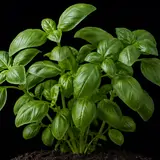
A clover cover crop beneath the trellis fixes nitrogen, suppresses weeds, and feeds pollinators without competing much with the deep-rooted vine.
- Traditional pairings, thin evidence
-
Aromatic alliums are traditionally planted near grapes and are said to discourage some pests and reduce fungal issues; harmless at minimum.
-
A classic old vineyard companion said to draw pollinators and beneficials and to benefit grape flavor; the pollinator draw is real, the flavor claim traditional.
-
Draws beneficial insects and French forms suppress soil nematodes; a common companion at the base of the trellis.
-
An aromatic herb traditionally interplanted to deter some insects and draw pollinators when flowering; low and non-competitive at the row edge.


Keep apart
-
Black walnut roots release juglone, which can injure grapevines; keep vines well outside a walnut's root zone.
- Traditional pairings, thin evidence
-
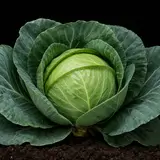
An old vineyard tradition holds that cabbage and grapes grow poorly together; evidence is thin, but brassicas are heavy feeders that compete for nutrients and water.
Varieties · 12
You pick one when you add Grape to your garden. Its days to maturity set your harvest window.
American slip-skin 3 varieties
Concord
The definitive American slip-skin grape and the flavor of grape juice and jelly itself: cold-hardy, disease-tough blue-black seeded grapes with intense 'foxy' aroma, on vigorous productive vines.
Variety details for Concord
Medium, round, blue-black grapes with a heavy silvery bloom in loose clusters.
slip-skinblue-blackseededjuiceResists Downy Mildew, Powdery Mildew
Cane-pruned. The reliable backbone of Eastern home growing and the standard by which juice grapes are judged. Needs a long season to fully ripen in the coldest zones. It resists the mildews but is SUSCEPTIBLE to black rot, so it still needs mummy sanitation and the bud-break-to-fruit-set program in the humid East. Don't use sulfur on it - sulfur burns American grapes.
Niagara
The classic white American slip-skin grape - essentially the green counterpart to Concord - with sweet, foxy, aromatic green-gold seeded grapes excellent for juice, jelly, and fresh eating.
Variety details for Niagara
Medium, oval, green-gold grapes with a musky sweet flavor.
slip-skingreen-goldseededjuiceResists Downy Mildew
Cold-hardy, vigorous, and disease-tolerant; cane-pruned. A longtime Eastern favorite. Like Concord it is susceptible to black rot despite its mildew tolerance, and sulfur burns its foliage - use potassium bicarbonate or oil instead.
Catawba
A historic red American slip-skin grape (one of the oldest US wine grapes) with coppery-red, spicy-sweet seeded fruit used for wine, juice, and fresh eating.
Variety details for Catawba
Medium, round, coppery-red to purplish grapes; late-ripening.
slip-skinredseededwineLate-ripening and needs a long season, so it suits milder end of the range; cold-hardy and disease-tolerant. An Eastern heritage variety.
Seedless table 5 varieties
Reliance
Good first pickThe most cold-hardy seedless table grape (University of Arkansas): sweet, tender, pinkish-red slip-skin-type seedless berries on a tough, adaptable, disease-tolerant vine.
Variety details for Reliance
Medium, round, pinkish-red, tender seedless berries in medium clusters.
american-hybridtableredcold-hardyResists Black Rot
The top seedless choice for the cold and humid East where vinifera table grapes fail. Cane-pruned; fruit can crack in wet spells near ripening.
Thompson Seedless
The dominant seedless table and raisin grape: sweet, crisp, pale-green vinifera berries eaten fresh and dried into golden raisins.
Variety details for Thompson Seedless
Small to medium, oval, seedless, translucent pale-green berries in large clusters.
europeanviniferatableraisinA warm-climate, low-chill variety that thrives in the hot arid West (California) with irrigation and long sun; disease-prone and cold-tender, so poorly suited to the cold or humid East. Spur- or cane-pruned.
Flame Seedless
A popular red seedless table grape: crisp, sweet, bright-red vinifera berries eaten fresh.
Variety details for Flame Seedless
Medium, round, crisp, bright-red seedless berries in large clusters.
europeanviniferatableredVigorous and productive in the warm, arid West with a low chill requirement; like other vinifera it's cold-tender and disease-prone in humidity. A leading fresh-eating grape for warm climates.
European wine (vinifera) 3 varieties
Cabernet Sauvignon
The world's most planted red wine grape: small, thick-skinned, intensely flavored black vinifera berries for full-bodied red wine.
Variety details for Cabernet Sauvignon
Small, thick-skinned, deep-black berries in tight clusters.
viniferawineblackseededSuperb quality but cold-tender (needs zone 7+) and disease-prone in humidity, so it excels in the arid West and California and demands a spray program in the humid East. Usually grafted onto phylloxera-resistant rootstock; spur- or cane-pruned.
Chardonnay
The classic white wine vinifera - versatile green-gold grapes for dry white wine.
Variety details for Chardonnay
Small to medium, thin-skinned, green-gold berries in compact clusters.
viniferawinegreenseededExcellent quality but, like all vinifera, more cold-tender and disease-susceptible than American grapes, needing zone 7+, good airflow, and disease management in humid regions; happiest in cooler wine-country climates of the West. Often grafted; typically cane-pruned.
Riesling
An aromatic white wine vinifera and one of the more cold-tolerant European grapes, making crisp, floral white wines.
Variety details for Riesling
Small, round, green-gold, highly aromatic berries in tight clusters.
viniferawinegreenseededStill more disease-prone than American types and best in cool-climate wine regions with disease management; a good vinifera choice for cooler zone-7 sites. Usually grafted; cane-pruned.
Other varieties 1 variety
Frontenac
An extremely cold-hardy French-American hybrid wine grape (University of Minnesota, hardy to about -30°F) making deep, dark, high-acid red and rosé wines - a cornerstone of cold-climate viticulture in the far North where vinifera can't survive.
Variety details for Frontenac
Small, black, high-sugar, high-acid berries in loose clusters.
american-hybridwineblackseededResists Downy Mildew, Powdery Mildew
Disease-resistant and vigorous; cane-pruned. The go-to home wine grape for the coldest zones.
Grower tips
Notes from growers, tagged with the zone they grow in. A person reads every post before it appears.
Nobody has posted about Grape yet. The first one usually saves someone a season.
Free account. Your post shows your grower name and zone, never your email.