Add it to your home screen and it opens full screen: no browser bars, one tap away, and everything stays signed in. Free, nothing to download from an app store.
- Tap the Share button in your browser
- Scroll down and choose “Add to Home Screen”
- Open GrowSomeFood from your home screen
- Open your browser’s menu
- Choose “Add to Home screen” or “Install app”
- Open GrowSomeFood from your home screen
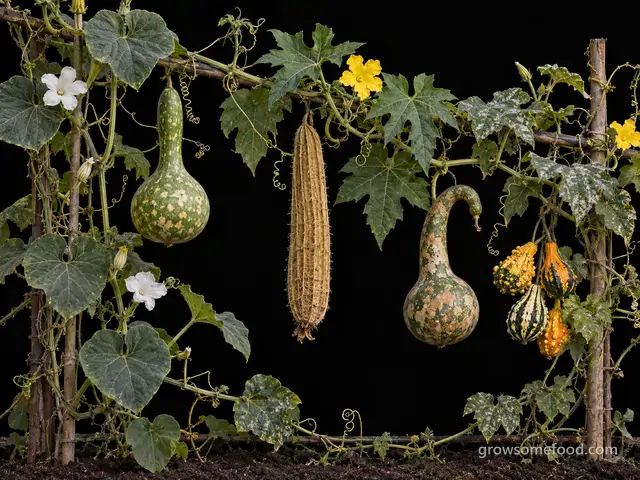
Gourds & Luffa
The dry-and-cure cucurbits: rampant vines grown not to eat but to mature, dry, and finish into luffa sponges, hard-shell craft gourds, and ornamental fall gourds.
Mature hard-shell and ornamental gourds are NOT food. The small ornamental Cucurbita pepo gourds carry bitter cucurbitacins that cause stomach upset and worse. Only young, tender luffa and bottle gourd - picked well under a hand long, before any fiber or bitterness forms - are edible; taste a raw sliver and discard anything bitter. Raw bottle-gourd juice that tastes bitter has caused serious poisoning and must never be consumed.
Overview
The one thing to knowGourds break the usual garden rule: you don't eat them, you finish them.
Gourds break the usual garden rule: you don't eat them, you finish them. These rampant, long-season cucurbit vines grow all summer, and the harvest is a fruit left to mature and dry until it becomes something useful - a scrubbing sponge, a hard woody shell, or a painted fall ornament. Give them a strong trellis and a long, hot season and they'll hand you a craft supply, a bath sponge, and a birdhouse from the same fence line.
Three very different kinds share the name and the culture. Luffa (Luffa aegyptiaca and acutangula) grows a cylindrical pod whose fibrous skeleton, peeled and dried, is the loofah sponge - and whose young pods are edible like zucchini. Hard-shell gourds (Lagenaria siceraria - bottle, birdhouse, dipper, swan, apple, bushel) dry into hard woody shells for birdhouses, dippers, bowls, and instruments, curing for months. And the small warted, striped ornamental gourds (Cucurbita pepo) are the fall-decoration gourds, grown and cured just like a little winter squash. They grow alike; they differ entirely at harvest and after.
Quick facts
- Sprouts in
- 12 days7 to 21
- Soil to sprout
- 85 °F70 to 95
- Start indoors
- 4 weeks before transplant3 to 6
- Life cycle
- Annual
- Seed to save
- About 140 days after planting110 to 180
- Height
- 15 ft8 to 25
- Spread
- 12 ft6 to 24
- Support
- Grows better on a trellis or stake
- Cold
- Killed by frostdamaged below 33°F
- Heat
- Struggles above 100°F
Full sun · medium water · well-drained soil · 36 in apart (24 to 48) · direct sow or transplant
When to plant
Nothing is open today. Spring indoor sowing opens 6 months, Mar 13 to Mar 27.
- Start indoors Mar 13 – Mar 27 Opens in 173 daysAbout 4 weeks before to 2 weeks before your last frost (Apr 10 here)
- Direct sow Apr 20 – May 15 Opens in 211 daysAbout 10 days after to 5 weeks after your last frost (Apr 10 here)Direct sow once soil reaches 70°F. A few weeks' head start indoors still helps the longest-season hard-shells (bushel, dipper) finish and cure in time.
Frost here: last around Apr 10 (Mar 27 to Apr 24 most years), first around Oct 25. Zone averages, your own yard may run a week or two either way.
Life stages
Seven stages, about 4 months from sowing to the first pull. Windows are typical; your zone and weather move them.
Germination
Day 0 to 12 from sowing- WaterKeep warm soil evenly moistdailyGourds have thick, slow seed coats and want warm ground (75-85°F). Nick the seed edge with a file and soak overnight before sowing to speed the notoriously uneven germination; then keep the surface damp, not soggy.
- ProtectSow 1 inch deep into warm groundCold, wet soil rots gourd seed before it sprouts. Wait until soil is reliably 70°F, or start indoors in deep pots - especially for slow luffa and hard-shells north of zone 7.
Watch for- No emergence in cool soil (too early)
- Hard-coated seed rotting in cold, wet ground
- Slugs and birds taking sprouts
Seedling
Day 12 to 30 from sowing- ThinThin to the strongest one or two per hillSnip extras at the soil line. These long-season vines need vigorous, uncrowded plants to size and mature fruit before frost.
- SupportBuild a STRONG trellis nowGet a heavy trellis, arbor, cattle panel, or fence up before the vines run - hard-shell fruit is heavy and the vines are rampant. A trellis grows straighter, cleaner gourds off the wet ground and saves enormous space.
- ProtectRow-cover against beetles and borersevery 3 daysCovers block cucumber beetles and the vine-borer moth on young plants; remove them at first flower so pollinators can reach the blooms.
Watch for- Cucumber beetles on young leaves
- Cutworms felling seedlings
- Damping-off in cool soil
Vining
Day 28 to 65 from sowing- SupportTrain the rampant vines up the trellisGourd vines run 10-30 feet and climb hard by tendril; guide the leaders onto the support and let them cover it. Pinch the growing tips once well established to push side branches, which carry more female flowers.
- WaterWater deeply as vines runevery 3 daysSteady 1-2 inches a week at the base builds the sprawling vine and big leaves that fill and mature the fruit; luffa in particular drinks heavily in heat.
- FertilizeFeed early, ease off near floweringevery 3 weeksSupport vine growth with a balanced feeding, then reduce nitrogen as flowering nears so the plant sets and fills fruit instead of running to leaf.
- InspectScout the stem base and leavesweeklyCheck the lower stem weekly for the vine borer's flat brown eggs and squash-bug egg clusters - the small ornamental Cucurbita pepo gourds are the vulnerable ones; luffa and hard-shells largely shrug both off.
Watch for- Squash vine borer eggs at the stem base (ornamental pepo especially)
- Squash bug egg clusters on leaf undersides
- Powdery mildew on older leaves
- Vines overrunning the garden - direct them onto the trellis
Flowering
Day 65 to 115 from sowing- PollinateKnow which flowers you have - and hand-pollinate if fruit won't setLuffa and ornamental gourds open YELLOW flowers by day, worked by bees. Hard-shell (Lagenaria) gourds open WHITE flowers in the EVENING and are pollinated by night-flying moths - if a small planting sets no fruit, dab a fresh male into open females at dusk with a soft brush. Every fruit needs its female flower (with a tiny gourd behind the bloom) pollinated.
- HarvestPick a few young luffa or bottle gourds for the kitchenYoung luffa (under 4-6 inches, before fiber forms) and young bottle gourd are edible - stir-fried or in curry. Leave the rest to mature for sponges and craft shells.
Watch for- No fruit set (hard-shells need moths or hand-pollination at dusk)
- All-male flush at first (normal)
- Tiny fruit yellowing and dropping (unpollinated)
Fruit set
Day 85 to 135 from sowing- SupportSling heavy fruit on the trellisA large bottle, dipper, or bushel gourd will tear itself off the vine - cradle heavy fruit in a cloth or net sling tied to the trellis. Slip a board under any fruit running on the ground to prevent rot and even the color.
- WaterKeep water steady while fruit sizesevery 3 daysEven moisture as fruit forms prevents cracking and blossom-end rot; each gourd takes weeks to reach full size.
- ThinIn short seasons, keep the earliest fruitKeep the earliest-set fruit per vine and pinch off late fruitlets that cannot possibly mature and begin curing before frost - especially on the long-season hard-shells. Fewer, fully mature gourds beat a vine of soft, un-curable ones.
Watch for- Heavy fruit tearing off the trellis (sling it)
- Fruit rot where a gourd sits on damp soil
- Late fruitlets that won't mature before frost
Maturing on the vine
Day 120 to 165 from sowing- DoLeave fruit on the vine to mature fullyThis is the opposite of summer squash: the gourd must ripen ON the vine. Luffa is ready as pods turn yellow-brown, dry, and light. Hard-shells should stay on the vine as long as possible - even past frost that kills the leaves - until the shell hardens and the stem browns. Ornamental pepo gourds finish like winter squash, with a hard, fully colored rind.
- InspectCheck maturity by kindLuffa: skin loosens and seeds begin to rattle. Hard-shell: a fingernail can't dent the shell and the tendril by the stem has dried. Ornamental: rind hard and fully colored. Reduce water late to help the fruit harden and dry down.
Watch for- Luffa pods yellowing and lightening (good)
- Hard-shell shells hardening; frost killing the vine (fruit stays on to cure)
- Ornamental gourds coloring up and hardening
Harvest
Day 110 to 155 to the first pull from sowing, picking to about day 180- HarvestCut mature fruit by kind, leaving a stem handleCut each gourd with pruners, leaving a few inches of stem. LUFFA: pick when yellow-brown, dry, and light with the skin loosening. HARD-SHELL: take after the vine dies or frost, when the stem is brown and dry (or leave them out over winter - the frost won't hurt a mature shell). ORNAMENTAL: pick when the rind is hard and colored, before a hard frost.
- DoCure - this is where gourds are madeevery 2 weeksLUFFA: peel the dried pod (soak overnight if the skin clings), shake out the seeds, soak the fibre 30-60 min in 1 part bleach to 9 parts water, rinse it thoroughly in clean water, and sun-dry. HARD-SHELL: cure 3-6 months dry and airy, not touching, until seeds rattle - surface mold is NORMAL, so scrub it off OUTDOORS with the shell kept WET, wearing a dust mask and eye protection; never dry-scrub indoors. Only a soft, punky spot is rot. ORNAMENTAL: wipe clean, cure 1-2 weeks for display.
Watch for- Gourds stacked or touching (trapped moisture rots them)
- Surface mold on curing hard-shells (normal - wipe it; a soft spot is not)
- Rodents gnawing curing gourds for the seeds
Harvest
- Luffa: pods yellow-brown, dry, and light, with the skin loosening and seeds starting to rattle
- Hard-shell: stem and tendril browned and dry; shell so hard a fingernail won't dent it
- Ornamental: rind hard and fully colored, picked before a hard frost
- The vine has withered or frost has killed it (mature hard-shells stay on to cure)
- Cut mature fruit by kind, leaving a stem handle
- Cure - this is where gourds are made · every 2 weeks
Per plant 3 to 25 gourdsPicking pull once
Watch out for
7 to know. None are high-risk for gourds. 3 are active in September.
Squash BugsSeverity Medium PestnowAs with the borer, the ornamental pepo gourds take the brunt; hard-shells and luffa are far less bothered, so pest pressure is mostly a concern if you grow the little fall gourds.
Neat bronze egg clusters in the V of leaf veins on the undersides, fast-moving gray nymphs, and adults that scatter when you lift a leaf or a board laid nearby.
Hand-pick adults and crush egg clusters daily - this alone controls small plantings. Target young nymphs with insecticidal soap or neem; mature adults shrug off most sprays, so timing on the nymph stage is everything. Use only a product labeled for the crop you are treating, follow the label exactly, and observe the pre-harvest interval before you pick.
Scrape egg masses off leaves into soapy water; clear old vines and mulch that shelter overwintering adults; lay a board at dusk and destroy the bugs that gather beneath it by morning; row covers until bloom.
Flat, gray-brown shield-shaped bugs that pierce leaves and stems to suck sap, injecting a toxin that wilts and browns foliage. Adults and gray nymphs cluster at the plant base and can overwhelm young plants; they are hardest to kill once mature.
Downy Mildew (Cucurbit)Severity Medium DiseasenowA wet summer that strips the leaves early leaves gourds poorly matured - a hard-shell that doesn't harden on the vine won't survive curing, so protecting the canopy protects your craft crop.
Angular yellow blotches on the upper leaf surface bounded by the veins (a blocky, mosaic look), with a gray-purple fuzzy growth on the underside in morning humidity; leaves brown and die from the oldest inward.
Remove affected leaves early and harvest ahead of a wet forecast; protectant copper or approved fungicides slow it if applied before infection takes hold. Once established in warm, humid weather it moves faster than sprays can keep up.
Grow resistant varieties; maximize airflow and sun; water at the base early so leaves dry fast; and watch the regional downy-mildew forecast maps that track the disease moving north each summer.
A fast-moving, wind-borne water mold (Pseudoperonospora cubensis) specific to the cucurbit family. Cool, wet, humid weather triggers it, and it can defoliate a planting within a week or two. Unlike powdery mildew it needs leaf moisture to spread.
Powdery MildewSeverity Medium DiseasenowOn these long-season vines, keeping the leaves alive later genuinely matters: a gourd that loses its canopy early may not mature and harden fully before frost, and an unmatured hard-shell will not cure.
Resistant varieties, trellising and weekly scouting from midsummer are the practical defenses.
Round white powdery spots on the upper leaf surfaces that spread and merge until whole leaves look dusted. It usually starts on the oldest, lowest, most shaded leaves and works upward, so check there first. Look at the undersides too, and at stems, buds, and flower stalks, which get coated as it advances. Leaves that yellow, brown, curl, or go crisp and drop early under the coating. New growth that opens small, crumpled, or twisted where the fungus has reached the shoot tips. On plants where it gets onto the fruit, a dull gray film, russeted or scarred skin, and cracking. Late in the season, tiny dark specks scattered through the white felt - that is the fungus setting up to overwinter on the debris.
Start early: sprays protect healthy tissue, they do not clean up leaves that are already coated. Pick off and bin the worst leaves as soon as you see them, and open the plant up by thinning or pruning so air moves through. On anything that regrows quickly, shearing the whole plant back forces a clean flush and beats spraying. If it keeps spreading, potassium bicarbonate, horticultural oil, or neem applied weekly will hold it - cover both leaf surfaces. Sulfur also works, but it burns the foliage of some plants, should never go on in heat, and must not be mixed with or applied close behind an oil spray. Whatever you use must be labeled for the plant you are treating: follow that label and observe its pre-harvest interval on anything you eat. Do not compost badly infected material. Late-season mildew on a plant that is finishing anyway is usually cosmetic; on a crop still filling out it is worth acting on.
Give plants room. Crowding and still air are the biggest single driver, so space at the full recommended distance, thin seedlings properly, and divide or prune out congested growth until air moves through the plant. Full sun and an open position help; deep shade and a still corner against a wall are where it always starts. Water at the base rather than overhead, and water early in the day so nothing stays damp overnight. Keep plants evenly watered - drought stress at the roots leaves them far more susceptible, even though the fungus itself likes dry air. Go easy on nitrogen, since soft lush growth is the most vulnerable. Where resistant varieties exist for what you are growing, choosing one is the single most effective thing you can do on a plant that mildews every year. Clear infected leaves and stems away at the end of the season rather than composting them.
Powdery mildew is a fungal disease that coats leaves - and often stems, buds, and fruit - in a white-to-gray powder that looks like spilled talcum. It is not one fungus but a large family of them, each fairly specialised to its own group of plants, which is why mildew on one crop rarely jumps to an unrelated one beside it. Unlike most leaf diseases it does not need wet leaves: it thrives on warm dry days followed by humid nights, and it takes hold fastest where plants stand crowded in still air or in shade. The coating blocks light, so heavily covered leaves yellow, brown, and drop early. On many plants that is mostly disfiguring and arrives late enough not to matter; where it strips away the leaves a crop still needed to finish, it costs you size, sweetness, and quality.
Cucumber BeetlesSeverity Medium PestCosmetic rind scarring matters little on a gourd headed for curing or paint, but the mosaic viruses and bacterial wilt these beetles carry do real harm - protect young plants under cover.
Ragged holes in leaves and flowers, scarred fruit rind, and the beetles themselves - striped or spotted, about a quarter inch - diving into blossoms as you approach.
Hand-pick in the cool early morning when beetles are sluggish; kaolin clay deters feeding; spot-treat heavy pressure at flowering with an evening insecticide application to spare bees. Use only a product labeled for the crop you are treating, follow the label exactly, and observe the pre-harvest interval before you pick. Controlling beetles is really about preventing the wilt they spread.
Row covers from planting until flowering are the single best defense (remove at bloom for pollination); yellow sticky traps; delay-sow past the first beetle surge; clean up crop debris in fall and choose wilt-tolerant varieties.
Small yellow beetles marked with black stripes or spots that chew leaves, flowers, and fruit rind. Their real danger is disease: they carry and spread the bacterium that causes cucurbit bacterial wilt and also transmit mosaic viruses, so even light feeding can be costly.
Squash Vine BorerSeverity Medium PestAmong gourds, the small ornamental Cucurbita pepo gourds are the borer's target; the Lagenaria hard-shells and the luffa largely resist it (much as moschata squash do), a real reason those kinds sail through where pepo gourds fail.
Sudden wilting of a whole vine in midsummer, a small hole near the stem base oozing wet, sawdust-like frass, and orange-and-black moths flying by day.
At the first frass, slit the stem lengthwise, dig out and destroy the grub, then bury that stem section in moist soil to re-root. Bury vine nodes along the row so the plant survives even if the crown is lost. Destroy spent vines in fall.
Cover young plants with row fabric until flowering (remove for pollination); wrap or mound soil over the lower stem to block egg-laying; plant a second sowing in early July after the moth's main flight; grow resistant Cucurbita moschata types where borers are severe.
The larva of a clearwing moth that looks like a wasp. The moth lays eggs at the base of stems in early summer; the grub tunnels inside and hollows the vine, cutting off water so the plant wilts and collapses seemingly overnight. Squash and pumpkins are the favored hosts.
2 more, low risk
AphidsSeverity Low PestThe melon aphid spreads mosaic viruses that mottle leaves; on vigorous gourd vines the feeding itself is minor, but virus spread is the reason to keep colonies down.
Dense clusters of tiny insects packed onto shoot tips, flower buds, and the undersides of young leaves. Curled, cupped, or distorted new growth that never opens properly. A sticky shine on the leaves - and on whatever sits under the plant - that later goes black with sooty mold. Tiny white cast skins left behind where a colony has been feeding. Ants running steadily up and down the stems, which is often the first thing you notice. Mottled, streaked, or misshapen leaves that do not grow out can mean a virus the aphids brought with them rather than the feeding itself.
Knock the colonies off with a hard jet of water and repeat every few days - on most plants that alone ends it. Pinch out or prune off the worst-infested tips rather than treating the whole plant. If colonies keep rebuilding, spray insecticidal soap or horticultural oil directly onto the insects, covering leaf undersides, and repeat weekly until they are gone; treat early or late in the day, and never spray a wilted or heat-stressed plant. Avoid broad-spectrum insecticides - they kill the ladybugs, lacewings, and parasitic wasps that were about to solve the problem for you, and aphid numbers usually come back worse afterward. Anything you spray must be labeled for the plant you are treating; follow that label and observe its pre-harvest interval. On anything you eat, wash leaves, heads, and buds well before use, since aphids hide down in crowns, folds, and tight growth.
Go easy on nitrogen: the soft, lush growth that heavy feeding produces is exactly what aphids breed on. Check new growth once a week through spring and early summer so you catch colonies while they are still small, and rub the first few out with your fingers. Leave flowering plants nearby and skip broad-spectrum sprays - ladybugs, lacewings, hoverflies, and parasitic wasps do most of this work for free, and they only stay if there is something for them to eat. Keep ants off the plant where you can, since they protect aphids from those predators. Water steadily so plants are not stressed, and check any new plant over before you bring it home or move it indoors, since aphids usually arrive on something else.
Aphids are small soft-bodied sap-suckers - green, black, gray, pink, or waxy white, and mostly wingless - that gather in dense colonies on the tenderest new growth: shoot tips, buds, and the undersides of young leaves. They breed extremely fast in mild weather, so a few can become hundreds inside a week. Their feeding curls and distorts soft growth, and the sticky honeydew they excrete coats everything below and turns black with sooty mold. Ants often farm and defend the colonies for that honeydew. A few aphids are normal on almost any plant and a healthy plant shrugs them off; only dense, persistent colonies do real damage, and some aphids also spread plant viruses as they feed.
Bacterial Wilt (Cucurbit)Severity Low DiseaseGourds are far less susceptible than cucumber or melon, and a wilting gourd vine is much more often the borer - check the stem base for frass before blaming wilt.
Individual runners wilting in midday sun and reviving at night, then whole-plant collapse; a cut wilted stem oozes sticky sap that strings into a fine thread when you touch it and pull away.
None - remove and destroy wilting plants before beetles carry the bacteria to healthy vines. Prevention through beetle management is the only real control.
There is no cure, so the whole strategy is beetle control: row covers until flowering, prompt beetle knockdown, and wilt-tolerant varieties. Cucumber beetles carry the bacterium over winter and infect through feeding wounds.
A bacterial disease (Erwinia tracheiphila) spread by cucumber beetles that plugs the plant's water-conducting vessels. Infected vines wilt in the heat, recover overnight at first, then collapse and die. Cucumbers and muskmelons are most susceptible; watermelon is essentially immune.
Good & bad neighbors
Plant nearby
-
French marigolds suppress root-knot nematodes in the soil, and the flowers feed the beneficial insects that hunt cucurbit pests.
- Traditional pairings, thin evidence
-
A living-mulch understory that fixes nitrogen for the hungry vines, holds soil moisture, and keeps the ground beneath the trellis cool and weed-free.
-
Tall corn can act as living support and light shade for smaller gourds, echoing the Three Sisters pattern - but keep heavy hard-shells off cornstalks, which can't bear the weight; a real trellis is better.
-
Its flowers feed the predators and parasitic wasps that hunt squash-bug nymphs and aphids.
-
Grown as a trap crop and pollinator draw; some growers report fewer squash bugs and cucumber beetles nearby.
-
Traditionally interplanted to deter cucumber beetles and squash bugs; the evidence is thin but they clear out early before the vines run.


Keep apart
-
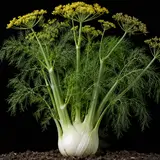
Fennel's root exudates inhibit most vegetables; give it its own corner well away from the gourd patch.
-
Not for the fruit you use this year, but for SEED: ornamental Cucurbita pepo gourds cross freely with pumpkins, zucchini, and acorn/delicata squash - a cross that can make next year's saved-seed squash dangerously bitter. Isolate or hand-pollinate if saving seed.
Varieties · 10
You pick one when you add Gourds & Luffa to your garden. Its days to maturity set your harvest window.
Luffa (Sponge Gourd) 2 varieties
Luffa (Smooth)
Smooth green cylindrical pods 12-24 inches long, drying to yellow-brown.
spongeaegyptiacaedible-youngopen-pollinatedThe classic loofah: smooth cylindrical pods on a rampant vine that, left to mature yellow-brown and dry, peel down to the familiar bath-and-kitchen sponge. The most heat- and season-hungry gourd here - start indoors north of zone 7. Young pods are a fine edible vegetable, but most are grown for the fibrous skeleton inside.
Angled Luffa (Chinese Okra)
Green club-shaped pods with 10 sharp lengthwise ridges, to 16 inches.
spongeacutangulaedible-youngopen-pollinatedThe ridged, angular luffa (also called Chinese okra or ridged gourd) - more widely eaten young than the smooth type, with sharp lengthwise ribs that are peeled off before cooking. Picked small it is a silky stir-fry and curry vegetable across Asia; left to mature it makes a slightly coarser sponge, and it tends to finish a bit faster than smooth luffa.
Hard-Shell (Bottle, Birdhouse, Dipper) 7 varieties
Birdhouse
Round-to-teardrop green fruit 6-12 inches across, drying to hard tan.
lagenariacraftopen-pollinatedThe quintessential craft gourd: round-bodied hard-shells sized and shaped to hollow, drill, and hang as birdhouses for wrens, martins, and swallows. Vigorous white-flowered vines set several fruit that cure over the winter into hard tan shells - the beginner's gourd for turning a fence into a season of craft projects.
Bottle (Calabash)
Green figure-eight bottle shape, drying to smooth tan.
lagenariacraftedible-youngopen-pollinatedThe classic two-lobed bottle or calabash gourd - a narrow waist between a small top and a larger base - used for millennia as canteens, containers, and instruments. Young and tender it is the edible cucuzza of Italian and Asian kitchens; left to mature it cures into the archetypal hard bottle shell.
Dipper
Bulbous base with a long, often curved handle, 12+ inches overall.
lagenariacraftlong-seasonopen-pollinatedA long-necked hard-shell with a round bulb at the base and a slim curved handle - grown for generations into water dippers, ladles, and scoops by simply cutting an opening in the bulb. Grow it up a tall trellis so the necks hang straight and long; grown on the ground the handles curl.
Ornamental (Small Warted & Striped) 1 variety
Ornamental Mix (Small Spoon & Warted)
Assorted small warted and striped gourds in mixed fall colors.
pepodecorativeopen-pollinatedThe classic fall-decoration gourds: a mix of small hard Cucurbita pepo fruit - spoons, eggs, pears, crown-of-thorns, and warted bicolors in yellow, orange, green, and white. Fast and easy, grown exactly like a mini winter squash and cured a week or two for the autumn table. Not for eating.
Grower tips
Notes from growers, tagged with the zone they grow in. A person reads every post before it appears.
Nobody has posted about Gourds & Luffa yet. The first one usually saves someone a season.
Free account. Your post shows your grower name and zone, never your email.