
Add it to your home screen and it opens full screen: no browser bars, one tap away, and everything stays signed in. Free, nothing to download from an app store.
- Tap the Share button in your browser
- Scroll down and choose “Add to Home Screen”
- Open GrowSomeFood from your home screen
- Open your browser’s menu
- Choose “Add to Home screen” or “Install app”
- Open GrowSomeFood from your home screen
Fig
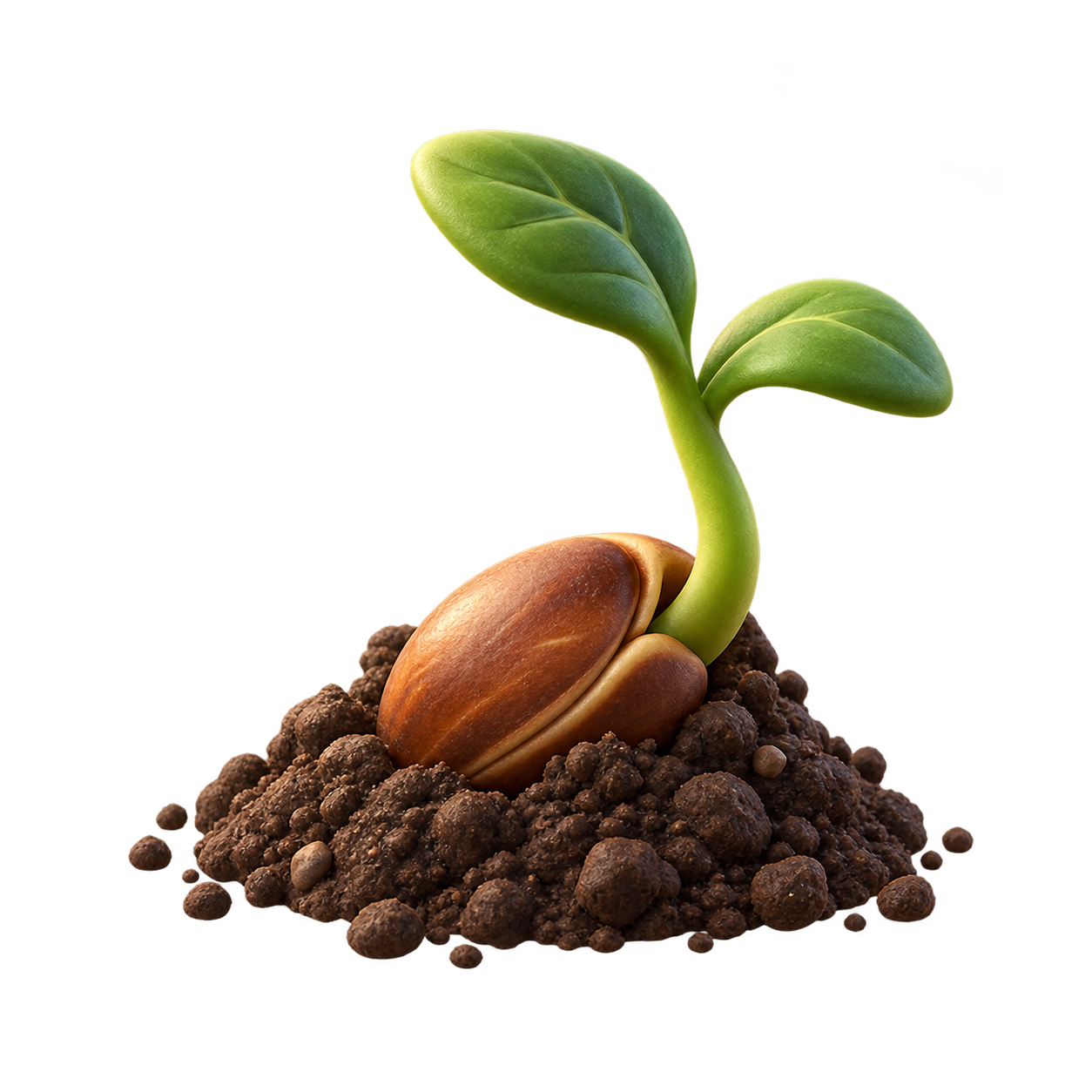
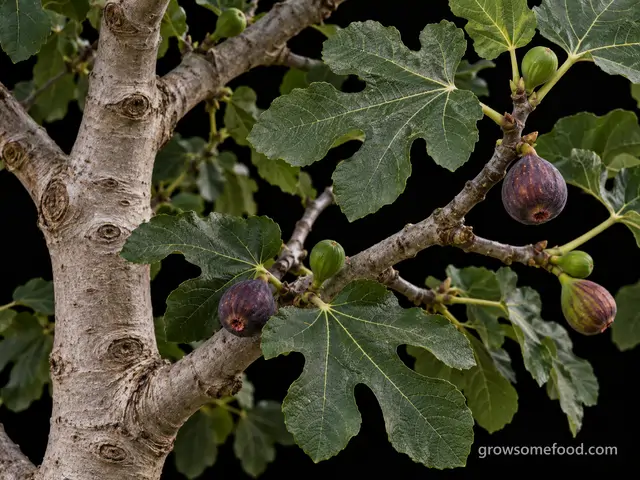
The easiest tree fruit for the warm South and West: no chill requirement, few pests, fruits in a year or two, roots from a stick - just wait for figs to be dead-ripe, because they don't ripen off the tree.
Safety notes The fruit is the food. The milky sap (in stems, leaves, and unripe fruit) irritates skin and can cause a rash that worsens in sunlight - wear gloves or long sleeves when pruning or picking.
Overview
If you're in a warm-enough climate, the fig is the most rewarding, least demanding fruit tree you can grow. It needs no winter chill (unlike apples, peaches, and pears), so it fruits happily in the Deep South and mild West where those crops struggle; it's largely free of the pest-and-spray routine that burdens stone fruit; it bears young, often in the first or second year; and it roots so easily from a cutting that fig trees have been passed hand-to-hand across generations as sticks in a bag.
Quick facts
- Height
- 15 ftRange: 8–30 ft
- Spread
- 15 ftRange: 8–25 ft
- Cold
- Takes light frostdamaged below 15°F
- Heat
- Struggles above 105°F
- Life cycle
- Perennial, lives about 50 years
- Soil
- Well-drained
- Water
- Medium
- Plant spacing
- 12 ftRange: 8–20 ft
When to plant
Fall transplanting is open for 28 more days. Next: spring, Mar 27 to May 10.
- Transplant Oct 1 – Nov 16 Open now · 28 days leftFall planting lets roots establish over a mild winter before spring growth.
- Transplant Mar 27 – May 10 Opens in 159 daysAbout 2 weeks before to 4 weeks after your last frost (Apr 10 here)The heart of Southern fig country. Plant in early spring; fall planting also works. Both breba and main crops possible in mild winters.
Frost here: last around Apr 10 (Mar 27 to Apr 24 most years), first around Oct 25. Zone averages, your own yard may run a week or two either way.
Life stages
Establish, grow, repeat
Getting established and returning each season are different parts of the story.
Stage 1 of 4 · Getting established
First-year establishment
The first year after planting
Care at this stage
-
Water regularly the first season
Figs are shallow-rooted and drought-sensitive when young. Keep the root zone evenly moist the first summer - deep watering builds the roots that later make figs drought-tolerant.
-
Mulch generously to protect shallow roots
A thick mulch ring conserves moisture and insulates the fig's near-surface roots against both heat and winter cold. Keep it off the trunk.
-
Plan winter protection in borderline zones
In zones 6-7, a young fig needs a warm microclimate (south-facing wall) or wrapping in burlap and leaves its first few winters until the wood hardens off.
Months are typical seasonal windows; climate, variety, and plant age can shift them.
Harvest
- Fruit fully soft and squishy to a gentle squeeze
- The neck bends and the fig droops downward on the branch
- Skin has deepened to its ripe color and may split slightly at the eye
- A drop of nectar may bead at the eye (the ostiole)
- Pick only fully soft, drooping, dead-ripe figs · every 2 days
- Net or pick daily to beat birds and beetles
Per plant 30 to 400 figs, 5 to 75 lbPicking pick as they ripen
Cook with figs
Watch out for
4 to know. 1 is high-risk: Root-Knot Nematodes. 1 is active in October.
Root-Knot NematodesSeverity High PestSeason: Apr–SepStunted, yellowing, unthrifty plants that wilt in the heat even though the soil is moist, and poor yields for no obvious reason.
The main soil-borne limit on fig longevity in the sandy Southeast; northern and heavy-soil gardens rarely see it. For figs specifically: there is no genuinely resistant cultivar - Ficus carica is uniformly susceptible - so swapping varieties will not help, and management is entirely cultural (heavy annual mulch and top-dressing to push fresh feeder roots, new or heavier ground, or a large container).
Stunted, yellowing, unthrifty plants that wilt in the heat even though the soil is moist, and poor yields for no obvious reason. Confirm by digging: beady swellings strung along the roots and side rootlets, and root crops that are forked, branched, cracked or knotted rather than clean.
There is no in-season cure. Pull and destroy affected plants rather than composting them, and bring that ground back over several seasons with rotation, resistant varieties and marigold cover crops. Where a crop can be grown in a container of fresh mix, that sidesteps the problem entirely.
Rotate to non-hosts, and grow resistant varieties where they exist for your crop. A French marigold cover crop grown thickly the season before and turned in genuinely lowers populations. Build organic matter and mulch heavily, which feeds the soil life that suppresses them. Plant only clean stock, never move soil from an infested bed around the garden, and solarize badly infested ground through the hottest part of summer.
Microscopic soil roundworms (Meloidogyne species) that invade roots and force them to swell into beady galls. A galled root cannot take up water and nutrients properly, so the plant stunts, yellows, wilts in heat despite watering, and yields poorly, and root and tuber crops come up forked, knobbly, hairy or cracked instead of clean. They are worst in warm, sandy soils and build up steadily wherever a susceptible crop is grown in the same ground year after year. The wounds they leave also open the way for fusarium wilt and rots.
Birds & WildlifeSeverity Medium WildlifenowSeason: Jul–OctFruit disappearing from the outermost, most exposed parts of the plant first, and from the top of a tree where you cannot reach anyway.
Because figs must ripen fully on the tree, they are exposed at their most tempting, and a fig stays perfectly ripe only a day or two. Netting plus daily picking is the answer; some growers slip organza bags over individual prized figs.
Fruit disappearing from the outermost, most exposed parts of the plant first, and from the top of a tree where you cannot reach anyway. Single neat pecks and gouges in ripening fruit, with several fruits sampled rather than one eaten through - the classic sign that it was birds rather than an animal. Heads of grain or seed going visibly lighter and emptier as they ripen, with hulls and chaff scattered underneath. Freshly sown seed vanishing off the surface of a bed before it germinates. Bird traffic in and out of the plant picking up as the crop colors, and birds waiting on nearby wires and branches. Wasps arriving at the pecked and split fruit shortly afterward.
There is no treatment once a crop is being taken - only protection and timing, so the answer is to get netting on and to pick what is ready. Reflective tape, flash ribbon, spinners, and decoy predators do work, but only for a few days at a time: birds habituate fast, so move and rotate them and never rely on them as the main defense for a crop you care about. Cut and gather grain or seed heads a little early, at firm dough, and finish drying them under cover instead of leaving them standing for the flocks. Plant a little extra, or a decoy crop the birds prefer, and accept sharing anything that crops heavily. On a wild or foraged patch, fruit going to birds and small mammals is the point of the plant rather than a problem to solve.
Net, and net early. Bird netting draped over a frame or hoops so it stands off the fruit, with the edges closed at ground level, is the only thing that reliably works at harvest scale - and it has to go on before the crop starts to color, because once birds have found the food they are far harder to displace. Keep fruit trees small enough that netting them is actually feasible; that decision gets made years earlier, at planting. Bags of mesh, organza, or paper slipped over individual heads, clusters, or prize fruit protect a small crop without netting the whole plant. Then shorten the exposure: pick promptly and completely rather than leaving ripe fruit hanging as a lure, clear split and dropped fruit that draws birds and wasps alike, and where a crop can finish off the plant, harvest a little early and ripen or dry it under cover. Rake in or cover broadcast seed so it is not lying in plain view.
Birds find ripening fruit and seed before you do. Robins, waxwings, starlings, catbirds, jays, sparrows, finches, blackbirds, and doves all work a garden, and the pressure arrives in a narrow window - the last days before harvest, when sugar rises, color changes, and the crop softens or the grain hardens. A flock can strip a small planting in a day or two, and birds that only peck rather than take whole fruit still leave wounds that rot or draw wasps. Squirrels, chipmunks, and other wildlife usually turn up on the same crop at the same time. This is competition rather than disease: the birds are not harming the plant, and a big tree or a heavy-cropping bush often has enough for everyone - but on a small planting it can be the difference between a harvest and none.
Fig RustSeverity Medium DiseaseSeason: Jun–SepSmall yellow spots on top of leaves with rusty-brown pustules beneath, spreading in warm humid weather, leading to early leaf drop.
A humid-climate, late-season disease; dry-climate figs rarely see it.
Small yellow spots on top of leaves with rusty-brown pustules beneath, spreading in warm humid weather, leading to early leaf drop.
Usually cosmetic and rarely fatal; a copper or neutral fungicide slows it in bad years, but sanitation and airflow matter most.
Rake up and destroy fallen leaves (the spores overwinter there), space and prune for airflow, avoid overhead watering, and choose resistant varieties (Celeste, LSU types).
The most common fig leaf disease in humid climates: a fungus that produces yellow-to-rust-brown spots and pustules on the undersides of leaves, causing them to yellow and drop prematurely in late summer, weakening the tree over time.
Fig Souring & Fruit BeetlesSeverity Medium DiseaseSeason: Jul–SepRipe figs that smell fermented or vinegary, leak bubbly liquid, or are soft and off inside; beetles and vinegar flies clustered at the eye.
Largely preventable by choosing a closed-eye fig and picking daily; the open-eye varieties are the vulnerable ones in wet climates.
Ripe figs that smell fermented or vinegary, leak bubbly liquid, or are soft and off inside; beetles and vinegar flies clustered at the eye.
No treatment for a soured fig - discard it; the control is variety choice, prompt harvest, and sanitation to keep beetle and fly populations down.
Grow closed-eye varieties (Celeste, Alma, Kadota) in humid or rainy climates, pick promptly as figs ripen, and remove any split, overripe, or fallen fruit that attracts the insects.
In wet weather or on open-eye varieties, yeasts and bacteria enter the fig's eye (often carried by vinegar flies and sap beetles), fermenting the interior into a sour, bubbly, off-smelling mush - and dried-fruit beetles feed on and further spoil ripe fruit.
Good & bad neighbors
Plant nearby
-
French marigolds suppress root-knot nematodes, a genuine fig problem on sandy southern soils - a useful, evidence-backed underplanting.
- Traditional pairings, thin evidence
-
Shares the fig's love of heat and sharp drainage; draws pollinators and beneficials to the area. A tidy, drought-tolerant underplanting.
-
Another heat-and-drainage lover that shares fig conditions and whose flowers feed pollinators; aromatic foliage may deter some pests.
-
A shallow-rooted groundcover under a fig that shares moisture needs; keeps soil shaded and cool over the fig's near-surface roots.
Varieties · 15
You pick one when you add Fig to your garden. Its days to maturity set your harvest window.
Celeste
The 'sugar fig' and the Southern backyard standard: small, sweet, purplish-brown figs on a hardy, dependable tree, with a tightly closed eye that keeps out the rain and insects that cause souring - the best choice for humid climates.
Variety details for Celeste
Small-to-medium, purplish-brown skin with light pink to amber flesh.
closed-eyecold-hardysmall-fruitsweetResists Fig rust (good), Fruit souring (closed eye resists it)
Reliable and productive.
Brown Turkey
The forgiving all-rounder and one of the most widely grown home figs: hardy, adaptable, and productive across a wide range, with medium-to-large sweet figs good fresh, dried, or preserved.
Variety details for Brown Turkey
Medium-to-large, brownish-purple skin with sweet pinkish-amber flesh.
adaptablecold-hardylarge-fruitbeginner-friendlyResists Common fig diseases (good)
An excellent beginner variety.
Chicago Hardy
The cold-climate fig: survives top temperatures around 10°F and comes back from the roots after harder freezes, making figs possible in zones 6 (and even 5 with protection or in pots).
Variety details for Chicago Hardy
Medium, dark purple-brown skin with sweet, pinkish-red flesh.
very-cold-hardyroot-hardycontainer-friendlyResists Cold (top-hardy to ~10°F, root-hardy colder)
Medium dark purple-brown figs with rich strawberry-colored flesh. The reason northern gardeners can grow figs at all.
Black Mission
The famous California fig, brought by Spanish missionaries in the 1700s and named for the missions - deep purple-black skin, rich sweet flavor, and equally good fresh or dried.
Variety details for Black Mission
Medium-to-large, deep purple-black skin with deep pink-red flesh.
classicrich-flavordryingtwo-cropVigorous and productive in warm-winter climates, often bearing both breba and main crops.
Kadota
The classic pale-skinned commercial fig for canning and preserves (the fig in many canned fig products): mild, sweet, light green-to-yellow skin with amber flesh and a nearly closed eye.
Variety details for Kadota
Small-to-medium, light green to yellow skin with amber flesh.
light-skinnedpreservingclosed-eyelate-seasonResists Fruit souring (closed eye resists it)
Needs heat to ripen its late crop well.
LSU Purple
A Louisiana State University fig bred specifically for the heat, humidity, and diseases of the Deep South - vigorous, productive (often two crops), and resistant to the rust and fruit diseases that trouble figs on southern soils.
Variety details for LSU Purple
Medium, dark purple skin with sweet, reddish-pink flesh.
disease-resistanthumid-adaptedproductivetwo-cropResists Fig rust, Humid-climate leaf and fruit diseases (good)
It is not nematode-resistant; no fig cultivar is. Dark purple, sweet reddish-pink flesh.
Grower tips
Notes from growers, tagged with the zone they grow in. A person reads every post before it appears.
Nobody has posted about Fig yet. The first one usually saves someone a season.
Free account. Your post shows your grower name and zone, never your email.