
Add it to your home screen and it opens full screen: no browser bars, one tap away, and everything stays signed in. Free, nothing to download from an app store.
- Tap the Share button in your browser
- Scroll down and choose “Add to Home Screen”
- Open GrowSomeFood from your home screen
- Open your browser’s menu
- Choose “Add to Home screen” or “Install app”
- Open GrowSomeFood from your home screen

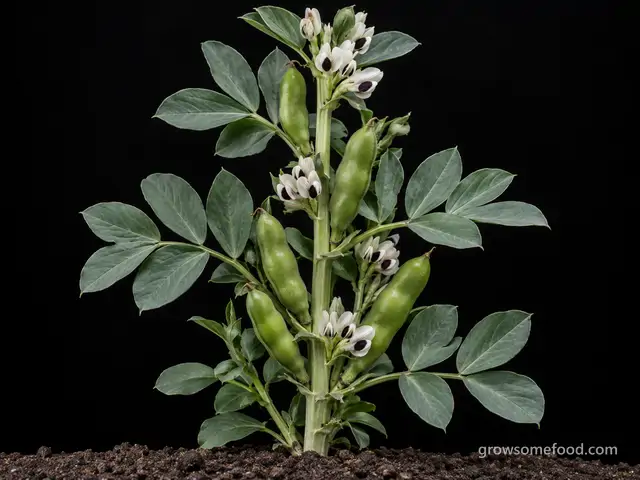
Fava Bean
The cool-season bean that breaks all the bean rules: cold-hardy, planted in fall or earliest spring, and finished before summer heat - plus it feeds the soil with nitrogen.
Safety notes The beans, young pods, tender shoots, and flowers are all edible. IMPORTANT: people with the inherited enzyme deficiency G6PD (favism) can suffer a serious reaction to fava beans and must avoid them - and the flowers and pollen too, since inhaling fava pollen on its own can trigger it. See the Culinary section. For everyone else, eat the beans cooked.
Overview
Fava beans (broad beans) are the odd one out in the bean world. Every other bean is a heat-loving summer crop; the fava is a cold-season legume that thrives in cool, even frosty weather and is ruined by summer heat. It's an ancient Old World crop - unrelated to the New World green beans - grown on stiff, upright, waist-to-shoulder-high plants for its big, buttery seeds, borne in plush-lined pods.
The one thing to knowEvery other bean is a heat-loving summer crop; the fava is a cold-season legume that thrives in cool, even frosty weather and is ruined by summer heat.
Quick facts
- Sprouts in
- 12 daysRange: 7–21 days
- Soil temperature
- 60 °FRange: 40–75 °F
- Height
- 42 inRange: 24–60 in
- Spread
- 12 inRange: 8–18 in
- Support
- Grows better on a trellis or stake
- Cold
- Takes hard frostdamaged below 12°F
- Heat
- Struggles above 80°F
- Life cycle
- Annual
- Save seeds
- About 120 days after plantingRange: 100–140 days
- Soil
- Well-drained
- Water
- Medium
- Plant spacing
- 6 inRange: 4–8 in
When to plant
Fall sowing is open for 27 more days. Next: spring, Feb 27 to Mar 27.
- Direct sow Oct 4 – Nov 15 Open now · 27 days leftAbout 3 weeks before to 3 weeks after your first frost (Oct 25 here)Where winters stay above about 10-15°F, sow in fall for overwintering plants that give the earliest spring harvest; mulch young plants through cold snaps. Growth pauses over winter, so harvest comes in spring - later than the day-count stages suggest.
- Direct sow Feb 27 – Mar 27 Opens in 131 daysAbout 6 weeks before to 2 weeks before your last frost (Apr 10 here)Cold zones: sow as EARLY as the soil is workable, 2-6 weeks before last frost. Favas need cool weather and must finish before summer heat, so the earliest sowing wins.
Frost here: last around Apr 10 (Mar 27 to Apr 24 most years), first around Oct 25. Zone averages, your own yard may run a week or two either way.
Life stages
From the first start to harvest
Follow the growing sequence. Choose a stage to see its care and signs to watch for.
Stage 1 of 6 · The growing sequence
Germination
Day 0 to 12 from sowing
Care at this stage
-
Sow 1-2 inches deep into cool, moist soil
Fava seeds are large - sow 1-2 inches deep and about 4-6 inches apart. They germinate in cool soil (down to ~40°F) but slowly; don't overwater, as cold wet soil can rot the seed.
-
No inoculant needed for most gardens
Favas fix their own nitrogen with soil rhizobia; a pea/vetch-type inoculant helps in soil that has never grown legumes, but most gardens don't need it.
Stages can overlap; weather, variety, and growing conditions change the pace.
Harvest
- Fresh: pods plump and glossy, beans full but still tender
- Dried: pods turned black and papery on the plant
- Pick lowest pods first, then work up the stem
- Pick plump pods young for fresh green beans · every 4 days
- Or leave pods to dry on the plant for dried favas
Per plant 10 to 50 pods, 1 to 4 lbPicking pick as they ripen
Cook with Fava Bean
Watch out for
4 to know. 1 is high-risk: Aphids. None are active in October.
AphidsSeverity High PestSeason: Apr–JunDense clusters of tiny insects packed onto shoot tips, flower buds, and the undersides of young leaves.
On favas the pest is specifically the BLACK BEAN APHID (Aphis fabae), the fava's number-one pest, which swarms the succulent growing tips and flower stalks. Pinching out the tops once the lowest pods set both boosts pod fill and removes the aphids' favorite site - the classic two-birds fava trick.
Dense clusters of tiny insects packed onto shoot tips, flower buds, and the undersides of young leaves. Curled, cupped, or distorted new growth that never opens properly. A sticky shine on the leaves - and on whatever sits under the plant - that later goes black with sooty mold. Tiny white cast skins left behind where a colony has been feeding. Ants running steadily up and down the stems, which is often the first thing you notice. Mottled, streaked, or misshapen leaves that do not grow out can mean a virus the aphids brought with them rather than the feeding itself.
Knock the colonies off with a hard jet of water and repeat every few days - on most plants that alone ends it. Pinch out or prune off the worst-infested tips rather than treating the whole plant. If colonies keep rebuilding, spray insecticidal soap or horticultural oil directly onto the insects, covering leaf undersides, and repeat weekly until they are gone; treat early or late in the day, and never spray a wilted or heat-stressed plant. Avoid broad-spectrum insecticides - they kill the ladybugs, lacewings, and parasitic wasps that were about to solve the problem for you, and aphid numbers usually come back worse afterward. Anything you spray must be labeled for the plant you are treating; follow that label and observe its pre-harvest interval. On anything you eat, wash leaves, heads, and buds well before use, since aphids hide down in crowns, folds, and tight growth.
Go easy on nitrogen: the soft, lush growth that heavy feeding produces is exactly what aphids breed on. Check new growth once a week through spring and early summer so you catch colonies while they are still small, and rub the first few out with your fingers. Leave flowering plants nearby and skip broad-spectrum sprays - ladybugs, lacewings, hoverflies, and parasitic wasps do most of this work for free, and they only stay if there is something for them to eat. Keep ants off the plant where you can, since they protect aphids from those predators. Water steadily so plants are not stressed, and check any new plant over before you bring it home or move it indoors, since aphids usually arrive on something else.
Aphids are small soft-bodied sap-suckers - green, black, gray, pink, or waxy white, and mostly wingless - that gather in dense colonies on the tenderest new growth: shoot tips, buds, and the undersides of young leaves. They breed extremely fast in mild weather, so a few can become hundreds inside a week. Their feeding curls and distorts soft growth, and the sticky honeydew they excrete coats everything below and turns black with sooty mold. Ants often farm and defend the colonies for that honeydew. A few aphids are normal on almost any plant and a healthy plant shrugs them off; only dense, persistent colonies do real damage, and some aphids also spread plant viruses as they feed.
Root RotSeverity Medium DiseaseSeason: Feb, Mar, Apr, Nov, DecWilting in the middle of the day on a plant whose soil is damp - the classic tell, and the reason people water a rotting plant and finish it off.
Cold, soggy soil at sowing and establishment is the whole risk on favas. Sow into well-drained ground, avoid replanting the same wet spot year after year, and rotate.
Wilting in the middle of the day on a plant whose soil is damp - the classic tell, and the reason people water a rotting plant and finish it off. Leaves yellowing from the bottom up, dull off-color foliage, and growth that stalls for no visible reason. Whole shoots, or one side of the plant, collapsing while the rest still looks fine. Soft, dark, or mushy tissue at the base of the stem or at the crown, sometimes with a sour smell. Lift a failing plant and look at the roots: healthy ones are firm and pale, rotted ones are brown or black and slimy, and the outer layer slips off between your fingers leaving a thread of core behind. Seedlings that topple over at soil level are the same problem, called damping-off.
There is no cure for tissue that has already rotted, so act on the conditions rather than looking for a spray. Stop watering at once and fix the drainage - open up compacted soil, or move the plant to a raised, sharply drained position or a container. Lift a badly affected plant, cut away every soft dark root and rotted section with a clean blade back to firm pale tissue, and replant only the healthy parts into fresh free-draining soil or mix. Often the better move is to give up on the plant and save its offspring instead: cuttings, offsets, or divisions taken from firm healthy growth root readily and give you a clean start. Bin the rotted material rather than composting it, and correct the drainage before you replant, because the rot comes straight back in the same wet spot.
Drainage is the whole defense. Match the plant to the site first - something that wants sharp drainage will not survive heavy clay or a low, water-collecting spot however well you tend it. Where the ground is heavy, plant on a raised bed, berm, or slope, or grow in a container. Set plants at the depth they were already growing, since burying the crown or the root flare is a common cause of rot, and keep mulch pulled back a few inches from the stem base instead of piled against it. Water the soil rather than the calendar: check that the top inch or two is dry before watering again, cut back hard in cool weather and winter dormancy, and never leave a pot standing in a full saucer. Do not plant or dig in soggy ground, and go easy on rich amendments for plants that want it lean. Rotate annual crops, and start with clean healthy plants and fresh mix.
Root rot is not one organism but a group of soil fungi and water molds - Pythium, Phytophthora, Fusarium, Rhizoctonia and others - that sit harmlessly in most soils and only turn destructive when the ground stays saturated. Waterlogged soil drives the air out, the roots suffocate, and the weakened tissue is invaded and goes soft, brown, and stringy. Because the damage is underground you usually see it first as something that looks like drought: wilting, yellowing, stunting, a plant that does not respond to being watered. Overwatering, heavy compacted ground, a low spot that collects runoff, a pot with no drainage or a saucer left standing full, and cold wet soil in winter are the usual causes. Once roots have actually rotted there is no cure - this is a problem you prevent rather than treat.
Chocolate Spot (Botrytis fabae)Severity Medium DiseaseSeason: Mar–JunReddish-brown to chocolate-coloured flecks on leaves first, spreading to stems and pods; spots enlarging into sooty blotches, blackened stems, and fuzzy gray mould in prolonged damp, still weather.
Search for this as 'chocolate spot' - it is the fava disease to watch in a cool, wet spring, and the reason airflow and dry foliage matter more here than in a summer bean.
Reddish-brown to chocolate-coloured flecks on leaves first, spreading to stems and pods; spots enlarging into sooty blotches, blackened stems, and fuzzy gray mould in prolonged damp, still weather.
Remove badly affected growth, open the stand up for airflow, and harvest ahead of prolonged wet spells; a labelled fungicide only where pressure is high. Do not compost heavily infected debris.
Space plants and thin dense blocks for airflow, avoid excess nitrogen and soft growth, water at the base rather than overhead, keep the bed weeded, make sure drainage is good, and rotate away from where favas grew.
The signature disease of fava and broad beans, caused mainly by Botrytis fabae: reddish-brown 'chocolate' speckles peppering leaves, stems, and pods, which enlarge and run together into dark blotches in a cool, wet spring. In a bad aggressive phase it blackens whole stems and can collapse a crowded stand.
Bean RustSeverity Medium DiseaseSeason: Apr–JunSmall raised rusty-orange pustules ringed with yellow, mostly on the leaf undersides and usually starting low in the plant where humidity is highest, followed by yellowing, browning and early leaf drop once it takes hold.
On favas rust often shows up as the weather warms near the end of the season, when the crop is winding down anyway, so it frequently costs nothing.
Small raised rusty-orange pustules ringed with yellow, mostly on the leaf undersides and usually starting low in the plant where humidity is highest, followed by yellowing, browning and early leaf drop once it takes hold.
Strip the worst-affected leaves early, starting with the lower ones. Sulfur slows the spread in a wet season; copper is not effective against rust. A late infection often still allows a full harvest, and fungicides are rarely needed in a home garden.
Grow resistant or tolerant varieties where they are offered, space and train for airflow, water at the base so the leaves stay dry, and rotate beans on a two to three year cycle. Remove crop debris after harvest rather than leaving it to carry the fungus over.
A fungal disease (Uromyces) of bean-family plants, producing raised rusty orange-brown pustules on the leaves and sometimes the stems, mostly on the undersides and ringed with yellow. Heavy infection browns and drops the foliage, and losing leaf area during pod fill directly shrinks the crop. It is worst in warm, humid weather and wherever the leaves stay wet.
Good & bad neighbors
Plant nearby
- Traditional pairings, thin evidence
-
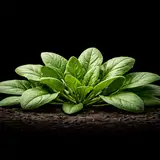
Brassicas benefit from the nitrogen favas add to the soil, and both are cool-season crops - a classic legume-brassica rotation partnership.
-
Old cottage-garden pairing; celery tolerates the light shade of taller favas and shares cool-season, moist conditions.
-
A traditional pairing - the nitrogen favas fix benefits hungry potatoes, and they occupy different space and seasons at the edges.
-
A cool-season leafy crop that grows happily in the partial shade and enriched soil around fava plants.
-
Sometimes interplanted in cool-season beds; favas add nitrogen and light shade with little competition.

Keep apart
-
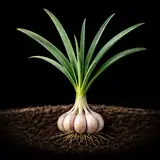
Alliums are widely reported to inhibit legume growth and their nitrogen-fixing bacteria; keep favas out of the garlic bed.
-
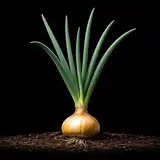
Same allium-legume conflict - onions are said to stunt beans and suppress their root nodulation.
-
Fennel's root exudates inhibit most garden vegetables; give it its own corner.

Varieties · 6
You pick one when you add Fava Bean to your garden. Its days to maturity set your harvest window.
Windsor
The classic large-seeded broad bean and a longtime standard: short-to-medium plants bearing pods of three to four big, flat, buttery beans with rich flavor.
Variety details for Windsor
Fat pods holding 3-4 large, flat, pale-green beans.
heirloomlarge-seededclassicshellingDependable and productive - a great default fava for fresh shelling.
Broad Windsor
A vigorous, tall selection of the Windsor type with the largest beans of the group and heavy yields - the go-to for big, meaty favas.
Variety details for Broad Windsor
Long pods with very large, plump pale-green beans on tall plants.
heirloomlarge-seededtallshellingWants staking and a full cool season; excellent fresh or dried.
Aquadulce
The premier overwintering fava: exceptionally cold-hardy Spanish heirloom (Aquadulce Claudia) bred for fall sowing and the earliest spring harvest.
Variety details for Aquadulce
Very long pods of white-to-pale-green beans on tall, hardy plants.
heirloomcold-hardyoverwinteringlong-poddedLong pods of white-seeded beans on tall, tough plants - the variety for mild-winter fall planting.
Extra Precoce Violetto
An early Italian heirloom ('extra early violet') that matures ahead of most, useful for short cool windows, with beans that carry an attractive purple tint.
Variety details for Extra Precoce Violetto
Medium pods of purple-tinged beans; among the earliest to mature.
heirloomearlypurple-seededitalianFast and flavorful - a good pick where the cool season is brief.
Sweet Lorane
A small-seeded, very cold-hardy fava selected in the Pacific Northwest for both eating and cover-cropping: sweet, nutty small beans on hardy plants that overwinter well and fix plenty of nitrogen.
Variety details for Sweet Lorane
Bushy hardy plants with many small pods of sweet, small beans.
small-seededcover-cropcold-hardysweetThe dual-purpose grower's favorite.
Karmazyn
An unusual variety whose beans have a rosy-pink blush and cook up especially tender and sweet, holding some color.
Variety details for Karmazyn
Pods of pink-blushed beans on medium-tall plants.
pink-seededshellingtenderA pretty, good-flavored change of pace for fresh shelling.
Grower tips
Notes from growers, tagged with the zone they grow in. A person reads every post before it appears.
Nobody has posted about Fava Bean yet. The first one usually saves someone a season.
Free account. Your post shows your grower name and zone, never your email.