
Add it to your home screen and it opens full screen: no browser bars, one tap away, and everything stays signed in. Free, nothing to download from an app store.
- Tap the Share button in your browser
- Scroll down and choose “Add to Home Screen”
- Open GrowSomeFood from your home screen
- Open your browser’s menu
- Choose “Add to Home screen” or “Install app”
- Open GrowSomeFood from your home screen
Blueberry
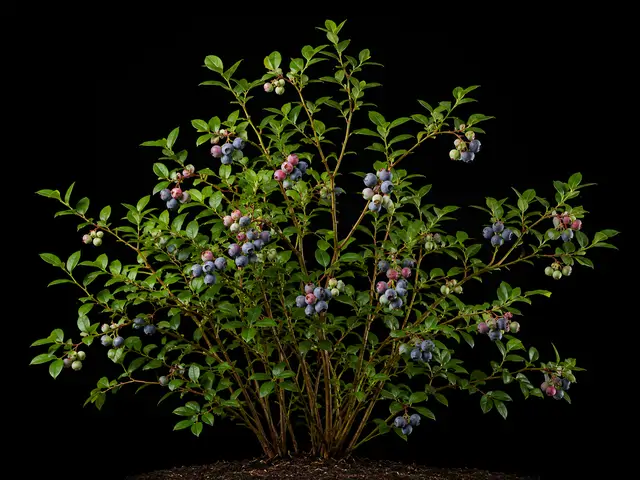
A long-lived, ornamental shrub that pays back a patient start with decades of fruit - if, and only if, you give it acidic soil.
Safety notes Ripe berries are entirely safe. Eat only fully blue, ripe fruit; unripe green and red berries are astringent and unpleasant, not toxic.
Overview
Blueberries are a rare permanent crop for the home garden: plant a bush and, well cared for, it can fruit for 20 to 30 years. They earn their space twice over - heavy crops of antioxidant-rich fruit plus real ornamental value, with white spring bells, glossy summer foliage, and blazing red fall color. One catch governs everything else: blueberries demand strongly acidic soil, and no amount of watering or feeding fixes the wrong pH.
The one thing to knowNorthern highbush (the classic, ~4-6 ft) is the cold-country berry for zones 4-7.
Quick facts
- Winter chill
- 700 hours below 45°FRange: 100–1000 hours
- Height
- 72 inRange: 24–144 in
- Spread
- 48 inRange: 24–72 in
- Cold
- Takes hard frostdamaged below -30°F
- Heat
- Struggles above 95°F
- Life cycle
- Perennial, lives about 30 years
- Soil
- Well-drained
- Water
- Medium
- Plant spacing
- 48 inRange: 30–72 in
When to plant
Nothing is open today. Spring transplanting opens 5 months, Mar 13 to May 1.
- Transplant Mar 13 – May 1 Opens in 145 daysAbout 4 weeks before to 3 weeks after your last frost (Apr 10 here)
- Transplant Aug 26 – Oct 4 Opens in 311 daysAbout 9 weeks before to 3 weeks before your first frost (Oct 25 here)Fall planting lets roots establish before summer heat; give a good winter mulch.
Frost here: last around Apr 10 (Mar 27 to Apr 24 most years), first around Oct 25. Zone averages, your own yard may run a week or two either way.
Life stages
Establish, grow, repeat
Getting established and returning each season are different parts of the story.
Stage 1 of 5 · Getting established
Settling in (planting year)
Day 0 to 120 after transplanting
Care at this stage
-
Confirm and fix soil pH to 4.5-5.5 BEFORE planting
This is the whole game. Test the soil; if pH is above 5.5, amend with elemental sulfur (ideally a season ahead) or plant in a bed of peat, pine bark, and sulfur. The wrong pH is the #1 reason backyard blueberries fail.
-
Strip off all flowers the first year (and often the second)
Pinch every bloom off a newly planted bush so it builds roots and wood instead of fruit. It's painful but it's why year-three crops are heavy.
-
Keep the root zone constantly moist
Blueberries have shallow, fibrous roots with no root hairs and dry out fast. Water so the top few inches never fully dry.
-
Mulch 3-4 inches with pine bark, sawdust, or pine needles
Acidic mulch conserves moisture, feeds the shallow roots as it breaks down, and slowly nudges pH down. Keep it topped up.
Months are typical seasonal windows; climate, variety, and plant age can shift them.
Harvest
- Fully blue with a dusty silver bloom, including under the cluster
- Berry rolls free into your palm with no tug
- Left a few days past first blue for peak sweetness
- Pick a few days AFTER berries turn blue · every 4 days
- Keep the net on and clear dropped fruit · every 4 days
Per plant 3 to 15 lbPicking pick as they ripen
Cook with blueberries
Watch out for
8 to know. 5 are high-risk: Mummy Berry, Blueberry Scorch Virus, Phytophthora Root & Crown Rot, Birds & Wildlife, Spotted Wing Drosophila. None are active in October.
Mummy BerrySeverity High DiseaseSeason: Mar–MaySudden wilting and browning ('shepherd's crook') of new shoots and flower clusters in spring, followed by cream-tan, shriveled, mummified berries at harvest.
Sudden wilting and browning ('shepherd's crook') of new shoots and flower clusters in spring, followed by cream-tan, shriveled, mummified berries at harvest.
Sanitation is primary - remove mummies and re-mulch every winter. Where severe, a dormant-to-bloom fungicide program timed to the spore release helps; no cure exists once berries mummify.
Rake up and destroy fallen mummies, then bury them under 2 inches of fresh mulch in late winter to block the spring spore stage; choose resistant varieties (Duke) and avoid highly susceptible ones (Bluecrop, Blueray, Jersey) where it's a problem.
A blueberry-specific fungal disease (Monilinia vaccinii-corymbosi): spring spores infect new shoots and flowers, then infected berries fill with fungus, turn tan, shrivel into hard 'mummies', and drop to overwinter and start the cycle again.
Blueberry Scorch VirusSeverity High DiseaseSeason: Apr–MaySudden blighting of flowers and young shoots and browned, 'scorched' leaves in spring, resembling frost damage but recurring yearly and spreading bush to bush.
Sudden blighting of flowers and young shoots and browned, 'scorched' leaves in spring, resembling frost damage but recurring yearly and spreading bush to bush.
None - rogue out and destroy infected bushes and manage aphids on the survivors. This is a source-control disease, not a treatable one.
Buy certified virus-free plants, control aphids (the vector), and remove infected bushes quickly to protect the rest of the planting.
An aphid-transmitted virus that blights blossoms and scorches leaves in spring; there is no cure, and infected bushes decline and spread the virus to neighbors over time.
Phytophthora Root & Crown RotSeverity High DiseaseSeason: Apr–SepWilting, yellowing and stunting that does not improve with watering, a thinning canopy of small pale leaves, and dieback from the shoot tips.
Blueberries' fine surface roots are especially vulnerable to soggy ground, and a bush declines over one or more seasons rather than collapsing outright. Raised beds of pine bark and peat are the standard answer, and Patriot and Reka are tolerant varieties for marginal sites.
Wilting, yellowing and stunting that does not improve with watering, a thinning canopy of small pale leaves, and dieback from the shoot tips. Dig and the feeder roots are dark, soft or brittle rather than white and firm, and on many plants the tissue at the base of the stem is discolored under the bark. Worst in low spots, and wherever a downspout, driveway or compacted path drains into the bed.
Very hard to reverse once established. Improve the drainage immediately, cut watering back, and mulch with coarse material rather than fine, which stays sodden. Remove severely affected plants and correct the site before replanting - and do not put another susceptible plant back into the same wet spot. Phosphonate (phosphite) treatments can suppress it in a valuable specimen, but drainage and siting do far more.
Drainage is the whole defense. Plant on a mound, berm or raised bed in heavy soil, and never in a hollow that holds winter water. Redirect roof and hard-surface runoff away from the planting, water deeply but infrequently so the surface dries between waterings, do not pile mulch against stems, and do not overwater in cold weather when the plant is using little. Use resistant rootstocks or tolerant varieties where they exist for the crop, and never move soil from an infected area.
A soil-borne water mold (Phytophthora species) that rots feeder roots and, on many plants, the crown at the soil line whenever the ground stays saturated. Rotted roots cannot take up water, so the plant looks drought-stressed even in wet soil: the canopy thins, leaves go small and pale, growth stalls, and dieback works in from the tips over months or years. It is the commonest cause of death in plants that want moisture but cannot tolerate standing water, and it travels in surface water and on tools, boots and moved soil.
Birds & WildlifeSeverity High WildlifeSeason: Jun–SepFruit disappearing from the outermost, most exposed parts of the plant first, and from the top of a tree where you cannot reach anyway.
The number-one blueberry pest for home growers - a single unnetted bush feeds the whole neighborhood's birds, often faster than you can pick. Net over a frame, closed at ground level, before the berries start to color; reflective tape buys days at best.
Fruit disappearing from the outermost, most exposed parts of the plant first, and from the top of a tree where you cannot reach anyway. Single neat pecks and gouges in ripening fruit, with several fruits sampled rather than one eaten through - the classic sign that it was birds rather than an animal. Heads of grain or seed going visibly lighter and emptier as they ripen, with hulls and chaff scattered underneath. Freshly sown seed vanishing off the surface of a bed before it germinates. Bird traffic in and out of the plant picking up as the crop colors, and birds waiting on nearby wires and branches. Wasps arriving at the pecked and split fruit shortly afterward.
There is no treatment once a crop is being taken - only protection and timing, so the answer is to get netting on and to pick what is ready. Reflective tape, flash ribbon, spinners, and decoy predators do work, but only for a few days at a time: birds habituate fast, so move and rotate them and never rely on them as the main defense for a crop you care about. Cut and gather grain or seed heads a little early, at firm dough, and finish drying them under cover instead of leaving them standing for the flocks. Plant a little extra, or a decoy crop the birds prefer, and accept sharing anything that crops heavily. On a wild or foraged patch, fruit going to birds and small mammals is the point of the plant rather than a problem to solve.
Net, and net early. Bird netting draped over a frame or hoops so it stands off the fruit, with the edges closed at ground level, is the only thing that reliably works at harvest scale - and it has to go on before the crop starts to color, because once birds have found the food they are far harder to displace. Keep fruit trees small enough that netting them is actually feasible; that decision gets made years earlier, at planting. Bags of mesh, organza, or paper slipped over individual heads, clusters, or prize fruit protect a small crop without netting the whole plant. Then shorten the exposure: pick promptly and completely rather than leaving ripe fruit hanging as a lure, clear split and dropped fruit that draws birds and wasps alike, and where a crop can finish off the plant, harvest a little early and ripen or dry it under cover. Rake in or cover broadcast seed so it is not lying in plain view.
Birds find ripening fruit and seed before you do. Robins, waxwings, starlings, catbirds, jays, sparrows, finches, blackbirds, and doves all work a garden, and the pressure arrives in a narrow window - the last days before harvest, when sugar rises, color changes, and the crop softens or the grain hardens. A flock can strip a small planting in a day or two, and birds that only peck rather than take whole fruit still leave wounds that rot or draw wasps. Squirrels, chipmunks, and other wildlife usually turn up on the same crop at the same time. This is competition rather than disease: the birds are not harming the plant, and a big tree or a heavy-cropping bush often has enough for everyone - but on a small planting it can be the difference between a harvest and none.
Spotted Wing DrosophilaSeverity High PestSeason: Jun–SepSoft, sunken, weeping fruit that collapses under light pressure, and tiny egg-laying scars on otherwise perfect ripening berries.
A three to five day harvest interval is the practical target on blueberries, and dropped fruit under the bush is the breeding source that keeps a population going.
Soft, sunken, weeping fruit that collapses under light pressure, and tiny egg-laying scars on otherwise perfect ripening berries. To confirm, crush or float suspect fruit in salt water (1-2 teaspoons per cup) and look for small white maggots floating out. In an apple-cider-vinegar or yeast-sugar trap, the males carry a distinct dark spot at each wingtip.
There is no rescue for infested fruit. Control is relentless sanitation plus trap-based monitoring to time any spray: bag or freeze culls rather than leaving them, never drop them on the ground, and use vinegar or yeast-sugar traps to tell you when the flies have arrived. Well-timed targeted sprays such as spinosad are used where pressure is high - use only a product labeled for the crop you are treating, follow the label exactly, and observe its pre-harvest interval.
Pick short and often - every two or three days through the ripening window - and remove ALL overripe and dropped fruit, because culls left on the plant or the ground breed the next generation. Cool the harvest to about 35°F promptly, which stops larvae developing in fruit you have already picked. Fine mesh under 1 mm excludes the fly where pressure is high.
An invasive vinegar fly (Drosophila suzukii). Unlike ordinary fruit flies, which need damaged or overripe fruit, the female has a saw-edged ovipositor that cuts into sound, intact, ripening fruit to lay her eggs. The larvae feed inside, so the fruit softens, sinks, weeps and collapses just as you were about to pick it. It has become the dominant pest of soft fruit across the country, and the old rule that fruit flies only bother spoiled fruit no longer applies.
Gray Mold (Botrytis)Severity Medium DiseaseSeason: Apr–JunBrowned, collapsed flowers and buds; soft, water-soaked brown patches on leaves, stems or fruit; and a dusty gray-brown fuzz over the dead tissue.
Two hits on blueberry: blighted blossoms in a wet spring, which costs you fruit before you notice, and soft rot on the ripe berry. Prune for an open bush, keep nitrogen moderate, and pick promptly.
Browned, collapsed flowers and buds; soft, water-soaked brown patches on leaves, stems or fruit; and a dusty gray-brown fuzz over the dead tissue. Rot jumping between two pieces of fruit or two petals that touch is the signature, and it often shows up again in the fridge or the storage box days later.
Cut out and destroy infected tissue as soon as it appears, and bag it rather than composting it. Harvest ahead of a prolonged wet spell and store the crop dry and cold. Protective fungicides help through long damp weather, but airflow and sanitation do most of the work.
Space and prune for airflow, water at the base rather than over the top, and go easy on nitrogen, which produces the soft growth it prefers. Clear dead leaves, spent flowers and rotting fruit at every pass, since that debris is where it overwinters. Handle fruit, buds and bulbs gently, because it enters through bruises, and cure and store anything you keep dry and well ventilated.
Botrytis cinerea and its relatives - the fuzzy gray-brown mold of cool, wet, humid weather. It blights flowers and buds, rots ripening fruit, and moves into soft, aging, bruised or frost-damaged tissue through the smallest wound, coating whatever it kills in dusty gray spores. It overwinters on dead plant debris, spreads on air currents and by direct contact between touching tissue, and keeps working after harvest, which is why it also ruins fruit and bulbs in storage.
Japanese BeetlesSeverity Medium PestSeason: Jun–AugClusters of shiny metallic beetles massed together on the upper, sunniest foliage and down inside open blooms, heaviest on warm sunny afternoons from around late June.
Usually cosmetic on established bushes, and the netting you put up for birds also excludes beetles. Hand-picking is very effective on just a few bushes.
Clusters of shiny metallic beetles massed together on the upper, sunniest foliage and down inside open blooms, heaviest on warm sunny afternoons from around late June. Leaves reduced to lace, with the veins left intact and the tissue between them gone - unmistakable, and quite different from the ragged chewing of a caterpillar. Ragged, chewed petals and blooms that never open properly. Beetles that let go and drop straight to the ground when you disturb the plant. Feeding damage on ripening fruit, on the plants they also take fruit from. Whole branches going brown and lacy at the top of a plant while the shaded lower growth stays untouched.
Persistent morning hand-picking into soapy water is the most effective home control there is, and on a vigorous established plant the damage is usually cosmetic and needs nothing else. Neem deters feeding rather than killing, and has to be reapplied. For heavy pressure, spinosad or a targeted insecticide labeled for the plant will work - but time any spray away from bloom and apply it at dusk to protect bees, and observe the pre-harvest interval on anything you eat. On flowering plants, some gardeners simply shear the blooms off for a couple of weeks and let the plant rebloom once the wave has passed, which removes the lure as well as the damage. Young plants and young trees are the ones worth defending: a mature tree or an established vine tolerates several weeks of leaf loss without lasting harm.
Hand-picking is genuinely the main defense in a home garden. Go out in the cool of the morning while the beetles are sluggish, hold a tub of soapy water underneath, and knock them in - they drop when disturbed, so most fall straight into it. Do it daily through the flight: because the beetles call each other in, taking them off early stops a plant becoming a beacon. Do not put pheromone or lure traps anywhere near the garden - they demonstrably pull in far more beetles than they catch. And do not count on lawn grub control: milky spore has performed poorly and inconsistently in field trials across most of the US, and treating your own turf does not reduce the adults feeding on your plants, because they fly in from surrounding properties. Where it is practical, row cover or netting through the peak flight excludes them outright. Otherwise riding out the six-to-eight-week wave is a legitimate strategy, since most established plants absorb the damage.
Japanese beetles are metallic green-and-copper beetles about half an inch long that emerge in early summer and feed for six to eight weeks. They feed in aggregating masses - one beetle's feeding releases a scent that draws in more - so a plant goes from untouched to covered in a couple of days. They chew the soft tissue between the leaf veins and leave the veins standing, so the leaf ends up as a brown lace skeleton, and they shred open flowers and sometimes ripening fruit as well. They work the sunniest upper parts of a plant on warm afternoons. The white C-shaped grubs spend the rest of the year in turf and pasture soil eating grass roots, and the adults then fly in from wherever they hatched, which can be some distance away.
1 more, low risk
AphidsSeverity Low PestSeason: Apr–JunDense clusters of tiny insects packed onto shoot tips, flower buds, and the undersides of young leaves.
Feeding alone rarely damages a blueberry. The reason to keep colonies down is that aphids transmit blueberry scorch and shoestring viruses; remove any virus-infected bush promptly to cut the source.
Dense clusters of tiny insects packed onto shoot tips, flower buds, and the undersides of young leaves. Curled, cupped, or distorted new growth that never opens properly. A sticky shine on the leaves - and on whatever sits under the plant - that later goes black with sooty mold. Tiny white cast skins left behind where a colony has been feeding. Ants running steadily up and down the stems, which is often the first thing you notice. Mottled, streaked, or misshapen leaves that do not grow out can mean a virus the aphids brought with them rather than the feeding itself.
Knock the colonies off with a hard jet of water and repeat every few days - on most plants that alone ends it. Pinch out or prune off the worst-infested tips rather than treating the whole plant. If colonies keep rebuilding, spray insecticidal soap or horticultural oil directly onto the insects, covering leaf undersides, and repeat weekly until they are gone; treat early or late in the day, and never spray a wilted or heat-stressed plant. Avoid broad-spectrum insecticides - they kill the ladybugs, lacewings, and parasitic wasps that were about to solve the problem for you, and aphid numbers usually come back worse afterward. Anything you spray must be labeled for the plant you are treating; follow that label and observe its pre-harvest interval. On anything you eat, wash leaves, heads, and buds well before use, since aphids hide down in crowns, folds, and tight growth.
Go easy on nitrogen: the soft, lush growth that heavy feeding produces is exactly what aphids breed on. Check new growth once a week through spring and early summer so you catch colonies while they are still small, and rub the first few out with your fingers. Leave flowering plants nearby and skip broad-spectrum sprays - ladybugs, lacewings, hoverflies, and parasitic wasps do most of this work for free, and they only stay if there is something for them to eat. Keep ants off the plant where you can, since they protect aphids from those predators. Water steadily so plants are not stressed, and check any new plant over before you bring it home or move it indoors, since aphids usually arrive on something else.
Aphids are small soft-bodied sap-suckers - green, black, gray, pink, or waxy white, and mostly wingless - that gather in dense colonies on the tenderest new growth: shoot tips, buds, and the undersides of young leaves. They breed extremely fast in mild weather, so a few can become hundreds inside a week. Their feeding curls and distorts soft growth, and the sticky honeydew they excrete coats everything below and turns black with sooty mold. Ants often farm and defend the colonies for that honeydew. A few aphids are normal on almost any plant and a healthy plant shrugs them off; only dense, persistent colonies do real damage, and some aphids also spread plant viruses as they feed.
Good & bad neighbors
First rule: keep Black walnut apart. Black walnut roots release juglone, which is toxic to many plants; keep blueberries well outside a walnut's root zone.
Plant nearby
-
Another acid-loving Ericaceae; grouping them lets you build and maintain one acidic bed for all. All parts of rhododendron and azalea are toxic if eaten (grayanotoxins) - keep them clear of where children pick berries.
-
Same acid-soil, moisture, and part-sun preferences - a classic ericaceous-bed pairing that makes soil management for both easier. All parts of rhododendron and azalea are toxic if eaten (grayanotoxins) - keep them clear of where children pick berries.
- Traditional pairings, thin evidence
-
A living mulch that fixes some nitrogen and draws pollinators to bloom; keep it from competing with the shallow roots for water.
-
Both like acidic soil and strawberries make a low ground cover under bushes; keep them from crowding the shallow blueberry roots.
-
A low, unaggressive ground cover that shades the shallow roots; tolerates the somewhat acidic conditions. Mostly a space-use pairing.
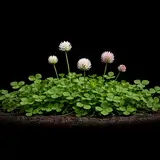
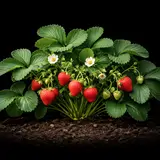
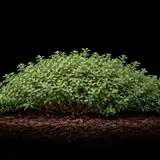
Keep apart
-
Black walnut roots release juglone, which is toxic to many plants; keep blueberries well outside a walnut's root zone.
-
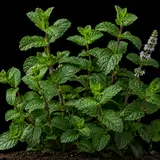
Mint spreads aggressively and prefers less-acidic soil; it will invade the bed and compete with the shallow blueberry roots.
- Traditional pairings, thin evidence
-
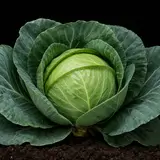
Heavy feeders that prefer neutral-to-alkaline, limed soil - directly at odds with blueberry acidity requirements.
-
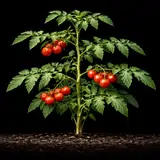
Not a disease conflict so much as a soil mismatch - tomatoes want near-neutral pH and heavier feeding, the opposite of a blueberry bed.
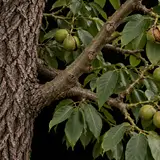
Varieties · 28
You pick one when you add Blueberry to your garden. Its days to maturity set your harvest window.
Northern Highbush 9 varieties
Bluecrop
The world standard northern highbush and the benchmark other varieties are measured against: heavy, dependable yields of large, light-blue, firm berries, wide adaptability, and good drought tolerance.
Variety details for Bluecrop
Medium to large, light-blue, firm berries in loose clusters.
northern-highbushmidseasonhigh-yieldResists Stem Canker
Susceptible to mummy berry, so pair with sanitation. Needs ~800-1,000 chill hours.
Duke
A leading early northern highbush: consistent heavy crops of firm, mild, light-blue berries that store and ship well.
Variety details for Duke
Medium to large, light-blue, very firm berries.
northern-highbushearlyhigh-yieldResists Mummy Berry, Blossom Blight
Its late bloom dodges spring frost while it ripens early - a favorite for reliability. ~800+ chill hours.
Southern Highbush 7 varieties
O'Neal
One of the best-flavored southern highbush and a Southern favorite: large, sweet berries early in the season on a low-chill bush (~400-500 hours).
Variety details for O'Neal
Large, sweet, medium-blue berries.
southern-highbushlow-chillearlygreat-flavorExcellent fresh eating for zones 7-9.
Misty
A very low-chill (~150-300 hours) southern highbush with pretty blue-green foliage and pink-tinged blooms, ripening early in warm-winter zones.
Variety details for Misty
Medium to large, light-blue berries on a colorful bush.
southern-highbushlow-chillearlyornamentalAttractive and productive; often semi-evergreen.
Rabbiteye 5 varieties
Climax
An early rabbiteye that ripens over a short, concentrated window - handy when you want one big pick rather than weeks of dribbling.
Variety details for Climax
Medium, medium-blue berries ripening in a tight early window.
earlyconcentrated-ripeningMedium, medium-blue berries on an upright bush. Needs another rabbiteye blooming with it; Premier and Brightwell are the usual partners. Low-to-moderate chill (~400-500 hours).
Premier
An early rabbiteye and one of the best-flavored for fresh eating, with large, sweet, medium-blue berries on a vigorous bush.
Variety details for Premier
Large, sweet, medium-blue berries.
earlygreat-flavorA dependable Southeast home variety and a good pollen partner for Climax and Brightwell. Low-to-moderate chill (~500-550 hours).
Half-High 7 varieties
Chippewa
A cold-hardy half-high (highbush x lowbush) from Minnesota, 3-4 ft tall and built to survive under snow in the far North.
Variety details for Chippewa
Medium, light-blue, sweet berries on a 3-4 ft bush.
cold-hardycompactSweet, sky-blue berries and a tidy size good for small gardens. Hardy to about -35°F.
Northblue
A compact 20-24 inch half-high for the coldest zones and containers, with sweet, dark, almost wild-tasting berries and good yields for its size.
Variety details for Northblue
Medium, dark-blue, wild-flavored berries on a dwarf bush.
cold-hardycompactcontainer-friendlySurvives brutal winters under snow cover.
Grower tips
Notes from growers, tagged with the zone they grow in. A person reads every post before it appears.
Nobody has posted about Blueberry yet. The first one usually saves someone a season.
Free account. Your post shows your grower name and zone, never your email.