
Add it to your home screen and it opens full screen: no browser bars, one tap away, and everything stays signed in. Free, nothing to download from an app store.
- Tap the Share button in your browser
- Scroll down and choose “Add to Home Screen”
- Open GrowSomeFood from your home screen
- Open your browser’s menu
- Choose “Add to Home screen” or “Install app”
- Open GrowSomeFood from your home screen

Arrowhead
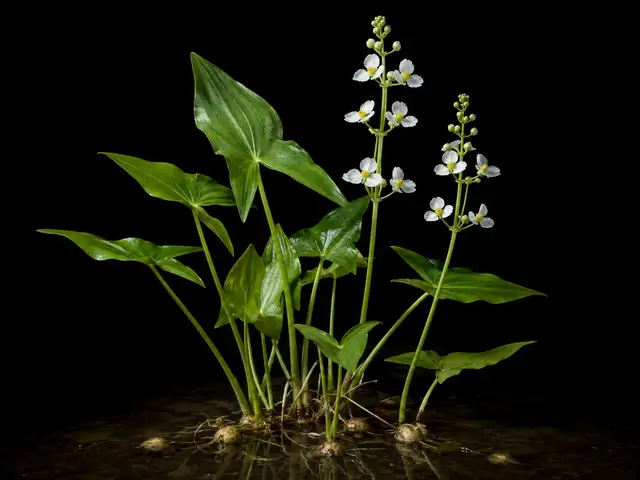
A striking native pond plant with bold arrow-shaped leaves and whorled white flowers - and, hidden in the mud, the starchy 'duck potato' tubers that were a real staple food across Indigenous North America.
Safety notes Arrowhead's underwater tubers ('duck potatoes' or wapato) are a genuine, historically important food - starchy and potato-like once cooked. Eat them COOKED, not raw: raw tubers are acrid and unpleasant, and cooking (boiling or roasting) removes the acridity. Gather only with certain identification and only from clean, unpolluted water, since wetland tubers concentrate whatever is in their mud. Do not confuse young arrowhead with the toxic arrow arum or with iris; positive ID matters.
Overview
Arrowhead (Sagittaria latifolia) is that rare plant that is both a handsome ornamental and a genuine food crop. Above the water it's unmistakable: bold, glossy, arrow-shaped leaves and airy stalks of pure white, three-petaled flowers arranged in tidy whorls of three, standing at a pond edge all summer. Below the water lies its secret - clusters of walnut-sized starchy tubers borne at the ends of underground runners, the famous 'duck potato' or 'wapato.'
The one thing to knowAbove the water it's unmistakable: bold, glossy, arrow-shaped leaves and airy stalks of pure white, three-petaled flowers arranged in tidy whorls of three, standing at a pond edge all summer.
Quick facts
- Height
- 30 inRange: 18–48 in
- Spread
- 18 inRange: 12–24 in
- Cold
- Takes hard frostdamaged below -30°F
- Heat
- Struggles above 95°F
- Life cycle
- Perennial, lives about 10 years
- Save seeds
- About 110 days after plantingRange: 90–140 days
- Self-sows
- Yes, expect volunteers
- Soil
- Tolerates wet soil
- Water
- High
- Plant spacing
- 18 inRange: 12–24 in
When to plant
Nothing is open today. Spring planting opens 6 months, Apr 10 to Jun 9.
- Plant tubers Apr 10 – Jun 9 Opens in 172 daysAbout at to 9 weeks after your last frost (Apr 10 here)Press dormant tubers into warm pond-edge mud under a few inches of water after last frost; they sprout quickly and build a colony and a crop of new tubers over the first season.
- Transplant Apr 10 – Jun 9 Opens in 172 daysAbout at to 9 weeks after your last frost (Apr 10 here)Set out potted plants or divisions after last frost into shallow water or saturated mud in full to part sun; they establish fast in the growing season.
Frost here: last around Apr 10 (Mar 27 to Apr 24 most years), first around Oct 25. Zone averages, your own yard may run a week or two either way.
Life stages
Establish, grow, repeat
Getting established and returning each season are different parts of the story.
Stage 1 of 5 · Getting established
Year 1 - rooting into the mud
Day 0 to 60 after transplanting
Care at this stage
-
Plant in mud under shallow water
Arrowhead is an emergent aquatic: press a tuber or start into pond-edge muck with the crown at or just below the waterline, in up to several inches of standing water. Keep it flooded or saturated at all times - it will not grow in soil that dries out.
-
Shield new tubers from waterfowl
Ducks and muskrats dig arrowhead tubers eagerly (hence 'duck potato'), and will grub up newly planted starts. Use planting baskets, weight the pots, and net or cage young plants until the colony is established.
Months are typical seasonal windows; climate, variety, and plant age can shift them.
Harvest
- Tops yellowed and collapsed in late fall - tubers are mature and starchy in the mud
- Walnut-sized tubers float up when the mud around the plant is stirred or trodden
- Best after the first frosts, when the plant has moved its energy into the tubers
- Grub tubers from the mud after the tops die back · every 10 days
- Leave plenty of tubers to regrow the colony
Per plant 10 to 60 tubers, 8 to 64 ozPicking pick as they ripen
Cook with tubers
Watch out for
4 to know. 2 are high-risk: Muskrat, Water-Level Loss (Drying Out). 2 are active in October.
MuskratSeverity High WildlifenowSeason: Sep–MarGrubbed, torn-up mud around the plants, cut stems and missing leaves, floating uprooted growth, and muskrat runs, feeding platforms, and lodges around the pond.
Muskrats are the commonest reason a first-year arrowhead planting simply disappears over winter. Cage or basket the crowns for that first season; a mature patch generally feeds them and still crops for you.
Grubbed, torn-up mud around the plants, cut stems and missing leaves, floating uprooted growth, and muskrat runs, feeding platforms, and lodges around the pond.
Re-anchor and cage disturbed plantings. A large established stand usually outgrows the grazing; a small new one may need exclusion until it fills in.
Let a stand establish strongly before muskrats find it; protect new plantings with weighted baskets, wire cages, or netting over the root zone, and plant enough that a share can be lost.
Muskrats live on emergent aquatic plants, and arrowhead is near the top of their list: they grub through pond-edge mud for the starchy tubers - the same 'duck potato' you are growing - and cut leaves and stems to build their lodges and feeding platforms. A resident family can strip a small stand over one autumn and winter, and will dig out a newly planted colony before it takes hold.
Water-Level Loss (Drying Out)Severity High DisorderSeason: Jun–SepWilting and browning leaves, collapsed flower spikes, and rapid decline when the water recedes or the mud dries.
Wilting and browning leaves, collapsed flower spikes, and rapid decline when the water recedes or the mud dries.
Restore the water level promptly; the plant recovers from mild drying but a prolonged drought kills it and ruins the tuber crop.
Site it in reliably standing water or saturated mud, keep the pond or container topped up through summer, and don't grow it in soil that dries between waterings.
Not a pest but pickerelweed's chief threat: as an emergent aquatic it wilts, browns, and collapses if the mud dries or the water level drops below its roots in a drought or a leaky pool.
Waterfowl GrazingSeverity Medium WildlifenowSeason: Apr, May, Jun, Oct, NovGrazed or shredded new leaves, plants floating loose, and uprooted starts along the shallow margin in spring.
Grazed or shredded new leaves, plants floating loose, and uprooted starts along the shallow margin in spring.
Replant and re-anchor uprooted starts; established colonies easily feed the waterfowl and still crop, so protection is mainly a first-season need.
Anchor new plants in planting baskets or weighted pots, tuck them firmly into the mud, and protect starts with netting or a temporary cage until they root.
Ducks and geese graze tender new shoots and tug at newly planted starts, and can uproot young plants before their rhizomes take hold in a pond.
AphidsSeverity Low PestSeason: May–JulDense clusters of tiny insects packed onto shoot tips, flower buds, and the undersides of young leaves.
Grown in or beside water, so skip sprays entirely - insecticidal soap and horticultural oil harm fish and pond insects. A jet of water is enough, and the predators a pond attracts usually catch up on their own.
Dense clusters of tiny insects packed onto shoot tips, flower buds, and the undersides of young leaves. Curled, cupped, or distorted new growth that never opens properly. A sticky shine on the leaves - and on whatever sits under the plant - that later goes black with sooty mold. Tiny white cast skins left behind where a colony has been feeding. Ants running steadily up and down the stems, which is often the first thing you notice. Mottled, streaked, or misshapen leaves that do not grow out can mean a virus the aphids brought with them rather than the feeding itself.
Knock the colonies off with a hard jet of water and repeat every few days - on most plants that alone ends it. Pinch out or prune off the worst-infested tips rather than treating the whole plant. If colonies keep rebuilding, spray insecticidal soap or horticultural oil directly onto the insects, covering leaf undersides, and repeat weekly until they are gone; treat early or late in the day, and never spray a wilted or heat-stressed plant. Avoid broad-spectrum insecticides - they kill the ladybugs, lacewings, and parasitic wasps that were about to solve the problem for you, and aphid numbers usually come back worse afterward. Anything you spray must be labeled for the plant you are treating; follow that label and observe its pre-harvest interval. On anything you eat, wash leaves, heads, and buds well before use, since aphids hide down in crowns, folds, and tight growth.
Go easy on nitrogen: the soft, lush growth that heavy feeding produces is exactly what aphids breed on. Check new growth once a week through spring and early summer so you catch colonies while they are still small, and rub the first few out with your fingers. Leave flowering plants nearby and skip broad-spectrum sprays - ladybugs, lacewings, hoverflies, and parasitic wasps do most of this work for free, and they only stay if there is something for them to eat. Keep ants off the plant where you can, since they protect aphids from those predators. Water steadily so plants are not stressed, and check any new plant over before you bring it home or move it indoors, since aphids usually arrive on something else.
Aphids are small soft-bodied sap-suckers - green, black, gray, pink, or waxy white, and mostly wingless - that gather in dense colonies on the tenderest new growth: shoot tips, buds, and the undersides of young leaves. They breed extremely fast in mild weather, so a few can become hundreds inside a week. Their feeding curls and distorts soft growth, and the sticky honeydew they excrete coats everything below and turns black with sooty mold. Ants often farm and defend the colonies for that honeydew. A few aphids are normal on almost any plant and a healthy plant shrugs them off; only dense, persistent colonies do real damage, and some aphids also spread plant viruses as they feed.
Good & bad neighbors
Plant nearby
-
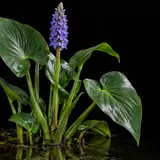
A classic shallow-water pairing: pickerelweed's blue spikes and heart-shaped leaves beside arrowhead's white flowers and arrow-shaped leaves, both emergent natives feeding pollinators and waterfowl at the pond edge.
-
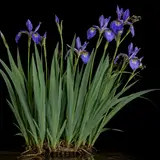
A native pond-margin iris for the same shallow water, adding early-summer blue and sword foliage - but note the contrast: the iris rhizome is toxic while arrowhead's tubers are the edible ones.
-
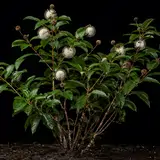
A wet-site native shrub that gives height and pollinator power behind a stand of arrowhead in the shallows.
- Traditional pairings, thin evidence
-
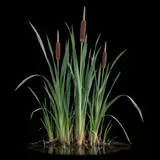
A natural marsh associate and fellow edible, but a vigorous rhizome spreader - keep cattail contained so it doesn't overrun the arrowhead patch it grows beside in the wild.
-
Softstem BulrushA native emergent that shares arrowhead's shallow water and adds vertical texture and wildlife cover to a naturalistic pond planting.
Varieties · 3
You pick one when you add Arrowhead to your garden. Its days to maturity set your harvest window.
Broadleaf Arrowhead (Sagittaria latifolia)
The wild species and the true 'duck potato': bold arrow-shaped leaves, whorled white flowers, and clusters of walnut-sized starchy tubers in the mud.
Variety details for Broadleaf Arrowhead (Sagittaria latifolia)
Glossy arrow-shaped leaves and airy stalks of three-petaled white flowers over shallow water.
speciesnativeedible-tuberemergent-aquaticThe classic edible and ornamental native for pond edges and rain gardens across most of the continent.
Wapato / Selected Food Strains
Local wild strains of the native Sagittaria latifolia long favored for their larger, more abundant tubers, still grown and foraged for food (the Pacific Northwest 'wapato' among them).
Variety details for Wapato / Selected Food Strains
Vigorous plants with heavier tuber production in rich mud.
nativelarge-tubertraditional-foodedible-tuberGrown for the pot as much as for looks; choose vigorous local stock where available - and confirm it is S. latifolia, not the Eurasian S. sagittifolia, which is sold under the same names and is a federally listed noxious weed that may not be imported or moved across state lines.
Grassy Arrowhead (Sagittaria graminea)
A related native arrowhead with narrow, grass-like leaves instead of arrowheads, for a finer-textured look in shallow water.
Variety details for Grassy Arrowhead (Sagittaria graminea)
Slender grass-like leaves with small white three-petaled flowers.
speciesnativenarrow-leafemergent-aquaticSmaller tubers and more of a wildlife-and-ornamental plant than a food crop.
Grower tips
Notes from growers, tagged with the zone they grow in. A person reads every post before it appears.
Nobody has posted about Arrowhead yet. The first one usually saves someone a season.
Free account. Your post shows your grower name and zone, never your email.