Add it to your home screen and it opens full screen — no browser bars, one tap away, and everything stays signed in. Free, nothing to download from an app store.
- Tap the Share button in your browser
- Scroll down and choose “Add to Home Screen”
- Open GrowSomeFood from your home screen
- Open your browser’s menu
- Choose “Add to Home screen” or “Install app”
- Open GrowSomeFood from your home screen
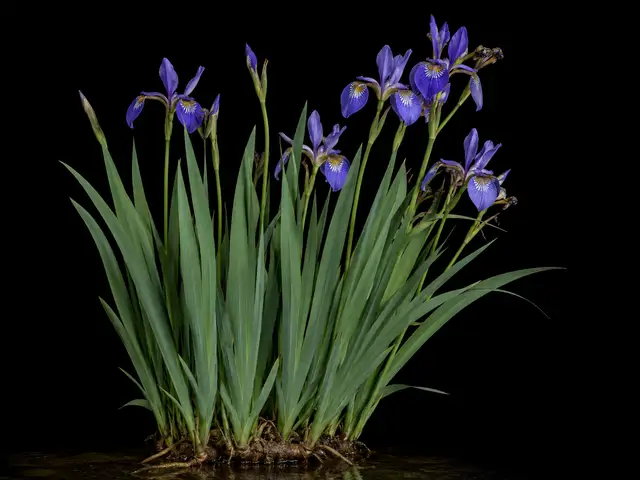
Blue Flag Iris
IMPORTANT: blue flag iris is TOXIC and must never be eaten. Its rhizome and roots contain irritant compounds (iridin) that cause severe nausea, vomiting, and diarrhea, and the sap can irritate skin - wear gloves when dividing. This matters at the water's edge, where its strap leaves resemble the EDIBLE cattail before either blooms: never harvest 'cattail' shoots or roots unless the plant is confirmed as cattail. Also toxic to pets and livestock.
Overview
The native blue iris of the water's edge: elegant violet-blue flowers with gold-veined falls above sword foliage, standing in the wet soil and pond shallows where garden bearded irises would rot - beautiful, tough, and pollinator-friendly.
Blue flag iris (Iris virginica in the South, Iris versicolor in the North) is North America's native water iris - the wild counterpart to the familiar bearded garden iris, but adapted to exactly the opposite conditions. Where bearded irises demand dry, sharp-drained soil, blue flag stands in constantly wet ground and the shallow margins of ponds, sending up elegant violet-blue to blue-purple flowers, their downward falls veined and splashed with gold and white, above bold sword-shaped leaves in late spring.
It's a superb native for a pond edge, rain garden, stream bank, or wet meadow, spreading gently by rhizomes into a widening clump (far less aggressively than cattail), stabilizing the shoreline and drawing bumblebees to its flowers. One caution defines it: every part is toxic, and its strap leaves look much like the edible cattail's before either blooms - so it's grown strictly for beauty, and foragers must be certain of their identification at the water's edge. As an ornamental for wet ground, blue flag iris is hard to beat.
At a glance
- Sun
- Full sun · Part sun
- Water
- High
- Spacing
- 12–24 in (typ. 18)
- Mature height
- 24–40 in (typ. 30)
- Start by
- Transplant · Division
- Frost
- Hardy
When to plant
Zone 7a typical frost: last Apr 10 · first Oct 25
Life stages
- Year 1 - rhizome rooting in day 0–60 from transplant
-
Plant in wet soil or shallow waterevery 4 dUnlike bearded garden iris, blue flag is a WATER iris: set the rhizome into constantly wet soil or the shallow margin of a pond, with the crown at or just below the waterline. Keep it saturated - it thrives standing in a few inches of water and won't tolerate dry ground.
-
Wear gloves and site it onceThe sap can irritate skin, so wear gloves when handling the rhizomes. Choose a permanent wet spot - blue flag settles in and forms a slowly expanding clump, and it doesn't need frequent moving.
Drying out (fatal - it needs constant wet)Skin irritation from the sap (wear gloves) -
Plant in wet soil or shallow waterevery 4 d
- Spring growth Mar, Apr, May (yearly)
-
Keep it standing in wet groundBlue flag pushes up its sword-shaped leaves in early spring; keep the soil saturated or the crown in shallow water. It's ideal for pond edges, rain gardens, and wet meadows where the ground stays wet through spring.
-
Let the clump slowly widen, divide when crowdedIt spreads gently by rhizomes into a widening clump - far less aggressive than cattail. Divide crowded clumps every few years (in late summer after bloom) to renew vigor and make more plants.
Sword leaves resembling cattail (ID carefully - iris is TOXIC)Iris borer tunneling into leaves and rhizomes -
Keep it standing in wet ground
- Late-spring to early-summer bloom May, Jun, Jul (yearly)
-
Enjoy the blue flag flowersThe show: elegant violet-blue to blue-purple iris flowers with gold-and-white veined falls, held above the sword foliage in late spring and early summer. Bumblebees and other long-tongued bees are the main pollinators, pushing in for nectar.
-
Deadhead or leave the seed podsSnip spent flowers for tidiness, or leave the fat green seed pods to ripen - they split to drop seed that self-sows a wet margin and floats to new spots. Leaving a few pods is fine; the clump also spreads by rhizome.
Bumblebees working the blue flowersSeed pods forming and ripening -
Enjoy the blue flag flowers
- Fall & winter Jan, Feb, Sep, Oct, Nov, Dec (yearly)
-
Let it die back in the wet groundThe foliage yellows and dies back after frost; blue flag is fully hardy in the wet soil and overwinters in its rhizomes with no protection needed. In a shallow container water garden, sink the pot below the ice line.
-
Clean up dead foliage and check for borerCut and remove the dead leaves in late fall or late winter - this also removes iris borer eggs laid on old foliage, the single best way to break that pest's cycle. Keep the clump clear before spring growth.
Iris borer eggs on old leaves (remove the foliage to break the cycle)Rhizomes freezing solid in a shallow container (sink it deeper) -
Let it die back in the wet ground
Watch out for
Iris Borer Pest MediumMay, Jun, Jul, Aug
The signature iris pest: the caterpillar of a night-flying moth. Eggs overwinter on old iris foliage; larvae hatch in spring, tunnel down through the leaf fans, and bore into the rhizome, hollowing it out. The wounds they leave open the door to devastating bacterial soft rot - borer and rot together are the classic clump-killer.
Watch for: Ragged, water-soaked notches and pinholes on the leaf fans, sawdust-like frass, slime, and streaking; fat pinkish caterpillars inside; and hollowed, mushy, foul-smelling rhizomes when you dig.
Prevent: Cut down and DESTROY all old iris foliage in late fall and early spring to kill overwintering eggs - the single most effective control; keep the bed clean; inspect and squash larvae in the fans early.
Treat: Squash larvae by pinching infested leaves early in the season; dig, cut out, and destroy borer-tunneled and rotted rhizomes (do not replant them). Systemic or spinosad treatments help under heavy pressure - time them to egg hatch in spring.
Bacterial Soft Rot Disease MediumMay, Jun, Jul, Aug
A smelly bacterial rot that turns rhizomes soft and mushy, often entering through iris borer wounds or in stagnant, oxygen-poor conditions, and can spread through a clump.
Watch for: Soft, slimy, foul-smelling rhizomes, collapsing leaf fans, and rot spreading from borer damage.
Prevent: Control iris borer (its main entry point), avoid stagnant water, and divide crowded clumps to keep them vigorous; plant in flowing or refreshed water where possible.
Treat: Cut away all rotted tissue back to firm, clean rhizome, let cut surfaces dry, and replant healthy divisions; discard badly affected rhizomes.
Drought Stress Disorder MediumJun, Jul, Aug
Witch hazel is a moisture-loving woodland shrub and suffers leaf scorch and stress in dry soil or hot, exposed sites, since it prefers steady moisture.
Watch for: Scorched, browning leaf edges and wilting in dry soil or hot, dry, exposed spots, especially on young plants.
Prevent: Site in moist, humusy soil out of harsh dry exposure, mulch well, and water through dry spells.
Treat: Water thoroughly and mulch; the plant recovers with steady moisture and benefits from a cooler, moister site.
Good & bad neighbors
Varieties · 3
A robust, tall selection of southern blue flag with large clear-blue flowers and a vigorous habit, standing well above the foliage - a showier garden form for pond edges and wet borders with the same wet-soil toughness.
The northern native blue flag, extremely cold-hardy and the provincial flower of Quebec, with blue-purple flowers variably veined in white and yellow. The classic water iris for northern marshes, pond edges, and rain gardens.
The southern native blue flag: violet-blue flowers with gold-and-white veined falls above sword foliage, thriving in the wet soil and pond margins of the Southeast and central states. The standard native water iris for warm-region rain gardens and pond edges.
Grow
A water iris for full to part sun: plant the rhizome in constantly wet soil or shallow pond margin - the wetter the better - and never let it dry out. Site it once and let the clump slowly widen.
Blue flag iris is a wetland plant, and that is the whole secret to growing it. Give it full sun (or part sun) and constantly wet to saturated soil, or plant it right in the shallow margin of a pond with its crown at or just below the waterline in a few inches of water - it thrives standing in water and is ideal for a pond edge, rain garden, bog, stream bank, or wet meadow. It grows in ordinary moist garden soil too, but only if it's kept reliably damp; it will not tolerate the dry, sharp drainage that bearded irises need.
Plant the rhizome shallowly in wet ground (or a submerged planting basket), wearing gloves against the irritant sap, and site it in a permanent spot - it settles in and forms a slowly widening clump. It spreads far more gently than cattail, so it's easy to place at a pond edge without fear of takeover. Once established, it's tough, hardy, and long-lived, asking only that the ground stay wet.
Care
Low-care in wet ground: keep it wet, divide crowded clumps in late summer, and cut back old foliage in fall to remove iris borer eggs - the one pest worth managing.
In constantly wet ground, blue flag iris needs little. Keep the soil saturated or the crown in shallow water - it flags if it dries - and it needs no fertilizer in decent wet soil. It forms a slowly widening clump rather than running, so there's minimal spread to manage; divide crowded clumps every few years in late summer (after bloom) to renew vigor and make more plants, wearing gloves for the sap.
The one pest worth attention is the iris borer, a moth caterpillar that tunnels down leaves into the rhizome and can invite rot. The best defense is simple sanitation: cut and remove the old foliage in fall or late winter, which destroys the borer's overwintering eggs laid on the leaves, breaking the cycle. Beyond that, deadhead spent flowers for tidiness or leave a few seed pods to self-sow, cut back the dead foliage each dormant season, and sink shallow container plantings below the ice line for winter.
Harvest
Not a harvest plant - it's toxic and grown for its flowers. It makes a good cut iris, but the critical point is safety: never confuse its toxic rhizome or leaves with the edible cattail beside it.
Blue flag iris isn't a harvest crop - it's toxic in every part and grown purely for its flowers and its value at the water's edge. The blooms make a fine, elegant cut iris for a vase, and it's worth a few stems, but the plant's real 'yield' is its beauty and the bumblebees it feeds, so most of the bloom is best left standing.
The genuinely important harvest note is a safety warning, not a how-to. Blue flag grows in the same wet margins as the edible cattail, and before either plant blooms their sword-shaped leaves look very similar - but where cattail's shoots and rhizome are food, blue flag's rhizome is toxic and will cause severe nausea, vomiting, and diarrhea. So the rule for anyone foraging at the water's edge is absolute: never harvest 'cattail' shoots, leaves, or roots unless the plant is confirmed as cattail (the old brown cattail spikes are the giveaway), because a mistaken blue flag rhizome is a real poisoning risk.
Storage
Nothing to store as food (it's toxic); collect the floating seed for sowing if you like, though division is far easier. The clump persists for years on hardy rhizomes at the water's edge.
There's nothing to store as food - blue flag iris is toxic. If you want to grow it from seed, collect it from the fat pods as they ripen and split; the seed is corky and floats (its natural way of spreading along water), and it germinates best after a cold, moist period, so fall-sow it into wet soil or cold-stratify it before spring sowing. Seed is slower than division and named forms won't come true from it.
As a hardy, long-lived perennial, blue flag stores itself at the water's edge on its rhizomes, which are fully cold-hardy in the wet ground (sink shallow container plantings below the ice line), and it returns and slowly widens each year while self-sowing modestly from its floating seed. So a planting persists and gently expands on its own, and the practical way to keep or multiply it is to lift and divide the rhizome clump in late summer.
Propagation & seed saving
Easiest by division of the rhizome in late summer after bloom (the standard method); also from cold-stratified, water-dispersed seed. It self-sows modestly along a wet margin.
Division is the standard, reliable way to propagate blue flag iris. In late summer, several weeks after flowering, lift the rhizome clump, cut it into sections each with a fan of leaves and healthy roots (trim the leaves back to reduce stress and discard any borer-damaged or rotted rhizome), and replant into wet soil - divisions establish quickly and keep named forms true. This is also how you renew a crowded, less-floriferous clump.
From seed, collect the corky floating seed from the ripe pods and give it a cold, moist stratification - fall-sow it into wet soil or chill it before spring sowing - though seedlings are slower to reach blooming size than divisions and vary in color. Blue flag also self-sows modestly, its buoyant seed floating to colonize new spots along a wet margin. Between easy division and gentle self-sowing, it's a straightforward native to increase.
Nutrition
Not a food plant - it's toxic - but an ecologically valuable wet-edge native: a bumblebee-pollinated flower and a shoreline-stabilizing, habitat-forming plant for ponds and rain gardens.
Blue flag iris is not eaten - it's toxic, its rhizomes containing irritant compounds that cause severe digestive upset - so it has no nutritional role and, unlike the cattail it grows beside, no wild-food use at all. Its value is ecological and ornamental.
At the water's edge it does real ecological work. Its flowers are pollinated mainly by bumblebees and other long-tongued bees, which push into the blooms for nectar, and it offers early-summer forage in wet habitats. Below the surface, its spreading rhizomes and roots stabilize shorelines and stream banks and help filter runoff, so it's widely used in rain gardens, pond plantings, and shoreline restoration for erosion control and water quality. Its clumps also provide cover for amphibians and other wetland wildlife. Blue flag feeds pollinators and holds the bank together - contributing habitat and stability to a wet place rather than food to a table.
Medicine
Blue flag root (Iris versicolor) was a nineteenth-century medicine - an official drug used by eclectic physicians as a strong alterative, cholagogue, and purgative for the liver, skin, and glands. But the rhizome is toxic (irisin/iridin), causing violent vomiting and purging, and it is easily confused with edible cattail. Strictly historical - never self-use. Educational, not medical advice.
Blue flag has a substantial documented place in American medicine. The dried rhizome of Iris versicolor (the northern blue flag) was 'blue flag root,' an official drug listed in the United States Pharmacopoeia in the nineteenth century and a favorite of the eclectic physicians. It was used as a powerful alterative ('blood purifier'), a cholagogue to stimulate the liver and bile, and a strong purgative and diuretic, prescribed for skin diseases, swollen glands, liver and thyroid complaints, and constipation. Indigenous peoples of the eastern wetlands likewise used the root medicinally — cautiously and often externally — and in ceremony, treating it with the respect a potent, poisonous plant demands.
That potency is exactly the danger. The rhizome contains irisin (iridin) and irritant resins that cause burning, violent vomiting, and purging, and it is toxic to people, pets, and livestock; historical doses sat close to the toxic threshold. There is an added hazard specific to blue flag: at the water's edge its strap leaves and rhizome closely resemble the edible cattail, and a foraging mix-up is a real poisoning risk. This is a historical and educational account, not a recommendation — blue flag should never be self-administered as medicine. Grow it for its flowers and its bumblebees, and keep its toxic rhizome well clear of the kitchen. Not medical advice.
History
A traditional Indigenous medicine and ceremonial plant of the eastern wetlands (the toxic root used cautiously), the emblem-flower behind the fleur-de-lis, and Tennessee's state cultivated flower; now a favorite native water iris.
Blue flag iris has a rich cultural history despite - or because of - its toxicity. Indigenous peoples of eastern North America used the rhizome medicinally, cautiously and externally or as a controlled purgative, and in ceremony, treating it with the respect a poisonous plant demands; its potency made it a serious medicine, not a casual one. Wild irises like it also stand behind the famous fleur-de-lis, the stylized iris that became a heraldic and royal emblem in Europe, and the very word 'flag' in its name is an old term for such waterside irises.
In North America the blue flag is a beloved wild flower of ponds, marshes, and wet meadows, and Iris versicolor is the provincial flower of Quebec, while the cultivated iris is a state flower of Tennessee. Long admired in the wild, it has become a mainstay of the native-plant and water-garden movements: prized as a tough, elegant, region-appropriate iris for wet ground, it's now widely planted in rain gardens, pond edges, and restoration projects across its range.
Troubleshooting
Most trouble is dryness (it needs wet ground) or the iris borer (remove old foliage to break the cycle); the biggest risk isn't to the plant but to foragers who confuse its toxic leaves with edible cattail.
Weak, browning, struggling plants: too dry - blue flag is a water iris and needs constantly wet soil or a shallow pond margin; move it somewhere wetter or keep the ground saturated. Leaves streaked, then rhizome rotting: iris borer - the caterpillar tunnels down leaves into the rhizome and lets rot in; cut and remove old foliage in fall to destroy its eggs, and cut out and destroy any borer-riddled or soft, smelly rhizome. Few flowers: too much shade, too dry, or an old crowded clump - give it sun and wet ground and divide it in late summer. Soft, mushy, foul-smelling rhizome: bacterial soft rot, often following borer damage or in stagnant conditions - cut away the rot to clean tissue and improve conditions. Skin irritation after handling: the sap irritates skin - wear gloves. The most dangerous mistake: harvesting it as 'cattail' - never eat wetland shoots or roots unless the plant is confirmed cattail, since blue flag's similar leaves hide a toxic rhizome.
Growing across climates
Hardy across the eastern and central U.S. (zones 3-9) wherever the ground stays wet - northern blue flag (I. versicolor) up north, southern (I. virginica) in the warm South; dryness, not climate, is its limit.
Blue flag iris is native across the eastern and central United States and hardy roughly zones 3-9, with two closely related species covering the range and wet ground - not climate - setting its limits. Zones 3-6: Iris versicolor (northern blue flag) is fully cold-hardy in northern marshes, pond edges, and wet meadows, dying back and returning from hardy rhizomes. Zones 5-8: the comfortable heartland of both species, an easy, elegant water iris wherever the ground stays wet. Hot South (zones 7-9): Iris virginica (southern blue flag) thrives in the warm, humid wetlands of the Southeast and Gulf, very heat-tolerant in wet soil. Everywhere, the requirement is the same - constantly wet ground or a shallow pond margin - and it fails on dry sites. Choosing the species native to your region and giving it wet feet, blue flag iris is an easy, dependable, long-lived native from the cold North to the Deep South.
No grower tips for Blue Flag Iris yet — yours could be the first.
Sign in to share what works in your garden.