
Add it to your home screen and it opens full screen: no browser bars, one tap away, and everything stays signed in. Free, nothing to download from an app store.
- Tap the Share button in your browser
- Scroll down and choose “Add to Home Screen”
- Open GrowSomeFood from your home screen
- Open your browser’s menu
- Choose “Add to Home screen” or “Install app”
- Open GrowSomeFood from your home screen
Amaranth
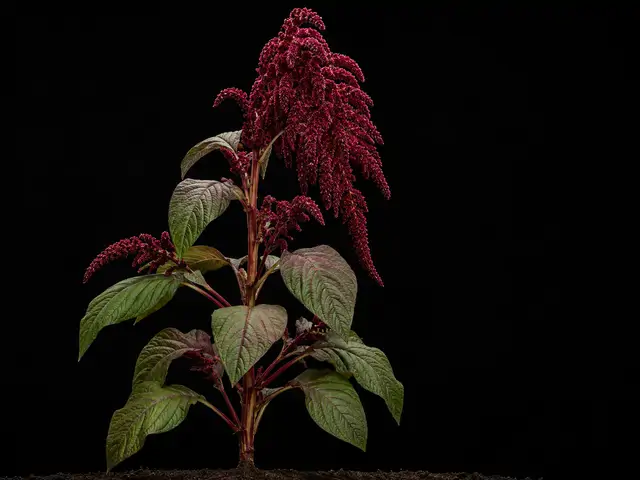
A dual-purpose, heat-loving pseudo-grain: showy crimson and gold seed heads give a tiny gluten-free, protein-rich grain, while the young leaves are one of the world's most widely eaten cooked greens - all on a tough, drought-tolerant plant that was a staple of the Aztecs.
Safety notes Amaranth is a valued dual crop - nutritious cooked leaves and a gluten-free grain - with a few honest cautions. The leaves, like their relatives spinach and chard, are high in OXALATES and can accumulate NITRATES in heavily fertilized soil, so eat them COOKED and in normal amounts (moderate if prone to kidney stones). The raw grain contains antinutrients and is meant to be COOKED, popped, or baked, not eaten raw in quantity. With those steps, both leaf and grain are safe, wholesome foods.
Overview
Amaranth is a spectacular dual crop - a grain and a leafy green in one dramatic, heat-loving plant. The grain types (Amaranthus cruentus, A. caudatus, and A. hypochondriacus) throw up bold seed heads, upright plumes or dramatic drooping tassels in crimson, magenta, gold, and green, that yield thousands of tiny gluten-free seeds prized for their protein. At the same time, the young leaves are edible and, cooked, are one of the most widely eaten leafy greens on earth, known as callaloo in the Caribbean, een choy or Chinese spinach in Asia, and thotakura in India. Few crops give you both a grain and a green from the same beautiful plant.
Quick facts
- Sprouts in
- 7 daysRange: 3–14 days
- Soil temperature
- 75 °FRange: 65–85 °F
- Start indoors
- 5 weeks before transplantRange: 4–6 weeks
- Height
- 6 ftRange: 3–8 ft
- Spread
- 18 inRange: 12–30 in
- Cold
- Killed by frostdamaged below 32°F
- Heat
- Struggles above 105°F
- Life cycle
- Annual
- Save seeds
- About 110 days after plantingRange: 90–120 days
- Self-sows
- Yes, expect volunteers
- Soil
- Well-drained
- Water
- Low
- Plant spacing
- 12 inRange: 6–18 in
When to plant
Nothing is open today. Summer sowing opens 6 months, Apr 17 to May 29.
- Direct sow Apr 17 – May 29 Opens in 179 daysAbout 7 days after to 7 weeks after your last frost (Apr 10 here)Direct sow after all frost when the soil is warm (65F or above) - amaranth is heat-loving and frost-tender, so there is no rush; late-spring and early-summer sowings into warm soil establish fast and grow explosively.
Frost here: last around Apr 10 (Mar 27 to Apr 24 most years), first around Oct 25. Zone averages, your own yard may run a week or two either way.
Life stages
From the first start to harvest
Follow the growing sequence. Choose a stage to see its care and signs to watch for.
Stage 1 of 5 · The growing sequence
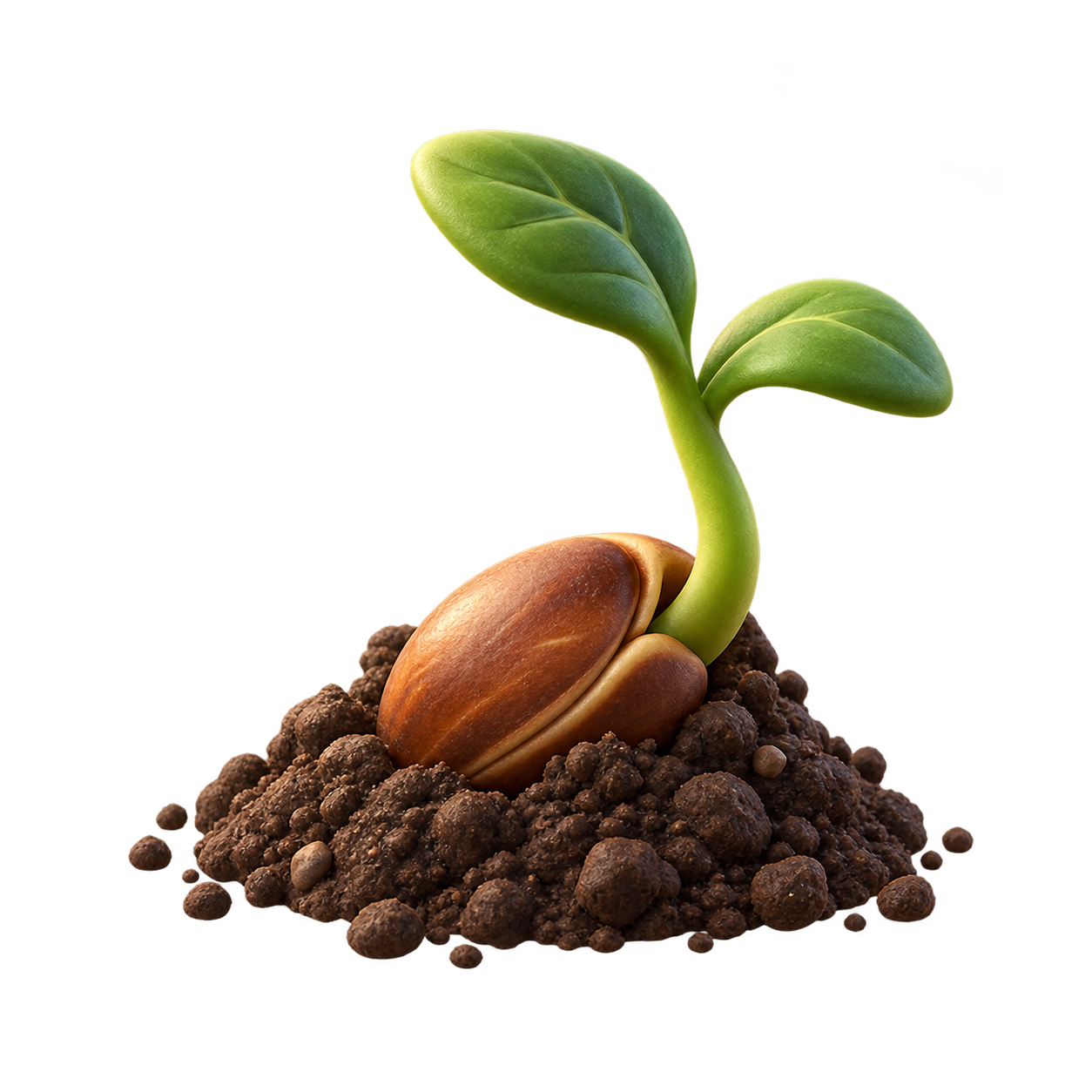
Germination
Day 0 to 8 from sowing
Care at this stage
-
Sow into warm, frost-free soil, barely covered
Amaranth is a heat-loving, frost-tender crop. Sow the tiny seed very shallow (an eighth to a quarter inch, barely covered) into warm soil (65F or above) after all frost has passed; it germinates in about a week in warmth. In short-season gardens, start it indoors 4-6 weeks early and transplant after frost.
-
Keep the fine seed moist until it sprouts
The seed is minute, so a firm, fine seedbed and even surface moisture give the best stand. Do not bury it deep - light helps germination and deep sowing fails.
Stages can overlap; weather, variety, and growing conditions change the pace.
Harvest
- The seed heads have matured and dried, and seeds shed freely when a head is rubbed or shaken
- A light frost has dried the plant (in cold regions), or the heads have gone papery
- Leaves have mostly yellowed and dropped on grain-type plants
- Harvest grain when seeds shed easily from the head · every 3 days
- Dry, thresh, winnow - no hulling needed
Per plant 1 to 12 ozPicking cut and it regrowsFirst crop 1 yrs
Cook with Amaranth
Watch out for
5 to know. None are high-risk for Amaranth. 2 are active in October.
Birds & WildlifeSeverity Medium WildlifenowSeason: Aug–OctFruit disappearing from the outermost, most exposed parts of the plant first, and from the top of a tree where you cannot reach anyway.
The main harvest-time competitor for a small grain patch. Net the plot or bag individual heads as the seed ripens, and cut once seeds shed freely rather than leaving heads standing.
Fruit disappearing from the outermost, most exposed parts of the plant first, and from the top of a tree where you cannot reach anyway. Single neat pecks and gouges in ripening fruit, with several fruits sampled rather than one eaten through - the classic sign that it was birds rather than an animal. Heads of grain or seed going visibly lighter and emptier as they ripen, with hulls and chaff scattered underneath. Freshly sown seed vanishing off the surface of a bed before it germinates. Bird traffic in and out of the plant picking up as the crop colors, and birds waiting on nearby wires and branches. Wasps arriving at the pecked and split fruit shortly afterward.
There is no treatment once a crop is being taken - only protection and timing, so the answer is to get netting on and to pick what is ready. Reflective tape, flash ribbon, spinners, and decoy predators do work, but only for a few days at a time: birds habituate fast, so move and rotate them and never rely on them as the main defense for a crop you care about. Cut and gather grain or seed heads a little early, at firm dough, and finish drying them under cover instead of leaving them standing for the flocks. Plant a little extra, or a decoy crop the birds prefer, and accept sharing anything that crops heavily. On a wild or foraged patch, fruit going to birds and small mammals is the point of the plant rather than a problem to solve.
Net, and net early. Bird netting draped over a frame or hoops so it stands off the fruit, with the edges closed at ground level, is the only thing that reliably works at harvest scale - and it has to go on before the crop starts to color, because once birds have found the food they are far harder to displace. Keep fruit trees small enough that netting them is actually feasible; that decision gets made years earlier, at planting. Bags of mesh, organza, or paper slipped over individual heads, clusters, or prize fruit protect a small crop without netting the whole plant. Then shorten the exposure: pick promptly and completely rather than leaving ripe fruit hanging as a lure, clear split and dropped fruit that draws birds and wasps alike, and where a crop can finish off the plant, harvest a little early and ripen or dry it under cover. Rake in or cover broadcast seed so it is not lying in plain view.
Birds find ripening fruit and seed before you do. Robins, waxwings, starlings, catbirds, jays, sparrows, finches, blackbirds, and doves all work a garden, and the pressure arrives in a narrow window - the last days before harvest, when sugar rises, color changes, and the crop softens or the grain hardens. A flock can strip a small planting in a day or two, and birds that only peck rather than take whole fruit still leave wounds that rot or draw wasps. Squirrels, chipmunks, and other wildlife usually turn up on the same crop at the same time. This is competition rather than disease: the birds are not harming the plant, and a big tree or a heavy-cropping bush often has enough for everyone - but on a small planting it can be the difference between a harvest and none.
Aggressive Self-Seeding & SpreadSeverity Medium DisordernowSeason: Sep–NovRipe seed heads or stalks shedding onto the ground, and a flush of volunteer seedlings coming up well beyond where the parent plant stood - most obvious in the first weeks of the plant's growing season.
Amaranth seedlings are indistinguishable from weedy pigweeds, so never eat or grow on a volunteer you cannot positively identify as your crop. Palmer amaranth and tall waterhemp are prohibited noxious weeds in several states (Minnesota, Iowa, Ohio, Illinois, Delaware and Wisconsin among them), where a landowner is required to destroy them - and both have reached gardens through contaminated seed lots. Sow in defined rows and hoe out everything else.
Ripe seed heads or stalks shedding onto the ground, and a flush of volunteer seedlings coming up well beyond where the parent plant stood - most obvious in the first weeks of the plant's growing season.
Hoe or hand-pull volunteers while they are small and before they set seed - the existing seed bank will keep germinating for several seasons either way, so this is an ongoing job rather than a single fix. Where the volunteers are themselves edible, harvesting them is the easiest control, but only ever eat or grow on a seedling you can positively identify.
Cut, deadhead or harvest the seed heads before they ripen and shatter, which is far easier than dealing with what they drop. Where the plant is grown deliberately, keep it in defined rows or a contained bed so that volunteers are obvious, and site it only where naturalizing is welcome.
Not a pest but a management issue. This plant sets and sheds seed prolifically, so anything left to ripen builds a persistent seed bank in the soil and returns as a heavy flush of volunteers the following season. Much of that seed stays viable for years, which is why one season of letting it go can take several seasons to undo.
Tarnished Plant Bug (Lygus)Severity Medium PestSeason: Jul–SepBerries that are hard, seedy, and knobby or shrunken at the tip; small pale-green nymphs in the blossoms when tapped over a white surface.
Chiefly a concern for a grain harvest, where it thins seed fill; incidental on leaf-grown amaranth harvested before flowering.
Berries that are hard, seedy, and knobby or shrunken at the tip; small pale-green nymphs in the blossoms when tapped over a white surface.
Row cover during bloom is the cleanest fix; where damage is heavy, targeted insecticide at early bloom, timed to protect pollinators, reduces the next generation.
Control broadleaf weeds nearby that host lygus, encourage beneficial insects (big-eyed bugs, minute pirate bugs), and avoid planting next to alfalfa or weedy field edges.
A small mottled brown true bug whose nymphs and adults feed on developing flowers and seeds, killing seed cells so the berry can't swell evenly - the classic cause of 'catfaced' (button-tipped, misshapen) fruit.
Flea BeetlesSeverity Low PestSeason: May–JulDozens of pinhead-sized round holes peppered across the leaves, thickest on the youngest, most tender growth.
Mainly a seedling and cosmetic pest on amaranth - the vigorous mature plant shrugs off light damage. Rotate away from beets, chard, and spinach, which share the same beetles.
Dozens of pinhead-sized round holes peppered across the leaves, thickest on the youngest, most tender growth. Tiny beetles that spring away as you brush the plants or lean in for a closer look - that jump is the identification. Seedlings that go lacy and stop growing, and transplants that sit and sulk instead of taking off. Damage heaviest in warm, dry weather and along the edge of a bed nearest weedy ground or last year's crop debris. On root crops, shallow narrow grooves or channels scarring the skin at harvest, from larvae feeding underground.
Row cover and healthy fast growth carry most crops through, and on an established plant the damage is usually cosmetic and needs nothing at all. Where a young planting is genuinely being stripped, kaolin clay coats the leaves and deters feeding, and spinosad will knock the beetles back. Spinosad is acutely toxic to bees while the spray is still wet - apply it at dusk when bees are not flying, never onto plants in flower, and follow the product label. Anything you spray must be labeled for the plant you are treating, and you must observe its pre-harvest interval on a crop you are picking. Yellow sticky traps are useful for telling you when the beetles have arrived. Where the damage falls on the part you eat, harvesting young often beats them outright; where you are growing for a root or a fruit, leaf damage can simply be tolerated. Larvae feeding underground cannot be reached by a foliar spray, so rotation and clean beds are what work against those.
Floating row cover or fine insect mesh, laid over the bed from the day of sowing or transplanting and sealed at the edges so nothing can walk in underneath, is the single best defense - and on the crops they favor it is close to essential. Leave it on until plants are large and growing strongly, or until flowering on anything that needs pollinating. Push growth: a well-watered, unchecked plant outgrows the damage, so the whole game is getting seedlings through their vulnerable weeks fast. Keep beds weed-free, since related weeds host the beetles alongside your crop, and clear crop debris at the end of the season where the adults overwinter. Rotate away from a bed that grew a related crop last year. Where you can, shift sowing dates - cooler-season and fall plantings often miss the peak of adult feeding entirely.
Flea beetles are tiny dark beetles - often shiny black or bronze, rarely more than a couple of millimeters long - with enlarged back legs that let them spring away like fleas the moment you lean in. The adults chew countless small round pits and shot-holes through leaves, giving the foliage a peppered, buckshot-riddled look. They overwinter as adults in leaf litter, hedgerows, and crop debris, emerge hungry in spring, and are worst in warm dry spells. The damage is mostly a seedling and transplant problem: a small plant with a few leaves can be checked, stunted, or killed outright, while the same plant shrugs them off once it is large and growing strongly. Different species specialize on different plant families, so the beetles hammering your brassicas are not the ones on your nightshades. Some species also have larvae that feed on roots and tubers underground.
AphidsSeverity Low PestSeason: Jun–AugDense clusters of tiny insects packed onto shoot tips, flower buds, and the undersides of young leaves.
A minor nuisance on amaranth - rarely warrants action on a healthy plant.
Dense clusters of tiny insects packed onto shoot tips, flower buds, and the undersides of young leaves. Curled, cupped, or distorted new growth that never opens properly. A sticky shine on the leaves - and on whatever sits under the plant - that later goes black with sooty mold. Tiny white cast skins left behind where a colony has been feeding. Ants running steadily up and down the stems, which is often the first thing you notice. Mottled, streaked, or misshapen leaves that do not grow out can mean a virus the aphids brought with them rather than the feeding itself.
Knock the colonies off with a hard jet of water and repeat every few days - on most plants that alone ends it. Pinch out or prune off the worst-infested tips rather than treating the whole plant. If colonies keep rebuilding, spray insecticidal soap or horticultural oil directly onto the insects, covering leaf undersides, and repeat weekly until they are gone; treat early or late in the day, and never spray a wilted or heat-stressed plant. Avoid broad-spectrum insecticides - they kill the ladybugs, lacewings, and parasitic wasps that were about to solve the problem for you, and aphid numbers usually come back worse afterward. Anything you spray must be labeled for the plant you are treating; follow that label and observe its pre-harvest interval. On anything you eat, wash leaves, heads, and buds well before use, since aphids hide down in crowns, folds, and tight growth.
Go easy on nitrogen: the soft, lush growth that heavy feeding produces is exactly what aphids breed on. Check new growth once a week through spring and early summer so you catch colonies while they are still small, and rub the first few out with your fingers. Leave flowering plants nearby and skip broad-spectrum sprays - ladybugs, lacewings, hoverflies, and parasitic wasps do most of this work for free, and they only stay if there is something for them to eat. Keep ants off the plant where you can, since they protect aphids from those predators. Water steadily so plants are not stressed, and check any new plant over before you bring it home or move it indoors, since aphids usually arrive on something else.
Aphids are small soft-bodied sap-suckers - green, black, gray, pink, or waxy white, and mostly wingless - that gather in dense colonies on the tenderest new growth: shoot tips, buds, and the undersides of young leaves. They breed extremely fast in mild weather, so a few can become hundreds inside a week. Their feeding curls and distorts soft growth, and the sticky honeydew they excrete coats everything below and turns black with sooty mold. Ants often farm and defend the colonies for that honeydew. A few aphids are normal on almost any plant and a healthy plant shrugs them off; only dense, persistent colonies do real damage, and some aphids also spread plant viruses as they feed.
Good & bad neighbors
All of these are traditional pairings. The evidence is thin, so treat them as a nudge, not a rule.
Plant nearby
-
The third partner of the milpa: nitrogen-fixing beans feed the soil for hungry grain crops, and beans plus corn plus amaranth together form a classic, mutually reinforcing traditional planting and nutritional trio.
-
A traditional Mesoamerican milpa pairing: amaranth was grown alongside corn and beans, and its lysine-rich grain nutritionally complements corn's protein. The tall crops share heat-loving, warm-season culture; give amaranth enough light between the corn.
-
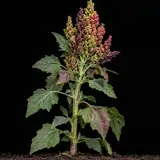
The other great pseudo-grain and a natural companion in a grain-and-greens patch: warm-season amaranth and cool-season quinoa share dual grain-and-leaf uses and similar culture, so growing both spreads the pseudo-grain harvest across the season.
Keep apart
-
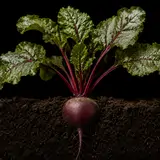
Beets, chard, and spinach are close relatives in the same family (Amaranthaceae) and share amaranth's flea beetles, leaf miners, and aphids - avoid crowding them together and rotate amaranth away from where these grew to break shared pest cycles.
Varieties · 5
You pick one when you add Amaranth to your garden. Its days to maturity set your harvest window.
Grain 3 varieties
Golden Giant (Amaranthus cruentus)
A top grain variety bred for heavy yields of pale, easily cleaned seed on big golden-tan heads, popular with home grain growers for its productivity and mild flavor.
Variety details for Golden Giant (Amaranthus cruentus)
Very tall plants topped by huge upright golden-tan seed heads of pale grain.
high-yieldpale-seedtallopen-pollinatedTall and vigorous, it is the go-to when the goal is a real grain harvest.
Hopi Red Dye (Amaranthus cruentus x powellii)
A striking heirloom grown by the Hopi as a food and a natural red dye, with intensely deep crimson-magenta leaves and heads.
Variety details for Hopi Red Dye (Amaranthus cruentus x powellii)
Deep blood-red to magenta leaves and seed heads on tall dramatic plants.
leafdyedeep-redheirloomTriple-purpose - the young leaves are excellent greens, the seed is good grain, and the plant yields a vivid natural coloring. Beautiful and useful.
Plainsman (Amaranthus hypochondriacus x hybridus)
A modern grain amaranth bred for the North American plains, selected to be shorter, more uniform, and more lodging-resistant than heirloom types while yielding heavily - a practical, reliable choice for a clean grain harvest with less flopping.
Variety details for Plainsman (Amaranthus hypochondriacus x hybridus)
Shorter, sturdier, uniform plants with compact golden seed heads of pale grain.
shorterlodging-resistanthigh-yielduniform
Leaf (greens) 1 variety
Red Garnet / Red Leaf (leaf amaranth)
A fast leaf-type amaranth (vegetable amaranth) grown mainly for its tender, richly red-and-green cooked greens, ready in weeks and productive all summer as a cut-and-come-again crop.
Variety details for Red Garnet / Red Leaf (leaf amaranth)
Bushy plants with vivid burgundy-and-green leaves, harvested young for greens.
fastornamental-ediblecut-and-come-againheat-lovingThe choice when you want callaloo-style greens rather than grain.
Ornamental 1 variety
Love-Lies-Bleeding (Amaranthus caudatus)
The famous ornamental amaranth with long, dramatic drooping crimson tassels, and also the Andean grain 'kiwicha' - so it is as edible as it is showy.
Variety details for Love-Lies-Bleeding (Amaranthus caudatus)
Long, ropelike drooping crimson flower tassels cascading from tall leafy plants.
grainkiwichadrooping-tasselsheirloomIts cascading blood-red plumes make it a favorite ornamental that also yields pale, protein-rich grain.
Grower tips
Notes from growers, tagged with the zone they grow in. A person reads every post before it appears.
Nobody has posted about Amaranth yet. The first one usually saves someone a season.
Free account. Your post shows your grower name and zone, never your email.