
Add it to your home screen and it opens full screen: no browser bars, one tap away, and everything stays signed in. Free, nothing to download from an app store.
- Tap the Share button in your browser
- Scroll down and choose “Add to Home Screen”
- Open GrowSomeFood from your home screen
- Open your browser’s menu
- Choose “Add to Home screen” or “Install app”
- Open GrowSomeFood from your home screen
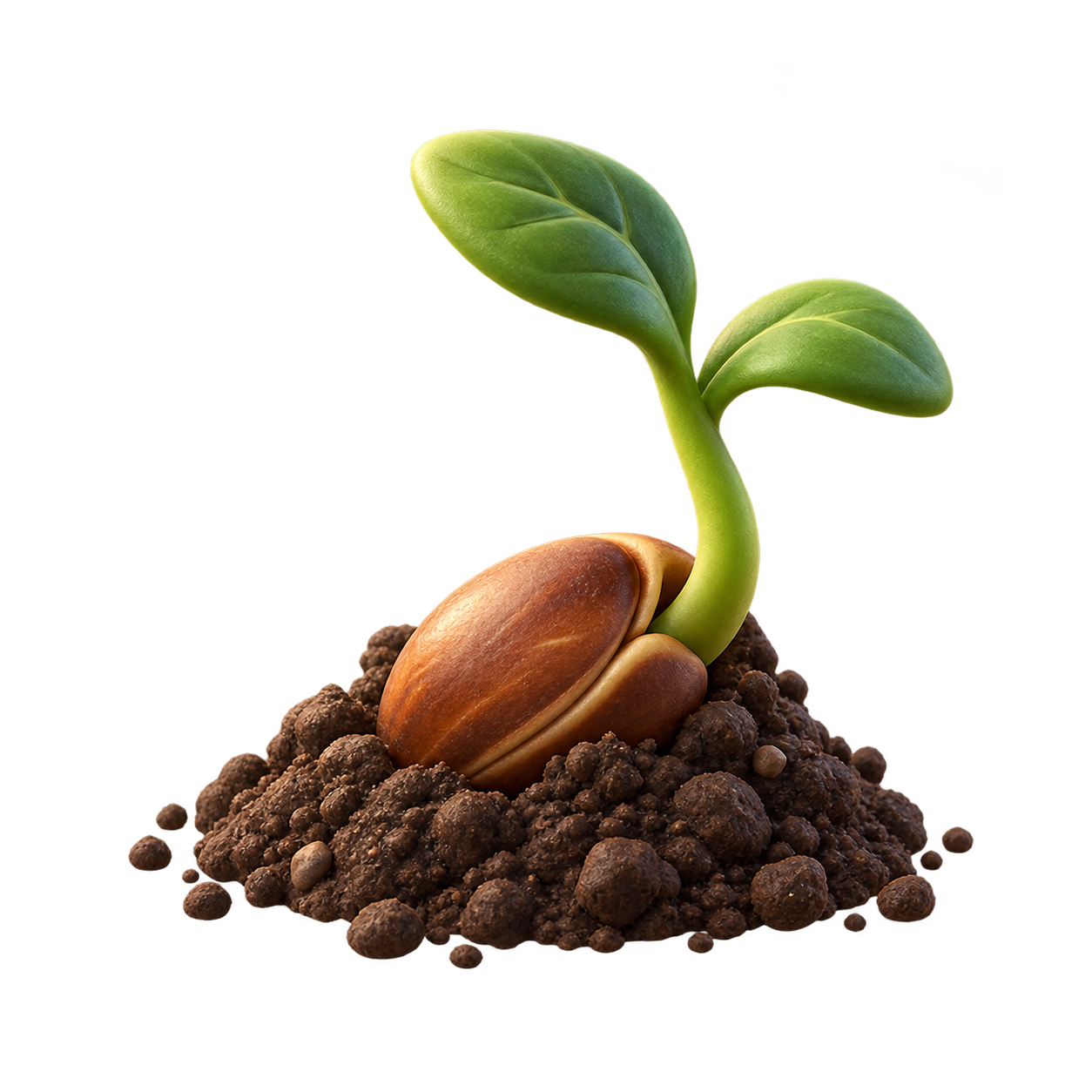
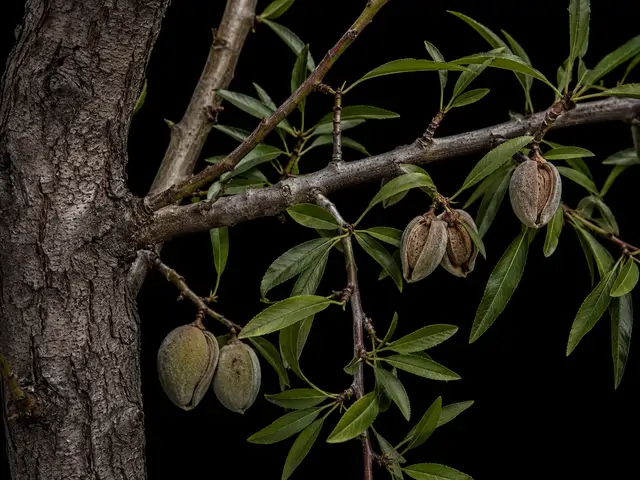
Almond
A Mediterranean stone-fruit relative grown for its seed instead of its flesh - beautiful, drought-tolerant, and productive in warm dry climates, but tripped up by very early bloom (frost risk) and by humidity (disease), so honesty about climate is everything.
Safety notes Sweet almonds (the food) are safe. BITTER almonds - from unnamed seedlings, wild and ornamental types, and peach-almond hybrids such as Hall's Hardy - contain amygdalin, which releases cyanide, and are genuinely dangerous to eat raw. Grow named SWEET almond varieties for eating, and note that not every named almond is a sweet almond. Never eat almond kernels raw from an unverified tree; bitterness is the disqualifier - spit it out and discard the crop. Common tree-nut allergen.
Overview
The almond is a peach's close cousin that we grow for the seed inside the pit rather than the thin, leathery flesh around it. In the right climate it's a lovely, productive, drought-tolerant tree that bursts into pink-white bloom before almost anything else in the garden - and that early bloom is exactly the catch. Almonds are a warm, dry-climate crop: they thrive in Mediterranean and dry-summer regions (California grows nearly all the world's supply), tolerate heat and drought once established, and need only modest winter chill (200-500 hours).
The one thing to knowThe almond is a peach's close cousin that we grow for the seed inside the pit rather than the thin, leathery flesh around it.
Quick facts
- Winter chill
- 400 hours below 45°FRange: 200–600 hours
- Height
- 18 ftRange: 10–30 ft
- Spread
- 18 ftRange: 10–25 ft
- Cold
- Takes light frostdamaged below -10°F
- Heat
- Struggles above 105°F
- Life cycle
- Perennial, lives about 40 years
- Soil
- Well-drained
- Water
- Low
- Plant spacing
- 20 ftRange: 15–30 ft
When to plant
Nothing is open today. Winter transplanting opens 3 months, Jan 15 to Mar 15.
- Transplant Jan 15 – Mar 15 Opens in 88 daysThe core almond range, especially in Mediterranean / dry-summer climates. Plant dormant bare-root trees in late winter. Choose late-blooming varieties where spring frost is a risk.
- Transplant Mar 20 – Apr 24 Opens in 152 daysAbout 3 weeks before to 2 weeks after your last frost (Apr 10 here)Early spring while still dormant, as the soil becomes workable, is also fine.
Frost here: last around Apr 10 (Mar 27 to Apr 24 most years), first around Oct 25. Zone averages, your own yard may run a week or two either way.
Life stages
Establish, grow, repeat
Getting established and returning each season are different parts of the story.
Stage 1 of 5 · Getting established
First-year establishment
The first year after planting
Care at this stage
-
Water regularly the first season, then ease off
Keep a newly planted almond evenly moist through its first summer to build roots. Once established, almonds are drought-tolerant and actually resent wet feet - so the first year is the thirsty one.
-
Mulch a ring, kept off the trunk
A wood-chip ring conserves moisture and suppresses grass while the young tree establishes. Keep it clear of the trunk to prevent crown rot.
-
Guard the trunk and site for good air drainage
Cage against deer and rodents. And site the tree where cold air drains away (higher ground, not a frost pocket) - almonds bloom very early and a late frost is the biggest threat to a crop.
-
Set the scaffold with light early cuts
Train to an open-center (vase) shape like other stone fruit - remove competing and low branches, keep it light. Almonds fruit on spurs and one-year wood.
Months are typical seasonal windows; climate, variety, and plant age can shift them.
Harvest
- The leathery green hull dries and splits open along its seam
- The shell inside is visible through the split hull
- Nuts shake or knock down readily onto a tarp
- The kernel is firm and crisp (not soft or rubbery)
- Harvest when the hulls split open · every 4 days
- Hull, then dry the nuts thoroughly
Per plant 500 to 8000 nuts, 5 to 100 lbPicking pick as they ripen
Cook with almonds
Watch out for
6 to know. 2 are high-risk: Navel Orangeworm, Brown Rot. 2 are active in October.
Navel OrangewormSeverity High PestnowSeason: Jul–OctWebbing, frass and tunnelled kernels inside split hulls; small navel-shaped egg scars on hulls; and mummy nuts still hanging in the tree over winter.
Mummy sanitation is time-sensitive: do it in winter, before bud swell, or the population carries straight into the new crop.
Webbing, frass and tunnelled kernels inside split hulls; small navel-shaped egg scars on hulls; and mummy nuts still hanging in the tree over winter.
Harvest promptly at hull split rather than leaving nuts hanging, and freeze the harvested nuts for a few days to kill any eggs or larvae that came in with them.
Strip every mummy nut from the tree and the ground during dormancy - this is the core control and it does more than anything you can spray. Prune for an open canopy so hulls dry and split evenly.
The most damaging almond pest in North America: a moth whose larvae enter the nut as the hull splits and feed on the kernel, leaving webbing and frass behind. It overwinters in mummy nuts left hanging in the tree or lying on the ground, so an uncleaned tree seeds its own infestation the following year.
Brown RotSeverity High DiseaseSeason: Feb–JunBrowned, collapsed blossoms in spring, sometimes with a small gummy canker on the twig behind them; firm brown spots on ripening fruit that erupt in tan fuzzy spores; and shriveled mummies clinging to the tree.
On almonds it takes the blossoms and shoot tips first and the developing nuts later, and mummy nuts left hanging carry it into the next year - strip every one during dormancy. The single biggest reason almonds are difficult in the humid East and Southeast; dry-climate almonds see far less of it.
Browned, collapsed blossoms in spring, sometimes with a small gummy canker on the twig behind them; firm brown spots on ripening fruit that erupt in tan fuzzy spores; and shriveled mummies clinging to the tree.
Fungicide at bloom for blossom blight, and again in the last two to three weeks before harvest if the weather stays warm and wet. Use only a product whose label lists your crop by name, and follow that label's pre-harvest interval - some stone-fruit fungicides (chlorothalonil, ziram) may not legally be sprayed that close to picking. Strip and destroy infected fruit the day you see it. Sanitation - clearing mummies and infected wood - is at least half the control.
Remove every mummy and rotted fruit - they are the spore source that starts next season - prune for airflow, thin so fruit don't touch, protect fruit from insect, bird and cracking injury (those wounds are the way in), and avoid wetting the foliage. Dry climates see far less of it.
The major fruit-rot disease of stone fruit: a fungus (Monilinia) that blights blossoms, cankers twigs, and rots ripening and stored fruit into fuzzy tan 'mummies' - it can destroy a ripe plum crop in days of warm, humid weather.
Squirrels & RodentsSeverity Medium WildlifenowSeason: Jul–OctChewed husks, shells or hulls scattered under the plant, fruit and nuts vanishing as they ripen, and gnawed or half-eaten windfalls.
Squirrels are the main wildlife loss on home almonds - harvest promptly as the hulls split to beat them. Birds also peck at split hulls, but they take far less.
Chewed husks, shells or hulls scattered under the plant, fruit and nuts vanishing as they ripen, and gnawed or half-eaten windfalls. On new plantings: freshly dug holes and scattered soil, bulbs missing or gnawed, dug-up seed rows, vole runways under the mulch, and gaps in spring where you know you planted.
There is no rescue for what has already been eaten, so this is a prevention problem. Re-cover disturbed plantings with mesh promptly, replant losses inside cages, and trap or exclude persistent diggers where that is legal locally. On a large tree, accept that you will share the crop and concentrate on gathering promptly.
For a crop on the plant, timely and frequent harvest is the real defense - gather daily through the ripening window rather than leaving anything to hang, and pick slightly early to finish indoors where the crop allows it. Net or bag what you can reach. For bulbs and sown seed, lay wire mesh or hardware cloth over the planting, plant deeper, use buried wire baskets, and clear away the papery tunics and debris that advertise a fresh planting. Trunk baffles slow climbers on isolated trees, clearing jumping routes from nearby trees and roofs helps, and removing brush cover reduces the rodents sheltering nearby.
Squirrels, chipmunks, voles and mice are the wildlife that competes with you most directly for a crop. They take ripening nuts, seed and fruit off the plant, usually before you judge it ready, and cache what they do not eat. They also dig up freshly planted bulbs and sown seed, and voles tunnel in to gnaw bulbs and roots underground through winter. They climb anything, they know exactly when a crop is ripe, and a determined pair can clear a small tree or a new planting in a few days.
Peach Leaf CurlSeverity Medium DiseaseSeason: Feb–AprNew spring leaves that are curled, thickened, puckered, and reddened, followed by leaf drop and a flush of replacement leaves.
On almonds this is a cool-wet-climate problem and generally milder than on peaches, but a wet spring in the coastal West or the humid Southeast will curl a young almond's first flush and set the tree back. Spray a dormant almond on the same schedule you would a peach - the one reliable control is a well-timed dormant application before bud swell.
New spring leaves that are curled, thickened, puckered, and reddened, followed by leaf drop and a flush of replacement leaves.
Nothing cures it in-season once leaves are curled; the tree usually pushes new healthy leaves, but protect for next year with the dormant spray. Rake and destroy fallen infected leaves.
The ONLY effective control is a dormant fungicide spray (copper or lime-sulfur) at leaf-fall in autumn and again just before bud swell - the infection happens before leaves emerge, so timing is everything. Choose resistant varieties (Hardired) where curl is severe.
A fungus (Taphrina deformans) that infects the leaf buds of peach, nectarine, and almond in cool, wet spring weather, causing new leaves to emerge puckered, thickened, curled, and reddened before dropping - weakening the tree and reducing the crop over time. Susceptibility varies by host and variety, but all three are affected.
Peachtree BorerSeverity Medium PestSeason: May–SepGummy sap mixed with sawdust-like frass oozing from the lower trunk and crown, and wilting or dieback on a young tree.
Attacks the trunk base, not the fruit - young trees are most at risk of being girdled.
Gummy sap mixed with sawdust-like frass oozing from the lower trunk and crown, and wilting or dieback on a young tree.
Dig out and destroy larvae from the trunk with a wire in spring/fall; targeted trunk sprays or beneficial nematodes drenched at the base help. Protect young trees especially.
Keep trees vigorous and avoid trunk wounds; keep mulch and weeds off the trunk base so borers can't hide; monitor the crown area. Pheromone traps help time management.
A clearwing moth whose larvae bore into the trunk at and just below the soil line, girdling and killing branches or whole young trees - one of the most serious pests of peaches and nectarines, especially on young trees.
AphidsSeverity Low PestSeason: Apr–JunDense clusters of tiny insects packed onto shoot tips, flower buds, and the undersides of young leaves.
Mostly a young-tree and spring-flush concern; established almonds shrug it off.
Dense clusters of tiny insects packed onto shoot tips, flower buds, and the undersides of young leaves. Curled, cupped, or distorted new growth that never opens properly. A sticky shine on the leaves - and on whatever sits under the plant - that later goes black with sooty mold. Tiny white cast skins left behind where a colony has been feeding. Ants running steadily up and down the stems, which is often the first thing you notice. Mottled, streaked, or misshapen leaves that do not grow out can mean a virus the aphids brought with them rather than the feeding itself.
Knock the colonies off with a hard jet of water and repeat every few days - on most plants that alone ends it. Pinch out or prune off the worst-infested tips rather than treating the whole plant. If colonies keep rebuilding, spray insecticidal soap or horticultural oil directly onto the insects, covering leaf undersides, and repeat weekly until they are gone; treat early or late in the day, and never spray a wilted or heat-stressed plant. Avoid broad-spectrum insecticides - they kill the ladybugs, lacewings, and parasitic wasps that were about to solve the problem for you, and aphid numbers usually come back worse afterward. Anything you spray must be labeled for the plant you are treating; follow that label and observe its pre-harvest interval. On anything you eat, wash leaves, heads, and buds well before use, since aphids hide down in crowns, folds, and tight growth.
Go easy on nitrogen: the soft, lush growth that heavy feeding produces is exactly what aphids breed on. Check new growth once a week through spring and early summer so you catch colonies while they are still small, and rub the first few out with your fingers. Leave flowering plants nearby and skip broad-spectrum sprays - ladybugs, lacewings, hoverflies, and parasitic wasps do most of this work for free, and they only stay if there is something for them to eat. Keep ants off the plant where you can, since they protect aphids from those predators. Water steadily so plants are not stressed, and check any new plant over before you bring it home or move it indoors, since aphids usually arrive on something else.
Aphids are small soft-bodied sap-suckers - green, black, gray, pink, or waxy white, and mostly wingless - that gather in dense colonies on the tenderest new growth: shoot tips, buds, and the undersides of young leaves. They breed extremely fast in mild weather, so a few can become hundreds inside a week. Their feeding curls and distorts soft growth, and the sticky honeydew they excrete coats everything below and turns black with sooty mold. Ants often farm and defend the colonies for that honeydew. A few aphids are normal on almost any plant and a healthy plant shrugs them off; only dense, persistent colonies do real damage, and some aphids also spread plant viruses as they feed.
Good & bad neighbors
Plant nearby
-
A clover understory fixes nitrogen, suppresses grass, and feeds the bees that almonds depend on for their early bloom - a good living groundcover under an almond.
- Traditional pairings, thin evidence
-
Planted around the trunk, daffodils deter voles and rabbits and bloom early alongside the almond; a harmless, useful ring under a young tree.
-
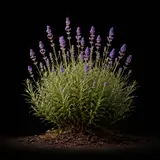
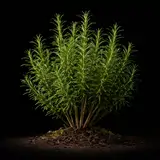
Shares the almond's love of heat and sharp drainage, tolerates drought, and draws pollinators to the area - a tidy, fitting underplanting for a dry-climate almond.
-
Another Mediterranean, drought-loving companion that shares almond conditions and whose flowers feed pollinators; aromatic foliage may deter some pests.
Keep apart
- Traditional pairings, thin evidence
-
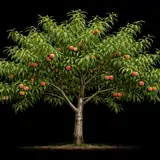
Not a hard 'avoid,' but almonds and peaches (close relatives) share the same diseases (brown rot, shot-hole, leaf curl) and pests, so planting them together concentrates disease pressure - space them out in humid climates.
Varieties · 6
You pick one when you add Almond to your garden. Its days to maturity set your harvest window.
All-in-One
The best almond for home gardens: genuinely self-fertile (crops well as a single tree, no pollinizer needed), semi-dwarf and manageable in size, with soft-shell, sweet, high-quality nuts.
Variety details for All-in-One
Medium semi-dwarf tree with soft-shelled, sweet, flavorful kernels.
sweetself-fertilesemi-dwarfbeginner-friendlyNeeds only ~300-500 chill hours and suits zones 7-9. The default beginner and small-garden choice - one tree, a real crop.
Hall's Hardy
The cold-climate and frost-prone-site almond: blooms notably later than most, dodging the late frosts that ruin earlier-blooming almonds, and is hardier than typical varieties - the best bet for pushing almonds into cooler or frostier areas.
Variety details for Hall's Hardy
Hardier tree with pink blossoms and harder-shelled nuts; kernels are often semi-bitter.
peach-almond hybridsemi-bitter kernelslate-bloomingcold-hardyPartially self-fertile but crops better with a pollinizer. IMPORTANT: Hall's Hardy is a peach-almond hybrid (Prunus x persicoides), not a true sweet almond, and its kernels are commonly semi-bitter - meaning elevated amygdalin. Grow it for the tree's hardiness and bloom; do not treat its nuts as sweet-almond eating stock, and never eat them raw. Bitterness is the disqualifier: a kernel that tastes bitter must be spat out and discarded.
Nonpareil
The world's premier commercial almond: thin, soft 'paper' shell, large, smooth, blemish-free, top-quality kernels, and the standard against which others are judged.
Variety details for Nonpareil
Soft, thin-shelled nuts with large, smooth, flat, blemish-free kernels.
sweetsoft-shellcommercial-standardhigh-qualitySelf-incompatible - a lone Nonpareil sets almost nothing. It requires a compatible pollinizer blooming at the same time (Mission is the classic partner). If you only have room for one tree, plant self-fertile All-in-One, Independence or Garden Prince instead. Best in dry-summer climates. The choice for finest nut quality where you can plant two trees.
Mission
A hardy, productive, late-blooming almond (also called Texas) that serves as the classic pollinizer for Nonpareil and crops reliably itself - hard-shelled nuts with rich, robust flavor, and enough cold and frost tolerance to be dependable across a range.
Variety details for Mission
Hard-shelled nuts with small-to-medium, plump, strongly flavored kernels.
sweethard-shelllate-bloomingpollinizerA workhorse variety and essential pollen partner.
Independence
A modern self-fertile almond with Nonpareil-quality nuts - it sets a full crop as a single tree, making it a top choice for home growers who want commercial-grade almonds without planting a pollinizer.
Variety details for Independence
Soft-shelled nuts with smooth, high-quality Nonpareil-type kernels.
sweetself-fertilehigh-qualityproductiveProductive, self-compatible, and well suited to dry-summer climates.
Garden Prince
A genetic-dwarf, self-fertile almond (only 8-10 feet) that fits small gardens, patios, and large containers - ornamental pink bloom, self-fruitful, low chill (~250 hours), and a real crop of soft-shelled sweet nuts from a compact tree.
Variety details for Garden Prince
Compact 8-10 ft tree with showy pink blossoms and soft-shelled sweet nuts.
sweetself-fertilegenetic-dwarfcontainer-friendlyThe pick for tight spaces and container growing.
Grower tips
Notes from growers, tagged with the zone they grow in. A person reads every post before it appears.
Nobody has posted about Almond yet. The first one usually saves someone a season.
Free account. Your post shows your grower name and zone, never your email.