
Add it to your home screen and it opens full screen: no browser bars, one tap away, and everything stays signed in. Free, nothing to download from an app store.
- Tap the Share button in your browser
- Scroll down and choose “Add to Home Screen”
- Open GrowSomeFood from your home screen
- Open your browser’s menu
- Choose “Add to Home screen” or “Install app”
- Open GrowSomeFood from your home screen
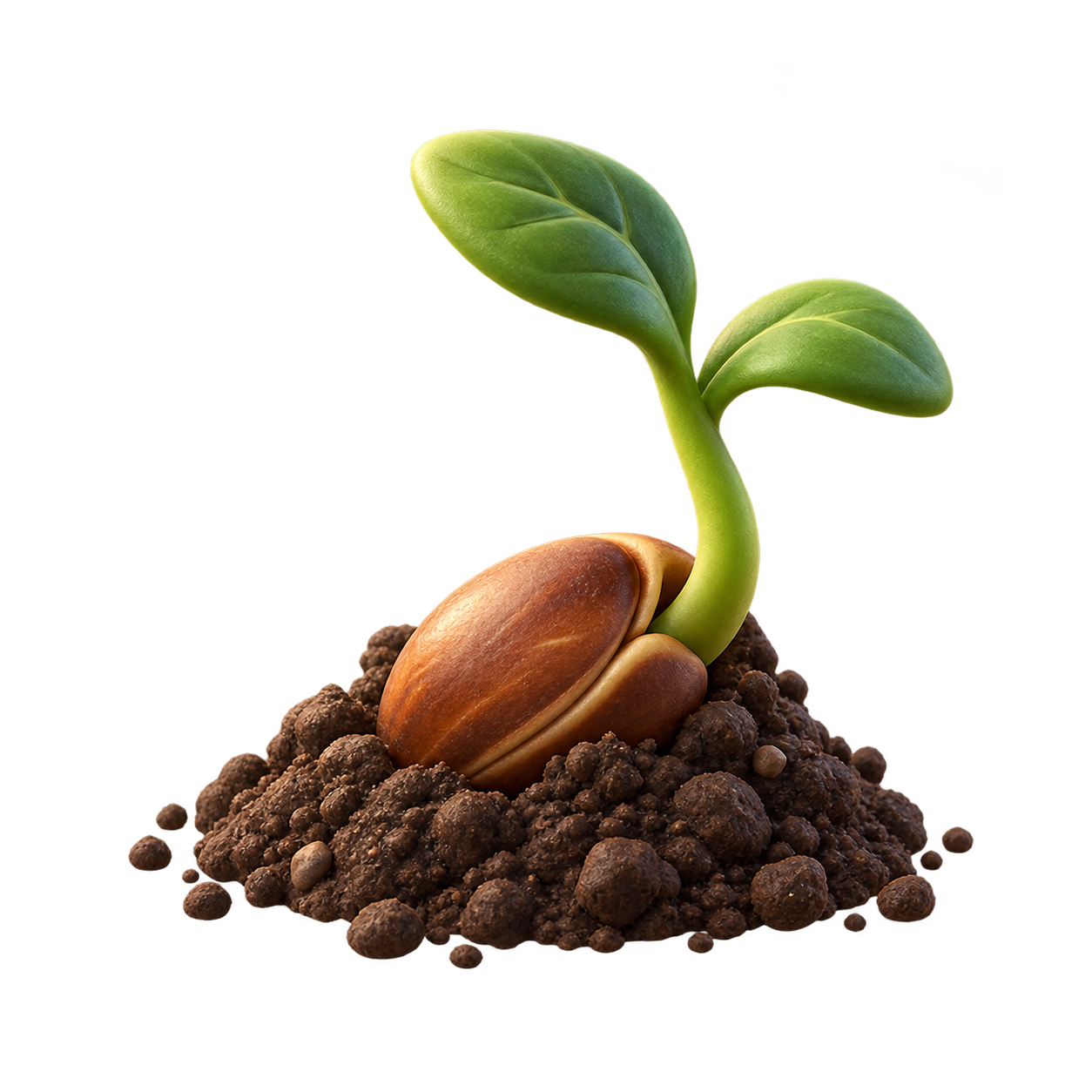
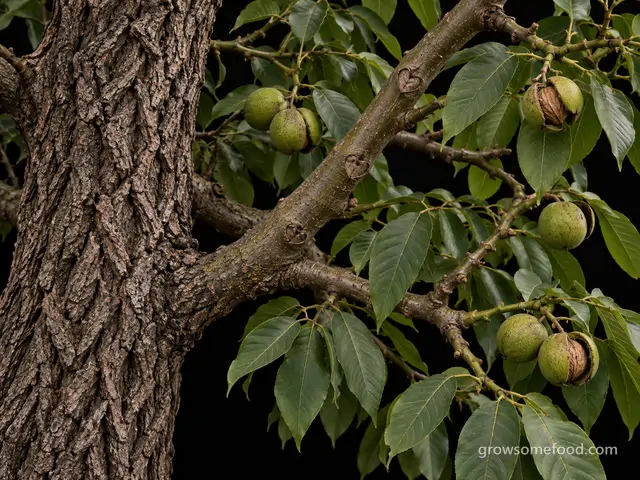
Walnut
A big, long-lived shade-and-nut tree grown for the mild, thin-shelled English/Persian walnut (its native cousin, black walnut, has its own entry). Its defining trait is juglone: walnut roots poison many nearby plants, so it shapes the whole garden around it.
Safety notes The kernel is the food and is a common tree-nut allergen. Roots (especially of black walnut) release juglone, which is toxic to many nearby plants and to horses (avoid using walnut shavings for bedding). The green husks stain skin and clothes deeply and semi-permanently - always wear gloves when hulling.
Overview
A walnut is a major, century-living tree that gives you both deep shade and a fall crop of one of the world's great nuts - but planting one is a landscape decision, because a walnut reaches 35 to 90 feet and comes with a chemical superpower that governs everything grown near it. There are two walnuts worth knowing. The English (Persian) walnut (Juglans regia) is the mild, thin-shelled, easy-cracking nut of the grocery store, best in zones 6-9 (cold-hardy Carpathian strains reach zone 4-5) - and it is the species this page covers. The black walnut (Juglans nigra) is a tough native, hardy and huge, with an intensely rich, bold-flavored kernel locked inside a fiendishly hard shell - and prized timber; it is a different species with different hardiness, pruning, and juglone guidance, so see the separate 'black-walnut' catalog entry for it.
Quick facts
- Winter chill
- 800 hours below 45°FRange: 400–1500 hours
- Height
- 50 ftRange: 35–90 ft
- Spread
- 50 ftRange: 35–70 ft
- Cold
- Takes hard frostdamaged below -25°F
- Heat
- Struggles above 100°F
- Life cycle
- Perennial, lives about 100 years
- Soil
- Well-drained
- Water
- Medium
- Plant spacing
- 50 ftRange: 40–70 ft
When to plant
Fall transplanting is open for 43 more days. Next: spring, Mar 11 to Apr 24.
- Transplant Oct 15 – Dec 1 Open now · 43 days leftFall planting lets roots settle over winter before spring growth in these zones.
- Transplant Mar 11 – Apr 24 Opens in 143 daysAbout 4 weeks before to 2 weeks after your last frost (Apr 10 here)The core range for English/Persian walnut (Chandler, Franquette). Plant dormant bare-root in late winter/early spring; fall planting works in the milder end.
Frost here: last around Apr 10 (Mar 27 to Apr 24 most years), first around Oct 25. Zone averages, your own yard may run a week or two either way.
Life stages
Establish, grow, repeat
Getting established and returning each season are different parts of the story.
Stage 1 of 5 · Getting established
First-year establishment
The first year after planting
Care at this stage
-
Water deeply and keep the taproot moist
Walnuts grow a deep taproot and resent transplanting - plant a young tree, set the taproot straight down in a deep hole, and water steadily (not soggy) all through the first summers. Consistent moisture now is the biggest factor in survival.
-
Mulch a wide ring, kept off the trunk
A broad wood-chip ring conserves moisture and suppresses grass. Keep the trunk clear to prevent rot and rodents.
-
Guard the trunk from sunscald, deer, and rodents
Wrap or cage the thin young trunk. Deer browse the shoots and bucks rub the bark - a cage saves young trees.
-
Train a single strong central leader
Walnuts build the best structure with one dominant trunk. Make only light formative cuts the first winters and remove competing leaders; heavy pruning delays bearing and walnuts 'bleed' sap if cut in late winter, so prune in summer or fall.
Months are typical seasonal windows; climate, variety, and plant age can shift them.
Harvest
- Green husks split open and the nuts fall or shake down freely
- The husk has softened and darkened from bright green
- The kernel in a test nut is plump, tan, and fully filled
- Nuts are dropping under the tree in autumn
- Gather as the husks split and nuts drop · every 3 days
- Hull and dry the nuts right away
Per plant 400 to 8000 nuts, 10 to 200 lbPicking pick as they ripen
Cook with walnuts
Watch out for
5 to know. 1 is high-risk: Squirrels & Rodents. 3 are active in October.
Squirrels & RodentsSeverity High WildlifenowSeason: Aug–NovChewed husks, shells or hulls scattered under the plant, fruit and nuts vanishing as they ripen, and gnawed or half-eaten windfalls.
The dominant wildlife loss on backyard walnuts, and squirrels take green nuts as readily as ripe ones. Black walnut's hard shell slows them slightly compared with thin-shelled English.
Chewed husks, shells or hulls scattered under the plant, fruit and nuts vanishing as they ripen, and gnawed or half-eaten windfalls. On new plantings: freshly dug holes and scattered soil, bulbs missing or gnawed, dug-up seed rows, vole runways under the mulch, and gaps in spring where you know you planted.
There is no rescue for what has already been eaten, so this is a prevention problem. Re-cover disturbed plantings with mesh promptly, replant losses inside cages, and trap or exclude persistent diggers where that is legal locally. On a large tree, accept that you will share the crop and concentrate on gathering promptly.
For a crop on the plant, timely and frequent harvest is the real defense - gather daily through the ripening window rather than leaving anything to hang, and pick slightly early to finish indoors where the crop allows it. Net or bag what you can reach. For bulbs and sown seed, lay wire mesh or hardware cloth over the planting, plant deeper, use buried wire baskets, and clear away the papery tunics and debris that advertise a fresh planting. Trunk baffles slow climbers on isolated trees, clearing jumping routes from nearby trees and roofs helps, and removing brush cover reduces the rodents sheltering nearby.
Squirrels, chipmunks, voles and mice are the wildlife that competes with you most directly for a crop. They take ripening nuts, seed and fruit off the plant, usually before you judge it ready, and cache what they do not eat. They also dig up freshly planted bulbs and sown seed, and voles tunnel in to gnaw bulbs and roots underground through winter. They climb anything, they know exactly when a crop is ripe, and a determined pair can clear a small tree or a new planting in a few days.
Deer (browse resistance)Severity Medium WildlifenowSeason: year-roundGrowth cleanly missing overnight, with the plant browsed back to a level line about as high as a deer can comfortably reach.
Young trees are far more at risk than mature ones; the juglone-rich foliage deters deer somewhat but not reliably, and antler rubbing on young trunks is the bigger danger.
Growth cleanly missing overnight, with the plant browsed back to a level line about as high as a deer can comfortably reach. Ragged, torn stem ends rather than the clean angled cut a rabbit leaves - the single most reliable identifier. Buds and flowers gone while the foliage below is untouched, since deer often take the best part first. Hoof prints and droppings in soft ground near the damage. Repeat visits, with fresh damage each morning once a planting has been found. On young trees, shredded and stripped bark and broken low branches in autumn - that is antler rubbing rather than feeding.
There is no chemical fix, only exclusion and recovery. Get physical protection up immediately after the first damage, because deer return to a known meal, and reinforce or rotate whatever you were relying on before. Most plants regrow from browsing if the crown and roots are intact - feed and water a grazed plant and protect the regrowth while it comes back. What does not recover in the same season is anything whose buds or flowers have been taken, and a young tree whose bark has been rubbed right around the trunk is usually lost. Where deer pressure is genuinely heavy, the honest answer is to fence properly or to grow the plants deer leave alone, rather than to keep replacing losses.
Fencing is the only thing that reliably works. Eight feet is the standard for excluding deer, or two parallel four-foot fences a few feet apart, which they will not jump because they cannot judge the landing. Short of that, cage individual plants: a sturdy wire cage or trunk guard around every young tree, left on until the trunk is thick and the canopy is above browse height, prevents both browsing and antler rubbing and is the single highest-value thing you can do for a young tree. Repellent sprays do help at moderate pressure, but they wash off and deer habituate, so reapply after rain and rotate between different types through the season. Motion-activated sprinklers, scent deterrents, and noise devices work for a while and then stop. Siting matters too: plants close to the house, in daily traffic, and screened behind other planting get browsed less than the same plant out at the boundary.
Deer are the largest garden problem across much of the country, and where pressure is high they set the limit on what you can grow at all. They browse at night and around dawn and dusk, taking tender shoots, leaves, buds, flowers, and fruit within about five feet of the ground, and they come back night after night to anything they have found and liked. Because they have no upper incisors they tear rather than cut, leaving ragged stem ends - that is how you tell deer damage from a rabbit's clean angled cut. In fall, bucks rub their antlers on young trunks and can strip the bark right around a stem, which kills a young tree outright. Palatability varies enormously between plants and between seasons: a herd short of food in late winter eats things it ignores in June, and no plant is truly deer-proof.
Walnut Husk FlySeverity Medium PestnowSeason: Jul–OctBlack, soft, slimy husks in late summer that cling to the shell, small white maggots inside the rotting husk, and stained, hard-to-hull nuts.
The kernel usually stays sound - the harm is messy, stuck-on husks and stained shells, plus darkened kernels if hulling is delayed.
Black, soft, slimy husks in late summer that cling to the shell, small white maggots inside the rotting husk, and stained, hard-to-hull nuts.
Rarely warrants spraying on a home tree - sanitation (removing dropped, infested hulls) is the main control, and the kernel inside stays sound. Just hull affected nuts promptly and clean the stained shells.
Gather and destroy dropped, infested nuts promptly to break the cycle; hang yellow sticky traps to monitor emergence; hull nuts immediately after gathering so the maggots can't taint the kernel.
The signature late-season walnut pest: a fly that lays eggs in the husk, and whose maggots tunnel through it, causing the husk to blacken, soften, and rot, and to stick tightly to the shell so it won't hull cleanly - staining the shell and darkening the kernel if left on, though the maggots rarely reach the nut itself.
Codling MothSeverity Medium PestSeason: May–AugSmall entry holes ringed with brown frass, early fruit or nut drop, and a tunnel running to the seed cavity or kernel when you cut or crack a damaged one open.
On walnuts the larvae enter through the husk and feed on the kernel, so it shows as early nut drop and tunneled kernels rather than a wormy fruit. Usually two generations a season here; the first, in early summer, is the key one to disrupt. Bt is not a control - the newly hatched larva is inside the nut within hours - and on a large home tree sanitation matters most.
Small entry holes ringed with brown frass, early fruit or nut drop, and a tunnel running to the seed cavity or kernel when you cut or crack a damaged one open.
Spinosad timed to egg hatch (the traps tell you when), or codling moth granulosis virus (CpGV) as a targeted biological. Bt does not work on codling moth - the newly hatched larva bores straight into the fruit within hours and never eats enough surface tissue to take in a dose. Use only a product labeled for the crop you are treating, follow the label exactly, and observe the pre-harvest interval before you pick. Sanitation and fruit-bagging matter more than any single spray.
Hang pheromone traps to time any spray; gather and destroy dropped fruit and nuts promptly to break the cycle; bag individual fruits or apply kaolin clay for spray-free control.
The classic 'worm in the fruit': larvae of a small gray moth tunnel in from the skin and feed at the core or kernel, packing the entry hole with sawdust-like frass and ruining the crop for keeping. The same moth works apples, pears and walnuts.
AphidsSeverity Low PestSeason: Jun–AugDense clusters of tiny insects packed onto shoot tips, flower buds, and the undersides of young leaves.
Walnut aphid and dusky-veined aphid are the species here, working the leaf undersides and coating the canopy in honeydew and sooty mold. Walnut aphid is a well-known biological-control success story - a tiny parasitic wasp keeps it in check across much of its range, so intervention is rarely warranted on a home tree.
Dense clusters of tiny insects packed onto shoot tips, flower buds, and the undersides of young leaves. Curled, cupped, or distorted new growth that never opens properly. A sticky shine on the leaves - and on whatever sits under the plant - that later goes black with sooty mold. Tiny white cast skins left behind where a colony has been feeding. Ants running steadily up and down the stems, which is often the first thing you notice. Mottled, streaked, or misshapen leaves that do not grow out can mean a virus the aphids brought with them rather than the feeding itself.
Knock the colonies off with a hard jet of water and repeat every few days - on most plants that alone ends it. Pinch out or prune off the worst-infested tips rather than treating the whole plant. If colonies keep rebuilding, spray insecticidal soap or horticultural oil directly onto the insects, covering leaf undersides, and repeat weekly until they are gone; treat early or late in the day, and never spray a wilted or heat-stressed plant. Avoid broad-spectrum insecticides - they kill the ladybugs, lacewings, and parasitic wasps that were about to solve the problem for you, and aphid numbers usually come back worse afterward. Anything you spray must be labeled for the plant you are treating; follow that label and observe its pre-harvest interval. On anything you eat, wash leaves, heads, and buds well before use, since aphids hide down in crowns, folds, and tight growth.
Go easy on nitrogen: the soft, lush growth that heavy feeding produces is exactly what aphids breed on. Check new growth once a week through spring and early summer so you catch colonies while they are still small, and rub the first few out with your fingers. Leave flowering plants nearby and skip broad-spectrum sprays - ladybugs, lacewings, hoverflies, and parasitic wasps do most of this work for free, and they only stay if there is something for them to eat. Keep ants off the plant where you can, since they protect aphids from those predators. Water steadily so plants are not stressed, and check any new plant over before you bring it home or move it indoors, since aphids usually arrive on something else.
Aphids are small soft-bodied sap-suckers - green, black, gray, pink, or waxy white, and mostly wingless - that gather in dense colonies on the tenderest new growth: shoot tips, buds, and the undersides of young leaves. They breed extremely fast in mild weather, so a few can become hundreds inside a week. Their feeding curls and distorts soft growth, and the sticky honeydew they excrete coats everything below and turns black with sooty mold. Ants often farm and defend the colonies for that honeydew. A few aphids are normal on almost any plant and a healthy plant shrugs them off; only dense, persistent colonies do real damage, and some aphids also spread plant viruses as they feed.
Good & bad neighbors
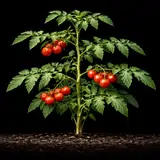
First rule: keep Tomato apart. The textbook juglone victim: tomatoes wilt, yellow, and die within a walnut's root zone (which extends beyond the branch tips).
Plant nearby
- Traditional pairings, thin evidence
-
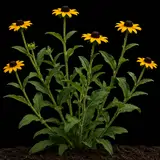
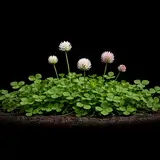
A juglone-tolerant native perennial that can be grown in the difficult ground beneath a walnut, where sensitive plants fail - useful for landscaping the root zone.
-
Among the juglone-TOLERANT plants that grow fine under walnuts - a nitrogen-fixing groundcover for the otherwise difficult ground beneath the tree. Grasses, some daffodils, and many natives also tolerate juglone.
Keep apart
-
The textbook juglone victim: tomatoes wilt, yellow, and die within a walnut's root zone (which extends beyond the branch tips). Keep all nightshades well clear of a walnut - this is a documented, well-known interaction.
-
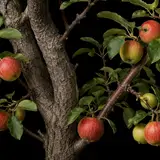
Apples (and other pome/stone fruit) are juglone-sensitive and decline near walnuts. Don't plant an orchard within a walnut's root zone.
-
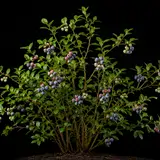
Blueberries are highly juglone-sensitive and one of the classic plants that fail near walnuts.
-
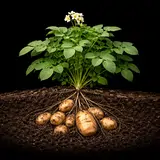
Potatoes and other nightshades are damaged by juglone; keep them out of the walnut's root zone.
-
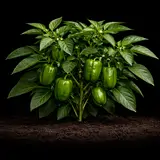
Peppers, like other nightshades, are juglone-sensitive and decline within a walnut's root zone.
Varieties · 5
You pick one when you add Walnut to your garden. Its days to maturity set your harvest window.
Chandler
The dominant modern English/Persian walnut and the commercial standard: large, light-colored, high-quality kernels that crack out cleanly, on a productive, precocious tree that bears relatively young.
Variety details for Chandler
Large, smooth, light tan shells with plump, light-colored kernels.
englishlate-leafinglarge-nuthigh-qualityResists Walnut blight (moderate, via late leafing)
Late-leafing, which helps it dodge spring frost and some blight. The default choice for quality English walnuts. Pairs well with Franquette for pollination.
Franquette
A classic French English/Persian walnut valued for very late leafing - the best trait for frost-prone and blight-prone sites, since it emerges after most spring frosts and wet weather - with good-quality (if smaller) nuts and some walnut-blight resistance.
Variety details for Franquette
Medium, elongated nuts with good-quality kernels.
englishvery-late-leafingcold-adaptedblight-tolerantResists Walnut blight (good, via very late leafing)
A favorite for the Pacific Northwest and a reliable pollinizer for Chandler.
Carpathian
Not a single cultivar but a cold-hardy strain of Persian/English walnut selected from the Carpathian Mountains, hardy to roughly -30°F (zone 4) - the way to grow mild, thin-shelled English-type walnuts in cold northern climates where standard English walnuts freeze out.
Variety details for Carpathian
Medium English-type nuts with thin shells and mild kernels.
englishvery-cold-hardyseed-strainNut quality varies by seedling selection; grafted named Carpathian selections are more consistent.
Hansen
A smaller, more compact, relatively self-fruitful English-type walnut sometimes offered for home gardens where there's room for only one tree - earlier to bear and easier to fit than a full-size standard, with thin-shelled, easy-cracking nuts.
Variety details for Hansen
Small-to-medium thin-shelled nuts on a more compact tree.
englishself-fruitfulcompactbeginner-friendlyA practical single-tree option.
Lake English
A hardy, dependable English/Persian selection well suited to colder northern gardens (a hardy Carpathian-type), producing good-quality thin-shelled nuts and bearing reliably where standard English walnuts are marginal.
Variety details for Lake English
Medium, thin-shelled English-type nuts with good kernels.
englishcold-hardyreliablenorthernA solid cold-climate English walnut.
Grower tips
Notes from growers, tagged with the zone they grow in. A person reads every post before it appears.
Nobody has posted about Walnut yet. The first one usually saves someone a season.
Free account. Your post shows your grower name and zone, never your email.