Add it to your home screen and it opens full screen — no browser bars, one tap away, and everything stays signed in. Free, nothing to download from an app store.
- Tap the Share button in your browser
- Scroll down and choose “Add to Home Screen”
- Open GrowSomeFood from your home screen
- Open your browser’s menu
- Choose “Add to Home screen” or “Install app”
- Open GrowSomeFood from your home screen
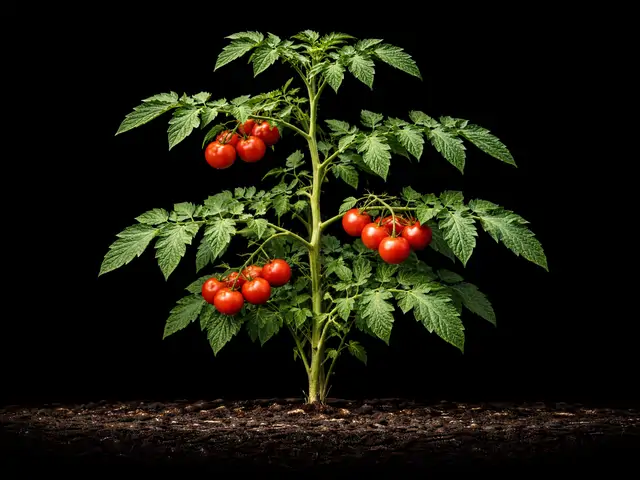
Tomato
Only the fruit is edible. Leaves and stems contain solanine-family alkaloids and should not be eaten in quantity.
Overview
The backyard classic: a frost-tender vining perennial grown as an annual for its fruit, rewarding steady care with months of harvest.
Tomatoes are the most-grown crop in home gardens for good reason: no store tomato matches one ripened on the vine. Botanically a tender perennial vine from western South America, the tomato is grown as a warm-season annual almost everywhere. Give it full sun, steady moisture, something to climb, and a long frost-free stretch, and a handful of plants will feed a household from midsummer to frost.
The biggest planning choice is determinate vs. indeterminate. Determinate (bush) varieties stop at a set height and ripen their crop in a concentrated window — ideal for sauce batches and small spaces. Indeterminate (vining) varieties keep growing and fruiting until frost kills them, and need tall support and regular pruning.
At a glance
- Sun
- Full sun
- Water
- Medium
- Spacing
- 18–36 in (typ. 24)
- Mature height
- 36–96 in (typ. 60)
- Start by
- Direct sow · Transplant
- Frost
- Tender
- Germination
- 5–14 days (typ. 7) @ 60–95 °F (typ. 78)
- Start indoors
- 5–8 wks (typ. 6) before transplant
When to plant
Zone 7a typical frost: last Apr 10 · first Oct 25
Life stages
- Germination day 0–8 from sowing
-
Keep seed mix evenly moistevery 1 dSurface should never dry out fully; bottom-water or mist to avoid dislodging seeds.
-
Hold 70-85°F for germinationA heat mat speeds germination noticeably; remove it once sprouts appear.
No emergence after 2 weeks (old seed or cold mix) -
Keep seed mix evenly moistevery 1 d
- Seedling day 8–42 from sowing
-
Give strong light 14-16 hrs/dayWeak light produces leggy transplants; keep grow lights 2-4 inches above leaves.
-
Pot up when first true leaves crowdBury the stem deeper each time - tomatoes root along buried stems.
-
Harden off over 7-10 days before transplantGradually increase outdoor exposure starting with a few sheltered hours.
Damping off (sudden seedling collapse)Leggy stretch from low lightPurple leaf undersides (cool temps / phosphorus) -
Give strong light 14-16 hrs/day
- Vegetative day 0–30 from transplant
-
Install stake, cage, or trellis at transplantDoing it later damages roots. Indeterminates need 5-6 ft of support.
-
Water deeply 1-2× per weekevery 4 dAim for 1-1.5 inches per week total; deep, infrequent watering builds deep roots.
-
Mulch 2-3 inches once soil is warmStabilizes moisture (prevents blossom end rot and cracking) and blocks soil-splash diseases.
-
Prune suckers on indeterminate varietiesevery 7 dRemove shoots forming in leaf axils below the first flower cluster; skip heavy pruning on determinates.
Cutworms at the stem base (use collars)Transplant shock (wilting first 3-5 days) -
Install stake, cage, or trellis at transplant
- Flowering day 30–110 from transplant
-
Switch to lower-nitrogen feedingevery 14 dExcess nitrogen at flowering grows leaves instead of fruit; use a balanced or bloom formula.
-
Check for blossom drop in heatSustained temps above 90°F or nights above 75°F cause flowers to abort - shade cloth helps.
Blossom drop in heat wavesEarly blight on lower leaves (brown target-ring spots) -
Switch to lower-nitrogen feedingevery 14 d
- Fruit set day 45–120 from transplant
-
Keep watering CONSISTENTevery 4 dSwings between dry and soaked cause blossom end rot and fruit cracking. Same schedule, every week.
-
Scout for hornworms weeklyevery 7 dLook for stripped leaves and droppings; hand-pick at dusk. Spared ones with white cocoons carry beneficial parasitic wasps.
Blossom end rot (black sunken fruit bottoms)Tomato hornwormsSeptoria leaf spot -
Keep watering CONSISTENTevery 4 d
- Harvest day 70–130 from transplant
-
Pick when fully colored with slight giveevery 3 dFruit ripens off the vine from the 'breaker' stage (first blush) onward - picking early beats splitting after rain.
-
Top indeterminates 4 weeks before first frostCutting the growing tip pushes energy into ripening the fruit already set.
Cracking after heavy rainSunscald on exposed fruitFirst-frost forecast (pick all mature green fruit before it) -
Pick when fully colored with slight giveevery 3 d
Harvest
- Style
- Repeated picking
- Typical yield
- 20–90 fruits (typ. 40)
- By weight
- 128–480 oz (typ. 240)
- Full, even color for the variety
- Slight give under gentle pressure
- Fruit releases easily from the stem
Watch out for
Early Blight Disease HighJun, Jul, Aug, Sep
Fungal disease (Alternaria) causing brown spots with concentric target rings, starting on the lowest leaves and climbing.
Watch for: Bulls-eye-patterned brown spots on lower leaves, yellowing around the spots, leaf drop moving upward.
Prevent: Mulch to stop soil splash, water at the base, prune for airflow, rotate out of nightshade beds for 2-3 years.
Treat: Remove and trash (never compost) affected leaves at first sight; copper or biological fungicides slow the spread through the canopy.
Tomato Hornworm Pest HighJun, Jul, Aug, Sep
Huge green caterpillar (to 4 inches) with a rear horn - the larva of the five-spotted hawk moth. Can defoliate a plant in days.
Watch for: Stripped stems, missing leaves at the top of the plant, and dark pellet droppings on leaves below.
Prevent: Till beds in fall to destroy overwintering pupae; interplant strongly scented herbs; encourage parasitic wasps.
Treat: Hand-pick at dusk (they glow under UV flashlight). Leave any wearing white rice-grain cocoons - those carry parasitic wasps that will kill the next generation. Bt works on small larvae.
Late Blight Disease HighJul, Aug, Sep
The Irish-famine pathogen (Phytophthora): greasy gray-green lesions that can collapse a planting in under a week of cool, wet weather.
Watch for: Large greasy-looking dark patches on leaves and stems, white fuzz under leaves in humidity, firm brown blotches on fruit.
Prevent: Never plant store potatoes nearby; give maximum airflow; keep foliage dry; resistant varieties where it recurs.
Treat: There is no cure - remove and bag whole infected plants immediately to protect neighbors and neighborhoods; it spreads by windborne spores for miles.
Verticillium Wilt Disease MediumJun, Jul, Aug, Sep
A soil-borne fungus that clogs the vascular tissue of maples, causing sudden wilting and dieback of individual branches, sometimes with dark-streaked wood - occasional in vine maple as in other maples.
Watch for: Sudden wilting, yellowing, and death of one or more branches while the rest looks healthy; dark streaking in the sapwood of affected limbs.
Prevent: Keep the tree vigorous with appropriate shade, moisture, and mulch; avoid wounding roots and avoid replanting maples where verticillium has killed a plant.
Treat: No cure - prune out dead wood well below symptoms, sanitize tools, and support vigor; many trees wall the fungus off and live for years.
Fusarium Wilt Disease MediumJun, Jul, Aug
Soil-borne fungus that plugs the plant's water vessels: leaves yellow and wilt, often one side of the plant first, in warm soil.
Watch for: Yellowing and wilting on one side or one branch while the rest looks fine; brown streaking inside a cut stem.
Prevent: This is what the F in VFN-resistant varieties defends against - use them where wilt has appeared; rotate nightshades 4+ years.
Treat: None once infected - remove the plant and switch that bed to resistant varieties or other crop families.
Septoria Leaf Spot Disease MediumJun, Jul, Aug, Sep
Fungal spotting disease: many small circular spots with dark edges and pale centers, mostly on lower foliage after wet weather.
Watch for: Dozens of small (1/8 inch) gray-centered spots per leaf, starting low; heavy leaf drop when severe.
Prevent: Same hygiene as early blight - mulch, base watering, airflow, rotation.
Treat: Strip affected lower leaves, improve airflow, apply copper early if the season is wet.
Blossom End Rot Disorder MediumJun, Jul, Aug
Not a disease: a calcium-delivery failure caused by uneven soil moisture, appearing as a black leathery patch on the fruit's bottom.
Watch for: Dark, sunken, leathery spots on the blossom end of developing fruit - often the first fruits of the season.
Prevent: Even, consistent watering plus mulch. The soil almost always has enough calcium; delivery, not supply, is the problem.
Treat: Remove affected fruit and fix the watering rhythm - subsequent fruit will be clean. Calcium sprays are largely cosmetic theater.
Aphids Pest LowApr, May, Jun, Jul, Aug, Sep
Small soft-bodied sap-suckers clustering on tender tips and buds, excreting sticky honeydew.
Watch for: Colonies on new growth and flower buds, sticky residue, curling shoots, attending ants.
Prevent: Avoid excess nitrogen; encourage ladybugs and lacewings (zinnia flowers help feed them).
Treat: Hose off or use insecticidal soap. Rarely serious on vigorous zinnias.
Good & bad neighbors
Varieties · 6
The dependable workhorse hybrid: heavy yields of smooth 12-16 oz slicers with classic tomato flavor and a strong disease package. A safe first tomato in almost any climate.
An All-America Selections winner that balances everything: tidy semi-determinate plants, 7-8 oz crack-resistant fruit, one of the best disease packages available, and reliable set in variable weather.
Pre-1890 Tennessee heirloom famous for rich, smoky-sweet flavor that tops taste trials. Dusky rose-purple fruit, 10-16 oz. Production is moderate and fruit cracks more readily than hybrids - the price of the flavor.
The standard paste tomato: compact determinate plants ripen a concentrated set of dense, low-moisture 2-3 oz fruit - exactly what sauce and canning batches want. Little pruning needed.
The legendary Italian sauce tomato: longer and drier-fleshed than Roma with a bittersweet depth prized for authentic marinara. Indeterminate, so it needs support and yields over a long window.
The cherry tomato people plant once and never skip again: intensely sweet tangerine-orange fruit in long trusses, first to ripen and still producing at frost. Prone to splitting after rain - pick often.
Grow
Start indoors 5-8 weeks before last frost, transplant deep after frost danger, into full sun and warm soil.
Nearly everyone starts tomatoes indoors or buys transplants — direct sowing only makes sense where summers are very long. Sow seed ¼ inch deep in warm mix (70-85°F) 5-8 weeks before your last frost. Give seedlings strong light immediately and pot them up as they grow, burying the stem deeper each time: tomatoes grow roots from any buried stem.
Transplant 1-4 weeks after your last frost, once nights stay above 50°F and soil has warmed. Plant deep — bury two-thirds of the plant, stripping the lower leaves. Space 18-36 inches apart with support installed at planting time.
Care
Consistent deep watering, mulch, support, and sucker-pruning on indeterminates are the whole game.
Tomato care rewards consistency over intensity. Water deeply once or twice a week (1-1.5 inches total) rather than lightly every day — and keep the schedule steady, because moisture swings cause blossom end rot and split fruit. Mulch 2-3 inches once the soil is warm to hold moisture and stop soil-borne disease splash.
Feed modestly: too much nitrogen grows a gorgeous plant with no fruit. On indeterminate varieties, pinch out suckers (shoots in the leaf axils) below the first flower cluster weekly, and keep vines tied to their support as they climb. Water at the base, not overhead, to keep foliage dry and blight at bay.
Harvest
Pick from the first blush of color onward; fruit ripens perfectly off the vine and avoids splitting.
A tomato is ready when it shows full, even color and yields slightly to pressure. But you don't have to wait: from the 'breaker' stage (first blush of pink), the fruit has sealed itself off from the vine and will ripen identically on your counter — picking at breaker protects it from cracking, pests, and heavy rain. Never refrigerate a tomato you care about; cold kills the flavor compounds.
Before your first fall frost, pick everything mature-green or beyond. Fruit with any gel development inside will ripen indoors in a paper bag over a few weeks.
Storage
Counter for fresh eating; can, sauce, or freeze the surplus. Never the fridge.
Ripe tomatoes keep 4-7 days at room temperature, stem-side down, out of sun. Refrigeration ruins texture and aroma — only use it for fully ripe fruit you can't eat in time, and let it return to room temperature before serving. For the surplus: whole tomatoes freeze skin-on in bags for winter sauce, and paste types can, roast, or dry beautifully. Green fruit rescued before frost ripens slowly wrapped in newspaper or bagged with a banana.
Growing across climates
Cold zones chase a short window with fast varieties; hot zones grow spring and fall crops around summer heat.
Zones 3-5: the season is short — start indoors on the early side, use short-maturity varieties (55-70 days), black plastic or fabric mulch to warm soil, and season-extenders at both ends. Zones 6-8: classic tomato country; almost any variety matures with time to spare. Zones 9-10: the enemy flips from frost to heat — fruit set stalls above ~90°F, so plant in late winter for an early-summer crop and again in late summer for a fall crop; heat-set varieties widen the window. Zones 11+: grow through the coolest, driest months and lean on disease-resistant varieties — humidity is the real opponent.
Troubleshooting
Most tomato problems trace back to watering swings, heat, or foliage staying wet.
Black sunken fruit bottoms (blossom end rot): calcium delivery failure caused by uneven watering — fix the schedule and mulch; the next fruits will be fine. Flowers falling without fruiting: heat above 90°F or nights below 55°F; wait it out or add shade cloth. Brown target-ring spots climbing from lower leaves (early blight): remove affected leaves, mulch, water at the base, rotate beds next year. Leaves vanished overnight: hornworm — look for the huge green caterpillar and droppings, hand-pick at dusk. Split fruit: a flood after drought; pick at breaker stage ahead of storms.
Nutrition
Low-calorie and lycopene-rich - the red pigment linked to heart and prostate health, and cooking increases it.
Tomatoes are about 95% water and only ~20 calories per cup, but they pull real nutritional weight: excellent vitamin C, good vitamin K, potassium, and folate. Their signature compound is lycopene, the carotenoid that makes them red, associated in long-running research with heart and prostate health.
The kitchen twist: unlike most nutrients, lycopene gets more available with cooking and a little fat — a slow-simmered sauce with olive oil delivers several times the absorbable lycopene of the same tomatoes raw. Grow them for the fresh-slice flavor; simmer the surplus for the nutrition.
In the kitchen
The most versatile crop in the garden: raw when perfect, roasted when plentiful, sauced and canned for winter.
Match the tomato to the job: slicers and beefsteaks for sandwiches and caprese where raw flavor is the whole point; cherries for salads, snacking, and blistering in a hot pan; paste types (Roma, San Marzano) for sauce, canning, and drying, where their dense, low-water flesh means half the simmering time.
When the August flood arrives: roast halved tomatoes with garlic and olive oil and freeze flat in bags (instant winter sauce); core and freeze whole ones skin-on (skins slip off under warm water); oven-dry cherries at 200°F into candy. Green fruit at season's end is its own ingredient — fried green tomatoes, chutney, salsa verde.
Propagation & seed saving
Save seed from heirlooms by fermenting the gel off; clone any favorite plant from a rooted sucker mid-season.
Seed saving works beautifully for heirloom and open-pollinated varieties (skip hybrids — their seed won't grow true). Squeeze the seeds and gel from a fully ripe fruit into a jar with a splash of water, let it ferment 2-3 days until a film forms (this dissolves the germination-blocking gel coat and kills seed-borne disease), rinse the good seeds that sank, and dry on a plate for two weeks. Stored cool and dry, tomato seed stays viable 4-6 years. Tomatoes self-pollinate, so even neighboring varieties usually come true.
The free-plants trick: those suckers you prune from indeterminates? Stand them in a glass of water for a week and they root into full transplants — a mid-season second wave, or insurance clones of your best plant.
Medicine
No traditional herbal role - the tomato's health story is dietary, through lycopene and vitamin-rich fruit.
Honest answer: the tomato has no established herbal or medicinal tradition — for centuries Europeans actually avoided eating it, assuming a nightshade must be poisonous. Its modern health reputation is entirely dietary: regular tomato consumption features prominently in Mediterranean-diet research, and lycopene remains one of the most-studied food compounds for cardiovascular and prostate health. Treat it as excellent food, not medicine — and note that the foliage is the one part with meaningful alkaloids, which is why leaves and stems stay out of the kitchen.
History
Domesticated in the Americas, feared as poison in Europe for 200 years, now the world's most-grown fruit.
The tomato's wild ancestors are pea-sized berries from the Andes; domestication happened in Mesoamerica, where the Aztecs grew tomatl long before Europeans arrived. Spain carried it home in the 1500s — where much of Europe promptly refused to eat it for two centuries, branding the 'poison apple' a nightshade fit only for ornament (acidic fruit leaching lead from pewter plates didn't help its reputation).
Italy converted first, and by the 1800s the tomato had gone from suspicion to sauce to global staple. Today it's the most-grown fruit on earth — and the most-grown crop in home gardens, where the flavor the shipping industry bred away still lives.
Cook it
All 20 recipes →No grower tips for Tomato yet — yours could be the first.
Sign in to share what works in your garden.