
Add it to your home screen and it opens full screen: no browser bars, one tap away, and everything stays signed in. Free, nothing to download from an app store.
- Tap the Share button in your browser
- Scroll down and choose “Add to Home Screen”
- Open GrowSomeFood from your home screen
- Open your browser’s menu
- Choose “Add to Home screen” or “Install app”
- Open GrowSomeFood from your home screen
Spicebush
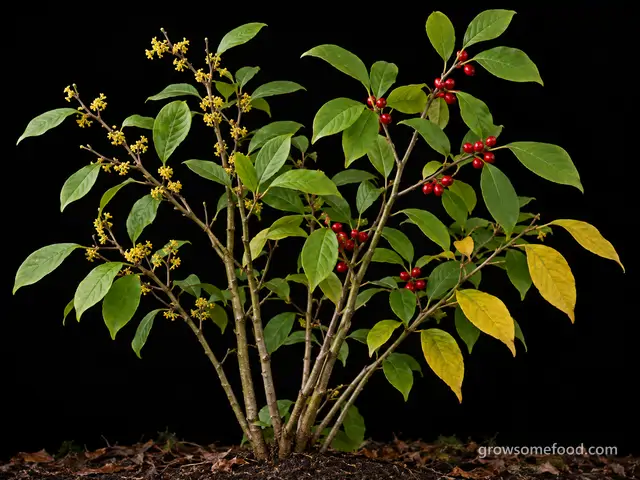
A fragrant native shade shrub with a triple gift - an early-spring yellow haze, a homegrown allspice-like berry spice, and its role as host to the beautiful spicebush swallowtail butterfly.
Safety notes Spicebush (Lindera benzoin) is a safe, aromatic native - dried berries make a spice, leaves and twigs a tea. Scratch a twig: true spicebush smells strongly of allspice-citrus, and the red-berried shrubs of the same woods (bush honeysuckles, winterberry holly, burning bush, barberry, nandina) have no scent - if it does not smell spicy, do not eat it. But smell is not enough: toxic sweetshrub (Calycanthus floridus) is spicy too - it has OPPOSITE leaves and dry brown pods, never red berries.
Overview
Spicebush (Lindera benzoin) is one of the most useful and charming native shrubs of the eastern woods - and one of the most fragrant. Crush a leaf, twig, or berry and you get a wonderful spicy, citrusy aroma. It's a rounded, 6-12 foot understory shrub of moist woods that opens the season with a soft yellow haze of tiny flowers on bare stems in very early spring, wears clean green leaves that turn clear gold in fall, and (on female plants) ripens glossy red berries.
Quick facts
- Sprouts in
- 60 daysRange: 30–120 days
- Soil temperature
- 68 °FRange: 60–72 °F
- Height
- 9 ftRange: 6–12 ft
- Spread
- 9 ftRange: 6–12 ft
- Cold
- Takes hard frostdamaged below -30°F
- Heat
- Struggles above 95°F
- Life cycle
- Perennial, lives about 30 years
- Save seeds
- About 150 days after plantingRange: 120–180 days
- Self-sows
- Yes, expect volunteers
- Soil
- Consistently moist
- Water
- Medium
- Plant spacing
- 8 ftRange: 5–12 ft
When to plant
Fall sowing is open for 20 more days. Next: spring, Mar 27 to May 22.
- Direct sow Oct 11 – Nov 8 Open now · 20 days leftAbout 2 weeks before to 2 weeks after your first frost (Oct 25 here)Fall-sow cleaned fresh seed (don't let it dry) outdoors; it needs cold stratification and germinates in spring, slowly - transplants are faster.
- Transplant Mar 27 – May 22 Opens in 159 daysAbout 2 weeks before to 6 weeks after your last frost (Apr 10 here)Plant in early spring into moist, humusy, well-drained soil in part shade; plant at least one male and one female for berries.
- Transplant Aug 16 – Sep 27 Opens in 301 daysAbout 10 weeks before to 4 weeks before your first frost (Oct 25 here)Fall planting works well in milder zones; keep moist and mulch.
Frost here: last around Apr 10 (Mar 27 to Apr 24 most years), first around Oct 25. Zone averages, your own yard may run a week or two either way.
Life stages
Establish, grow, repeat
Getting established and returning each season are different parts of the story.
Stage 1 of 5 · Getting established
Year 1 - rooting in
Day 0 to 90 after transplanting
Care at this stage
-
Keep evenly moist while establishing
Spicebush is a moist-woodland understory shrub - water a new plant to keep the soil evenly moist through its first season, and don't let it dry out. It naturalizes along streams and in rich, damp woods.
-
Mulch with leaf litter
A woodland mulch of leaf litter or compost suits it, holds moisture, and enriches the soil. For berries, plant at least one male and one female (it's dioecious).
Months are typical seasonal windows; climate, variety, and plant age can shift them.
Harvest
- Berries fully glossy red in fall (female plants only), for drying into spice
- Leaves and twigs aromatic and available all season for tea
- Pick the red berries for spice · every 3 days
- Fall color and birds
Picking pick as they ripen
Cook with Spicebush
Watch out for
3 to know. None are high-risk for Spicebush. 1 is active in October.
No Berries (Dioecious / No Pollinator)Severity Low DisordernowSeason: Sep–OctA healthy, flowering tree that never sets fruit year after year - either a male tree, or a female with no male nearby.
A healthy, flowering tree that never sets fruit year after year - either a male tree, or a female with no male nearby.
Add a male pollinator (or graft a male branch onto a female tree, or plant a self-fruitful cultivar); nothing else will make a lone female or a male tree fruit.
Plant both a male and a female (or a self-fruitful cultivar like 'Meader'); when buying seedlings, expect roughly half to be non-fruiting males, and site a known male within pollination range of females.
American persimmon is usually dioecious - trees are male or female, and only females bear fruit, generally needing a male within a few hundred feet to pollinate them. A lone male, or a female with no pollinator, produces no crop, a common surprise for new growers.
Drought StressSeverity Low DisorderSeason: Jun–AugWilting on hot afternoons, browning and crisping along leaf edges and tips, premature leaf drop, collapsed flower stems, and thin, stunted growth - showing up first on young plants and on the driest, most exposed side of the planting.
Spicebush is a moisture- and shade-loving woodland shrub, so sun exposure is half the problem here - it scorches and thins in a hot open position even where the soil is reasonable.
Wilting on hot afternoons, browning and crisping along leaf edges and tips, premature leaf drop, collapsed flower stems, and thin, stunted growth - showing up first on young plants and on the driest, most exposed side of the planting.
Water deeply and consistently, then mulch. Mild wilting reverses within a day or two, but a prolonged drought sets a plant back hard and can kill a young one outright. If a plant scorches every summer, the site is wrong - move it to damper ground rather than trying to water it through.
Match the site to the plant: put a moisture-loving species where the ground actually stays damp - a rain garden, pond edge, ditch, seep or low spot - rather than in an ordinary border you intend to keep watered. Mulch to hold moisture and keep the roots cool, water deeply through every dry spell while the plant is establishing, and avoid hot, windy, exposed positions.
Not a pest but a siting problem, and on a moisture-loving plant it is usually the thing that actually kills it. When the soil dries out, leaf edges brown and crisp, foliage wilts and drops early, flowering and fall color are cut short, and growth thins. Hot sun, wind and exposed positions make it worse by pulling water out faster than the roots can replace it. A plant that wants reliably moist or wet ground has no drought tolerance to fall back on, and young or recently planted ones have the least of all.
Spicebush Swallowtail CaterpillarsSeverity Low PestSeason: Jun–AugLeaves folded into shelters and remarkable green caterpillars with large fake 'snake eye' spots feeding on the foliage.
Leaves folded into shelters and remarkable green caterpillars with large fake 'snake eye' spots feeding on the foliage.
None - welcome the caterpillars; never spray a butterfly host plant.
None wanted - this is a host plant; plant spicebush precisely to feed these butterflies.
Not really a pest - the celebrated spicebush swallowtail (and promethea moth) caterpillars feed on the leaves. Some leaf loss is the whole ecological point of the plant, and healthy shrubs shrug it off.
Good & bad neighbors
Plant nearby
-
Two native understory plants for the moist woodland edge - dogwood's spring bracts above spicebush's fragrant layer, both feeding birds in fall and thriving in part shade.
-
Native ferns and woodland wildflowersFerns, wild ginger, and spring ephemerals share spicebush's moist, shaded, humusy conditions and complete a woodland understory.
-
Both are native, bird-feeding, part-shade woodland shrubs/small trees with edible fruit; together they layer a productive, wildlife-rich shade planting.
-
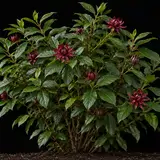
Another fragrant native shrub for the same shaded woodland edge - and the one to learn alongside spicebush, because it is the aromatic lookalike. Sweetshrub (Calycanthus floridus) is called spicebush in some regions and its scratched bark smells spicy too, but it is toxic. Tell them apart by leaf arrangement and fruit: sweetshrub has opposite leaves, maroon strappy flowers, and dry brown urn-shaped pods; spicebush has alternate leaves and glossy red berries.
-
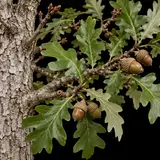
Spicebush is a natural understory shrub beneath a high oak canopy, sharing the moist shade and adding a butterfly-host and spice layer to an oak-hardwood planting.
Grower tips
Notes from growers, tagged with the zone they grow in. A person reads every post before it appears.
Nobody has posted about Spicebush yet. The first one usually saves someone a season.
Free account. Your post shows your grower name and zone, never your email.