Add it to your home screen and it opens full screen: no browser bars, one tap away, and everything stays signed in. Free, nothing to download from an app store.
- Tap the Share button in your browser
- Scroll down and choose “Add to Home Screen”
- Open GrowSomeFood from your home screen
- Open your browser’s menu
- Choose “Add to Home screen” or “Install app”
- Open GrowSomeFood from your home screen
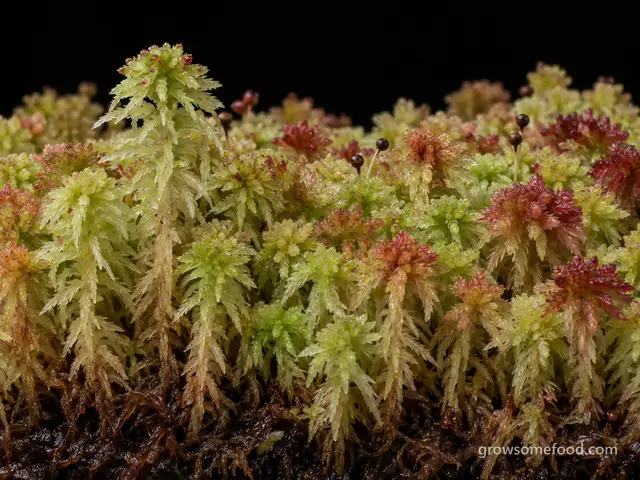
Sphagnum Moss
The moss that builds bogs: no roots, no flowers, and cells that hold twenty times its own weight in water while acidifying everything around it. Live sphagnum is the growing medium for carnivorous plants and orchids - and it is not the same thing as the bagged peat moss stripped from bogs that took millennia to form.
Sphagnum is not toxic, but wear gloves. Live moss and bagged sphagnum can both carry the fungus Sporothrix, which enters through a scratch and causes sporotrichosis - a slow chain of skin nodules spreading up the arm that needs prescription antifungal treatment, not a bandage. Handle it in gloves, dampen a dry bale before you tear it open so you are not breathing the dust, and see a doctor about any sore that will not heal after working with moss. Nothing here is edible.
Overview
The one thing to knowSphagnum is a true moss - no roots, no flowers, no seeds - and it is one of the most consequential plants on earth.
Sphagnum is a true moss - no roots, no flowers, no seeds - and it is one of the most consequential plants on earth. A sphagnum carpet is built from shoots that grow at the top and die at the bottom, rising a fraction of an inch a year over its own compacting remains. Do that for five thousand years and you have a peat bog.
Two tricks make it extraordinary. First, most of a sphagnum leaf is made of large empty dead cells that act as sponges: living moss holds something like sixteen to twenty-five times its own dry weight in water, which is why a handful squeezed in your fist runs like a wrung-out cloth. Second, it acidifies its own surroundings, pulling mineral nutrients out of the water and releasing acid in exchange. Between them, those two habits let sphagnum flood the ground, strip it of nutrients and sour it - conditions almost nothing else tolerates. That is how a bog stays a bog, and it is why carnivorous plants evolved to eat insects instead of feeding from the soil.
For a gardener, that same behaviour makes live sphagnum the ideal medium and living mulch for a bog planter, for orchids, for air layering and for lining baskets. Venus flytraps, pitcher plants, sundews and bladderworts all name it as their growing surface, and it doubles as a water-quality gauge: sphagnum dies in tap water, so moss that is going grey and slimy is telling you the water is wrong before the carnivores show it.
One distinction runs through this whole entry. Live sphagnum is the growing plant, and you can grow, crop and share it indefinitely. Peat moss is the dead, partly decomposed sphagnum mined out of bogs that took thousands of years to accumulate, and it is not a renewable product on any human timescale. They come from the same plant and they are not the same thing. And whichever you handle, wear gloves: sphagnum can carry the fungus behind sporotrichosis.
Quick facts
- Life cycle
- Perennial
- Height
- 3 in1 to 12
- Spread
- 24 in6 to 240
- Cold
- Takes hard frostdamaged below -50°F
- Heat
- Struggles above 90°F
Full sun or part sun or part shade · high water · tolerates wet soil soil · division
When to plant
Fall transplanting is open for 20 more days. Next: spring, Apr 10 to Jun 24.
- Transplant Aug 11 – Oct 11 Open now · 20 days leftAbout 11 weeks before to 2 weeks before your first frost (Oct 25 here)In mild-winter regions autumn is a good time to start a patch - cooler air, lower light and reliable rain suit establishment better than the heat of summer. Keep it permanently wet through the cool season and shaded from any harsh winter sun.
- Transplant Apr 10 – Jun 24 Opens in 201 daysAbout at to 11 weeks after your last frost (Apr 10 here)There is no true planting: scatter live fragments thinly over saturated peat in a tray or bog planter and press them in. Spring gives the longest growing season for the fragments to knit into a carpet. Rainwater, distilled or reverse osmosis water only, and no fertilizer ever.
Frost here: last around Apr 10 (Mar 27 to Apr 24 most years), first around Oct 25. Zone averages, your own yard may run a week or two either way.
Life stages
One stage to settle in, then three that repeat each year. Windows are typical; your zone and weather move them.
Starting a patch from live fragments
Day 0 to 120- DoScatter live fragments over wet peat and press them inThere is no planting and no soil. Fill a tray, bog planter or lined pot with pure peat, or a peat and washed sand mix, and saturate it. Tear a handful of live sphagnum into loose fragments, spread them thinly over the surface, and press them into contact - each fragment grows into a new shoot, so a thin scattering knits into a carpet faster than a thick clump does. Never add potting soil, compost or fertilizer.
- WaterPure water only, and keep it permanently wetevery 3 daysSphagnum is killed by the dissolved minerals in ordinary tap, spring, softened and most bottled water. Use rainwater, distilled water or reverse osmosis water, and nothing else. Stand the container in a saucer or tray with an inch or two of water so the peat wicks up and the surface never dries; a covered tray or a plastic dome holds humidity while the fragments knit together.
- ProtectBright light, but not baking sun in a hot climateLive sphagnum wants bright light - it grows greener and denser in it, and the red species need sun to colour properly - but only where it stays permanently wet. In hot, dry, high-light climates give it afternoon shade or it bleaches to straw. Under cool, humid conditions it takes full sun happily. Wear gloves for all of this handling; sphagnum can carry the fungus behind sporotrichosis.
Watch for- Fragments greening up and lengthening within a few weeks
- Surface drying to a pale crisp between waterings (it must stay wet)
- White crust on the peat, which means mineral-bearing water got in
The slow upward creep
Mar to Oct, every year- InspectIt grows at the top and dies at the bottomA sphagnum shoot lengthens from its crowded head, the capitulum, while the lower part below dies and compacts. That is the whole biology of a bog: the living carpet rises a fraction of an inch a year on top of its own accumulating dead tissue, which is what peat is. Growth is slow - expect an inch or two of height a year and a carpet that spreads sideways over seasons, not weeks.
- WeedPull out anything else that appearsevery 2 weeksSphagnum wins in the wild by making conditions no other plant can tolerate, but in a tray it is easily overtaken. Pick out algae, liverworts, grass and tree seedlings as they appear, before they shade the moss. Anything that arrives on the wind is a sign that nutrients have got in from somewhere - runoff, dust, a splash of tap water, or a fertilised plant sharing the tray.
- WaterKeep the water level up and the water pureevery 5 daysTop up the tray with rainwater, distilled or reverse osmosis water so the surface never dries out. Do not fertilize, ever: sphagnum absorbs nutrients avidly and dies of them. Flushing the container occasionally with pure water clears any minerals that have accumulated by evaporation, which matters most in hot weather when trays evaporate fast.
Watch for- Dense green heads (capitula) at the top of each shoot
- Algae film or liverworts appearing, meaning nutrients have got in
- Bleaching to straw colour in strong sun and heat
Cropping the top growth
Jun to Sep, every year- HarvestTake the top inch or two and leave the rest to regrowevery 60 daysCrop a live carpet the way a bog crops itself: gather the green top growth with scissors or gloved fingers, taking the top one to two inches and leaving the lower living stems in place. The cut carpet closes over and regrows within a season. Never lift the whole mat - that removes the plants and the accumulated peat together, which is precisely the damage that wild harvesting does.
- DoUse it fresh, or dry it slowly for storageFresh live moss is what you want for lining hanging baskets, top-dressing orchids, wrapping an air layer, or as a living mulch in a bog planter. To store it, spread it thinly somewhere airy and out of direct sun until it is dry and springy, then keep it in a paper sack rather than sealed plastic. Rehydrated dried moss works as a medium but is no longer alive.
Watch for- Dense green top growth an inch or two deep, ready to crop
- A cropped patch closing over and regreening within a few weeks
- Thin or pale growth, which means the carpet needs a season off
Winter under ice
Nov to Feb, every year- ProtectLeave it wet and let it freezeSphagnum is genuinely arctic-hardy and needs no winter protection outdoors across its range; a bog planter that freezes solid thaws out in spring and carries on. The one winter mistake is letting a container dry out, which is easy to do when everything is frozen and you have stopped watering. Keep the reservoir topped up in mild spells, and keep road salt and salted runoff well away.
- InspectClear fallen leaves off the carpetSweep or pick tree leaves off the moss in autumn. A mat of decaying leaves smothers the growing heads and, worse, feeds the carpet with the nutrients it is adapted to live without, which is what lets algae and weeds take hold the following spring. Indoors, a sphagnum tray on a windowsill simply slows down over winter and needs less water.
Watch for- A frozen carpet, which is normal and harmless
- Containers drying out unnoticed during freezes
- Fallen leaves smothering the growing heads
- Salted runoff or splash reaching the moss
Harvest
- A dense green carpet with an inch or two of fresh top growth
- Crop only the top and leave the lower living stems - the mat closes over and regrows in a season
- Thin, pale or slow growth means the carpet needs a rest rather than a haircut
- Take the top inch or two and leave the rest to regrow · every 60 days
- Use it fresh, or dry it slowly for storage
Picking pick as they ripen
Watch out for
5 to know. 2 are high-risk: Mineral Burn (Bad Water & Fertilizer), Peat Extraction & Bog Loss. 5 are active in September.
Mineral Burn (Bad Water & Fertilizer)Severity High DisordernowSphagnum is the most sensitive thing in the bog and therefore the best gauge: it greys, goes slimy and dies in mineral-bearing water well before the carnivorous plants growing in it show damage, so moss failing in a healthy-looking planter is a warning to check the water.
Softened water is the fastest killer of all. Flush containers through with pure water in hot weather, since evaporation concentrates whatever minerals are present.
Traps and leaves blackening and dying back for no obvious reason, stunted weak growth, and a white mineral crust forming on the soil surface, especially in plants watered from the tap.
Dilute or fully replace with fresh pure water and move the plant to a clean, soft-water container; badly affected plants may not recover, so prevent it by keeping the water lean.
Use ONLY distilled, rainwater, or reverse-osmosis water, always; pot only in pure peat and washed sand/perlite; never fertilize or use potting soil, compost, or garden soil.
As with all carnivores, hard, alkaline, or mineral-rich water - and any fertilizer - harms bladderwort, whose delicate stems and traps need soft, acidic, nutrient-poor water; mineral and nutrient loading dissolves the plant and feeds smothering algae.
Peat Extraction & Bog LossSeverity High DisordernowBagged peat and wild-gathered long-fibered sphagnum with no indication of source.
Bagged peat and wild-gathered long-fibered sphagnum with no indication of source. Local bogs being drained, ditched or cut. Wild moss offered cheaply, which almost always means it was stripped rather than farmed. Whole mats lifted from a patch rather than the top growth cropped, which sets the colony back years.
Nothing a gardener does repairs a cut bog; the work is restoration by conservation bodies, reflooding drained ground and reintroducing living sphagnum. What a gardener controls is demand: reduce peat use, propagate and share live moss instead of buying wild-gathered stock, and support local bog and pocosin conservation.
Grow your own live moss and crop it from the top - a single tray becomes a permanent supply and a shared handful starts another. Never collect from a wild bog: many are protected, collecting on public land or another's property needs permission and is frequently prohibited, and recovery is measured in decades. Buy farmed or nursery-propagated live moss where you can, and substitute coir, composted bark or wood fibre for peat in general potting, keeping peat for the bog and carnivorous mixes where nothing else works.
The real threat to this plant is not in anyone's garden. Sphagnum peatlands accumulate at roughly a millimetre a year, so a metre of peat represents about a thousand years of growth, and both harvesting the moss and mining the peat beneath it remove far more than regrows. Drained and cut bogs lose the water table that keeps them alive, stop accumulating carbon and begin releasing it, and take decades to centuries to recover even with active restoration. Peatlands cover roughly three percent of the world's land and hold about a third of all soil carbon, so this is a climate question as well as a habitat one, and it takes the carnivorous plants, orchids and bog specialists down with it.
Sporotrichosis from Handling MossSeverity Medium DisordernowA small painless firm bump at the site of a scratch or thorn prick days or weeks after handling moss, which may ulcer.
A small painless firm bump at the site of a scratch or thorn prick days or weeks after handling moss, which may ulcer. A line of similar nodules appearing up the forearm from it. Any sore linked to plant work that simply will not heal. People with weakened immune systems can develop more serious lung or joint infection, particularly after breathing dust from dry moss.
See a doctor rather than treating it at home - it needs prescription antifungal medication, typically for several weeks to months, and antibiotics will not touch it. Tell the doctor you have been handling sphagnum moss or peat, because that history is what makes an unusual skin infection immediately recognisable. Nothing here is medical advice.
Wear gloves for all handling of live moss, dried sphagnum and bagged peat, and long sleeves when working with rose canes and other thorny material in the same session. Dampen a dry bale before tearing it open so you are not breathing the dust, and work outdoors or in ventilated space. Cover existing cuts and scratches before you start, and wash your hands and forearms afterwards.
A hazard to the gardener rather than the plant, and the reason gloves belong with sphagnum. The soil fungus Sporothrix lives on sphagnum, on rose thorns and on other plant debris, and it can enter through a scratch, splinter or thorn prick while handling live moss or dried bagged sphagnum. The result is sporotrichosis, sometimes called rose gardener's disease: a small firm nodule appears at the wound days to weeks later, then further nodules follow in a chain up the limb along the lymphatic vessels, often with little pain and no fever. It is uncommon, it is not contagious between people, and it is treatable - but it needs prescription antifungal medication for weeks to months and it will not resolve under a bandage.
Algae, Liverworts & Weed InvasionSeverity Medium DisordernowA slick green algae film spreading over the wet surface.
A slick green algae film spreading over the wet surface. Flat liverwort thalli, grass blades or tree seedlings appearing in the carpet. Sphagnum thinning and paling underneath the invaders. Fallen leaves matted on the surface, which both smother and feed.
Pick the invaders out by hand as they appear, taking grass and tree seedlings out by the root, and then find and fix the source of the nutrients rather than just weeding repeatedly. Flush the container thoroughly with pure water. Where algae has taken a section completely, clear it, flush, and reseed the gap with fragments from a clean part of the carpet.
Water only with rainwater, distilled or reverse osmosis water, and never fertilize, directly or indirectly. Keep the container away from runoff, from fertilised beds and from soil splash, and do not share a tray with anything that gets fed. Sweep fallen leaves off in autumn before they mat down. Flush containers through with pure water in hot weather so evaporation does not concentrate minerals.
In the wild sphagnum defends itself by making the ground too acidic and too nutrient-poor for competitors. In a tray that defence is easily broken. Once nutrients or minerals get in - fertiliser runoff, a fed plant sharing the container, compost or soil splash, bird droppings, a mat of decaying tree leaves, or hard water - green algae film, liverworts, grasses and tree seedlings move in and shade the moss out. The invaders are a symptom rather than the disease: their arrival is usually the first visible sign that the water or the nutrient balance has gone wrong.
Drying Out & Sun ScorchSeverity Medium DisordernowColour draining from green to pale straw, then to white.
Colour draining from green to pale straw, then to white. Growing heads shrivelling and the carpet feeling springy and dry rather than sodden. A reservoir that has run empty, often unnoticed in a heatwave or during winter. Bleaching on the sunny side of a tray while the shaded side stays green.
Rewet thoroughly with pure water and be patient - the green heads that survive will start growing again within weeks, and a partly bleached carpet often recovers completely. Where the heads are dead the moss will not regreen, so pick out the white crisp material and reseed those patches with fresh fragments from a living part of the same tray.
Keep the container standing in an inch or two of pure water at all times, and check it daily in hot weather. In hot, bright, dry climates give afternoon shade, use a deeper reservoir, and consider a partial cover to hold humidity. Indoors, a covered tray keeps the air around the moss damp. Do not forget the reservoir over winter, when a freeze can empty a tray without you noticing.
Sphagnum has no roots and no way to fetch water, so it lives entirely on what is held in and beneath the carpet. A container that runs dry, or a carpet in strong sun and hot dry air, bleaches from green to straw and then to white and crisp. Moss survives short dry spells and revives when rewetted, but repeated drying kills the growing heads and lets the carpet break up. Dry indoor air, an outdoor tray in a heatwave, a reservoir forgotten during winter freezing, and simple sun scorch in a low-humidity climate are all versions of the same failure.
Good & bad neighbors
Plant nearby
-
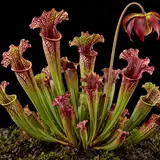
The classic bog-garden carpet under Sarracenia. Sphagnum keeps the surface of a pitcher-plant bog wet and sour, suppresses weed seedlings, and in the wild is the ground the pitchers grow out of. Crop it from the top if it starts creeping up over small crowns.
-
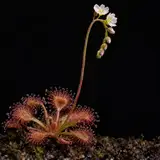
Sundews grow naturally in and on live sphagnum and often self-sow into a moss carpet, which holds the moisture their tiny root systems need. Watch that vigorous moss does not overtop the smallest rosettes; a light crop of the surrounding heads keeps them clear.
-
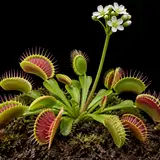
Live sphagnum is the ideal living mulch around flytraps: it keeps the surface acidic and wet, sets the traps off beautifully, and acts as a water-quality gauge, since the moss dies in mineral-bearing water before the flytrap shows the damage. Same culture exactly - pure water, peat and sand, no fertilizer.
-
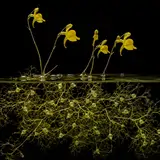
Terrestrial bladderworts thread through wet sphagnum in the wild and frequently appear on their own in a moss tray, adding tiny bright flowers. Both want the same pure, soft, nutrient-poor water, and neither competes with the other for anything.
-
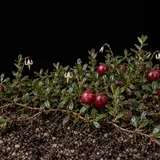
The natural bog pairing: cranberry vines run over living sphagnum in wild peatlands and grow the same way in a home bog planter, with the moss holding moisture and acidity around their shallow roots. A cranberry bog is, quite literally, a sphagnum bog with fruit on it.
Varieties · 4
You pick one when you add Sphagnum Moss to your garden. Its days to maturity set your harvest window.
Live Sphagnum (Sphagnum spp.)
Dense spongy carpet of pale green to bronze shoots, each ending in a crowded rounded head, wet to the touch and dripping when squeezed.
speciesnativelivinggrowing-mediumThe growing plant, and the only form that regrows. Dozens of species occur in the US and they are genuinely difficult to tell apart without a microscope, so live moss is almost always sold and shared simply as sphagnum. Practically it makes little difference: all of them hold vast amounts of water, acidify their surroundings and strip nutrients from the water. Green, gold and bronze forms are the usual garden moss, growing in dense hummocks or loose wet carpets. Cropped from the top and left to regrow, a single tray is a permanent supply.
Red bog mosses (Sphagnum magellanicum group)
Compact hummocks of deep red to wine-purple shoots, brightest in full sun and fading to green in shade.
species-groupnativelivingornamentalThe deep red and wine-purple sphagnums that give northern bogs their colour, and the most ornamental moss to grow. The red pigments develop in strong light, so a shaded plant of the same species stays green and a sunny, permanently wet one turns spectacular. Culture is identical to any other sphagnum - pure water, no nutrients, never dry - but give it the brightest position your heat allows, with afternoon shade in hot climates.
Long-fibered Sphagnum Moss (dried) - a product, not a plant
Long, pale straw to golden strands of dried moss, springy and light in the bag, swelling and softening when soaked.
productdriedharvestedmediumThe bagged, dried whole moss sold for orchids, air layering and basket liners, mostly harvested in New Zealand and Chile. It is real sphagnum, dried rather than decomposed, and it rehydrates into an excellent long-lasting medium - but it is dead and will not grow, however wet you keep it. Some of it is now cropped from farmed beds on a genuinely renewable cycle and some is wild-gathered; the label rarely tells you which. Wear gloves and dampen the bale before tearing it open, both to keep the dust down and because dried sphagnum can carry the sporotrichosis fungus.
Sphagnum Peat / Peat Moss - NOT the same thing
Fine, dark brown, fibrous compressed material with no living structure - nothing like the pale springy strands of live or dried sphagnum.
productharvestednon-renewabledo-not-confuseThe bagged brown peat in every potting mix, and the source of endless confusion. Sphagnum peat is dead, partly decomposed sphagnum mined from bogs where it accumulated at roughly a millimetre a year over thousands of years - so while it is made of this plant, it is not a renewable product on any human timescale, and extraction releases carbon from one of the world's largest soil stores. It is still the standard base for carnivorous plant and bog mixes because nothing else matches its acidity and structure; coir, composted bark and wood fibre substitute well for general potting. Use it deliberately and sparingly, and grow live moss on top of it.
Grower tips
Notes from growers, tagged with the zone they grow in. A person reads every post before it appears.
Nobody has posted about Sphagnum Moss yet. The first one usually saves someone a season.
Free account. Your post shows your grower name and zone, never your email.