Add it to your home screen and it opens full screen: no browser bars, one tap away, and everything stays signed in. Free, nothing to download from an app store.
- Tap the Share button in your browser
- Scroll down and choose “Add to Home Screen”
- Open GrowSomeFood from your home screen
- Open your browser’s menu
- Choose “Add to Home screen” or “Install app”
- Open GrowSomeFood from your home screen
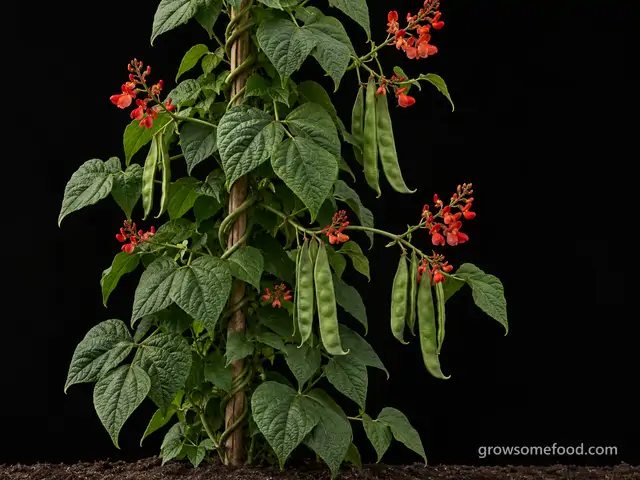
Runner Bean
A different bean altogether: a perennial highland climber with scarlet hummingbird flowers, insect-pollinated pods, and a taste for cool summers - the bean that thrives where common beans sulk.
Cook the beans. Runner-bean seeds, shelled fresh or dried, carry phytohaemagglutinin - the same lectin as kidney beans. Boil them hard for at least 10 minutes before eating, and never eat them raw or cook them only in a slow cooker. Young pods are eaten cooked; the flowers are edible raw as a peppery-sweet garnish. Do not eat the tuberous roots: they are what overwinters the plant in mild zones, not a root crop, and their safety for eating is not established.
Overview
The runner bean looks like a pole bean and behaves like nothing of the sort. It is a separate species - Phaseolus coccineus, from the cool highlands of Mexico and Central America - and almost every difference between it and the common bean matters in the garden. It germinates in colder soil, it flowers in scarlet, white, or two-tone sprays that pull in bumblebees and hummingbirds, it is pollinated by insects rather than by itself, and it keeps cropping in cool, damp summers that leave snap beans sitting there doing nothing. Underground it is a genuine perennial, storing fleshy tubers that regrow the following spring in zone 7 and warmer.
The other side of that highland ancestry is heat. Above about 85°F a runner bean drops its flowers and sets almost nothing, which is why it is a beloved staple in Britain, New England, the upper Midwest, and the Pacific Northwest, and a frustration in the humid South. Grow it for long flat pods picked young and sliced, for the huge mottled seeds as a pot bean, and for the flowers, which are edible and among the best things a vegetable garden can put on an arch. Note the safety rule up front, because it is the same one that applies to kidney beans: the seeds must be boiled hard before eating.
Quick facts
- Sprouts in
- 10 days7 to 16
- Soil to sprout
- 70 °F50 to 85
- Start indoors
- 3 weeks before transplant2 to 4
- Life cycle
- Perennial, grown as an annual
- Seed to save
- About 115 days after planting100 to 135
- Height
- 9 ft6 to 12
- Spread
- 14 in8 to 20
- Support
- Grows better on a trellis or stake
- Cold
- Killed by frostdamaged below 33°F
- Heat
- Struggles above 85°F
Full sun or part sun · medium water · well-drained soil · 6 in apart (4 to 9) · direct sow or transplant
When to plant
Nothing is open today. Spring sowing opens 7 months, Apr 10 to May 1.
- Direct sow Apr 10 – May 1 Opens in 201 daysAbout at to 3 weeks after your last frost (Apr 10 here)Sow once frost has passed and the soil reaches about 50°F - a good ten degrees cooler than common beans will accept. One sowing climbs and crops until frost, so there is no reason to succession-sow.
Frost here: last around Apr 10 (Mar 27 to Apr 24 most years), first around Oct 25. Zone averages, your own yard may run a week or two either way.
Life stages
Seven stages, about 10 weeks from sowing to the first pull. Windows are typical; your zone and weather move them.
Germination
Day 0 to 10 from sowing- SupportBuild the support before you sowRunner beans climb 8 to 12 feet and carry a heavy, sail-like canopy. Put the poles, teepee, or netting in first and make it genuinely storm-sturdy - erecting a structure around growing plants tears their roots, and a loaded runner bean teepee that blows over in August takes the crop with it.
- WaterSow 1-2 inches deep into moist soilevery 2 daysRunner beans germinate in cooler ground than common beans - about 50°F rather than 60°F - so they can go in a little earlier. Water in at sowing and keep just moist; the big seeds rot in cold soggy ground.
Watch for- Large seed rotting in cold, wet soil
- Mice and birds digging the seed (they favour these big beans)
Seedling
Day 10 to 25 from sowing- ThinKeep 2-3 plants per poleRunner beans are far more vigorous than pole beans, so give them room: two or three plants per pole, or seedlings 6 to 9 inches apart along a trellis. Crowded vines tangle into a mass that never dries out.
- ProtectGuard the seedlings from slugsThe soft, broad first leaves are a slug magnet in a cool damp spring, and a runner bean seedling chewed at the growing point does not recover. Patrol at night for the first fortnight, or start plants in pots and set them out already climbing.
Watch for- Slugs shearing off seedlings overnight
- Cutworms felling young plants
- A late frost (runner beans are killed outright at freezing)
Climbing
Day 22 to 52 from sowing- SupportStart the first shoots up the poleweeklyOnce a runner bean finds its support it twines by itself - clockwise, the opposite way from a common bean - and needs no further help. Wind the first shoot onto the pole by hand and it takes over from there.
- WaterWater deeply at the base, about 1-1.5 inches a weekevery 4 daysRunner beans are thirstier than common beans and drop their flowers when the root zone dries out. Water the ground, not the leaves, and water more in hot spells.
- MulchMulch thickly once the soil is warmA deep mulch is the single most useful thing you can do for a runner bean: it keeps the roots cool and evenly moist, which is exactly what the plant needs to keep setting pods in warm weather.
Watch for- Black bean aphid colonies on shoot tips
- Vines outgrowing an undersized support
Flowering
Day 55 to 125 from sowing- PollinateRunner beans need insects - common beans do notUnlike snap and pole beans, runner beans are cross-pollinated by bumblebees and hummingbirds rather than pollinating themselves inside the closed flower. Plant something else in bloom nearby, never spray insecticide onto open flowers, and if pods are not setting despite plenty of bloom, suspect a shortage of bumblebees before anything else.
- WaterNever let the roots dry out while it is bloomingevery 3 daysDry roots and hot nights are the two classic causes of runner bean flowers dropping without setting pods. Keep the soil evenly moist under a deep mulch through the whole bloom period, which runs for weeks.
Watch for- Masses of flowers but no pods forming (heat above ~85°F, dry roots, or too few pollinators)
- Bumblebees biting holes in the base of the flowers to rob nectar without pollinating
Pod set
Day 62 to 135 from sowing- WaterKeep water steady through each wave of podsRunner beans set in waves for months. Consistent moisture keeps each flush straight, tender, and stringless for longer; a dry spell mid-wave gives you short, curled, lumpy pods.
- InspectCheck leaf undersides weeklyMexican bean beetle larvae and red spider mites both build up quietly on the undersides of leaves over a long season. Catch them before the canopy starts to look bronzed or lacy.
Watch for- Short, curled, lumpy pods (uneven watering or poor pollination)
- Mexican bean beetle larvae on leaf undersides
Harvest
Day 58 to 82 to the first pull from sowing, picking to about day 140- HarvestPick every 2-3 days, while pods still snapRunner bean pods go rough, fibrous, and stringy far faster than snap beans - the window is roughly 6 to 10 inches long, before the seeds begin to bump through the wall. Picking constantly is what keeps a plant flowering; leave pods to fill and the whole vine stops setting new ones.
- InspectSearch the top and the inside of the canopyThe biggest, toughest pods are always the ones you missed high up or deep inside the leaves. Walk the whole support each time so nothing over-matures and signals the plant to shut down.
Watch for- Missed pods going leathery and lumpy (they stop new set)
- First-frost forecast (pick everything, then decide about the roots)
Overwintering the roots (zones 7 and warmer)
Day 165 to 260 from sowing- ProtectCut the vines down and mulch the crownThis is the trait that separates runner beans from every other bean: they are true perennials with fleshy tuberous roots. In zone 7 and warmer, cut the frosted vines to the ground and mulch the crown 6 inches deep, and the roots push up new shoots the following spring - a fortnight earlier and heavier-cropping than a fresh sowing.
- DoOr lift and store the tubers like dahliasIn colder zones you can lift the tuberous roots after frost, shake off the soil, and store them barely damp in a frost-free shed at around 40-50°F, then replant after the last frost. It is a fussy option and plants raised from seed usually catch up, so treat it as an experiment rather than the standard route. The tubers are for replanting, not for eating.
Watch for- Crowns rotting in wet winter ground (they want mulch and drainage, not waterlogging)
- Voles eating stored or mulched tubers
Harvest
- Pods 6-10 inches long, flat, and still snapping cleanly
- Seeds not yet bumping visibly through the pod wall
- Surface still matt green rather than rough and leathery
- Pick every 2-3 days, while pods still snap
- Search the top and the inside of the canopy
Per plant 40 to 180 pods, 1.5 to 8 lbPicking pick as they ripen
Cook with Runner Bean
Watch out for
6 to know. 2 are high-risk: Slugs & Snails, Flowers Without Pods (Runner Bean Pod-Set Failure). 2 are active in September.
Slugs & SnailsSeverity High PestRunner beans are sown into cool damp spring soil, which is peak slug weather, and a seedling chewed at the growing point is gone for good.
This is the single best reason to start plants in deep pots and set them out already climbing.
Irregular ragged holes chewed out of the middle of leaves and along the edges - not the clean-edged cuts a caterpillar leaves. Seedlings that vanish overnight, or that are cut off at soil level with nothing left behind. Silvery dried slime trails across leaves, soil, pots, and paving in the morning: this is the giveaway that tells you it was mollusks rather than an insect. Chewed pits in ripe fruit, especially where it rests on the ground. Damage that shows up on the lowest, dampest leaves first and gets worse after rain or evening watering. Turn over a board, an upturned pot, or a clump of dense mulch during the day and look for the animals themselves sheltering in the cool underneath.
Hand-picking works and costs nothing: go out an hour after dark with a headlamp, drop what you find into soapy water, and repeat nightly for a week or two - persistence is what wins, not any single product. Shallow beer traps sunk to soil level catch them too, but need emptying and refilling daily to be worth anything. Iron-phosphate bait is the standard control and is far lower-risk around pets and wildlife than the old metaldehyde products, but it is not harmless: many formulations include EDTA, and a dog that eats a quantity of pellets can develop iron toxicosis. Scatter it thinly per the label, never in piles, and keep dogs off a baited bed. Clear fallen foliage and debris in autumn, where the eggs are laid. In a wet climate this is a population you manage each season rather than one you eradicate - and on most established plants light grazing is cosmetic and needs nothing at all.
Take away the daytime shelter first: lift boards and upturned pots, clear piles of debris, keep dense mulch pulled back from crowns and stems, and give crowded plantings enough airflow to dry out. Water in the morning rather than the evening so the surface is dry by the time they come out. Copper tape around containers and raised beds gives them a shock they will not cross, and it is the one barrier that reliably works. Get plants past the vulnerable stage quickly - start seedlings in pots and set them out at a decent size rather than direct-sowing into a cold wet bed, since most plants stop being worth defending once the leaves toughen. Leave the ground beetles, frogs, toads, and ground-feeding birds alone, because they eat mollusks all night for free and broad-spectrum slug pellets kill them too. Where thick-leaved or resistant varieties exist for what you are growing, they take far less damage.
Slugs and snails are nocturnal mollusks that rasp ragged holes in soft leaves, shear off seedlings at ground level, and chew into ripe fruit that touches the soil. They feed at night and in the early morning and spend the day hidden under boards, pots, dense mulch, leaf litter, and low foliage, becoming active in exactly the cool, damp, shaded conditions that suit young plants. Damage is heaviest in wet spells and on tender spring growth: a single wet week can erase a row of seedlings while an established, tough-leaved plant of the same species is barely marked. They lay clusters of small pearly eggs in damp soil and under debris, so a garden with plenty of cover carries a resident population year after year rather than being invaded from outside.
Flowers Without Pods (Runner Bean Pod-Set Failure)Severity High DisorderWorth reading before planting rather than after: this is not a disease and not a soil problem, and it is the single most common reason a runner bean disappoints in the United States.
Weeks of heavy bloom with hardly any small pods forming behind the flowers. Flowers browning and dropping off the truss cleanly, leaving bare stalks. Pod set stopping during a heat wave and starting again a week after it breaks - the clearest confirmation that heat is the cause. Short, curled, or lumpy pods with only two or three seeds developing, which points to partial pollination rather than none. Very little bumblebee traffic on the flowers, or holes chewed through the base of the flower tube by bees robbing nectar without entering the front.
There is nothing to spray and nothing to fix on a plant that is already blooming into a heat wave - the vine is healthy and will resume setting when the weather breaks, so keep it watered, mulched, and picked. Strip off any leathery over-mature pods, which independently signal the plant to stop. If cold wet weather has grounded the bees, you can hand-pollinate by opening the keel of a flower with a fingertip, though at trellis scale that is a curiosity rather than a solution. If it happens every year in your garden, the honest fix is a variety change rather than a technique change.
Cool the roots and keep them evenly moist - a deep mulch and base watering through the whole bloom period do more than anything else. Site the plants where they get afternoon shade in any zone where summers run hot, and sow early enough that the first flush of bloom lands before peak heat. Plant strong bumblebee forage nearby - borage, sunflowers, and flowering herbs - and never spray insecticide onto or near open flowers, since the pollinators are the crop. Where heat is the recurring problem, grow a self-pollinating stringless variety such as Moonlight or Firestorm, which carry common-bean genetics and set pods without insects and in warmer weather.
The defining runner bean problem, and the reason so many American gardeners give up on the crop: a vine covered in flowers that sets almost no pods. Runner beans are a highland Mexican species pollinated by bumblebees and hummingbirds, not self-pollinating inside the closed flower like snap and pole beans, so three separate things can each stop the crop. Sustained heat above about 85°F - and warm nights in particular - aborts the flowers outright. Dry roots during bloom does the same. And a shortage of large bees, whether from cold wet weather that keeps them grounded or from insecticide use, leaves the flowers unpollinated no matter how good the plant looks.
Bean AnthracnoseSeverity Medium DiseasenowWorth knowing about here because runner beans are grown in exactly the cool damp summers this fungus likes, and because gardeners often save the big attractive seeds - discard any that are blotched.
Sunken, dark-bordered spots on pods (pink ooze in humidity), reddish-brown streaks on stems and leaf veins, seed with dark blotches.
Remove and destroy infected plants; copper can protect healthy foliage in a wet season. Don't save seed from infected plants.
Start with clean, disease-free seed; never save seed from infected plants; never work wet plants; rotate 2-3 years; clear debris.
A seed- and splash-borne fungus (Colletotrichum lindemuthianum) causing dark, sunken lesions on pods, stems, and leaf veins - and because it is seed-borne, it carries straight into next year's crop through saved seed, making it especially serious for dry-bean growers.
Bean RustSeverity Medium DiseasenowA dense runner bean canopy holds moisture, so rust often starts deep inside the vines where you cannot see it.
Thin the interior growth if the plant is a solid wall of leaves by August.
Small raised rusty-orange pustules ringed with yellow, mostly on the leaf undersides and usually starting low in the plant where humidity is highest, followed by yellowing, browning and early leaf drop once it takes hold.
Strip the worst-affected leaves early, starting with the lower ones. Sulfur slows the spread in a wet season; copper is not effective against rust. A late infection often still allows a full harvest, and fungicides are rarely needed in a home garden.
Grow resistant or tolerant varieties where they are offered, space and train for airflow, water at the base so the leaves stay dry, and rotate beans on a two to three year cycle. Remove crop debris after harvest rather than leaving it to carry the fungus over.
A fungal disease (Uromyces) of bean-family plants, producing raised rusty orange-brown pustules on the leaves and sometimes the stems, mostly on the undersides and ringed with yellow. Heavy infection browns and drops the foliage, and losing leaf area during pod fill directly shrinks the crop. It is worst in warm, humid weather and wherever the leaves stay wet.
AphidsSeverity Medium PestThe black bean aphid is the one that finds runner beans, massing black on the shoot tips and flower trusses.
Pinch out the infested tips and hose the rest off - and be careful what you spray, because this crop depends on bumblebees to set pods at all.
Dense clusters of tiny insects packed onto shoot tips, flower buds, and the undersides of young leaves. Curled, cupped, or distorted new growth that never opens properly. A sticky shine on the leaves - and on whatever sits under the plant - that later goes black with sooty mold. Tiny white cast skins left behind where a colony has been feeding. Ants running steadily up and down the stems, which is often the first thing you notice. Mottled, streaked, or misshapen leaves that do not grow out can mean a virus the aphids brought with them rather than the feeding itself.
Knock the colonies off with a hard jet of water and repeat every few days - on most plants that alone ends it. Pinch out or prune off the worst-infested tips rather than treating the whole plant. If colonies keep rebuilding, spray insecticidal soap or horticultural oil directly onto the insects, covering leaf undersides, and repeat weekly until they are gone; treat early or late in the day, and never spray a wilted or heat-stressed plant. Avoid broad-spectrum insecticides - they kill the ladybugs, lacewings, and parasitic wasps that were about to solve the problem for you, and aphid numbers usually come back worse afterward. Anything you spray must be labeled for the plant you are treating; follow that label and observe its pre-harvest interval. On anything you eat, wash leaves, heads, and buds well before use, since aphids hide down in crowns, folds, and tight growth.
Go easy on nitrogen: the soft, lush growth that heavy feeding produces is exactly what aphids breed on. Check new growth once a week through spring and early summer so you catch colonies while they are still small, and rub the first few out with your fingers. Leave flowering plants nearby and skip broad-spectrum sprays - ladybugs, lacewings, hoverflies, and parasitic wasps do most of this work for free, and they only stay if there is something for them to eat. Keep ants off the plant where you can, since they protect aphids from those predators. Water steadily so plants are not stressed, and check any new plant over before you bring it home or move it indoors, since aphids usually arrive on something else.
Aphids are small soft-bodied sap-suckers - green, black, gray, pink, or waxy white, and mostly wingless - that gather in dense colonies on the tenderest new growth: shoot tips, buds, and the undersides of young leaves. They breed extremely fast in mild weather, so a few can become hundreds inside a week. Their feeding curls and distorts soft growth, and the sticky honeydew they excrete coats everything below and turns black with sooty mold. Ants often farm and defend the colonies for that honeydew. A few aphids are normal on almost any plant and a healthy plant shrugs them off; only dense, persistent colonies do real damage, and some aphids also spread plant viruses as they feed.
Mexican Bean BeetleSeverity Medium PestA long-season crop gives the beetle time to build up, so scout weekly from midsummer.
Do not spray anything onto open flowers here - the bumblebees are what set the pods.
Fuzzy spiny yellow larvae and neat clusters of yellow eggs on the leaf undersides, lacy skeletonized leaves with only the veins left, and coppery black-spotted adults on the foliage. The larvae are usually well established underneath before the adults become obvious, so turn the leaves over.
Hand-crush eggs and larvae on the leaf undersides - done every day or two while the pods are filling, this alone controls a home planting. Insecticidal soap or neem knocks back a heavy larval outbreak, and the parasitic wasp Pediobius is available for large plantings. Do not spray anything onto open flowers.
Float row cover over young plants, scout leaf undersides weekly from midsummer and crush the egg clusters before they hatch, grow early varieties that finish before peak beetle season where you can, clean up bean-family debris in fall, and rotate the bean bed.
A coppery, black-spotted beetle that looks like an oversized ladybug and is in fact a member of the same family - but this one eats plants. The spiny yellow larvae do most of the damage, feeding on the undersides of bean-family leaves and skeletonizing them into lace, which cuts the photosynthesis that fills the pods. Both adults and larvae feed, and over a long season the generations stack up.
Good & bad neighbors
Plant nearby
-
One of the few companion claims that matters here: runner beans depend on bumblebees to set pods at all, and borage is among the strongest bumblebee magnets you can plant beside them.
-
Draws black bean aphids away from the shoot tips and flowers alongside the beans; the flowers of both end up in the same salad.
-
Pulls in the bumblebees and hummingbirds that pollinate runner beans, and gives afternoon shade to the root zone in a hot garden.
-
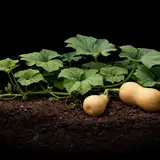
Sprawling squash shades and cools the ground under the poles, which is exactly what a runner bean's roots want in warm weather, while the beans add nitrogen.
- Traditional pairings, thin evidence
-
Runner beans will climb corn, but they are heavier and more vigorous than the three-sisters common bean and can pull stalks over - give them their own poles unless the corn is tall and well rooted.
-
French marigolds suppress root-knot nematodes and keep something in flower under the poles.





Keep apart
- Traditional pairings, thin evidence
-
Not a growing conflict - the two grow together happily - but a harvesting and seed-saving one: runner pods must be picked far younger than snap beans, and mixing them on one trellis is how tough pods get missed. Keep them on separate supports.
-
Long-standing garden lore; no controlled evidence that alliums affect legume growth or nodulation. Separate them if you like the tradition, but do not rearrange a bed over it.
Varieties · 8
You pick one when you add Runner Bean to your garden. Its days to maturity set your harvest window.
Scarlet-flowered runners 2 varieties
Scarlet Emperor
Vermilion flowers over tall vines; long flat green pods; purple-black seeds mottled violet.
heirloomvigorousornamental-edibleThe standard scarlet runner and the one most seed racks carry: vigorous 10-foot vines, brilliant vermilion flower sprays that draw bumblebees and hummingbirds, and long flat pods of real flavor picked at 8 to 10 inches. The dry seeds are large, glossy purple-black mottled with violet, and make a fine pot bean once boiled hard.
Ayocote Morado
Scarlet flowers on very vigorous vines; large glossy deep-purple seeds.
landracedry-seedmexicanOne of the Mexican landrace runner beans grown for the dried seed rather than the pod - big, glossy purple beans with a rich, almost chestnut flavor, the traditional bean of highland Mexican pot dishes and moles. Days shown are to dry seed, not to pod picking, which starts far earlier. Give it a long season and a strong support.
White-flowered runners 3 varieties
White Emergo
White flowers; broad flat pods; big plump ivory-white seeds.
heirloomdry-seedlarge-seededA white-flowered Dutch runner grown for both pods and its very large plump white seeds. The pods are broad and meaty picked young; left to dry, the ivory beans are among the best pot beans a garden produces. Somewhat steadier than the scarlet types in warm weather.
Czar
White flowers; long straight pods; large white seeds.
heirloomdual-purposedry-seedA Victorian white-flowered runner traditionally grown as a dual-purpose bean: sliced pods through the summer, then the large white seeds shelled fresh as butter beans or dried for winter. Reliable, heavy-cropping, and a good choice where you want the seed as much as the pod.
Bicolor runners 1 variety
Painted Lady
Red-and-white bicolor flowers; long green pods; buff seeds mottled brown.
heirloomornamental-ediblehistoricA 17th-century heirloom and one of the oldest garden beans still in cultivation, carrying striking two-tone red-and-white flowers on vigorous vines. Grown as much for the display on an arch or arbour as for the crop, but it produces good long pods and pale mottled seeds alongside the show.
Self-pollinating stringless runners 2 varieties
Moonlight
White flowers; smooth straight stringless green pods.
stringlesswhite-floweredheat-settingmodernA modern white-flowered runner that carries self-pollinating genetics from the common bean, so it sets pods in heat and in cold wet spells when bumblebees are not flying - the answer to the classic all-flowers-no-beans problem. Smooth, straight, stringless pods with good flavor, and heavy over a long season.
Firestorm
Scarlet flowers; smooth stringless pods on tall vines.
stringlessscarlet-floweredheat-settingmodernThe red-flowered counterpart to Moonlight: the ornamental scarlet display of a traditional runner bean, combined with self-pollinating, stringless, heat-setting modern breeding. A sensible first choice for anyone in a warmer zone or anywhere pod set has previously disappointed.
Grower tips
Notes from growers, tagged with the zone they grow in. A person reads every post before it appears.
Nobody has posted about Runner Bean yet. The first one usually saves someone a season.
Free account. Your post shows your grower name and zone, never your email.