Add it to your home screen and it opens full screen: no browser bars, one tap away, and everything stays signed in. Free, nothing to download from an app store.
- Tap the Share button in your browser
- Scroll down and choose “Add to Home Screen”
- Open GrowSomeFood from your home screen
- Open your browser’s menu
- Choose “Add to Home screen” or “Install app”
- Open GrowSomeFood from your home screen
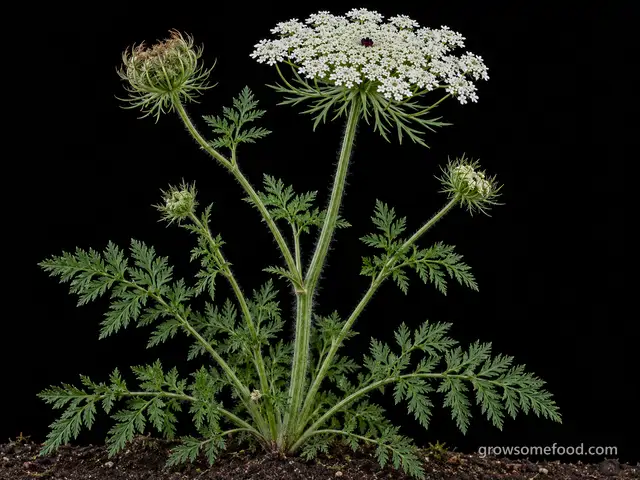
Queen Anne's Lace
The wild carrot: a froth of white lace with one dark floret at its heart, superb for beneficial insects - and the plant whose look-alikes, poison hemlock and water hemlock, kill people every year. Grow it in a bed you control, and learn the hairy-stem test before you go near a wild one.
Never dig or eat a wild carrot root. It is edible in principle, but poison hemlock and water hemlock share its white umbels and its ground, and both are lethal. Learn the stem: Queen Anne's lace is HAIRY (the Queen has hairy legs), 2-4 ft, smells of carrot when crushed, and usually carries one dark floret in the middle of the umbel. Poison hemlock is hairless, purple-blotched, 6-10 ft, and smells musty. The foliage sap can also raise a sun-triggered rash, so wear sleeves and gloves.
Overview
The one thing to knowThe garden problem is that it self-sows relentlessly, crosses with any carrot you leave to flower for seed, and is listed as a noxious weed in several states.
Queen Anne's lace (Daucus carota) is the wild ancestor of the garden carrot - a Eurasian biennial now naturalized in every US state, throwing flat lacy white umbels over roadsides, old fields and meadows from June into September. It is a genuinely good garden plant: hoverflies, lacewings and tiny parasitic wasps work it constantly, black swallowtail caterpillars feed on it, and the cut-flower trade grows a dark-flowered selection of the same species under the name Dara.
It carries two problems, and they are different in kind. The garden problem is that it self-sows relentlessly, crosses with any carrot you leave to flower for seed, and is listed as a noxious weed in several states. The serious problem is that this is the plant that poison hemlock and water hemlock get mistaken for. All three are white-umbelled members of the carrot family; two of them are among the deadliest plants in North America; and the confusion runs in the fatal direction, because the person who thinks they have found Queen Anne's lace is the one who eats it.
So this entry does two jobs. It tells you how to grow the plant, and it gives you the field tests that separate it from its killers - the hairy stem, the forked bracts, the single dark floret, the carrot smell. Learn those before you touch a wild umbel, and do not dig a wild root at all.
Quick facts
- Sprouts in
- 16 days10 to 21
- Soil to sprout
- 70 °F55 to 80
- Life cycle
- Biennial
- Seed to save
- Second yearafter overwintering a few plants
- Height
- 36 in18 to 48
- Spread
- 14 in8 to 24
- Cold
- Takes hard frostdamaged below -30°F
- Heat
- Struggles above 95°F
- Self-sows
- Yes, expect volunteers
Full sun or part sun · low water · well-drained soil · 10 in apart (6 to 18) · direct sow
When to plant
Fall sowing is open for 27 more days. Next: spring, Mar 13 to Apr 24.
- Direct sow Aug 26 – Oct 18 Open now · 27 days leftAbout 9 weeks before to 7 days before your first frost (Oct 25 here)Autumn sowing is best - winter cold breaks the seed's dormancy and gives even spring germination, and the rosette overwinters to flower the following summer.
- Direct sow Mar 13 – Apr 24 Opens in 173 daysAbout 4 weeks before to 2 weeks after your last frost (Apr 10 here)Spring sowing works but germinates less evenly without cold treatment; expect a rosette this year and flowers next summer.
Frost here: last around Apr 10 (Mar 27 to Apr 24 most years), first around Oct 25. Zone averages, your own yard may run a week or two either way.
Life stages
Two stages to settle in, then two that repeat each year. Windows are typical; your zone and weather move them.
Germination
Day 0 to 16 from sowing- ProtectSow shallow, and let winter do the stratifyingScatter seed onto raked soil and rake it in barely a quarter inch - it germinates best with light and after cold. An autumn sowing gets natural stratification and comes up evenly in spring; a spring sowing takes two to three weeks once the soil holds above about 60 degrees F. Do not start it in pots and move it: the taproot resents transplanting.
- WeedChoose the site before you sow, not afterwardsThis plant decides where it lives after year one, so the sowing decision is the only one you fully control. Put it in a dedicated pollinator strip, meadow patch or cutting bed - never in or beside vegetable beds, an herb bed you gather from, or a carrot row you plan to save seed from.
Watch for- Patchy germination from a spring sowing without cold treatment
- Seed washed off the surface by heavy watering
Year 1 rosette (the look-alike stage)
The first year after planting- InspectLabel the rosette - poison hemlock makes one tooIn year one this is a flat rosette of finely divided leaves that smells strongly of carrot when crushed. A first-year poison hemlock rosette looks much the same but is glossier, smells musty, and sits on hairless stems that may already show purple blotches. Label what you sowed, and treat any unlabelled ferny rosette in the garden as unidentified rather than as this plant.
- WeedPull volunteers out of food-growing groundRosettes appear well beyond where you sowed. Pull every one that lands in a vegetable bed, an herb bed, or a carrot row - taproot and all, while it is small enough to come up whole.
Watch for- Unlabelled ferny rosettes appearing in beds you harvest from
- Volunteers spreading beyond the patch you sowed
Year 2 bloom (June to September)
Jun to Sep, every year- HarvestCut for the vase when the umbel is two-thirds openCut in the cool of the morning with the umbel about two-thirds open, strip the lower leaves, and stand the stems in deep water for a couple of hours before arranging. Cut stems still ripen seed, so do not leave trimmings lying on the ground.
- PruneDeadhead before the umbel curls into a nestweeklyThis is the one job that matters. Cut spent umbels as the flowers fade and BEFORE they fold inward into the brown cupped bird's-nest shape - once that nest has formed the seed is ripe and a shake of the stem sows the bed. One plant sets several thousand seeds that stay viable for years.
- ProtectCover up: the sap plus sunlight can raise a rashQueen Anne's lace carries the same family of furanocoumarins as parsnip. Sap on skin followed by strong sunlight can produce a delayed blistering rash in sensitive people - far milder than wild parsnip or giant hogweed, but real. Wear gloves and long sleeves for cutting, and do it in the evening if you can.
Watch for- Umbels curling shut into seed heads before you cut them
- A delayed rash on forearms a day after cutting
- Black swallowtail caterpillars on the foliage - leave them, this is a host plant
Seed drop and die-back
Sep to Nov, every year- ThinThin the volunteers you want, pull the restEach plant dies after flowering, so next year's stand comes only from this year's seed. Thin the seedlings you want to about 10 inches apart and pull everything outside the patch. Bag seed heads for the trash rather than composting them unless your heap genuinely runs hot.
Watch for- Dense seedling carpets under last year's stems
- Seedlings appearing in vegetable, herb and carrot beds
Watch out for
4 to know. 2 are high-risk: Fatal Look-alike Confusion (poison hemlock, water hemlock), Runaway Self-Seeding & Noxious-Weed Listing. 3 are active in September.
Fatal Look-alike Confusion (poison hemlock, water hemlock)Severity High DisordernowAny wild umbel plant with a hairless stem, purple blotches or streaks, a musty smell, a height above 5 ft, or growth in wet ground - and any intention to dig a wild root, which removes every above-ground test at once.
Any wild umbel plant with a hairless stem, purple blotches or streaks, a musty smell, a height above 5 ft, or growth in wet ground - and any intention to dig a wild root, which removes every above-ground test at once.
Suspected ingestion is an EMERGENCY - call poison control or emergency services immediately and do not wait for symptoms. Take a piece of the plant if you can do so safely. There is no antidote for either hemlock; treatment is urgent supportive hospital care.
Learn the four tests before you touch a wild plant: HAIRY solid stem, carrot smell when crushed, long three-forked bracts under the umbel, and usually one dark central floret. Never dig a wild carrot-family root. Do not use a garden plant as your reference for a wild one, and keep this plant out of beds you gather food from.
The hazard is not the plant but the family. Queen Anne's lace, poison hemlock and water hemlock all carry white umbels over finely divided leaves, they grow in overlapping ground, and their first-year rosettes are hard to separate. Poison hemlock's coniine causes paralysis; water hemlock's cicutoxin causes violent seizures within the hour. Neither has an antidote, and both have killed people who believed they had found wild carrot.
Runaway Self-Seeding & Noxious-Weed ListingSeverity High DisordernowUmbels folding inward into the brown cupped bird's-nest shape, which means the seed is ripe; dense seedling carpets under last year's stems the following spring; rosettes appearing well outside the sown patch.
Umbels folding inward into the brown cupped bird's-nest shape, which means the seed is ripe; dense seedling carpets under last year's stems the following spring; rosettes appearing well outside the sown patch.
Pull or dig first-year rosettes with the taproot while they are small, and cut all flowering stems before seed set. Expect several consecutive seasons - the seed bank, not the standing plants, is the problem.
Deadhead every umbel at petal-fall, before the nest closes. Bag seed heads for the trash rather than composting. Check state and county noxious weed lists before sowing, and do not plant it beside pasture, hayfield or a prairie restoration.
One plant sets several thousand seeds, and they remain viable in soil for years. Left to ripen, a small sown patch becomes a permanent population that spreads into lawn, pasture and neighbouring land - which is why Washington, Michigan, Iowa, Ohio and others carry wild carrot on a noxious weed list.
Crossing with Saved Carrot SeedSeverity Medium DisorderWild carrot flowering anywhere near a carrot left to bolt for seed; saved seed that grows into leafy plants with unusable roots.
Wild carrot flowering anywhere near a carrot left to bolt for seed; saved seed that grows into leafy plants with unusable roots.
There is no rescue for crossed seed - discard it and buy fresh carrot seed. If you want both plants, keep this one as a flower and buy your carrot seed each year.
Isolate a carrot seed crop by around half a mile from any flowering wild carrot, or cage and hand-pollinate. Pull flowering wild carrot from hedgerows and verges around the garden during the carrot bloom period.
Queen Anne's lace is the same species as the garden carrot and crosses with it freely. Seed saved from a carrot that flowered within pollination range of wild carrot produces plants with thin, pale, woody, forked roots - the wild form reasserting itself in one generation.
Sap Rash in SunlightSeverity Low DisordernowRedness appearing roughly a day after cutting or weeding, in streaks matching where stems brushed the skin, sometimes followed by small blisters and lingering brown marks.
Redness appearing roughly a day after cutting or weeding, in streaks matching where stems brushed the skin, sometimes followed by small blisters and lingering brown marks.
Get out of the sun, wash the area with soap and cool water, and keep it covered from sunlight for a day or two. Cool compresses help; see a doctor if it blisters badly or covers a large area.
Wear gloves and long sleeves when cutting or pulling, especially in strong summer sun, and work in the evening where you can. Wash skin and tools afterwards.
The foliage contains furanocoumarins, the same class of compound that makes wild parsnip and giant hogweed dangerous. Sap on skin followed by strong sunlight can cause a delayed reddening and blistering rash in sensitive people. It is much milder here than in those plants, but it is the same mechanism.
Good & bad neighbors
First rule: keep Carrot apart. Same species.
Plant nearby
-
Both feed the same beneficial insects - hoverflies, lacewings and the tiny parasitic wasps that hunt aphids and caterpillars. A strip of umbels sited away from the vegetable beds is one of the better-evidenced pieces of companion planting.
-
Same conditions - poor dry soil, full sun, no feeding - the same flat landing-pad flower shape, and the same predatory insect crowd. A natural meadow partner that flowers at the same time and holds the ground between plants.
- Traditional pairings, thin evidence
-
A meadow pairing that works on habit rather than folklore: solid gold daisies underneath the airy white lace, the same lean soil and full sun, and overlapping midsummer bloom.
Keep apart
-
Same species. Queen Anne's lace crosses freely with any carrot you leave to flower for seed, and the seedlings revert toward a thin, woody, white wild root - so a carrot seed crop needs real isolation from it. It is also a wild reservoir for carrot rust fly. If you save carrot seed, do not grow this anywhere near the bed, and pull flowering wild carrot from the surrounding hedgerows too.
-
Not a cross - a clarity problem. Both throw tall carrot-family umbels over a food bed, and a garden where several white and yellow umbels are flowering at once is a garden where a misidentification gets easier, not harder. Keep flowering umbel plants out of the ground you gather from.

Varieties · 2
You pick one when you add Queen Anne's Lace to your garden. Its days to maturity set your harvest window.
Wild Carrot (Daucus carota)
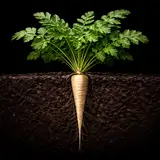
Flat 3-5 inch lacy white umbels on bristly, ridged, solid stems, folding into a brown cupped bird's-nest shape as the seed ripens.
speciesbiennialpollinatorself-seedingThe roadside plant itself: a first-year rosette of ferny, carrot-scented leaves, then a branched 2-4 ft stem carrying flat white lacy umbels through midsummer. Most umbels carry a single dark purple floret at the centre, and every one sits above a collar of long three-forked bracts. The stems are solid, ridged and bristly-hairy - the feature that separates it from poison hemlock, which is hairless and purple-blotched. Self-sows heavily; deadhead before the umbels curl shut.
Dara
Domed 2-4 inch umbels ageing from white through pink to deep wine-red on branched 3-4 ft stems.
ornamentalcut flowerdark-floweredThe florists' selection of the same species, sold as Daucus carota Dara. Umbels open white or blush and deepen through rose to a near-black burgundy, giving several colours on one plant at once, on 3-4 ft stems. Usually grown as a hardy annual from an early sowing rather than waited out as a biennial. It is the same plant with the same habits: it self-sows just as freely, crosses with carrots just as readily, and carries the same sap. Deadhead it as strictly as the wild form.
Grower tips
Notes from growers, tagged with the zone they grow in. A person reads every post before it appears.
Nobody has posted about Queen Anne's Lace yet. The first one usually saves someone a season.
Free account. Your post shows your grower name and zone, never your email.