Add it to your home screen and it opens full screen: no browser bars, one tap away, and everything stays signed in. Free, nothing to download from an app store.
- Tap the Share button in your browser
- Scroll down and choose “Add to Home Screen”
- Open GrowSomeFood from your home screen
- Open your browser’s menu
- Choose “Add to Home screen” or “Install app”
- Open GrowSomeFood from your home screen
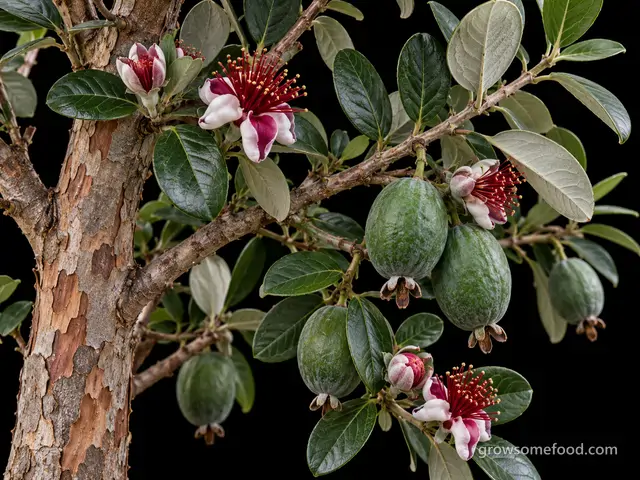
Pineapple Guava
A tough evergreen shrub that doubles as a hedge and a fruit crop: silver-backed leaves, extraordinary edible flowers, and aromatic fruit that tells you it is ripe by falling off. Hardy to about 12F, and one of the most trouble-free edibles you can plant.
No toxic parts. Both the ripe fruit and the thick, sweet flower petals are food - pick petals gently and leave the flower's centre intact and it will still set fruit. The leaves are not eaten. Fruit that has lain on the ground for several days ferments and goes brown and boozy inside, so gather windfalls daily rather than letting them sit. Despite the name it is not a true guava (Psidium) and shares none of that group's issues.
Overview
Pineapple guava is the fruit plant to grow if you want one that also earns its place as landscaping. It is a dense evergreen shrub with grey-green leaves that flash silver-white underneath in the wind, it takes shearing, drought, salt spray and neglect, it has almost no pests, and it is hardy to roughly 12 to 15°F once established - which puts it comfortably in zones 8 through 10, well north of where most subtropical fruit will go. Plenty of people grow it for years as a hedge without realising it makes fruit at all.
Then there are the flowers, which are the plant's party trick: thick, fleshy white petals blushed magenta, surrounding a burst of long crimson stamens, and the petals are sweet and edible - sugary, faintly cinnamon, with the texture of a marshmallow. You can strip a few petals from every flower for salads and desserts and still get the fruit, because pollination happens at the centre of the flower. In its native range birds do the pollinating precisely by eating those petals.
The fruit is a green, egg-shaped, aromatic thing with perfumed jelly around the seeds, tasting of pineapple, guava, quince and mint at once. It ripens by falling off the bush - there is no colour change to read and no picking judgement to make, only the habit of shaking the branches every couple of days and collecting what lands. Despite the name it is not a guava: true guavas are Psidium, tropical and frost-tender, while this is Acca sellowiana, a cool-highland plant from southern Brazil and Uruguay that actually wants a bit of winter.
Quick facts
- Winter chill
- 100 hours below 45°F50 to 200
- Life cycle
- Perennial, lives about 40 years
- Height
- 12 ft6 to 15
- Spread
- 11 ft5 to 15
- Cold
- Takes hard frostdamaged below 12°F
- Heat
- Struggles above 105°F
Full sun or part sun · medium water · well-drained soil · 12 ft apart (5 to 18) · transplant or cuttings
When to plant
No planting window on record for this zone. Nearest zone with one: 7b. It needs winter chill.
Frost here: last around Apr 10 (Mar 27 to Apr 24 most years), first around Oct 25. Zone averages, your own yard may run a week or two either way.
Life stages
One stage to settle in, then five that repeat each year. Windows are typical; your zone and weather move them.
Planting & first two years
The first year after planting- WaterWater regularly for the first two summersevery 5 daysA pineapple guava earns its reputation for drought tolerance only after its roots are down. Water deeply once or twice a week through the first two growing seasons, letting the surface dry between soakings, and it will need very little afterwards.
- MulchMulch wide, and keep it off the trunkA broad mulch ring holds summer moisture and suppresses the grass that competes with a young shrub. Keep it a few inches clear of the stems - piled mulch against the base invites collar rot on a plant that otherwise has almost no disease problems.
- ProtectShelter it through its first wintersAn established pineapple guava takes about 12 to 15°F without real damage, but a young plant is noticeably tenderer. In zones 8 and colder, give it a sheltered spot out of the wind, mulch the root zone before hard weather, and be ready to throw frost cloth over it for the first two or three winters.
- PruneDecide early whether this is a hedge or a fruit bushSheared into a tight formal hedge it flowers and fruits very little, because the flowers come on the current season's growth and shearing removes it. Grown as an open shrub or small multi-trunked tree, or clipped only once right after harvest, it does both jobs. Choose at planting - the shape is much easier to build than to correct.
Watch for- Cold damage on young growth in the first winters
- Grass and weeds crowding the base of a young shrub
- Drought stress in its first two summers - it is not drought-proof yet
Winter rest & the annual prune
Jan to Feb, every year- PrunePrune lightly in late winter - flowers come on new woodPineapple guava flowers on the current season's shoots, so a light annual thinning in late winter, once the coldest weather has passed, is what keeps fruiting wood coming. Take out crossing and inward-growing branches, open the centre to light, and shorten a few of the oldest stems. Do not shear the whole plant flat unless you have decided you want a hedge rather than a crop.
- ProtectWatch the low-temperature forecast at the cold edgeIn zone 8a and the colder end of 8b, a night below about 10°F can damage an otherwise established plant. Mulch the root zone deeply and cover a young shrub on the worst nights; a mature one usually loses some leaves and recovers.
Watch for- Leaf burn and twig dieback after a hard freeze
- Frost-cracked bark on a young trunk in an exposed site
Spring growth
Mar to Apr, every year- FertilizeFeed lightly, once, in early springA modest spring application of a balanced fertiliser or a topdressing of compost is all this shrub needs. Heavy nitrogen produces a beautiful leafy plant with few flowers - the classic mistake made on a pineapple guava planted as a hedge and fed like one.
- WaterRestart regular watering as growth beginsevery 10 daysEven an established plant fruits far better with steady moisture from spring through fruit fill. This is the difference between an ornamental screen and a shrub that gives you fruit.
Watch for- Vigorous soft growth from over-feeding, at the expense of flowers
- Scale insects building up in the shaded interior
Bloom (and the edible-petal harvest)
May to Jun, every year- HarvestPick petals for the kitchen without losing the fruitevery 3 daysThe thick white-and-magenta petals are genuinely delicious - sweet, faintly cinnamon, with the texture of a marshmallow. Pull individual petals off gently and leave the crimson stamens and the ovary at the centre of the flower untouched, and that flower will still set a feijoa. Taking a few petals per flower costs you nothing.
- PollinateCheck whether your cultivar needs a partnerSome selections (Coolidge, Nikita, Unique) set a crop alone; many of the best-flavoured ones (Mammoth, Triumph, Apollo) crop poorly without a second, different cultivar within about 20 feet. If you have only one plant and it flowers heavily but sets nothing, that is the reason. Hand-pollinating with a soft brush between flowers works as a stopgap.
- InspectLet the birds work the flowersIn its native range the flowers are pollinated by birds that eat the sweet petals and carry pollen on their heads, and mockingbirds and others do the same job in US gardens. Petal-stripped flowers are a good sign, not damage - resist the urge to net a plant in bloom.
Watch for- Heavy bloom followed by almost no fruit set (a cultivar that needs a pollen partner)
- Birds stripping petals - this is pollination, not damage
- Flowers dropping in a hot dry spell
Fruit filling (four to seven months)
Jun to Sep, every year- WaterKeep water steady - this is when fruit dropsweeklyFeijoas take four and a half to seven months from bloom to ripe, straight through the hottest part of the year. Irregular watering during that stretch is the single commonest cause of small fruit and premature drop. Deep, regular summer water is what sizes the crop.
- MulchTop up the mulch before the heatRefreshing the mulch ring in early summer keeps the shallow feeding roots cool and evens out soil moisture through the long fruit-filling period, which is exactly what this crop wants.
Watch for- Small green fruit dropping after a dry spell
- Fruit sunburning on an over-thinned, wide-open plant
- In Florida and the Gulf, fruit flies stinging softening fruit
Harvest (the fruit drops when it is ripe)
Sep to Dec, every year- HarvestShake the bush and gather from the groundevery 2 daysA feijoa does not soften or change colour usefully on the plant - it ripens and then falls, and that is your only reliable signal. Give the branches a firm shake every day or two through the season and collect what comes down; anything that drops from a shake is ripe or within a day of it. Picked fruit that had to be tugged will never taste right.
- DoLay windfalls out for a day or two indoorsSpread the drops in a single layer somewhere cool. A day or two on the counter brings a just-fallen feijoa to its aromatic best - the jelly around the seeds turns clear and the perfume comes up. After that, refrigerate. Fruit left lying on the ground for several days ferments and browns inside.
- WeedKeep the ground under the bush clear during harvestLong grass under a fruiting pineapple guava hides windfalls until they have spoiled and gives fruit flies and rodents somewhere to work. Mow or mulch the drop zone before the season starts and collecting becomes trivial.
Watch for- Windfalls lost in long grass and fermenting
- Rodents, possums and birds working the drops overnight
- Fruit still hanging at the end of the season - it will drop, not ripen on the branch
Harvest
- The fruit has fallen, or comes down when you shake the branches - that is the only reliable ripeness sign
- It gives very slightly under gentle thumb pressure, like a barely ripe pear
- A strong sweet perfume, somewhere between pineapple, guava and mint
- Cut open, the jelly around the seeds is clear rather than white and opaque
- Shake the bush and gather from the ground · every 2 days
- Lay windfalls out for a day or two indoors
- Keep the ground under the bush clear during harvest
Per plant 20 to 400 fruits, 2 to 60 lbPicking pick as they ripen
Cook with feijoas
Watch out for
4 to know. None are high-risk for feijoas. 3 are active in September.
Scale & Sooty MoldSeverity Medium PestnowThe one pest that genuinely troubles this shrub, and it is usually self-inflicted: black scale builds up in the dense, shaded interior of a plant that has been sheared as a hedge but never thinned.
A proper thinning prune plus horticultural oil clears it.
Rows of small brown, tan, black, white, or waxy bumps along stems, twigs, leaf midribs, and leaf undersides that do not brush off but can be scraped loose with a fingernail. A sticky shine on the leaves - and on the floor, table, or path beneath the plant - that later turns black with sooty mold. Ants running steadily up and down the stems, since they farm and defend scale for that honeydew; often the first sign anything is wrong. Yellowing leaves, weak thin growth, and dieback of individual branches or canes that are heavily encrusted. On fruit crops, scale covers and sooty mold directly on the fruit. Check the leaf undersides and the shaded inner wood, which is where colonies build up unseen.
Horticultural oil is the main control: it works by smothering, so it has to coat the insects thoroughly - stems, twigs, and leaf undersides - and it usually needs repeating, because the waxy covering shields them and no single pass reaches everything. On deciduous woody plants a dormant-season oil smothers the overwintering stage while the leaves are out of the way, and timing a growing-season spray to the crawler stage, when the young are mobile and uncovered, is far more effective than spraying settled adults. On a small plant or a light infestation, scrub or wipe the scales off by hand, or dab them with a cotton swab of rubbing alcohol. Prune out and destroy badly encrusted wood rather than trying to save it. Wash off the sooty mold once the scale is gone - it lives on the honeydew, not on the plant, and stops once the supply does. Anything you spray must be labeled for the plant, and oils can burn delicate foliage, so test first.
Inspect. Look over leaf undersides and stems regularly - on a crop you pick, every harvest is a scouting chance - and check every new plant thoroughly before you buy it, plant it, or set it beside anything else, because scale almost always arrives on a plant rather than flying in. Quarantine new houseplants for a few weeks. Keep plants unstressed and not over-fertilized, since soft, forced growth is what populations build on. Prune for airflow and light to open up the shaded inner growth where scale hides, and prune out heavily infested wood as routine maintenance - on anything that gets a hard annual pruning, that alone removes most of any buildup. Leave the lady beetles, lacewings, and parasitic wasps alone, since they normally keep scale down to nothing, and keep ants off the plant where you can, because ants protect the colonies from those predators. Indoors, avoid hot, dry, still winter air.
Scale insects are sap-suckers that spend most of their lives immobile, fixed to a stem, twig, or leaf underside beneath a waxy or shell-like cover. They look far more like bumps, blisters, or crusty encrustations than like insects, which is why an infestation is usually well established before anyone notices it. Soft scales excrete large amounts of sticky honeydew that drips onto everything below and grows a black sooty mold - and those blackened leaves are often the first thing a gardener actually sees. Armored scales produce no honeydew but sit under a hard shield that protects them from most sprays. They spread as tiny mobile crawlers in the weeks after hatching, which is the only stage that moves and the only stage that is easy to kill. Populations build on stressed plants, on crowded shaded growth, and above all on plants kept indoors in dry, still air over winter.
Myrtle RustSeverity Medium DiseasenowPineapple guava is a myrtle-family host and can carry it, though it is less severely affected than some relatives.
Mainly a concern in Florida, Hawaii and the humid Gulf; a plant in California's dry summers or the Pacific Northwest is at much lower risk.
Bright yellow or orange powdery pustules on the youngest leaves, shoot tips, flower buds and developing fruit - the colour is distinctive and unlike ordinary leaf spot. Purple-tinged or brown lesions on slightly older leaves, sometimes with a yellow halo. New growth that puckers, twists and dies back at the tips. Repeated loss of each spring and summer flush, leaving a plant that never gets ahead. Symptoms concentrated on the soft new growth, since the fungus cannot infect mature hardened leaves.
Prune out and bag infected growth on a dry day, sealing it rather than composting or shredding it, since disturbing pustules releases clouds of spores. Protectant fungicides are used commercially and can hold a valuable plant, but they must be labeled for the crop and applied before infection to be worth anything. On a badly and repeatedly infected plant in a warm humid region, removal is often the honest answer. Where the disease is not yet known to occur, do not treat it quietly - report a suspected find to your state agriculture office or extension service, since early detection is the only thing that slows its spread.
Buy clean, inspected nursery stock and quarantine new myrtle-family plants for a few weeks before planting them near others. Avoid overhead watering and water in the morning so foliage dries. Space and prune for airflow, and do not push soft new growth with heavy nitrogen feeding, since only young tissue can be infected. Clean tools, gloves and boots between plants and especially between properties. Do not move cuttings, plants or prunings out of an area where the disease is present - most long-distance spread has been human-assisted.
A rust fungus that attacks plants in the myrtle family - eucalyptus, bottlebrush, guava, feijoa, allspice, myrtle and their relatives - and is established in Florida, Hawaii, California and parts of the Gulf coast. It infects soft new growth, producing vivid yellow to orange powdery pustules on young leaves, shoots, flower buds and fruit, followed by leaf distortion, dieback of the growing tips and, on repeatedly infected plants, progressive decline. Spores are microscopic and travel on wind, clothing, tools and infected nursery stock, which is how it has moved between regions. In some parts of the world it has devastated wild myrtle-family populations, so it is treated seriously by agriculture departments and is subject to reporting and movement rules in areas where it is not yet established.
Fruit Flies (Caribbean, Mediterranean & Oriental)Severity Medium PestnowLargely a Florida and Gulf-coast problem for this crop - a pineapple guava in California or the Pacific Northwest rarely sees it.
Bagging is impractical on a shrub carrying hundreds of small fruit, so the control here is sanitation: because feijoas ripen by falling, daily collection of windfalls is already the harvest routine, and doing it without exception is what breaks the cycle.
Tiny puncture or sting marks on the skin of ripening fruit, sometimes with a weeping drop or a small sunken dimple around them. Fruit that softens, browns, or collapses on one side well before it should. Small white maggots in the flesh when the fruit is cut, and fruit that falls early and rots fast. Adult flies - larger than a housefly, with patterned wings - hovering around ripening fruit and resting on foliage in the morning. Windfalls under the tree squirming with larvae, which is where the next generation comes from.
There is no cure for fruit already infested - bin it sealed, and never leave it lying. Protein bait sprays are the standard commercial control and are what agriculture departments use in outbreaks; in a home garden, sanitation plus bagging does most of the work. If you find a fruit fly outside its normal range, or receive a quarantine notice, report it to your state agriculture department rather than dealing with it privately: several of these species are regulated, and it is illegal to move host fruit out of a declared quarantine area, including to friends and family in another county or state.
Bag the fruit. A paper, mesh, or organza bag slipped over each fruit once it reaches golf-ball size physically excludes the females and is the only home control that reliably works. Pick fruit at color break and finish ripening it indoors rather than letting it soften on the plant, which removes the window the flies need. Clear every fallen fruit at least weekly and dispose of it by bagging, deep burial, or solarizing in a sealed bag in the sun - never in an open compost heap, which just breeds more. Keep trees pruned small enough that you can actually reach and bag the crop. Hanging traps tell you when flies are active but will not protect a crop on their own.
Tephritid fruit flies lay their eggs under the skin of ripening fruit, and the maggots feed inside it, so the first sign is usually a fruit that looks fine and is full of larvae when cut. The Caribbean fruit fly is established across peninsular Florida and the Caribbean; Mediterranean and Oriental fruit flies are established in Hawaii and turn up in California, Texas and Florida as quarantine outbreaks. They prefer fruit that is beginning to soften and color, they build up on any fallen fruit left rotting on the ground, and populations run from late spring through fall. Because several of these species are regulated pests, an infestation is not only a garden problem - moving infested fruit is how quarantines start.
Root RotSeverity Low DiseaseUncommon on a pineapple guava planted well - it tolerates poor soil happily, but not standing water.
The two things that cause it here are a low, wet planting spot on heavy clay and mulch piled up against the trunk. Plant on a slight mound in clay and keep the mulch ring a few inches clear of the stems.
Wilting in the middle of the day on a plant whose soil is damp - the classic tell, and the reason people water a rotting plant and finish it off. Leaves yellowing from the bottom up, dull off-color foliage, and growth that stalls for no visible reason. Whole shoots, or one side of the plant, collapsing while the rest still looks fine. Soft, dark, or mushy tissue at the base of the stem or at the crown, sometimes with a sour smell. Lift a failing plant and look at the roots: healthy ones are firm and pale, rotted ones are brown or black and slimy, and the outer layer slips off between your fingers leaving a thread of core behind. Seedlings that topple over at soil level are the same problem, called damping-off.
There is no cure for tissue that has already rotted, so act on the conditions rather than looking for a spray. Stop watering at once and fix the drainage - open up compacted soil, or move the plant to a raised, sharply drained position or a container. Lift a badly affected plant, cut away every soft dark root and rotted section with a clean blade back to firm pale tissue, and replant only the healthy parts into fresh free-draining soil or mix. Often the better move is to give up on the plant and save its offspring instead: cuttings, offsets, or divisions taken from firm healthy growth root readily and give you a clean start. Bin the rotted material rather than composting it, and correct the drainage before you replant, because the rot comes straight back in the same wet spot.
Drainage is the whole defense. Match the plant to the site first - something that wants sharp drainage will not survive heavy clay or a low, water-collecting spot however well you tend it. Where the ground is heavy, plant on a raised bed, berm, or slope, or grow in a container. Set plants at the depth they were already growing, since burying the crown or the root flare is a common cause of rot, and keep mulch pulled back a few inches from the stem base instead of piled against it. Water the soil rather than the calendar: check that the top inch or two is dry before watering again, cut back hard in cool weather and winter dormancy, and never leave a pot standing in a full saucer. Do not plant or dig in soggy ground, and go easy on rich amendments for plants that want it lean. Rotate annual crops, and start with clean healthy plants and fresh mix.
Root rot is not one organism but a group of soil fungi and water molds - Pythium, Phytophthora, Fusarium, Rhizoctonia and others - that sit harmlessly in most soils and only turn destructive when the ground stays saturated. Waterlogged soil drives the air out, the roots suffocate, and the weakened tissue is invaded and goes soft, brown, and stringy. Because the damage is underground you usually see it first as something that looks like drought: wilting, yellowing, stunting, a plant that does not respond to being watered. Overwatering, heavy compacted ground, a low spot that collects runoff, a pot with no drainage or a saucer left standing full, and cold wet soil in winter are the usual causes. Once roots have actually rotted there is no cure - this is a problem you prevent rather than treat.
Good & bad neighbors
All of these are traditional pairings. The evidence is thin, so treat them as a nudge, not a rule.
Plant nearby
-
A clover understory fixes a little nitrogen, keeps the soil covered and cool over the shallow feeding roots, and gives you a clean surface to collect windfalls from. Keep it clear of the trunk itself.
-
Another drought-tolerant, sun-loving neighbour that suits the same lean, well-drained conditions and adds pollinator traffic. A tidy, low underplanting for a specimen shrub rather than a functional pairing.
-
Shares the same taste for full sun and sharp drainage and works well at the foot of a pineapple guava hedge; the flowers feed pollinators through a long season without competing for water once both are established.
-
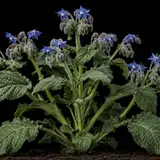
Draws bees to the area during the late-spring bloom, which helps on cultivars that need cross-pollination. A supporting player - the flowers here are largely bird-pollinated, but more insect traffic does no harm.
Keep apart
-
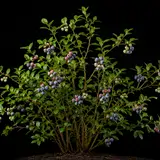
Not antagonistic, just incompatible in soil terms: blueberries demand acid, constantly moist ground while pineapple guava wants sharp drainage and is indifferent to pH. Whatever you do for one will be wrong for the other in a shared bed.
Varieties · 7
You pick one when you add Pineapple Guava to your garden. Its days to maturity set your harvest window.
Self-fertile selections 3 varieties
Coolidge
Medium, elongated green fruit with a light waxy bloom; dense upright shrub.
hardyheavy-bearinghedgecalifornia-classicThe old California standard and still the safe default for a single plant: dependably self-fertile, hardy, vigorous and heavy-bearing, with medium, slightly elongated fruit of good but not outstanding flavour. Selected in Santa Barbara in the early 1900s and planted by the thousand as a hedge ever since. If you have room for exactly one pineapple guava, this is usually the one to buy.
Nikita
Medium, rounded green fruit on a compact, bushy plant.
compactearlysweetcontainer-friendlyA compact, early-ripening selection from the Crimean botanical garden that suits small gardens and large containers: sweet, aromatic, medium fruit on a naturally smaller plant that fruits young. A good choice where space is limited or where a shorter season means you want fruit finishing early.
Unique
Small, smooth, pale green thin-skinned fruit, borne very heavily.
precocioussmall-fruitproductivenew-zealandThe New Zealand selection famous for two things: it is genuinely self-fertile, and it starts fruiting extremely young, often in its second year in the ground. The fruit is small and thin-skinned with sweet, mild flesh and few seeds. The best single plant for impatient gardeners, though the fruit is less impressive than the big cross-pollinated cultivars.
Cross-pollination required 4 varieties
Mammoth
Very large, round to oval fruit with rough, thick, dark green skin.
needs-cross-pollinationvery-large-fruitnew-zealandrich-flavorThe big one: very large, round, thick-skinned fruit with rich, slightly gritty, well-flavoured flesh - the cultivar people plant when they want impressive feijoas. It sets poorly on its own, so pair it with Triumph, which ripens alongside it and is the traditional partner. Ripens mid-season.
Triumph
Medium-large, oval, firm fruit with dull green skin and a slightly gritty texture.
needs-cross-pollinationfirmgood-keepertartA firm, gritty-fleshed New Zealand cultivar with a sharper, more acid flavour and unusually good keeping quality - the commercial workhorse and the standard pollen partner for Mammoth. Medium to large oval fruit that holds in the fridge far longer than most feijoas, which makes it the best cultivar for anyone who wants to spread the harvest out.
Apollo
Large, oval fruit with thin, light green, slightly waxy skin and smooth flesh.
needs-cross-pollinationlarge-fruitthin-skinexcellent-flavorWidely rated the best-eating feijoa of the common cultivars: large, oval, thin-skinned fruit with smooth, mild, sweet flesh and very little grit. Vigorous and heavy-bearing, ripening mid to late season. Often described as partially self-fertile, but it crops far better with a partner - Gemini is the usual match, and any different cultivar helps.
Grower tips
Notes from growers, tagged with the zone they grow in. A person reads every post before it appears.
Nobody has posted about Pineapple Guava yet. The first one usually saves someone a season.
Free account. Your post shows your grower name and zone, never your email.