
Add it to your home screen and it opens full screen: no browser bars, one tap away, and everything stays signed in. Free, nothing to download from an app store.
- Tap the Share button in your browser
- Scroll down and choose “Add to Home Screen”
- Open GrowSomeFood from your home screen
- Open your browser’s menu
- Choose “Add to Home screen” or “Install app”
- Open GrowSomeFood from your home screen
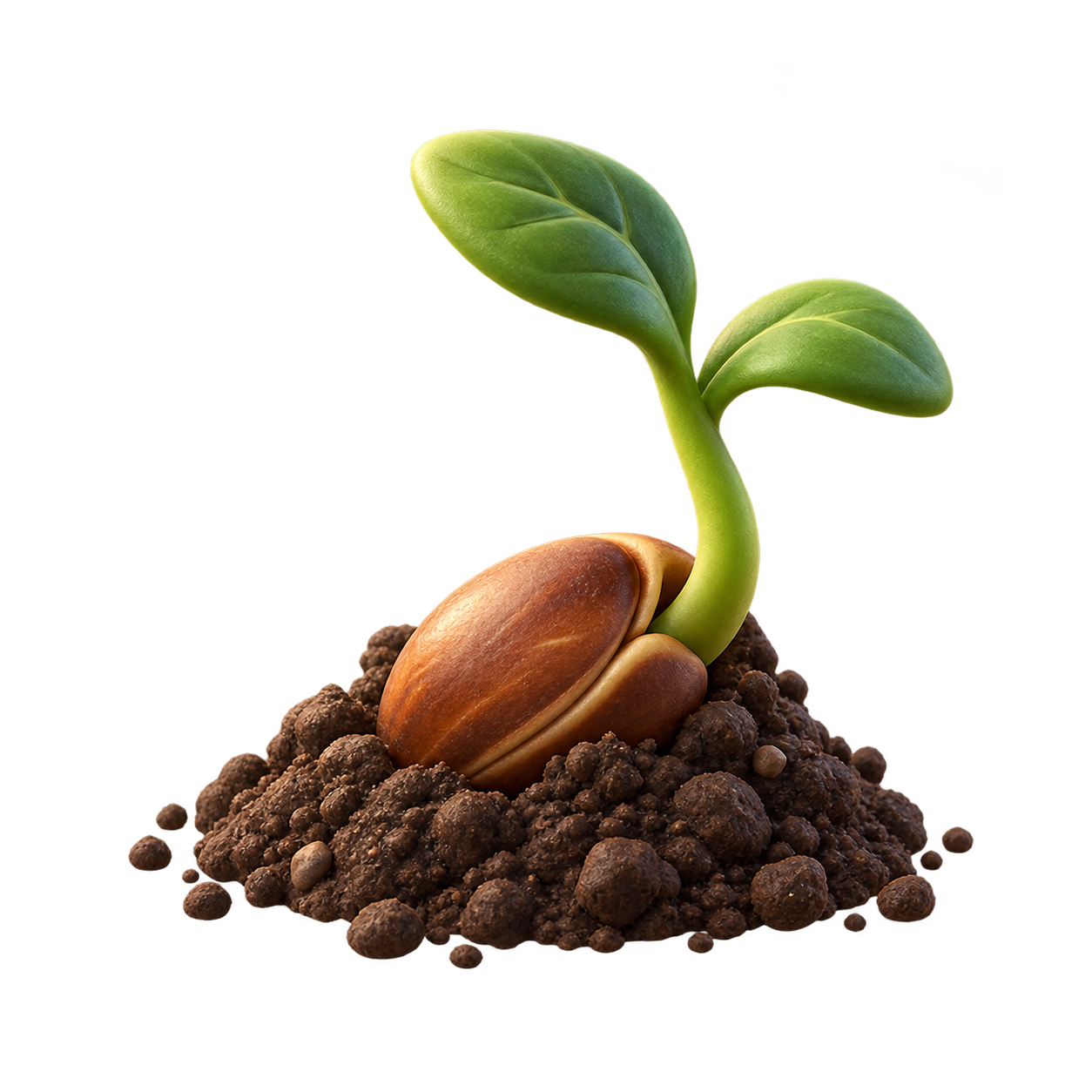
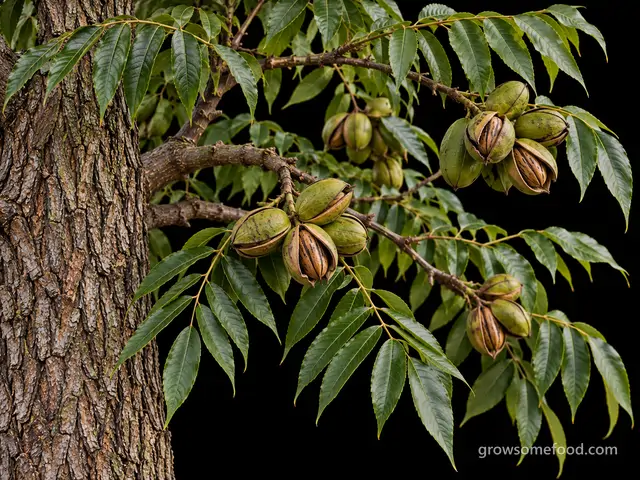
Pecan
A native North American giant that produces the classic Southern nut - but it demands space (60+ feet), a long hot summer, plenty of water, and two pollination-compatible trees, and it makes you wait years for the first real crop.
Safety notes The kernel is the food and is a common tree-nut allergen. The husks and shells stain hands and clothing - wear gloves when hulling. Like other Juglandaceae, pecan roots produce small amounts of juglone, though far less than black walnut.
Overview
The pecan is the only major tree nut native to North America, and a mature one is a magnificent, century-living shade tree that happens to rain down bushels of buttery nuts every fall. It's the taste of a Southern autumn - but it asks a lot in return. This is not a small-yard tree: a standard pecan reaches 60 to 100 feet tall and just as wide, with a taproot to match, so you plant it where a huge tree belongs and give it decades to become one.
The one thing to knowThis is not a small-yard tree: a standard pecan reaches 60 to 100 feet tall and just as wide, with a taproot to match, so you plant it where a huge tree belongs and give it decades to become one.
Quick facts
- Winter chill
- 500 hours below 45°FRange: 250–1000 hours
- Height
- 70 ftRange: 40–120 ft
- Spread
- 60 ftRange: 40–80 ft
- Cold
- Takes hard frostdamaged below -10°F
- Heat
- Struggles above 105°F
- Life cycle
- Perennial, lives about 100 years
- Soil
- Well-drained
- Water
- Medium
- Plant spacing
- 60 ftRange: 40–80 ft
When to plant
Nothing is open today. Fall transplanting opens in 13 days, Nov 1 to Dec 15.
- Transplant Nov 1 – Dec 15 Opens in 13 daysFall planting lets the roots settle over a mild winter before spring growth.
- Transplant Jan 15 – Mar 15 Opens in 88 daysThe pecan heartland - the long hot summers of the South are what pecans need. Plant dormant bare-root trees in late winter; fall planting also works in these mild zones.
Frost here: last around Apr 10 (Mar 27 to Apr 24 most years), first around Oct 25. Zone averages, your own yard may run a week or two either way.
Life stages
Establish, grow, repeat
Getting established and returning each season are different parts of the story.
Stage 1 of 5 · Getting established
First-year establishment
The first year after planting
Care at this stage
-
Water deeply and often the first two seasons
A pecan grows a long, brittle taproot and hates disturbance - plant a young bare-root or container tree, spread the taproot straight down in a deep hole, and keep it steadily moist (not soggy) all through the first summers. Drought stress now sets a tree back for years.
-
Mulch a wide ring, kept off the trunk
A broad wood-chip ring conserves moisture and stops grass from stealing water and nitrogen from the slow-starting tree. Leave the trunk clear.
-
Guard the thin young trunk
Wrap or cage the trunk against sunscald, rodents, and deer. Young pecans invest in roots first and grow slowly on top - that's normal, not failure.
-
Train a strong central leader
Pecans make the best structure with a single dominant trunk. The first winters, remove competing leaders and low branches you don't want, but keep pruning light - it delays bearing.
Months are typical seasonal windows; climate, variety, and plant age can shift them.
Harvest
- Green shucks split open along their seams, exposing the tan shell
- Nuts drop freely or shake down with a firm shake of the limb
- The kernel inside a test nut is plump, tan, and fully filled (not shriveled)
- The shuck has dried from green toward brown
- Gather nuts as the shucks split and drop · every 3 days
- Race the squirrels and crows
Per plant 500 to 10000 nuts, 10 to 200 lbPicking pick as they ripen
Cook with pecans
Watch out for
7 to know. 2 are high-risk: Squirrels & Rodents, Pecan Scab. 3 are active in October.
Squirrels & RodentsSeverity High WildlifenowSeason: Aug–DecChewed husks, shells or hulls scattered under the plant, fruit and nuts vanishing as they ripen, and gnawed or half-eaten windfalls.
Squirrels are the single biggest wildlife threat to a home pecan crop - they take green nuts as well as ripe ones, from late summer onward, and no baffle reliably stops a climber on a large tree. Crows and jays also take nuts, but squirrels are the dominant loss.
Chewed husks, shells or hulls scattered under the plant, fruit and nuts vanishing as they ripen, and gnawed or half-eaten windfalls. On new plantings: freshly dug holes and scattered soil, bulbs missing or gnawed, dug-up seed rows, vole runways under the mulch, and gaps in spring where you know you planted.
There is no rescue for what has already been eaten, so this is a prevention problem. Re-cover disturbed plantings with mesh promptly, replant losses inside cages, and trap or exclude persistent diggers where that is legal locally. On a large tree, accept that you will share the crop and concentrate on gathering promptly.
For a crop on the plant, timely and frequent harvest is the real defense - gather daily through the ripening window rather than leaving anything to hang, and pick slightly early to finish indoors where the crop allows it. Net or bag what you can reach. For bulbs and sown seed, lay wire mesh or hardware cloth over the planting, plant deeper, use buried wire baskets, and clear away the papery tunics and debris that advertise a fresh planting. Trunk baffles slow climbers on isolated trees, clearing jumping routes from nearby trees and roofs helps, and removing brush cover reduces the rodents sheltering nearby.
Squirrels, chipmunks, voles and mice are the wildlife that competes with you most directly for a crop. They take ripening nuts, seed and fruit off the plant, usually before you judge it ready, and cache what they do not eat. They also dig up freshly planted bulbs and sown seed, and voles tunnel in to gnaw bulbs and roots underground through winter. They climb anything, they know exactly when a crop is ripe, and a determined pair can clear a small tree or a new planting in a few days.
Pecan ScabSeverity High DiseaseSeason: Apr–AugBlack, sunken spots on shucks and leaf veins that spread and coalesce in wet weather; blackened, stuck-on shucks; small, poorly filled nuts.
The defining reason variety choice matters in the humid South; scab is minor in the arid West.
Black, sunken spots on shucks and leaf veins that spread and coalesce in wet weather; blackened, stuck-on shucks; small, poorly filled nuts.
Commercial orchards apply repeated fungicide sprays through the season, but home growers usually can't reach the canopy - variety resistance and sanitation are the realistic controls.
Plant scab-resistant varieties (Elliott, Kanza, Lakota) - the practical home defense, since spraying a tall tree is rarely feasible. All three are Type II, so include a Type I pollinizer: Amling or Caddo where scab pressure is high, Pawnee where the season is short. Improve air movement, rake and destroy fallen shucks and leaves, and don't crowd trees.
The most destructive pecan disease in the humid Southeast: a fungus that produces small, sunken, olive-to-black lesions on leaves, shoots, and especially the nut shucks, which in wet years merge to blacken and crack the shucks, stunt or drop the nuts, and ruin the crop.
Pecan WeevilSeverity Medium PestnowSeason: Aug–OctNuts dropping early in August and September; a clean, perfectly round hole about 1/8 inch across in the shell; a white, legless, brown-headed grub inside an otherwise sound-looking nut; long-snouted brown weevils jarred out of the canopy onto a sheet.
The reason the harvest and storage advice on this page keeps saying to cull holed nuts - a few weevil grubs will infest a whole stored batch.
Nuts dropping early in August and September; a clean, perfectly round hole about 1/8 inch across in the shell; a white, legless, brown-headed grub inside an otherwise sound-looking nut; long-snouted brown weevils jarred out of the canopy onto a sheet.
There's no home rescue for an infested nut. Cull every holed or suspiciously light nut before storing, and destroy them (burn, bag, or deep-bury) rather than composting under the tree. Orchards time trunk and canopy sprays to adult emergence; on a 70-foot backyard tree, sanitation is the realistic control.
Gather dropped nuts promptly and often through the whole drop window so grubs can't leave the nut and burrow into the soil - that one habit breaks the cycle better than anything else. Keep chickens or livestock under the tree if you have them, and don't leave culled nuts lying beneath the canopy.
The most damaging pecan nut pest across much of the native range: adult weevils emerge from the soil in late summer, and the females drill through the shuck of hardening nuts to lay eggs inside. The grubs eat the kernel from within, so a nut that looks and weighs almost right can be hollow, and when the grub chews its way out it leaves a clean round hole in the shell.
Pecan Nut CasebearerSeverity Medium PestSeason: May–JunSmall nutlets in late spring with a tiny entry hole at the base and dark frass (sawdust-like droppings) webbed around it; whole clusters of nutlets shriveling and dropping a few weeks after bloom; nutlets webbed together.
Distinguish from a normal 'June drop' - casebearer damage shows the entry hole and frass; June drop nutlets are clean.
Small nutlets in late spring with a tiny entry hole at the base and dark frass (sawdust-like droppings) webbed around it; whole clusters of nutlets shriveling and dropping a few weeks after bloom; nutlets webbed together.
Timing is everything and it is narrow: sprays only work in the few days between egg-laying and the larva boring in, which is why orchards follow regional casebearer forecasts. A backyard tree usually rides out the loss, since pecans set far more nutlets than they can fill.
Nothing you plant your way out of - scout the nutlet clusters weekly from just after bloom, and let the parasitic wasps, spiders, and lacewings that normally keep casebearer in check do their work by not spraying broadly for aphids.
A small gray-brown moth whose larvae attack pecans right after nut set. Each larva bores into a tiny nutlet at the base of the cluster and tunnels on from nut to nut, so one caterpillar can destroy several nutlets in a cluster - the main cause of early nutlet loss in the South.
AphidsSeverity Medium PestSeason: Jun–SepDense clusters of tiny insects packed onto shoot tips, flower buds, and the undersides of young leaves.
Pecans have two: the yellow pecan aphid, which mainly leaves honeydew and sooty mold on the lower leaves, and the black pecan aphid, which is more damaging and causes yellow leaf blotches and early defoliation. Beneficial insects usually handle both on a large home tree; heavy late-season black-aphid outbreaks are an orchard problem more than a garden one.
Dense clusters of tiny insects packed onto shoot tips, flower buds, and the undersides of young leaves. Curled, cupped, or distorted new growth that never opens properly. A sticky shine on the leaves - and on whatever sits under the plant - that later goes black with sooty mold. Tiny white cast skins left behind where a colony has been feeding. Ants running steadily up and down the stems, which is often the first thing you notice. Mottled, streaked, or misshapen leaves that do not grow out can mean a virus the aphids brought with them rather than the feeding itself.
Knock the colonies off with a hard jet of water and repeat every few days - on most plants that alone ends it. Pinch out or prune off the worst-infested tips rather than treating the whole plant. If colonies keep rebuilding, spray insecticidal soap or horticultural oil directly onto the insects, covering leaf undersides, and repeat weekly until they are gone; treat early or late in the day, and never spray a wilted or heat-stressed plant. Avoid broad-spectrum insecticides - they kill the ladybugs, lacewings, and parasitic wasps that were about to solve the problem for you, and aphid numbers usually come back worse afterward. Anything you spray must be labeled for the plant you are treating; follow that label and observe its pre-harvest interval. On anything you eat, wash leaves, heads, and buds well before use, since aphids hide down in crowns, folds, and tight growth.
Go easy on nitrogen: the soft, lush growth that heavy feeding produces is exactly what aphids breed on. Check new growth once a week through spring and early summer so you catch colonies while they are still small, and rub the first few out with your fingers. Leave flowering plants nearby and skip broad-spectrum sprays - ladybugs, lacewings, hoverflies, and parasitic wasps do most of this work for free, and they only stay if there is something for them to eat. Keep ants off the plant where you can, since they protect aphids from those predators. Water steadily so plants are not stressed, and check any new plant over before you bring it home or move it indoors, since aphids usually arrive on something else.
Aphids are small soft-bodied sap-suckers - green, black, gray, pink, or waxy white, and mostly wingless - that gather in dense colonies on the tenderest new growth: shoot tips, buds, and the undersides of young leaves. They breed extremely fast in mild weather, so a few can become hundreds inside a week. Their feeding curls and distorts soft growth, and the sticky honeydew they excrete coats everything below and turns black with sooty mold. Ants often farm and defend the colonies for that honeydew. A few aphids are normal on almost any plant and a healthy plant shrugs them off; only dense, persistent colonies do real damage, and some aphids also spread plant viruses as they feed.
2 more, low risk
Walnut Husk FlySeverity Low PestnowSeason: Aug–OctBlack, soft, slimy husks in late summer that cling to the shell, small white maggots inside the rotting husk, and stained, hard-to-hull nuts.
Primarily a walnut pest; on pecans it's usually a cosmetic hulling nuisance rather than a serious threat.
Black, soft, slimy husks in late summer that cling to the shell, small white maggots inside the rotting husk, and stained, hard-to-hull nuts.
Rarely warrants spraying on a home tree - sanitation (removing dropped, infested hulls) is the main control, and the kernel inside stays sound. Just hull affected nuts promptly and clean the stained shells.
Gather and destroy dropped, infested nuts promptly to break the cycle; hang yellow sticky traps to monitor emergence; hull nuts immediately after gathering so the maggots can't taint the kernel.
The signature late-season walnut pest: a fly that lays eggs in the husk, and whose maggots tunnel through it, causing the husk to blacken, soften, and rot, and to stick tightly to the shell so it won't hull cleanly - staining the shell and darkening the kernel if left on, though the maggots rarely reach the nut itself.
Japanese BeetlesSeverity Low PestSeason: Jun–AugClusters of shiny metallic beetles massed together on the upper, sunniest foliage and down inside open blooms, heaviest on warm sunny afternoons from around late June.
A minor, brief midsummer nuisance on established pecans; young trees are more vulnerable to defoliation and are the ones worth protecting.
Clusters of shiny metallic beetles massed together on the upper, sunniest foliage and down inside open blooms, heaviest on warm sunny afternoons from around late June. Leaves reduced to lace, with the veins left intact and the tissue between them gone - unmistakable, and quite different from the ragged chewing of a caterpillar. Ragged, chewed petals and blooms that never open properly. Beetles that let go and drop straight to the ground when you disturb the plant. Feeding damage on ripening fruit, on the plants they also take fruit from. Whole branches going brown and lacy at the top of a plant while the shaded lower growth stays untouched.
Persistent morning hand-picking into soapy water is the most effective home control there is, and on a vigorous established plant the damage is usually cosmetic and needs nothing else. Neem deters feeding rather than killing, and has to be reapplied. For heavy pressure, spinosad or a targeted insecticide labeled for the plant will work - but time any spray away from bloom and apply it at dusk to protect bees, and observe the pre-harvest interval on anything you eat. On flowering plants, some gardeners simply shear the blooms off for a couple of weeks and let the plant rebloom once the wave has passed, which removes the lure as well as the damage. Young plants and young trees are the ones worth defending: a mature tree or an established vine tolerates several weeks of leaf loss without lasting harm.
Hand-picking is genuinely the main defense in a home garden. Go out in the cool of the morning while the beetles are sluggish, hold a tub of soapy water underneath, and knock them in - they drop when disturbed, so most fall straight into it. Do it daily through the flight: because the beetles call each other in, taking them off early stops a plant becoming a beacon. Do not put pheromone or lure traps anywhere near the garden - they demonstrably pull in far more beetles than they catch. And do not count on lawn grub control: milky spore has performed poorly and inconsistently in field trials across most of the US, and treating your own turf does not reduce the adults feeding on your plants, because they fly in from surrounding properties. Where it is practical, row cover or netting through the peak flight excludes them outright. Otherwise riding out the six-to-eight-week wave is a legitimate strategy, since most established plants absorb the damage.
Japanese beetles are metallic green-and-copper beetles about half an inch long that emerge in early summer and feed for six to eight weeks. They feed in aggregating masses - one beetle's feeding releases a scent that draws in more - so a plant goes from untouched to covered in a couple of days. They chew the soft tissue between the leaf veins and leave the veins standing, so the leaf ends up as a brown lace skeleton, and they shred open flowers and sometimes ripening fruit as well. They work the sunniest upper parts of a plant on warm afternoons. The white C-shaped grubs spend the rest of the year in turf and pasture soil eating grass roots, and the adults then fly in from wherever they hatched, which can be some distance away.
Good & bad neighbors
Plant nearby
-
A clover understory fixes nitrogen (pecans are nitrogen-hungry), suppresses grass that competes for water, and feeds pollinators - a good living groundcover under a young tree.
- Traditional pairings, thin evidence
-
ComfreyA classic orchard-guild plant: deep roots mine minerals and the chopped leaves make a nutrient mulch under the tree. Traditional, low evidence, but harmless and useful.
-
Planted around the trunk, daffodils deter voles and rabbits from gnawing bark and bloom early; a harmless, useful ring under a young pecan.
-
French marigolds suppress root-knot nematodes and draw beneficial insects; a low-confidence but harmless underplanting while the tree is small.


Keep apart
- Traditional pairings, thin evidence
-
Pecans (like other Juglandaceae) produce small amounts of juglone, far less than black walnut; sensitive fruit trees are best kept out of the immediate root zone as a mild precaution.
Varieties · 6
You pick one when you add Pecan to your garden. Its days to maturity set your harvest window.
Desirable
The classic large, high-quality Southern pecan and a longtime commercial standard - big, well-filled, easy-cracking nuts and a reliable, moderate producer.
Variety details for Desirable
Large, plump, oblong nuts with an easily removed, well-filled kernel.
type-ilarge-nutsouthern-classichigh-qualityThe major drawback is scab susceptibility: Desirable needs a spray program in the humid Southeast, so it suits drier regions or growers willing to manage disease. Type I (protandrous) - pair with a Type II such as Stuart or Elliott, whose later season and Southern adaptation overlap it better than the early northern types.
Elliott
The scab-resistant workhorse of the humid Southeast: smaller nuts than Desirable but excellent, rich, high-oil flavor and strong resistance to the scab disease that plagues wetter climates - the practical home-grower choice where spraying a tall tree isn't feasible.
Variety details for Elliott
Small-to-medium, teardrop-shaped nuts with a rich, oily, flavorful kernel.
type-iiscab-resistantsmall-nutrich-flavorResists Pecan scab (very good)
Reliable and consistent. Type II (protogynous).
Pawnee
An early-ripening, large-nut variety that extends pecans northward - its shorter season need lets it finish in zone 6 and the cooler Midwest edge where later types run out of fall.
Variety details for Pawnee
Large, oblong, attractive nuts that ripen weeks ahead of most varieties.
type-iearly-ripeninglarge-nutcold-adaptedResists Pecan scab (moderate)
Good quality and a popular Type I pollinizer. Moderate scab resistance, so still best in drier or well-managed sites. Type I (protandrous) - a fine partner for the Type II cultivars Elliott, Kanza, Lakota, or Stuart.
Kanza
The modern all-star for home growers: a cold-hardy, early-ripening, strongly scab-resistant variety with small but exceptionally high-quality, richly flavored kernels and consistent, low-alternate-bearing crops.
Variety details for Kanza
Small, well-filled nuts with an outstanding, rich-flavored kernel.
type-iiscab-resistantcold-hardysmall-nutResists Pecan scab (very good)
Bred by the USDA and widely recommended from the Midwest to the humid South. Type II (protogynous) - pair with Pawnee.
Stuart
A venerable, tough old Southern standard - big nuts, a vigorous and long-lived tree, and better scab tolerance than Desirable, though not immune.
Variety details for Stuart
Large, broad, thick-shelled nuts with a good kernel.
type-iilarge-nutsouthern-classicvigorousSlow to come into bearing but dependable for decades. A traditional choice across the Southeast. Type II (protogynous).
Lakota
A newer USDA release combining strong scab resistance, good cold hardiness, high yield, and excellent kernel quality - one of the best recommended varieties for disease-prone humid regions and northern edges alike.
Variety details for Lakota
Medium-large nuts with a bright, well-filled, high-quality kernel.
type-iiscab-resistantcold-hardyhigh-qualityResists Pecan scab (very good)
Type II (protogynous), so it pairs naturally with a Type I such as Pawnee.
Grower tips
Notes from growers, tagged with the zone they grow in. A person reads every post before it appears.
Nobody has posted about Pecan yet. The first one usually saves someone a season.
Free account. Your post shows your grower name and zone, never your email.