
Add it to your home screen and it opens full screen: no browser bars, one tap away, and everything stays signed in. Free, nothing to download from an app store.
- Tap the Share button in your browser
- Scroll down and choose “Add to Home Screen”
- Open GrowSomeFood from your home screen
- Open your browser’s menu
- Choose “Add to Home screen” or “Install app”
- Open GrowSomeFood from your home screen
Peanut
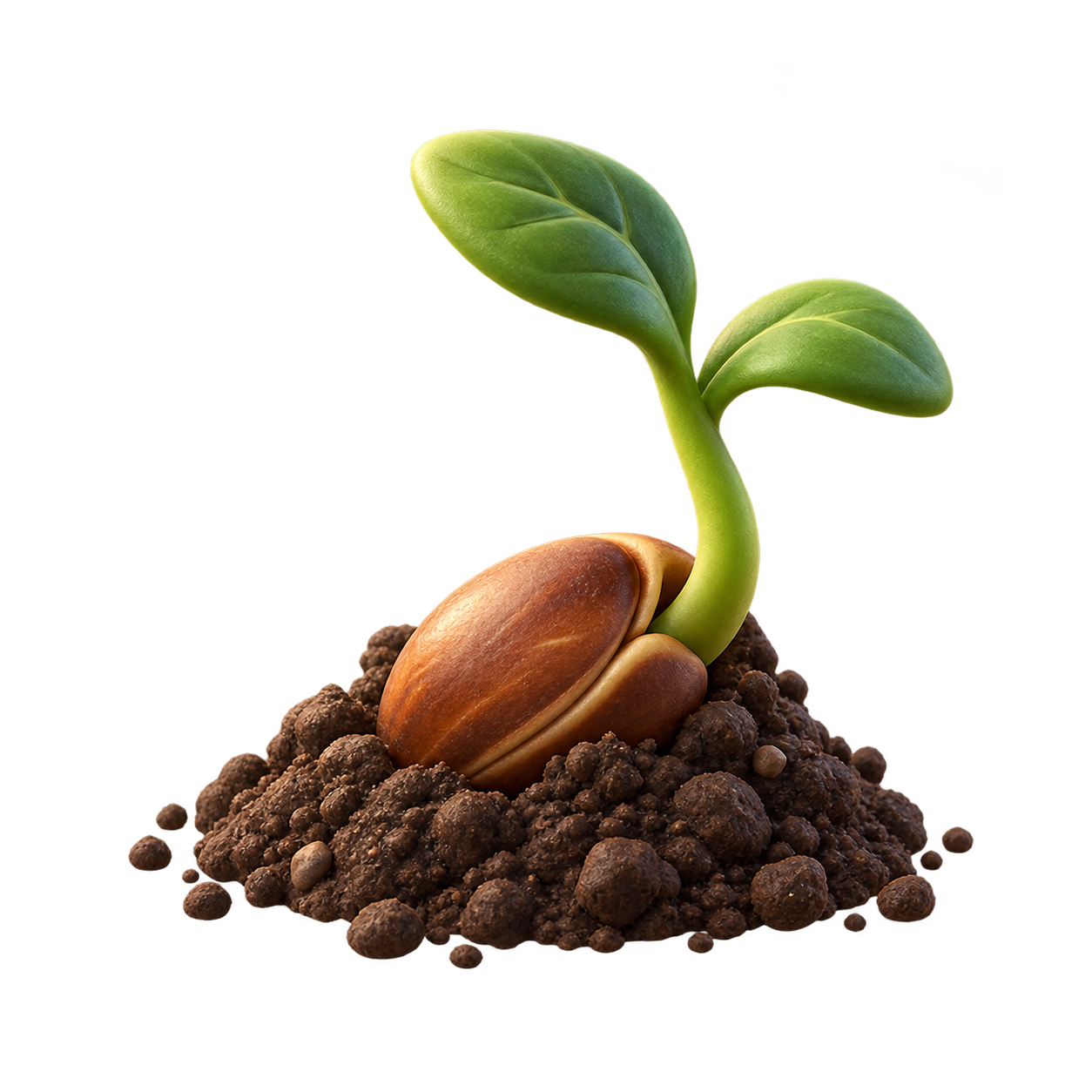
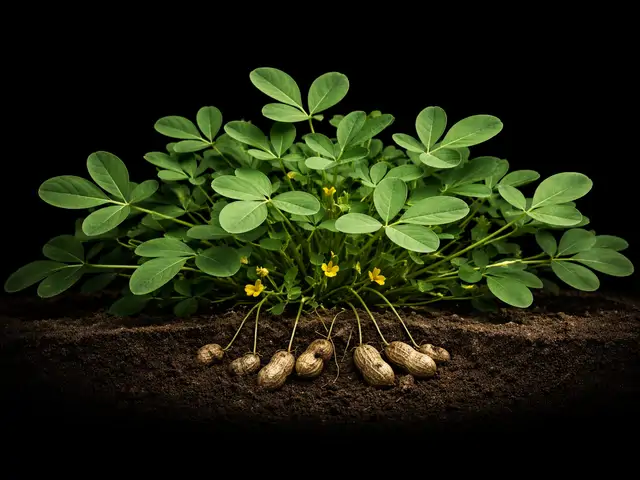
A legume that flowers above ground and ripens its pods below it: plant in warm sandy soil, let it peg down, and dig a protein-rich crop that fixes its own nitrogen.
Safety notes Peanuts are a common, serious food allergen - handle and label accordingly. Otherwise all-food and safe; store dry, since damp peanuts can grow Aspergillus mold that produces toxic aflatoxin (discard any moldy or off-smelling nuts).
Overview
The peanut is one of the garden's true botanical marvels - a legume (not a nut) that flowers above ground, then drives its fertilized flower stalks down into the soil, where the pods form and ripen underground. That underground habit gives it its other names, groundnut and goober, and makes harvest a treasure-dig. Like its bean and pea cousins, it fixes its own nitrogen, so it feeds itself and improves the soil for the next crop.
The one thing to knowFour market types cover the range: big Virginia (the roasting/ballpark peanut), high-yielding Runner (most peanut butter), small oily Spanish, and sweet many-seeded Valencia (the boiling peanut).
Quick facts
- Sprouts in
- 10 daysRange: 7–14 days
- Soil temperature
- 75 °FRange: 65–90 °F
- Height
- 18 inRange: 12–24 in
- Spread
- 24 inRange: 18–36 in
- Cold
- Killed by frostdamaged below 32°F
- Heat
- Struggles above 95°F
- Life cycle
- Annual
- Save seeds
- About 140 days after plantingRange: 110–160 days
- Soil
- Well-drained
- Water
- Medium
- Plant spacing
- 8 inRange: 6–12 in
When to plant
Nothing is open today. Spring sowing opens 6 months, Apr 17 to May 8.
- Direct sow Apr 17 – May 8 Opens in 180 daysAbout 7 days after to 4 weeks after your last frost (Apr 10 here)Sow 1-3 weeks after last frost once soil holds 65°F. Peanut needs 120-150 frost-free warm days - choose earlier Spanish/Valencia types at the cool end of this range.
Frost here: last around Apr 10 (Mar 27 to Apr 24 most years), first around Oct 25. Zone averages, your own yard may run a week or two either way.
Life stages
From the first start to harvest
Follow the growing sequence. Choose a stage to see its care and signs to watch for.
Stage 1 of 7 · The growing sequence
Germination
Day 0 to 10 from sowing
Care at this stage
-
Keep soil evenly moist and warm
Plant raw (unroasted) peanuts still in their papery red skins; keep the bed moist but not soggy at 65°F+ soil for good emergence.
-
Sow only into warm soil
Peanut seed rots in cold, wet ground; wait until soil holds 65°F and the frost danger has passed.
Stages can overlap; weather, variety, and growing conditions change the pace.
Harvest
- Foliage yellowing and 120-150 days from planting
- Test-dug pods are plump and the inside of the shell is darkened and veined
- Kernels fill their shells with well-colored papery skins
- Loosen and lift the whole plant on a dry day · weekly
- CURE like garlic: dry on the plant, then shell-dry
Per plant 20 to 50 pods, 8 to 24 ozPicking pull once
Cook with peanuts
Watch out for
6 to know. 1 is high-risk: Leaf Spot (Peanut). 1 is active in October.
Leaf Spot (Peanut)Severity High DiseaseSeason: Jun–SepSmall circular dark-brown spots (often ringed with a yellow halo) on leaflets, spreading upward, followed by heavy leaf drop.
Defoliation late in the season is the real cost - it weakens the pegs so mature pods drop off in the soil and are lost at harvest.
Small circular dark-brown spots (often ringed with a yellow halo) on leaflets, spreading upward, followed by heavy leaf drop.
Remove badly affected debris; protectant fungicides (chlorothalonil, copper) on a schedule where pressure is high; keep foliage dry. Use only a product labeled for this crop, follow the label exactly, and observe the pre-harvest interval before you dig.
Rotate away from peanuts for 2-3 years, space for airflow, water at the base not overhead, remove crop debris, and grow tolerant varieties.
The most important peanut disease: fungal early and late leaf spot (Cercospora/Cercosporidium) causing small dark spots that spread and defoliate the plant, cutting yield as the weakened plant drops pods.
Squirrels & RodentsSeverity Medium WildlifenowSeason: Aug–OctChewed husks, shells or hulls scattered under the plant, fruit and nuts vanishing as they ripen, and gnawed or half-eaten windfalls.
The buried, protein-rich pods are a magnet for foragers, especially as the plants dry down and signal ripeness. Harvesting on time rather than leaving pods in the ground is the most practical defense.
Chewed husks, shells or hulls scattered under the plant, fruit and nuts vanishing as they ripen, and gnawed or half-eaten windfalls. On new plantings: freshly dug holes and scattered soil, bulbs missing or gnawed, dug-up seed rows, vole runways under the mulch, and gaps in spring where you know you planted.
There is no rescue for what has already been eaten, so this is a prevention problem. Re-cover disturbed plantings with mesh promptly, replant losses inside cages, and trap or exclude persistent diggers where that is legal locally. On a large tree, accept that you will share the crop and concentrate on gathering promptly.
For a crop on the plant, timely and frequent harvest is the real defense - gather daily through the ripening window rather than leaving anything to hang, and pick slightly early to finish indoors where the crop allows it. Net or bag what you can reach. For bulbs and sown seed, lay wire mesh or hardware cloth over the planting, plant deeper, use buried wire baskets, and clear away the papery tunics and debris that advertise a fresh planting. Trunk baffles slow climbers on isolated trees, clearing jumping routes from nearby trees and roofs helps, and removing brush cover reduces the rodents sheltering nearby.
Squirrels, chipmunks, voles and mice are the wildlife that competes with you most directly for a crop. They take ripening nuts, seed and fruit off the plant, usually before you judge it ready, and cache what they do not eat. They also dig up freshly planted bulbs and sown seed, and voles tunnel in to gnaw bulbs and roots underground through winter. They climb anything, they know exactly when a crop is ripe, and a determined pair can clear a small tree or a new planting in a few days.
ThripsSeverity Medium PestSeason: May–JulSilvery-white streaks and fine speckling on leaves and petals, brown discolored patches, distorted buds and blooms that fail to open properly, and tiny sliver-like insects that drop out when you shake foliage or a flower over a sheet of white paper.
The feeding damage is usually minor, but thrips vector tomato spotted wilt virus in peanut, which can be serious - watch for them on young plants, where early control actually matters.
Silvery-white streaks and fine speckling on leaves and petals, brown discolored patches, distorted buds and blooms that fail to open properly, and tiny sliver-like insects that drop out when you shake foliage or a flower over a sheet of white paper. Worst in hot, dry spells and on drought-stressed plants.
A strong water spray dislodges light infestations, and on a plant that can take it a hard shear and clean regrowth clears them outright. For heavier pressure use insecticidal soap, neem or spinosad, aimed down into the leaf sheaths and buds where thrips actually shelter, and repeat at intervals since eggs and pupae escape a single spray. Spinosad is a registered insecticide: use only a product labeled for the crop you are treating, follow the label exactly, and observe its pre-harvest interval.
Scout early, before the damage reaches the part of the plant you care about. Start with clean planting stock, keep plants well watered since drought-stressed plants suffer worst, avoid heavy nitrogen, clear weedy hosts nearby, and hang blue or yellow sticky traps to catch the first arrivals. Reflective mulch deters them, and predatory mites, lacewings and minute pirate bugs do real work outdoors.
Tiny slender sap-sucking insects that rasp at leaves, buds and petals and drink what runs out, leaving silvery-white streaking and fine flecking, brown scorched patches, and new growth that comes out twisted or fails to open. They breed fast in hot, dry weather, shelter deep in leaf sheaths, folds and unopened buds where sprays struggle to reach, and several species also transmit plant viruses - which is often more damaging than the feeding itself.
Root-Knot NematodesSeverity Medium PestSeason: Jun–SepStunted, yellowing, unthrifty plants that wilt in the heat even though the soil is moist, and poor yields for no obvious reason.
Galls form on peanut roots and on the pegs and pods themselves, so pod fill suffers as well as top growth. The same warm sandy soils that suit peanut favor these nematodes, which makes rotation doubly important.
Stunted, yellowing, unthrifty plants that wilt in the heat even though the soil is moist, and poor yields for no obvious reason. Confirm by digging: beady swellings strung along the roots and side rootlets, and root crops that are forked, branched, cracked or knotted rather than clean.
There is no in-season cure. Pull and destroy affected plants rather than composting them, and bring that ground back over several seasons with rotation, resistant varieties and marigold cover crops. Where a crop can be grown in a container of fresh mix, that sidesteps the problem entirely.
Rotate to non-hosts, and grow resistant varieties where they exist for your crop. A French marigold cover crop grown thickly the season before and turned in genuinely lowers populations. Build organic matter and mulch heavily, which feeds the soil life that suppresses them. Plant only clean stock, never move soil from an infested bed around the garden, and solarize badly infested ground through the hottest part of summer.
Microscopic soil roundworms (Meloidogyne species) that invade roots and force them to swell into beady galls. A galled root cannot take up water and nutrients properly, so the plant stunts, yellows, wilts in heat despite watering, and yields poorly, and root and tuber crops come up forked, knobbly, hairy or cracked instead of clean. They are worst in warm, sandy soils and build up steadily wherever a susceptible crop is grown in the same ground year after year. The wounds they leave also open the way for fusarium wilt and rots.
Southern BlightSeverity Medium DiseaseSeason: Jun–AugSudden wilting of individual plants, white fungal fans on the lower stem and surrounding soil, and tiny round tan-to-brown sclerotia at the base in hot, humid weather.
A wide-host-range fungus (it also hits tomatoes, beans, and many vegetables), which is why peanuts shouldn't follow susceptible crops.
Sudden wilting of individual plants, white fungal fans on the lower stem and surrounding soil, and tiny round tan-to-brown sclerotia at the base in hot, humid weather.
Remove and destroy affected plants along with the surrounding soil crust; the sclerotia persist, so rotation and sanitation are the long game.
Rotate with non-host crops (grasses/corn), improve drainage, bury or remove old debris, avoid deep mulch against stems, and don't overcrowd.
A hot-weather soil fungus (Sclerotium rolfsii) that attacks the stem at the soil line, collapsing plants; recognizable by white fan-like fungal growth and tan mustard-seed-sized sclerotia at the base.
Peanut RustSeverity Medium DiseaseSeason: Jul–SepOrange, powdery, raised pustules on leaf undersides that rupture and spread; leaves yellowing and dropping when heavy.
Usually shows up late and often travels with leaf spot; together they're the main defoliation threat in humid regions.
Orange, powdery, raised pustules on leaf undersides that rupture and spread; leaves yellowing and dropping when heavy.
Fungicides used for leaf spot also help rust; remove worst-affected foliage and harvest promptly if defoliation sets in. Use only a product labeled for this crop, follow the label exactly, and observe the pre-harvest interval before you dig.
Grow resistant varieties, give good airflow and spacing, rotate, and avoid overhead watering; rust arrives on wind late in the season.
A fungal disease producing orange-brown pustules on the undersides of leaves, often alongside leaf spot, that defoliates plants and reduces pod fill in warm humid weather.
Good & bad neighbors
All of these are traditional pairings. The evidence is thin, so treat them as a nudge, not a rule.
Plant nearby
-
Traditional pairing where tall corn and the low peanut use different layers; peanut fixes nitrogen the heavy-feeding corn can use.
-
Sprawling squash and low peanuts can share ground cover; keep the squash from smothering the peanut's pegging zone.
-
Draws pollinators and beneficial insects at the edge of the patch; keep it from shading the sun-loving peanuts.

Keep apart
-
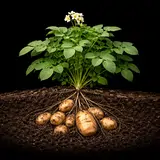
Two crops competing for the same underground space, and potatoes can host soil diseases like southern blight; digging one disturbs the other.
-
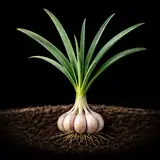
The same allium-legume tradition as onions, and the same caveat: it is folklore rather than demonstrated agronomy, with no controlled evidence that garlic root chemistry suppresses peanut rhizobia. Separate them if you keep the tradition.
-
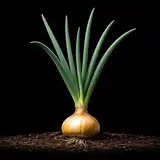
Traditional companion lore holds that alliums inhibit legumes and their nitrogen-fixing bacteria. The mechanism is not established and controlled evidence is lacking - separate them if you follow the tradition, but don't plan a rotation around it.
Varieties · 5
You pick one when you add Peanut to your garden. Its days to maturity set your harvest window.
Virginia
The big roasting-and-snacking peanut - the classic 'ballpark' peanut - with the largest kernels of any type, two to a pod, in a smooth tan shell.
Variety details for Virginia
Large, plump kernels in long, smooth light-brown shells on spreading plants.
virginia-typelarge-seededroastinglong-seasonSpreading, long-season plants grown mainly in Virginia and the Carolinas; superb roasted in the shell.
Runner
The workhorse behind most American peanut butter: low, spreading plants that set uniform two-seeded pods in high yields.
Variety details for Runner
Low, spreading vines with uniform medium kernels, usually two per pod.
runner-typehigh-yieldpeanut-butteruniformResists Leaf Spot
Developed in the mid-20th century and now the dominant commercial type for its consistency and productivity.
Valencia
The sweet, early boiling peanut: upright bunch plants bearing slender pods with three to five small red-skinned seeds each - more per pod than other types.
Variety details for Valencia
Slender pods with 3-5 small, red-skinned kernels on upright bunch plants.
valencia-typeearlyboilingsweetThe classic choice for Southern boiled peanuts, and its short season suits cooler gardens.
Spanish
Small, round, red-skinned peanuts with the highest oil content, on compact upright bunch plants - the earliest-maturing type, ideal for confections, snacks, and oil, and for shorter seasons.
Variety details for Spanish
Small round kernels with reddish-brown skins in short two-seeded pods.
spanish-typeearlyhigh-oilsmall-seededGrown closer-spaced than the larger types.
Tennessee Red
A Valencia-type heirloom valued for adaptability across a range of climates and its sweet, red-skinned kernels, several to a pod.
Variety details for Tennessee Red
Red-skinned kernels, several per pod, on productive bunch plants.
valencia-typeheirloomred-skinadaptableA dependable open-pollinated choice for home gardens and for saving your own seed.
Grower tips
Notes from growers, tagged with the zone they grow in. A person reads every post before it appears.
Nobody has posted about Peanut yet. The first one usually saves someone a season.
Free account. Your post shows your grower name and zone, never your email.