
Add it to your home screen and it opens full screen: no browser bars, one tap away, and everything stays signed in. Free, nothing to download from an app store.
- Tap the Share button in your browser
- Scroll down and choose “Add to Home Screen”
- Open GrowSomeFood from your home screen
- Open your browser’s menu
- Choose “Add to Home screen” or “Install app”
- Open GrowSomeFood from your home screen
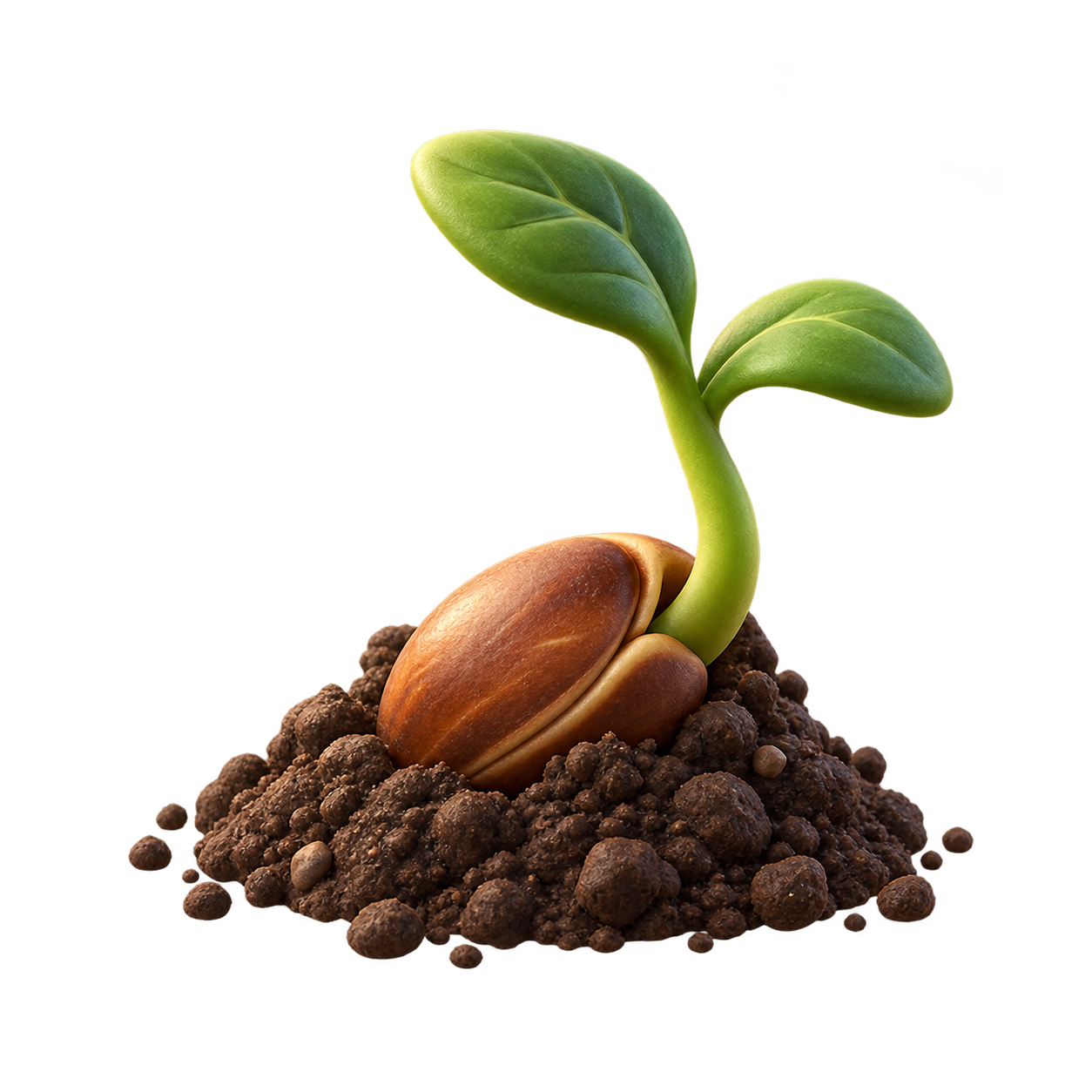
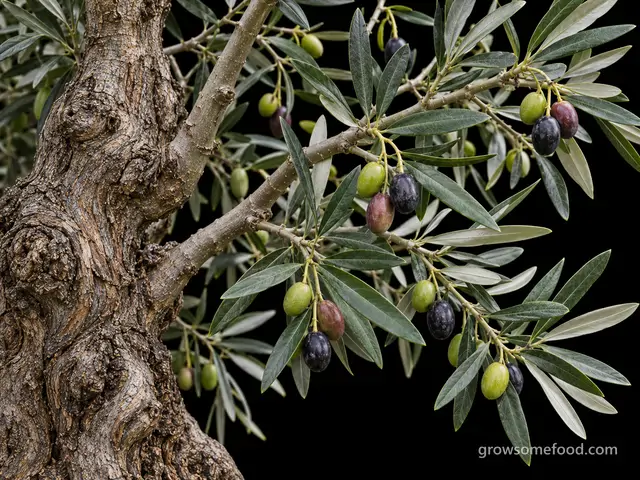
Olive
An ancient, drought-hardy, incredibly long-lived evergreen for Mediterranean climates (zones 8-10) - grown for table olives and oil, or as a silvery ornamental. The catches: raw olives must be cured to be edible, and the tree needs a cool-but-not-freezing winter to fruit.
Safety notes Raw olives are bitter and inedible until cured - that is oleuropein, not a poison. Home curing is low-acid food preservation with a real botulism risk: finished olives must be acidified and refrigerated, never kept at room temperature, and you should follow a university extension procedure. Olive pollen is also a major airborne allergen, and a few desert-Southwest jurisdictions (Pima County AZ, Clark County NV) restrict selling or planting olive trees - check your local ordinance.
Overview
The olive is one of humanity's oldest and longest-lived trees - individual olives live for centuries, some for over a thousand years, and a tree you plant may outlive several generations of your family. It's a silvery, drought-tough, heat-loving evergreen that thrives on neglect once established, tolerates poor and rocky soil, and doubles as a beautiful ornamental and evergreen screen even where it won't fruit. Where the climate suits it, it gives you two of the great foods of civilization: cured table olives and pressed olive oil.
The one thing to knowIt's a silvery, drought-tough, heat-loving evergreen that thrives on neglect once established, tolerates poor and rocky soil, and doubles as a beautiful ornamental and evergreen screen even where it won't fruit.
Quick facts
- Winter chill
- 250 hours below 45°FRange: 150–400 hours
- Height
- 20 ftRange: 8–40 ft
- Spread
- 18 ftRange: 8–30 ft
- Cold
- Killed by frostdamaged below 15°F
- Heat
- Struggles above 110°F
- Life cycle
- Perennial, lives about 100 years
- Soil
- Well-drained
- Water
- Low
- Plant spacing
- 18 ftRange: 10–30 ft
When to plant
No planting window on record for this zone. Nearest zone with one: 8a. It needs winter chill.
Frost here: last around Apr 10 (Mar 27 to Apr 24 most years), first around Oct 25. Zone averages, your own yard may run a week or two either way.
Life stages
Establish, grow, repeat
Getting established and returning each season are different parts of the story.
Stage 1 of 5 · Getting established
First-year establishment
The first year after planting
Care at this stage
-
Water regularly the first year, then taper off
Olives are famously drought-tolerant once established, but a young tree needs steady moisture its first year or two to root in. Water deeply every 7-10 days the first summer, then gradually reduce as it establishes.
-
Mulch to hold moisture, kept off the trunk
A ring of mulch conserves water while the tree establishes. Keep it a few inches off the trunk to prevent crown rot.
-
Protect young trees from frost
Young olive trees are frost-tender (hardy only to about 15-20°F even when mature, and less so when young). In zone 8 and cold edges, shelter or wrap the trunk through the first few winters and plant a cold-hardier cultivar (Arbequina, Mission, Frantoio).
-
Train the framework lightly the first year
Decide single-trunk tree or multi-stem form and set the main scaffolds. Olives grow slowly and need little early pruning - remove only suckers, crossing wood, and low growth. Don't rush; the tree is building for a century.
Months are typical seasonal windows; climate, variety, and plant age can shift them.
Harvest
- For firm green table olives: fruit is full-sized, hard, and still green
- For black table olives and richest oil: fruit has turned purple to glossy black and softened slightly on the tree
- Cut fruit shows the flesh color changing from white-green toward purple as oil content peaks
- Remember: ripe or not, olives are inedibly bitter until cured - color signals USE (green vs black), not edibility
- Pick green for firm table olives, black-ripe for oil and soft olives · every 5 days
- Remember: they are NOT edible off the tree - cure first
Per plant 5 to 200 lbPicking pick as they ripen
Cook with olives
Watch out for
5 to know. 1 is high-risk: Olive Fruit Fly. 3 are active in October.
Olive Fruit FlySeverity High PestnowSeason: Jun–DecA small brown or purplish dimple (the egg-laying sting) on otherwise perfect fruit, sometimes with a tiny exit hole later.
In infested regions unmanaged fruit is usually unusable for table olives, though lightly stung fruit may still press acceptably if it is milled within a day or two, before the damage sours the oil.
A small brown or purplish dimple (the egg-laying sting) on otherwise perfect fruit, sometimes with a tiny exit hole later. Damage is nearly invisible from outside, so cut a sample of fruit open through the summer and look for creamy maggots and brown tunnels in the flesh.
There is no rescue once the maggot is inside - infested olives cannot be salvaged for the table. Strip and destroy the remaining fruit (bag it or bury it deeply; do not compost it) to break the cycle for next year, and start trapping and baiting earlier the following season.
Hang yellow sticky traps or protein-bait traps from midsummer so you know when flies arrive; apply spinosad protein-bait sprays (GF-120) on the recommended schedule once they do; pick up and destroy every dropped and mummified olive, since sanitation is the single biggest lever on a home tree; harvest promptly instead of leaving fruit hanging; or bag or net a small tree.
Bactrocera oleae is the defining pest of olive fruit. The female stings a green or ripening olive and lays a single egg under the skin; the maggot then tunnels through the flesh, opening the fruit to rot and driving up the acidity of any oil pressed from it. It has been established statewide in California since 1998 and is effectively unavoidable there without active management - unmanaged backyard fruit is commonly 100% infested.
Verticillium WiltSeverity Medium DiseasenowSeason: Mar–OctOne branch, one limb or one side of a plant wilting, yellowing and browning in summer while the rest carries on normally - the lopsided pattern is the tell - and leaves that wilt and then hang on rather than dropping cleanly.
Tomato, cotton and other hosts build the fungus up in soil, so an olive planted where they grew is at risk - a key reason to site olives in well-drained ground with no verticillium history. Some cultivars are more tolerant than others, and the one-limb-at-a-time wilt is characteristic here.
One branch, one limb or one side of a plant wilting, yellowing and browning in summer while the rest carries on normally - the lopsided pattern is the tell - and leaves that wilt and then hang on rather than dropping cleanly. Cut into affected wood and look for olive-green, grey or brown streaking along the grain; in a cut vegetable stem it shows as a ring of discolored dots. On vegetables, lower leaves yellow in a wedge from the margin inward, and the plant wilts at midday but recovers overnight in the early stages.
There is no cure and nothing to spray. On a tree or shrub the aim is to keep it alive long enough to compartmentalize the fungus, which many plants manage for years: prune out dead and wilting branches well below the discolored wood, sanitize the pruners between cuts, water deeply through dry spells, mulch, and feed lightly rather than pushing it with a heavy feed. On vegetables, pull and bin affected plants rather than composting them, and move that crop to clean ground or to containers of fresh mix. Do not replant the same species where one has died.
There is no way to sterilize garden soil of it, so prevention is plant choice and plant vigor. Do not replant a susceptible species where one has already died of it. Grasses, conifers, ginkgo, hawthorn, hornbeam, honeylocust, oak and beech do not get it, and many vegetable varieties carry bred-in resistance - the V in a VFN code on the seed packet. Rotate susceptible vegetables on a long cycle and keep them off ground where the disease has shown. Buy clean stock, avoid wounding roots with spades and machinery, and keep woody plants steadily watered, mulched and only lightly fed, because a vigorous plant walls the fungus off far better than a stressed one.
A soil fungus (Verticillium dahliae and relatives) that enters through the roots and grows upward inside the water-conducting tissue, plugging it from within. The plant is not being eaten or rotted, it is being cut off from its own water supply, which is why the signature symptom is one branch or one side wilting and browning while the rest looks perfectly healthy. Cut into affected wood or stem and the tissue is streaked olive-green, grey or brown. The host range is enormous - maples, redbud, olive, tomato, potato, pepper, eggplant, strawberry and many more - and the fungus survives in soil for years as tough resting structures, so infected ground stays infected. Grasses and conifers do not get it.
Scale & Sooty MoldSeverity Medium PestSeason: Apr–SepRows of small brown, tan, black, white, or waxy bumps along stems, twigs, leaf midribs, and leaf undersides that do not brush off but can be scraped loose with a fingernail.
Black scale is one of the classic olive pests, and the honeydew-and-sooty-mold combination is the tell. It is worse on shaded, crowded, unpruned trees, so pruning for airflow and light matters as much as spraying - and control ants, which protect the scale from its predators.
Rows of small brown, tan, black, white, or waxy bumps along stems, twigs, leaf midribs, and leaf undersides that do not brush off but can be scraped loose with a fingernail. A sticky shine on the leaves - and on the floor, table, or path beneath the plant - that later turns black with sooty mold. Ants running steadily up and down the stems, since they farm and defend scale for that honeydew; often the first sign anything is wrong. Yellowing leaves, weak thin growth, and dieback of individual branches or canes that are heavily encrusted. On fruit crops, scale covers and sooty mold directly on the fruit. Check the leaf undersides and the shaded inner wood, which is where colonies build up unseen.
Horticultural oil is the main control: it works by smothering, so it has to coat the insects thoroughly - stems, twigs, and leaf undersides - and it usually needs repeating, because the waxy covering shields them and no single pass reaches everything. On deciduous woody plants a dormant-season oil smothers the overwintering stage while the leaves are out of the way, and timing a growing-season spray to the crawler stage, when the young are mobile and uncovered, is far more effective than spraying settled adults. On a small plant or a light infestation, scrub or wipe the scales off by hand, or dab them with a cotton swab of rubbing alcohol. Prune out and destroy badly encrusted wood rather than trying to save it. Wash off the sooty mold once the scale is gone - it lives on the honeydew, not on the plant, and stops once the supply does. Anything you spray must be labeled for the plant, and oils can burn delicate foliage, so test first.
Inspect. Look over leaf undersides and stems regularly - on a crop you pick, every harvest is a scouting chance - and check every new plant thoroughly before you buy it, plant it, or set it beside anything else, because scale almost always arrives on a plant rather than flying in. Quarantine new houseplants for a few weeks. Keep plants unstressed and not over-fertilized, since soft, forced growth is what populations build on. Prune for airflow and light to open up the shaded inner growth where scale hides, and prune out heavily infested wood as routine maintenance - on anything that gets a hard annual pruning, that alone removes most of any buildup. Leave the lady beetles, lacewings, and parasitic wasps alone, since they normally keep scale down to nothing, and keep ants off the plant where you can, because ants protect the colonies from those predators. Indoors, avoid hot, dry, still winter air.
Scale insects are sap-suckers that spend most of their lives immobile, fixed to a stem, twig, or leaf underside beneath a waxy or shell-like cover. They look far more like bumps, blisters, or crusty encrustations than like insects, which is why an infestation is usually well established before anyone notices it. Soft scales excrete large amounts of sticky honeydew that drips onto everything below and grows a black sooty mold - and those blackened leaves are often the first thing a gardener actually sees. Armored scales produce no honeydew but sit under a hard shield that protects them from most sprays. They spread as tiny mobile crawlers in the weeks after hatching, which is the only stage that moves and the only stage that is easy to kill. Populations build on stressed plants, on crowded shaded growth, and above all on plants kept indoors in dry, still air over winter.
Birds & WildlifeSeverity Low WildlifenowSeason: Sep–DecFruit disappearing from the outermost, most exposed parts of the plant first, and from the top of a tree where you cannot reach anyway.
Rarely a serious problem given a mature tree's heavy crop, but worth netting a small young tree's first fruit. Birds eating ripe black olives also spread the seed.
Fruit disappearing from the outermost, most exposed parts of the plant first, and from the top of a tree where you cannot reach anyway. Single neat pecks and gouges in ripening fruit, with several fruits sampled rather than one eaten through - the classic sign that it was birds rather than an animal. Heads of grain or seed going visibly lighter and emptier as they ripen, with hulls and chaff scattered underneath. Freshly sown seed vanishing off the surface of a bed before it germinates. Bird traffic in and out of the plant picking up as the crop colors, and birds waiting on nearby wires and branches. Wasps arriving at the pecked and split fruit shortly afterward.
There is no treatment once a crop is being taken - only protection and timing, so the answer is to get netting on and to pick what is ready. Reflective tape, flash ribbon, spinners, and decoy predators do work, but only for a few days at a time: birds habituate fast, so move and rotate them and never rely on them as the main defense for a crop you care about. Cut and gather grain or seed heads a little early, at firm dough, and finish drying them under cover instead of leaving them standing for the flocks. Plant a little extra, or a decoy crop the birds prefer, and accept sharing anything that crops heavily. On a wild or foraged patch, fruit going to birds and small mammals is the point of the plant rather than a problem to solve.
Net, and net early. Bird netting draped over a frame or hoops so it stands off the fruit, with the edges closed at ground level, is the only thing that reliably works at harvest scale - and it has to go on before the crop starts to color, because once birds have found the food they are far harder to displace. Keep fruit trees small enough that netting them is actually feasible; that decision gets made years earlier, at planting. Bags of mesh, organza, or paper slipped over individual heads, clusters, or prize fruit protect a small crop without netting the whole plant. Then shorten the exposure: pick promptly and completely rather than leaving ripe fruit hanging as a lure, clear split and dropped fruit that draws birds and wasps alike, and where a crop can finish off the plant, harvest a little early and ripen or dry it under cover. Rake in or cover broadcast seed so it is not lying in plain view.
Birds find ripening fruit and seed before you do. Robins, waxwings, starlings, catbirds, jays, sparrows, finches, blackbirds, and doves all work a garden, and the pressure arrives in a narrow window - the last days before harvest, when sugar rises, color changes, and the crop softens or the grain hardens. A flock can strip a small planting in a day or two, and birds that only peck rather than take whole fruit still leave wounds that rot or draw wasps. Squirrels, chipmunks, and other wildlife usually turn up on the same crop at the same time. This is competition rather than disease: the birds are not harming the plant, and a big tree or a heavy-cropping bush often has enough for everyone - but on a small planting it can be the difference between a harvest and none.
AphidsSeverity Low PestSeason: Apr–JunDense clusters of tiny insects packed onto shoot tips, flower buds, and the undersides of young leaves.
Mostly a spring-flush and young-tree concern on olives; established trees tolerate light pressure.
Dense clusters of tiny insects packed onto shoot tips, flower buds, and the undersides of young leaves. Curled, cupped, or distorted new growth that never opens properly. A sticky shine on the leaves - and on whatever sits under the plant - that later goes black with sooty mold. Tiny white cast skins left behind where a colony has been feeding. Ants running steadily up and down the stems, which is often the first thing you notice. Mottled, streaked, or misshapen leaves that do not grow out can mean a virus the aphids brought with them rather than the feeding itself.
Knock the colonies off with a hard jet of water and repeat every few days - on most plants that alone ends it. Pinch out or prune off the worst-infested tips rather than treating the whole plant. If colonies keep rebuilding, spray insecticidal soap or horticultural oil directly onto the insects, covering leaf undersides, and repeat weekly until they are gone; treat early or late in the day, and never spray a wilted or heat-stressed plant. Avoid broad-spectrum insecticides - they kill the ladybugs, lacewings, and parasitic wasps that were about to solve the problem for you, and aphid numbers usually come back worse afterward. Anything you spray must be labeled for the plant you are treating; follow that label and observe its pre-harvest interval. On anything you eat, wash leaves, heads, and buds well before use, since aphids hide down in crowns, folds, and tight growth.
Go easy on nitrogen: the soft, lush growth that heavy feeding produces is exactly what aphids breed on. Check new growth once a week through spring and early summer so you catch colonies while they are still small, and rub the first few out with your fingers. Leave flowering plants nearby and skip broad-spectrum sprays - ladybugs, lacewings, hoverflies, and parasitic wasps do most of this work for free, and they only stay if there is something for them to eat. Keep ants off the plant where you can, since they protect aphids from those predators. Water steadily so plants are not stressed, and check any new plant over before you bring it home or move it indoors, since aphids usually arrive on something else.
Aphids are small soft-bodied sap-suckers - green, black, gray, pink, or waxy white, and mostly wingless - that gather in dense colonies on the tenderest new growth: shoot tips, buds, and the undersides of young leaves. They breed extremely fast in mild weather, so a few can become hundreds inside a week. Their feeding curls and distorts soft growth, and the sticky honeydew they excrete coats everything below and turns black with sooty mold. Ants often farm and defend the colonies for that honeydew. A few aphids are normal on almost any plant and a healthy plant shrugs them off; only dense, persistent colonies do real damage, and some aphids also spread plant viruses as they feed.
Good & bad neighbors
Plant nearby
-
The quintessential Mediterranean pairing: lavender loves the same heat, full sun, and dry, sharp-drained soil, draws pollinators, and needs no extra water once established.
-
Another drought-tolerant Mediterranean herb that thrives in the olive's hot, dry, well-drained conditions and brings in pollinators; a natural understory in an olive garden.
- Traditional pairings, thin evidence
-
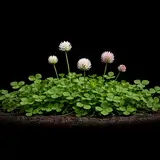
A low clover cover crop fixes nitrogen, protects the soil, and feeds pollinators; choose a drought-tolerant type suited to dry conditions.
-
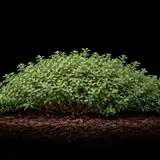
A low, drought-hardy Mediterranean groundcover that suits the same dry, sunny site and provides pollinator bloom under and around the tree.
-
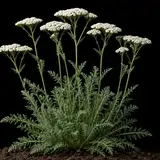
Drought-tolerant flat-flowered plant that draws in the lacewings, ladybugs, and parasitic wasps that help control scale and other soft pests.
Varieties · 8
You pick one when you add Olive to your garden. Its days to maturity set your harvest window.
Arbequina
The go-to home olive: a small, compact, self-fertile Spanish cultivar that bears young and heavily, making it ideal for small yards, containers, and cold-edge zones.
Variety details for Arbequina
Small tree with small brown-black fruit; produces a mild, fruity oil.
self-fertileoilcompactcontainerSmall fruit prized for fruity, mild, high-quality oil (and it can be brined). Reliably self-fertile, though it yields more with a partner. One of the more cold-tolerant cultivars. Roughly 300 chill hours.
Mission
The historic California olive, brought by Spanish missionaries and named for the missions - a hardy, adaptable, dual-purpose cultivar good for both black table olives and oil.
Variety details for Mission
Upright tree with medium blue-black fruit; used for both table olives and oil.
self-fertiledual-purposetableoilMore cold-tolerant than most, self-fertile (though better with a partner such as Arbequina or Frantoio), and long-lived. A dependable all-arounder for the American West. Roughly 250-300 chill hours.
Manzanillo
The classic Spanish green table olive - large, rounded, meaty fruit that's the standard for green and stuffed 'Spanish' olives, and it makes good oil too.
Variety details for Manzanillo
Spreading tree with large, rounded green-to-black fruit; the classic table olive.
partly-self-fertiletablelarge-fruitgreen-olivePartly self-fertile but sets a much heavier crop with a pollen partner. Begins bearing fairly young (3-4 years). The table-olive cultivar most Americans have eaten. Roughly 250 chill hours.
Kalamata
The famous Greek black table olive - large, almond-shaped, deep purple-black fruit with rich, fruity, wine-like flavor, brine-cured into the premium olive of Greek cuisine (and it presses fine oil).
Variety details for Kalamata
Large, almond-shaped, deep purple-black fruit; rich, wine-like flavor when cured.
needs-pollinizertablelarge-fruitpremiumLargely self-unfruitful, so it needs a compatible pollen partner. Somewhat less cold-hardy; wants a warm site. A must for table-olive lovers.
Frantoio
The premier Tuscan oil olive - the backbone of classic Italian extra-virgin oil, giving a fruity, peppery, complex, high-quality oil.
Variety details for Frantoio
Vigorous tree with medium purple-black fruit; produces premium peppery oil.
partly-self-fertileoilpremium-oilcold-hardyVigorous, productive, fairly cold-tolerant, and a good pollen partner for other cultivars. Partly self-fertile but crops better with a companion. The choice for serious home oil-making. Roughly 300 chill hours.
Koroneiki
The dominant Greek oil olive - tiny fruit but an exceptionally high oil yield and a robust, peppery, antioxidant-rich extra-virgin oil that stores well.
Variety details for Koroneiki
Small tree with very small fruit; prized for high-yield, robust, peppery oil.
self-fertileoilhigh-oilsmall-fruitVigorous and precocious, self-fertile, and highly productive. The workhorse behind much premium Greek oil, and a great backyard oil cultivar. Roughly 250-300 chill hours.
Grower tips
Notes from growers, tagged with the zone they grow in. A person reads every post before it appears.
Nobody has posted about Olive yet. The first one usually saves someone a season.
Free account. Your post shows your grower name and zone, never your email.