Add it to your home screen and it opens full screen: no browser bars, one tap away, and everything stays signed in. Free, nothing to download from an app store.
- Tap the Share button in your browser
- Scroll down and choose “Add to Home Screen”
- Open GrowSomeFood from your home screen
- Open your browser’s menu
- Choose “Add to Home screen” or “Install app”
- Open GrowSomeFood from your home screen
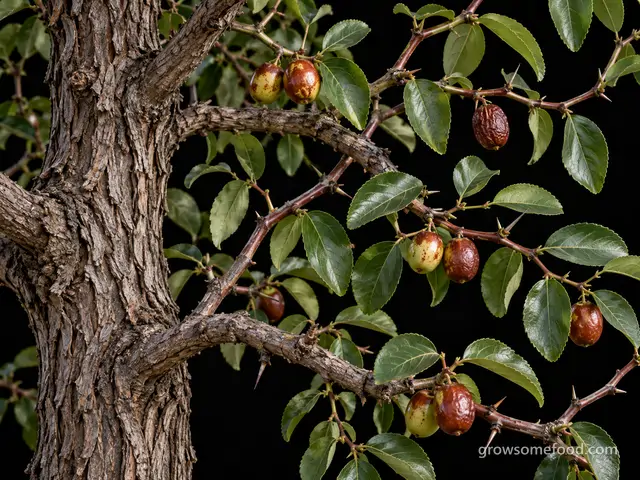
Jujube
A tough, thorny, drought-proof tree that fruits in a year or two and crops where nothing else will. Eat them crisp like a sweet apple, or let them wrinkle into something like a date.
The fruit is wholesome food fresh or dried, and no part of the plant is poisonous. Two practical cautions. Most jujubes carry sharp paired spines on young wood and on root suckers, so wear gloves and long sleeves to prune. And the single hard stone is inedible - spit it out, and do not give small children unpitted dried jujubes. Do not confuse Chinese jujube with Indian jujube (Ziziphus mauritiana), a different tropical species regulated as a noxious weed in Florida.
Overview
The one thing to knowThe fruit itself takes people by surprise, because it has two entirely different stages and both are correct.
The jujube is the fruit tree for places that defeat fruit trees. It shrugs off drought, blistering heat, alkaline and salty soil, cold to about -20°F, and almost every pest and disease that keeps stone-fruit growers spraying - and it bears young, often in its first or second year in the ground. In the desert Southwest and the hot interior valleys it is close to unbeatable; in China, where it has been cultivated for over four thousand years, it is one of the most important fruits there is.
The fruit itself takes people by surprise, because it has two entirely different stages and both are correct. Picked while the skin is still part yellow-green and part mahogany, a jujube is crisp, juicy and sweet, with the crunch of a good apple and a flavor somewhere between apple and date. Left on the tree until it goes fully brown and wrinkles, the same fruit becomes chewy, dense and caramel-sweet - which is why it is called the Chinese date, and why it dries so beautifully.
Two things to know before planting. It leafs out extraordinarily late - often not until May, weeks after everything around it - and every year somebody digs up a perfectly healthy tree they assumed was dead. And a grafted jujube suckers from its rootstock, sometimes twenty feet out, with thorny shoots that need cutting off. Plan for both and it is one of the easiest fruit trees you can own.
Quick facts
- Life cycle
- Perennial, lives about 50 years
- Height
- 20 ft12 to 30
- Spread
- 15 ft10 to 20
- Cold
- Takes hard frostdamaged below -20°F
- Heat
- Struggles above 115°F
Full sun · low water · well-drained soil · 18 ft apart (12 to 25) · transplant
When to plant
Fall transplanting is open for 41 more days. Next: spring, Mar 20 to May 1.
- Transplant Sep 15 – Nov 1 Open now · 41 days leftFall planting works well in the milder half of this range, giving roots a cool season to establish. Skip it further north, where a jujube planted late may not root out before hard freezes.
- Transplant Mar 20 – May 1 Opens in 180 daysAbout 3 weeks before to 3 weeks after your last frost (Apr 10 here)Plant in early spring, bare-root or potted, into full sun and sharply drained soil. In the humid Southeast, choose earlier-ripening cultivars - autumn rain at ripening splits and rots the fruit, and that is the region's real limit rather than cold.
Frost here: last around Apr 10 (Mar 27 to Apr 24 most years), first around Oct 25. Zone averages, your own yard may run a week or two either way.
Life stages
One stage to settle in, then four that repeat each year. Windows are typical; your zone and weather move them.
First two years
The first year after planting- WaterWater regularly the first two summers, then stop coddling itA jujube is drought-tough once its roots are down, but not before. Soak deeply once a week through its first two hot seasons. After that, cut right back - jujube fruits better on lean, dry treatment than on generous care, and constant irrigation encourages both root suckers and root rot.
- ProtectCage the trunk against deer and rabbitsYoung jujubes are browsed and rubbed like any other young tree, and a buck that strips the bark around the trunk will kill it. A wire cage or trunk guard, left on until the trunk is thick and the canopy is above browse height, is the highest-value thing you can do for a new tree.
- PruneSet the framework in the first two dormant seasonsChoose three to five well-spaced scaffold branches while the tree is young and keep the center open. Prune in late winter while it is dormant. Wear leather gloves and long sleeves: young jujube wood carries paired spines at the nodes and they are genuinely sharp.
- WeedCut every rootstock sucker off flush, as soon as it appearsA grafted jujube sends thorny suckers up from the rootstock, sometimes twenty feet from the trunk. Cut or mow them the moment you see them, right at ground level or below - a sucker left to grow for a season becomes a woody, thorny thicket stem that is far harder to remove and steals from the tree.
Watch for- Nothing leafing out until May (normal - jujube is the last tree in the garden to wake)
- Thorny suckers appearing in the lawn or beds around the tree
- Deer browsing or antler-rubbing a young trunk
- Standing water or heavy wet clay around the roots
Winter dormancy
Nov to Mar, every year- PrunePrune in late winter while dormant - and wear leather glovesRemove dead, crossing and inward wood, keep the center open, and shorten the long whippy shoots that jujubes throw. Jujube fruits on new growth from short permanent spurs, so ordinary thinning cuts do not cost you a crop. The spines are the real hazard here; long sleeves and leather gloves, not garden gloves.
- WeedClear the year's root suckers while you can see themWinter is the easiest time to find and cut suckers, with the ground bare and the tree leafless. Trace each one back and cut it below the soil line; snapping them off at the surface just makes them branch.
Watch for- Suckers standing out across bare winter ground
- Rodent or rabbit gnawing at the trunk base under snow
Late leaf-out & spring growth
Apr to Jun, every year- InspectDo not panic in April - jujube leafs out very lateA jujube is often the last woody plant in the garden to break bud, frequently not until May, weeks after everything around it. Every year some owner concludes the tree is dead and digs it up. Scratch a twig: green under the bark means it is fine and simply waiting for real heat.
- FertilizeFeed lightly if at allJujube evolved on poor, dry, alkaline ground and needs very little. A light balanced feed or a top-dressing of compost in spring is plenty on poor soil; on decent garden soil skip it entirely. Rich feeding grows whippy wood and suckers rather than fruit.
Watch for- No leaves until May (expected)
- A flush of new suckers as the tree wakes
- Late spring frost nipping the very first growth (rarely serious, given how late it starts)
Summer bloom
Jun to Jul, every year- PollinateLet the flies and bees work - and plant a second cultivar if you canThe flowers are tiny, greenish-yellow and easy to overlook, but strongly and sweetly fragrant, and they open over many weeks. Most jujubes will set a crop alone, but nearly all set noticeably heavier with a second cultivar nearby - Li and Lang are the classic pair. Do not spray anything while the tree is flowering.
- WaterOne deep soak if the summer is genuinely dryJujube fruits fine on very little water, but a total drought during flowering and early fruit set drops fruit. A single deep soak in a long rainless spell is worth it; frequent shallow watering is not.
Watch for- A long, staggered bloom over several weeks (normal)
- Heavy early fruit drop after a drought or a heat spike
Harvest
Sep to Oct, every year- HarvestPick over the tree every few days - fruit ripens unevenlyJujubes do not all ripen at once; a tree colors up over four to six weeks. Pick at the crisp stage, when the skin has gone about half mahogany-brown over yellow-green, for apple-crunchy sweet fruit. Leave them to go fully brown and start to wrinkle for the chewy date stage. Both are correct - it depends what you want.
- HarvestLet drying-type fruit wrinkle on the tree, then finish it off the treeFor dried jujubes, leave the fruit until it is fully brown and beginning to shrivel, then pick and finish drying indoors on racks or in a dehydrator. In a dry climate they will dry on the branch. In a wet autumn, pick at full brown and dry them under cover before rain splits them.
- InspectWatch for cracking and rot in a rainy autumnRain on ripening jujubes splits the skin and the split fruit rots or ferments within days. In the humid Southeast this, not cold, is the real limit on the crop. Pick ahead of a forecast wet spell, clear split fruit off the tree and the ground, and choose earlier-ripening cultivars.
Watch for- Fruit splitting after rain, then browning and rotting
- Birds and wasps working the cracked fruit
- Fruit shriveling on the branch (that is the date stage, not spoilage)
- Windfalls attracting wasps and ants
Harvest
- For the crisp stage: skin about half turned from yellow-green to mahogany-brown, flesh crunchy and sweet
- For the date stage: fully brown all over and just beginning to wrinkle
- Fruit detaches easily with a light twist
- Fruit ripens unevenly over four to six weeks - pick over the tree repeatedly
- Picked ahead of forecast rain, which splits ripening fruit
- Pick over the tree every few days - fruit ripens unevenly
- Let drying-type fruit wrinkle on the tree, then finish it off the tree
- Watch for cracking and rot in a rainy autumn
Per plant 100 to 3000 fruits, 2 to 100 lbPicking pick as they ripen
Cook with jujubes
Watch out for
5 to know. 1 is high-risk: Fruit Cracking & Autumn Rot. 5 are active in September.
Fruit Cracking & Autumn RotSeverity High DisordernowThis is the deciding factor in whether jujube is a great backyard tree for you or a merely good one.
Arid West: essentially a non-issue. Humid Southeast and the Gulf: plan the whole planting around early-ripening cultivars.
Fine radial or ring splits appearing in the skin of coloring fruit within a day or two of heavy rain. Split fruit browning, softening and smelling fermented soon afterward. Wasps, ants and vinegar flies working the damaged fruit and then moving to sound fruit through the wounds. A whole crop deteriorating over one wet week in late September. Late-ripening varieties affected far worse than early ones, because they are still on the tree when the autumn rains set in.
There is no treatment for a fruit that has already split. Pick the sound fruit immediately when rain is coming - jujubes at the crisp stage store for weeks in the refrigerator, so early picking costs very little. Strip and remove split and rotting fruit from the tree and the ground rather than leaving it, since it feeds the rot and the wasps that then reach sound fruit. Fruit picked at the fully brown stage just ahead of rain can be finished drying indoors on racks or in a dehydrator.
Variety choice is the strongest lever: in a humid climate plant the early-ripening cultivars (Li, Honey Jar, Sugar Cane) that finish before the autumn rains, and avoid the late drying types (GA-866, Sherwood) that are still hanging in October. Keep water even through the season rather than letting the tree swing between drought and soaking, since a sudden uptake after dry weeks is what bursts the skin. Prune to an open canopy so fruit dries quickly after rain. Watch the forecast at ripening and pick ahead of a wet spell rather than after it.
The main limit on jujube quality east of the arid West, and a weather problem rather than a disease in origin. A ripening jujube has a thin, tight skin over dense flesh; when heavy rain or humid weather arrives during the last weeks of ripening, the fruit takes up water faster than the skin can stretch and splits. The splits then admit the rot organisms and yeasts that are always around a fruiting tree, and split fruit browns, softens and ferments within a few days, drawing wasps and ants. In the desert Southwest this barely happens at all; in the humid Southeast it can take most of a crop, and it is the reason jujube has a reputation for superb fruit in Arizona and mediocre fruit in Georgia.
Deer (browse resistance)Severity Medium WildlifenowThe thorns make a mature jujube largely unattractive to deer, and dropped fruit is taken more often than foliage.
Young trees are the exception and are browsed and antler-rubbed like any other - cage the trunk until the canopy is above browse height and the spines have hardened off.
Growth cleanly missing overnight, with the plant browsed back to a level line about as high as a deer can comfortably reach. Ragged, torn stem ends rather than the clean angled cut a rabbit leaves - the single most reliable identifier. Buds and flowers gone while the foliage below is untouched, since deer often take the best part first. Hoof prints and droppings in soft ground near the damage. Repeat visits, with fresh damage each morning once a planting has been found. On young trees, shredded and stripped bark and broken low branches in autumn - that is antler rubbing rather than feeding.
There is no chemical fix, only exclusion and recovery. Get physical protection up immediately after the first damage, because deer return to a known meal, and reinforce or rotate whatever you were relying on before. Most plants regrow from browsing if the crown and roots are intact - feed and water a grazed plant and protect the regrowth while it comes back. What does not recover in the same season is anything whose buds or flowers have been taken, and a young tree whose bark has been rubbed right around the trunk is usually lost. Where deer pressure is genuinely heavy, the honest answer is to fence properly or to grow the plants deer leave alone, rather than to keep replacing losses.
Fencing is the only thing that reliably works. Eight feet is the standard for excluding deer, or two parallel four-foot fences a few feet apart, which they will not jump because they cannot judge the landing. Short of that, cage individual plants: a sturdy wire cage or trunk guard around every young tree, left on until the trunk is thick and the canopy is above browse height, prevents both browsing and antler rubbing and is the single highest-value thing you can do for a young tree. Repellent sprays do help at moderate pressure, but they wash off and deer habituate, so reapply after rain and rotate between different types through the season. Motion-activated sprinklers, scent deterrents, and noise devices work for a while and then stop. Siting matters too: plants close to the house, in daily traffic, and screened behind other planting get browsed less than the same plant out at the boundary.
Deer are the largest garden problem across much of the country, and where pressure is high they set the limit on what you can grow at all. They browse at night and around dawn and dusk, taking tender shoots, leaves, buds, flowers, and fruit within about five feet of the ground, and they come back night after night to anything they have found and liked. Because they have no upper incisors they tear rather than cut, leaving ragged stem ends - that is how you tell deer damage from a rabbit's clean angled cut. In fall, bucks rub their antlers on young trunks and can strip the bark right around a stem, which kills a young tree outright. Palatability varies enormously between plants and between seasons: a herd short of food in late winter eats things it ignores in June, and no plant is truly deer-proof.
Root RotSeverity Medium DiseasenowJust about the only thing that kills an established jujube.
This is a tree adapted to dry, poor, sharply drained ground - a low spot, heavy wet clay, or an irrigation schedule meant for the lawn around it will finish it off where drought never would. Plant it high, on a berm if your soil is heavy, and stop watering once it is established.
Wilting in the middle of the day on a plant whose soil is damp - the classic tell, and the reason people water a rotting plant and finish it off. Leaves yellowing from the bottom up, dull off-color foliage, and growth that stalls for no visible reason. Whole shoots, or one side of the plant, collapsing while the rest still looks fine. Soft, dark, or mushy tissue at the base of the stem or at the crown, sometimes with a sour smell. Lift a failing plant and look at the roots: healthy ones are firm and pale, rotted ones are brown or black and slimy, and the outer layer slips off between your fingers leaving a thread of core behind. Seedlings that topple over at soil level are the same problem, called damping-off.
There is no cure for tissue that has already rotted, so act on the conditions rather than looking for a spray. Stop watering at once and fix the drainage - open up compacted soil, or move the plant to a raised, sharply drained position or a container. Lift a badly affected plant, cut away every soft dark root and rotted section with a clean blade back to firm pale tissue, and replant only the healthy parts into fresh free-draining soil or mix. Often the better move is to give up on the plant and save its offspring instead: cuttings, offsets, or divisions taken from firm healthy growth root readily and give you a clean start. Bin the rotted material rather than composting it, and correct the drainage before you replant, because the rot comes straight back in the same wet spot.
Drainage is the whole defense. Match the plant to the site first - something that wants sharp drainage will not survive heavy clay or a low, water-collecting spot however well you tend it. Where the ground is heavy, plant on a raised bed, berm, or slope, or grow in a container. Set plants at the depth they were already growing, since burying the crown or the root flare is a common cause of rot, and keep mulch pulled back a few inches from the stem base instead of piled against it. Water the soil rather than the calendar: check that the top inch or two is dry before watering again, cut back hard in cool weather and winter dormancy, and never leave a pot standing in a full saucer. Do not plant or dig in soggy ground, and go easy on rich amendments for plants that want it lean. Rotate annual crops, and start with clean healthy plants and fresh mix.
Root rot is not one organism but a group of soil fungi and water molds - Pythium, Phytophthora, Fusarium, Rhizoctonia and others - that sit harmlessly in most soils and only turn destructive when the ground stays saturated. Waterlogged soil drives the air out, the roots suffocate, and the weakened tissue is invaded and goes soft, brown, and stringy. Because the damage is underground you usually see it first as something that looks like drought: wilting, yellowing, stunting, a plant that does not respond to being watered. Overwatering, heavy compacted ground, a low spot that collects runoff, a pot with no drainage or a saucer left standing full, and cold wet soil in winter are the usual causes. Once roots have actually rotted there is no cure - this is a problem you prevent rather than treat.
Rootstock SuckeringSeverity Medium DisordernowThis is the single reason to think carefully about where a jujube goes.
It does not threaten the tree at all - it threatens your patience, your lawnmower and your ankles. Plan the site for it and it is a minor annual chore.
Thin, upright, vigorously growing shoots with paired spines at the nodes appearing in lawn or beds around the tree, often well away from the trunk. Shoots emerging along a line, which marks the run of a lateral root. Suckers reappearing in the same spots each season, and multiplying wherever they were snapped off at the surface rather than cut below it. Heavier suckering after irrigation, cultivation that damages roots, or a hard pruning of the top.
Cut suckers off at or slightly below ground level, and do it while they are green and soft. Do not snap or mow them off at the surface: that leaves the base and it responds by branching into several shoots. Excavate a couple of inches and cut cleanly at the root, and repeat several times a season - late winter, with bare ground and no leaves, is the easiest sweep of the year. Persistent removal genuinely does reduce the flush over time. Herbicide is a poor idea, since the sucker is connected to your tree.
Site the tree where suckers can be dealt with - a mown lawn or a cultivated area, not a shrub border, a gravel bed, or a wild corner you visit twice a year. Avoid digging or rototilling near the roots, since root damage triggers a flush of suckers. Do not overwater an established jujube; regular irrigation makes the problem noticeably worse. Where a genuinely sucker-free tree matters, seek out an own-root plant or a cultivar with a reputation for restraint - Tigertooth and Sugar Cane are among the worst offenders.
Jujube spreads vegetatively by sending shoots up from its lateral roots, and a grafted tree does this from the rootstock, which is a wild, vigorous, thorny seedling type rather than the cultivar you bought. Suckers appear through lawn, beds and paving cracks, sometimes fifteen or twenty feet from the trunk, and they are markedly spinier than the tree itself. Left alone for a season they become woody thicket stems that steal vigor from the tree and are painful and difficult to remove - which is how neglected jujubes around old homesteads in the Southwest turn into thorny thickets. It is a containment problem rather than a health problem: the tree is fine, and the gardener is the one with the work.
Birds & WildlifeSeverity Medium WildlifenowLighter pressure than on soft fruit - a crisp jujube is hard work for a bird, and a mature tree crops so heavily that sharing costs little.
The pecking that does happen matters mainly because the wounds let in the rot that follows autumn rain. Netting is worth it only on a young or small tree.
Fruit disappearing from the outermost, most exposed parts of the plant first, and from the top of a tree where you cannot reach anyway. Single neat pecks and gouges in ripening fruit, with several fruits sampled rather than one eaten through - the classic sign that it was birds rather than an animal. Heads of grain or seed going visibly lighter and emptier as they ripen, with hulls and chaff scattered underneath. Freshly sown seed vanishing off the surface of a bed before it germinates. Bird traffic in and out of the plant picking up as the crop colors, and birds waiting on nearby wires and branches. Wasps arriving at the pecked and split fruit shortly afterward.
There is no treatment once a crop is being taken - only protection and timing, so the answer is to get netting on and to pick what is ready. Reflective tape, flash ribbon, spinners, and decoy predators do work, but only for a few days at a time: birds habituate fast, so move and rotate them and never rely on them as the main defense for a crop you care about. Cut and gather grain or seed heads a little early, at firm dough, and finish drying them under cover instead of leaving them standing for the flocks. Plant a little extra, or a decoy crop the birds prefer, and accept sharing anything that crops heavily. On a wild or foraged patch, fruit going to birds and small mammals is the point of the plant rather than a problem to solve.
Net, and net early. Bird netting draped over a frame or hoops so it stands off the fruit, with the edges closed at ground level, is the only thing that reliably works at harvest scale - and it has to go on before the crop starts to color, because once birds have found the food they are far harder to displace. Keep fruit trees small enough that netting them is actually feasible; that decision gets made years earlier, at planting. Bags of mesh, organza, or paper slipped over individual heads, clusters, or prize fruit protect a small crop without netting the whole plant. Then shorten the exposure: pick promptly and completely rather than leaving ripe fruit hanging as a lure, clear split and dropped fruit that draws birds and wasps alike, and where a crop can finish off the plant, harvest a little early and ripen or dry it under cover. Rake in or cover broadcast seed so it is not lying in plain view.
Birds find ripening fruit and seed before you do. Robins, waxwings, starlings, catbirds, jays, sparrows, finches, blackbirds, and doves all work a garden, and the pressure arrives in a narrow window - the last days before harvest, when sugar rises, color changes, and the crop softens or the grain hardens. A flock can strip a small planting in a day or two, and birds that only peck rather than take whole fruit still leave wounds that rot or draw wasps. Squirrels, chipmunks, and other wildlife usually turn up on the same crop at the same time. This is competition rather than disease: the birds are not harming the plant, and a big tree or a heavy-cropping bush often has enough for everyone - but on a small planting it can be the difference between a harvest and none.
Good & bad neighbors
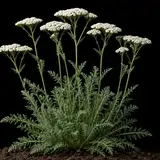
Plant nearby
-
An almost perfect match of conditions - full sun, sharp drainage, alkaline tolerance and very little water - so it thrives under a jujube without dragging the root zone into the wet, frequently irrigated state that causes suckering and rot.
-
Another dry-ground Mediterranean shrub that shares jujube's needs exactly, and whose long flowering season keeps bees and hoverflies in the area for the jujube's own inconspicuous summer bloom.
- Traditional pairings, thin evidence
-
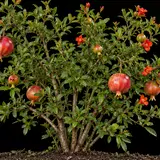
Not a biological interaction but a matched pair: both take heat, drought, alkalinity and salt, both fruit in autumn, and both suit exactly the hot dry gardens where conventional fruit trees fail. A sensible two-tree orchard for the Southwest.
-
A tough, drought-tolerant perennial for the drip line that draws in a wide range of small beneficial insects and tolerates the poor, dry, alkaline soil a jujube is happiest in.
Keep apart
-
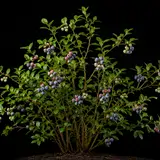
Directly incompatible. Blueberries need strongly acid soil and constant moisture; jujube wants alkaline ground and dry feet. Watering and acidifying a bed for blueberries under a jujube is the fastest route to root rot and a forest of rootstock suckers.
Varieties · 8
You pick one when you add Jujube to your garden. Its days to maturity set your harvest window.
Fresh-eating (crisp) jujubes 4 varieties
Li
Large, round to slightly oblong fruit, mahogany-brown over yellow-green, with dense crisp white flesh.
large-fruitearlynearly-thornlessreliableThe most widely planted jujube in the United States and the standard fresh-eating variety: large round fruit, an inch and a half or more across, crisp and sweet at the mottled-brown stage. It ripens early, which matters in a wet autumn, bears young and heavily, and has few thorns compared with most jujubes. Partly self-fruitful but crops much better with Lang or another cultivar nearby. If you plant only one jujube, plant this one.
Honey Jar
Small round-oval fruit, deep brown when ripe, with very juicy crisp flesh and a small stone.
small-fruitvery-sweetheavy-bearingconnoisseurSmall fruit, and widely considered the best-tasting jujube of all - intensely sweet, juicy and crisp, with a very small stone and a high proportion of flesh. It bears extremely heavily and young, often fruiting the first year in the ground, and ripens early. The only real drawback is size: these are cherry-to-plum-sized, so you eat a lot of them. The enthusiast's default choice, and an excellent partner for Li.
Sugar Cane
Medium round-oval fruit, brown over yellow-green, crisp and notably sweet.
very-sweetearlythornysuckeringAn early-ripening, very sweet crisp jujube with excellent flavor and a heavy crop, and one of the best fresh types for regions where autumn turns wet early. The trade-offs are real: it is among the thorniest cultivars and one of the most enthusiastic suckerers, so plant it where you can mow around it and keep the leather gloves handy.
Drying (date) jujubes 4 varieties
Lang
Pear-shaped fruit ripening to a deep even mahogany brown, with chewy amber flesh when fully ripe.
pear-shapedvigorousclassic-pollinizerThe other half of the classic American pair, brought over with Li in 1908. Distinctly pear-shaped fruit that must be left until fully brown - picked early at the crisp stage it is bland and disappointing, which is why people who treat it like Li come away unimpressed. Left to go dark and wrinkle, it dries superbly and is the traditional drying jujube. Vigorous and upright, and the standard pollinizer partner for Li.
GA-866
Elongated barrel-shaped fruit ripening to dark brown, with very sweet dense flesh.
extremely-sweetlatelong-seasonA late-ripening variety famous for extraordinary sugar - routinely measured among the sweetest jujubes grown - and prized for drying, where that sweetness concentrates into something close to a fine date. It needs a long, hot, dry autumn to finish, so it belongs in the Southwest and hot interior valleys and disappoints in short or humid seasons. Elongated fruit on a fairly upright tree.
Sherwood
Large, rounded, deep brown fruit on a weeping, fine-branched tree.
large-fruitlateweepingornamentalA late, large-fruited variety with excellent flavor for drying, carried on a distinctly graceful, weeping, almost willow-like tree that is genuinely ornamental in its own right. Because it ripens very late it needs a long season and a dry fall; in shorter or wetter climates the crop often does not finish. A good choice where you want the tree to earn its place visually as well.
Grower tips
Notes from growers, tagged with the zone they grow in. A person reads every post before it appears.
Nobody has posted about Jujube yet. The first one usually saves someone a season.
Free account. Your post shows your grower name and zone, never your email.