Add it to your home screen and it opens full screen: no browser bars, one tap away, and everything stays signed in. Free, nothing to download from an app store.
- Tap the Share button in your browser
- Scroll down and choose “Add to Home Screen”
- Open GrowSomeFood from your home screen
- Open your browser’s menu
- Choose “Add to Home screen” or “Install app”
- Open GrowSomeFood from your home screen
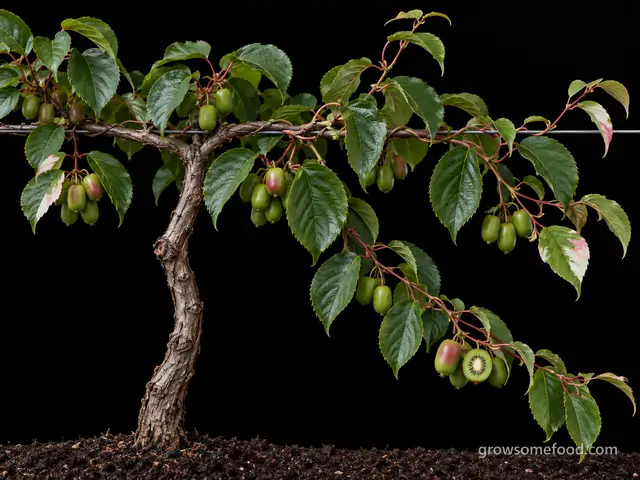
Hardy Kiwi
Grape-sized smooth kiwifruit you eat whole, on a woody vine that shrugs off -25F winters and ripens in a short northern season. It grows fast and heavy enough to pull down a flimsy trellis, and nearly every plant is either male or female - so plant a pair, or get flowers and no fruit.
Kiwiberries are eaten whole - the skin is thin, smooth and edible, so there is nothing to peel. Kiwi is a recognised food allergen and can cause severe reactions, including anaphylaxis, especially in young children; it also cross-reacts with latex, banana and avocado (latex-fruit syndrome) and with birch pollen. Mouth tingling can be an early sign - anyone with a reaction beyond mild tingling, or any latex allergy, should avoid kiwi and seek medical advice.
Overview
Hardy kiwi is the kiwi for cold gardens. Actinidia arguta and its even tougher relative A. kolomikta make smooth-skinned, grape-sized fruit that you eat whole by the handful - no fuzz, no peeling, and a flavour most people find sweeter and more intense than the fuzzy supermarket kiwi. The vines are properly cold-hardy: dormant arguta wood comes through roughly -25°F, and kolomikta is reported hardy colder still, which puts a kiwi crop within reach of zone 4 and, with the Arctic types, of gardens colder than that. The season is short to match - fruit ripens about 140 to 160 days after bloom, in late summer or early autumn, rather than hanging into November the way fuzzy kiwi does.
Three things decide whether you get fruit. The vine is enormously vigorous - ten to twenty feet of new cane a year, for fifty years, on wood that ends up weighing hundreds of pounds - so it needs a genuinely engineered structure, not a garden arch. It is slow to start, typically three to five years to the first real crop. And it is dioecious: male and female flowers are on separate plants, only females fruit, and only then if a compatible male of the same species is blooming nearby. One male serves up to about eight females; the self-fertile variety Issai is the single exception. Get the structure and the pair right at planting and the rest is winter pruning and patience. For the fuzzy brown supermarket kiwi - a different species for zones 7 to 9 - see the separate kiwi entry.
Quick facts
- Winter chill
- 750 hours below 45°F400 to 1000
- Life cycle
- Perennial, lives about 50 years
- Height
- 8 ft6 to 20
- Spread
- 24 ft12 to 40
- Support
- Grows better on a trellis or stake
- Cold
- Takes hard frostdamaged below -25°F
- Heat
- Struggles above 95°F
- Self-sows
- Yes, expect volunteers
Full sun or part sun · medium water · well-drained soil · 15 ft apart (10 to 20) · transplant or cuttings
When to plant
Nothing is open today. Spring transplanting opens 6 months, Mar 27 to May 25.
- Transplant Mar 27 – May 25 Opens in 187 daysAbout 2 weeks before to 6 weeks after your last frost (Apr 10 here)Ideal territory - reliable winters, a long enough season to ripen, and enough chill. Plant dormant vines from a fortnight before the last frost. Fuzzy kiwi becomes possible at the warm end of this range too, but needs its own species-matched male.
Frost here: last around Apr 10 (Mar 27 to Apr 24 most years), first around Oct 25. Zone averages, your own yard may run a week or two either way.
Life stages
One stage to settle in, then five that repeat each year. Windows are typical; your zone and weather move them.
Years 1-2: structure, a pair of vines, a trunk
The first year after planting- SupportBuild a structure that could hold a person - before you plantHardy kiwi is among the heaviest and most vigorous vines you can put in a garden: 10 to 20 feet of new cane a year, for decades, ending as a woody mass that weighs hundreds of pounds wet and heavier again under a crop. A garden arch, a trellis panel or a wooden fence will be pulled apart, and people do lose them. Build a T-bar trellis on 4x4 or 6x6 posts set in concrete with tensioned high-tensile wire, or a pergola framed like a small building, and put it up before the vine goes in the ground.
- DoPlant a MALE and a FEMALE - hardy kiwis are dioeciousThis is the one mistake that costs a whole crop. Male and female flowers are on separate plants, only females fruit, and a female with no male nearby flowers beautifully and sets nothing. Plant one male per up to eight females, within about 50 feet, and match the species: an arguta male cannot pollinate an Arctic kiwi (kolomikta) female, and no fuzzy-kiwi male will do. The one exception is self-fertile Issai. Buy named, sexed vines - a seedling hides its sex for years.
- PruneTrain one shoot up a stake to build the permanent trunkevery 3 weeksThe first two years are framework, not fruit. Tie the single strongest shoot to a stake and run it straight up to the top wire, rubbing off everything that competes with it, then let two shoots run in opposite directions along the wire as permanent arms. Cut back whatever wanders. You are building a skeleton that will carry fruit for forty years, and time spent on it now is never wasted.
- WaterWater deeply while the vine roots inevery 4 daysLarge leaves and fast growth make a thirsty plant. Keep the root zone evenly moist through the first two summers - hardy kiwi tolerates neither drought nor standing water - and mulch to hold that moisture, keeping the mulch pulled back off the trunk itself.
- ProtectCage the base against cats, and shield the young trunkCats respond to Actinidia much as they do to catnip: they roll on, chew and shred young vines, and Arctic kiwi (A. kolomikta) is the worst affected. A cylinder of wire mesh around the base, pegged down so it cannot be shoved over, solves it permanently and costs almost nothing. Wrap or shade the young trunk through the first winters too - the wood is genuinely hardy, but sunscald and voles both target a thin young stem.
Watch for- An undersized structure - a mature vine will destroy an arch, a fence or a light trellis
- Only females planted, or only a male, or a male of the wrong species (all give the same result: no fruit)
- Cats chewing and flattening a first-year vine
- Late spring frost blackening the new growth
- Deer browsing everything within reach
- No crop for the first three to five years - normal, not a fault
Winter dormancy & the hard annual prune
Dec to Feb, every year- PrunePrune hard - fruit comes on new shoots from 1-year-old woodHardy kiwi fruits on current-season shoots arising from one-year-old wood, exactly like a grape, and an unpruned vine turns into a shading tangle that flowers little and fruits less. Each winter, cut the previous season's growth on the permanent arms back to short canes of roughly three to five buds, remove most of last year's wood, and take out anything tangled, crossing or older than it needs to be. It looks severe. It is what makes the crop.
- PrunePrune the male only enough to keep it in boundsThe male exists to flower, so treat it differently: prune it lightly, ideally just after it has bloomed. Cut it back hard every winter along with the females and you can remove the very wood that was going to carry the pollen. Keep it clear of the females' arms, and otherwise let it flower freely.
- InspectPrune early enough to avoid heavy sap bleeding, and clean upCuts made late in winter, as the sap starts to rise, bleed for weeks. It looks alarming, is essentially harmless, and is easily avoided by pruning in the depth of dormancy rather than at the end of it. While you are there, rake up fallen leaves and any mummified fruit, and check the trunk guards and the trellis wires before the growing season loads them.
Watch for- Skipping or softening the winter prune (a jungle, and very little fruit)
- Pruning the male as hard as the females and removing next season's pollen
- Sap bleeding from late cuts (harmless, but avoidable)
- Wires stretched or posts leaning under last year's growth
Bud break & the frost-risk window
Apr to May, every year- ProtectCover the new growth when a late frost is forecastThis is the biggest risk to the crop and the one that catches northern growers every few years. The dormant vine takes -25F without blinking; the shoots it pushes in April are killed at around 30F, and the flower buds they carry go with them. Watch the forecast from bud break until your last frost date, and throw floating row cover or old sheets over the lower trellis on clear, still, cold nights - then take them off in the morning.
- SupportTuck and thin the new shoots onto the wiresevery 2 weeksGrowth is explosive once it starts, and a foot a week is ordinary. Guide the fruiting shoots along the wires, cut out the crowded and the plainly non-fruiting ones, and stop the runaway shoots heading for the nearest tree. Getting light and air onto the fruiting wood is most of what fills a crop.
- FertilizeFeed once at bud break - and then stopA balanced fertilizer or a good mulch of compost at bud break covers a hardy kiwi's needs for the year. Do not push it: the vine is already vigorous, and extra nitrogen buys you more cane to prune rather than more fruit, plus soft growth that hardens off late in autumn. Keep fertilizer off the trunk, and water it in.
Watch for- A late frost after bud break - the season's single biggest risk
- Shoots blackening and hanging limp a day after a clear cold night
- Runaway growth needing tucking every couple of weeks
- Japanese beetles skeletonizing the new leaves from late June
Bloom & pollination
May to Jun, every year- PollinateCheck the male is actually open when the females areThe flowers are small, creamy-white and faintly fragrant, and bees do the work of carrying pollen from the male vine to the females. All of that only matters if a compatible male is in bloom on the same days - so walk out and look. Bloom overlap is the part people assume rather than check, and a mismatched pair yields exactly as much fruit as no male at all.
- PollinateHand-pollinate if bloom weather is cold and bee-freeevery 3 daysCold, wet or windy weather keeps bees at home, and hardy kiwi bloom is short - a week or two. If you see no bee activity, pick an open male flower, strip its petals off, and dab its anthers directly onto the centre of each female flower. It takes minutes, one male flower will serve several females, and it reliably rescues a set.
- InspectKeep bee-killing sprays off the vine while it is in bloomWhatever else you use during the year, do not spray anything toxic to bees while the vine is flowering. This crop depends entirely on insects moving pollen between two separate plants inside a window of a week or two, and there is no second chance at it.
Watch for- A female in bloom with no compatible male open nearby (no fruit at all)
- Bloom times that do not overlap between your male and your females
- Cold, wet bloom weather with no bees flying
- Small greenish-white flowers that are easy to miss entirely
Fruit sizing
Jun to Aug, every year- WaterWater steadily while the fruit sizesevery 5 daysEven, generous moisture from set through to harvest builds size and sugar; a dry spell shrinks the berries and can drop them outright. Hardy kiwi still hates soggy ground, so aim for evenly moist and free-draining - deep watering on a regular rhythm beats little and often.
- SupportKeep tucking - the canopy doubles over the summerevery 3 weeksShoots keep extending long after the fruit has set. Tuck the fruiting shoots in along the wires, pinch or cut back the wandering ones a few leaves past the last fruit, and keep the interior open. A closed canopy shades its own fruiting wood and gives you a smaller crop next year as well as this one.
- InspectScout the few pests that bother hardy kiwievery 2 weeksThere is not much to find, which is part of the appeal. Watch for Japanese beetles lacing the leaves in July, scale encrusting the older canes, and root or crown rot in ground that stays wet. Check the base guards for cat damage, and look for deer browsing anything still within reach.
Watch for- Drought shrinking or dropping the fruit
- Waterlogged ground after summer storms (root rot risk)
- Japanese beetles skeletonizing leaves through July
- Scale insects crusting the older canes
- A canopy closing over and shading its own fruiting wood
Harvest (late summer to fall)
Aug to Oct, every year- HarvestPick as the first berries soften - the window is shortevery 3 daysKiwiberries ripen roughly 140 to 160 days after bloom, far faster than fuzzy kiwi, and the whole crop comes in over two or three weeks in late summer or early autumn. Test by squeezing: when the first berries in a cluster give slightly and taste sweet all the way through, the crop is ready. Left another week they go soft, split and drop, so once it starts, pick every few days.
- HarvestOr pick the whole crop firm and finish it indoorsCut a berry open: once the seeds have turned from white to jet black, the fruit is mature even while still hard, and it will ripen evenly at room temperature over several days to a couple of weeks. For a home vine this is often the better plan - one picking instead of six, no fruit lost on the ground, and nothing left hanging for birds and wasps. It also holds far longer in the fridge before you start it off.
- ProtectNet before the fruit colours if birds find the vineRipening kiwiberries are grape-sized, soft and sweet, and a flock can clear a small vine in a couple of days. Netting has to go on before the fruit softens, not after - once birds have found the food they are very hard to move off it. Clear split and fallen fruit too, which draws wasps and yellowjackets within hours.
Watch for- Berries softening, splitting and dropping if left too long - the window is short
- Birds and wasps working a ripe vine
- Fruit ripening unevenly across the vine (normal - pick over, or pick all firm)
- Waiting for a colour change that never really comes
Harvest
- Cut one open: the seeds have turned from white to jet black - the earliest reliable sign, and it comes before any softening
- The first berries in a cluster give slightly to a gentle squeeze and taste sweet right through to the middle
- Fruit detaches easily, usually with its little stalk attached
- Skin colour barely changes, so do not wait for it - a few types blush red or bronze, most stay green
- Roughly 140-160 days after bloom, with the whole crop arriving inside two to three weeks
- Pick as the first berries soften - the window is short · every 3 days
- Or pick the whole crop firm and finish it indoors
- Net before the fruit colours if birds find the vine
Per plant 20 to 100 pounds per vine, 20 to 100 lbPicking pick as they ripen
Cook with kiwiberries
Watch out for
7 to know. 2 are high-risk: Phytophthora Root & Crown Rot, Late Spring Frost Dieback. 4 are active in September.
Phytophthora Root & Crown RotSeverity High DiseasenowThe one disease that genuinely kills hardy kiwi.
The vine is thirsty but wholly intolerant of waterlogging, so wet ground is its real vulnerability - plant on a raised mound or berm and treat drainage as part of the planting job, not an afterthought.
Wilting, yellowing and stunting that does not improve with watering, a thinning canopy of small pale leaves, and dieback from the shoot tips. Dig and the feeder roots are dark, soft or brittle rather than white and firm, and on many plants the tissue at the base of the stem is discolored under the bark. Worst in low spots, and wherever a downspout, driveway or compacted path drains into the bed.
Very hard to reverse once established. Improve the drainage immediately, cut watering back, and mulch with coarse material rather than fine, which stays sodden. Remove severely affected plants and correct the site before replanting - and do not put another susceptible plant back into the same wet spot. Phosphonate (phosphite) treatments can suppress it in a valuable specimen, but drainage and siting do far more.
Drainage is the whole defense. Plant on a mound, berm or raised bed in heavy soil, and never in a hollow that holds winter water. Redirect roof and hard-surface runoff away from the planting, water deeply but infrequently so the surface dries between waterings, do not pile mulch against stems, and do not overwater in cold weather when the plant is using little. Use resistant rootstocks or tolerant varieties where they exist for the crop, and never move soil from an infected area.
A soil-borne water mold (Phytophthora species) that rots feeder roots and, on many plants, the crown at the soil line whenever the ground stays saturated. Rotted roots cannot take up water, so the plant looks drought-stressed even in wet soil: the canopy thins, leaves go small and pale, growth stalls, and dieback works in from the tips over months or years. It is the commonest cause of death in plants that want moisture but cannot tolerate standing water, and it travels in surface water and on tools, boots and moved soil.
Late Spring Frost DiebackSeverity High DisorderThis is the single reason a winter-hardy vine still fails to crop in the North: -25F in January is no trouble at all, and 29F in late April is a disaster.
Arctic kiwi (A. kolomikta) breaks bud earliest of any kiwi and is the most exposed of the lot.
New shoots and unfolded leaves that blacken, go limp and hang wilted within a day or two of a clear cold night, then dry to brown. Growth scorched at the tips while wood further back stays green under a scratch. Flower buds that shrivel and drop without ever opening. Damage that stops at a distinct height, with everything below the level of pooled cold air hit and the growth above it untouched. A second, later flush of shoots pushing from further back on the arms - that is the vine recovering, and it is worth noting whether it carries flowers, because usually it does not. Consistently worse damage in a hollow, at the bottom of a slope, or behind a solid fence or hedge that dams cold air.
There is nothing to spray and nothing to cut in a hurry. Wait - blackened growth looks fatal within a day, but the buds behind it are often alive, and you cannot tell which wood is dead until the plant pushes again a few weeks later. Once regrowth shows, prune back to live wood, water and feed lightly to support the second flush, and accept that this flush usually carries little fruit. Do not fertilize heavily to force it, which only produces soft growth that hardens off late. If the same plant is caught two or three years running, the site is wrong rather than the plant: move it to higher ground, or plan on covering it every spring.
Siting is most of the answer, and it is decided once. Plant on a slope or a rise where cold air drains away downhill, not in a hollow or against a solid barrier that traps it. Avoid the warmest south-facing wall, which pulls the plant into growth ahead of the safe date; a cooler north or east aspect that holds it dormant a fortnight longer is the safer bet. Delay winter pruning until the end of dormancy where you can, since early pruning can nudge bud break forward. Keep the trunk and lowest arms wrapped or shielded through the first few winters. And when a freeze is forecast onto tender growth, cover what you can reach - floating row cover or old sheets thrown over the lower framework overnight and taken off in the morning genuinely saves crops.
Actinidia vines break dormancy early, often on the first run of mild days in late winter or early spring, and the shoots they push are among the most frost-tender growth in the fruit garden. Dormant wood is extremely tough, but once buds swell and the first leaves unfold, temperatures around 30F kill them outright, and a hard late freeze takes the season's growth along with the flower buds it was carrying. The vine itself usually survives and pushes a second flush from secondary buds, but that flush carries little or no fruit - so a completely winter-hardy vine can go several years without a crop in a site that keeps getting caught. Damage is worst in low ground where cold air pools, against warm south-facing walls that coax the vine into growth too early, and in seasons following an unusually mild late winter.
Cat Damage to Young VinesSeverity Medium WildlifenowWorth taking seriously on Arctic kiwi in particular, and worth doing at planting rather than after the first loss - a wire guard around the base for the first two or three years costs almost nothing and is the difference between a vine and a stub.
A young vine flattened, bent or snapped off near the base, with the soil scuffed and the mulch scattered around it. Bark chewed, shredded or rubbed away in patches on the lowest foot or two of stem, and shoots bitten off cleanly and left lying rather than eaten. Fur caught on the stem or the stake. Cats visibly rolling on or lying against the base of the plant. Damage that arrives in bursts - nothing for weeks, then a wrecked vine overnight - and that concentrates on newly planted or freshly pruned vines, because cutting releases the scent. On older plants, rubbing and bark loss at the trunk while everything above the first few feet is untouched.
Protect first, assess afterwards. Get a guard around the base the moment you see damage, because a cat that has found the plant will come back to it. A vine chewed off above a live bud usually regrows strongly if the roots are sound, so cut cleanly back to good wood, water it, and train the strongest new shoot up the stake as a replacement trunk - you lose a season, not the plant. A stem chewed through below every remaining bud is lost. Repellent sprays and scent deterrents work for a while and then stop, so treat them as a supplement to a physical guard rather than a substitute for one.
Cage the base. A cylinder of wire mesh or hardware cloth around the lower stem, held off the wood and pegged down so it cannot be shoved over, is cheap, permanent, and the only thing that reliably works - leave it on until the trunk is thick and woody. A ring of prickly prunings or coarse gravel over the root zone helps at the margins. Train the early growth up and tie it in rather than letting it trail at ground level where it is easy to reach. Where you have the choice, put a newly planted vine somewhere cats do not routinely patrol, and expect the heaviest pressure straight after planting and straight after a pruning.
Several Actinidia species contain compounds close enough to those in catnip that cats respond to them the same way, and the reaction is strongest to young wood and to freshly cut or bruised stems. Cats roll on the base of the vine, bite and chew the canes, rub against them and shred the bark, and a determined neighbourhood cat can reduce a first-year plant to a stub over a few visits. Arctic kiwi (Actinidia kolomikta) is the worst affected of the garden kiwis, along with the related silver vine; Actinidia arguta is attacked less consistently but is still well worth protecting while young. It is a nuisance rather than a disease, and it stops mattering once the trunk is thick and woody and the growth is up out of reach - but the first year or two is precisely when the vine cannot spare the damage.
Deer (browse resistance)Severity Medium WildlifenowDeer strip the new shoots off establishing vines and can set a young hardy kiwi back years or kill it outright.
A tall trellis lifts the growth out of reach as the vine matures, so the vulnerable period is the first couple of seasons - the same cage that keeps cats off the base is the obvious place to start.
Growth cleanly missing overnight, with the plant browsed back to a level line about as high as a deer can comfortably reach. Ragged, torn stem ends rather than the clean angled cut a rabbit leaves - the single most reliable identifier. Buds and flowers gone while the foliage below is untouched, since deer often take the best part first. Hoof prints and droppings in soft ground near the damage. Repeat visits, with fresh damage each morning once a planting has been found. On young trees, shredded and stripped bark and broken low branches in autumn - that is antler rubbing rather than feeding.
There is no chemical fix, only exclusion and recovery. Get physical protection up immediately after the first damage, because deer return to a known meal, and reinforce or rotate whatever you were relying on before. Most plants regrow from browsing if the crown and roots are intact - feed and water a grazed plant and protect the regrowth while it comes back. What does not recover in the same season is anything whose buds or flowers have been taken, and a young tree whose bark has been rubbed right around the trunk is usually lost. Where deer pressure is genuinely heavy, the honest answer is to fence properly or to grow the plants deer leave alone, rather than to keep replacing losses.
Fencing is the only thing that reliably works. Eight feet is the standard for excluding deer, or two parallel four-foot fences a few feet apart, which they will not jump because they cannot judge the landing. Short of that, cage individual plants: a sturdy wire cage or trunk guard around every young tree, left on until the trunk is thick and the canopy is above browse height, prevents both browsing and antler rubbing and is the single highest-value thing you can do for a young tree. Repellent sprays do help at moderate pressure, but they wash off and deer habituate, so reapply after rain and rotate between different types through the season. Motion-activated sprinklers, scent deterrents, and noise devices work for a while and then stop. Siting matters too: plants close to the house, in daily traffic, and screened behind other planting get browsed less than the same plant out at the boundary.
Deer are the largest garden problem across much of the country, and where pressure is high they set the limit on what you can grow at all. They browse at night and around dawn and dusk, taking tender shoots, leaves, buds, flowers, and fruit within about five feet of the ground, and they come back night after night to anything they have found and liked. Because they have no upper incisors they tear rather than cut, leaving ragged stem ends - that is how you tell deer damage from a rabbit's clean angled cut. In fall, bucks rub their antlers on young trunks and can strip the bark right around a stem, which kills a young tree outright. Palatability varies enormously between plants and between seasons: a herd short of food in late winter eats things it ignores in June, and no plant is truly deer-proof.
Birds & WildlifeSeverity Medium WildlifenowKiwiberries are grape-sized, soft and sweet, and a small vine can be cleared in a couple of days.
The practical answer here is often not netting a huge vine at all but picking the whole crop firm at black seed and ripening it indoors, which takes the food away before the birds commit to it.
Fruit disappearing from the outermost, most exposed parts of the plant first, and from the top of a tree where you cannot reach anyway. Single neat pecks and gouges in ripening fruit, with several fruits sampled rather than one eaten through - the classic sign that it was birds rather than an animal. Heads of grain or seed going visibly lighter and emptier as they ripen, with hulls and chaff scattered underneath. Freshly sown seed vanishing off the surface of a bed before it germinates. Bird traffic in and out of the plant picking up as the crop colors, and birds waiting on nearby wires and branches. Wasps arriving at the pecked and split fruit shortly afterward.
There is no treatment once a crop is being taken - only protection and timing, so the answer is to get netting on and to pick what is ready. Reflective tape, flash ribbon, spinners, and decoy predators do work, but only for a few days at a time: birds habituate fast, so move and rotate them and never rely on them as the main defense for a crop you care about. Cut and gather grain or seed heads a little early, at firm dough, and finish drying them under cover instead of leaving them standing for the flocks. Plant a little extra, or a decoy crop the birds prefer, and accept sharing anything that crops heavily. On a wild or foraged patch, fruit going to birds and small mammals is the point of the plant rather than a problem to solve.
Net, and net early. Bird netting draped over a frame or hoops so it stands off the fruit, with the edges closed at ground level, is the only thing that reliably works at harvest scale - and it has to go on before the crop starts to color, because once birds have found the food they are far harder to displace. Keep fruit trees small enough that netting them is actually feasible; that decision gets made years earlier, at planting. Bags of mesh, organza, or paper slipped over individual heads, clusters, or prize fruit protect a small crop without netting the whole plant. Then shorten the exposure: pick promptly and completely rather than leaving ripe fruit hanging as a lure, clear split and dropped fruit that draws birds and wasps alike, and where a crop can finish off the plant, harvest a little early and ripen or dry it under cover. Rake in or cover broadcast seed so it is not lying in plain view.
Birds find ripening fruit and seed before you do. Robins, waxwings, starlings, catbirds, jays, sparrows, finches, blackbirds, and doves all work a garden, and the pressure arrives in a narrow window - the last days before harvest, when sugar rises, color changes, and the crop softens or the grain hardens. A flock can strip a small planting in a day or two, and birds that only peck rather than take whole fruit still leave wounds that rot or draw wasps. Squirrels, chipmunks, and other wildlife usually turn up on the same crop at the same time. This is competition rather than disease: the birds are not harming the plant, and a big tree or a heavy-cropping bush often has enough for everyone - but on a small planting it can be the difference between a harvest and none.
Scale & Sooty MoldSeverity Medium PestScale crusts the older canes and the trunk of an established vine.
The hard annual winter prune removes most of any buildup as a side effect, and a dormant oil on the remaining framework smothers what is left; it is rarely serious on a well-pruned, unstressed vine.
Rows of small brown, tan, black, white, or waxy bumps along stems, twigs, leaf midribs, and leaf undersides that do not brush off but can be scraped loose with a fingernail. A sticky shine on the leaves - and on the floor, table, or path beneath the plant - that later turns black with sooty mold. Ants running steadily up and down the stems, since they farm and defend scale for that honeydew; often the first sign anything is wrong. Yellowing leaves, weak thin growth, and dieback of individual branches or canes that are heavily encrusted. On fruit crops, scale covers and sooty mold directly on the fruit. Check the leaf undersides and the shaded inner wood, which is where colonies build up unseen.
Horticultural oil is the main control: it works by smothering, so it has to coat the insects thoroughly - stems, twigs, and leaf undersides - and it usually needs repeating, because the waxy covering shields them and no single pass reaches everything. On deciduous woody plants a dormant-season oil smothers the overwintering stage while the leaves are out of the way, and timing a growing-season spray to the crawler stage, when the young are mobile and uncovered, is far more effective than spraying settled adults. On a small plant or a light infestation, scrub or wipe the scales off by hand, or dab them with a cotton swab of rubbing alcohol. Prune out and destroy badly encrusted wood rather than trying to save it. Wash off the sooty mold once the scale is gone - it lives on the honeydew, not on the plant, and stops once the supply does. Anything you spray must be labeled for the plant, and oils can burn delicate foliage, so test first.
Inspect. Look over leaf undersides and stems regularly - on a crop you pick, every harvest is a scouting chance - and check every new plant thoroughly before you buy it, plant it, or set it beside anything else, because scale almost always arrives on a plant rather than flying in. Quarantine new houseplants for a few weeks. Keep plants unstressed and not over-fertilized, since soft, forced growth is what populations build on. Prune for airflow and light to open up the shaded inner growth where scale hides, and prune out heavily infested wood as routine maintenance - on anything that gets a hard annual pruning, that alone removes most of any buildup. Leave the lady beetles, lacewings, and parasitic wasps alone, since they normally keep scale down to nothing, and keep ants off the plant where you can, because ants protect the colonies from those predators. Indoors, avoid hot, dry, still winter air.
Scale insects are sap-suckers that spend most of their lives immobile, fixed to a stem, twig, or leaf underside beneath a waxy or shell-like cover. They look far more like bumps, blisters, or crusty encrustations than like insects, which is why an infestation is usually well established before anyone notices it. Soft scales excrete large amounts of sticky honeydew that drips onto everything below and grows a black sooty mold - and those blackened leaves are often the first thing a gardener actually sees. Armored scales produce no honeydew but sit under a hard shield that protects them from most sprays. They spread as tiny mobile crawlers in the weeks after hatching, which is the only stage that moves and the only stage that is easy to kill. Populations build on stressed plants, on crowded shaded growth, and above all on plants kept indoors in dry, still air over winter.
Japanese BeetlesSeverity Medium PestThe most conspicuous pest on hardy kiwi in the Northeast and Midwest, lacing the big leaves through July.
A mature vine grows straight through it; a first- or second-year vine being trained to a trunk cannot spare the leaves, so that is the one worth hand-picking daily.
Clusters of shiny metallic beetles massed together on the upper, sunniest foliage and down inside open blooms, heaviest on warm sunny afternoons from around late June. Leaves reduced to lace, with the veins left intact and the tissue between them gone - unmistakable, and quite different from the ragged chewing of a caterpillar. Ragged, chewed petals and blooms that never open properly. Beetles that let go and drop straight to the ground when you disturb the plant. Feeding damage on ripening fruit, on the plants they also take fruit from. Whole branches going brown and lacy at the top of a plant while the shaded lower growth stays untouched.
Persistent morning hand-picking into soapy water is the most effective home control there is, and on a vigorous established plant the damage is usually cosmetic and needs nothing else. Neem deters feeding rather than killing, and has to be reapplied. For heavy pressure, spinosad or a targeted insecticide labeled for the plant will work - but time any spray away from bloom and apply it at dusk to protect bees, and observe the pre-harvest interval on anything you eat. On flowering plants, some gardeners simply shear the blooms off for a couple of weeks and let the plant rebloom once the wave has passed, which removes the lure as well as the damage. Young plants and young trees are the ones worth defending: a mature tree or an established vine tolerates several weeks of leaf loss without lasting harm.
Hand-picking is genuinely the main defense in a home garden. Go out in the cool of the morning while the beetles are sluggish, hold a tub of soapy water underneath, and knock them in - they drop when disturbed, so most fall straight into it. Do it daily through the flight: because the beetles call each other in, taking them off early stops a plant becoming a beacon. Do not put pheromone or lure traps anywhere near the garden - they demonstrably pull in far more beetles than they catch. And do not count on lawn grub control: milky spore has performed poorly and inconsistently in field trials across most of the US, and treating your own turf does not reduce the adults feeding on your plants, because they fly in from surrounding properties. Where it is practical, row cover or netting through the peak flight excludes them outright. Otherwise riding out the six-to-eight-week wave is a legitimate strategy, since most established plants absorb the damage.
Japanese beetles are metallic green-and-copper beetles about half an inch long that emerge in early summer and feed for six to eight weeks. They feed in aggregating masses - one beetle's feeding releases a scent that draws in more - so a plant goes from untouched to covered in a couple of days. They chew the soft tissue between the leaf veins and leave the veins standing, so the leaf ends up as a brown lace skeleton, and they shred open flowers and sometimes ripening fruit as well. They work the sunniest upper parts of a plant on warm afternoons. The white C-shaped grubs spend the rest of the year in turf and pasture soil eating grass roots, and the adults then fly in from wherever they hatched, which can be some distance away.
Good & bad neighbors
Plant nearby
-
A clover cover beneath the trellis fixes nitrogen, holds moisture for a thirsty vine, suppresses weeds, and feeds the bees that have to carry pollen from your male vine to the females.
-
Different species, routinely sold under one name. This page is hardy kiwi (A. arguta and kolomikta) - grape-sized smooth fruit eaten whole, hardy to about -25F, ripening in a short late-summer season. Fuzzy kiwi (A. deliciosa) is the brown egg-sized supermarket fruit, a zones 7-9 vine damaged around 10F. Critically, their MALES ARE NOT INTERCHANGEABLE: a hardy male cannot pollinate a fuzzy female, or the reverse, so buy the male that matches your female.
- Traditional pairings, thin evidence
-
A strong bee magnet planted to draw pollinators into the kiwi bloom, which is genuinely useful here - the entire crop depends on insects moving pollen between two separate plants in a window of a week or two.
-
A deep-rooted guild plant at the base of the vine: it mines nutrients from below the kiwi's root zone and its cut leaves make a rich mulch, while keeping the ground covered without competing at the surface.
-
Draws bees and other pollinators to the area through the season; a naturalistic pollinator-support pairing rather than a proven benefit, and it wants drier ground than the vine does, so keep it at the sunny edge.


Keep apart
-
Black walnut's juglone can injure many plants; keep a vine you intend to leave in place for fifty years well outside a walnut's root zone.
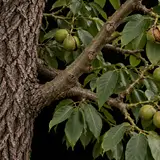
Varieties · 9
You pick one when you add Hardy Kiwi to your garden. Its days to maturity set your harvest window.
Hardy kiwi (Actinidia arguta) 7 varieties
Ananasnaya (Anna)
Grape-sized, smooth green fruit in clusters, sweet with a pineapple note.
hardy-kiwiargutafemaleproductiveThe most widely grown hardy kiwi and the standard kiwiberry: heavy crops of sweet, aromatic, grape-sized green fruit with a hint of pineapple, which is what the name means. Vigorous and productive across zones 4-8, and the variety most nurseries mean when they simply sell you a hardy kiwi. Female - it needs an arguta male such as Meader nearby, and it will not be pollinated by a kolomikta or fuzzy male. The default choice.
Ken's Red
Grape-sized fruit with reddish-purple skin and red-blushed flesh; sweet, rich flavour.
hardy-kiwiargutafemalered-fleshedA striking hardy kiwi with reddish-purple skin and red-tinged flesh, prized for rich, sweet, gourmet flavour and easily the best-looking kiwiberry on a plate. Vigorous female vine needing an arguta male; the red colour develops best in cool climates and late-season gardens, and can stay muted where autumn is warm. Ripens later than Ananasnaya, so allow a longer season for it.
Issai
Small-to-medium, smooth green grape-sized fruit; a compact, far less rampant vine.
hardy-kiwiargutaself-fertileearly-bearingThe famous SELF-FERTILE hardy kiwi - the one variety that fruits without a male, which makes it the answer where there is only room for one vine, or for a large container. It also bears young, often in one to three years rather than the usual three to five. The trade-offs are real: fruit is smaller, yields are lighter than Ananasnaya, it crops better with a male anyway, and it is a little less cold-hardy than most arguta. Still the easiest kiwi to succeed with.
Arctic kiwi (Actinidia kolomikta) 2 varieties
Arctic Beauty (kolomikta)
Small, very sweet, early green kiwiberries on a modest vine with handsome foliage.
arctic-kiwikolomiktavery-cold-hardyornamentalThe hardiest kiwi there is - Actinidia kolomikta, reported good to around -40F, or zone 3 - and the choice for the coldest gardens. Small, very sweet berries ripening earliest of any kiwi, on a comparatively restrained vine that suits a smaller structure. Sold as sexed plants: you need both a female and a kolomikta male, and an arguta male will not do the job. Give afternoon shade where summers are hot, and cage the base, because cats go for this species hardest of all.
Arctic Beauty Male
Non-fruiting vine whose leaves are splashed and tipped with white and pink over green.
arctic-kiwikolomiktamalepollinizerThe kolomikta MALE, and the most ornamental plant in the genus: its leaves emerge green and then splash boldly with white and pink, a display the female plants barely show. It bears no fruit, and its job is to pollinate female Arctic kiwis - one male serves several females, and no arguta or fuzzy male can substitute. Worth planting for the foliage alone on a shaded arbour, but do not mistake it for a fruiting vine. Colour is strongest in part shade and on established plants.
Grower tips
Notes from growers, tagged with the zone they grow in. A person reads every post before it appears.
Nobody has posted about Hardy Kiwi yet. The first one usually saves someone a season.
Free account. Your post shows your grower name and zone, never your email.