Add it to your home screen and it opens full screen: no browser bars, one tap away, and everything stays signed in. Free, nothing to download from an app store.
- Tap the Share button in your browser
- Scroll down and choose “Add to Home Screen”
- Open GrowSomeFood from your home screen
- Open your browser’s menu
- Choose “Add to Home screen” or “Install app”
- Open GrowSomeFood from your home screen
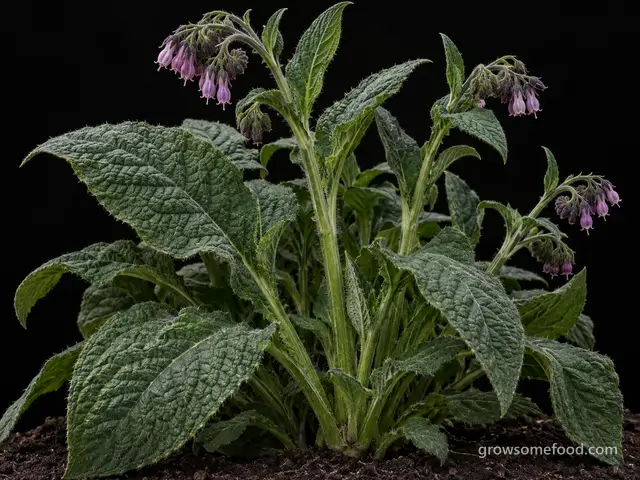
Comfrey
The permaculture fertility workhorse - a big bristly perennial with a six-foot taproot, cut three or four times a season for mulch and compost. Two things to know first: it is hepatotoxic and no longer used internally, and once established it is effectively permanent.
Never taken internally. All parts contain pyrrolizidine alkaloids that damage the liver and can cause fatal veno-occlusive disease; oral products are restricted in several countries, and the root holds far more than the leaf. Do not brew it as tea. External use on unbroken skin is traditional but debated - avoid it in pregnancy and on children. It is also the plant a foxglove rosette gets mistaken for: comfrey leaves are coarsely bristly and rough to the hand, foxglove soft and finely downy.
Overview
The one thing to knowIt is a big, coarse, bristly-leaved perennial of the borage family with drooping mauve or cream bells that bumblebees work all summer, and a taproot that can reach six to ten feet into the subsoil.
Comfrey is the fertility engine of a permaculture garden. It is a big, coarse, bristly-leaved perennial of the borage family with drooping mauve or cream bells that bumblebees work all summer, and a taproot that can reach six to ten feet into the subsoil. That root is the whole point: it pulls up potassium and other minerals from below the reach of ordinary garden plants and puts them into leaves you can cut three or four times a season and lay straight down as mulch, throw into the compost heap as an activator, or steep into a (memorably foul-smelling) liquid feed.
Two facts belong before any of that, though. The first is that comfrey is hepatotoxic. All parts contain pyrrolizidine alkaloids, which damage the liver and can cause a serious and sometimes fatal condition called veno-occlusive disease. The old “knitbone tea” tradition has not survived the research: internal use is no longer recommended by anyone credible, and oral comfrey products are banned or restricted in a number of countries. It is not a herb-bed plant and it is not a tea.
The second is that comfrey is permanent. Every fragment of that deep root regrows into a new plant, so digging out an established clump generally multiplies it. Choose the site once, deliberately, and choose a sterile Bocking cultivar of Russian comfrey so it cannot seed itself around on top of that. Handled with those two facts in mind, it is one of the most genuinely useful plants you can put in a garden.
Quick facts
- Life cycle
- Perennial, lives about 20 years
- Height
- 40 in24 to 60
- Spread
- 36 in24 to 48
- Cold
- Takes hard frostdamaged below -30°F
- Heat
- Struggles above 100°F
- Self-sows
- Yes, expect volunteers
Full sun or part sun or part shade · medium water · consistently moist soil · 36 in apart (24 to 48) · transplant or cuttings or division
When to plant
Fall transplanting is open for 13 more days. Next: spring, Mar 20 to May 22.
- Transplant Aug 16 – Oct 4 Open now · 13 days leftAbout 10 weeks before to 3 weeks before your first frost (Oct 25 here)Fall planting into warm soil lets the taproot get down before winter and gives a strong first spring. Mulch new crowns after the ground cools in cold zones.
- Transplant Mar 20 – May 22 Opens in 180 daysAbout 3 weeks before to 6 weeks after your last frost (Apr 10 here)Plant crowns or two-to-three inch root cuttings two to three inches deep, three feet apart, into deep soil that has been dug over well. Spring planting gives a full first season of growth and usually one or two cuts by fall.
Frost here: last around Apr 10 (Mar 27 to Apr 24 most years), first around Oct 25. Zone averages, your own yard may run a week or two either way.
Life stages
One stage to settle in, then three that repeat each year. Windows are typical; your zone and weather move them.
Year 1 - rooting in (choose the spot carefully)
Day 0 to 150- DoDecide the spot as a permanent one before you plantComfrey regrows from any piece of root left behind, so digging it out mostly multiplies it. Site it at the edge of the garden, along a fence, at the base of fruit trees, or in a dedicated bed - not in a rotation bed, not in a raised bed you may want back, and not where a rototiller will ever pass. A sunken bottomless container or a bed ringed by mown grass are the two practical ways to keep it in bounds.
- WaterWater through the first season while the taproot goes downevery 5 daysNew crowns and root cuttings want steady moisture for their first summer. Once the taproot is down - it can reach six to ten feet - the plant is remarkably drought-tough and needs watering only in genuine dry spells.
- ProtectWear gloves and long sleeves for every job on itComfrey leaves and stems are covered in stiff bristly hairs that scratch and irritate bare forearms, and the plant is toxic if any sap reaches your mouth. Gloves and sleeves for planting, cutting and handling, and wash up afterwards.
Watch for- Wilting in the first summer before the taproot is established
- Slugs shredding the first soft leaves
- Second thoughts about the location - this is the only easy moment to change your mind
Spring growth & first cut
Mar to Jun, every year- HarvestTake the first cut at about knee heightevery 35 daysCut the whole clump back to two or three inches above the crown when it reaches roughly knee height in late spring, using shears or a sickle. An established plant regrows in four to six weeks and gives three or four cuts a season in most of the country. Cutting is not optional maintenance - it is the point of the plant, and a clump left uncut just gets coarse and floppy.
- MulchChop and drop it straight where you want the fertilityCut leaves wilt fast and rot down quickly, which is what makes comfrey such a good mulch: lay it thick around fruit trees, currants, potatoes, tomatoes and squash, or throw it into the compost heap in layers to heat it up. There is no need to shred it. Keep it a hand's width off the stems of whatever you are mulching.
Watch for- Orange rust pustules on the undersides of leaves
- Slug damage on the softest early growth
- Clumps flopping outward once they are cut-ready
Bloom & repeat cuts
May to Sep, every year- InspectLeave one flush to flower for the bumblebeesThe drooping mauve, pink or cream bells are one of the best long-season bumblebee plants in the garden, and long-tongued bees work them heavily from late spring onward. If you cut every flush the moment it is ready you get no flowers at all, so let one clump - or one round of growth - bloom before you cut it.
- WeedIf yours is seed-setting common comfrey, cut before seed dropsCommon comfrey (Symphytum officinale) sets viable seed and self-sows into paths, borders and hedge bottoms, and each seedling makes its own un-diggable taproot. Cutting the flush as it finishes flowering prevents this entirely. The Bocking cultivars of Russian comfrey are effectively sterile and do not have this problem - which is the main reason they are the ones to plant.
- HarvestKeep cutting every four to six weeks until early fallContinue taking the clump down to a few inches whenever it regrows to knee height, stopping about six weeks before your first frost so the plant can rebuild reserves for winter. Three or four cuts a year from a mature clump is normal, and heavy cutting does not weaken it.
Watch for- Seedlings appearing away from the parent clump (common comfrey only)
- Rust spreading through a wet summer
- Growth getting coarse and leaning where a clump was left uncut
Fall & winter dormancy
Oct to Feb, every year- WeedClear and bin the old foliage if rust was badComfrey dies back to the crown after hard frost. Rake off and bin - do not compost - the last season's foliage where comfrey rust was heavy, since the fungus overwinters on the debris. Otherwise the collapsed leaves can simply be left as their own mulch.
- DoWinter is the only sensible window to remove a patchIf a clump has to go, dormancy is the moment: dig the whole crown and follow the taproot as deep as you can, then expect regrowth from the fragments you missed and cut every new shoot off at the ground repeatedly through the following season, or smother the ground with heavy cardboard and mulch for a full year. Do not rototill it - that turns one plant into fifty.
Watch for- Crowns rotting in ground that stands wet all winter
- Regrowth from root fragments where a clump was dug out
Watch out for
5 to know. 2 are high-risk: Pyrrolizidine Alkaloid Toxicity, Confusion with Foxglove Rosettes. 3 are active in September.
Pyrrolizidine Alkaloid ToxicitySeverity High DisordernowThis is the single most important thing on the page: comfrey is a fertility plant, not a herb.
The alkaloid content is why the plant's medicinal era ended, and why this catalog lists no edible parts for it despite centuries of tea and poultice tradition.
Any use of comfrey as a tea, tincture, capsule, syrup or root decoction; comfrey leaves in a herb bed or drying rack alongside plants that are brewed; anyone treating the old 'knitbone tea' tradition as current advice. Children mouthing the leaves, and comfrey being cut as green feed for rabbits, poultry or livestock, are the other routes worth guarding against.
If comfrey has been swallowed or taken as a preparation, contact poison control or your doctor for advice rather than waiting to see what happens - liver injury from these alkaloids can be silent at first. Seek medical attention promptly for abdominal swelling or pain over the liver, jaundice, dark urine or unexplained fatigue in anyone who has been using comfrey internally. Stop all internal use immediately and take the product or plant material with you.
Do not take comfrey internally in any form, and do not feed it to animals. Grow it as a soil and compost plant only, keep it out of herb beds and away from anything you gather for tea, and label the patch if others garden with you. Wear gloves when cutting and wash before eating. External comfrey ointments on unbroken skin are the only application with meaningful modern support, and are still avoided on broken skin, in pregnancy, while nursing, and for long-term daily use.
Every part of comfrey contains pyrrolizidine alkaloids, which the liver converts into compounds that damage the small hepatic veins. Prolonged or repeated internal use can cause hepatic veno-occlusive disease, which is serious and sometimes fatal, and the damage can build up over time rather than arriving with a single dose. The root carries a far heavier load than the leaves, young leaves more than old, and Russian comfrey generally more than common comfrey. The US FDA advised the removal of oral comfrey products from the market in 2001, and several countries ban or restrict them.
Confusion with Foxglove RosettesSeverity High DisorderBorage sits in the same confusion cluster and is also bristly; mullein rosettes are woolly rather than bristly.
Of the group, only foxglove is deadly, which is why the separation rule is worth keeping even though comfrey itself is no longer gathered for internal use.
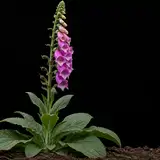
Foxglove seedlings and rosettes appearing in or near the comfrey patch, especially downwind of a foxglove that was allowed to seed the previous summer. Any grey-green rosette in a bed you gather from that you cannot positively identify. The discriminator is texture: comfrey leaves are coarsely BRISTLY and noticeably rough to the hand, while foxglove leaves are soft and finely downy, with scalloped-toothed margins and a strongly netted vein pattern underneath.
If there is any doubt about a leaf, discard it - nothing about comfrey is valuable enough to gamble on. Suspected ingestion of foxglove, including tea brewed from leaves, is a medical emergency: call poison control or emergency services immediately without waiting for symptoms, and take a piece of the plant with you if you can.
Keep the two plants in separate parts of the garden rather than in adjacent labelled beds - physical separation is far more reliable than identification skill on a dim spring morning. Do not let foxglove seed anywhere near comfrey, pull volunteer rosettes out of the comfrey patch on sight, and label the comfrey clump. If you gather leaves for any purpose, gather only from a plant you planted yourself and know the position of.
Foxglove in its first year makes only a flat rosette of soft grey-green leaves that closely resembles young comfrey, and foxglove is a cardiac poison whose glycosides are not reduced by drying or brewing. Documented fatal poisonings have come from exactly this mistake: a rosette gathered as comfrey and made into tea. Because foxglove self-sows prolifically and both plants like the same moist, part-shaded ground, mixed patches happen easily, and the risk is highest in spring when both are small.
Regrowth from Root FragmentsSeverity Medium DisordernowWorth being honest about at planting time rather than discovering later.
Almost every regret about comfrey is a siting regret.
Shoots reappearing through the season everywhere a clump was dug out or forked through. New plants popping up along the line a rototiller travelled. Seedlings appearing at a distance from the parent plant, which means you have a seed-setting type rather than a sterile Bocking cultivar. Comfrey pushing out from under a fence or bed edge into a lawn or a neighbouring border.
Remove it by exhaustion rather than excavation. Cut or mow every emerging shoot off at ground level as soon as it appears, repeatedly, through a full season or two until the root starves - or smother the ground with heavy overlapping cardboard and a thick mulch for a full year. Digging helps only if you are prepared to follow up on the regrowth for a season afterwards. Do not rototill, and do not compost live root pieces; bin them or dry them to death on a hard surface first.
Choose the site once, deliberately, and treat it as permanent: garden edge, fence line, orchard floor or a dedicated bed, never a rotation bed or a raised bed you may want back. Plant a sterile Bocking cultivar so seed is not a second route. Ring the patch with regularly mown grass, which is the simplest effective barrier, or sink a bottomless container. Never fork, dig or till through a clump you want to keep in bounds, and cut seed-setting types as each flush finishes flowering.
Comfrey regenerates from almost any piece of its deep taproot, so an established clump is effectively permanent and every attempt to dig it out tends to multiply it instead. A rototiller run through a patch will plant a whole bed of it. On top of that, common comfrey and unnamed Russian comfrey seedlings set viable seed and self-sow into paths, borders and hedge bottoms, where each seedling promptly makes its own un-diggable root. This is not invasive behaviour in the ecological sense - comfrey does not overrun wild habitat the way a listed invasive does - but it is genuinely irreversible at garden scale.
Comfrey RustSeverity Low DiseasenowThe only disease comfrey routinely gets, and it is a nuisance rather than a threat.
Because the leaves are cut for mulch, binning rather than composting rusted material matters more here than it would on an ornamental.
Orange to rust-brown pustules dusting the leaf undersides, with corresponding pale-yellow spotting on the upper surface. Leaves yellowing, curling and dying back early from the bottom of the clump upward. Growth that looks tired and thin in late summer on a plant that started the season vigorously. Worst in the crowded centre of an uncut clump, and in wet years.
Cut the whole clump down to two or three inches at the first sign of a heavy infection and bin the foliage - do not compost it and do not use it as mulch. The regrowth usually comes back clean. There is no spray worth using on a plant you cut to the ground several times a season anyway. If a clump rusts badly every single year, replace it with Bocking 14 in a more open position.
Cut the clump regularly rather than letting it stand and get congested - frequent cutting is itself the best control, because it repeatedly removes the infected tissue. Space plants a full three feet apart for airflow, and clear and bin the collapsed foliage in late fall rather than leaving it as mulch where rust was present. Bocking 14 is notably more resistant than common comfrey, which is one reason it became the standard cultivar.
A rust fungus specific to comfrey, producing orange-brown powdery pustules on the undersides of leaves and matching yellow blotching above. It builds through warm humid weather and wet summers, spreading fastest in crowded, poorly ventilated clumps, and overwinters on the old foliage and crown debris. It is disfiguring and reduces the leaf crop, but it does not kill an established plant, and it does not affect other garden plants.
Slugs & SnailsSeverity Low PestOnly the softest early spring growth and newly planted crowns are worth defending.
Once the bristly mature leaves are up, comfrey outgrows slug damage entirely and needs nothing - the holes in an established clump are cosmetic on a plant you are about to cut for mulch anyway.
Irregular ragged holes chewed out of the middle of leaves and along the edges - not the clean-edged cuts a caterpillar leaves. Seedlings that vanish overnight, or that are cut off at soil level with nothing left behind. Silvery dried slime trails across leaves, soil, pots, and paving in the morning: this is the giveaway that tells you it was mollusks rather than an insect. Chewed pits in ripe fruit, especially where it rests on the ground. Damage that shows up on the lowest, dampest leaves first and gets worse after rain or evening watering. Turn over a board, an upturned pot, or a clump of dense mulch during the day and look for the animals themselves sheltering in the cool underneath.
Hand-picking works and costs nothing: go out an hour after dark with a headlamp, drop what you find into soapy water, and repeat nightly for a week or two - persistence is what wins, not any single product. Shallow beer traps sunk to soil level catch them too, but need emptying and refilling daily to be worth anything. Iron-phosphate bait is the standard control and is far lower-risk around pets and wildlife than the old metaldehyde products, but it is not harmless: many formulations include EDTA, and a dog that eats a quantity of pellets can develop iron toxicosis. Scatter it thinly per the label, never in piles, and keep dogs off a baited bed. Clear fallen foliage and debris in autumn, where the eggs are laid. In a wet climate this is a population you manage each season rather than one you eradicate - and on most established plants light grazing is cosmetic and needs nothing at all.
Take away the daytime shelter first: lift boards and upturned pots, clear piles of debris, keep dense mulch pulled back from crowns and stems, and give crowded plantings enough airflow to dry out. Water in the morning rather than the evening so the surface is dry by the time they come out. Copper tape around containers and raised beds gives them a shock they will not cross, and it is the one barrier that reliably works. Get plants past the vulnerable stage quickly - start seedlings in pots and set them out at a decent size rather than direct-sowing into a cold wet bed, since most plants stop being worth defending once the leaves toughen. Leave the ground beetles, frogs, toads, and ground-feeding birds alone, because they eat mollusks all night for free and broad-spectrum slug pellets kill them too. Where thick-leaved or resistant varieties exist for what you are growing, they take far less damage.
Slugs and snails are nocturnal mollusks that rasp ragged holes in soft leaves, shear off seedlings at ground level, and chew into ripe fruit that touches the soil. They feed at night and in the early morning and spend the day hidden under boards, pots, dense mulch, leaf litter, and low foliage, becoming active in exactly the cool, damp, shaded conditions that suit young plants. Damage is heaviest in wet spells and on tender spring growth: a single wet week can erase a row of seedlings while an established, tough-leaved plant of the same species is barely marked. They lay clusters of small pearly eggs in damp soil and under debris, so a garden with plenty of cover carries a resident population year after year rather than being invaded from outside.
Good & bad neighbors
First rule: keep Foxglove apart. Keep these two in separate parts of the garden, and never let foxglove self-seed into a comfrey patch.
Plant nearby
-
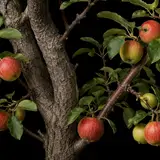
The classic orchard-guild placement: a ring of comfrey just outside the drip line, cut three or four times a season and dropped in place, mulches and feeds the tree while the flowers pull in bumblebees. Keep the cut material a hand's width off the trunk.
-
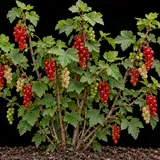
Soft fruit is potassium-hungry and comfrey mulch is potassium-rich, which is why this pairing turns up in every fruit-guild plan. Plant the comfrey at the edge of the bush row rather than among the stools, so you are never digging near it.
-
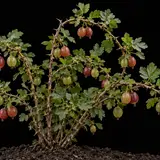
Same logic as currants: chop-and-drop comfrey around the bushes covers the ground, holds moisture and supplies potassium for fruiting. Site the clump where you will not need to fork the soil later.
- Traditional pairings, thin evidence
-
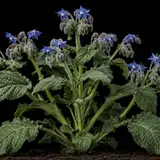
A close relative in the same family, and a good bee-plant partner - but worth knowing that borage is also bristly and also contains pyrrolizidine alkaloids, and that both plants are what foxglove rosettes get confused with. If you grow all three, keep the foxglove somewhere else entirely.
-
A deep-rooted fertility plant at the base of a hungry vine, keeping the root zone covered and supplying a mulch feed through the season. Traditional permaculture practice rather than tested science, but harmless and useful.
Keep apart
-
Keep these two in separate parts of the garden, and never let foxglove self-seed into a comfrey patch. Foxglove's first-year rosette resembles young comfrey closely, comfrey leaves get gathered for poultices and (historically) tea, and foxglove is a cardiac poison - this confusion has killed people. The discriminator: comfrey is coarsely bristly and rough to the hand, foxglove soft and finely downy. Separation beats identification skill.
Varieties · 5
You pick one when you add Comfrey to your garden. Its days to maturity set your harvest window.
Bocking 14 (Russian comfrey)
A coarse three-to-four-foot clump of large bristly pointed leaves with drooping mauve-purple bell flowers on curled stems.
russian-comfreysterilehigh-yieldcut-and-come-againThe default comfrey to plant and the one nearly every fertility-focused grower uses. Selected by Lawrence D. Hills at Bocking in the 1950s: effectively sterile so it cannot seed itself around, high-yielding, notably rust-resistant, and vigorous enough for three or four cuts a season. Still spreads freely from root fragments like every comfrey, so site it permanently.
Bocking 4 (Russian comfrey)
Similar coarse bristly clump to Bocking 14, a little more open in habit, with mauve-pink bells.
russian-comfreysterileforage-selectiondrought-tolerantThe other Hills selection, chosen originally as a livestock forage strain: slightly coarser and more drought-tolerant than Bocking 14, with a marginally lower leaf yield. Also sterile. Worth seeking out for dry sites, though for garden mulch and compost Bocking 14 is the better all-round choice. Comfrey is no longer recommended as animal feed given its alkaloid content.
Common Comfrey (Symphytum officinale)
Three-foot clump of bristly lance-shaped leaves with nodding bells in cream, pink or dull purple; sets small seed after flowering.
speciesself-seedingnaturalizedhistoric-medicinalThe wild European species naturalized across much of North America and the plant of the old herbals. Grow it only knowingly: unlike the Bocking cultivars it SETS VIABLE SEED and self-sows into paths, borders and hedge bottoms, where each seedling makes its own permanent taproot. Cut each flush as it finishes flowering if you have it. Flowers run cream, pink or purple, and it is the better bee plant of the two.
Russian Comfrey (Symphytum x uplandicum, unnamed seedlings)
Vigorous four-foot clump, bristly leaves, bells typically violet-blue to purple.
hybridvariablemay-set-seedThe hybrid of common comfrey and rough comfrey sold generically as 'Russian comfrey' when it is not one of the named Bocking clones. Vigorous and productive, but variable - unnamed seedlings are not guaranteed sterile, so treat an unlabelled plant as a potential self-sower and cut it before seed sets. Buy a named Bocking cultivar if sterility matters to you, which it usually should.
Creeping Comfrey (Symphytum grandiflorum / S. ibericum)
Dense one-foot mat of dark bristly oval leaves with nodding cream-to-primrose bells in early spring.
groundcoverdwarfshadespreads-by-runnerA low creeping comfrey grown as a shade groundcover rather than for fertility: about a foot tall, with cream or pale-yellow tubular bells in early spring and handsome ground-covering foliage under trees. It spreads steadily by runners and, like all comfrey, resists removal once settled - useful for a difficult dry shaded bank, a nuisance in a mixed border. Not a cutting plant.
Grower tips
Notes from growers, tagged with the zone they grow in. A person reads every post before it appears.
Nobody has posted about Comfrey yet. The first one usually saves someone a season.
Free account. Your post shows your grower name and zone, never your email.