Add it to your home screen and it opens full screen: no browser bars, one tap away, and everything stays signed in. Free, nothing to download from an app store.
- Tap the Share button in your browser
- Scroll down and choose “Add to Home Screen”
- Open GrowSomeFood from your home screen
- Open your browser’s menu
- Choose “Add to Home screen” or “Install app”
- Open GrowSomeFood from your home screen
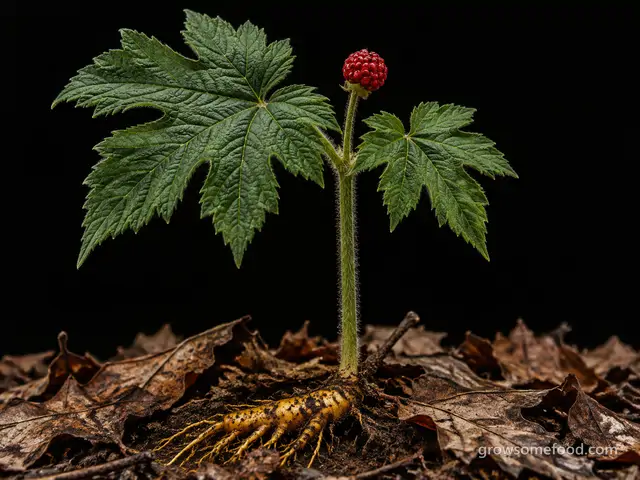
Goldenseal
A small, slow woodland native with a brilliant yellow rhizome - one of the most heavily wild-dug medicinal plants in America, now CITES-listed and at risk. Buy nursery-propagated stock and grow it as a conservation planting under deep shade.
A protected at-risk medicinal, not a forage. Goldenseal is CITES-listed and wild digging is regulated or prohibited in a number of states - buy nursery-propagated stock and know the law. The rhizome contains berberine and is not a casual remedy: it can change how the liver clears prescription drugs, is avoided in pregnancy and must never be given to newborns, and irritates the gut in quantity. The single red raspberry-like fruit is not edible - keep it away from children.
Overview
The one thing to knowWhat made it famous is underground - a knotted rhizome of a startling, almost fluorescent yellow, the source of every one of its old names (orangeroot, yellow puccoon, ground raspberry) and of the alkaloid berberine.
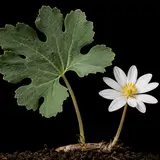
Goldenseal (Hydrastis canadensis) is a modest-looking plant with an outsized history: a single hairy stem, two deeply lobed palmate leaves, a petal-less puff of white stamens in spring, and one knobbly red fruit like a small raspberry in midsummer. What made it famous is underground - a knotted rhizome of a startling, almost fluorescent yellow, the source of every one of its old names (orangeroot, yellow puccoon, ground raspberry) and of the alkaloid berberine.
It grows on the floor of rich, moist, mature hardwood forest across eastern North America, and it grows slowly - a first-year seedling is a single leaf, a rhizome takes four or five years to reach marketable size, and a patch creeps outward a few inches a year. That combination of high commercial value and slow recovery is exactly the wrong one. A century and a half of digging for the herb trade stripped goldenseal out of much of its range, and it is now listed on CITES Appendix II, tracked as at-risk by conservation groups, and regulated or protected by law in a number of states.
This entry is marked Caution for that reason alone, not because the plant is hard to grow or hazardous in the ground. The rules are simple and they matter: buy nursery-propagated rhizomes or seed, never wild-dug plants, know your state's law before harvesting anything wild, and treat a goldenseal bed as a conservation planting first. Grown that way it is a lovely, undemanding, long-lived shade perennial - and one of the few garden plants where simply having it is a contribution.
Quick facts
- Sprouts in
- 365 days180 to 540
- Soil to sprout
- 60 °F50 to 68
- Life cycle
- Perennial, lives about 25 years
- Seed to save
- About 75 days after planting60 to 90
- Height
- 12 in6 to 18
- Spread
- 10 in6 to 14
- Cold
- Takes hard frostdamaged below -30°F
- Heat
- Struggles above 85°F
- Self-sows
- Yes, expect volunteers
Part shade or shade · medium water · well-drained soil · 8 in apart (6 to 12) · direct sow or transplant or division
When to plant
Fall sowing is open for 55 more days. Next: spring, Mar 20 to May 1.
- Direct sow Sep 6 – Nov 15 Open now · 55 days leftAbout 7 weeks before to 3 weeks after your first frost (Oct 25 here)Sow fresh, pulp-free, never-dried seed a quarter inch deep in a shaded nursery bed as soon as it is cleaned. It needs a winter or two of cold before it germinates, and seedlings take four to five years to reach transplant size.
- Transplant Aug 30 – Oct 18 Open now · 27 days leftAbout 8 weeks before to 7 days before your first frost (Oct 25 here)Plant nursery-propagated rhizome divisions in fall, half an inch to an inch deep and eight inches apart, into rich shaded well-drained woodland soil under hardwood leaf litter. Fall planting lets the roots settle before the spring flush.
- Transplant Mar 20 – May 1 Opens in 180 daysAbout 3 weeks before to 3 weeks after your last frost (Apr 10 here)Spring planting of dormant divisions works if you can get them in before the shoots break, but fall is markedly better - a spring-planted rhizome spends its first season catching up.
Frost here: last around Apr 10 (Mar 27 to Apr 24 most years), first around Oct 25. Zone averages, your own yard may run a week or two either way.
Life stages
One stage to settle in, then three that repeat each year. Windows are typical; your zone and weather move them.
Years 1-4 - settling into the forest floor
The first year after planting- MulchPlant rhizome pieces shallow under hardwood leaf litterSet nursery-propagated rhizome divisions about half an inch to an inch deep, buds facing up, eight inches apart, into rich humusy woodland soil in 70-80 percent shade - under maple, basswood, tulip poplar or oak on a cool north- or east-facing slope. Firm gently and cover with an inch or two of natural hardwood leaf litter, which is the mulch the plant evolved under. Fall planting is standard.
- WaterKeep it evenly moist but never waterloggedGoldenseal wants the moisture of a forest floor and the drainage of a slope. Water through dry spells in the first two seasons, and check that water is not collecting where you planted - rhizome rot in soggy ground is the single most common way a planting fails.
- InspectExpect slow growth and a first-year plant that is only one leafA first-year seedling makes a single small leaf and nothing else. Divisions come up faster, but a rhizome takes roughly four to five years to reach the size the herb trade wants, and the patch spreads sideways at only a few inches a year. Do not dig into the bed to check on it.
Watch for- Rhizomes rotting in ground that holds water
- Too much sun scorching the leaves
- Slugs shredding newly emerged leaves
- Plants disappearing - goldenseal is poached, like ginseng
Spring emergence
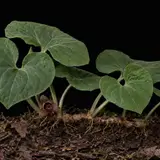
Apr to May, every year- InspectTwo palmate leaves on one hairy stem - the ID to knowA mature goldenseal sends up a single hairy stem carrying two deeply lobed, sharply toothed palmate leaves, one larger than the other, with a flower bud between them. Snapping a rhizome shows the bright yellow interior that gives the plant every one of its names. Several unrelated plants are also called yellowroot, so the two-leaf, single-stem, forest-floor form is the real identifier.
- MulchTop up the leaf litter each springA one-to-two-inch layer of natural hardwood leaf mulch is the whole feeding programme. It holds moisture, keeps the rhizomes cool, and feeds the soil as it breaks down. Goldenseal wants no fertilizer beyond that.
Watch for- Leaf edges scorching where the canopy has thinned
- Slug damage on soft new leaves
- Botrytis blotching on foliage in a cold wet spring
Flower & red fruit
Apr to Jul, every year- InspectOne small greenish-white flower, then one red fruitGoldenseal's flower has no petals at all - just a puff of white stamens over the leaves for a few days in spring. It ripens by midsummer into a single knobbly red fruit that looks strikingly like a raspberry, holding a dozen or more hard black seeds. The fruit is not edible; keep it away from children.
- DoCollect and sow the ripe seed to grow the patchPick the fruit as it colours fully red and softens, before birds and rodents take it. Squeeze out the seeds, wash the pulp off thoroughly (it inhibits germination), and sow them fresh about a quarter inch deep in a shaded nursery bed the same season - the seed must not dry out. Expect germination the following spring, or the one after.
Watch for- Fruit stripped by birds or rodents before you collect it
- Seed dried out in storage (it must be sown fresh)
Fall & winter dormancy
Sep to Mar, every year- MulchLet the falling hardwood leaves cover the bedTops die back after the first frosts and the plant rests as a knotted yellow rhizome. The natural leaf fall is exactly the winter cover it needs - do not rake the bed clean, and do not substitute a heavy bark mulch, which packs down and holds too much water over the crowns.
- DoDivide only in fall dormancy, if at allIf you are propagating or thinning a crowded patch, dormancy is the window: lift a clump, break the rhizome into pieces each carrying at least one fat bud and some fibrous root, and replant immediately at the same shallow depth. Never lift a patch in growth, and never take more than a third of it in one year.
Watch for- Rhizomes rotting where winter water stands
- Bare, raked beds losing their leaf cover
- Disturbed ground in a known patch - the sign of digging
Watch out for
4 to know. 2 are high-risk: Over-Harvesting & Illegal Digging, Root Rot. 1 is active in September.
Over-Harvesting & Illegal DiggingSeverity High DisordernowThe whole reason this entry is gated Caution.
Planting goldenseal is unambiguously good for the species; buying wild-dug stock to do it is not, which is why the sourcing question is repeated through this page.
Known colonies thinning or disappearing between seasons, and freshly disturbed ground or filled-in holes in a patch. Bulk offers of large, irregular, cheaply priced rhizomes in autumn, which is what wild-dug material looks like. Suppliers who cannot or will not say where their planting stock came from. Supplement labels with no origin information, and unusually cheap goldenseal products, which are also the ones most often adulterated with other berberine-bearing plants.
Leave a depleted wild stand alone entirely and give it many years, sowing fresh seed into it if you have any. Report digging on protected land. On the demand side the fix is straightforward: shift to cultivated, traceable material, and support the forest-farming growers producing it, since it is wild-harvest demand rather than gardening that empties the woods.
Buy nursery-propagated rhizomes and seed only, from growers who propagate their own stock and say so, and ask the question before you buy. Do not dig wild plants: check your state's law, and treat public land as off limits. If you do harvest from your own bed, divide and replant rather than clearing it, take no more than about a third in a year, and always sow the ripe seed. Keep plantings discreet and count them - goldenseal is poached like ginseng.
The defining threat to the species. A century and a half of commercial digging for the herb trade, compounded by the loss of mature hardwood forest, stripped goldenseal out of much of its historic range, and because a rhizome takes four to five years to size up and a colony creeps outward only a few inches a year, dug ground recovers extremely slowly or not at all. Goldenseal was listed on CITES Appendix II in 1997, sits on conservation at-risk lists, and its harvest is regulated or prohibited in a number of states. Wild-dug rhizomes are still sold into the nursery and supplement trades.
Root RotSeverity High DiseaseRhizome rot is the commonest way a goldenseal bed fails, and the trap is that the plant wants forest moisture at the same time.
The answer is slope drainage rather than less water: plant on a rise, never in a spot where runoff collects, keep the shallow rhizomes under leaf litter rather than packed bark, and do not crowd the bed. Lift and destroy affected clumps and replant clean divisions elsewhere.
Wilting in the middle of the day on a plant whose soil is damp - the classic tell, and the reason people water a rotting plant and finish it off. Leaves yellowing from the bottom up, dull off-color foliage, and growth that stalls for no visible reason. Whole shoots, or one side of the plant, collapsing while the rest still looks fine. Soft, dark, or mushy tissue at the base of the stem or at the crown, sometimes with a sour smell. Lift a failing plant and look at the roots: healthy ones are firm and pale, rotted ones are brown or black and slimy, and the outer layer slips off between your fingers leaving a thread of core behind. Seedlings that topple over at soil level are the same problem, called damping-off.
There is no cure for tissue that has already rotted, so act on the conditions rather than looking for a spray. Stop watering at once and fix the drainage - open up compacted soil, or move the plant to a raised, sharply drained position or a container. Lift a badly affected plant, cut away every soft dark root and rotted section with a clean blade back to firm pale tissue, and replant only the healthy parts into fresh free-draining soil or mix. Often the better move is to give up on the plant and save its offspring instead: cuttings, offsets, or divisions taken from firm healthy growth root readily and give you a clean start. Bin the rotted material rather than composting it, and correct the drainage before you replant, because the rot comes straight back in the same wet spot.
Drainage is the whole defense. Match the plant to the site first - something that wants sharp drainage will not survive heavy clay or a low, water-collecting spot however well you tend it. Where the ground is heavy, plant on a raised bed, berm, or slope, or grow in a container. Set plants at the depth they were already growing, since burying the crown or the root flare is a common cause of rot, and keep mulch pulled back a few inches from the stem base instead of piled against it. Water the soil rather than the calendar: check that the top inch or two is dry before watering again, cut back hard in cool weather and winter dormancy, and never leave a pot standing in a full saucer. Do not plant or dig in soggy ground, and go easy on rich amendments for plants that want it lean. Rotate annual crops, and start with clean healthy plants and fresh mix.
Root rot is not one organism but a group of soil fungi and water molds - Pythium, Phytophthora, Fusarium, Rhizoctonia and others - that sit harmlessly in most soils and only turn destructive when the ground stays saturated. Waterlogged soil drives the air out, the roots suffocate, and the weakened tissue is invaded and goes soft, brown, and stringy. Because the damage is underground you usually see it first as something that looks like drought: wilting, yellowing, stunting, a plant that does not respond to being watered. Overwatering, heavy compacted ground, a low spot that collects runoff, a pot with no drainage or a saucer left standing full, and cold wet soil in winter are the usual causes. Once roots have actually rotted there is no cure - this is a problem you prevent rather than treat.
Slugs & SnailsSeverity Medium PestGenuinely damaging on a slow plant that carries only two leaves: shredding both of them costs a goldenseal its whole season of growth, and seedlings can be erased outright.
The leaf-litter mulch this plant needs is also perfect slug habitat, so hand-picking after dark in a wet spring beats trying to remove the cover. Protect nursery seedbeds in particular.
Irregular ragged holes chewed out of the middle of leaves and along the edges - not the clean-edged cuts a caterpillar leaves. Seedlings that vanish overnight, or that are cut off at soil level with nothing left behind. Silvery dried slime trails across leaves, soil, pots, and paving in the morning: this is the giveaway that tells you it was mollusks rather than an insect. Chewed pits in ripe fruit, especially where it rests on the ground. Damage that shows up on the lowest, dampest leaves first and gets worse after rain or evening watering. Turn over a board, an upturned pot, or a clump of dense mulch during the day and look for the animals themselves sheltering in the cool underneath.
Hand-picking works and costs nothing: go out an hour after dark with a headlamp, drop what you find into soapy water, and repeat nightly for a week or two - persistence is what wins, not any single product. Shallow beer traps sunk to soil level catch them too, but need emptying and refilling daily to be worth anything. Iron-phosphate bait is the standard control and is far lower-risk around pets and wildlife than the old metaldehyde products, but it is not harmless: many formulations include EDTA, and a dog that eats a quantity of pellets can develop iron toxicosis. Scatter it thinly per the label, never in piles, and keep dogs off a baited bed. Clear fallen foliage and debris in autumn, where the eggs are laid. In a wet climate this is a population you manage each season rather than one you eradicate - and on most established plants light grazing is cosmetic and needs nothing at all.
Take away the daytime shelter first: lift boards and upturned pots, clear piles of debris, keep dense mulch pulled back from crowns and stems, and give crowded plantings enough airflow to dry out. Water in the morning rather than the evening so the surface is dry by the time they come out. Copper tape around containers and raised beds gives them a shock they will not cross, and it is the one barrier that reliably works. Get plants past the vulnerable stage quickly - start seedlings in pots and set them out at a decent size rather than direct-sowing into a cold wet bed, since most plants stop being worth defending once the leaves toughen. Leave the ground beetles, frogs, toads, and ground-feeding birds alone, because they eat mollusks all night for free and broad-spectrum slug pellets kill them too. Where thick-leaved or resistant varieties exist for what you are growing, they take far less damage.
Slugs and snails are nocturnal mollusks that rasp ragged holes in soft leaves, shear off seedlings at ground level, and chew into ripe fruit that touches the soil. They feed at night and in the early morning and spend the day hidden under boards, pots, dense mulch, leaf litter, and low foliage, becoming active in exactly the cool, damp, shaded conditions that suit young plants. Damage is heaviest in wet spells and on tender spring growth: a single wet week can erase a row of seedlings while an established, tough-leaved plant of the same species is barely marked. They lay clusters of small pearly eggs in damp soil and under debris, so a garden with plenty of cover carries a resident population year after year rather than being invaded from outside.
Deer (browse resistance)Severity Medium WildlifeDeer browse goldenseal tops, and heavy browsing is documented as a real pressure on remaining wild colonies alongside digging - a two-leaved plant that loses both leaves loses its whole year, and the fruit is often taken before any seed can be collected.
A low wire cage over a small bed is cheap and effective; count on collecting ripe fruit promptly rather than leaving it on the plant.
Growth cleanly missing overnight, with the plant browsed back to a level line about as high as a deer can comfortably reach. Ragged, torn stem ends rather than the clean angled cut a rabbit leaves - the single most reliable identifier. Buds and flowers gone while the foliage below is untouched, since deer often take the best part first. Hoof prints and droppings in soft ground near the damage. Repeat visits, with fresh damage each morning once a planting has been found. On young trees, shredded and stripped bark and broken low branches in autumn - that is antler rubbing rather than feeding.
There is no chemical fix, only exclusion and recovery. Get physical protection up immediately after the first damage, because deer return to a known meal, and reinforce or rotate whatever you were relying on before. Most plants regrow from browsing if the crown and roots are intact - feed and water a grazed plant and protect the regrowth while it comes back. What does not recover in the same season is anything whose buds or flowers have been taken, and a young tree whose bark has been rubbed right around the trunk is usually lost. Where deer pressure is genuinely heavy, the honest answer is to fence properly or to grow the plants deer leave alone, rather than to keep replacing losses.
Fencing is the only thing that reliably works. Eight feet is the standard for excluding deer, or two parallel four-foot fences a few feet apart, which they will not jump because they cannot judge the landing. Short of that, cage individual plants: a sturdy wire cage or trunk guard around every young tree, left on until the trunk is thick and the canopy is above browse height, prevents both browsing and antler rubbing and is the single highest-value thing you can do for a young tree. Repellent sprays do help at moderate pressure, but they wash off and deer habituate, so reapply after rain and rotate between different types through the season. Motion-activated sprinklers, scent deterrents, and noise devices work for a while and then stop. Siting matters too: plants close to the house, in daily traffic, and screened behind other planting get browsed less than the same plant out at the boundary.
Deer are the largest garden problem across much of the country, and where pressure is high they set the limit on what you can grow at all. They browse at night and around dawn and dusk, taking tender shoots, leaves, buds, flowers, and fruit within about five feet of the ground, and they come back night after night to anything they have found and liked. Because they have no upper incisors they tear rather than cut, leaving ragged stem ends - that is how you tell deer damage from a rabbit's clean angled cut. In fall, bucks rub their antlers on young trunks and can strip the bark right around a stem, which kills a young tree outright. Palatability varies enormously between plants and between seasons: a herd short of food in late winter eats things it ignores in June, and no plant is truly deer-proof.
Good & bad neighbors
Plant nearby
-
The other great at-risk Appalachian forest medicinal, sharing the same rich shaded well-drained hardwood habitat and very nearly the same conservation story. Goldenseal tolerates slightly more variation in shade and soil and sizes up faster, so growers often establish it first and add ginseng once the site has proved itself.
-
The third of the at-risk Appalachian medicinals, and a taller layer over a goldenseal bed - its white flower candles rise well above the low two-leaved goldenseal without shading it out. Both are wild-dug for the supplement trade, and both are best answered with a nursery-propagated planting.
-
The classic canopy for a goldenseal planting: the right density of shade, and a leaf litter that breaks down into precisely the rich, moist, well-drained soil the plant needs. Basswood, tulip poplar, oak and hickory serve the same role.
-
A fellow rich-woods native with a coloured rhizome and a similar over-harvest history, flowering before goldenseal emerges and sharing exactly the same moist humusy deep-shade ground. Its presence in a wood is a good sign that goldenseal will take.
-
Native ferns and rich-woods wildflowersTrillium, mayapple, ferns and the rest of the rich-cove understory grow with goldenseal and signal the cool moist humusy deep shade it needs. A diverse intact understory is the best indicator that a site will suit it.
-
A low woodland groundcover for the same deep shade and humusy soil, covering the ground between slow-spreading goldenseal clumps and indicating suitable forest-floor conditions.
Varieties · 4
You pick one when you add Goldenseal to your garden. Its days to maturity set your harvest window.
Goldenseal (Hydrastis canadensis) - nursery-propagated stock
A foot-high plant with one hairy stem and two deeply lobed palmate leaves, a petal-less white flower in spring and a single red raspberry-like fruit in summer, over a knotted brilliant-yellow rhizome.
speciesnativeat-riskCITESThe species itself, from rhizome divisions or seed raised by a grower who propagates their own material. This is the only stock to buy: wild-dug rhizomes are still sold as nursery plants, and buying them is what keeps pressure on the remaining wild populations. Ask a supplier directly where their stock came from - the honest ones say so without being asked.
Wild-simulated goldenseal (cultivation method)
Scattered natural-looking colonies of two-leaved plants spreading slowly through hardwood leaf litter on a shaded slope.
nativecultivation-methodforest-farmedlow-inputRhizome pieces or fresh seed planted into suitable forest floor under a natural hardwood canopy and then largely left alone, mimicking how the plant grows in the wild. The lowest-input approach and the one that produces material closest to wild-harvested root, at the cost of a smaller, slower crop. The standard conservation-minded way to establish goldenseal on wooded land.
Woods-grown goldenseal (cultivation method)
Even, dense beds of two-leaved plants in prepared woodland soil under shade cloth or a natural canopy.
nativecultivation-methodforest-farmedtended-bedsThe same species grown in prepared, tended beds beneath a forest canopy - raised beds of amended woodland soil, weeded and mulched. More work than wild-simulated planting, but markedly faster and heavier yielding, typically reaching size in four to five years. This is the mainstream forest-farming method and the one that most reliably relieves pressure on wild stands.
Shade-cloth (artificial shade) goldenseal
Uniform rows of two-leaved plants in a raised bed beneath a shade structure.
cultivation-methodfield-grownartificial-shadehighest-yieldGrown in open ground under 70-80 percent shade cloth rather than under trees - the highest-yielding and most controllable method, and how much commercial goldenseal is now produced. Practical for a home grower without woodland: a shaded frame over a raised bed of rich, well-drained, leaf-mulched soil will grow it perfectly well. Needs closer attention to watering and disease than a forest bed.
Grower tips
Notes from growers, tagged with the zone they grow in. A person reads every post before it appears.
Nobody has posted about Goldenseal yet. The first one usually saves someone a season.
Free account. Your post shows your grower name and zone, never your email.