Add it to your home screen and it opens full screen — no browser bars, one tap away, and everything stays signed in. Free, nothing to download from an app store.
- Tap the Share button in your browser
- Scroll down and choose “Add to Home Screen”
- Open GrowSomeFood from your home screen
- Open your browser’s menu
- Choose “Add to Home screen” or “Install app”
- Open GrowSomeFood from your home screen
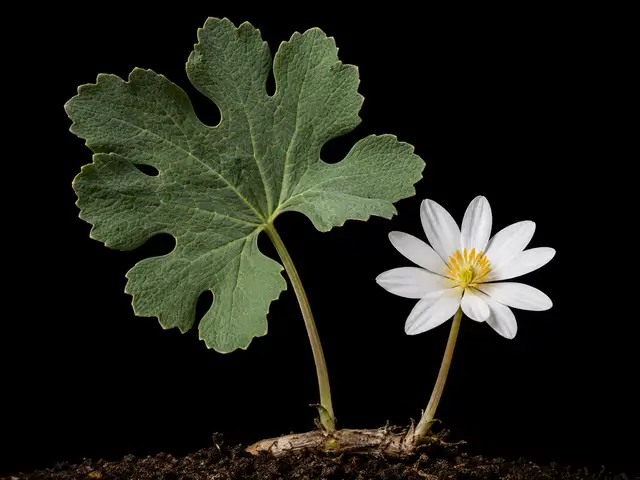
Bloodroot
Bloodroot is grown as an ornamental wildflower, not a food or a home remedy. The whole plant, especially the rhizome and its red-orange sap, is toxic (it contains sanguinarine); never eat any part. Do NOT use the sap on skin as a folk wart 'remedy' - caustic bloodroot salves can destroy healthy tissue and cause severe, disfiguring wounds. The sap also stains and irritates skin, so wear gloves when dividing the rhizome. Keep it away from children and pets.
Overview
One of the earliest and loveliest spring wildflowers - a fleeting pure-white bloom wrapped in its own curled leaf over a toxic, red-sapped rhizome; grown as an ornamental, never dug from the wild.
Bloodroot (Sanguinaria canadensis) is among the first and most enchanting flowers of the eastern spring woodland. Each stem pushes up with its white flower bud hugged inside a single curled, deeply lobed leaf, then opens into a pure-white, golden-centered bloom that shines on the still-bare forest floor. The flower is famously fleeting - often lasting only a few days, closing at night - which makes catching it in bloom a small annual delight. After flowering, the handsome blue-green leaf expands and carries the plant into early summer before it dies back.
Its name comes from the red-orange sap that bleeds from its rhizome when cut - a striking, and toxic, feature. The whole plant contains sanguinarine and is poisonous; the sap has a long history as a dye and folk medicine, but it is also a caustic (escharotic) that can seriously damage skin, so it is emphatically not a safe home remedy. Grown as an ornamental in moist shade, bought nursery-propagated (never dug from the wild), bloodroot is a treasured, slow-spreading native for the spring garden - beautiful to look at, and best admired rather than handled or used.
At a glance
- Sun
- Part shade · Shade
- Water
- Medium
- Spacing
- 8–12 in (typ. 10)
- Mature height
- 6–12 in (typ. 8)
- Start by
- Direct sow · Transplant · Division
- Frost
- Hardy
- Germination
- 60–500 days (typ. 300) @ 45–70 °F (typ. 60)
When to plant
Zone 7a typical frost: last Apr 10 · first Oct 25
Life stages
- Rhizome rooting in day 0–120 from transplant
-
Keep evenly moist while settlingPlant a nursery-grown division or dormant rhizome into rich, moist, humusy shade and keep it evenly moist. Bloodroot forms slow-spreading clumps by branching rhizome - give it a permanent spot, as it dislikes being moved once settled.
-
Mulch with leaf litterA woodland mulch of shredded leaves keeps the shallow rhizome cool and moist and mimics the forest floor. Wear gloves if you handle the rhizome - the red sap stains and can irritate skin.
Slow first-year growth (normal)The clump slowly widening by branching rhizome -
Keep evenly moist while settling
- Early spring bloom Mar, Apr (yearly)
-
Catch the fleeting white flowerOne of the earliest and loveliest spring flowers - a single pure-white flower with a golden center, each wrapped in its own curled leaf as it emerges. The bloom is short-lived (often just a few days) and closes at night, so enjoy it while it lasts.
-
Let ants disperse the seedAfter bloom, seeds form with a fatty appendage (elaiosome) that ants carry off and 'plant' nearby - the natural way bloodroot spreads. Leave developing seed pods if you want the colony to expand on its own.
Fleeting flowers, each hugged by a curled leafEarly bees visiting on warm daysAnts carrying off ripe seed (a good sign) -
Catch the fleeting white flower
- Spring & early-summer leaves Apr, May, Jun (yearly)
-
Enjoy the sculptural lobed leavesAfter the flower fades, the single rounded, deeply lobed leaf expands and enlarges - handsome, blue-green, and sculptural through late spring. In good moist shade the foliage can persist into early summer before the plant goes dormant.
-
Keep the soil from drying while in leafSteady moisture in spring keeps the foliage lush and helps the rhizome build reserves; the longer the leaves stay green, the stronger next year's bloom. It can go dry once it's dormant.
Handsome lobed foliage expanding after bloomLeaves yellowing early in dry soil (water to prolong them)Slugs on the leaves in damp shade -
Enjoy the sculptural lobed leaves
- Summer & winter dormancy Jan, Feb, Jul, Aug, Sep, Oct, Nov, Dec (yearly)
-
Let it die back and restAs a spring ephemeral, bloodroot yellows and dies back by mid-summer (earlier in dry heat) and rests underground as a rhizome for the rest of the year. Mark its location so you don't dig into the shallow rhizome while it's invisible.
-
Refresh leaf litter in fallLet autumn leaves lie or add leaf mold over the dormant crowns to feed and insulate them. Bloodroot is fully cold-hardy and needs no other winter care.
Foliage gone by mid-to-late summer (normal ephemeral dormancy)Shallow rhizomes when digging nearby -
Let it die back and rest
Watch out for
Wild Collection (Poaching) Disorder HighMar, Apr, May, Jun, Jul, Aug, Sep, Oct
Not a pest but the greatest threat to trilliums: digging plants from the wild. Wild-dug trilliums transplant poorly, wild populations take a decade or more to rebuild, and much cheap 'nursery' trillium is actually unsustainably or illegally collected - depleting forests for plants that often die anyway.
Watch for: Suspiciously cheap or bare-root 'wild' trilliums, and the temptation to move a plant from a woodland.
Prevent: Buy only from nurseries that clearly state their trilliums are nursery-propagated (not wild-collected); never dig plants from the wild.
Treat: There is no fix after the fact - the only remedy is prevention: support ethical propagation and leave wild plants where they grow.
Caustic Sap Injury (Folk-Remedy Misuse) Disorder Highyear-round
Not a plant pest but a human hazard: bloodroot's sanguinarine-rich sap is a caustic escharotic. Applied to skin as a 'black salve' folk remedy for warts, moles, or cancer, it destroys healthy tissue and causes severe, sometimes disfiguring wounds, while doing nothing to treat disease. Ingestion is also toxic.
Watch for: Any use of bloodroot sap or 'black salve' on skin, and children or pets sampling the plant.
Prevent: Never apply the sap to skin or ingest any part; keep the plant away from children and pets; wear gloves when handling the rhizome, which also stains and irritates.
Treat: Seek medical care for any caustic injury or ingestion; there is no safe home use of bloodroot sap - prevention and awareness are the control.
Slugs & Snails Pest LowApr, May, Jun
Mollusks that chew holes in the low foliage in the cool, damp shade woodland phlox favors - usually cosmetic on an established mat.
Watch for: Ragged holes in the leaves and slime trails in moist shade.
Prevent: Reduce excess debris and give airflow; established mats tolerate light grazing.
Treat: Iron-phosphate bait or hand-picking if severe; usually unnecessary.
Good & bad neighbors
Varieties · 2
The wild native species: a single fleeting pure-white flower with a golden center, each emerging wrapped in its own curled, deeply lobed blue-green leaf. Among the earliest and loveliest spring woodland flowers, spreading slowly by branching rhizome. Toxic in all parts, with the signature red-orange sap.
A prized double-flowered form with many-petaled, water-lily-like pure-white blooms that last noticeably longer than the fleeting single flower (it sets no seed, so its energy goes to the show). Sterile and increased only by division; a choice, sought-after woodland ornamental.
Grow
Give it rich, moist, humusy shade like a forest floor, plant nursery-grown stock in a permanent spot, and let it slowly form clumps - it's easy but dislikes being moved.
Bloodroot wants a forest floor: part to full shade and rich, moist-but-well-drained, humusy soil full of decayed leaves, ideally slightly acidic to neutral. It's a woodland understory plant, happy beneath deciduous trees or on a shady, cool side of the house where it's never baked. Enrich the soil with leaf mold before planting and mulch with shredded leaves.
Plant dormant rhizomes in fall or nursery-grown plants in spring, choosing a permanent spot, because bloodroot resents disturbance and is slow to recover from being moved. It spreads gently by branching rhizome into clumps over the years - not aggressive, just steadily widening. As with other slow woodland natives, buy only nursery-propagated stock and never dig plants from the wild. Keep it evenly moist through spring while it's in leaf (steady moisture lengthens the foliage season and strengthens next year's bloom), and it will settle into an easy, long-lived, self-renewing spring feature.
Care
Low care - keep it moist in spring, mulch with leaf litter, and leave it undisturbed; wear gloves when handling the rhizome, since the red sap stains and irritates skin.
An established bloodroot asks for little. Keep the soil evenly moist during spring growth (it can go dry once dormant in summer), refresh a leaf-litter mulch each fall, and otherwise leave it alone - it dislikes being dug or moved and takes time to recover from disturbance. No fertilizer is needed in decent woodland soil.
The care point unique to bloodroot is handling: its rhizome bleeds a red-orange sap that stains skin and clothing and can irritate, so wear gloves when dividing or planting it. Keep the toxic plant away from children and pets, and resist any temptation to use the caustic sap as a folk skin remedy - it can cause serious wounds. Beyond those cautions, bloodroot is trouble-free: deer usually leave the toxic foliage alone, and pests and diseases are few, with only occasional slug grazing on the leaves in damp shade.
Harvest
Not a harvest plant - it's a toxic ornamental to enjoy in place. The only thing worth collecting is ripe seed to sow fresh; the sap is not a safe home remedy.
Bloodroot is grown to be enjoyed where it stands, not harvested. Every part is toxic, so nothing here is food, and its flower is too fleeting and delicate to cut for the vase. Historically the red sap was 'harvested' as a dye and a folk medicine, but modern guidance is firmly against using it: as a caustic escharotic it can destroy healthy skin and cause disfiguring wounds, and it should never be applied to skin or ingested as a home remedy.
The one thing you might collect is seed, if you're propagating bloodroot. The seed ripens quickly, only a few weeks after bloom, and must be sown fresh - it loses viability if it dries out. Each seed carries a fatty appendage that ants disperse in the wild, so a happy colony will also spread itself. For nearly all gardeners, though, the best 'harvest' is simply the annual sight of the first white flowers of spring, admired and left in place.
Storage
Nothing to store as food from a toxic plant; bloodroot seed must be sown fresh and won't keep dry, and the plant persists in the ground for years as a rhizome.
Because bloodroot is a toxic ornamental, there is nothing to store for the pantry. Even its seed does not store well: it must be sown fresh, right after it ripens in late spring, because it quickly loses viability if allowed to dry, and it needs cool, moist conditions and winter cold to germinate. So 'storage' really means sowing promptly.
As a perennial, bloodroot stores itself in the ground: it persists as a durable, slow-branching rhizome for many years, dying back each summer and returning every spring, so a planting is self-renewing and permanent with no lifting or winter protection needed. If you must move or divide it, do so as it goes dormant, replant promptly into moist shade, and keep the shallow rhizome from drying out - and wear gloves, since the cut rhizome bleeds its staining red sap.
Propagation & seed saving
Easiest by careful rhizome division as it goes dormant; seed works but must be sown fresh and takes years to bloom - and always buy nursery-propagated, never wild-dug.
Bloodroot is propagated by rhizome division or by fresh seed. Division is the quicker route: as the plant goes dormant (or in very early spring), lift the rhizome, cut it into pieces each with a growth bud, and replant them horizontally about an inch deep in moist, humusy shade. Wear gloves - the cut rhizome bleeds a red, staining, irritating sap. Divisions establish more readily than seed, and the double-flowered form 'Multiplex' (which is sterile) can only be increased this way.
From seed, collect it as the pods ripen just weeks after bloom and sow it immediately in a shaded nursery bed, since it won't keep dry and needs winter cold to germinate; seedlings then take two to four years to reach flowering size. As with trillium and other slow woodland natives, buy only nursery-propagated plants and never dig from the wild - wild populations are slow to rebuild, and ethical propagation is the only responsible source.
Nutrition
Not a food - bloodroot is a toxic ornamental. Its value is ecological (a very early spring flower for emerging bees) and, cautiously, medicinal history.
Bloodroot is not eaten - it's a toxic ornamental containing sanguinarine, so no part is a food. Its value is ecological and historical. As one of the earliest spring flowers, it offers pollen (it produces little nectar) to some of the first bees and flies to emerge on warm days, and, like trilliums and violets, its seeds are dispersed by ants that carry off the fatty-appendaged seed - a small but real thread in the woodland's early-spring food web.
Its other significance is medicinal and cultural history, which must be taught honestly and with caution. Sanguinarine has genuine biological activity and appears in some products (it was once used in oral-care products, for instance), but bloodroot's most notorious use - as a caustic 'black salve' folk remedy for warts and even cancer - is dangerous and discredited: it destroys healthy tissue and causes serious, disfiguring wounds without treating disease. So bloodroot's story is that of a biologically potent, historically important, but genuinely hazardous plant. In the garden it earns its place purely as a beautiful, very early native flower - not as food or medicine.
Medicine
Bloodroot's red sap contains sanguinarine and has a long history as an escharotic and expectorant folk medicine, but it is genuinely dangerous - caustic 'black salve' made from it destroys healthy tissue, and health authorities warn against any home use. Educational history only, not medical advice; never apply the sap to skin or ingest any part.
Bloodroot has a genuine but hazardous place in herbal history, all traceable to one compound: sanguinarine, a benzophenanthridine alkaloid concentrated in the red-orange rhizome sap. In small, carefully controlled doses, traditional and 19th-century Eclectic practitioners used bloodroot preparations as an expectorant for coughs and bronchial complaints and as an emetic, and sanguinarine's antibacterial activity even led to its use in some oral-care products (toothpastes and rinses) in the 20th century, until safety concerns caused it to be withdrawn.
Its most notorious use is as a caustic escharotic - the basis of so-called 'black salve,' a folk and quack remedy applied to skin growths, warts, moles, and even cancers. This use is dangerous and firmly discredited: the salve indiscriminately destroys healthy tissue, causing severe, disfiguring wounds and scarring while doing nothing to cure disease, and the FDA and dermatologists strongly warn against it. Because every part of the plant is toxic and the sap is a genuine caustic, bloodroot is not a safe home medicine in any form - it should never be applied to skin or ingested. This section is educational history, not medical advice; bloodroot today is best appreciated purely as an early spring wildflower.
History
A long-used Indigenous dye and medicine ('red puccoon') and a cautionary tale - its caustic sap became the basis of dangerous 'black salve' quackery, so it's grown today purely as an ornamental.
Bloodroot has a vivid cultural history rooted in its red sap. Various Indigenous peoples used the sap as a dye and body paint (the names 'red puccoon' and 'Indian paint' reflect this) and, carefully, as a traditional medicine, though it was always understood to be a strong and toxic plant. Settlers adopted it as a folk remedy under names like 'bloodwort' and 'tetterwort,' using it for skin complaints, coughs, and more.
That medicinal history carries a serious cautionary tale. Because the sap is a caustic escharotic that eats away tissue, it became the basis of so-called 'black salve' - a folk and quack remedy still marketed for warts, moles, and even cancer, which can cause severe, disfiguring wounds while doing nothing to cure disease. Medical authorities strongly warn against it. Meanwhile the plant's real bioactive compound, sanguinarine, saw limited legitimate use (such as in some older dental products). Today bloodroot is valued for what is safest and loveliest about it - its role as one of the first and most beautiful native wildflowers of spring - and it is grown as an ornamental, with its potent sap admired in the garden bed rather than the medicine cabinet.
Troubleshooting
Most 'problems' are its nature: the flower is fleeting by design, it dies back by summer, and it's slow to spread; the main real issues are moving it, letting it dry, and handling the staining sap.
The flowers only lasted a few days: that's normal - bloodroot flowers are famously fleeting (and close at night); catch them at their peak and enjoy the handsome foliage afterward. The plant vanished by mid-summer: normal - it's a spring ephemeral that dies back and rests as a rhizome; mark its spot. It's not spreading much: also normal - it widens slowly by branching rhizome, so be patient; the double form spreads only by division since it's sterile. Foliage yellowed and died back early: usually too dry - steady spring moisture keeps the leaves going longer and strengthens next year's bloom. It sulked after I moved it: bloodroot resents disturbance - site it permanently and leave it alone. Red stains on my hands and tools: the rhizome sap - wear gloves, since it stains and can irritate. Chewed leaves: occasional slugs in damp shade; deer usually avoid the toxic foliage. Someone used the sap on their skin: don't - it's caustic and can cause serious wounds; seek medical advice.
Growing across climates
A hardy eastern-forest plant (roughly zones 3-8) that needs shade, spring moisture, and a real winter chill; heat, drought, and sun are its limits, not cold.
Bloodroot is a widespread and cold-hardy plant of eastern North American forests, thriving across roughly zones 3-8. Zones 3-6: ideal - reliable winter cold and cool, moist, shaded woodland soils suit it perfectly, and it's among the first flowers to greet the northern spring. Zones 7-8: good in shade with steady spring moisture and rich humus, though in the warm South it emerges and dies back earlier as summer heat arrives, so the leaf season is shorter.
Its limits are heat, drought, and sun, not cold. Bloodroot needs shade and consistent spring moisture; in hot, sunny, or dry sites the foliage scorches and dies back prematurely, weakening the plant over time. Like other spring ephemerals it also depends on a genuine winter chill to reset dormancy and germinate seed, so it isn't a plant for frost-free climates. Give it a cool, shaded, humus-rich, evenly moist woodland corner anywhere in its broad eastern range, and bloodroot will return faithfully as one of the earliest signs of spring.
No grower tips for Bloodroot yet — yours could be the first.
Sign in to share what works in your garden.