
Add it to your home screen and it opens full screen: no browser bars, one tap away, and everything stays signed in. Free, nothing to download from an app store.
- Tap the Share button in your browser
- Scroll down and choose “Add to Home Screen”
- Open GrowSomeFood from your home screen
- Open your browser’s menu
- Choose “Add to Home screen” or “Install app”
- Open GrowSomeFood from your home screen
Currant
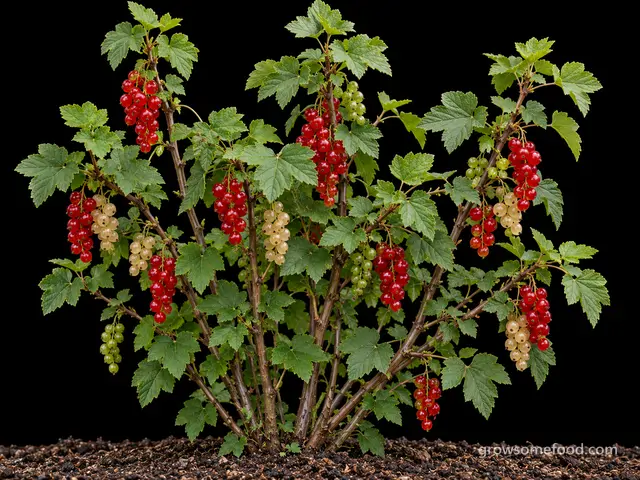
A hardy, shade-tolerant Ribes shrub (sibling to the gooseberry) grown for jewel-like clusters of tart berries; red and white currants shine in jelly and fresh, blackcurrants bring intense flavor and huge vitamin C - a cool-climate fruit, and a Ribes with legal restrictions in some states.
Safety notes The berries are safe and healthy. Redcurrants and white currants are tart-fresh; blackcurrants are strong-flavored and usually cooked or juiced. Note: Ribes plants (especially blackcurrant) are restricted or banned in some US states as a host of white pine blister rust - check local rules and, where required, plant only rust-immune blackcurrant cultivars. These are unrelated to the dried 'Zante currants' sold for baking, which are actually tiny grapes.
Overview
Currants are the gooseberry's close cousins - both are Ribes shrubs with similar culture - but they earn their own place for two reasons: they're among the most shade-tolerant fruits you can grow, and blackcurrants pack one of the highest vitamin-C contents of any fruit. A compact currant bush drips with glistening clusters (called 'strigs') of jewel-like berries in early-to-mid summer, thrives where many fruits sulk (north walls, dappled spots, cool northern gardens), and lives productively for years.
Quick facts
- Winter chill
- 1000 hours below 45°FRange: 800–1600 hours
- Height
- 4.5 ftRange: 3–6 ft
- Spread
- 4 ftRange: 3–5 ft
- Cold
- Takes hard frostdamaged below -35°F
- Heat
- Struggles above 85°F
- Life cycle
- Perennial, lives about 15 years
- Soil
- Well-drained
- Water
- Medium
- Plant spacing
- 4 ftRange: 3–5 ft
When to plant
Nothing is open today. Spring transplanting opens 5 months, Mar 13 to Apr 24.
- Transplant Mar 13 – Apr 24 Opens in 145 daysAbout 4 weeks before to 2 weeks after your last frost (Apr 10 here)The warm edge of the range - use the shade tolerance: plant in an afternoon-shaded, cool, moist spot. Hot, humid summers stress the bush and worsen mildew, especially on blackcurrant.
Frost here: last around Apr 10 (Mar 27 to Apr 24 most years), first around Oct 25. Zone averages, your own yard may run a week or two either way.
Life stages
Establish, grow, repeat
Getting established and returning each season are different parts of the story.
Stage 1 of 5 · Getting established
Getting rooted (planting year)
Day 0 to 120 after transplanting
Care at this stage
-
Use the shade tolerance - site in cool part shade in warm areas
Currants are unusually shade-tolerant for a fruit - they crop in part shade and actually prefer cool roots and afternoon shade in warm climates. Use a north-facing wall, dappled spot, or east side of a building in zones 6-7; reserve full sun for cool northern gardens.
-
Keep the shallow roots evenly moist
Currants are shallow-rooted and want steady moisture, especially in heat and while fruiting. Water so the root zone stays moist and mulch to hold it.
-
Mulch deeply to cool and feed the roots
A thick compost or leaf-mold mulch keeps the shallow roots cool and moist (their strong preference) and suppresses weeds; refresh it each year.
Months are typical seasonal windows; climate, variety, and plant age can shift them.
Harvest
- The whole cluster (strig) is fully colored - red, white/translucent, or deep near-black
- Berries are plump, glossy, and slightly soft
- Red/white currants stay tart even when ripe; blackcurrants deepen and soften
- Berries don't ripen further after picking - wait for full color
- Pick whole clusters (strigs) when fully colored · every 4 days
- Beat the birds to ripe fruit · every 4 days
Per plant 4 to 12 pounds per bush, 4 to 12 lbPicking pick as they ripen
Cook with currants
Watch out for
5 to know. 1 is high-risk: Imported Currantworm (Ribes Sawfly). None are active in October.
Imported Currantworm (Ribes Sawfly)Severity High PestSeason: Apr–JulHoles chewed rapidly through the leaves starting low and central, small green caterpillar-like larvae with dark spots on the leaf undersides, and a bush suddenly stripped to bare stems.
On currants the larvae strip the leaves but leave the strigs, so a bush can end up bare-stemmed with the fruit still hanging. Check the leaf undersides low in the center of the bush from bud break onward, and again for the later generations.
Holes chewed rapidly through the leaves starting low and central, small green caterpillar-like larvae with dark spots on the leaf undersides, and a bush suddenly stripped to bare stems.
Hand-pick or hose off larvae immediately - they multiply and defoliate fast; where heavy, an insecticidal soap or a targeted spray stops an outbreak. Repeat checks through the season, as new generations follow.
Inspect leaf undersides frequently from bud break onward (early detection is everything), pick off larvae by hand at the first sign, and clear leaf litter where they pupate; encourage birds and predatory insects.
The larvae of Ribes sawflies (Nematus ribesii, the imported currantworm, and relatives) are the most dramatic pest of Ribes - both currants and gooseberries: green, caterpillar-like larvae that feed in groups and can strip a bush of its leaves in a day or two, often starting low in the center of the plant. Several generations occur through the season.
AphidsSeverity Medium PestSeason: Apr–JunDense clusters of tiny insects packed onto shoot tips, flower buds, and the undersides of young leaves.
The currant blister aphid is the signature one here: it feeds under new leaves in spring and its saliva raises puckered blisters, reddish on redcurrant and yellow-green on blackcurrant. It looks dramatic but rarely does lasting harm, and the aphids move off to summer hosts by midsummer. Dormant oil in winter reduces overwintering eggs where it recurs.
Dense clusters of tiny insects packed onto shoot tips, flower buds, and the undersides of young leaves. Curled, cupped, or distorted new growth that never opens properly. A sticky shine on the leaves - and on whatever sits under the plant - that later goes black with sooty mold. Tiny white cast skins left behind where a colony has been feeding. Ants running steadily up and down the stems, which is often the first thing you notice. Mottled, streaked, or misshapen leaves that do not grow out can mean a virus the aphids brought with them rather than the feeding itself.
Knock the colonies off with a hard jet of water and repeat every few days - on most plants that alone ends it. Pinch out or prune off the worst-infested tips rather than treating the whole plant. If colonies keep rebuilding, spray insecticidal soap or horticultural oil directly onto the insects, covering leaf undersides, and repeat weekly until they are gone; treat early or late in the day, and never spray a wilted or heat-stressed plant. Avoid broad-spectrum insecticides - they kill the ladybugs, lacewings, and parasitic wasps that were about to solve the problem for you, and aphid numbers usually come back worse afterward. Anything you spray must be labeled for the plant you are treating; follow that label and observe its pre-harvest interval. On anything you eat, wash leaves, heads, and buds well before use, since aphids hide down in crowns, folds, and tight growth.
Go easy on nitrogen: the soft, lush growth that heavy feeding produces is exactly what aphids breed on. Check new growth once a week through spring and early summer so you catch colonies while they are still small, and rub the first few out with your fingers. Leave flowering plants nearby and skip broad-spectrum sprays - ladybugs, lacewings, hoverflies, and parasitic wasps do most of this work for free, and they only stay if there is something for them to eat. Keep ants off the plant where you can, since they protect aphids from those predators. Water steadily so plants are not stressed, and check any new plant over before you bring it home or move it indoors, since aphids usually arrive on something else.
Aphids are small soft-bodied sap-suckers - green, black, gray, pink, or waxy white, and mostly wingless - that gather in dense colonies on the tenderest new growth: shoot tips, buds, and the undersides of young leaves. They breed extremely fast in mild weather, so a few can become hundreds inside a week. Their feeding curls and distorts soft growth, and the sticky honeydew they excrete coats everything below and turns black with sooty mold. Ants often farm and defend the colonies for that honeydew. A few aphids are normal on almost any plant and a healthy plant shrugs them off; only dense, persistent colonies do real damage, and some aphids also spread plant viruses as they feed.
Powdery MildewSeverity Medium DiseaseSeason: May–AugRound white powdery spots on the upper leaf surfaces that spread and merge until whole leaves look dusted.
Blackcurrants are hit hardest - the American gooseberry mildew fungus attacks currants too - while redcurrants are much less affected. Resistant blackcurrant varieties such as Ben Sarek and Titania, plus the annual renewal pruning that keeps the bush open, do most of the work. Cut out and destroy infected shoot tips as they appear.
Round white powdery spots on the upper leaf surfaces that spread and merge until whole leaves look dusted. It usually starts on the oldest, lowest, most shaded leaves and works upward, so check there first. Look at the undersides too, and at stems, buds, and flower stalks, which get coated as it advances. Leaves that yellow, brown, curl, or go crisp and drop early under the coating. New growth that opens small, crumpled, or twisted where the fungus has reached the shoot tips. On plants where it gets onto the fruit, a dull gray film, russeted or scarred skin, and cracking. Late in the season, tiny dark specks scattered through the white felt - that is the fungus setting up to overwinter on the debris.
Start early: sprays protect healthy tissue, they do not clean up leaves that are already coated. Pick off and bin the worst leaves as soon as you see them, and open the plant up by thinning or pruning so air moves through. On anything that regrows quickly, shearing the whole plant back forces a clean flush and beats spraying. If it keeps spreading, potassium bicarbonate, horticultural oil, or neem applied weekly will hold it - cover both leaf surfaces. Sulfur also works, but it burns the foliage of some plants, should never go on in heat, and must not be mixed with or applied close behind an oil spray. Whatever you use must be labeled for the plant you are treating: follow that label and observe its pre-harvest interval on anything you eat. Do not compost badly infected material. Late-season mildew on a plant that is finishing anyway is usually cosmetic; on a crop still filling out it is worth acting on.
Give plants room. Crowding and still air are the biggest single driver, so space at the full recommended distance, thin seedlings properly, and divide or prune out congested growth until air moves through the plant. Full sun and an open position help; deep shade and a still corner against a wall are where it always starts. Water at the base rather than overhead, and water early in the day so nothing stays damp overnight. Keep plants evenly watered - drought stress at the roots leaves them far more susceptible, even though the fungus itself likes dry air. Go easy on nitrogen, since soft lush growth is the most vulnerable. Where resistant varieties exist for what you are growing, choosing one is the single most effective thing you can do on a plant that mildews every year. Clear infected leaves and stems away at the end of the season rather than composting them.
Powdery mildew is a fungal disease that coats leaves - and often stems, buds, and fruit - in a white-to-gray powder that looks like spilled talcum. It is not one fungus but a large family of them, each fairly specialised to its own group of plants, which is why mildew on one crop rarely jumps to an unrelated one beside it. Unlike most leaf diseases it does not need wet leaves: it thrives on warm dry days followed by humid nights, and it takes hold fastest where plants stand crowded in still air or in shade. The coating blocks light, so heavily covered leaves yellow, brown, and drop early. On many plants that is mostly disfiguring and arrives late enough not to matter; where it strips away the leaves a crop still needed to finish, it costs you size, sweetness, and quality.
Birds & WildlifeSeverity Medium WildlifeSeason: Jun–AugFruit disappearing from the outermost, most exposed parts of the plant first, and from the top of a tree where you cannot reach anyway.
Birds are especially fond of red currants and can strip clusters quickly as the fruit colors; on some bushes they also strip buds in late winter. Blackcurrants' stronger flavor draws them somewhat less. Net if pressure is heavy and harvest promptly by the strig.
Fruit disappearing from the outermost, most exposed parts of the plant first, and from the top of a tree where you cannot reach anyway. Single neat pecks and gouges in ripening fruit, with several fruits sampled rather than one eaten through - the classic sign that it was birds rather than an animal. Heads of grain or seed going visibly lighter and emptier as they ripen, with hulls and chaff scattered underneath. Freshly sown seed vanishing off the surface of a bed before it germinates. Bird traffic in and out of the plant picking up as the crop colors, and birds waiting on nearby wires and branches. Wasps arriving at the pecked and split fruit shortly afterward.
There is no treatment once a crop is being taken - only protection and timing, so the answer is to get netting on and to pick what is ready. Reflective tape, flash ribbon, spinners, and decoy predators do work, but only for a few days at a time: birds habituate fast, so move and rotate them and never rely on them as the main defense for a crop you care about. Cut and gather grain or seed heads a little early, at firm dough, and finish drying them under cover instead of leaving them standing for the flocks. Plant a little extra, or a decoy crop the birds prefer, and accept sharing anything that crops heavily. On a wild or foraged patch, fruit going to birds and small mammals is the point of the plant rather than a problem to solve.
Net, and net early. Bird netting draped over a frame or hoops so it stands off the fruit, with the edges closed at ground level, is the only thing that reliably works at harvest scale - and it has to go on before the crop starts to color, because once birds have found the food they are far harder to displace. Keep fruit trees small enough that netting them is actually feasible; that decision gets made years earlier, at planting. Bags of mesh, organza, or paper slipped over individual heads, clusters, or prize fruit protect a small crop without netting the whole plant. Then shorten the exposure: pick promptly and completely rather than leaving ripe fruit hanging as a lure, clear split and dropped fruit that draws birds and wasps alike, and where a crop can finish off the plant, harvest a little early and ripen or dry it under cover. Rake in or cover broadcast seed so it is not lying in plain view.
Birds find ripening fruit and seed before you do. Robins, waxwings, starlings, catbirds, jays, sparrows, finches, blackbirds, and doves all work a garden, and the pressure arrives in a narrow window - the last days before harvest, when sugar rises, color changes, and the crop softens or the grain hardens. A flock can strip a small planting in a day or two, and birds that only peck rather than take whole fruit still leave wounds that rot or draw wasps. Squirrels, chipmunks, and other wildlife usually turn up on the same crop at the same time. This is competition rather than disease: the birds are not harming the plant, and a big tree or a heavy-cropping bush often has enough for everyone - but on a small planting it can be the difference between a harvest and none.
Ribes Leaf Spot (Anthracnose/Septoria)Severity Medium DiseaseSeason: Jun–AugNumerous small dark-brown spots on the leaves from early summer, spreading to yellowing and early leaf drop from the base upward, worst in warm wet weather and on crowded bushes.
Numerous small dark-brown spots on the leaves from early summer, spreading to yellowing and early leaf drop from the base upward, worst in warm wet weather and on crowded bushes.
Remove and destroy infected fallen leaves at season's end to break the cycle; improve airflow. Rarely needs spraying in the home garden, but repeated early defoliation weakens the bush over years.
Rake and destroy fallen leaves (the overwintering source), prune for airflow, water at the base rather than overhead, and avoid crowding; resistant vigor comes from an open, well-fed bush.
Fungal leaf spots (anthracnose, Drepanopeziza ribis, and Septoria/Mycosphaerella) that pepper Ribes foliage with small dark spots; heavy infection yellows and drops the leaves prematurely, weakening the bush and reducing next year's crop.
Good & bad neighbors
All of these are traditional pairings. The evidence is thin, so treat them as a nudge, not a rule.
Plant nearby
-
Aromatic alliums around Ribes bushes are traditionally credited with deterring some pests and reducing fungal issues; harmless at minimum and low-competing.
-
A living-mulch understory that fixes nitrogen, keeps the shallow roots cool and moist, suppresses weeds, and feeds pollinators at bloom.
-
A deep-rooted guild plant beneath soft-fruit bushes: mines nutrients and its cut leaves make a potassium-rich mulch/feed - well suited to currants' potassium appetite.
-
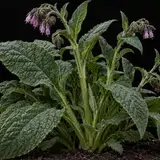
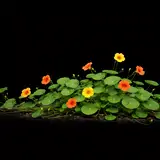
A trap plant for aphids (including currant aphids) and a pollinator draw; low and unaggressive at the base of the bush.
-
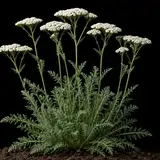
Draws beneficial predatory insects (hoverflies, lacewings) that help control currant aphids and sawfly; a useful insectary plant nearby.
Varieties · 9
You pick one when you add Currant to your garden. Its days to maturity set your harvest window.
Redcurrant 3 varieties
Red Lake
Good first pickThe most widely grown redcurrant in North America and a dependable classic: heavy, easy crops of large, bright-red, tart berries on long strigs, on a cold-hardy, adaptable, forgiving bush.
Variety details for Red Lake
Large, bright-red, translucent berries on long, easy-to-pick strigs.
productivecold-hardyclassicSuperb for jelly and juice. The safe default redcurrant for the home garden.
Rovada
A superb late-season Dutch redcurrant regarded as one of the best: very long strigs of large, uniform, bright-red berries that are easy to pick in quantity, with excellent yields and good disease resistance.
Variety details for Rovada
Very long strigs of large, glossy, uniform bright-red berries.
very-large-fruitlatehigh-yieldlong-strigResists Leaf Spot
Ripens late to extend the season - a top modern choice.
Jonkheer van Tets
An early, heavy-cropping Dutch redcurrant with large, richly flavored, deep-red berries on good strigs - one of the first to ripen, extending the season at the front end.
Variety details for Jonkheer van Tets
Large, deep-red, well-flavored berries; early ripening.
earlyhigh-yieldgreat-flavorVigorous and productive; blooms early, so protect from hard late frosts. An excellent flavorful early redcurrant.
White & Pink Currant 2 varieties
White Imperial
Widely considered the best-flavored white currant: sweet, mild, pale creamy-translucent berries that are genuinely delicious eaten fresh - the one currant to pick and pop like a grape.
Variety details for White Imperial
Small-to-medium, pale creamy-translucent, sweet berries on neat strigs.
white-currantsweetfresh-eatingmildLower in the tart bite and pigment of redcurrants; a lovely dessert and garnish currant on a productive bush.
Pink Champagne
A gourmet pink currant (a redcurrant-white currant type) prized for exceptional sweet-tart flavor and beautiful blush-pink translucent berries - a connoisseur's fresh-eating and garnish currant.
Variety details for Pink Champagne
Small, blush-pink, translucent, sweet-tart berries.
pink-currantsweetfresh-eatinggourmetYields are modest and it can be slower, but the flavor is among the best of any currant.
Blackcurrant 4 varieties
Ben Sarek
A compact, heavy-cropping Scottish 'Ben' blackcurrant ideal for small gardens: a short, sturdy bush (about 3-4 ft) that yields large, well-flavored berries and resists mildew and frost.
Variety details for Ben Sarek
Large, near-black, aromatic berries on a compact, sturdy bush.
compacthigh-yieldmildew-resistantlarge-fruitResists Powdery Mildew
One of the best blackcurrants for the home garden where space is limited.
Titania
A vigorous, very productive Swedish blackcurrant with strong all-around disease resistance - including immunity to white pine blister rust, which makes it legal to grow in many restricted states.
Variety details for Titania
Large, glossy, near-black, aromatic berries in heavy crops on a big bush.
vigoroushigh-yieldrust-immunedisease-resistantResists White Pine Blister Rust, Powdery Mildew, Leaf Spot
Large, aromatic berries in heavy crops on a big robust bush. A top rust-immune blackcurrant choice for North America.
Consort
A classic rust-immune blackcurrant bred specifically to be safe near white pines - legal in many restricted states for that reason - and a longtime North American standard.
Variety details for Consort
Small-to-medium, strong-flavored, near-black berries; hardy bush.
rust-immunecold-hardyjuicecassisResists White Pine Blister Rust
Strong, musky-tart berries excellent for juice, cordial, cassis, and jam; self-fertile and cold-hardy, though flavor and size are workmanlike rather than gourmet.
Grower tips
Notes from growers, tagged with the zone they grow in. A person reads every post before it appears.
Nobody has posted about Currant yet. The first one usually saves someone a season.
Free account. Your post shows your grower name and zone, never your email.