Add it to your home screen and it opens full screen: no browser bars, one tap away, and everything stays signed in. Free, nothing to download from an app store.
- Tap the Share button in your browser
- Scroll down and choose “Add to Home Screen”
- Open GrowSomeFood from your home screen
- Open your browser’s menu
- Choose “Add to Home screen” or “Install app”
- Open GrowSomeFood from your home screen
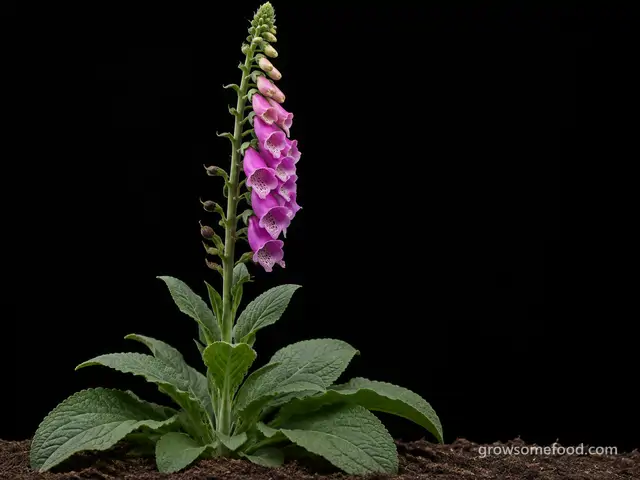
Foxglove
The cottage-garden spire that bumblebees love and that gave medicine its heart drugs - poisonous in every part, and dangerous mainly as a first-year rosette.
POISONOUS - never eat any part, and never make tea, tincture or any preparation from it. All parts contain cardiac glycosides that alter heart rhythm; drying and cooking do NOT reduce them. The lethal confusion is the FIRST-YEAR ROSETTE, mistaken for comfrey, borage or mullein and brewed as tea - people have died this way. Foxglove leaves are soft, grey-green and finely downy, NOT bristly like borage and comfrey. Wear gloves. Suspected ingestion is an emergency - call poison control immediately.
Overview
The one thing to knowIt is a biennial: a flat leaf rosette in year one, a 4- to 6-foot flower spike in year two, then it dies - and it keeps itself going by self-sowing prolifically.
Foxglove (Digitalis purpurea) is the tall, freckled bell-spire of the English cottage garden and one of the best bumblebee plants you can grow. It is a biennial: a flat leaf rosette in year one, a 4- to 6-foot flower spike in year two, then it dies - and it keeps itself going by self-sowing prolifically.
It is also poisonous in every part. Foxglove is the original source of the digitalis heart drugs, and its cardiac glycosides do to any heart exactly what they do to a treated patient's - only without measurement. Drying and cooking do not reduce them.
The important thing is which risk actually matters. Adults rarely eat the flowers. The documented fatalities come from the first-year rosette, whose soft grey-green leaves resemble comfrey, borage and mullein closely enough that people have gathered and brewed it as herbal tea. If you grow foxglove and you also gather leaves for tea, the two must be kept apart. That, and keeping it away from small children, is the whole of foxglove safety.
Quick facts
- Sprouts in
- 21 days14 to 30
- Soil to sprout
- 68 °F60 to 75
- Life cycle
- Biennial
- Height
- 48 in24 to 72
- Spread
- 18 in12 to 24
- Cold
- Takes hard frostdamaged below -20°F
- Heat
- Struggles above 90°F
- Self-sows
- Yes, expect volunteers
Part sun or part shade · medium water · well-drained soil · 18 in apart (12 to 24) · direct sow or transplant
When to plant
Nothing is open today. Spring indoor sowing opens 4 months, Jan 30 to Feb 27.
- Start indoors Jan 30 – Feb 27 Opens in 131 daysAbout 10 weeks before to 6 weeks before your last frost (Apr 10 here)Surface-sow indoors on light; transplant out after frost for bloom the following year.
- Direct sow Jul 27 – Sep 10 Opens in 309 daysAbout 13 weeks before to 6 weeks before your first frost (Oct 25 here)Sow in summer for a rosette that overwinters and flowers the following year - the natural biennial rhythm.
Frost here: last around Apr 10 (Mar 27 to Apr 24 most years), first around Oct 25. Zone averages, your own yard may run a week or two either way.
Life stages
Two stages to settle in, then two that repeat each year. Windows are typical; your zone and weather move them.
Germination
Day 0 to 21 from sowing- ProtectSurface-sow - the seed needs lightdailyFoxglove seed is dust-fine and must NOT be buried. Press it onto the surface of moist mix and leave it uncovered; darkness prevents germination. Keep it evenly damp by misting or bottom-watering.
- ProtectWear gloves and wash up after handlingEven at seed and seedling stage this is a cardiac-glycoside plant. Wear gloves, keep hands away from your face, and wash before eating or handling food.
Watch for- No germination from buried seed (it needs light)
- Seed washed away by heavy top-watering
First-year rosette (the dangerous lookalike stage)
The first year after planting- InspectLabel the rosette - this is what gets mistaken for comfreyIn its first year foxglove makes only a flat rosette of soft grey-green leaves, and at this stage it is genuinely hard to tell from comfrey, borage or mullein. People have died making tea from it. If foxglove self-seeds anywhere near an herb bed, label or remove the rosettes. Key differences: foxglove leaves are soft and finely downy, NOT coarsely bristly like borage and comfrey, with scalloped-toothed margins and a conspicuously netted vein pattern underneath.
- WeedKeep it out of the herb garden entirelyThe reliable fix is separation, not identification skill. Do not let foxglove seed into beds where you gather leaves for tea or cooking - pull volunteer rosettes there on sight.
Watch for- Volunteer rosettes appearing in or near herb beds
- Rosettes confused with comfrey, borage or mullein
Second-year bloom spike
May to Jul, every year- SupportStake tall spikes in exposed spotsBloom spikes reach 4-6 feet and can lean or snap in wind and rain once the flowers are heavy. A single cane behind the spike is usually enough.
- PruneCut the main spike for a second flush - or leave it to seedCutting the central spike as it fades often triggers smaller side spikes. Leave at least one spike to ripen if you want it to self-sow, since this is a biennial and next year's plants come only from this year's seed.
- ProtectDo not cut it for a mixed 'edible flower' arrangementFoxglove flowers are toxic and must never join edible-flower posies, salads or garnishes. Keep cut spikes away from food preparation surfaces.
Watch for- Spikes leaning after storms
- Flowers mixed into edible-flower arrangements
Seed drop & dieback
Aug to Oct, every year- ThinDecide where the seedlings are allowed to beOne spike sheds enormous quantities of dust-fine seed. Shake ripe spikes only where you want plants, and thin the resulting rosettes to 18 inches - and remove any that landed in food-growing areas.
Watch for- Dense seedling carpets under last year's spikes
- Seedlings spreading into vegetable and herb beds
Watch out for
4 to know. 1 is high-risk: Poisoning by Ingestion. 1 is active in September.
Poisoning by IngestionSeverity High DisordernowAny tea or preparation made from an unlabelled grey-green rosette; children handling or mouthing flowers; symptoms including nausea, vomiting, visual disturbance with yellow-green haloes, confusion and irregular heartbeat.
Any tea or preparation made from an unlabelled grey-green rosette; children handling or mouthing flowers; symptoms including nausea, vomiting, visual disturbance with yellow-green haloes, confusion and irregular heartbeat.
Suspected ingestion is an EMERGENCY - call poison control or emergency services immediately and do not wait for symptoms. Take a sample of the plant if possible.
Keep foxglove physically separate from herb beds and any plant harvested for tea; remove volunteer rosettes from food-growing areas; label plants; wear gloves and wash after handling.
All parts contain cardiac glycosides that alter heart rhythm, and drying or cooking does not reduce them. The recorded fatalities overwhelmingly involve the first-year leaf rosette being mistaken for comfrey, borage or mullein and brewed as tea.
Crown RotSeverity Medium DiseaseThe overwintering first-year rosette is what rots, and this is the usual reason a foxglove never returns to flower in its second year.
Site it on a slight rise or raised ground on heavy clay, and avoid winter-wet hollows.
A plant that fails to green up or emerge in spring when everything around it does - the most common way this gets discovered, and by then it is already too late. Stems that wilt, blacken, and collapse in wet weather while the soil is clearly damp rather than dry. A crown that is soft, dark, brown, or mushy when you press or lift it, sometimes with a foul smell, instead of firm and pale. New growth that pulls away from the crown with almost no resistance. Clumps browning and going hollow in the middle while the outer growth stays alive. In stands and cover crops, patches wilting, yellowing, and thinning out after wet spells or over a mild wet winter.
There is usually no cure once the crown itself has rotted: the plant is lost, and the job is to save what you can and fix the site. Lift it, cut away every soft, dark, rotted part with a clean blade back to firm tissue, and replant only healthy divisions or firm outer growth into fresh, sharply drained soil or medium. On potted and specialist plants, repotting into fresh airy medium and keeping them drier with better airflow gives the best chance, though a badly rotted crown is usually beyond saving. Bin the rotted material rather than composting it. Replant somewhere better drained rather than back into the same wet spot - or start again from seed, cuttings, or self-sown seedlings, which is the realistic option for anything that resents being moved at all.
Drainage and airflow at the crown are everything. Match the plant to the site first: a dry-adapted perennial planted in heavy or enriched ground is on borrowed time whatever else you do. In wet or clay soil, plant on a slope, berm, raised bed, or gritty rock-garden site so water drains away from the crown rather than standing over it. Set plants at the right depth - never bury the crown - and keep mulch, dead leaves, and debris pulled back from it rather than piled against it, since damp material resting on the crown is a common trigger. Do not overwater, and ease right off during dormancy, when a resting plant wants to be barely damp rather than wet. Give crowded plantings enough space and airflow to dry out, and do not sow a stand too thickly. In cold, wet climates, divide in spring rather than fall, so plants are not recovering from surgery through the wettest months.
Crown rot is the rotting of a plant at the crown - the growing point where the stems meet the roots, right at or just below soil level. Soil fungi and water molds that live in most ground attack that tissue whenever it sits wet, cold, and airless, and because the crown is the one part a perennial cannot regrow from, losing it usually means losing the plant. It is above all a winter problem: a plant that survives hard frost perfectly well in dry ground rots out in a wet one, and the classic story is a perennial that simply never comes back in spring. Dry-adapted plants growing in heavy or over-improved soil are the most vulnerable, along with anything that has mulch, wet leaves, or piled debris sitting against the crown, and anything planted too deep.
AphidsSeverity Low PestWear gloves for every job on foxglove, including hosing or wiping aphids off - all parts of the plant are toxic.
Dense clusters of tiny insects packed onto shoot tips, flower buds, and the undersides of young leaves. Curled, cupped, or distorted new growth that never opens properly. A sticky shine on the leaves - and on whatever sits under the plant - that later goes black with sooty mold. Tiny white cast skins left behind where a colony has been feeding. Ants running steadily up and down the stems, which is often the first thing you notice. Mottled, streaked, or misshapen leaves that do not grow out can mean a virus the aphids brought with them rather than the feeding itself.
Knock the colonies off with a hard jet of water and repeat every few days - on most plants that alone ends it. Pinch out or prune off the worst-infested tips rather than treating the whole plant. If colonies keep rebuilding, spray insecticidal soap or horticultural oil directly onto the insects, covering leaf undersides, and repeat weekly until they are gone; treat early or late in the day, and never spray a wilted or heat-stressed plant. Avoid broad-spectrum insecticides - they kill the ladybugs, lacewings, and parasitic wasps that were about to solve the problem for you, and aphid numbers usually come back worse afterward. Anything you spray must be labeled for the plant you are treating; follow that label and observe its pre-harvest interval. On anything you eat, wash leaves, heads, and buds well before use, since aphids hide down in crowns, folds, and tight growth.
Go easy on nitrogen: the soft, lush growth that heavy feeding produces is exactly what aphids breed on. Check new growth once a week through spring and early summer so you catch colonies while they are still small, and rub the first few out with your fingers. Leave flowering plants nearby and skip broad-spectrum sprays - ladybugs, lacewings, hoverflies, and parasitic wasps do most of this work for free, and they only stay if there is something for them to eat. Keep ants off the plant where you can, since they protect aphids from those predators. Water steadily so plants are not stressed, and check any new plant over before you bring it home or move it indoors, since aphids usually arrive on something else.
Aphids are small soft-bodied sap-suckers - green, black, gray, pink, or waxy white, and mostly wingless - that gather in dense colonies on the tenderest new growth: shoot tips, buds, and the undersides of young leaves. They breed extremely fast in mild weather, so a few can become hundreds inside a week. Their feeding curls and distorts soft growth, and the sticky honeydew they excrete coats everything below and turns black with sooty mold. Ants often farm and defend the colonies for that honeydew. A few aphids are normal on almost any plant and a healthy plant shrugs them off; only dense, persistent colonies do real damage, and some aphids also spread plant viruses as they feed.
Powdery MildewSeverity Low DiseaseDisfigures the rosette and lower foliage.
Rarely worth treating on a plant that is about to set seed and die back anyway - thin dense self-sown seedling stands instead.
Round white powdery spots on the upper leaf surfaces that spread and merge until whole leaves look dusted. It usually starts on the oldest, lowest, most shaded leaves and works upward, so check there first. Look at the undersides too, and at stems, buds, and flower stalks, which get coated as it advances. Leaves that yellow, brown, curl, or go crisp and drop early under the coating. New growth that opens small, crumpled, or twisted where the fungus has reached the shoot tips. On plants where it gets onto the fruit, a dull gray film, russeted or scarred skin, and cracking. Late in the season, tiny dark specks scattered through the white felt - that is the fungus setting up to overwinter on the debris.
Start early: sprays protect healthy tissue, they do not clean up leaves that are already coated. Pick off and bin the worst leaves as soon as you see them, and open the plant up by thinning or pruning so air moves through. On anything that regrows quickly, shearing the whole plant back forces a clean flush and beats spraying. If it keeps spreading, potassium bicarbonate, horticultural oil, or neem applied weekly will hold it - cover both leaf surfaces. Sulfur also works, but it burns the foliage of some plants, should never go on in heat, and must not be mixed with or applied close behind an oil spray. Whatever you use must be labeled for the plant you are treating: follow that label and observe its pre-harvest interval on anything you eat. Do not compost badly infected material. Late-season mildew on a plant that is finishing anyway is usually cosmetic; on a crop still filling out it is worth acting on.
Give plants room. Crowding and still air are the biggest single driver, so space at the full recommended distance, thin seedlings properly, and divide or prune out congested growth until air moves through the plant. Full sun and an open position help; deep shade and a still corner against a wall are where it always starts. Water at the base rather than overhead, and water early in the day so nothing stays damp overnight. Keep plants evenly watered - drought stress at the roots leaves them far more susceptible, even though the fungus itself likes dry air. Go easy on nitrogen, since soft lush growth is the most vulnerable. Where resistant varieties exist for what you are growing, choosing one is the single most effective thing you can do on a plant that mildews every year. Clear infected leaves and stems away at the end of the season rather than composting them.
Powdery mildew is a fungal disease that coats leaves - and often stems, buds, and fruit - in a white-to-gray powder that looks like spilled talcum. It is not one fungus but a large family of them, each fairly specialised to its own group of plants, which is why mildew on one crop rarely jumps to an unrelated one beside it. Unlike most leaf diseases it does not need wet leaves: it thrives on warm dry days followed by humid nights, and it takes hold fastest where plants stand crowded in still air or in shade. The coating blocks light, so heavily covered leaves yellow, brown, and drop early. On many plants that is mostly disfiguring and arrives late enough not to matter; where it strips away the leaves a crop still needed to finish, it costs you size, sweetness, and quality.
Good & bad neighbors
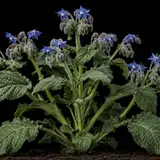
First rule: keep Borage apart. Same hazard as comfrey.
Plant nearby
-
Both want part shade and moist rich soil; hosta mounds cover the ground while foxglove spikes rise clear above them, and hosta fills the gap left when a spent foxglove dies.
-
The classic cottage-garden pairing - vertical foxglove spires against rounded rose growth, with similar soil and feeding needs and overlapping early-summer bloom.
-
A low native shade partner that flowers just before foxglove and covers the bare ground around the rosettes.
Keep apart
-
Same hazard as comfrey. Borage leaves and flowers are eaten, borage self-sows freely, and foxglove self-sows into it - producing exactly the mixed patch of grey-green rosettes in which a fatal mistake gets made. Borage is bristly to the touch; foxglove is soft and downy. Better still: don't let the question arise.
-
ComfreyNever plant foxglove near comfrey, and never let it self-seed into a comfrey patch. Their first-year rosettes look alike, comfrey leaves are gathered for tea and poultices, and foxglove is a cardiac poison. This confusion has killed people. Keep them in separate parts of the garden - not adjacent, labelled beds.
Varieties · 4
You pick one when you add Foxglove to your garden. Its days to maturity set your harvest window.
Excelsior Hybrids
Dense 5-6 ft spires ringed with speckled bells in mixed pastels.
tallall-round-facingThe classic tall strain: 5-6 ft spikes carrying flowers all the way around the stem, rather than hanging to one side, in cream, pink, purple and rose. Reliable and widely available.
Camelot
Compact 3-4 ft spikes with large open bells and dark speckled throats.
first-year-floweringBred to flower in its first year from an early sowing, sidestepping the biennial wait. Sturdy 3-4 ft spikes with heavily spotted throats.
Pam's Choice
White flowers with heavy purple-maroon throat blotching.
bicolortallStriking white bells with a deep maroon-blotched throat on 4-5 ft spikes - the most dramatic of the common garden foxgloves.
Dalmatian Series
Short, tidy 2-3 ft spikes in peach, purple, rose and white.
first-year-floweringcompactDwarf first-year-flowering strain at 2-3 ft, useful in containers and small borders and quicker to reward a first-time grower.
Grower tips
Notes from growers, tagged with the zone they grow in. A person reads every post before it appears.
Nobody has posted about Foxglove yet. The first one usually saves someone a season.
Free account. Your post shows your grower name and zone, never your email.