
Add it to your home screen and it opens full screen: no browser bars, one tap away, and everything stays signed in. Free, nothing to download from an app store.
- Tap the Share button in your browser
- Scroll down and choose “Add to Home Screen”
- Open GrowSomeFood from your home screen
- Open your browser’s menu
- Choose “Add to Home screen” or “Install app”
- Open GrowSomeFood from your home screen
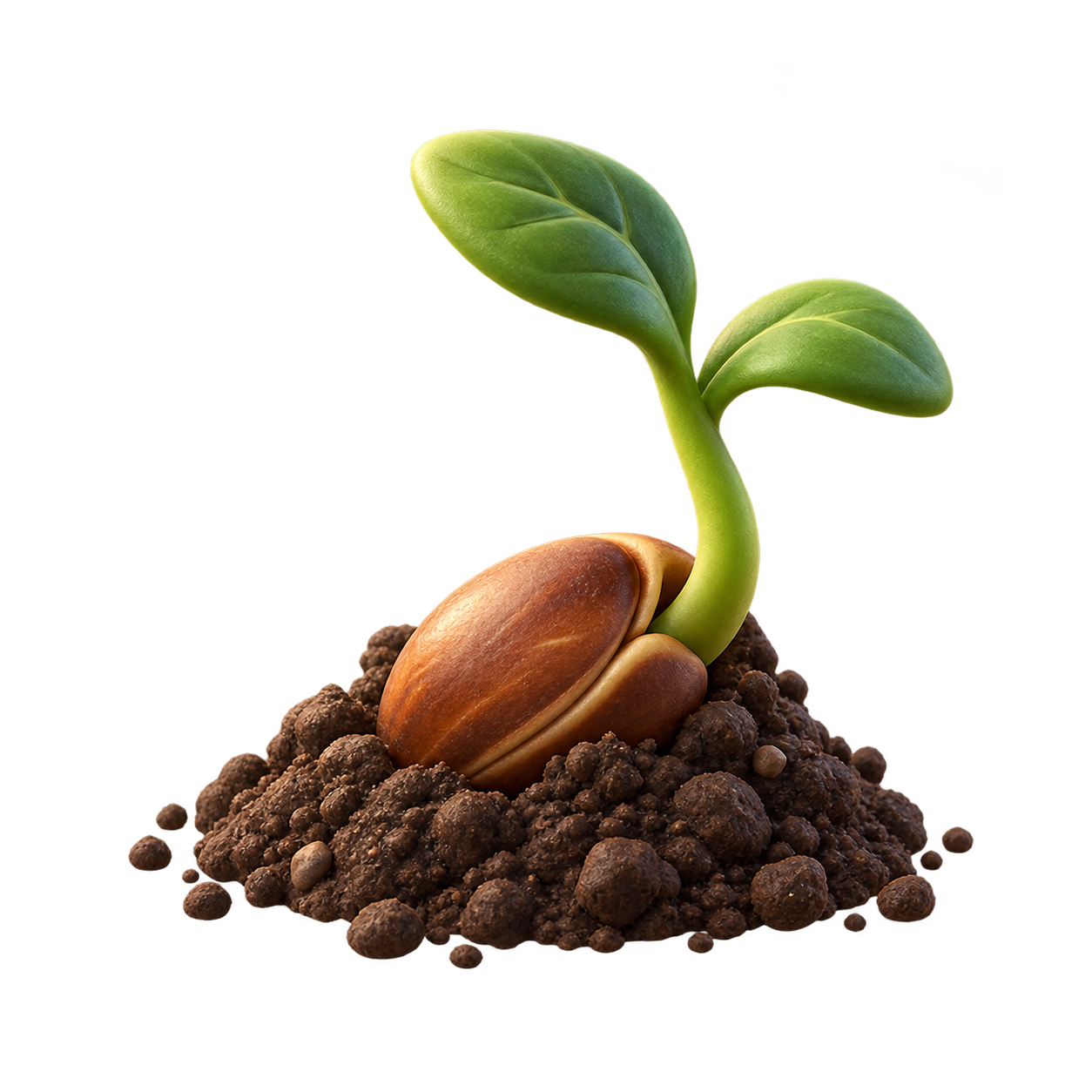
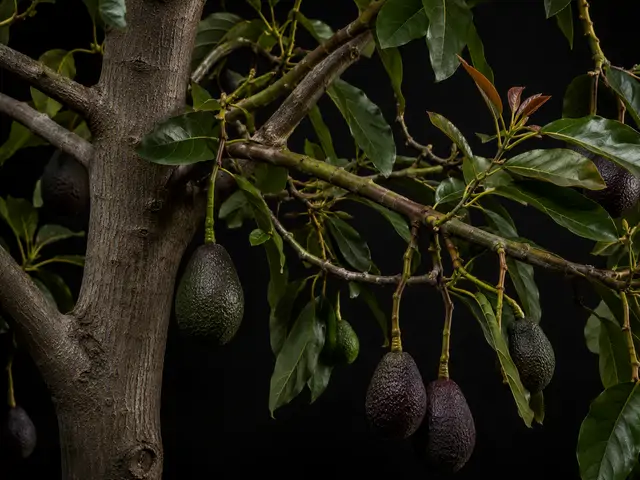
Avocado
The buttery-fleshed tree behind guacamole - a beautiful evergreen for frost-free and near-frost-free gardens (zones 9b-11), with cold-hardier Mexican types stretching the range. Two facts rule it: root rot is its great killer, and A/B flower types mean a second tree greatly improves the crop.
Safety notes The buttery flesh is the food. The pit, skin, leaves, and bark contain persin and are mildly toxic - not a danger to people from the flesh, but avocado (especially leaves and pit) is genuinely TOXIC to many animals: dogs, cats, and especially birds, horses, and livestock can be poisoned, so keep pets away from the plant and trimmings. Allergy is the human exception: avocado is one of the latex-fruit syndrome foods, so people allergic to natural rubber latex may react to it.
Overview
The avocado is one of the most rewarding subtropical trees you can grow - a handsome, glossy-leaved evergreen that produces the rich, buttery fruit behind guacamole, avocado toast, and a thousand other dishes. It's a warm-climate crop for frost-free and near-frost-free gardens (zones 9b-11 in the ground), though the three racial types differ in cold tolerance and in the climate they suit: the Mexican types are hardiest (Mexicola, Bacon, Zutano - some to about 18-20°F, stretching into zone 9 and warm 8b), the Guatemalan and the market-king Hass (a Mexican-Guatemalan hybrid) are more tender (damaged below about 30°F, best in zones 10-11), and the West Indian types (Persea americana var. americana) are the avocados of the humid lowland tropics and subtropics - the most heat-, humidity-, and salt-tolerant of the three, and the ones that actually perform in South Florida, the Gulf Coast, Puerto Rico, and Hawaii, though they are the least cold-hardy and their fruit is generally larger and lower in oil.
Quick facts
- Height
- 25 ftRange: 10–60 ft
- Spread
- 20 ftRange: 10–40 ft
- Cold
- Killed by frostdamaged below 20°F
- Heat
- Struggles above 105°F
- Life cycle
- Perennial, lives about 50 years
- Soil
- Well-drained
- Water
- Medium
- Plant spacing
- 25 ftRange: 15–40 ft
When to plant
No planting window on record for this zone. Nearest zone with one: 8b.
Frost here: last around Apr 10 (Mar 27 to Apr 24 most years), first around Oct 25. Zone averages, your own yard may run a week or two either way.
Life stages
Establish, grow, repeat
Getting established and returning each season are different parts of the story.
Stage 1 of 5 · Getting established
First-year establishment
The first year after planting
Care at this stage
-
Water carefully - moist but never soggy (root rot is THE killer)
Avocados are exquisitely sensitive to wet roots. Water a new tree to keep it evenly moist, but ensure fast drainage and let the surface dry between waterings - overwatering and poor drainage cause phytophthora root rot, the disease that kills more avocados than anything else. Plant on a mound in heavy soil.
-
Mulch generously with coarse material, off the trunk
A thick, coarse wood-chip mulch suits avocados' shallow feeder roots and actually SUPPRESSES root rot (the beneficial soil life it feeds antagonizes phytophthora). Keep it several inches off the trunk to prevent collar rot.
-
Protect from frost, wind, and sun on the trunk
Avocados are frost-tender (Mexican types hardiest to ~18-20°F, Guatemalan/Hass types damaged below ~30°F). Shelter from cold and wind, and paint or shade the thin young trunk against sunburn.
-
Feed lightly - avocados aren't heavy feeders early
Go easy the first year; a little balanced fertilizer once established is enough. Over-fertilizing (especially with soggy soil) does more harm than good. Zinc and iron deficiencies are the ones to watch.
Months are typical seasonal windows; climate, variety, and plant age can shift them.
Harvest
- Fruit is fully sized for the variety (avocados don't soften on the tree - maturity, not softness, is the tree cue)
- A test-picked fruit ripens (softens) evenly to buttery over several days on the counter, rather than shriveling
- Skin color may darken at maturity (Hass turns dark purple-black; many green types stay green)
- The tree can hold mature fruit for weeks to months - pick as needed
- Pick MATURE fruit - it ripens off the tree, not on it · weekly
- Clip the stem, don't pull
Per plant 20 to 500 avocados, 10 to 250 lbPicking pick as they ripen
Cook with avocados
Watch out for
6 to know. 2 are high-risk: Laurel Wilt, Phytophthora Root & Crown Rot. 4 are active in October.
Laurel WiltSeverity High DiseasenowSeason: year-roundSudden wilting of one limb or of the whole canopy, with the brown, dried leaves CLINGING to the tree instead of dropping - that is the signature that separates it from a slow root or drought decline.
For avocados this is a humid-Southeast disease - Florida, coastal Georgia, South Carolina, Alabama, and Mississippi - where it has killed well over 100,000 commercial trees in Miami-Dade County alone; it is not a factor in California or the arid Southwest. Inside that range, sudden whole-tree wilt with clinging brown leaves means laurel wilt until proven otherwise. It is not phytophthora root rot, which thins a canopy slowly over months to years.
Sudden wilting of one limb or of the whole canopy, with the brown, dried leaves CLINGING to the tree instead of dropping - that is the signature that separates it from a slow root or drought decline. Peel the bark on a wilted limb and look for brown-to-black streaking in the sapwood. On the trunk and larger limbs, look for pinhole-sized beetle entry holes, often with a protruding toothpick of compacted sawdust or a fine frass tube. Wilt usually starts in one branch and runs through the tree fast. Mainly a concern in the Southeast, where the beetle is established.
There is no cure once a tree is infected. Report a suspected case to your state agriculture department or extension office - Florida and neighboring states run survey and response programs and quarantine the movement of laurel-family wood. The required response is fast removal: take the tree down promptly and chip or burn the wood ON SITE rather than hauling it away, since moving infested wood spreads the beetle. Grind the stump, chip fine, and watch nearby laurel-family trees closely.
There is no spray that protects a home tree. Keep trees vigorous, avoid wounding the trunk and roots, and above all do not move laurel-family wood or firewood - avocado, redbay, sassafras, and their relatives - because the beetle rides in cut wood, and moving it is how the disease jumps counties. Before planting a laurel-family tree in the Southeast, find out from your extension office whether laurel wilt has reached your county. Preventive fungicide injection exists, but it is an arborist-applied, repeated treatment for high-value individual trees, not a home measure.
A lethal fungal wilt (Raffaelea lauricola) carried by the tiny redbay ambrosia beetle, and the most destructive disease of laurel-family trees (Lauraceae) in the southeastern United States. The beetle bores into the trunk and limbs and introduces the fungus, which plugs the tree's water-conducting vessels, so a healthy mature tree can wilt and die in weeks to months instead of declining slowly over years. It has killed redbay and swampbay on a landscape scale across the Southeast and also attacks avocado, sassafras, spicebush, and pondspice - which is how it travels through woods and neighborhoods and into a yard. Susceptibility varies by host, but no laurel-family tree inside the beetle's range is immune.
Phytophthora Root & Crown RotSeverity High DiseasenowSeason: year-roundWilting, yellowing and stunting that does not improve with watering, a thinning canopy of small pale leaves, and dieback from the shoot tips.
Kills more avocado trees than everything else combined - Phytophthora cinnamomi is THE great killer of avocados, and the reason drainage and careful watering are the number-one avocado care task. Plant on a mound, mulch heavily with COARSE wood chips, which suppress the pathogen, and buy grafted trees on root-rot-resistant rootstocks.
Wilting, yellowing and stunting that does not improve with watering, a thinning canopy of small pale leaves, and dieback from the shoot tips. Dig and the feeder roots are dark, soft or brittle rather than white and firm, and on many plants the tissue at the base of the stem is discolored under the bark. Worst in low spots, and wherever a downspout, driveway or compacted path drains into the bed.
Very hard to reverse once established. Improve the drainage immediately, cut watering back, and mulch with coarse material rather than fine, which stays sodden. Remove severely affected plants and correct the site before replanting - and do not put another susceptible plant back into the same wet spot. Phosphonate (phosphite) treatments can suppress it in a valuable specimen, but drainage and siting do far more.
Drainage is the whole defense. Plant on a mound, berm or raised bed in heavy soil, and never in a hollow that holds winter water. Redirect roof and hard-surface runoff away from the planting, water deeply but infrequently so the surface dries between waterings, do not pile mulch against stems, and do not overwater in cold weather when the plant is using little. Use resistant rootstocks or tolerant varieties where they exist for the crop, and never move soil from an infected area.
A soil-borne water mold (Phytophthora species) that rots feeder roots and, on many plants, the crown at the soil line whenever the ground stays saturated. Rotted roots cannot take up water, so the plant looks drought-stressed even in wet soil: the canopy thins, leaves go small and pale, growth stalls, and dieback works in from the tips over months or years. It is the commonest cause of death in plants that want moisture but cannot tolerate standing water, and it travels in surface water and on tools, boots and moved soil.
Root RotSeverity Medium DiseasenowSeason: year-roundWilting in the middle of the day on a plant whose soil is damp - the classic tell, and the reason people water a rotting plant and finish it off.
This entry covers the general collar and root rot avocados get when kept too wet or with mulch or soil piled against the trunk, which girdles the tree; phytophthora root rot is tracked separately. Plant with the graft and root flare above soil, keep mulch several inches clear of the trunk, and expose and dry the crown if rot starts - severely girdled trees may not recover.
Wilting in the middle of the day on a plant whose soil is damp - the classic tell, and the reason people water a rotting plant and finish it off. Leaves yellowing from the bottom up, dull off-color foliage, and growth that stalls for no visible reason. Whole shoots, or one side of the plant, collapsing while the rest still looks fine. Soft, dark, or mushy tissue at the base of the stem or at the crown, sometimes with a sour smell. Lift a failing plant and look at the roots: healthy ones are firm and pale, rotted ones are brown or black and slimy, and the outer layer slips off between your fingers leaving a thread of core behind. Seedlings that topple over at soil level are the same problem, called damping-off.
There is no cure for tissue that has already rotted, so act on the conditions rather than looking for a spray. Stop watering at once and fix the drainage - open up compacted soil, or move the plant to a raised, sharply drained position or a container. Lift a badly affected plant, cut away every soft dark root and rotted section with a clean blade back to firm pale tissue, and replant only the healthy parts into fresh free-draining soil or mix. Often the better move is to give up on the plant and save its offspring instead: cuttings, offsets, or divisions taken from firm healthy growth root readily and give you a clean start. Bin the rotted material rather than composting it, and correct the drainage before you replant, because the rot comes straight back in the same wet spot.
Drainage is the whole defense. Match the plant to the site first - something that wants sharp drainage will not survive heavy clay or a low, water-collecting spot however well you tend it. Where the ground is heavy, plant on a raised bed, berm, or slope, or grow in a container. Set plants at the depth they were already growing, since burying the crown or the root flare is a common cause of rot, and keep mulch pulled back a few inches from the stem base instead of piled against it. Water the soil rather than the calendar: check that the top inch or two is dry before watering again, cut back hard in cool weather and winter dormancy, and never leave a pot standing in a full saucer. Do not plant or dig in soggy ground, and go easy on rich amendments for plants that want it lean. Rotate annual crops, and start with clean healthy plants and fresh mix.
Root rot is not one organism but a group of soil fungi and water molds - Pythium, Phytophthora, Fusarium, Rhizoctonia and others - that sit harmlessly in most soils and only turn destructive when the ground stays saturated. Waterlogged soil drives the air out, the roots suffocate, and the weakened tissue is invaded and goes soft, brown, and stringy. Because the damage is underground you usually see it first as something that looks like drought: wilting, yellowing, stunting, a plant that does not respond to being watered. Overwatering, heavy compacted ground, a low spot that collects runoff, a pot with no drainage or a saucer left standing full, and cold wet soil in winter are the usual causes. Once roots have actually rotted there is no cure - this is a problem you prevent rather than treat.
Scale & Sooty MoldSeverity Low PestnowSeason: Mar–OctRows of small brown, tan, black, white, or waxy bumps along stems, twigs, leaf midribs, and leaf undersides that do not brush off but can be scraped loose with a fingernail.
A minor pest on avocados compared with the overwhelming threat of root rot; most serious on stressed and container trees.
Rows of small brown, tan, black, white, or waxy bumps along stems, twigs, leaf midribs, and leaf undersides that do not brush off but can be scraped loose with a fingernail. A sticky shine on the leaves - and on the floor, table, or path beneath the plant - that later turns black with sooty mold. Ants running steadily up and down the stems, since they farm and defend scale for that honeydew; often the first sign anything is wrong. Yellowing leaves, weak thin growth, and dieback of individual branches or canes that are heavily encrusted. On fruit crops, scale covers and sooty mold directly on the fruit. Check the leaf undersides and the shaded inner wood, which is where colonies build up unseen.
Horticultural oil is the main control: it works by smothering, so it has to coat the insects thoroughly - stems, twigs, and leaf undersides - and it usually needs repeating, because the waxy covering shields them and no single pass reaches everything. On deciduous woody plants a dormant-season oil smothers the overwintering stage while the leaves are out of the way, and timing a growing-season spray to the crawler stage, when the young are mobile and uncovered, is far more effective than spraying settled adults. On a small plant or a light infestation, scrub or wipe the scales off by hand, or dab them with a cotton swab of rubbing alcohol. Prune out and destroy badly encrusted wood rather than trying to save it. Wash off the sooty mold once the scale is gone - it lives on the honeydew, not on the plant, and stops once the supply does. Anything you spray must be labeled for the plant, and oils can burn delicate foliage, so test first.
Inspect. Look over leaf undersides and stems regularly - on a crop you pick, every harvest is a scouting chance - and check every new plant thoroughly before you buy it, plant it, or set it beside anything else, because scale almost always arrives on a plant rather than flying in. Quarantine new houseplants for a few weeks. Keep plants unstressed and not over-fertilized, since soft, forced growth is what populations build on. Prune for airflow and light to open up the shaded inner growth where scale hides, and prune out heavily infested wood as routine maintenance - on anything that gets a hard annual pruning, that alone removes most of any buildup. Leave the lady beetles, lacewings, and parasitic wasps alone, since they normally keep scale down to nothing, and keep ants off the plant where you can, because ants protect the colonies from those predators. Indoors, avoid hot, dry, still winter air.
Scale insects are sap-suckers that spend most of their lives immobile, fixed to a stem, twig, or leaf underside beneath a waxy or shell-like cover. They look far more like bumps, blisters, or crusty encrustations than like insects, which is why an infestation is usually well established before anyone notices it. Soft scales excrete large amounts of sticky honeydew that drips onto everything below and grows a black sooty mold - and those blackened leaves are often the first thing a gardener actually sees. Armored scales produce no honeydew but sit under a hard shield that protects them from most sprays. They spread as tiny mobile crawlers in the weeks after hatching, which is the only stage that moves and the only stage that is easy to kill. Populations build on stressed plants, on crowded shaded growth, and above all on plants kept indoors in dry, still air over winter.
MealybugsSeverity Low PestSeason: Apr–SepWhite cottony masses tucked into leaf axils, crevices and stem joints, which smear rather than brush off.
A minor pest overall, most troublesome on container and indoor avocados - the far bigger concern remains root rot. The mealybug destroyer ladybug and parasitic wasps control it outdoors if you leave them alone and keep the ants down.
White cottony masses tucked into leaf axils, crevices and stem joints, which smear rather than brush off. A sticky shine on the leaves and on the surface beneath the plant, later blackened with sooty mold. Ants running steadily up and down the stems - often the first thing anyone notices. Yellowing, stunted or distorted growth with no other obvious cause. On a plant that has been treated repeatedly and keeps declining, check the roots, because root-dwelling mealybugs are easy to miss entirely.
Deal with small colonies mechanically: dab them with a cotton bud dipped in rubbing alcohol, wipe them off with a damp cloth, or wash the plant down with a firm jet of water aimed into the crevices where they hide. For anything larger, spray insecticidal soap or horticultural oil directly onto the insects, which means getting into the axils and undersides where they actually live, and repeat every seven to ten days for at least three rounds, because the waxy coat protects them and contact sprays do not kill the eggs. Cut out badly infested growth rather than nursing it, deal with the ants at the same time or the colony rebuilds, and test any oil first, since it can burn foliage in heat.
Inspect new plants thoroughly before you buy, and quarantine anything you bring indoors for a few weeks - mealybugs almost always arrive on another plant rather than flying in. Check leaf axils and crevices every few weeks on anything grown under cover, since a colony found early is trivially dealt with. Control the ants that protect and spread them; a sticky barrier on a pot rim or a stem does a lot of work. Keep plants unstressed, avoid heavy nitrogen feeding, and do not leave them standing in hot, dry, stagnant air.
Soft, slow-moving sap-suckers that coat themselves and their egg masses in a white waxy fluff, so a colony looks like scattered specks of cotton wool rather than like insects. They wedge into the places hardest to see and hardest to spray - leaf axils, crevices, stem joints, leaf undersides, the base of the plant, and sometimes the roots - and feed there for weeks, weakening growth and excreting sticky honeydew that blackens with sooty mold. Ants farm them for that honeydew, carry them from plant to plant, and drive off the predators that would otherwise control them. Populations explode in warm, dry, still air, which is why indoor and greenhouse plants suffer worst.
Spider MitesSeverity Low PestSeason: Jun–SepFine pale stippling or speckling across the upper leaf surface, as though the color had been sandblasted out of it, and later a dull bronze or rusty cast over the whole leaf.
The persea mite is an avocado-specific pest that leaves brown necrotic spots rather than plain stippling, but it is usually a manageable, secondary problem next to root rot. Predatory mites are the main biological control and healthy trees generally recover.
Fine pale stippling or speckling across the upper leaf surface, as though the color had been sandblasted out of it, and later a dull bronze or rusty cast over the whole leaf. Delicate webbing across leaf joints, shoot tips, and undersides - that comes with a heavy infestation and means you caught it late. Leaves that dry, curl, and drop early while the plant looks thirsty no matter how much you water it. Hold a leaf over a sheet of white paper and tap it: the specks that fall and then start walking are mites. With a hand lens, look on the undersides for the mites themselves, pale or reddish, and their round translucent eggs. Damage that shows up first on the hottest, dustiest, most sheltered side of a plant, or on a pot sitting near a radiator indoors.
Start with water. A strong jet aimed at the leaf undersides, repeated every few days for a couple of weeks, knocks populations down and breaks the cycle - on many plants that alone ends it. On anything that regrows quickly, shearing back badly infested growth resets the plant to clean foliage. If it keeps building, spray insecticidal soap or horticultural oil directly onto the undersides where the mites actually live, and repeat every five to seven days for three rounds: contact sprays do not kill the eggs, so a single application always fails. Anything you spray must be labeled for the plant you are treating - follow the label and observe its pre-harvest interval on anything you eat. Predatory mites are an effective release in a greenhouse or on an indoor plant. Above all, correct the heat, dust, and drought stress that caused it, or the mites simply come back.
Do not let plants get drought-stressed - that is the single strongest trigger, and a plant watered steadily through heat is far less likely to have a mite problem at all. Hose the foliage down, undersides included, during hot dry spells: it knocks mites off, washes away the dust they thrive in, and raises the humidity around the plant for a while. Indoors and under cover, keep the air from going hot, dry, and stagnant, wipe or rinse the leaves occasionally, and keep pots away from radiators and heating vents. Inspect any plant carefully before you bring it indoors for winter or set it among others, since mites almost always arrive on something else. Avoid broad-spectrum insecticides: they wipe out the predatory mites, lacewings, and lady beetles that do most of this work for you, and reliably leave you with a worse outbreak than you started with.
Spider mites are not insects but tiny sap-feeding arachnids, smaller than a grain of salt, and you almost always notice the damage before you notice them. They live on the undersides of leaves and drain the cells one at a time, which is why the leaf goes finely stippled with pale dots before it bronzes and dries. They breed explosively in hot, dry, dusty, still air - a generation can pass in a week at high temperature - so a barely visible population becomes a webbed, bronzed plant within a fortnight. Drought-stressed plants and plants wintered indoors in dry heated air are the classic hosts. Broad-spectrum insecticides make matters worse rather than better, because they kill the predatory mites and lady beetles that normally hold mites in check.
Good & bad neighbors
All of these are traditional pairings. The evidence is thin, so treat them as a nudge, not a rule.
Plant nearby
-
A clover understory fixes nitrogen and feeds pollinators; useful under a young avocado, though avocados prefer a thick COARSE wood-chip mulch over the root zone (which suppresses root rot), so keep living groundcover to the edges.
-
ComfreyA classic fruit-tree-guild plant: deep roots mine minerals and chopped leaves make a nutrient mulch - fitting for avocados, which love a rich coarse-mulch layer over their shallow roots. Traditional, low evidence, but useful.
-
Draws beneficial insects and suppresses root-knot nematodes; a harmless companion at the edge of the root zone while the tree is small.
-
Draws aphids and beneficial insects and is a harmless, pretty underplanting at the drip line of a young avocado; keeps some pests off the tree.
-
A drought-tolerant, pollinator-drawing herb for the sunny, well-drained conditions avocados need; plant at the edge, as avocados want more water than lavender likes.


Varieties · 10
You pick one when you add Avocado to your garden. Its days to maturity set your harvest window.
Hass
The market king: the pebbly-skinned avocado behind nearly all commercial fruit, with rich, creamy, nutty flesh, thick durable skin that darkens from green to purple-black as it ripens, and excellent long holding on the tree.
Variety details for Hass
Medium, oval, pebbly-skinned fruit turning green to purple-black when ripe, with rich creamy flesh.
type-aguatemalan-mexican-hybridmarket-kingrich-flavorA Mexican-Guatemalan hybrid, so more cold-tender (damaged below ~30°F) - best in zones 9b-11. Type A flower; pairs well with a Type B like Bacon or Zutano. Every Hass on earth descends from one 1920s California tree.
Mexicola (Grande)
The cold-hardiness champion: a pure Mexican type hardy to about 18-20°F (the best avocado for pushing into zone 9 and warm 8b), with small, thin-skinned, black fruit of surprisingly rich, nutty flavor.
Variety details for Mexicola (Grande)
Small, thin black-skinned fruit with rich, nutty flesh and a large seed.
type-amexicancold-hardiestsmall-fruitResists Cold (hardiest common avocado, to ~18-20°F)
Fast-growing and productive. Fruit is small with a large seed and thin, tender skin (thinner than Hass, but still not something to eat - see the safety note on persin), and the flavor is excellent - the go-to for cooler-climate avocado growers. Type A flower.
Bacon
A cold-hardy (to about 25-26°F), reliable green-skinned avocado with smooth, medium fruit of mild, lighter flavor - popular as both a crop and, importantly, a Type B pollinizer for Type A trees like Hass.
Variety details for Bacon
Medium, oval, smooth green-skinned fruit with mild, pale-yellow flesh.
type-bmexican-hybridcold-hardypollinizerResists Cold (hardy to ~25-26°F)
Vigorous and productive, ripening in the cooler season. A dependable choice for cooler zones and the classic pollen partner for Hass.
Zutano
Another cold-hardy (to about 24-26°F), vigorous green-skinned avocado valued heavily as a Type B pollinizer for Hass and other Type A trees, and as an early, dependable crop in its own right - lighter, milder, more watery flesh than Hass, with thin shiny green skin.
Variety details for Zutano
Pear-shaped, thin, shiny green-skinned fruit with mild, light flesh.
type-bmexican-hybridcold-hardypollinizerResists Cold (hardy to ~24-26°F)
A tough, productive tree; a top pollen partner and a good cooler-climate avocado.
Fuerte
The classic pre-Hass commercial avocado and still beloved for flavor: smooth, thin, green-skinned, pear-shaped fruit with rich, buttery, high-quality flesh - many consider it better-tasting than Hass.
Variety details for Fuerte
Pear-shaped, smooth, thin green-skinned fruit with rich, buttery flesh.
type-bmexican-guatemalan-hybridclassicrich-flavorA Type B flower (so it pairs with Type A Hass), moderately cold-tolerant, and a productive, long-established variety. A superb-flavored green avocado and a good Hass pollinizer.
Reed
A large, round, Guatemalan-type avocado prized for its big size and rich, smooth, high-quality flesh, ripening in summer to extend the season past the winter-spring types.
Variety details for Reed
Large, round, thick green-skinned fruit with rich, buttery, high-quality flesh.
type-aguatemalanlarge-fruitrich-flavorHolds very well on the tree. A Type A flower on a compact, upright tree that fits smaller spaces despite the big fruit. More cold-tender (best zones 10-11). An excellent large summer avocado.
Grower tips
Notes from growers, tagged with the zone they grow in. A person reads every post before it appears.
Nobody has posted about Avocado yet. The first one usually saves someone a season.
Free account. Your post shows your grower name and zone, never your email.